Author: Fitfortunes yogaways

  • How to Build Discipline in Yoga Practice

    How to Build Discipline in Yoga Practice

    Yoga is not just about postures. It’s a way of life. And at the heart of it lies discipline yoga. Without discipline, yoga remains a half-done effort.

    From early mornings on the mat to the study of scriptures, one truth stands firm discipline is the spine of a true yogi’s journey.

    Why Is Discipline So Important in Yoga?

    Yoga calls for steady effort. A random practice gives random results. Discipline yoga helps maintain regularity. It keeps the practitioner grounded in the process.

    Patanjali, in the Yoga Sutras, speaks of “abhyasa” constant practice. He also warns about skipping or laziness. Without discipline, the mind slips into habits and excuses.

    That’s why daily discipline in yoga becomes an inner compass. It brings structure, focus, and calm.

    What the Scriptures Say About Discipline

    The Bhagavad Gita emphasizes balance. Krishna tells Arjuna that a yogi eats, sleeps, and acts in moderation. Discipline is rhythm, not restriction.

    In Hatha Yoga Pradipika, Swatmarama states that practice must be steady and modest. No rush. No breaks. Tapas yogic effort burns impurities and distractions.

    Discipline in yoga is about showing up with steadiness, not intensity.

    Discipline Yoga: The Backbone of Real Practice

    Building a Daily Yoga Routine

    Start small. Ten minutes a day is enough. But keep it daily. Set a consistent time. Morning works well for many. The mind is fresh. The world is quiet.

    Choose simple asanas or breathing practices. The goal is not quantity but regularity. This lays the foundation for deeper practice.

    Yoga Lifestyle and Discipline

    Discipline yoga goes beyond the mat. It shapes how one eats, sleeps, speaks, and thinks. A yogic lifestyle has order. It means being mindful, not rigid.

    Waking up early, eating moderately, and speaking consciously these habits support internal balance. The outer behavior reflects the inner state.

    Scriptures outline daily conduct guidelines not as rules, but as steady paths to clarity.

    Tapas: The Fire of Discipline

    In yogic philosophy, tapas is the fire of discipline. It is not physical heat but focused effort. Tapas keeps commitment alive during uninspired days.

    Even when the desire to practice is low, discipline carries the practitioner forward. Steadiness replaces force.

    This gentle effort builds strength over time, like a tree growing slowly and silently.

    Discipline vs Motivation in Yoga

    Motivation comes and goes. Discipline stays. Many wait for inspiration. But yoga is built on regular action, not fleeting moods.

    Motivation is a spark. Discipline is the fuel. A steady practice, even for a short time, creates more growth than sporadic effort.

    Overcoming Obstacles with a Disciplined Mind

    Resistance is part of the journey. It may appear as tiredness, doubt, or boredom. Discipline yoga helps navigate these inner hurdles.

    As Krishna tells Arjuna act because it is your duty. Do not cling to outcomes. Discipline allows practice through both joy and struggle.

    With consistent return to posture and breath, clarity emerges.

    Yogic Codes that Guide Discipline

    Patanjali’s Yoga Sutras list yamas and niyamas ethical disciplines and personal practices. Discipline, or tapas, is a key niyama.

    It works alongside swadhyaya (self-study) and ishwara pranidhana (surrender to the higher power). These create a strong base for progress in yoga.

    Discipline supports all eight limbs of yoga.

    Morning Practice: Why It Works

    Morning offers stillness. The body is rested. The environment is quiet. Practicing at dawn brings natural calm.

    Establishing a morning yoga habit supports daily rhythm. It becomes easier over time. The regularity helps the nervous system settle.

    Early practice encourages focus throughout the day.

    What If You Miss a Day?

    Missing a day is part of life. The key is to return. Do not let one missed day lead to many.

    Discipline yoga allows flexibility. It focuses on return, not perfection. The moment one steps back on the mat, the path resumes.

    Consistency is built through return.

    Discipline Beyond the Mat

    Yoga discipline continues in daily actions. Can one hold silence when needed? Can one focus fully on a task?

    Discipline shows up in cooking, walking, speaking, and thinking. Krishna calls this skill in action “yogah karmasu kaushalam”.

    This discipline leads to clarity in both inner and outer life.

    How Discipline Affects Progress

    Progress in yoga is not always visible. It is not about flexibility alone. It is about steadiness and awareness.

    Discipline provides the foundation. Over time, the mind quiets. Breath deepens. Stillness grows.

    Even a brief daily practice holds more value than intense but rare efforts.

    Is Discipline Natural or Learned?

    Discipline can be learned. Some grow with order. Others build it slowly. Both are valid paths.

    Begin by setting a time. Remove distractions. Focus on small practices. Discipline grows like a seed with care.

    With time, discipline becomes natural.

    Final Thoughts on Discipline Yoga

    Discipline yoga is a steady path. It’s a commitment to show up daily with honesty and patience.

    The teachings of the yogic texts remind us without discipline, effort fades. With discipline, even simple actions bear deep fruit.

    Start small. Stay consistent. Let practice become part of life.

    FAQ: Discipline Yoga

    Q: What is discipline yoga?
    A: It is the steady, regular effort in yoga practice, both on and off the mat.

    Q: Why is discipline important in yoga?
    A: It builds consistency, focus, and allows deeper inner work to unfold.

    Q: How can I build a daily yoga habit?
    A: Choose a time, keep the practice short, and repeat it every day.

    Q: What if I lose motivation?
    A: Focus on habit. Practice without waiting for motivation.

    Q: What do yoga texts say about discipline?
    A: Patanjali and Hatha Yoga texts speak of tapas and regularity as key to progress.

    Q: Does missing a day ruin progress?
    A: No. What matters is returning without delay.

    Q: Can discipline make yoga boring?
    A: No, if practiced mindfully. Discipline leads to quiet joy and awareness.
  • Bhagavad Gita on Yoga: Karma, Bhakti, Jnana and Dhyana

    Bhagavad Gita on Yoga: Karma, Bhakti, Jnana and Dhyana

    Yoga is not just exercise. It is a way to live with clarity and peace. The Bhagwat Geeta on Yoga gives us this understanding. These ancient verses are more than 5,000 years old. Yet their wisdom speaks clearly even today.

    As a yoga teacher who has studied the Geeta for decades, I find its lessons simple, yet deep. They help not only on the mat but in daily life too. Let us explore the real meaning of yoga through the eyes of the Bhagwat Geeta.

    What Does the Bhagwat Geeta Say About Yoga?

    The word “yoga” comes up often in the Bhagwat Geeta. But it is not about bending the body. Yoga in the Geeta is about balance, action, and the path to truth. Lord Krishna speaks of yoga in many forms. Each one offers a way to know the self and connect with the divine.

    He says, “Yogah karmasu kaushalam” — Yoga is skill in action. This means doing your duty with care, without greed or fear. Yoga becomes a way to live, not something separate.

    Karma Yoga: The Yoga of Action

    Karma Yoga is one of the core teachings of the Bhagwat Geeta on Yoga. It teaches us to act without selfishness. You do your work, give your best, but leave the result to the divine.

    This is not about giving up action. It is about giving up attachment. You plant the seed and water it. But you don’t cry if the fruit takes time. This attitude frees the mind.

    As Krishna tells Arjuna, the warrior’s job is to fight for justice, not to worry about victory or loss. That is Karma Yoga.

    Jnana Yoga: The Yoga of Knowledge

    Jnana Yoga is the path of self-inquiry. It is about knowing the soul (Atma), beyond body and mind. The Geeta teaches that the real self never dies. It is eternal, like the sky. Clouds may come and go, but the sky stays.

    When you understand this, fear leaves you. You stop chasing things. You stay calm. Jnana Yoga helps in finding true peace.

    Bhakti Yoga: The Yoga of Devotion

    Bhakti Yoga is about love and surrender to God. Krishna says, “Offer me a leaf, a flower, or water with love — I accept it.” It is not the gift, but the feeling that matters.

    In Bhakti Yoga, the heart opens. You see God in everything. This softens pride and anger. It brings joy in simple things — a bird’s song, a morning breeze.

    Dhyana Yoga: The Yoga of Meditation

    Dhyana Yoga is the art of sitting still. The Geeta says to sit straight, breathe steady, and keep the mind quiet. This helps to see clearly within.

    Meditation is not running from the world. It is seeing it without noise. Like a clean mirror, the mind reflects truth when still. This is Dhyana Yoga, the path of silence.

    The Inner Battle of Arjuna

    Arjuna stands in doubt. He does not want to fight his own kin. This is where Krishna speaks. The battlefield is not only outside. It is also inside — between right and wrong, fear and faith.

    The Bhagwat Geeta on Yoga shows how to face this inner battle. Arjuna’s story is ours. We all face tough choices. The Geeta gives the strength to act with wisdom.

    Sanyasa and Tyaga: Renunciation and Sacrifice

    Krishna explains that giving up action is not yoga. Real sanyasa is giving up selfish desires. Tyaga is giving up the craving for reward.

    He says a yogi does not run away to caves. A yogi lives in the world, but stays free inside. Like a lotus leaf in water — wet, but not soaked.

    Qualities of a Yogi According to Bhagwat Geeta

    A yogi is calm. A yogi does not get shaken by joy or sorrow. A yogi eats, sleeps, and speaks in balance.

    The Geeta says, such a person shines like a lamp in a windless place. Steady, peaceful, full of light.

    He lives in the world, but is not ruled by it. He acts, but does not cling. He loves, but does not bind.

    Is This Yoga Relevant Today?

    Yes. More than ever. Today, we rush, compare, and worry. The Bhagwat Geeta on Yoga teaches us to slow down, look within, and live with purpose.

    It is not tied to religion or culture. It is for anyone who wants to live with peace and clarity. Yoga is not a luxury. It is a need.

    How to Apply Gita’s Yoga in Daily Life

    1. Do your work with care, not greed.
    2. Take time to sit in silence every day.
    3. Read a verse of the Geeta each morning.
    4. Help others without expecting a reward.
    5. Accept success and failure as seasons.

    These small steps bring big changes. Life becomes light and free.

    Connection with Patanjali and Hatha Yoga

    The Bhagwat Geeta speaks of mental balance and duty. Patanjali’s Yog Sutra speaks of mind control and awareness. Both guide the seeker on the inner path.

    The Hatha Yoga Pradipika focuses on physical and energy practices. But even there, the goal is inner stillness. All paths meet in the same place — peace within.

    Final Thoughts: The Gita’s Gift to Every Yogi

    The Bhagwat Geeta on Yoga is not just for saints. It is for students, parents, teachers — for anyone who wants a calm mind and a kind heart.

    Its message is simple. Do your best. Stay steady. Trust the higher power. That is yoga.

    Whether you follow Karma Yoga, Bhakti Yoga, or Dhyana Yoga, the path leads inward. And there, you find your own light.

    The wisdom of Bhagwat Geeta on Yoga stays true across time. Because truth does not age. It only becomes more clear.

    FAQ: Bhagwat Geeta on Yoga

    Q: How many types of yoga are mentioned in Bhagwat Geeta?
    A: Mainly four — Karma Yoga, Jnana Yoga, Bhakti Yoga, and Dhyana Yoga.

    Q: What is the best yoga according to Krishna?
    A: Krishna says Bhakti Yoga is the highest, but he respects all paths.

    Q: Can a beginner understand the Geeta?
    A: Yes. Start with simple verses and reflect on daily actions.

    Q: Is Bhagwat Geeta only for Hindus?
    A: No. Its teachings are universal. It speaks of the soul, not religion.

    Q: How can I use Bhagwat Geeta in modern life?
    A: Use its teachings in your work, relationships, and thoughts. It helps bring calm and clarity.

    Q: What is the role of discipline in the Geeta’s yoga?
    A: Discipline is key. Regular practice, honest effort, and mental steadiness are all part of the path.

  • Yoga in Rishikesh: What You Can Actually Study and Practice

    Yoga in Rishikesh: What You Can Actually Study and Practice

    Rishikesh is called the yoga capital of the world. That title is not just for show. I’ve spent years practicing and teaching yoga across India. But the best yoga in Rishikesh stands out every single time. Let me tell you why.

    Why People Travel to Rishikesh for Yoga

    Rishikesh is not just a place; it’s a feeling. Surrounded by the Himalayas and the Ganga River, it offers calm and quiet. That makes it the perfect place to learn yoga the Indian way.

    People come from around the world. They want to study where yoga was born. They want to learn from teachers who have lived yoga their whole lives. You don’t need a fancy gym here. You need patience, a mat, and an open mind.

    What Makes Yoga in Rishikesh Different

    Yoga in Rishikesh is pure. It follows the roots of ancient Indian yoga. No music. No mirrors. Just you and your breath. The focus is on learning slowly, with care and respect.

    Many yoga schools in Rishikesh follow the traditional ashram style. You wake early, eat simple food, and attend classes with discipline. The air is clean, the river flows nearby, and your mind gets lighter.

    The Best Yoga Schools in Rishikesh

    There are many yoga schools in Rishikesh. Some offer short retreats. Others run 200 hour yoga teacher training courses. Choosing the right one depends on what you need.

    Look for schools that are certified. Make sure the teachers have experience. Many good schools are near the Ganga. These places are peaceful, away from the city noise.

    If you’re serious about yoga, pick a course that lasts at least a month. That gives you time to understand the postures, breathing, and yogic life.

    Ashram Life in Rishikesh

    Living in an ashram is part of the full yoga experience. You follow a set routine. You practice yoga, join group meditation, and eat simple sattvic meals.

    Ashrams are not hotels. They are quiet places for learning and self-study. You may wake at 5 a.m. and sleep early. But by the end of your stay, your body and mind feel more balanced.

    What to Expect in a 200 Hour Yoga Teacher Training Course

    Most people join a 200 hour course if they want to become a yoga teacher. In Rishikesh, these courses follow the Yoga Alliance standards.

    You learn:

    • Hatha yoga
    • Pranayama (breathing techniques)
    • Philosophy
    • Anatomy
    • Teaching methods

    These courses are intense but rewarding. You grow as a student and learn how to share yoga with others. Classes are small, so you get personal attention.

    Rishikesh Yoga for Beginners

    You don’t need to be flexible to start. You just need to be willing. Many schools welcome beginners. They teach simple poses first and move slowly.

    A good beginner course focuses on:

    • Basic asanas
    • Gentle breathing
    • Mindful movement
    • Correct posture

    Teachers in Rishikesh understand that every body is different. They guide you without pushing. You learn to listen to your body.

    Choosing the Right Time to Visit

    The best time to do yoga in Rishikesh is between October and March. The weather is cool and pleasant. Summers can be hot. Monsoons bring rain.

    During the cooler months, the city is filled with yoga lovers. You can meet people from all over the world. Still, the vibe stays calm and focused.

    Daily Routine in a Rishikesh Yoga School

    Here’s what a day looks like:

    • Wake up early
    • Morning yoga
    • Light breakfast
    • Theory or anatomy class
    • Lunch (vegetarian and simple)
    • Rest or self-study
    • Evening yoga or meditation
    • Dinner and early sleep

    There are no late nights. No distractions. Just a steady rhythm that helps your body and mind reset.

    What to Pack for Your Yoga Journey

    Keep it light. You don’t need much:

    • A good yoga mat
    • Loose clothes
    • Water bottle
    • Notebook
    • Natural toiletries

    Most schools provide mats and blocks. But having your own mat is helpful.

    Food and Stay in Rishikesh

    Yoga schools usually provide stay and food. The meals are sattvic – simple, pure, and vegetarian. No caffeine, no processed sugar. The idea is to clean your body and mind.

    Rooms are clean but basic. You get a bed, blanket, and bathroom. Some schools are near the river, offering calm views.

    Meeting Yoga Masters

    One of the best parts of learning yoga in Rishikesh is the teachers. Many of them have studied for decades. Some come from long lines of yogic families.

    They may not speak fancy English. But they teach with honesty. They share real knowledge. That’s what makes your learning deep and special.

    Yoga Retreats and Short Courses

    Not everyone wants to become a teacher. Some people just want to relax. That’s where yoga retreats come in.

    These are 5 to 10-day programs. They include yoga, meditation, river walks, and rest. Great for people who need a break from fast life.

    Some retreats also include:

    • Sound healing
    • Ayurveda massage
    • Fire rituals

    They help you feel calm, rested, and clear-headed.

    Cost of Yoga Courses in Rishikesh

    Prices vary. A good 200 hour course may cost between $1000 to $1500. That includes food and stay.

    Short retreats are cheaper. You can also find budget options. But make sure the place is clean and the teachers are trained.

    Staying Safe and Healthy

    Rishikesh is safe. But it’s still good to be careful.

    • Drink clean water
    • Wear modest clothes
    • Respect local customs

    Also, try not to overdo your practice. Yoga is not a race.

    Real Stories from Real Students

    Many students say their time in Rishikesh changed them. Not because of magic, but because of stillness.

    They find clarity. They feel stronger. They learn to focus. That’s what real yoga gives you.

    One student from Italy told me, “I came for the asanas, but I stayed for the peace.”

    Conclusion: Why the Best Yoga in Rishikesh Still Matters

    If you’re looking for the best yoga in Rishikesh, come with an open heart. It’s not just about bending or stretching. It’s about slowing down. It’s about learning from a culture that has lived yoga for thousands of years.

    Yoga in Rishikesh is real. It is grounded. It is humble. Whether you come for a week or a month, you will go back lighter.

    Upcoming Traditional Multi-Style 200 Hour Yoga Teacher Training

    Upcoming Traditional Multi-Style 200 Hour Yoga Teacher Training

    Date Shared Room Book Private Room Book

    FAQ: Best Yoga in Rishikesh

    Q: Is Rishikesh good for beginner yoga students?
    Yes. Many schools welcome beginners and teach step-by-step.

    Q: What is the best time to join a yoga course in Rishikesh?
    October to March is ideal. The weather is good for practice.

    Q: How long should I stay for yoga training?
    If you want full training, stay at least 3 to 4 weeks.

    Q: Are yoga teachers in Rishikesh certified?
    Most good schools have certified and experienced teachers.

    Q: Do I need to know Sanskrit or Indian culture?
    No. You’ll learn slowly, and teachers explain everything.

    Q: Is food included in yoga courses?
    Yes. Most courses include vegetarian meals and stay.

    Q: Can I get certified as a yoga teacher in Rishikesh?
    Yes. Many courses are registered with Yoga Alliance.

    Q: How do I choose the best yoga school in Rishikesh?
    Look at reviews, teacher profiles, and school certification

  • Yoga Pants Without Underwear: Comfort, Hygiene and Class Etiquette

    Yoga Pants Without Underwear: Comfort, Hygiene and Class Etiquette

    Some topics are best discussed with honesty. So let’s talk about a question many hesitate to ask: Is it okay to wear yoga pants with no panties? I’ve been teaching yoga for over two decades, and this subject comes up often. It may sound personal, but it’s directly related to comfort, hygiene, and confidence during your practice.

    Wearing Yoga Pants Without Panties: A Real-World Perspective

    Wearing yoga pants with no panties isn’t new. Many experienced yogis do it. Some prefer it for comfort. Others for hygiene. I’ve met students who find it less distracting during practice. They feel free to move without adjusting their clothing.

    However, it’s not for everyone. Each body is different. Some people prefer the extra layer of protection. Some avoid underwear due to visible panty lines. Others want fewer seams pressing against the skin.

    If you’re thinking about it, listen to your body. Try it during home practice first. Notice how it feels when you move, bend, or stretch.

    Comfort Versus Coverage in Yoga Clothing

    Yoga is about awareness. Your clothing should support that. If your pants are soft, breathable, and snug, going commando may feel natural. But if they’re thin or too tight, it might cause discomfort or draw unwanted attention.

    Check the fabric before deciding. High-quality leggings with a gusseted crotch work best. Compression pants with sweat-wicking material offer more support and reduce friction.

    Coverage matters, too. Avoid sheer fabrics. Bend in front of a mirror to see how much is visible. Choose pants with a thicker weave if you’re going without panties.

    Hygiene Matters: What You Should Know

    Going commando means your body is in direct contact with the pants. That can be fine if you practice proper hygiene.

    Wear clean pants every time. Avoid reusing sweaty workout gear. Always wash your yoga pants after each session. Use mild detergent that doesn’t irritate the skin.

    Choose moisture-wicking material. It keeps the area dry. Avoid synthetic fabrics that trap heat and bacteria. Breathable fabrics like cotton blends or bamboo help keep things fresh.

    That said, wearing cotton or breathable underwear under yoga pants is generally considered better for hygiene. It adds a clean barrier, absorbs sweat, and reduces friction especially helpful in humid climates like India.

    Seamless Yoga Wear and Other Options

    Some students ask, “What if I don’t feel comfortable going commando, but hate panty lines?”

    The solution is seamless underwear. They are light, smooth, and often invisible under yoga leggings. Look for styles made for activewear. Stretchy and sweat-resistant underwear is a good compromise.

    Some prefer thongs, but others find them distracting. Again, this comes down to what you’re used to and what lets you focus.
    Seamless Yoga Wear Options

    What to Wear in a Yoga Class: Simple Guidelines

    Many beginners worry about what to wear in a yoga class. The answer is simple. Wear what lets you move freely. Clothes should not pinch or slide. You shouldn’t be adjusting your waistband during Downward Dog.

    A fitted top, full-length leggings or shorts, and a sports bra (if needed) usually work. Skip anything too loose. Baggy clothes bunch up or fall during inversions.

    Ask your studio about the dress code if unsure. Some places are more traditional. Modesty is respected. Stick to clothes that are body-aware and allow full movement.

    In most Indian yoga ashrams, wearing appropriate innerwear is the norm. It reflects respect for both the practice and the community. Keeping modesty and hygiene in mind is important when sharing a class space.

    Going Commando in Hot Yoga or Intense Classes

    Sweaty classes like Bikram or power yoga come with different needs. Your clothing must manage moisture well. This is where going without panties can help.

    Less fabric means faster drying. But only if the material is right. Stick to synthetic blends with quick-dry features. Look for flat seams and breathable mesh panels.

    Also, bring a towel. Wipe off between poses. Stay dry to reduce irritation.

    If you’re not comfortable without underwear, opt for breathable, sweat-wicking panties to stay dry and avoid rashes.

    Is It Common to Wear Yoga Pants Without Underwear?

    Yes, it’s common. Not universal, but common. In most classes I’ve taught, a good number of students quietly go commando. It’s not a trend. It’s about finding what feels right.

    In some cases, students don’t mention it until they face issues like chafing or discomfort. Then we talk. It’s a private choice, but knowing your options helps.

    In traditional settings, however, underwear is seen as a hygiene and modesty necessity. If you’re practicing in India or a spiritual center, it’s better to follow those customs.

    Fabric Choices: What Works Best Without Panties

    Your pants must be soft, thick, and elastic. Here are features to look for:

    • Four-way stretch
    • Flatlock seams
    • Gusseted crotch
    • Breathable fabric
    • Moisture-wicking finish

    Avoid ultra-thin leggings. Avoid anything see-through. Some fast-fashion brands don’t offer full coverage. Stick with trusted yoga brands.

    Always try on before class. Move in them. Bend. Squat. Sit cross-legged. You’ll know quickly if the fit is right.

    Dressing Respectfully in Group Settings

    Yoga is personal, but also shared. You might prefer no underwear, but always check that your outfit keeps things private. Double-layered leggings or thicker fabrics help.

    Respect your classmates. No one wants to be distracted during class. Yoga clothing should be secure and appropriate for all postures.

    In India and many ashram-style environments, this is especially important. Modesty and cleanliness are seen as part of the yogic path.

    Real Stories from Students and Teachers

    One student told me, “I stopped wearing underwear during practice because I felt less restricted.” Another said, “I tried it, but switched back because I like the extra layer.”

    As a teacher, I’ve heard both sides. The key is to test what works. Try it at home before class. Notice how your body responds. There’s no one rule for all.

    Many teachers in India suggest wearing light cotton underwear with well-fitted pants to stay clean and respectful during practice.

    When Not to Go Commando

    If you have sensitive skin or are prone to infections, underwear may offer protection. If you’re using rental mats or borrowed gear, it’s safer to wear a barrier layer.

    If your leggings are too worn out or thin, skip it. Always check coverage. Also, during menstruation, underwear adds security.

    Packing for a Yoga Class: Keep It Simple

    Here’s what to bring:

    • One clean pair of yoga pants
    • Sports bra
    • Fitted top
    • Optional seamless underwear
    • Small towel
    • Water bottle

    Keep an extra pair of pants or underwear in your bag. You never know when you’ll want to switch.

    Final Thought: Choose What Feels Right

    No one can decide for you. Wearing yoga pants with no panties is a personal choice. It depends on your comfort, your clothes, and your practice.

    If you’re practicing in a modern studio, comfort may guide you. But in Indian settings, wearing underwear is generally better for hygiene, modesty, and shared respect.

    After all, the goal of yoga isn’t the clothes. It’s the quiet mind and moving body.

    FAQ: Yoga Pants No Panties

    Q: Is it normal to wear yoga pants without underwear?
    Yes. Many do it for comfort and simplicity.

    Q: What type of yoga pants are best if going commando?
    Thick, breathable leggings with flat seams and a gusseted crotch work best.

    Q: Is it hygienic to skip panties during yoga?
    It can be if you follow proper hygiene. But for most, wearing clean underwear is safer.

    Q: What if I feel uncomfortable without underwear?
    Use seamless underwear. They offer comfort without visible lines.

    Q: Is this okay in public yoga classes?
    Yes, as long as your clothing is secure and not see-through. Respect studio norms.

    Q: Can I go commando during hot yoga?
    Yes, but choose sweat-wicking materials or wear active underwear.

    Q: Should I wear underwear during my period?
    Yes. It offers extra support and helps with hygiene.

    Q: What if I’m self-conscious?
    Choose thicker leggings and well-fitted panties. Confidence grows with comfort and respect.

    The best yoga happens when your clothing supports your practice. Whether you choose underwear or not, the focus should stay on your breath, not your outfit. But in Indian yoga settings, wearing underwear is both practical and respectful — a small choice that supports a larger discipline.

  • Yoga Teacher Salary in India (2026): What Pay Really Depends On

    Yoga Teacher Salary in India (2026): What Pay Really Depends On

    Many people ask me the same question. What is the average yoga teacher salary in India? If you’re thinking about teaching yoga as a career, it’s a valid concern. I’ve taught across India in studios, schools, retreats, and ashrams. Here’s what I’ve seen and learned over the years.

    Yoga as a Profession in India

    Yoga is deeply rooted in Indian culture. But as a profession, it has only recently become more visible. Many new teachers, fresh from their yoga teacher training course, want to teach full-time. Some start in a yoga studio. Others look for jobs in a yoga school or retreat center.

    Like any profession, earnings depend on location, experience, and type of work. There is no fixed number. Some teachers earn a modest living. Others make enough to support a family. But it takes time.

    Starting Salary for Yoga Teachers in India

    Let’s start with the basics. A beginner yoga instructor salary in India usually ranges from ₹10,000 to ₹20,000 per month. This applies mostly to full-time jobs in small yoga schools or local wellness studios.

    If you teach part-time, you may earn ₹300 to ₹500 per session. That means your total monthly income depends on the number of classes you teach.

    In bigger cities like Delhi, Mumbai, or Bangalore, the pay might be higher. Studios there serve more clients and charge more per class.

    Yoga Studio Jobs: What to Expect

    Working at a yoga studio offers structure. You may be expected to teach 2–4 sessions daily. These may include group classes, private lessons, or therapy-based sessions.

    Studios often pay based on class attendance or hourly rates. On average, instructors earn between ₹500 to ₹1,200 per class. That can add up if you teach daily.

    But there are no shortcuts. Studios want experienced teachers. If you’re new, they may offer fewer slots or trial periods.

    Income from Private Yoga Classes

    Some teachers prefer going freelance. They visit clients’ homes or teach online. Here, you set your own rates. Many freelance yoga teachers in India charge ₹1,000 to ₹2,000 per session, depending on city and client profile.

    Private teaching pays better but takes effort. You must handle your own scheduling, travel, and promotion. Still, with 4–5 clients a day, you can earn a decent income.

    Teaching in a Yoga School or Retreat Center

    Yoga schools that run teacher training programs also hire instructors. If you’ve completed a 200-hour YTT and gained experience, this could be your next step.

    These jobs offer steady work. You may be paid ₹20,000 to ₹50,000 per month during high seasons. However, work may slow during off-seasons.

    In places like Rishikesh or Goa, many retreats hire teachers on a seasonal basis. Pay is often lower than urban studios, but food and lodging are included.

    Teaching at an Ashram or Non-Profit

    Some yoga teachers choose the spiritual path. They teach at ashrams or seva-based centers. Here, the yoga teacher salary in India is not the main focus.

    Often, teachers get a small monthly honorarium, around ₹5,000 to ₹10,000, along with food and stay. This setup suits those looking for simplicity and service.

    Does Certification Matter?

    Yes. A proper yoga certification improves your chances of getting hired. Most studios ask for a Yoga Alliance-approved 200-hour course.

    More advanced teachers may hold 300-hour or 500-hour certificates. While these don’t always increase salary directly, they help in securing better teaching roles.

    Also, some schools in India now look for anatomy and therapy knowledge. If you have training in yoga therapy, you might earn more.

    City vs Rural: Salary Differences

    Location makes a big difference. In cities like Bangalore, Delhi, or Pune, studios pay more. But competition is also higher.

    In smaller towns, you might earn less. However, your cost of living is lower. Teaching in rural yoga schools or ashrams may pay little, but offer peace and learning.

    How Yoga Teachers Get Paid

    Most studios pay monthly, based on number of sessions taught. Freelancers get paid per class, often in cash or online.

    Some schools offer fixed contracts for teacher training programs. These are paid either per day or per course.

    You may also get tips, bonuses, or referrals, especially if students like your style and progress under your guidance.

    Online Teaching Opportunities

    Post-2020, many yoga teachers started teaching online. This works well if you have regular students or teach abroad.

    Online sessions can pay ₹500 to ₹1,500 per class, or more if you teach in English and reach global students.

    You need good internet, a quiet space, and comfort with tech. It also helps to offer classes at flexible times.

    Challenges in the Profession

    Yoga teaching is rewarding but not always easy. Income is not stable in the beginning. You must build your student base.

    You may face seasonal slowdowns. There’s competition in metro cities. Some months will be better than others.

    But if you keep learning, stay disciplined, and build trust with students, the work becomes steady.

    Tips to Increase Your Income

    1. Specialize: Learn prenatal yoga, therapy yoga, or senior yoga.
    2. Teach in English: Helps you reach international students.
    3. Record classes: Sell them online or offer on subscription.
    4. Take workshops: Teach weekend or short-term retreats.
    5. Offer private sessions: Clients often pay more for one-on-one.

    These steps take effort but pay off over time.

    Final Thoughts on Yoga Teacher Salary in India

    If you’re serious about teaching yoga, start with clear expectations. The yoga teacher salary in India varies. In the beginning, it may feel small. But with time, the work grows.

    Yoga is not a shortcut to quick money. But it’s steady, honest work. You meet kind people. You help others feel better.

    If you stay committed, income and respect both follow.

    FAQ: Yoga Teacher Salary in India

    Q: How much does a beginner yoga teacher earn in India?
    Usually between ₹10,000 to ₹20,000 per month.

    Q: What is the average income for yoga teachers in big cities?
    Instructors in Delhi or Mumbai may earn ₹30,000 to ₹50,000 per month.

    Q: Can I make a living as a yoga teacher in India?
    Yes, with experience, good planning, and steady clients.

    Q: Do yoga teachers get paid more in studios or privately?
    Private sessions usually pay more per class.

    Q: Is it better to work at an ashram or a studio?
    Depends on your goal. Ashrams offer spiritual focus. Studios offer higher pay.

    Q: Does having a certification help?
    Yes. Most schools ask for certified teachers, especially Yoga Alliance credentials.

    Q: Can I teach yoga online from India?
    Yes. Many Indian teachers offer online classes globally.

    Q: Do yoga schools hire recent TTC graduates?
    Yes, but they often start with lower pay or internship roles.

    Yoga teaching is a path of practice and patience. The salary grows with time, effort, and experience. And if your heart is in the right place, the rewards go beyond just money.

  • Yoga and Meditation for Beginners: A Simple At-Home Start

    Yoga and Meditation for Beginners: A Simple At-Home Start

    If you’re new to yoga and meditation, you’re not alone. Many people feel curious but unsure how to begin. Yoga and meditation for beginners can seem intimidating at first. But it doesn’t have to be that way. You can start with easy yoga poses and simple meditation techniques that anyone can do. This guide will help you build a gentle and daily yoga practice from scratch.

    Starting yoga and meditation has many benefits. It improves flexibility, calms your mind, and boosts your mood. Plus, it teaches you how to breathe deeply and relax. This makes it easier to handle stress and feel more peaceful.

    Let’s explore how to start yoga and meditation safely and enjoyably.

    Why Start Yoga and Meditation for Beginners?

    Many beginners ask, “Why should I start yoga or meditation?” The answer is simple. Yoga is not just about touching your toes or doing difficult poses. It is about connecting with your body and mind. When you practice yoga postures for beginners, you gently stretch your muscles. You also learn how to breathe better. Meditation adds calm and focus.

    When combined, yoga and meditation create a powerful tool to feel better every day. For people with busy lives, this combination helps reduce anxiety and clears the mind. It is like giving yourself a daily reset button.

    Easy Yoga Poses to Try at Home

    You don’t need a studio or fancy equipment to start yoga. A quiet corner in your home and a yoga mat are enough. Here are some gentle yoga poses for beginners you can try:

    • Mountain Pose (Tadasana): Stand tall with your feet together. Feel your body strong and steady. This pose improves posture and balance.
    • Child’s Pose (Balasana): Kneel on the floor, sit back on your heels, and stretch your arms forward. This pose relaxes your back and shoulders.
    • Cat-Cow Pose (Marjaryasana-Bitilasana): On your hands and knees, alternate arching and rounding your back. This flow warms up your spine.
    • Seated Forward Bend (Paschimottanasana): Sit with legs stretched out, bend forward gently. It stretches your hamstrings and calms the nervous system.
    • Easy Twist (Ardha Matsyendrasana): Sit cross-legged and twist gently to one side. This pose aids digestion and loosens your back.

    Remember, don’t rush. Hold each pose for a few breaths. Feel how your body responds. These simple poses create a good foundation for your yoga routine.

    Starting a Daily Yoga Practice

    Consistency matters more than length. Even 10 minutes of yoga daily can help beginners build strength and flexibility. Choose a time that works best for you—morning or evening. A morning yoga routine can energize your day. An evening flow can help you unwind.

    Begin with a warm-up sequence like Cat-Cow and gentle stretches. Follow it with the easy yoga poses we discussed. Finish with a brief relaxation or meditation. Over time, you can add more poses as you feel ready.

    Keeping a yoga journal helps track progress. Write down how you feel before and after practice. This habit connects you more deeply to your yoga journey.

    How Meditation Fits with Yoga Practice

    Meditation is often misunderstood as sitting still and clearing your mind completely. For beginners, it’s about paying attention to the breath and noticing thoughts without judgment. Meditation and yoga complement each other well. Yoga loosens the body, making sitting for meditation easier.

    You can start meditation right after yoga or at a different time. Find a quiet spot. Sit comfortably, close your eyes, and focus on your breathing. If your mind wanders, gently bring it back to the breath.

    Try these beginner meditation techniques:

    • Breath Awareness: Count your breaths silently up to 10 and then start over.
    • Body Scan: Slowly notice each part of your body from head to toe.
    • Guided Meditation: Listen to recorded instructions to help your focus.

    Just five minutes a day can make a difference. Gradually increase as you feel comfortable.

    Tips to Stay Motivated and Safe

    Starting yoga and meditation can sometimes feel challenging. Here are some tips to keep you motivated and safe:

    • Listen to Your Body: Avoid pushing too hard. Yoga is not a competition.
    • Use Props: Blocks, straps, or cushions can support your poses.
    • Wear Comfortable Clothes: Loose, stretchy clothing helps you move freely.
    • Find a Teacher or Videos: Beginners benefit from guidance to learn proper alignment.
    • Set Realistic Goals: Aim for progress, not perfection.
    • Create a Dedicated Space: Even a small corner helps you focus.
    • Breathe Slowly: Always pair movement with calm breathing.
    • Stay Patient: Flexibility and calmness come with time.

    The Benefits You Can Expect

    Regular yoga and meditation improve both your physical and mental health. Here are some common benefits beginners notice:

    • Better posture and flexibility
    • Increased energy and reduced fatigue
    • Relief from stress and anxiety
    • Improved concentration and memory
    • Better sleep quality
    • Feeling more balanced emotionally
    • Greater self-awareness and calmness

    These benefits build gradually. The key is steady practice.

    Yoga and Meditation for Busy People

    If your schedule is tight, yoga and meditation can still fit in. Even short sessions help. For example:

    • Try a 10-minute morning stretch to wake up your body.
    • Do seated meditation at your desk during breaks.
    • Use breathing exercises to calm nerves before meetings.

    Yoga and meditation are flexible tools for any lifestyle.

    Common Questions About Yoga and Meditation for Beginners

    Q: Do I need to be flexible to start yoga?

    No. Yoga improves flexibility over time. Start where you are.

    Q: Can I do yoga without a mat or equipment?

    Yes. A mat is helpful but not required. Any comfortable surface works.

    Q: How long should my meditation sessions be?

    Start with 5 minutes. Increase gradually as you feel comfortable.

    Q: Is it okay to meditate if I can’t stop my thoughts?

    Absolutely. The practice is noticing thoughts and returning focus to the breath.

    Q: Can yoga help with stress and anxiety?

    Yes. Yoga and meditation calm the nervous system and ease stress.

    Q: How often should I practice yoga?

    Aim for daily or at least 3-4 times a week. Consistency matters.

    Q: Can beginners practice yoga alone?

    Yes, with care. Watching videos or joining beginner classes helps learn safely.

    Final Thoughts on Yoga and Meditation for Beginners

    Yoga and meditation for beginners is a gentle journey. It does not require special skills or years of practice. You only need curiosity and a willingness to try.

    Start with simple yoga poses and easy meditation techniques. Practice regularly, listen to your body, and be patient. Over time, you’ll notice your body feeling more flexible and your mind more peaceful.

    The key is to keep it simple and enjoy each moment. Yoga and meditation are not just exercises; they are ways to care for yourself. Begin today, and let these practices bring small but meaningful changes to your life.

    If you want to start right now, find a quiet spot and try the Mountain Pose followed by 3 minutes of breath awareness. Notice how you feel afterward. This simple start can open the door to a new, healthier habit.

  • Enlightenment in Yoga: What Samadhi Means in Yoga Philosophy

    Enlightenment in Yoga: What Samadhi Means in Yoga Philosophy

    I didn’t come to yoga to get enlightened. I came because my back hurt, my mind was noisy, and life felt stuck.

    But slowly, through the breath, through the postures, and through sitting with myself in silence, something deeper started happening.

    That’s what this blog is about. Not the kind of enlightenment you read about in books. But the real kind. The one that creeps up on you in between poses, when you least expect it.

    Because yoga and enlightenment aren’t separate. One is the path. The other is the unfolding.

    What is Enlightenment, Really?

    People imagine enlightenment like fireworks a grand event. But the more I practiced, the more I learned it’s not that at all. It’s a slow peeling away. You don’t become someone else. You stop pretending. You stop reacting. You start listening to your breath, your body, your heart.

    Enlightenment isn’t about becoming light. It’s about dropping the weight.

    And yoga? Yoga gives you the tools to do just that one breath at a time.

    The Old Way of Yoga (And Why It Still Works)

    Today, people think yoga is mostly about stretching. But the real roots of yoga the Eastern kind go much deeper.

    In the East, yoga was never separate from spirituality. It wasn’t just a workout. It was a way to clean the inner mirror.

    • Postures were only one part.
    • Breathwork (pranayama) was vital.
    • Silence (dhyana) was sacred.
    • And above all, the goal was union of the self with the self.

    That’s why when we talk about yoga and enlightenment, we can’t ignore the spiritual part. Without it, we’re just moving bones and skin.

    The Eight Limbs of Yoga: A Real Map to Enlightenment

    Patanjali didn’t leave us guessing. The ancient yogis had a roadmap. It’s called the Eight Limbs of Yoga.

    Let’s go over them quickly not as a list to memorize, but as a lifestyle to live.

    1. Yamas (Ethical Living)
      Things like truth, non-violence, and non-stealing. These prepare your mind.
    2. Niyamas (Personal Discipline)
      Cleanliness, contentment, and study. These help you reflect.
    3. Asana (Postures)
      Yes, the physical yoga. But originally, it was to prepare the body for sitting still.
    4. Pranayama (Breath Control)
      The breath is the bridge. Control the breath, and you calm the storm inside.
    5. Pratyahara (Withdrawal from Senses)
      Learning to unplug. Turn off the noise and go inward.
    6. Dharana (Focus)
      One thought. One thing. Not many tabs open in the mind.
    7. Dhyana (Meditation)
      Stillness. Silence. Space.
    8. Samadhi (Bliss, Union, Enlightenment)
      Not an escape but full presence. A falling away of separation.

    See the flow? You don’t “achieve” enlightenment. You just stop standing in its way.

    How Breath Helped Me More Than Any Pose

    There was a time when I could touch my toes but couldn’t sit still for two minutes.

    Then I discovered pranayama.

    That’s when things started shifting. Not because my breath got longer, but because my mind got quieter.

    The breath is the rope that pulls the monkey mind down from the trees.

    If you’re chasing enlightenment, start with your breath. Not with the big questions. Just watch your inhale. Then your exhale. Stay there.

    That’s enough.

    The Problem with “Instant” Enlightenment

    Social media makes enlightenment look like a glow-up.

    Like one retreat and you’re healed.

    But real yogic enlightenment doesn’t happen on schedule. It comes when you do the boring things consistently. When you show up on the mat even when nothing’s happening.

    Some days, you’ll sit in silence and feel bliss.

    Other days, you’ll feel your knees ache and your thoughts scream. Both are yoga.

    Enlightenment hides in the ordinary. In the dishes. In the discomfort. In the pause between inhaling and exhaling.

    Yoga Is a Mirror, Not an Escape

    Yoga won’t fix you. But it will show you where you need fixing.

    That’s the scary part. It reflects everything your resistance, your ego, your laziness, your craving.

    But once you see it clearly, you can choose differently.

    That’s real freedom. And maybe that’s what yoga and enlightenment is all about — not becoming better, but becoming more you.

    Living the Yogic Way: Beyond the Mat

    You don’t need a fancy mat or retreat to walk the yogic path.

    Here’s what my daily practice looks like now:

    • I wake up and sit quietly before checking my phone.
    • I bow to the sun not just physically, but mentally.
    • I try not to lie, even to myself.
    • I eat when hungry, not when bored.
    • I breathe deeply in traffic.
    • I apologize when I mess up.

    That’s yoga. That’s the practice.

    And yes that’s enlightenment in small doses.

    Common Misconceptions About Yoga and Enlightenment

    Let’s bust a few myths:

    • You have to be vegetarian– You don’t. But mindful eating helps.
    • You need a guru– Not always. A sincere heart can be your teacher.
    • It takes lifetimes – Maybe. Or maybe one deep breath is enough.
    • You need to renounce everything – No. You just need to stop clinging to everything.

    Don’t let rules scare you away. Just start. Show up. Stay honest.

    That’s enough.

    Conclusion: You’re Already Closer Than You Think

    If you’re reading this, you’re already on the path.

    You don’t need to find the light. You just need to stop blocking it.

    Yoga and enlightenment aren’t separate goals. They’re one journey messy, beautiful, and deeply human.

    Just keep breathing. Keep moving. Keep stillness in your pocket.

    And maybe, when you least expect it, that thing you were searching for will show up inside you like it always was.

    FAQ: Yoga and Enlightenment (Common Questions)

    1. What is enlightenment in yoga?
      Enlightenment is inner clarity when the ego fades, and truth shines. In yoga, it’s called samadhi.
    2. Do I need to meditate for enlightenment?
      Yes, meditation is key. But it starts with discipline, breath, and daily life awareness.
    3. Can beginners experience spiritual awakening through yoga?
      Absolutely. Even beginners can taste peace and self-awareness. Enlightenment isn’t a rank. It’s a shift.
    4. What is the link between breath and awareness?
      Breath anchors the mind. It helps you stay present — which is the first step toward inner awakening.
    5. Can physical postures alone lead to enlightenment?
      Not alone. Asana prepares the body. But without breath and stillness, it’s just exercise.
    6. How long does it take to become enlightened?
      There’s no set time. It’s less about time, more about sincerity. Just start walking.
    7. Do I need a guru or teacher?
      A guide helps, but true realization comes from within. Your inner voice is your best teacher.
  • Benefits of Yoga for Men: Strength, Mobility, Stress and Recovery

    Benefits of Yoga for Men: Strength, Mobility, Stress and Recovery

    The benefits of yoga for men are not fundamentally different from the benefits studied in other adults. A regular practice can support mobility, balance, body awareness, stress management and, depending on the style, muscular endurance and body-weight strength.

    For men who mainly lift weights, run, cycle or sit for long periods, yoga can also provide a different movement pattern and a structured way to work on controlled range of motion. It does not require extreme flexibility or replacing every other form of exercise.

    Research summarized by the U.S. National Center for Complementary and Integrative Health suggests yoga may support general wellness, stress management, sleep and balance, while also noting that results vary by population and yoga style. See the NCCIH evidence summary.

    Yoga students practising strength, mobility and balance

    What Are the Main Benefits of Yoga for Men?

    Yoga can help men work on mobility, balance, body control, breathing and stress management. You do not need to be flexible before you start. The best results come from a style and schedule you can repeat.

    GoalHow yoga may help
    MobilityRegular movement through comfortable ranges
    StrengthBody-weight holds and controlled movement
    StressBreathing, slower movement and attention
    RecoveryGentle practice on easier training days

    Related guides: beginner yoga poses, how often to practise yoga, and does yoga count as strength training?

    Yoga for Men Does Not Require Flexibility

    Yoga is not limited to stretching, and flexibility is not a requirement for starting. People arrive with different ranges of motion in the hips, hamstrings, shoulders and spine.

    For beginners, the useful goal is not a perfect pose. It is learning to move with control, notice discomfort early and build a practice that can be repeated consistently.

    Different yoga styles create different physical demands. Compare pace, support, movement volume and teaching method before choosing a class.

    Mobility, Balance and Body-Weight Strength

    Physical yoga can train controlled range of motion, balance and muscular endurance. Styles with repeated standing poses, planks and transitions may also provide a meaningful body-weight strength challenge, although they are not identical to progressive resistance training.

    Research on yoga is not specific to men in every case, and outcomes vary by style and population. It is better to treat yoga as one useful form of physical activity rather than promise that it will fix joint pain, digestion, sleep or back problems for everyone.

    Stress Management and Attention

    Yoga can also be used as part of a stress-management routine. Movement, slower breathing and short periods of stillness give some people a structured way to shift attention away from work or training demands.

    Research summarized by NCCIH suggests yoga may help with perceived stress and aspects of general mental well-being, but it should not be presented as a guaranteed treatment for anger, anxiety disorders or burnout. Meditation and simple breath awareness can be added when they are comfortable and appropriate.

    Yoga for Men Over 40

    Starting later is not a problem, but the practice should match current mobility, balance, training history and health status. A beginner may do better with controlled standing poses, supported floor work and simple breathing before adding demanding inversions or heated classes.

    Older adults and people with existing health conditions may need modifications. NCCIH recommends appropriate precautions and qualified instruction, especially when balance issues, joint problems or other medical conditions are present.

    Yoga Is Not Defined by Gender

    Yoga does not require a particular personality, body type or idea of masculinity. Men can approach it as physical training, breath practice, meditation, philosophy or a combination of these.

    There is also no need to adopt stereotypes in either direction. A class can include strong physical work, quiet attention, mobility or rest depending on the style and the student’s goals.

    How Often Should Men Practise Yoga?

    Start with a session you can repeat: perhaps 10 to 20 minutes two or three times a week, or one guided class plus a short home practice. Consistency matters more than forcing long sessions.

    Choose a style that matches the purpose. A strength-focused class, a mobility session and a quiet recovery practice do not need to look the same.

    Which Yoga Style May Suit Different Goals?

    Hatha yoga is often a practical starting point for learning postures and breathing at a moderate pace. Stronger Vinyasa or power-style classes add more continuous movement. Restorative yoga emphasizes support and rest, while Yin uses longer passive holds.

    You do not need to commit to one label. Compare the actual class pace, teaching method and physical demands.

    How to Start Yoga for Men

    You do not need to be flexible before starting yoga. Choose a beginner-appropriate class, work within a comfortable range and use props when they help.

    • Start with one or two guided sessions each week.
    • Use slower classes while learning basic positions and breathing.
    • Keep strength training or other exercise if it serves your goals.
    • Stop or modify movements that cause sharp pain.
    • Ask a qualified instructor for alternatives when a pose does not suit your body.

    FAQ: Yoga for Men

    Is yoga useful for men?

    Yes. The same research on mobility, balance, stress management and general wellness that applies to adults can be relevant to men. The effect depends on the style, frequency and individual.

    I’m not flexible. Can I still do yoga?

    Yes. Flexibility is not a prerequisite. Start within a comfortable range and build familiarity gradually.

    What yoga is suitable for men over 40?

    There is no single best style. Choose a class that matches current mobility, balance, training experience and health needs.

    Can yoga replace strength training?

    Some yoga can challenge strength and muscular endurance, but it is not identical to progressive resistance training. The two can complement each other.

    Can yoga help with stress or sleep?

    Research suggests yoga may support stress management and sleep quality in some populations, but results vary and it is not a guaranteed treatment.

    How often should I practise?

    A repeatable schedule matters more than a perfect number. Beginners can start with a few sessions per week and adjust based on recovery and goals.

    Do I need a teacher?

    A qualified teacher can help with technique and modifications, especially when you are new or have movement limitations. Simple home practice can complement guided instruction.

  • Yoga Retreats in Bali: What to Expect & How to Choose

    Yoga Retreats in Bali: What to Expect & How to Choose

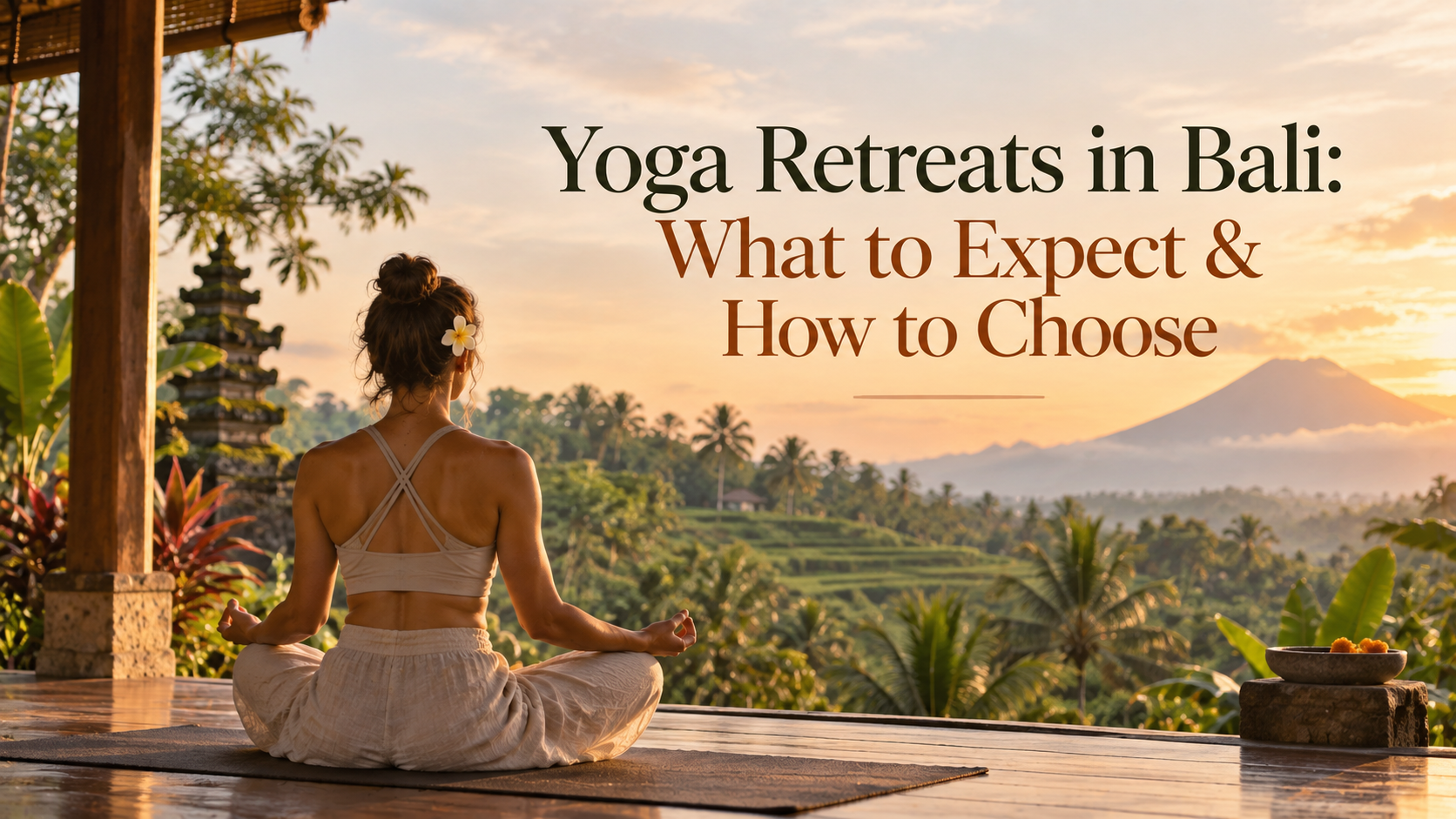
    There is something quietly magnetic about Bali. I remember my first yoga retreat in Bali like a soft breeze on a warm morning. The air was fragrant with frangipani, and the rice fields stretched green and endless beneath a calm sky. It was not about grand promises but about slowing down, peeling away layers, and sitting with myself in stillness.

    If you’ve ever thought about taking a yoga retreat in Bali, this post might feel like a gentle conversation over tea. Let’s explore what makes Bali yoga retreats so quietly special, and how you can find your own space in this beautiful island’s calm embrace.

    Finding Your Place in Bali Yoga Retreats

    Yoga retreats in Bali are as varied as the island’s landscape. From jungle retreats tucked near Ubud’s rice terraces to beachfront yoga escapes in Canggu or Seminyak, there’s a rhythm here that invites all kinds of travelers.

    When I first arrived, I sought a simple yoga getaway — nothing flashy, just a place to breathe and practice. I found a small Balinese yoga sanctuary with daily morning yoga sessions, pranayama workshops, and moments of silence under the stars. These retreats often focus on hatha or restorative yoga, styles that gently support all levels, especially beginners.

    You might hear phrases like “holistic retreat” or “mindful travel to Bali.” These describe experiences where yoga intertwines with local healing traditions, meditation, and often, nourishing organic meals. It’s not just about the postures; it’s about reconnecting body and mind in a space that feels safe and welcoming.

    What to Expect from a Yoga Retreat in Bali

    One thing I’ve learned is to release expectations. Each retreat has its own personality, shaped by the teachers, location, and community.

    Many yoga retreats offer a schedule that blends daily yoga practice with meditation, workshops on yoga philosophy, and free time to explore or simply rest. You might join a yin yoga retreat to unwind deeply or practice vinyasa flows as the sun rises over the ocean.

    The benefits are subtle but profound. Stress relief often comes quietly, like the soft rustle of palm leaves. The Balinese healing traditions invite you to listen to your body, your breath, and the natural rhythms of the island.

    A yoga retreat in Bali is also about slowing down enough to notice things. The sound of waves, the taste of fresh tropical fruit, the kindness of strangers. This attention to simple details brings clarity and calm in ways that last long after the retreat ends.

    Why Bali for Your Yoga Holiday?

    Bali’s unique blend of culture, nature, and spirituality offers something different from many other yoga destinations.

    The island’s temples, quiet villages, and lush landscapes form a natural setting that supports yoga and meditation. In Ubud, you might find yourself practicing yoga near rice fields or in eco-luxury retreats that respect the environment and local culture.

    The connection to Balinese spiritual traditions adds depth to your experience. Some retreats incorporate gentle chanting, sound healing, or even Ayurvedic treatments. You’ll hear about chakras, inner journeys, and mindful living all woven gently into your daily practice.

    For those who prefer beach vibes, Seminyak and Canggu offer yoga with ocean views. Many retreats here include surf lessons or healthy cafes where you can taste local, organic food.

    Choosing the Right Yoga Retreat in Bali

    The options can feel overwhelming, but it helps to ask yourself what you want from your retreat.

    Are you looking for a beginner yoga retreat Bali? Many centers welcome those new to yoga with patient teachers and simple practices.

    If you prefer something quieter, consider a jungle retreat or meditation hut stay, where mornings might begin with silent walks and end with soft chanting.

    Couples yoga retreats and women-only yoga retreats are popular too. These often provide a supportive atmosphere to deepen your connection with yourself and others.

    Budget yoga retreats coexist alongside luxury yoga holidays. Some offer all-inclusive packages with private villas, organic meals, and spa treatments. Others keep it simple, with shared spaces and more time for self-reflection.

    Practical Tips for Your Yoga Retreat in Bali

    When packing for your retreat, think light and comfortable. Loose, breathable clothing works best. Bring a reusable water bottle and sunscreen.

    Many retreats provide yoga mats and props, but you can bring your own if you prefer.

    Timing matters. The best time for yoga retreat Bali is usually in the dry season, from April to October, when the weather feels friendliest.

    Consider how long you want to stay. Seven-day retreats give you a solid introduction, while two-week immersions allow deeper rest and practice.

    It’s okay to arrive with no experience. Yoga retreats often welcome solo travelers, and you’ll find community in unexpected moments over meals, in classes, or during evening talks.

    The Philosophy Behind Yoga Retreats in Bali

    Yoga is much more than physical poses. It’s a path that includes ethics, breath work, meditation, and mindfulness. Many retreats introduce you to these deeper layers gently.

    Drawing from ancient texts like the Yoga Sutras, the idea is simple: yoga helps us live with more clarity and kindness, to ourselves and others.

    In Bali, the practice often blends with local spirituality. This can include Balinese ceremonies or traditional healing methods. The goal is not to transform overnight but to notice who you are beneath life’s noise.

    Retreats encourage self-discovery and presence, inviting you to connect with nature and your inner rhythms.

    Stories from the Mat and Beyond

    One morning during my first retreat, I struggled with a difficult pose. Frustration bubbled up, but a gentle teacher reminded me, “Yoga is about patience, not perfection.”

    That moment shifted something. It wasn’t about bending deeper or holding longer. It was about listening to my body and honoring its limits.

    Later, sitting by a pool under a mango tree, I met travelers who shared stories of their own yoga journeys from healing emotional wounds to rediscovering joy.

    These connections, these small shared moments, are the heart of a yoga retreat.

    Final Thoughts on Yoga Retreats in Bali

    Choosing a yoga retreat in Bali is not just a trip; it’s an invitation to slow down and listen. The island’s calm spaces, supportive teachers, and natural beauty make it an ideal place to nurture your practice.

    Whether you are seeking a beginners’ yoga camp, a restorative yin yoga retreat, or a spiritual escape, Bali offers a quiet refuge for all.

    The journey may not always be easy, but it is always genuine. If you approach your time with openness and kindness, you will carry Bali’s peace home with you long after the last sun sets on the rice fields.

    Frequently Asked Questions (FAQ)

    Q1: What should I pack for a yoga retreat in Bali?

    Wear light, comfortable clothes. Bring a water bottle, sunscreen, and maybe a journal.

    Q2: Do I need to be experienced in yoga to join a retreat?

    Not at all. Many retreats welcome beginners and offer gentle, easy-to-follow classes.

    Q3: What kind of yoga styles can I expect in Bali retreats?

    You’ll find hatha, vinyasa, yin, restorative, and even kundalini practices.

    Q4: When is the best time to visit Bali for a yoga retreat?

    The dry season from April to October offers the best weather for retreats.

    Q5: Are Bali yoga retreats expensive?

    There’s a wide range from budget-friendly to luxury retreats, so you can find one that suits your budget.

    Q6: Can I travel solo to a Bali yoga retreat?

    Yes, solo travelers often find community and support easily at these retreats.

    Q7: Do retreats include meals?

    Most provide organic, vegetarian meals focused on health and nourishment.

    If you feel curious about finding your own quiet corner in Bali or want to learn more about the traditions behind yoga practice, take your time exploring. Yoga retreats in Bali have a way of unfolding slowly, like a flower opening to the sun.

    Thank you for reading and for sharing this journey, even if just in words.

    Would you like help finding specific Bali retreats or advice on preparing for your trip? I’m here whenever you want to talk more about this quiet, wonderful path

  • 100-50 Weight Loss Method: What It Means, Evidence & Safety

    100-50 Weight Loss Method: What It Means, Evidence & Safety

    What is the 100-50 Weight Loss Method? A Simple Guide to Sustainable Health

    One morning while sipping tea, I came across something called the 100-50 weight loss method. The name sounded interesting, but what caught my attention was its simplicity. Unlike diets that demand endless restrictions or quick fixes, this one seemed calm and realistic.

    If you are wondering what the 100-50 weight loss method is, you are not alone. Many people have started exploring it because it offers a gentle, balanced way to lose weight without stress. It helps you reconnect with your body and enjoy food mindfully.

    This guide explains everything you need to know about how the method works, how to plan meals, and how others have achieved results through it. It is a practical, step-by-step overview for anyone looking to manage their weight naturally.


    Understanding the 100-50 Weight Loss Method

    The 100-50 method focuses on balance rather than strict dieting. The idea is simple: maintain a calorie deficit that is small enough to be sustainable but large enough to make a difference over time.

    The “100” and “50” refer to calorie management and portion mindfulness. Instead of completely cutting out foods, you learn to reduce calorie intake by 100 to 150 calories per meal and make wiser food choices. This may reduce energy intake, but weight loss varies and no single 100-50 formula is clinically established.

    Many people find this method more freeing than traditional diets. It encourages you to eat consciously, not emotionally. You begin to listen to hunger signals, enjoy your meals, and stop when you feel satisfied not stuffed.

    The best part of this approach,” says a wellness coach, “is that it fits into everyday life. You do not have to count every bite or skip social meals.

    For a deeper explanation, you can also explore this article on The 100-50 Diet Method: A Simple Way to Achieve Healthy Weight Loss.


    How the 100-50 Method Works

    This method focuses on consistency and awareness. You don’t need complex tools or paid apps just understanding and regular practice.

    Here is how it generally works:

    1. Identify your calorie range. Estimate your daily needs and reduce your intake slightly by about 100-150 calories per meal.

    2. Use smaller plates. This simple change helps you eat less while feeling just as full.

    3. Prioritize real food. Choose whole grains, fruits, vegetables, and lean proteins over processed items.

    4. Stay hydrated. Often, thirst feels like hunger.

    5. Track lightly. Keep notes about how you feel and your energy levels rather than only calories.

    Unlike crash diets, this method does not cut out any food groups. You can enjoy your favorite dishes, just in smaller, balanced portions. It promotes a healthy relationship with food instead of guilt or fear.


    How to Evaluate Weight Loss Success Claims

    The 100-50 weight loss method has gained attention for being simple and adaptable. Personal stories cannot establish whether a diet is safe or effective. For a closer look at conflicting definitions, read our 100-50 diet claims guide and 100-50 safety guide.

    Many report losing between 5 to 10 pounds over a few months while feeling energized and satisfied. Some say they sleep better, have clearer skin, and feel less bloated.

    One student from Delhi shared, “For the first time, I felt like I was not dieting. I was just eating with awareness. My meals became lighter, but I never felt deprived.”

    Another person mentioned, “This method helped me focus on what my body truly needs. I stopped emotional eating and started enjoying food again.”

    If you would like to read more insights and structured results, check The 100-50 Method Weight Loss Plan: A Simple Path to Sustainable Health and Fitness.


    The 100-50 Weight Loss Meal Plan

    A strong meal plan makes this method easy to follow. The 100-50 meal plan emphasizes balance and portion awareness. It combines natural foods with mindful eating habits.

    Below is a sample meal plan inspired by this approach:

    Morning (Breakfast)

    • A bowl of oats with banana slices and a handful of nuts.

    • One cup of green tea or lemon water.

    Mid-Morning Snack

    • A small apple or papaya slice.

    Lunch

    • Brown rice with lentil dal and stir-fried vegetables.

    • A small salad with lemon dressing.

    Evening Snack

    • Roasted chickpeas or herbal tea.

    Dinner

    • Grilled tofu or paneer with a bowl of sautéed greens.

    • A small portion of quinoa or millet.

    This meal plan is flexible. You can swap items according to your taste and availability. What matters most is eating wholesome foods, avoiding excess oils or sugars, and keeping portions moderate.


    The 100-50 Method for Women

    Women often face unique challenges during their weight loss journeys, including hormonal changes and stress-related eating. The 100-50 method for women can be adjusted slightly to support these needs.

    Instead of focusing only on calories, women are encouraged to prioritize nutrient density adding iron-rich foods, omega fats, and natural sources of calcium. Small, regular meals help stabilize energy and mood.

    A yoga teacher from Rishikesh shared, “I found the 100-50 approach easier to maintain through busy teaching days. It helped me balance my meals without skipping any.”

    For detailed examples, refer to What is the 100-50 Method for Weight Loss where more tailored advice for women and beginners is available.


    Downloadable 100-50 Weight Loss PDF Guides

    Many people find it useful to keep a printable guide for planning meals. The 100-50 weight loss method PDFs available online often include:

    • Portion charts and serving visuals

    • Weekly meal planners

    • Balanced macronutrient breakdowns

    • Shopping lists for local markets

    • Tips for mindful eating

    These guides simplify the process and help you stay consistent. They remind you that small steps, taken daily, make lasting changes.

    When I downloaded one of these PDFs, it felt practical and encouraging. It was like having a gentle reminder to stay kind to myself and enjoy real food.


    The Role of Mindful Eating in the 100-50 Method

    One of the strongest aspects of this method is its link to mindful eating. Instead of rushing through meals or multitasking, you focus on the taste, smell, and satisfaction of your food.

    Studies show that mindful eating reduces overeating and helps regulate digestion. When you eat slowly, your body has time to signal fullness.

    You can start with small habits:

    • Sit quietly while eating.

    • Put your fork down between bites.

    • Chew slowly and appreciate every flavor.

    These habits may sound simple, but they change the entire eating experience and make weight management natural and stress-free.


    Exercise and Lifestyle with the 100-50 Approach

    Although the 100-50 weight loss method focuses on food awareness, gentle physical activity enhances the results. You don’t need to spend hours at the gym.

    Walking, yoga, swimming, or cycling for 30 minutes a day can make a difference. Exercise improves metabolism, reduces stress, and helps balance hormones.

    Yoga practitioners in Rishikesh often combine this eating method with Hatha or Vinyasa yoga for better results. Breathing practices like Pranayama also support mindful living and digestion.

    A fitness expert shared, “Movement and mindful eating go hand in hand. You feel lighter, calmer, and more centered.”
    Read :- How to breathe from the diaphragm correctly


    Common Results and Realistic Expectations

    The results of this method depend on your lifestyle and consistency. Most people notice improvements in the first few weeks.

    Instead of drastic weight loss, you can expect:

    • Gradual fat reduction

    • Better digestion

    • Stable energy levels

    • Clearer thinking and mood balance

    People who follow the 100-50 weight loss method for three to six months often report long-term success because it feels natural. It becomes part of your routine, not a temporary challenge.

    Healthy salad bowl for 100-50 weight loss method

    Healthy salad bowl for 100-50 weight loss method


    Is the 100-50 Weight Loss Method Right for You?

    If you struggle with extreme diets or emotional eating, this method offers a refreshing change. It’s flexible, practical, and realistic.

    You do not need special supplements or complicated routines. It teaches you to respect your hunger, manage portions, and enjoy every meal.

    As one participant shared, “I didn’t just lose weight I gained balance. My relationship with food changed completely.”

    The 100-50 method reminds us that discipline and kindness can work together. It’s not about perfection but about progress made with patience.
    Read :- How to Improve Posture at Home.


    Frequently Asked Questions (FAQ)

    Q1. What exactly is the 100-50 weight loss method?
    It’s a simple and flexible calorie control plan that helps you eat mindfully while creating a mild calorie deficit for gradual weight loss.

    Q2. Can beginners try this method?
    Yes. It is ideal for beginners because it does not require extreme restrictions or intense tracking.

    Q3. Can women follow the same plan?
    Yes. Women can adapt the meal plan slightly for their specific nutritional needs.

    Q4. Where can I find a 100-50 weight loss meal plan PDF?
    Many downloadable guides are available online with meal plans, portion charts, and shopping lists.

    Q5. Does it require daily exercise?
    While exercise is not mandatory, light physical activity such as yoga or walking helps improve results.

    Q6. How soon can I expect results?
    Results vary, but most people see progress within two months of consistent practice.

    Q7. Can I follow this method with Indian food?
    Absolutely. The 100-50 method works perfectly with Indian meals like dal, sabzi, and roti when portioned mindfully.

    Q8. Is it suitable for international students living in India?
    Yes, it is simple to follow with locally available foods and works well with any lifestyle.


    Final Thoughts

    The 100-50 weight loss method is not about restrictions but awareness. It helps you eat smartly, move naturally, and live calmly.

    By combining small calorie adjustments with mindfulness and patience, you can achieve healthy, long-lasting results.

    If you want to explore more practical health ideas, you can read other related articles on FitFortunes Yoga school like:

    Remember, slow and steady wins the race. Be patient, stay consistent, and trust your body’s rhythm.