
200 Hour Multi-Style Yoga Teacher Training in Rishikesh
Study Hatha Yoga foundations and Vinyasa Krama through 21 days of residential practice, guided study and supervised teaching in Rishikesh. Learn the principles of sequencing, alignment, pranayama, meditation, anatomy and yoga philosophy while developing the skills to guide a class responsibly.
The course at a glance
200 training hours · 21 days
Residential programme in Rishikesh
Hatha Yoga & Vinyasa Krama
Asana, pranayama, meditation and philosophy
Practical teaching preparation
Sequencing, observation and supervised teaching
Accommodation and vegetarian meals included.
From Personal Practice to Clear Teaching
Understanding what you experience in your own practice is the starting point. The course connects that experience with thoughtful study and supervised teaching so that you learn both how to practise and how to guide others.
Practise with intention
In Hatha sessions, examine preparation, alignment, suitable holding times, steadiness and breath awareness. Vinyasa Krama introduces purposeful progression: why one posture prepares for another, when to link movement with breathing and how to adjust pace or complexity. The focus is on understanding the methods rather than memorising routines.
Study beyond postures
Pranayama, meditation, practice-related anatomy and traditional yoga philosophy provide context for the physical work. Learn to observe movement differences and consider appropriate variations. Discuss attention, personal discipline and a teacher’s responsibilities while approaching breath and meditation practices gradually, without presenting yoga as medical treatment.
Learn through teaching
Observe experienced teachers, prepare lesson plans and practise demonstrations and verbal cues before leading supervised segments. Feedback helps you refine class timing, sequencing, communication and responses to different student needs. Teaching practicum and practical evaluations involve active participation, not merely following daily classes.
What You Will Learn During the Training
The training develops four connected skills: personal practice, understanding yoga traditions, creating thoughtful sequences and teaching with feedback. Practical classes and study reinforce each other throughout the course.
Build a Steady Personal Practice
Study standing, seated, balancing, forward-bending, back-bending and restorative postures with attention to breath, preparation and steady alignment. Practise within your own ability rather than aiming for a perfect shape.
Understand when a longer hold is helpful in Hatha practice and when a progressive Vinyasa Krama sequence serves the class better.
Study the Wider Yoga Tradition
Study pranayama, meditation, mudra and bandha with selected teachings from the Yoga Sutras and Bhagavad Gita. Discuss how the ideas relate to attention, discipline and the responsibilities of teaching.
You learn to explain traditional ideas with respect for their original context and for students from different backgrounds.
Understand Sequencing and Adaptation
Learn to build a lesson from accessible preparation towards more demanding postures. Study breath coordination, sensible transitions, pacing, rest and sequence planning.
Practise adapting postures and movements for different abilities, explaining why an alternative is helpful instead of merely giving a different shape.
Develop Your Teaching Skills
Observe teachers, prepare lesson plans, demonstrate movements and guide short classes under supervision. Work on instructions, timing, variations and appropriate feedback.
Review each practice-teaching attempt with your teacher and use the feedback to improve the next session.
Who Is This Multi-Style Course For?
This 200-hour course welcomes beginners and regular practitioners. You do not need prior teaching experience, but should be ready for 21 days of consistent practice, classroom learning and supervised teaching.
Students need enough English to understand instructions and take part in discussions. If an injury or health concern may affect your practice, speak with the teaching team before applying.
This course may suit you if…
You want to understand both Hatha foundations and progressive Vinyasa Krama rather than memorising one fixed flow.
You value direct explanations of posture, breathing, movement and how different people experience a practice.
You want to design lessons, guide students under supervision and receive feedback before teaching independently.
Consider another option if…
The 100-Hour Multi-Style course offers a shorter 10-day introduction.
A yoga retreat is better suited to rest and personal practice without a teaching assessment.
If you already hold a foundation qualification, a specialist or advanced programme may suit your current goals.
FitFortunes · Rishikesh
Training dates &
room availability
For the 21-day residential Multi-Style course, batches begin on the 2nd of each month. The school confirms availability for each starting date and room selection.
Batch availability enquiry
Enter your preferred date and accommodation. You can review the message before sending it through WhatsApp.
Looking for a shorter training? View the 100-Hour Multi-Style Yoga Course .
200-Hour Multi-Style Course Fees
Choose one residential package for the full 21-day course. Both include complete training, accommodation and three vegetarian meals each day. The room type does not change the teaching programme or certificate requirements.
Shared Room
Full 200-hour course, shared accommodation and three vegetarian meals each day. Suitable for students happy to share a room.
Private Room
Full 200-hour course, private accommodation and three vegetarian meals each day. Suitable for students who prefer more quiet personal space.
Not included: travel, visa costs, airport pickup, personal expenses, extra nights and optional trips outside the course.
How to reserve: choose your date and room on the application form. A 20% deposit counts towards your course fee, and the remaining 80% is due on arrival. Read the booking terms before paying.
Hatha Foundations and Vinyasa Krama: Understand Both Methods
Traditional Hatha foundations: Study postures carefully, with preparation, alignment, breath awareness and appropriate holding time. Learn to notice students’ comfort and movement range before offering corrections.
Vinyasa Krama: Arrange movements in purposeful stages, coordinate breathing with transitions and adjust pace to suit a class. Sequencing is based on progression, not an inflexible routine.
Both approaches help you decide when to hold a posture, when to connect movements and when to offer a simpler choice.
What teachers need to understand: the purpose of a posture, why it belongs in a sequence, when the breath should guide a transition and how a student may need a different approach.
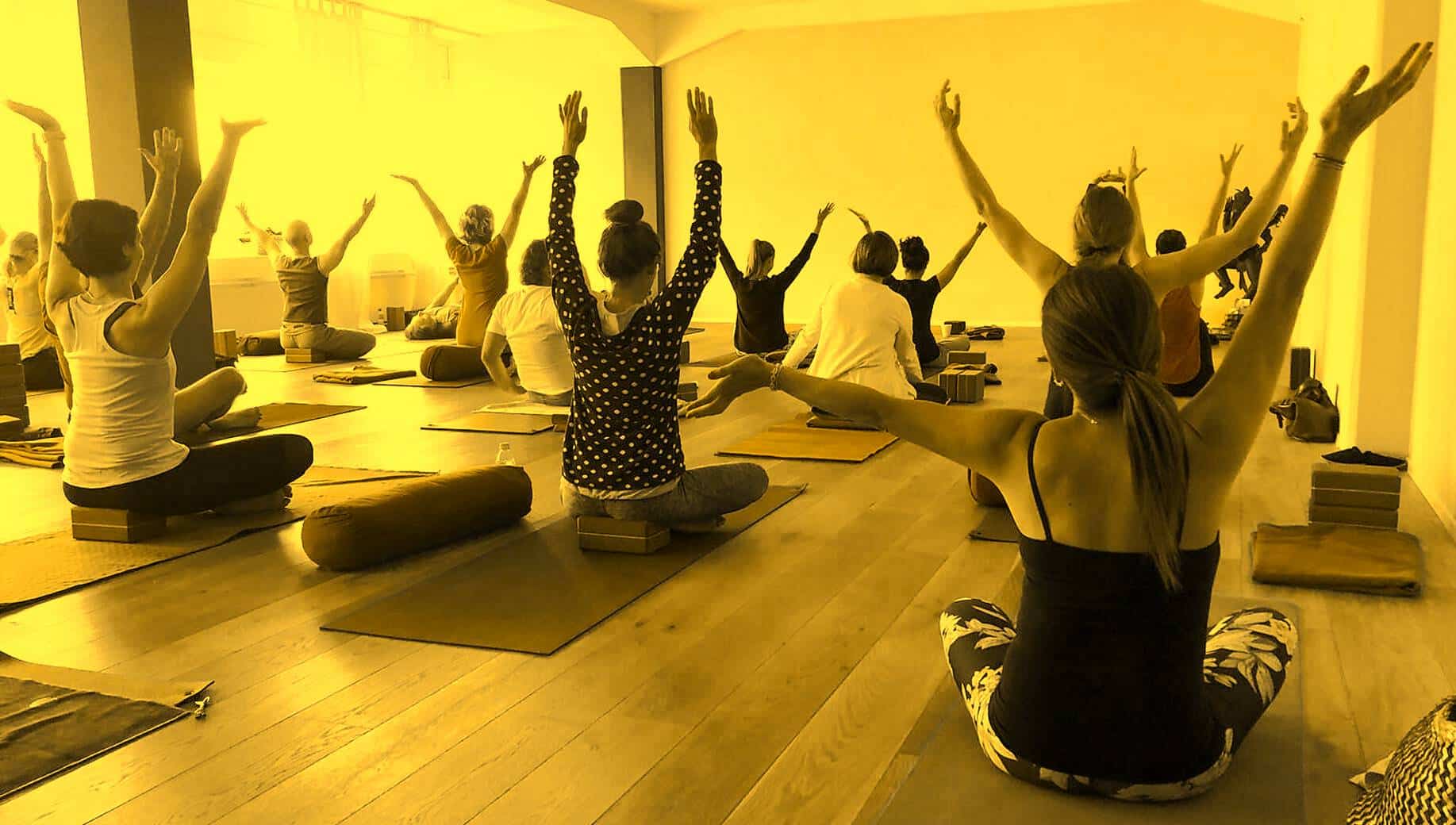
Prepare and Observe
Start with simple mobility, preparation and accessible postures. Observe breath, balance and range of movement before increasing complexity.
Sequence with Purpose
Create progressive stages with a clear lesson goal. Select transitions, timing and intensity based on the ability of the group rather than repeating one fixed sequence.
Refine the Breath
Practise pranayama gradually with attention to preparation, comfort and contraindications. Learn how breathing methods relate to concentration and asana practice.
Adapt the Practice
Use observation and practical anatomy to select variations, props or other options. Work with the person instead of forcing a fixed posture.
Connect Practice and Reflection
Bring asana, pranayama, meditation and philosophy into one coherent practice. Connect what students experience on the mat to the responsibilities of teaching.
200-Hour Multi-Style Yoga Curriculum
The complete 200-hour programme combines yoga techniques and guided practice, anatomy, philosophy, teaching methodology, professional responsibilities and a supervised practicum. Each area below explains the actual subjects and practical work.
Teaching includes demonstrations, group discussion, observation, lesson planning and supervised teaching. For the current registered hour allocation and assessment format, request the detailed course outline before reserving.
Asana, Pranayama and Meditation
Practise Hatha foundations and progressive Vinyasa Krama, including standing, seated, balancing, forward-bending, back-bending and restorative postures. Learn preparation, movement control, alignment, posture variations and breath awareness.
Pranayama, meditation, mantra, mudra and bandha are taught alongside asana. Traditional cleansing methods are explained and introduced where suitable, with attention to readiness and individual comfort.
Anatomy and Physiology
Study joints, muscle groups and common movements involved in yoga, as well as breathing mechanics and variations in individual mobility. Consider how anatomy affects posture choice, preparation and progression.
Practise giving appropriate modifications and understanding when a student should seek advice from a qualified healthcare professional. This subject is educational, not medical diagnosis or rehabilitation treatment.
Yoga Philosophy and Humanities
Read selected teachings from Patanjali’s Yoga Sutras and the Bhagavad Gita. Discuss Yama, Niyama, the eight limbs, Karma Yoga and the relationship between attention, discipline and conduct.
Connect these traditional teachings to your personal practice and to the ethical responsibilities of guiding students from different backgrounds.
Teaching Methodology
Develop clear instructions, sequencing, demonstration, observation, lesson planning and realistic class timing. Learn how to start, develop and close a class with an understandable purpose.
Practise consent-aware adjustments, appropriate alternatives, professional boundaries and respectful communication. Discuss how to respond when a student’s needs go beyond the role of a yoga teacher.
Supervised Teaching Practicum
Begin by watching experienced teachers organise classes and give instructions. Prepare lesson plans with clear goals, timing, transitions and variations, then guide short segments before moving to longer teaching assignments.
Receive feedback on cues, pacing, class organisation and adaptations. A practical assessment forms part of the completion requirements; the school confirms the exact assessment tasks during training.
Practicum progression: observe, plan, teach, receive feedback and practise again. These stages develop confidence through repeated experience rather than memorising a script.
Building a Purposeful Vinyasa Krama Sequence
Learn to plan progressive sequences around a clear objective instead of memorising one fixed flow. These stages show how preparation, movement, observation and rest work together in a well-reasoned lesson.
Clarify the goal
Know whom you are teaching. Consider the students, define a manageable lesson objective and plan alternatives before choosing postures.
Prepare
Begin accessibly. Start with breath and spinal awareness, suitable joint preparation and gentle movements that help students enter the lesson comfortably.
Establish foundations
Steadiness before complexity. Explore standing, balancing and other foundational postures. Introduce alignment, pacing and comfortable breath before advancing.
Progress deliberately
Connect movement and breathing. Arrange purposeful transitions, coordinate movement with breath and offer intensity options that suit different participants.
Ease down
Reduce effort gradually. Offer accessible alternatives and appropriate resting positions. Observe student responses rather than requiring everyone to finish in the same way.
Rest and review
Integrate the practice. Close with Savasana or quiet rest where appropriate. Reflect on individual needs and what the lesson teaches you about planning the next class.
Teacher information and current campus photographs
FitFortunes’ existing teacher profile and curriculum remain available below. You can also meet lead teacher Pravesh Narwal, view an independent teacher listing, and check the official Yoga Alliance directory. For current photographs of rooms and teaching spaces, ask the school directly.
How Teaching Practice Develops
Observe how teachers give cues, demonstrate postures, organise lessons and adapt to the needs of the students in the room.
Write a realistic plan with a clear goal, sensible preparation, sequence, timing and alternative postures. Discuss it with a teacher before practising.
Lead short teaching segments under supervision. Progress to longer sequences as you work on voice, pacing, transitions and responding to students.
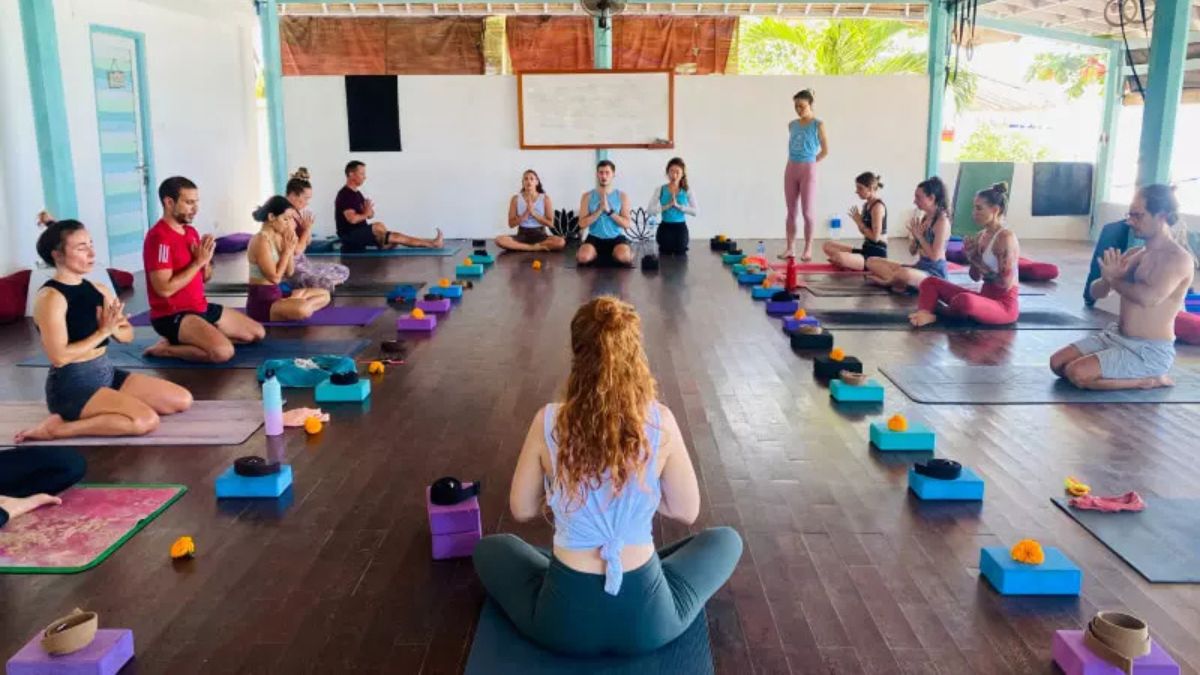
From Observation to Feedback
Observe
Watch class organisation, instruction and student response.
Prepare
Build lesson plans with a clear purpose and realistic timing.
Teach
Guide short sessions and longer teaching assignments under supervision.
Review
Review what went well and what needs improvement. Use direct feedback to prepare for the next practice-teaching assignment and the practical evaluation.
Your certificate confirms completion of the course requirements. Good judgement continues to develop through real teaching experience, ongoing study and observation.
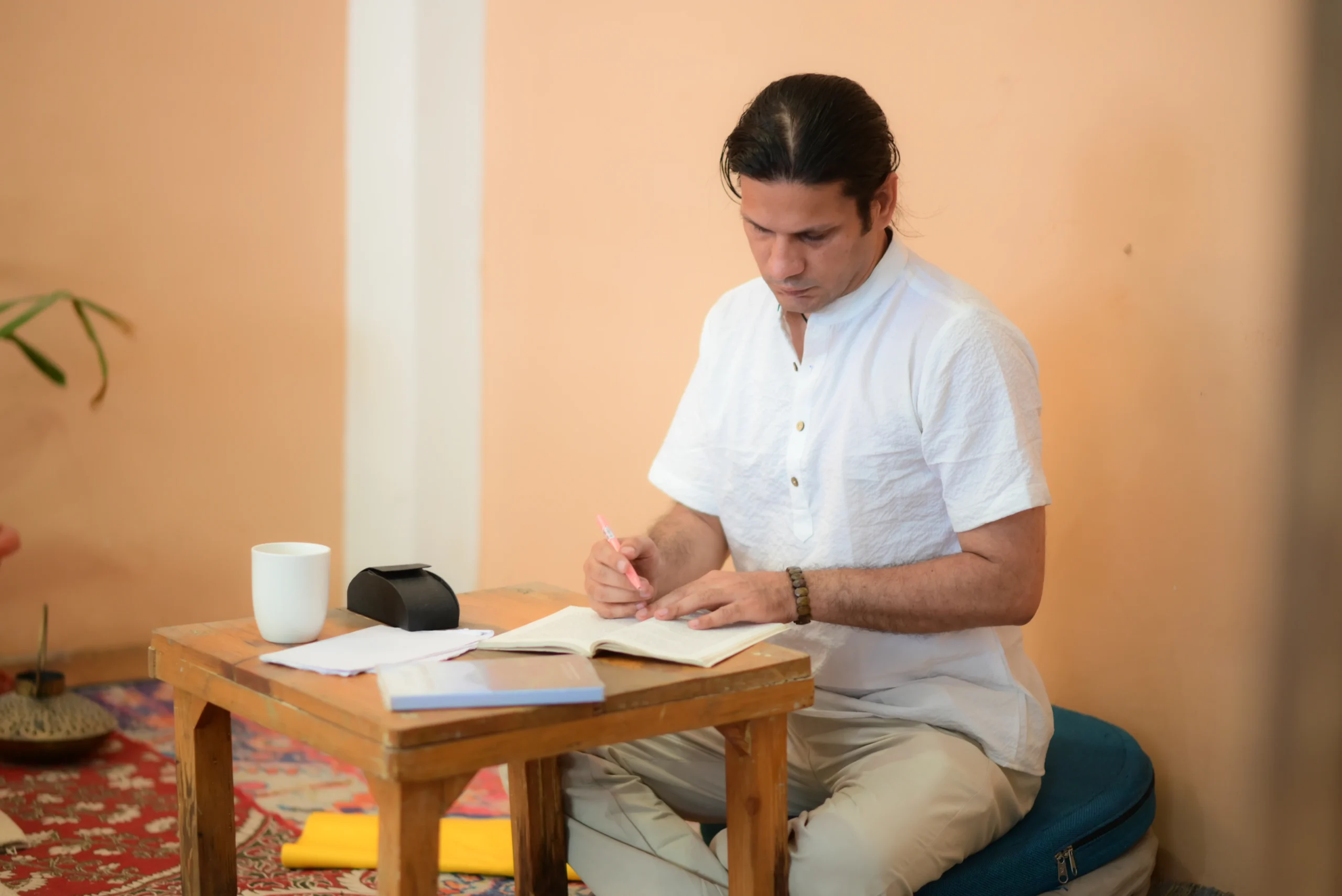
Pravesh Narwal
FitFortunes Holistic Wellness Yoga School
Learn Multi-Style Yoga with Pravesh Narwal
Pravesh Narwal is the founder and lead teacher of FitFortunes Holistic Wellness Yoga School, established in 2019. He holds E-RYT 500 and AYUSH Level-3 Wellness Teacher credentials.
His earlier work in orthopaedic rehabilitation informs his attention to movement differences and sensible posture variations. His classes combine breath awareness, traditional yoga practice, alignment and practical teaching. Yoga training here is educational and does not replace medical care.
His Role in This Training
Students first practise and observe methods, then apply that understanding to planning and teaching classes. Questions, demonstration and feedback are part of this process.
The wider teaching team supports subjects across the programme. Individual faculty assignments and activity times can vary between monthly batches.
Why Learn at FitFortunes
FitFortunes Holistic Wellness Yoga School was founded in 2019. The programme values patient practice, sound explanations and learning how to guide others rather than presenting yoga as a list of poses.
Learn the method, then teach it. Students study the purpose behind posture, breath and sequence choices, observe how teachers work and practise instruction under supervision.
Keep traditional subjects connected. Yoga philosophy, meditation and pranayama are taught alongside the physical practice, professional responsibilities and teaching skills.
Know what you are joining. Dates, room choices, fees, schedule and booking terms are explained on this page. Ask about any specific batch details before reserving.
A Typical Day During the Multi-Style Course
On training days, the schedule balances yoga practice, theory, teacher-training methods, practical teaching, meals and breaks. Sunday is the weekly rest day, with no scheduled classes. This sample timetable shows how classes fit together; times may vary for workshops, assessments or other training activities.
Morning
Practice & Study
Morning yoga practice · Foundational asana, Vinyasa Krama, breath awareness and meditation
Breakfast & Break
Yoga Philosophy & Theory · Yoga principles and their relationship with practice
Anatomy & Physiology · Body, movement and practice-related anatomy
Lunch & Break
Afternoon & Evening
Teaching & Practice
Teaching Methodology · Instruction, class organisation and teaching techniques
Practice Teaching · Guided teaching practice
Practicum · Observation and feedback
Evening Practice · Restorative yoga, meditation or workshop
Dinner
Evening Satsang · Discussion, chanting or guest lecture
Schedule note: This is the typical daily structure. Individual classes may move when a workshop, assessment or course activity requires it.
Choose a Room That Helps You Rest and Study
Accommodation is included in both residential room packages. All students study the same curriculum and follow the same class schedule. The difference is how much privacy you prefer outside the classroom.
A private room is suitable for independent rest and study. Shared accommodation suits students comfortable staying with another course participant. Confirm the final room arrangements before payment.
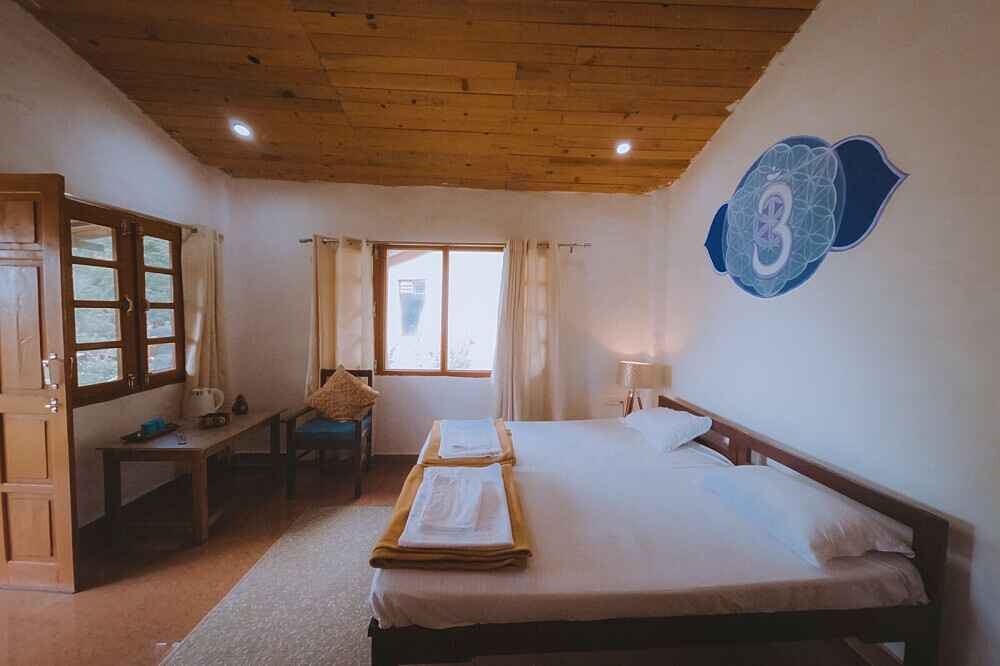
Room Facilities
- Bed, linen and seasonal blanket
- Attached bathroom
- Storage for belongings
- Ceiling fan and power socket
- Wi-Fi access
- Balcony or terrace access in many rooms
More Personal Space
Your own room gives you more privacy for sleep and personal study.
Best for: light sleepers and students who prefer quiet time.
Share the Residential Experience
Share your room with another student attending the same training.
Best for: students comfortable sharing personal space.
Not sure which room suits you? Compare private and shared rooms.
Rooms are allocated according to availability. Ask the school about the location and features of your room before reserving.
Vegetarian Meals During Your Stay
Three vegetarian meals are included each day: breakfast, lunch and dinner. Food is generally simple Indian home-style dishes based on vegetables, grains, rice, pulses and seasonal ingredients.
The menu changes during the course. Meals are part of the residential programme, not a medical or therapeutic diet.
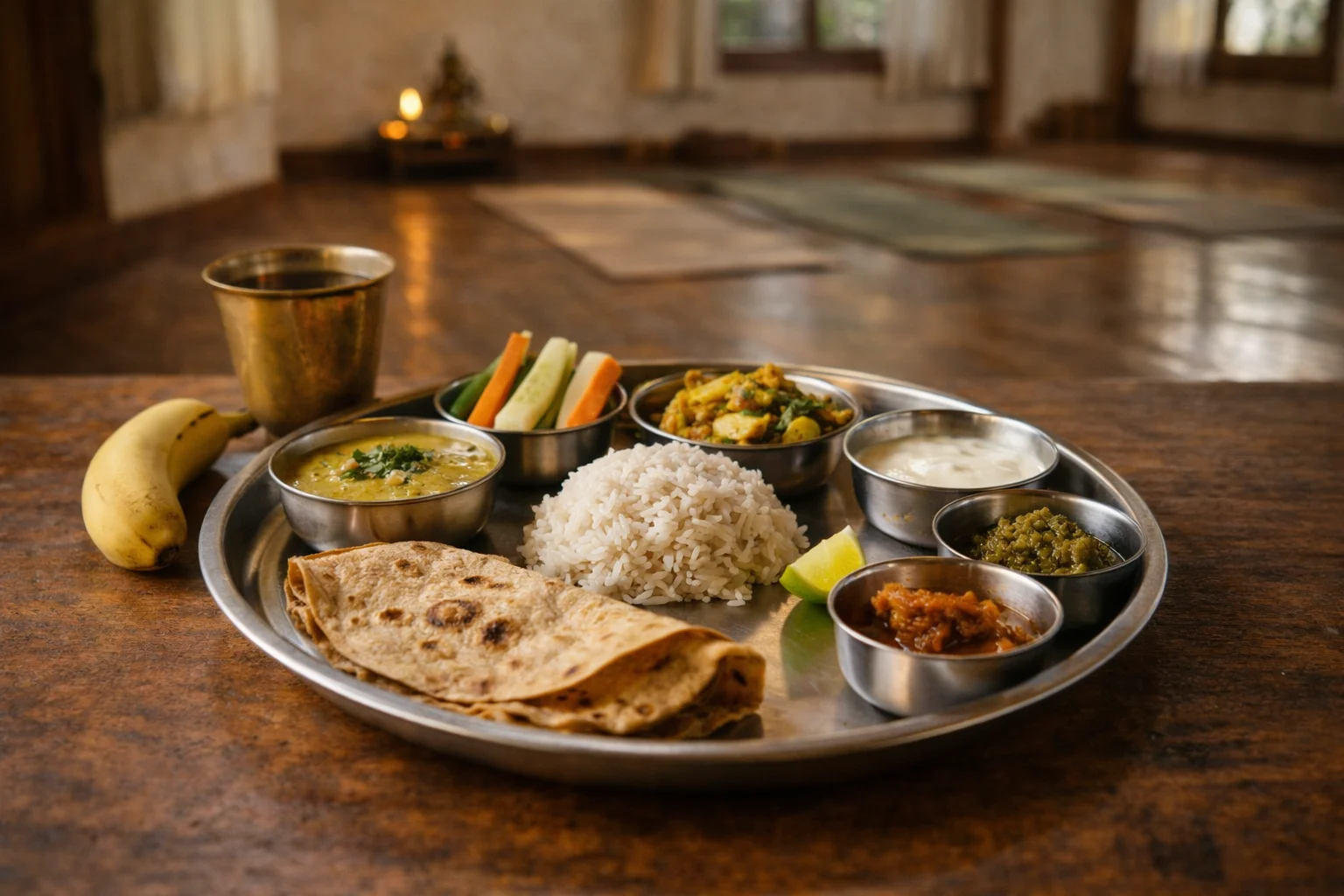
Simple Vegetarian Meals
What is usually served?
Meals commonly include vegetables, pulses, grains, rice, chapati and other simple dishes prepared as part of the daily school routine.
What style of food is it?
The menu follows a simple vegetarian approach influenced by sattvic and Indian food traditions. Dishes vary according to the day and available ingredients. Meals change during the training while remaining simple and vegetarian.
Vegan or gluten-free?
Vegan and gluten-free options can be discussed when requested in advance. Tell the school about important dietary restrictions before arrival.
Before You Arrive
Tell the school about allergies, intolerances, vegan preferences and strict dietary needs before arrival. The kitchen can then confirm what will be possible during your stay.
For more about the food tradition, read our Ayurvedic meal-preparation guide.
Your training, clearly explained
How You Are Prepared and Evaluated
Completing a 200-hour course involves more than attending asana classes. The school reviews practice, study and teaching participation before issuing a completion certificate.
Practice and study
Take part in the scheduled practice, theory and teacher-training activities. Sunday remains the weekly rest day.
Teaching and feedback
Observe classes, prepare lessons and practise teaching with guidance and feedback.
Course completion
Complete the required assignments and practical evaluation. Graduates of an eligible 200-hour programme may apply separately for RYT 200; registration is not automatic.
For the detailed topics, read the curriculum overview. Your teachers can clarify the current study and assessment requirements for your specific batch before you reserve.
Your 200-Hour Certificate and RYT-200 Eligibility
Students who complete the required attendance, study, yoga practice and assessments receive a FitFortunes course-completion certificate for the 200-Hour Multi-Style programme.
Course-Completion Certificate
The FitFortunes certificate confirms that you have met the course requirements. Keep a copy of your training details for any later credential application.
RYT-200 Registration
FitFortunes issues the course-completion certificate. Graduates of eligible RYS 200 training may apply separately for RYT 200 registration through Yoga Alliance, subject to its current rules. Registration is not automatic.
Your Certificate and Your Registration
The school issues the course-completion certificate. Yoga Alliance evaluates each graduate’s separate registration application against its own rules.
Study Multi-Style Yoga in Rishikesh
FitFortunes teaches in Rishikesh, Uttarakhand, near the Ganga in the Himalayan foothills. The town is known for yoga, meditation, traditional study and ashram life. The 21-day course keeps daily practice and learning at its centre.

Near Laxman Jhula and Swargashram
The school is in the Laxman Jhula and Swargashram area. Students can spend free time walking near the river, visiting the neighbourhood and resting between classes. Confirm the exact meeting and arrival location before travelling.
Rishikesh offers a setting shaped by local yoga traditions, ashrams, temples and everyday Indian life. These surroundings give context to philosophy and meditation, while the real learning happens in regular classes.
Outside class: The course itself remains focused on training. Time outside class is for rest, personal study and experiencing the local area at your own pace.
Getting Here and Preparing for Your Stay
Arrival: Batches start on the 2nd of each month. Confirm your room check-in, departure time and the exact school location before buying non-refundable tickets.
Transport: Dehradun’s Jolly Grant Airport is the nearest airport. Airport pickup is not included automatically. Ask the school for transfer options and costs, or arrange your own onward travel.
Before travel: Bring clothing for regular practice, personal essentials and a notebook. Ask whether a mat and course manual will be provided. Inform the school in advance about allergies or important health and mobility concerns.
Extra nights: Early arrival and stays after the course depend on room availability and must be arranged separately.
Before You Reserve Your Place
Deposit and Balance
A 20% deposit is required to secure your chosen room package. The remaining 80% is due on arrival. The deposit counts towards the total fee.
If You Cancel or Change Dates
The deposit is non-refundable on cancellation. Before the course begins, you may request to apply it to a later available FitFortunes course starting within 12 months of your original booking date, subject to availability. It cannot be transferred to another person.
Refunds and Your Rights
If you paid an additional balance in advance, that balance is refundable when you cancel at least 24 hours before the course starts. If FitFortunes cancels your course, payments made directly to the school for it are refunded. Read the full Terms & Conditions; applicable legal rights remain unaffected.
Review the current Terms & Conditions before making a payment.
Choose the Course That Fits Your Goal
100-Hour Multi-Style Training — a 10-day introduction focused on the practice foundations and first steps in teaching.
200-Hour Multi-Style Training — this 21-day course combines Hatha foundations, Vinyasa Krama and a supervised teaching practicum.
200-Hour Traditional Hatha Training — for students who want more concentrated study of traditional Hatha practice.
Unsure which is best for you? Ask FitFortunes to explain the differences before booking.
200-Hour Multi-Style Questions and Answers
Practical answers about the curriculum, dates, accommodation, booking, teaching certificate and planning your stay.
What is included in the 200-hour curriculum?
Traditional Hatha foundations, Vinyasa Krama, pranayama, meditation, anatomy, yoga philosophy, teaching methods, professional ethics and supervised practice. Read the course curriculum.
Which styles do you teach?
The core methods are Hatha foundations and progressive Vinyasa Krama. Students learn why postures are held, how movements can be connected and when an alternative is appropriate.
What is Vinyasa Krama?
A method of sequencing movements progressively. You study preparation, breath coordination, pacing and variations rather than memorising one routine.
Can beginners join?
Yes. Beginners and regular practitioners are welcome. No prior teaching experience is required, but you should be prepared for daily practice and classroom study.
How long is the course and when does it start?
The programme lasts 21 residential days and covers 200 hours. Sunday is the weekly rest day, with no scheduled classes. Monthly batches begin on the 2nd. Confirm check-in and check-out details before booking travel.
How much does the programme cost?
Shared and private packages are shown in the Course Fees section. Each package includes the same teaching programme, accommodation and three vegetarian meals daily.
What expenses are not included?
Travel, visas, airport transfer, personal expenses, extra nights and optional outside trips are not included.
What is the deposit and cancellation policy?
A 20% deposit reserves an available package and counts towards the fee; the balance is payable on arrival. Read the booking terms for cancellation and date-change rules.
Does the course automatically qualify me as RYT 200?
No. FitFortunes provides a course-completion certificate to successful graduates. Graduates of eligible RYS 200 training may apply separately for RYT 200 through Yoga Alliance.
Will I practise teaching?
Yes. You will observe classes, prepare lessons, teach under supervision and receive feedback. Practical assessment is part of the completion requirements.
What does a normal day look like?
A day combines yoga practice, theory, teaching methodology, practicum, meals and breaks. See the sample daily schedule.
What English level do I need?
You should be comfortable following English instructions and participating in lessons and discussions.
Where is the school and how do I arrive?
FitFortunes is near Laxman Jhula and Swargashram in Rishikesh. Dehradun’s Jolly Grant Airport is the closest airport. Confirm your exact arrival arrangements beforehand.
Can I arrive early or stay longer?
Extra nights depend on availability and are arranged separately. Ask before booking travel.
What should I bring?
Comfortable practice clothing, personal essentials, any personal medication and a notebook. Confirm the mat and study-material policy with the school before travel.
How are dietary needs managed?
Meals are vegetarian. Tell the school in advance about allergies, vegan requests or strict dietary requirements so the kitchen can confirm what is possible.
What if I have an injury or health concern?
Consult a qualified healthcare professional and contact the school before booking. Appropriate practice variations depend on individual needs.
How do I apply?
Choose a date and room, complete the application form and wait for confirmation before paying your deposit.
For anything not covered, contact FitFortunes before paying a deposit.
Ready to Join the Next Multi-Style Course?
Select an upcoming batch, choose the room you prefer and complete the application. FitFortunes can confirm your room and arrival arrangements before payment. If you need to discuss the course first, message us on WhatsApp.