Restorative yoga teacher training teaches you how to guide supported, low-effort yoga poses with clear instructions, thoughtful prop use, and enough time for rest. It is different from simply taking a gentle yoga class. A good training should explain why each setup is used, how to adapt it, and when a student needs a different option.
This guide explains the curriculum, common course lengths, certification questions, props, safety, and how to compare programs in Rishikesh or online. It is written for yoga teachers, trainees, and serious practitioners who want a practical answer before paying for a course.
Reviewed and updated: October 6, 2026.
Contents
- What is restorative yoga teacher training?
- What should the curriculum include?
- Props and supported pose setup
- Restorative yoga vs Yin yoga
- How many training hours are enough?
- Certification and Yoga Alliance
- Choosing training in Rishikesh
- Course selection checklist
- Frequently asked questions
What Is Restorative Yoga Teacher Training?
Restorative yoga uses supported positions so the body can stay comfortable with less muscular effort. Bolsters, blankets, blocks, straps, walls, and chairs may be used. Poses are usually held longer than in an active Hatha or Vinyasa class.
A restorative yoga teacher training should teach more than a list of poses. You need to learn setup, observation, timing, transitions, verbal cues, room management, and safe alternatives. The teacher must also know when not to push a student deeper.
The goal is not to promise treatment for anxiety, injury, pain, or disease. Yoga research covers many styles, and results cannot always be applied to restorative yoga alone. The U.S. National Center for Complementary and Integrative Health notes that yoga may support general wellness and stress management, but evidence varies by condition and yoga style. Read the NCCIH yoga evidence and safety overview.
What Should a Restorative Yoga Teacher Training Curriculum Include?
A useful course should connect practice with teaching skill. Look for clear learning outcomes instead of vague claims about deep healing. The curriculum should show what you will be able to set up, observe, explain, and teach by the end.
1. Restorative pose families
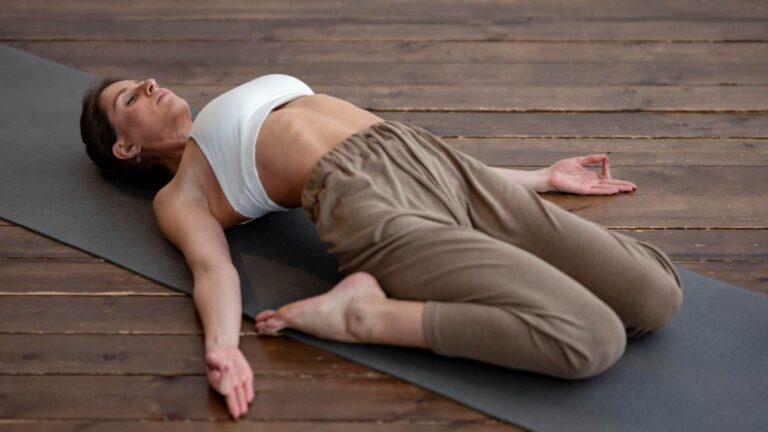
You should study supine, prone, seated, side-lying, gentle backbending, and supported inversion options. The focus should be on comfort and stability. A teacher also needs alternatives for students who cannot use a standard setup.
2. Functional anatomy for supported practice
Training should cover breathing mechanics, joint position, pressure points, circulation concerns, and common reasons a pose may feel uncomfortable. It should not turn a yoga teacher into a medical practitioner. Good teaching stays within the teacher’s scope.
3. Sequencing and pacing
A restorative class needs deliberate pacing. Teachers should learn how to open a session, choose a small number of positions, manage transitions, and close the class without rushing. Long holds do not automatically make a sequence effective.
4. Language and observation
Clear language matters because students may stay in one position for several minutes. A teacher should give simple setup instructions, then reduce unnecessary talking. Observation helps you notice strain, restlessness, numbness, cold, or poor support.
5. Teaching practice
A serious restorative yoga teacher training should include supervised practice teaching. You should set up real students, receive feedback, and correct common mistakes. Watching demonstrations alone is not enough preparation for teaching.
6. Scope, consent, and professional boundaries
Restorative classes can feel personal because students are quiet and physically supported. Teachers need clear consent for touch and adjustments. They also need boundaries around mental health, injury, and medical advice.
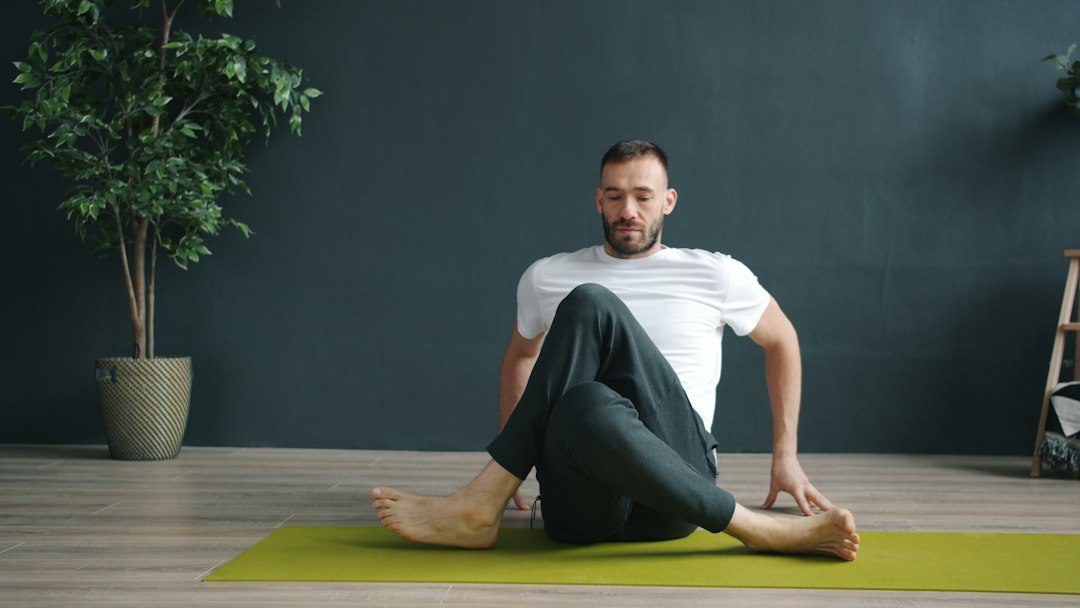
Practice image: Vitaly Gariev / Unsplash. Used as a general yoga illustration, not as a FitFortunes student photo.
Props Used in Restorative Yoga
Props are not decoration. They change how the body is supported. A restorative yoga teacher training should teach you how to choose the right height, firmness, and position for each student.
- Bolsters: support the spine, knees, pelvis, or torso.
- Blankets: add height, warmth, cushioning, and small adjustments.
- Blocks: create stable support when a bolster is too low or too wide.
- Straps: help maintain a position without constant muscular work.
- Chairs and walls: provide support when floor-based setups are not suitable.
- Eye pillows: may reduce light, but they should always be optional.
Prop use should be individual. Two students may need different setups for the same named pose. A good teacher learns to look at the person first and the pose second.
Restorative Yoga vs Yin Yoga
Restorative yoga and Yin yoga are often grouped together, but they are not the same method. Both may use long holds and a quiet pace. Their teaching intention and amount of support can be different.
Restorative practice usually uses enough support to reduce effort and make the position easier to stay in. Yin practice often allows a mild, sustained physical load in selected tissues. That difference changes how props, timing, sensation, and cueing are used.
If a course advertises both Yin and restorative yoga, check how many hours are given to each subject. A combined title does not tell you how much restorative teaching practice you will receive.
How Many Hours Should Restorative Yoga Teacher Training Be?
There is no single universal hour requirement for every restorative yoga certificate. Current courses may be short workshops, 20-hour modules, 30- to 60-hour specialty programs, or longer combined trainings. The right length depends on your starting level and the depth of the syllabus.
A short course can be useful for an experienced teacher who already understands anatomy, sequencing, cueing, ethics, and class management. A beginner needs more foundation. Course hours should be judged together with supervised teaching, assessment, trainer experience, and curriculum detail.
If you have not completed foundational teacher training, compare the specialty course with a broader program. FitFortunes offers a 21-day 200-hour Hatha Yoga Teacher Training in Rishikesh and a 10-day 100-hour Hatha Yoga program. These are separate programs and should not be described as restorative yoga certification.
Does a Restorative Yoga Certificate Make You RYT-200?
No, not by itself. Yoga Alliance states that the RYT 200 credential is based on completing a 200-hour teacher training with a Registered Yoga School at the RYS 200 level. Shorter or partial trainings do not replace that 200-hour pathway.
A restorative specialty course may still be valuable professional education. For teachers who are already registered, some training may qualify toward continuing education when it meets Yoga Alliance rules. YACEP courses are specifically designed to provide continuing education hours for Registered Yoga Teachers.
Before enrolling, ask the provider exactly what certificate is issued. Also ask whether the course is an RYS training, a YACEP continuing education course, or an independent specialty certificate. Do not rely on the words “international certificate” without checking what they mean.
For the current credential rules, see Yoga Alliance RYT credentials and the RYS standards.
Restorative Yoga Teacher Training in Rishikesh: What to Check
Rishikesh has a large number of yoga schools, short courses, retreats, and residential teacher trainings. That gives students choice, but course titles can sound very similar. Check the actual timetable and syllabus before comparing prices.
For restorative yoga teacher training in Rishikesh, ask how many hours are specifically restorative. Find out who teaches those hours and whether you will practice teaching. Also check class size, accommodation, meals, props, assessment, and cancellation terms.
Do not assume every “multi-style” course includes restorative yoga. The safest approach is to read the curriculum line by line. FitFortunes follows the same rule on its own course pages: a style is named only when it is actually part of that program.
How to Choose a Restorative Yoga Teacher Training
Use this checklist before paying a deposit. It helps separate a clear training program from a page built mainly around marketing language.
- The course states the exact number of training hours.
- The syllabus separates restorative yoga from other yoga styles.
- The trainer’s teaching background is easy to verify.
- Props and setup practice are included, not only lectures.
- Students receive supervised teaching practice and feedback.
- Safety, consent, modifications, and scope are covered.
- The certificate type is explained in plain language.
- Yoga Alliance claims can be checked on the official platform.
- Accommodation, meals, dates, fees, and refund terms are written clearly.
- The school does not promise that yoga will cure medical or mental health conditions.
Who Is This Training Best For?
Restorative yoga teacher training can suit existing yoga teachers who want stronger skills in quiet, supported classes. It may also suit serious practitioners who want a structured study of props, pacing, observation, and teaching language.
Health professionals may find some teaching principles useful, but a yoga certificate does not add a medical license or clinical qualification. Teachers should stay within their professional scope and refer students when a concern requires medical care.
Beginners can join some courses, but they should read the entry requirements carefully. A specialty certificate is not the same as a complete 200-hour teacher training foundation.
Safety and Responsible Teaching
Yoga is generally considered safe for healthy people when taught properly, but injuries can still occur. NCCIH advises beginners to work with a qualified instructor and notes that older adults, pregnant students, and people with health conditions may need modifications.
Restorative practice can look simple because there is less movement. That does not remove the need for careful teaching. Long holds, pressure from props, getting up from the floor, or unsupported joints can still create problems for some students.
A responsible restorative yoga teacher training teaches teachers to ask questions, offer choices, avoid force, and stop when a student has concerning symptoms. It should also make clear that yoga is not a substitute for medical diagnosis or treatment.
Frequently Asked Questions
What is restorative yoga teacher training?
It is specialty training in supported yoga poses, prop use, sequencing, observation, cueing, class pacing, modifications, and teaching practice. The exact content depends on the school and course length.
Do I need a 200-hour yoga certificate first?
Not every provider requires one. However, prior teacher training can make a short specialty course easier to use professionally. Check the entry requirements before enrolling.
Can I become RYT-200 through a short restorative course?
No. Yoga Alliance’s RYT 200 pathway requires completion of a 200-hour teacher training with an RYS 200. A short restorative certificate does not replace that requirement.
Can restorative yoga training count as continuing education?
It may, depending on the provider, your current registration, and Yoga Alliance rules. YACEP courses are specifically intended for continuing education. Verify the provider before claiming hours.
Is restorative yoga the same as Yin yoga?
No. Both can be slow and quiet, but restorative yoga usually uses more support and less physical effort. Yin classes may intentionally use a mild, sustained physical load.
What props should I learn to use?
Common props include bolsters, blankets, blocks, straps, chairs, walls, and optional eye pillows. More important than the prop list is learning how to adapt each setup to the person.
Is Rishikesh a good place to study restorative yoga?
Rishikesh has many yoga schools and training formats. That creates useful choice, but quality varies. Compare the specific restorative hours, teacher background, practicum, certificate, accommodation, and written policies.
How do I know whether a course is credible?
Look for a detailed syllabus, clear hours, qualified trainers, teaching practice, realistic claims, written policies, and verifiable credential information. Avoid pages that promise medical cures or hide the exact curriculum.
Final Takeaway
A strong restorative yoga teacher training is practical, precise, and honest about what it certifies. It should teach you how to support different bodies, use props intelligently, sequence a quiet class, and teach within clear professional boundaries.
If you are comparing specialty training with a broader teaching foundation, review the curriculum rather than the course title. You can also read our guide on whether 200-hour yoga teacher training is enough and our 200-hour multi-style yoga teacher training in Rishikesh.