
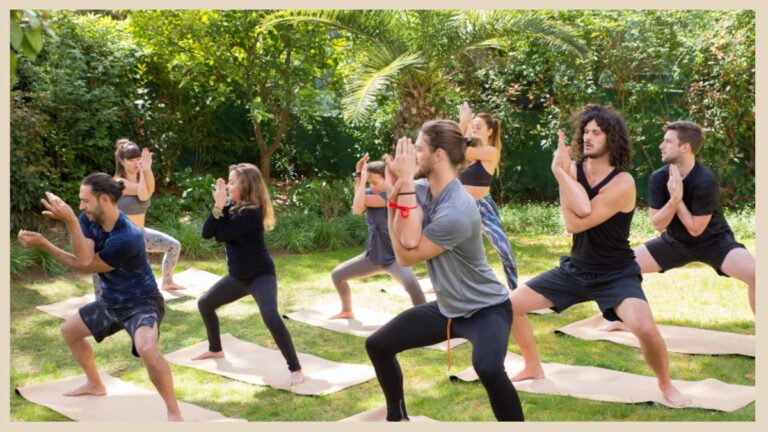
Many students have asked me over the years, does yoga count as strength training? It’s a fair question. In a world filled with gym routines, fitness trackers, and weightlifting schedules, it’s easy to wonder where yoga fits in.
Let’s walk through the answer with honesty, care, and clarity.
What Is Strength Training?
First, we need to define what strength training means. Simply put, it’s any exercise that makes your muscles work harder than usual. It builds muscle strength, improves endurance, and supports bone health.
Lifting weights is the most common form. But strength can also be built using your own body weight. That’s where yoga comes in.
What Does Yoga Actually Do to the Body?
Yoga uses your own body as resistance. When you hold a pose like Warrior II or Plank your muscles work to stay stable. The longer you hold it, the more effort your body makes.

It’s not just about stretching. Yoga builds control, focus, and muscular endurance. These are important parts of strength training too.
Certain styles, like Ashtanga or Power Yoga, increase the physical demand. These practices engage major muscle groups repeatedly.
Yoga and Functional Strength
Functional strength means building muscles you actually use in daily life. Yoga is excellent for this.
- It improves core stability
- It builds leg and arm strength
- It enhances grip and shoulder endurance
You’re not just lifting. You’re learning how to control and support your body with awareness.
How Yoga Builds Muscle
Muscles grow when they’re challenged. In yoga, isometric holds (like Chair Pose or Downward Dog) activate muscle fibers deeply.
Your body holds positions without movement. That creates tension. Tension builds strength.

You also move through poses in sequences, which trains both endurance and coordination. It’s a full-body workout.
Which Yoga Styles Build Strength?
Not all yoga is equal in this regard. Here are some that focus more on building physical power:
- Ashtanga Yoga
A fixed sequence, physically demanding, and rhythmically intense. Builds strength through repetition. - Power Yoga
Fast-paced and athletic. Focuses on large movements and sustained holds. - Vinyasa Flow
Combines breath with movement. Builds strength with fluid transitions and weight-bearing poses. - Hatha Yoga
Slower, but still uses body weight for isometric strength. Great for beginners.
Key Strength-Building Yoga Poses
These poses use your body weight to strengthen specific areas:
- Plank: Core, arms, shoulders
- Chaturanga: Triceps, chest, core
- Chair Pose: Legs, glutes
- Warrior II: Legs, hips, shoulders
- Boat Pose: Abdominals
- Side Plank: Core and obliques
Holding these poses for time builds muscular endurance. Repeating them builds power.
Yoga vs. Traditional Strength Training
Here’s how yoga compares to weightlifting and resistance workouts:
Feature | Yoga | Gym Strength Training |
Equipment Needed | Body only | Dumbbells, machines |
Builds Muscle Size | Moderate | High |
Improves Mobility | High | Varies |
Boosts Endurance | Yes | Yes |
Risk of Injury | Low (with guidance) | Moderate |
Functional Strength | Strong | Depends on routine |
Bone Density Support | Yes | Yes |
Yoga won’t bulk you up, but it tones and strengthens in a balanced way.
What About Bone Health and Aging?
Strength training supports bone density. Yoga does too. Holding weight-bearing poses places gentle stress on bones. This helps prevent bone loss.
Yoga also improves balance and coordination. That’s key in preventing falls, especially as we age.
Gentle resistance through yoga is safe for most age groups. It’s a strength practice that supports longevity.
Is Yoga Enough on Its Own?
It depends on your goals. If you want flexibility, body control, and moderate strength yes, yoga is enough.
But if you’re looking to gain significant muscle mass or compete in strength sports, you may need additional weight training.
That said, many athletes use yoga to complement their routines. It fills in the gaps core, mobility, and endurance.
Yogic View on Physical Strength
Ancient yoga texts value strength, but not for vanity. In the Yoga Sutras, the word tapas means disciplined effort. Physical practice is a way to build inner focus.
Hatha Yoga Pradipika emphasizes balance between effort and ease. Strength comes from holding steady and calm in the face of challenge.
So yes, strength is a part of yogic life but always with awareness and purpose.
Final Answer: Does Yoga Count as Strength Training?
Yes, yoga counts as strength training especially for functional strength, core stability, and muscular endurance. You use your body as resistance. You engage deep muscle groups. You build strength through effort and focus.
If your goal is healthy strength, yoga offers more than enough. If your goal is muscle bulk or competitive lifting, pair it with weights.
Either way, yoga supports strength both in body and mind.
FAQ: Does Yoga Count as Strength Training?
Q: Can yoga replace lifting weights?
A: For general fitness, yes. For heavy muscle growth, you may need weights too.
Q: Which yoga poses build the most strength?
A: Plank, Chaturanga, Chair Pose, and Warrior sequences are top choices.
Q: Does yoga build lean muscle?
A: Yes. Regular practice tones and defines muscles through body-weight resistance.
Q: Is yoga strength training for beginners?
A: Absolutely. It’s a safe and gradual way to build foundational strength.
Q: How often should I practice to build strength?
A: Aim for 3–5 times per week. Consistency matters more than duration.
Q: Will yoga make me bulky?
A: No. Yoga builds balanced, lean muscle not size.
Q: What’s better for strength yoga or pilates?
A: Both help. Yoga adds flexibility and mental focus; Pilates targets core strength directly.
Q: Does yoga support bone strength like weight training?
A: Yes. Especially in standing and weight-bearing poses