Diaphragmatic breathing is a slow breathing practice that helps you notice and use the diaphragm with less unnecessary effort. The diaphragm is the large breathing muscle under the lungs. During a comfortable inhale it moves downward, the lower ribs can widen, and the abdomen may move gently. You do not need to push the belly out or make every breath as deep as possible.
Table of contents
- How to do diaphragmatic breathing
- Lying down or sitting
- Common mistakes
- How it fits into yoga
- When to be careful
- Three-position progression
- Frequently asked questions
What is diaphragmatic breathing?
The diaphragm is a dome-shaped muscle below the lungs and one of the main muscles involved in breathing. When you inhale, it contracts and moves downward as the lungs fill, while the lower ribs can expand and the abdomen may rise slightly. During exhalation, the diaphragm relaxes and the abdomen can soften again. This is why the practice is often called belly breathing or abdominal breathing.
The name can be misleading if it makes people think the belly should be the only part that moves. Normal breathing is three-dimensional and the ribs, chest, and abdomen can all move. The purpose of this practice is usually to reduce unnecessary shoulder lifting and bracing, not to freeze the chest or exaggerate abdominal movement. The Cleveland Clinic describes a similar basic method.
How to do diaphragmatic breathing step by step
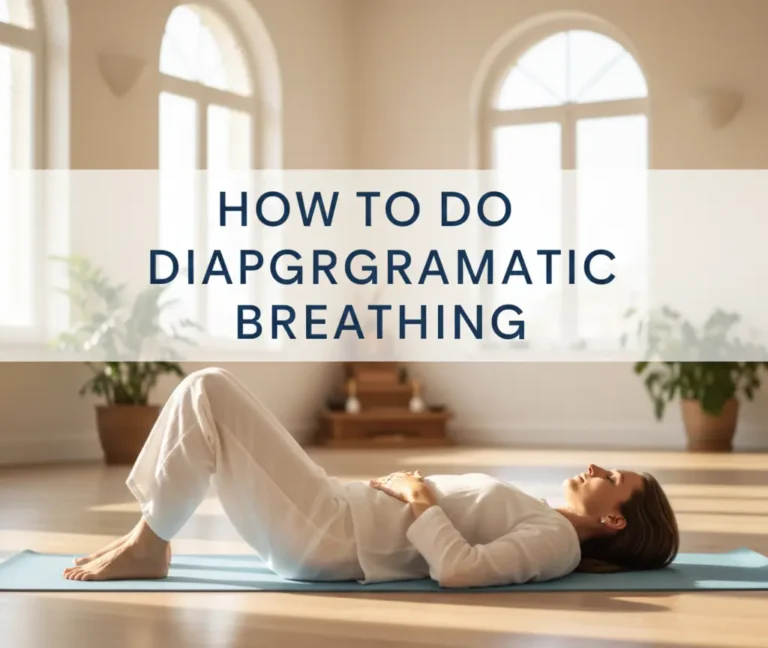
Begin in a position where you can relax rather than trying to control the breath immediately. Lying on your back with the knees bent is often easiest for beginners, but a supported chair also works. Keep the jaw, shoulders, and hands soft, and use your hands only to notice movement rather than forcing the body to breathe in a particular way.
- Lie on your back with the knees bent, or sit comfortably with the feet supported.
- Relax the jaw, shoulders, and hands.
- Place one hand on the upper chest and the other around the lower ribs or abdomen.
- Breathe in quietly through the nose.
- Let the lower ribs and abdomen move gently without pushing them outward.
- Breathe out slowly and allow the abdomen to soften.
- Continue for two to five minutes if the breathing remains comfortable.
The upper chest does not have to remain completely still. If you try to hold it rigid, the breathing may become less natural instead of more efficient. Aim for quieter breathing, less shoulder lifting, and a sense that the lower ribs can move rather than trying to make the hands rise by a certain amount.
Is it easier lying down or sitting?
Both positions can be useful, but they teach slightly different things. Lying down reduces the work needed to hold the body upright and can make lower-rib and abdominal movement easier to notice. Sitting is more practical for daily life because you learn to breathe comfortably while the trunk is supporting itself. Start in the position that feels easiest, then practise in other positions once the pattern feels familiar.
Lying down
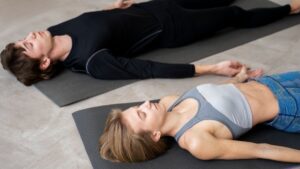
Lying on the back can help a beginner feel the abdomen and lower ribs more clearly because the floor supports the body. Bend the knees if that makes the lower back more comfortable and avoid trying to flatten the spine. Use the position to observe how the breath moves rather than trying to create the biggest possible abdominal rise.
Sitting
Sit with the feet supported and choose a chair height that lets the body stay comfortable without bracing. Keep the neck easy and allow the ribs to move instead of lifting the chest on every inhale. Once the practice feels natural in sitting, you can notice the same quieter breathing while standing or walking without turning normal movement into another breathing exercise.
Common mistakes
The most common problem is trying too hard. People may push the belly outward, take oversized breaths, freeze the chest, or slow the breath so much that they become uncomfortable. A useful breathing practice should make the body feel less strained rather than creating dizziness, air hunger, or anxiety. If breathing feels difficult during distress, read our anxiety and breathing safety guide instead of forcing deep breaths.
Pushing the belly out hard
The abdomen should respond to the pressure changes created by breathing; it does not need to be pushed forward on purpose. Forcing the belly outward can create tension and teach a movement that is different from relaxed breathing. Let the movement happen rather than trying to perform it for the hand resting on your abdomen.
Trying to take the biggest possible breath
A very large inhale can make some people feel light-headed, tense, or short of breath afterward. Use a comfortable breath size and let the rhythm stay easy. The aim is not maximum lung volume; it is more efficient, aware breathing with less unnecessary effort.
Holding the chest rigid
The ribs and upper chest normally move during breathing, so trying to stop all movement above the abdomen is unnecessary. Think of the lower ribs widening and the whole trunk responding softly instead of dividing the body into a moving belly and a frozen chest. More natural breathing usually feels less mechanical.
Breathing too slowly too soon
Long inhales and exhales are not automatically better. If slowing the breath creates air hunger, dizziness, panic, or a strong urge to gasp, return to normal breathing. Build comfort first and only extend the breath when it remains easy rather than forcing a target count.
Diaphragmatic breathing in yoga
Breath awareness is an important base for many yoga and pranayama practices because it teaches students to notice effort before adding more control. Before learning stronger breathing techniques, it is useful to know whether you can breathe quietly without lifting the shoulders, gripping the abdomen, or becoming tense. That basic awareness can also help during asana and meditation.
This does not mean every pranayama method is simply belly breathing. Different practices use different patterns, ratios, positions, and levels of control and should be learned with appropriate preparation. Students in teacher training also study how breathing changes with posture and movement; see the FitFortunes YTT curriculum for the wider context.
Can diaphragmatic breathing help with stress?
Slow breathing is associated with changes in autonomic measures and can support relaxation for some people. A 2018 systematic review of slow-breathing research reported changes in heart-rate variability and other measures related to autonomic regulation. A later systematic review of diaphragmatic breathing included multiple randomised trials but also noted substantial variation in methods and limitations in the evidence.
The careful conclusion is that slow diaphragmatic breathing may be a useful relaxation practice, but it should not be presented as a cure for anxiety or another health condition. People can respond differently, and breathing exercises that feel calming for one person may feel uncomfortable for another. Sources include the systematic review of slow breathing and the systematic review of diaphragmatic breathing.
When should you be careful?
Stop the exercise if you feel dizzy, faint, very short of breath, panicked, or otherwise unwell. If you have COPD, asthma, heart disease, are recovering from surgery, or have another significant medical concern, ask an appropriate healthcare professional whether a breathing exercise is suitable for you. Breathing practice should support care, not replace prescribed treatment or delay medical attention.
How often should a beginner practise?
Start with two to five minutes once or twice a day if the practice feels comfortable. There is no need to force a long session, especially while you are still learning what relaxed breathing feels like. Once the pattern becomes familiar, you can extend the time gradually or simply use a few quiet breaths before meditation, yoga practice, or sleep.
A simple three-position breathing progression
Once the basic pattern feels comfortable, practise it in more than one position so it does not become a technique you can only do while lying on the floor. Start on your back because the body is supported and lower-rib movement is easier to notice. Then try the same quiet breathing in a chair with the feet supported and the spine comfortable rather than rigid. Finally, notice the breath while standing naturally without pulling the chest up or tightening the abdomen. The goal is to keep the breathing easy as the body takes on more postural work, not to make every position look identical.
- Lie down: practise for 2–5 minutes and notice lower-rib and abdominal movement without forcing it.
- Sit: keep the feet supported, relax the shoulders, and let the breath stay quiet while the trunk supports itself.
- Stand: keep the knees easy and notice whether you can breathe without lifting the shoulders or bracing the stomach.
This progression also connects breathing practice with posture awareness. If you tend to brace while sitting or standing, the posture-at-home guide explains how screen height, foot support, movement breaks, and general strength can reduce unnecessary effort during the day. For students studying pranayama in a wider yoga context, the YTT curriculum guide explains how breath work relates to meditation, asana, and teaching methodology. Keep the practice brief enough that it still feels calm and repeatable.
Frequently asked questions
Why does belly breathing feel strange?
You may simply be paying close attention to breathing in a way you normally do not. It can also feel unfamiliar if you usually use a lot of chest and shoulder movement or tend to hold the abdomen tight. Keep the breath small and comfortable instead of trying to make the technique look obvious.
Should the belly move on every breath?
Some abdominal movement is common, especially when you are lying down, but the lower ribs and chest also move during normal breathing. Do not try to make the belly the only moving part. The useful goal is coordinated, comfortable breathing rather than one visible movement pattern.
Can I do diaphragmatic breathing before meditation?
Yes. A few quiet breaths can help you settle before sitting, especially when you use the practice to notice tension rather than control every breath. Keep it simple and return to normal breathing if counting or slowing the breath makes meditation feel more difficult.
Can diaphragmatic breathing cure anxiety?
No. Slow breathing may help some people relax or manage a stressful moment, but anxiety can require wider support and professional care. A breathing exercise should not be treated as a replacement for mental-health treatment when someone needs it.
How long until it feels natural?
There is no fixed timeline. Some people become comfortable after a few sessions, while others need more time because breathing habits, posture, stress, and health conditions differ. Practise briefly and regularly rather than judging progress by how large the belly movement looks.
Can you do diaphragmatic breathing all day?
You do not need to consciously control the diaphragm all day. The diaphragm already works automatically during normal breathing, and constantly monitoring every inhale can make some people more tense rather than more relaxed. Use the exercise for short practice periods to notice unnecessary shoulder lifting, breath holding, or abdominal bracing. Outside practice, let breathing return to a natural rhythm unless a healthcare professional has given you a specific respiratory program. The goal is better awareness and less unnecessary effort, not permanent conscious control of every breath.
Can I practise diaphragmatic breathing while walking?
Yes, once quiet breathing feels comfortable while lying, sitting, and standing, you can notice the same pattern during easy walking. Do not force a slow count that makes you short of breath or changes your natural walking pace. Movement increases the body’s need for air, so the breath may become faster and larger than it is at rest. Use walking practice to reduce unnecessary tension rather than trying to keep the abdomen moving in a fixed way. If you become dizzy, unusually breathless, or unwell, stop the exercise and return to normal breathing.
Keep the breath simple
The goal is not to breathe as deeply or slowly as possible. The goal is to breathe with less unnecessary effort and more awareness, while staying comfortable enough that the breath does not become another source of tension. A quiet, repeatable practice is more useful than forcing a technique because it sounds healthier.