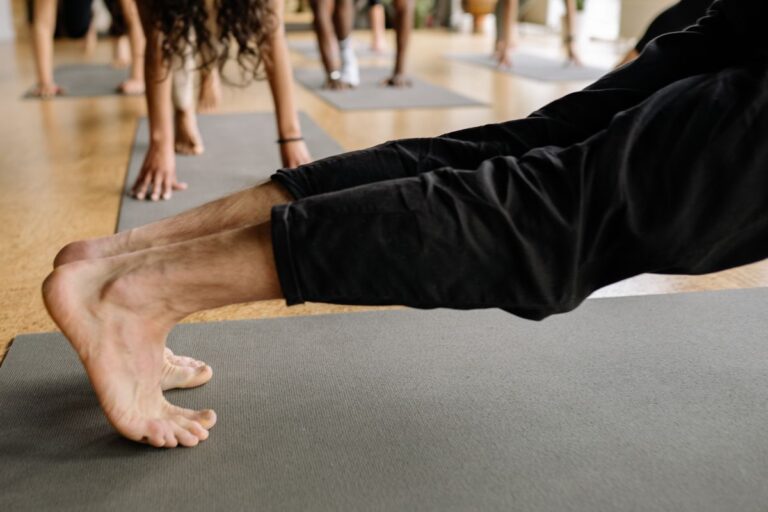
Hot yoga is an intense practice that requires the right equipment. A high-quality, non-slip yoga mat is essential for safety and comfort. Sweat-resistant yoga mats help maintain grip and stability during heated sessions.
The best yoga mat for hot yoga should keep useful grip when your hands and feet are wet, feel stable under standing poses, and be easy to clean after a sweaty class. Thickness matters too: too much cushioning can reduce stability, while very thin mats may feel harsh on the knees. This guide explains what to check before buying and how common mat materials behave in heated practice. You can also compare sizes in our yoga mat thickness chart.
Why a Good Yoga Mat Matters for Hot Yoga
Hot yoga involves high temperatures and sweating. A slip-resistant yoga mat helps maintain balance and prevents injuries. The right mat absorbs sweat and offers superior traction.
Some smooth or low-grip mats become harder to use when sweat builds up. For hot yoga, wet grip matters more than marketing words such as “premium” or “extra soft.” Test how the surface feels with damp hands, check whether the mat moves on the floor, and choose enough cushioning for your joints without making balance unstable.
Hot Yoga Mat Quick Comparison
| Feature | What to look for | Why it matters |
|---|---|---|
| Wet grip | Rubber, cork, microfiber or grippy PU surface | Helps hands and feet stay steadier as sweat increases |
| Thickness | About 3–5 mm for many practitioners | Balances cushioning with standing stability |
| Cleaning | Surface that can be wiped and fully air-dried | Hot classes leave more moisture on the mat |
| Base stability | Mat should stay flat and resist sliding on the floor | A grippy top is not enough if the whole mat moves |
| Portability | Choose weight based on whether you carry it daily | Heavy mats may be durable but less convenient |
Features to Look for in a Hot Yoga Mat
Choosing the right yoga mat depends on several factors:
- Non-Slip Surface
A high-traction yoga mat prevents slipping. Look for materials like rubber, microfiber, or PU-coated surfaces.
- Sweat Absorption
Moisture-wicking mats keep the surface dry. Cork and microfiber mats absorb sweat efficiently.
- Durability and Thickness
A durable mat withstands intense practice. Thicker yoga mats provide better cushioning, while thinner ones improve stability.
- Eco-Friendly Materials
Sustainable mats made of natural rubber, jute, or cork are safe for the environment and your health.
- Easy to Clean
Machine-washable or wipeable mats prevent bacteria buildup. Waterproof yoga mats resist odor and stains.
How to Choose a Hot Yoga Mat in 60 Seconds
- Start with wet grip. If your hands sweat heavily, choose a surface designed to stay grippy when damp rather than judging it only when dry.
- Choose thickness for your body and floor. Around 3–5 mm suits many people. Go thinner for more floor feel or slightly thicker if your knees need more cushioning.
- Check the base. The bottom of the mat should stay flat on the studio floor. A grippy top does not help if the whole mat slides.
- Think about cleaning before buying. Hot yoga leaves much more moisture on a mat. Choose a material you can clean and fully dry between classes.
- Match the mat to how you travel. If you carry it to class several times a week, weight matters. A heavy mat may feel stable but becomes inconvenient quickly.
Simple examples: choose a grippy 3–4 mm mat if balance and wet traction matter most; choose closer to 5 mm if you want more knee comfort; add a yoga towel when your current mat becomes slippery as sweat increases. If you travel often, compare this with our travel yoga mat guide.
Brand names and model specifications can change. Before buying, check the current material, thickness, weight, cleaning instructions, and whether the maker describes the surface for wet or heated practice.
Top 5 Best Yoga Mats for Hot Yoga
- Manduka Pro Yoga Mat

A high-quality yoga mat known for durability and grip.
Features:
- Closed-cell surface prevents sweat absorption.
- Excellent cushioning for joint support.
- Non-toxic and eco-friendly material.
- Liforme Yoga Mat

One of the best slip-resistant yoga mats for hot yoga.
Features:
- PU-coated surface for superior grip.
- Alignment markers for posture correction.
- Biodegradable and non-toxic materials.
- Gaiam Cork Yoga Mat

An eco-friendly yoga mat with natural sweat absorption.
Features:
- Cork surface enhances grip when wet.
- Thick cushioning for extra comfort.
- Free from harmful chemicals.
- Jade Harmony Yoga Mat

A perfect rubber yoga mat for intense sweat sessions.
Features:
- Open-cell structure absorbs moisture.
- Made from natural rubber.
- Provides firm traction and cushioning.
- Heathyoga Non-Slip Yoga Mat

A budget-friendly yoga mat with excellent grip.
Features:
- Microfiber top layer wicks sweat.
- Anti-slip surface for better balance.
- Extra-wide design for more space.
How to Maintain Your Hot Yoga Mat
Taking care of your yoga mat extends its lifespan. Follow these tips:
- Clean after every session: Use a mild soap and water solution.
- Air dry completely: Avoid direct sunlight to prevent material damage.
- Store properly: Roll the mat loosely to avoid creases.
- Use a yoga towel: Helps keep the mat dry and clean.
Ancient Wisdom on Yoga and Mat Selection
Ancient yogic texts like the Hatha Yoga Pradipika emphasize the importance of a dedicated practice space. Traditional yogis used natural materials like grass or wool. Today, eco-friendly yoga mats continue this tradition, offering stability and alignment.
Sweating mainly helps the body regulate temperature. It does not make one yoga mat “detoxifying.” For a hot-yoga mat, the practical priorities are grip, stability, cleaning, drying time, and comfort. After class, follow the maker’s care instructions and let the mat dry fully. Our guide on how to clean a yoga mat explains the basic care steps.
Hot Yoga Mat FAQ
What thickness is best for hot yoga?
For many people, 3–5 mm gives a useful balance between cushioning and stability. If your knees are sensitive, you may prefer slightly more support, but very thick mats can feel less steady in standing poses.
Is cork good for hot yoga?
Cork can work well because its surface often feels grippier as it becomes damp. The base still needs to stay stable on the floor, and the mat should be dried fully after practice.
Do I need a yoga towel for hot yoga?
Not always. Some mats are designed for wet grip, while others become slippery with sweat. A yoga towel can help if your mat surface loses traction during class.
Conclusion
Selecting the best yoga mat for hot yoga ensures a safe and comfortable practice. Non-slip, sweat-resistant, and durable mats improve grip and support posture. Investing in a high-quality mat enhances your experience and prevents injuries.
A good yoga mat makes a difference in your practice. Choose wisely and enjoy a stable, sweat-free session every time.