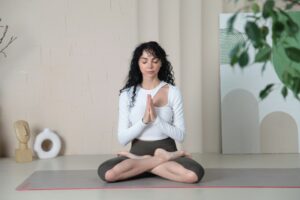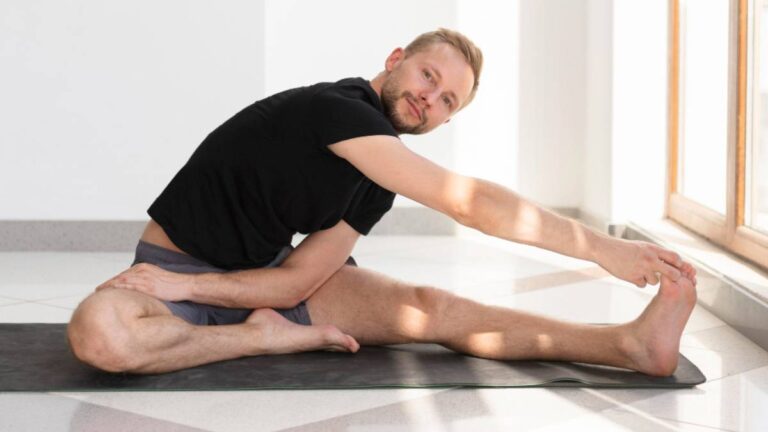
The benefits of yoga for men are not fundamentally different from the benefits studied in other adults. A regular practice can support mobility, balance, body awareness, stress management and, depending on the style, muscular endurance and body-weight strength.
For men who mainly lift weights, run, cycle or sit for long periods, yoga can also provide a different movement pattern and a structured way to work on controlled range of motion. It does not require extreme flexibility or replacing every other form of exercise.
Research summarized by the U.S. National Center for Complementary and Integrative Health suggests yoga may support general wellness, stress management, sleep and balance, while also noting that results vary by population and yoga style. See the NCCIH evidence summary.
What Are the Main Benefits of Yoga for Men?
Yoga can help men work on mobility, balance, body control, breathing and stress management. You do not need to be flexible before you start. The best results come from a style and schedule you can repeat.
| Goal | How yoga may help |
|---|---|
| Mobility | Regular movement through comfortable ranges |
| Strength | Body-weight holds and controlled movement |
| Stress | Breathing, slower movement and attention |
| Recovery | Gentle practice on easier training days |
Related guides: beginner yoga poses, how often to practise yoga, and does yoga count as strength training?
Yoga for Men Does Not Require Flexibility
Yoga is not limited to stretching, and flexibility is not a requirement for starting. People arrive with different ranges of motion in the hips, hamstrings, shoulders and spine.
For beginners, the useful goal is not a perfect pose. It is learning to move with control, notice discomfort early and build a practice that can be repeated consistently.
Different yoga styles create different physical demands. Compare pace, support, movement volume and teaching method before choosing a class.
Mobility, Balance and Body-Weight Strength
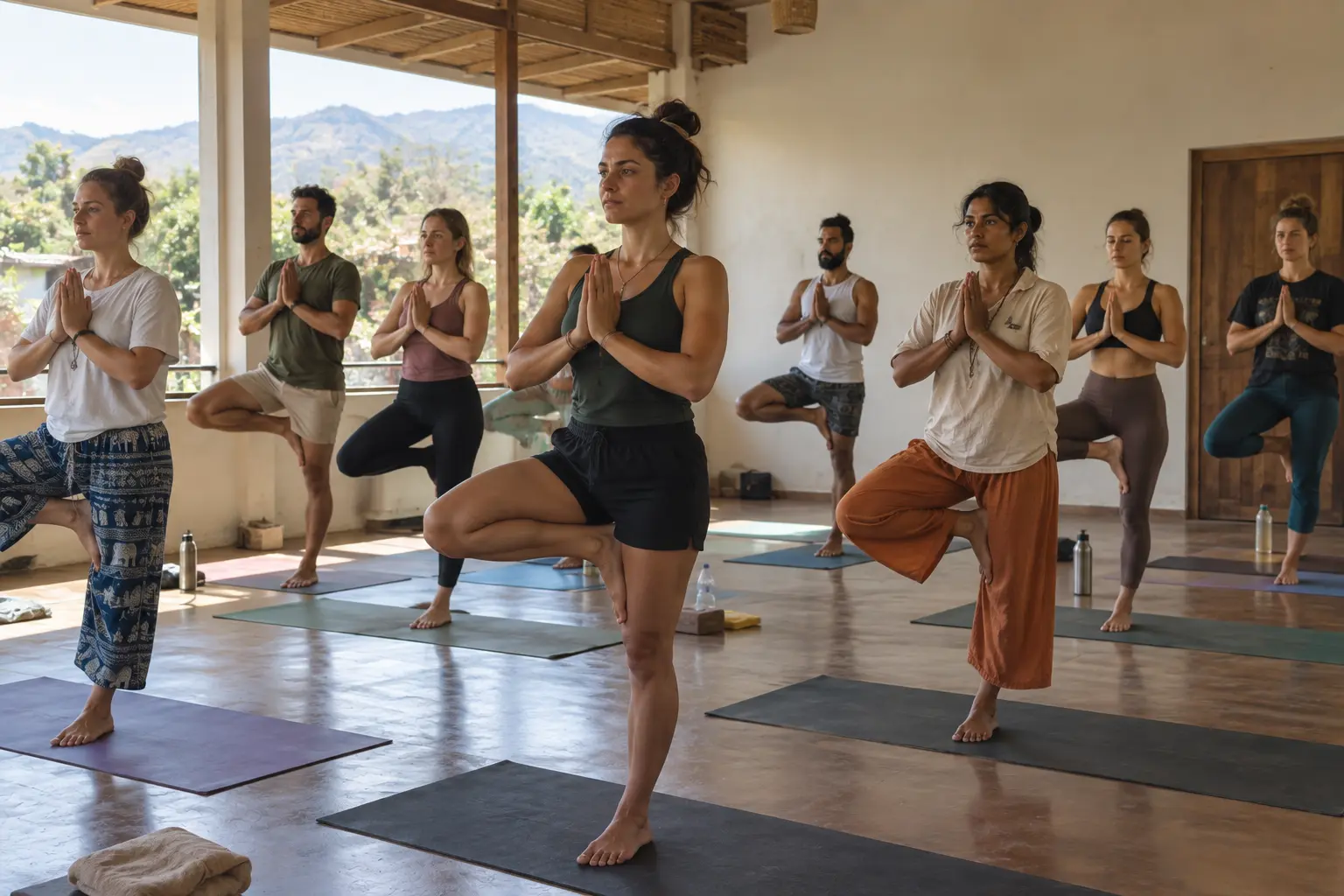
Physical yoga can train controlled range of motion, balance and muscular endurance. Styles with repeated standing poses, planks and transitions may also provide a meaningful body-weight strength challenge, although they are not identical to progressive resistance training.
Research on yoga is not specific to men in every case, and outcomes vary by style and population. It is better to treat yoga as one useful form of physical activity rather than promise that it will fix joint pain, digestion, sleep or back problems for everyone.
Stress Management and Attention
Yoga can also be used as part of a stress-management routine. Movement, slower breathing and short periods of stillness give some people a structured way to shift attention away from work or training demands.
Research summarized by NCCIH suggests yoga may help with perceived stress and aspects of general mental well-being, but it should not be presented as a guaranteed treatment for anger, anxiety disorders or burnout. Meditation and simple breath awareness can be added when they are comfortable and appropriate.
Yoga for Men Over 40
Starting later is not a problem, but the practice should match current mobility, balance, training history and health status. A beginner may do better with controlled standing poses, supported floor work and simple breathing before adding demanding inversions or heated classes.
Older adults and people with existing health conditions may need modifications. NCCIH recommends appropriate precautions and qualified instruction, especially when balance issues, joint problems or other medical conditions are present.
Yoga Is Not Defined by Gender
Yoga does not require a particular personality, body type or idea of masculinity. Men can approach it as physical training, breath practice, meditation, philosophy or a combination of these.
There is also no need to adopt stereotypes in either direction. A class can include strong physical work, quiet attention, mobility or rest depending on the style and the student’s goals.
How Often Should Men Practise Yoga?
Start with a session you can repeat: perhaps 10 to 20 minutes two or three times a week, or one guided class plus a short home practice. Consistency matters more than forcing long sessions.
Choose a style that matches the purpose. A strength-focused class, a mobility session and a quiet recovery practice do not need to look the same.
Which Yoga Style May Suit Different Goals?
Hatha yoga is often a practical starting point for learning postures and breathing at a moderate pace. Stronger Vinyasa or power-style classes add more continuous movement. Restorative yoga emphasizes support and rest, while Yin uses longer passive holds.
You do not need to commit to one label. Compare the actual class pace, teaching method and physical demands.
How to Start Yoga for Men
You do not need to be flexible before starting yoga. Choose a beginner-appropriate class, work within a comfortable range and use props when they help.
- Start with one or two guided sessions each week.
- Use slower classes while learning basic positions and breathing.
- Keep strength training or other exercise if it serves your goals.
- Stop or modify movements that cause sharp pain.
- Ask a qualified instructor for alternatives when a pose does not suit your body.
FAQ: Yoga for Men
Is yoga useful for men?
Yes. The same research on mobility, balance, stress management and general wellness that applies to adults can be relevant to men. The effect depends on the style, frequency and individual.
I’m not flexible. Can I still do yoga?
Yes. Flexibility is not a prerequisite. Start within a comfortable range and build familiarity gradually.
What yoga is suitable for men over 40?
There is no single best style. Choose a class that matches current mobility, balance, training experience and health needs.
Can yoga replace strength training?
Some yoga can challenge strength and muscular endurance, but it is not identical to progressive resistance training. The two can complement each other.
Can yoga help with stress or sleep?
Research suggests yoga may support stress management and sleep quality in some populations, but results vary and it is not a guaranteed treatment.
How often should I practise?
A repeatable schedule matters more than a perfect number. Beginners can start with a few sessions per week and adjust based on recovery and goals.
Do I need a teacher?
A qualified teacher can help with technique and modifications, especially when you are new or have movement limitations. Simple home practice can complement guided instruction.