Blog

  • Best Time for Hatha Yoga Teacher Training in India: Rishikesh by Season

    Best Time for Hatha Yoga Teacher Training in India: Rishikesh by Season

    The best time for Hatha Yoga teacher training in India depends on the climate you practise well in, not on one universal “best month.” In Rishikesh, many students first consider October-November or February-March because conditions are often moderate. Winter suits people who prefer cooler practice. Late spring and early summer are warmer, while July-September brings monsoon rain and more humidity.

    Weather matters during a residential course because you practise, study, eat and rest on a fixed daily rhythm for several weeks. Temperature can change warm-up time, hydration, sleep, clothing and travel planning. It should influence your choice, but it should never outweigh teacher quality, curriculum, practicum, accommodation and the real daily schedule. If Hatha is your main goal, compare the live 200-hour Hatha Yoga Teacher Training after choosing your preferred season.

    Table of contents

    October and November: comfortable for many students

    October and November are popular because the main monsoon period has normally passed and the strongest summer heat has eased. Morning Hatha practice can feel comfortable, while the middle of the day is often suitable for walking between classes. As November progresses, mornings and evenings become cooler, so simple layers are useful. Check the live forecast before travel because seasonal patterns do not guarantee the weather on your exact dates.

    If October is one of your choices, use the separate October YTT guide for Rishikesh for month-specific packing and travel details. That page owns the October intent. This guide stays broader so it can help you compare the whole year without repeating the same article.

    December and January: cooler mornings and evenings

    Winter can feel cold before sunrise and after sunset, especially if you arrive from a tropical climate. The middle of the day may feel much milder, so layers work better than one heavy outfit. Ask about hot water, blankets and the yoga hall if you are sensitive to cold. A cooler room can also make long seated classes feel different from a warm afternoon practice.

    Cold weather does not make Hatha training unsuitable. It changes preparation. Give the body time to warm up, keep warm clothes nearby after practice and protect your sleep. Students who dislike heat may prefer these months, while people who struggle with cold mornings may be more comfortable in spring or autumn.

    February and March: a balanced spring option

    February and March often give students a useful middle ground. Mornings can still be cool, while daytime temperatures become warmer as spring develops. That range can make it easier to practise, study and move around Rishikesh without peak-summer heat. It can also be practical if you want a few travel days before or after the course.

    March can be busier because Rishikesh attracts more visitors and yoga events. This does not change the curriculum, but it can affect traffic and extra accommodation outside the school. If you plan to stay longer, book those additional nights separately from the training and keep enough buffer before an international flight.

    April to June: warmer conditions and more recovery planning

    Late spring and early summer become warmer. Students may sweat more and need more attention to hydration, sleep and recovery. Feeling warm can make the body seem more mobile, but warmth is not permission to force range of motion. Hatha practice should still be controlled, progressive and based on what the body can manage that day.

    Before booking a hotter month, ask about ventilation or cooling in the yoga hall and rooms. Check access to drinking water and whether the daily timetable gives real breaks between practical sessions. Students who tolerate heat well can train successfully in these months, but comfort outside class matters because residential study continues all day.

    July to September: monsoon training

    Monsoon changes the practical side of living in Rishikesh. Rain and humidity can make laundry slower to dry, footwear wetter and road journeys less predictable. The hills are green, but travel planning needs more flexibility. Most training happens indoors, so monsoon does not automatically stop a residential course.

    Bring quick-drying clothes, rain protection and waterproof storage for important documents and electronics. Give yourself more time for the journey to Rishikesh rather than booking a tight onward connection. Check current road and weather conditions near the travel date because a seasonal description cannot predict an individual day.

    How weather changes Hatha practice

    Residential teacher training moves between early practice, theory, meals, methodology, practicum and study across a full day. Weather can change how much warm-up, hydration, rest and clothing you need, but it should not change the educational standard of the course. A responsible Hatha teacher adjusts pace and preparation to the people in the room rather than forcing the same intensity in every season.

    Classical Hatha texts also place importance on measured practice and suitable conditions rather than physical display. The Hatha Yoga Pradipika discusses practice discipline, moderation and the environment in which practice is undertaken. A modern residential course should apply the same practical principle: practise consistently, observe the body and avoid treating weather as a test of toughness.

    The curriculum should not change with the season

    The calendar month should not quietly change what the same teacher-training program teaches. A Hatha batch in winter and a Hatha batch in spring should still follow the published learning structure for that course. Season can change warm-up, clothing and recovery, but the core education should remain clear: Hatha asana, pranayama, meditation, philosophy, anatomy, teaching methodology and supervised practice teaching.

    Use the FitFortunes Yoga Teacher Training Curriculum guide to understand the subject areas, and use the live course page for the final batch information. Keeping curriculum and seasonal planning separate also helps searchers: this page answers “when should I go?”, while the curriculum page answers “what will I study?”

    Current Hatha course timing at FitFortunes

    FitFortunes’ current 200-hour Hatha Yoga Teacher Training in Rishikesh is a 21-day residential program with regular arrivals on the 2nd of each month. That gives students a choice of seasons instead of forcing one annual intake. Confirm the live batch before booking flights because course dates and room availability should always come from the current course page.

    For destination information, the official Uttarakhand Tourism Rishikesh page is a useful external reference. It describes Rishikesh as a year-round destination and provides current travel information. Use seasonal guidance as planning context, then check the actual forecast shortly before departure.

    Packing changes with the season

    Keep the base packing list simple: comfortable practice clothes, modest everyday clothing, study materials, medicines, chargers and easy footwear. Then add only the seasonal layer you need. Winter needs warmer layers, monsoon needs rain protection and quick-dry clothing, and hotter months make breathable fabrics and hydration more important. This avoids carrying four seasons of clothing for one three-week course.

    • Comfortable yoga clothes.
    • Long trousers or simple town clothes.
    • A light jacket, sweatshirt, or shawl.
    • Socks for cooler mornings.
    • Walking shoes and easy sandals.
    • Prescription medicines and basic personal items.
    • Notebook, adapter, and chargers.

    The full Rishikesh YTT packing guide also covers documents, money, medicines, electronics, and what you can leave at home. Check the weather again a few days before departure and adjust the number of warm layers instead of packing for a generic idea of “winter in India.”

    Travel and visa planning

    November can be a busy travel period in North India, so flight and train availability may change as the date approaches. That does not mean there is one guaranteed cheap or expensive November fare. Compare your actual travel dates, leave enough time before the first training day, and avoid building the trip around a tight connection simply to save a small amount.

    For visa information, use the official Government of India visa portal. For the final journey after arriving in Delhi, read the Delhi to Rishikesh travel guide and choose a route that still feels manageable after a long flight.

    How to choose your month

    Start with your own tolerance. If cold affects your sleep, avoid the coolest period. If strong heat reduces your energy, choose autumn, winter or early spring. If rain makes road travel stressful, the monsoon may not be your first choice. The best month is the one in which you can arrive rested, practise consistently and recover well between study days.

    1. Choose the temperature range in which you normally sleep and exercise well.
    2. Check flight prices and how many arrival buffer days you can afford.
    3. Check the school’s room conditions and current batch dates.
    4. Then compare the teachers, curriculum and practicum; do not choose a weaker course just for prettier weather.

    The school is still the bigger decision. Teachers, curriculum, practicum, class size and accommodation affect every training day, while the month mainly affects weather and travel. Use the India YTT selection guide to compare those factors before the season makes the decision for you.

    Frequently asked questions

    Which months are easiest for beginners?

    Many beginners find moderate weather easier to manage, so October-November or February-March can be practical starting points. Beginner suitability still comes from the course design and teaching rather than the month. A beginner-friendly program should explain techniques clearly, give sensible options and provide enough time for questions and feedback. Read the beginner YTT guide if you are unsure whether the daily routine suits your current practice.

    Does the season change the certificate or curriculum?

    No. The calendar month does not create a different certification pathway when the same registered program is being taught. The season can affect clothing, warm-up and travel, but the published course requirements should remain consistent. Check the live program details rather than assuming a winter, spring or monsoon batch has a different certificate.

    Should I book months in advance?

    Book when you are confident about the school, dates, and travel plan. Earlier planning can help with room choice and transport prices, but there is no universal rule that every November student must book a fixed number of months ahead. Confirm the cancellation and transfer terms before paying so you understand what happens if travel plans change.

    Can I do Hatha Yoga teacher training during monsoon?

    Yes. Most residential classes are indoors, so rain does not automatically stop training. The bigger issues are humidity, wet clothing and travel delays. Bring rain protection, choose quick-drying clothes and leave extra time for the journey to Rishikesh.

    Choose the season you can study well in

    There is no prize for choosing the coldest, hottest or rainiest month. Choose a course because the teachers, curriculum, practicum and living conditions make sense for you. Then use the season to plan clothes, travel and arrival time so the weather supports the training instead of becoming the main reason you chose it.

  • Ashtanga Yoga Weight Loss: A Path to Strength, Balance, and Wellness

    Ashtanga Yoga Weight Loss: A Path to Strength, Balance, and Wellness

    Ashtanga yoga can support an active lifestyle, but it is not a guaranteed weight-loss method. Body weight changes through many factors, including food intake, total daily movement, sleep, stress, medication, health conditions, and genetics. A regular physical yoga practice can increase activity and build strength, but it should not be sold as a way to target belly fat or promise a certain number of kilograms lost.

    What people mean by Ashtanga yoga for weight loss

    In modern classes, the phrase usually refers to Ashtanga Vinyasa Yoga, where postures are linked in a set sequence with steady breathing and repeated transitions. The practice can feel physically demanding because it includes standing poses, forward folds, balances, seated work, and repeated movements such as Sun Salutations. That makes it different from Patanjali’s Ashtanga Yoga, which means the eight-limbed path and is a broader philosophical system rather than one fixed exercise sequence.

    Can Ashtanga yoga help with body weight?

    It can contribute to overall physical activity, and regular activity is one part of long-term weight management. The practice also develops strength, coordination, mobility, and work capacity, which can make other forms of movement easier. What it cannot do is guarantee fat loss from one part of the body, overcome every dietary pattern, or replace medical care when weight change is connected with a health condition.

    Why consistency matters more than one hard class

    A very hard session once a week is not automatically more useful than a moderate practice you can repeat safely. Beginners often progress better when they learn the sequence gradually, allow recovery, and stop before technique breaks down. A routine that you can follow for months is more practical than forcing an advanced schedule for two weeks and then quitting because of pain, exhaustion, or lack of time.

    What the physical practice actually develops

    Ashtanga Vinyasa uses repeated weight-bearing positions, transitions, balancing work, and sustained attention to breathing. These elements can challenge the legs, shoulders, trunk, and general endurance while also asking for mobility and coordination. The useful goal is not to chase sweat as proof of success, but to move with enough control that the body can adapt without turning every class into a test.

    Sun Salutations

    Sun Salutations link several movements together and can raise the physical demand of the session when they are repeated. The important part for a beginner is learning stable positions and smooth transitions rather than moving as fast as possible. If wrists, shoulders, or the lower back feel overloaded, reduce repetitions and ask for a simpler variation instead of forcing the full sequence.

    Standing and balancing poses

    Standing postures build control through the legs and hips while balancing positions challenge coordination and attention. These poses can feel demanding even without constant movement, especially when they are held with steady breathing. Progress should come from better control and clearer technique, not from trying to make every posture deeper each week.

    Repeated transitions

    Movements such as lowering from plank and returning to standing can add a lot of work to an Ashtanga session. They are also where fatigue may change shoulder, wrist, or spinal control. Beginners do not need to perform every transition in its hardest form, and skipping or modifying one movement can be a sensible training choice rather than a failure.

    Breathing does not directly burn fat

    Breath control helps organise movement and attention, but it should not be described as a technique that directly melts fat or “boosts metabolism” in a special way. In Ashtanga Vinyasa, steady breathing helps students pace the sequence and notice when effort is becoming uncontrolled. For a simple introduction to breathing mechanics, use our diaphragmatic breathing guide.

    Food, sleep and total daily activity still matter

    No yoga style removes the need for basic health habits. If weight management is your goal, look at the whole week rather than only the time spent on the mat. Regular meals that suit your health needs, enough protein and fibre, reasonable portions, walking or other daily movement, adequate sleep, and recovery between hard sessions can all matter alongside yoga practice.

    A sensible starting routine for beginners

    Start with a shorter practice that lets you learn the sequence without rushing. Two or three guided sessions a week can be enough at first, with easier movement or walking on other days. As your technique and recovery improve, you can add time or another session, but there is no need to copy an advanced practitioner’s six-day schedule simply because it is traditional in some schools.

    • Learn the basic sequence before increasing speed.
    • Use modifications for wrists, knees, shoulders, or lower back when needed.
    • Keep at least one easier day when fatigue is high.
    • Do not use pain or dizziness as a sign that the practice is working.
    • Track consistency, energy, strength, and recovery instead of only scale weight.

    When weight loss should not be the main goal

    If you have a history of disordered eating, unexplained weight change, pregnancy, a medical condition, or medication that affects body weight, general internet advice may not be enough. In those situations, speak with an appropriate healthcare professional before using a demanding exercise routine mainly for weight loss. Yoga can still be useful, but the goal may need to shift toward strength, mobility, stress management, or maintaining a steady practice.

    Frequently asked questions

    Can beginners use Ashtanga yoga for fitness?

    Yes, but beginners should learn the sequence gradually and use modifications when needed. The full primary series is not a sensible starting target for everyone. A shorter guided practice can build familiarity and strength without making fatigue the centre of the session.

    Does Ashtanga yoga burn belly fat?

    No exercise can reliably choose where body fat is lost first. Ashtanga can contribute to total physical activity and may support overall weight management, but changes in body fat depend on many factors. Claims that one sequence specifically removes abdominal fat should be treated carefully.

    How often should I practise?

    There is no single number that suits everyone. Beginners can start with a few sessions each week and increase only when recovery is good and technique remains steady. Your age, training history, sleep, work demands, injuries, and other exercise all affect how much practice is sensible.

    Do I need cardio or strength training too?

    You do not have to combine every form of exercise, but a balanced week often includes different kinds of movement. Walking, general strength work, cycling, swimming, or another activity can add benefits that a yoga sequence may not provide in the same way. Choose forms of exercise you can recover from and continue consistently.

    Use Ashtanga as practice, not a promise

    Ashtanga Vinyasa can be a demanding and disciplined physical practice, and that can make it useful for people who enjoy structured movement. Its value does not depend on promising a particular body shape or a fixed weight-loss result. If you want to understand the wider meaning of Ashtanga beyond the modern sequence, read our guide to what Ashtanga Yoga means before choosing a practice or teacher-training course.

  • Yoga and Discipline: How to Build a Consistent Practice

    Yoga and Discipline: How to Build a Consistent Practice

    Yoga and discipline are closely connected, but discipline in yoga does not mean punishment, rigid rules, or forcing yourself through pain. It means creating enough consistency that practice continues even when motivation changes. A short practice done regularly can teach more than an ambitious routine that lasts only a few days.

    In practical terms, discipline is the ability to return. You return to movement, breath, study, or meditation without needing every session to feel inspiring. That steadiness gives the body and mind enough repetition to learn. It also helps you notice when a routine is realistic and when it needs to be changed.


    Why Discipline Matters in Yoga

    Regularity matters across asana, pranayama, meditation, and study because each develops through repetition. In Patanjali’s Yoga Sutras, tapas is one of the niyamas and is commonly translated as disciplined effort, austerity, or heat. It is better understood as steady effort than as an instruction to force the body or fight discomfort.

    Many beginners think yoga is about flexibility. But ask any long-term practitioner, and they’ll tell you: flexibility of the mind comes first. The discipline to show up daily is more important than how deep your forward fold looks.


    Discipline in Daily Practice

    Discipline often shows up in small choices: setting aside practice time, keeping the phone away during meditation, preparing the mat before you need it, and protecting enough sleep for the next day. None of these choices is dramatic, but together they make regular practice easier to maintain.

    For beginners, the best way to start is with a short daily routine. Ten minutes of breathwork, fifteen minutes of asana, and five minutes of stillness. Over time, the mind adjusts, and the body starts to crave this rhythm.


    Discipline Beyond the Mat

    Yoga is more than what happens on the mat. Discipline extends into food, rest, speech, and relationships. The way we eat, the way we speak to others, and the way we manage our thoughts all reflect yogic discipline.

    For example, mindful eating is a form of discipline. Choosing fresh, sattvic food over processed snacks supports both body and mind. Similarly, keeping a regular sleep cycle is part of yoga discipline. Skipping rest makes practice harder, while a well-rested body supports focus and energy.


    Discipline in Teacher Training

    Teacher training makes discipline more visible because the schedule is structured. Students may move between asana, pranayama, anatomy, philosophy, teaching methodology, practicum, meals, assignments, and self-study in the same day. Regular attendance matters because each subject connects with the next and teaching skills improve through repetition rather than last-minute study.

    A good course should also teach sustainable discipline. Students need enough consistency to learn without assuming that exhaustion proves commitment. The FitFortunes yoga teacher training curriculum shows how physical practice, philosophy, anatomy, teaching methodology, and practicum fit together across the training.


    Discipline for beginners

    Beginners usually do better with a small routine that is easy to repeat. Ten to twenty minutes can be enough to build the habit if you use that time well. Practise at a similar time when possible, keep the mat easy to reach, and choose a few movements you already understand instead of changing the entire routine every day.

    Do not judge the session by flexibility or difficulty. The useful question is whether you returned to practice and whether the routine still fits your body and schedule. If a plan keeps failing, shorten it before assuming you need more willpower.


    Discipline for intermediate students

    Intermediate students often need less novelty and more consistency. Instead of adding difficult postures every week, refine the movements you already know, keep the breath steady, and notice where technique changes when you become tired. A short practice diary can help you see patterns in sleep, energy, recovery, and concentration without turning the routine into a competition.

    This is also a useful stage for giving pranayama, meditation, and study a regular place beside asana. The aim is not simply to make practice longer. It is to make the different parts of practice more deliberate and easier to sustain.


    Discipline for advanced practitioners

    With more years of practice, discipline becomes less about doing more and more about choosing carefully. Advanced practitioners still need recovery, honest self-observation, and the willingness to simplify when the body or mind is not responding well. Longer meditation, study, teaching, or seva can be part of practice, but none of them should become a reason to ignore health, relationships, or basic responsibilities.

    More years of practice can also make habits harder to question. A mature practice keeps enough curiosity to notice when an old routine no longer serves its purpose. Discipline is not loyalty to one schedule at any cost; it is the ability to stay committed while adapting intelligently.


    The Role of Tapas in Yogic Philosophy

    In Patanjali’s Eight Limbs of Yoga, tapas is listed as one of the niyamas (personal observances). Tapas is the discipline to continue even when comfort says “stop.” This doesn’t mean forcing the body into pain. It means facing distractions and choosing practice instead.

    A student once told me, “I don’t have time.” The truth is, yoga discipline creates time. By waking early, focusing better, and wasting less energy, life becomes more spacious.


    Practical Ways to Build Yoga Discipline

    • Fix a practice space at home.
    • Join a class or community for accountability.
    • Start with realistic goals instead of aiming too high.
    • Remember your “why” health, peace, or self-discovery.
    • Reward yourself with rest and reflection after consistent practice.

    Common Struggles With Discipline

    Even experienced students face challenges. Some days the body feels heavy. Some days the mind resists. Discipline is not about never failing. It is about returning after failure. Missing one day does not break discipline. Giving up does.


    Discipline and the Modern Lifestyle

    Modern schedules can make regular practice difficult because work, screens, late nights, travel, and irregular meals compete for the same time. A useful routine does not try to remove every distraction. It creates a clear place for practice and keeps that place realistic enough to survive ordinary weeks.

    Motivation changes from day to day, so consistency should not depend on feeling inspired. A simple routine, a fixed practice window, and a realistic minimum session make it easier to continue when enthusiasm is low.


    Conclusion: Discipline as the True Teacher

    Yoga and discipline work best when discipline supports practice rather than controlling it. A steady routine gives you repeated chances to learn movement, breathing, attention, and self-observation. The aim is not to prove how strict you can be. It is to build a practice you can return to for years.

    If your routine keeps breaking down, reduce it to something you can maintain and build from there. Consistency is more useful than intensity when intensity leaves you exhausted, injured, or unable to continue.


    Frequently asked questions

    Why is discipline important in yoga?

    Yoga develops through repetition. Regular practice gives the body time to learn movement, gives the mind repeated practice in attention, and makes it easier to understand what supports or disrupts your routine. Discipline is the structure that keeps those repetitions happening without requiring perfect motivation.

    How can beginners build discipline in yoga?

    Start with a short routine that is realistic enough to repeat several times each week. Use a regular time and place, keep the first few steps simple, and judge success by whether you practised rather than by how difficult the session looked.

    What does tapas mean in yoga?

    Tapas is one of the niyamas described in Patanjali’s Yoga Sutras. It is commonly translated as disciplined effort, austerity, or inner heat. In practical terms, it can mean staying committed to useful practice without turning effort into self-punishment.

    Does discipline mean practising every day?

    No. Daily practice may suit some people, while others need more recovery or have schedules that make fewer sessions more realistic. Discipline means following a sensible plan consistently, including planned rest when it is needed.

    How do I restart after losing my yoga routine?

    Return with a smaller routine instead of trying to recover everything at once. Choose a realistic time, reduce the session to the essentials, and repeat it until the habit feels stable again. A simple restart is usually easier to maintain than a dramatic one.

  • Is Yin Yoga a Waste of Time

    Is Yin Yoga a Waste of Time

    Yin Yoga is not a waste of time, but it is also not a substitute for every other kind of movement. Its value depends on what you want from the practice. Yin uses long, relatively still positions with low-intensity effort, so it can be useful for people who want a slower session, time to notice sensation, or a contrast to faster yoga and strength work. It should not be sold as a magical way to “release fascia,” prevent all injuries, or heal emotions.

    What is Yin Yoga?

    Yin Yoga is a modern yoga style in which floor-based postures are commonly held for several minutes with relatively little muscular effort. Props may be used to change the amount of load and make the position more sustainable. The practice often focuses on hips, legs, and spine and gives students time to observe sensation instead of moving quickly from one posture to the next.

    The common explanation that Yin “targets fascia instead of muscles” is too simple because muscles, connective tissue, joints, nerves, and other structures are all affected by position and load. What makes Yin distinct is mainly the slower pace, longer holds, and lower active effort. Those features create a different experience from Vinyasa, Ashtanga Vinyasa, or a strength-focused Hatha class.

    Why does Yin Yoga feel like nothing is happening?

    Many people are used to judging exercise by sweat, speed, or muscular fatigue, so a quiet hold can feel unproductive. Yin asks for a different kind of attention because the challenge may be staying still, finding an appropriate level of sensation, and resisting the urge to keep increasing intensity. A practice does not have to feel exhausting to have a purpose, but that purpose should be clear.

    If your main goal is cardiovascular fitness or building high levels of strength, Yin alone is unlikely to provide everything you need. If your goal is to spend time in slow positions, explore comfortable range, or add a quieter session to a more active week, it may fit very well. The mistake is treating one style as if it must do every job.

    Can Yin Yoga improve flexibility?

    Longer holds can help some people become more comfortable in certain ranges of motion over time, especially when the positions are repeated consistently. But flexibility changes are influenced by nervous-system tolerance, joint structure, muscle length, training history, and many other factors. A deeper sensation does not automatically mean a better flexibility result.

    Use enough intensity to feel the position without forcing into pain, numbness, tingling, or a sense that the joint is being compressed. Progress can also come from strength through range, not only passive stretching, which is one reason Yin can work well alongside more active movement rather than replacing it.

    Does Yin Yoga work on fascia?

    Fascia and other connective tissues respond to load, but online claims about “melting fascia,” “breaking adhesions,” or reaching tissue that other exercise cannot reach are often overstated. During a Yin posture, the body experiences load through several tissues at once. The practical goal should be finding a sustainable position rather than imagining that one structure is being isolated.

    Can Yin Yoga help you relax?

    A quiet class with slower breathing, fewer transitions, and longer pauses can feel relaxing for some people because it reduces external stimulation and gives attention one simple task. Other people become restless or uncomfortable when asked to stay still for a long time. Neither reaction means they are doing yoga incorrectly; different nervous systems and preferences respond differently to stillness.

    Do not treat an emotional response during a pose as proof that “stored trauma” has been released from a body part. People can experience memories, sadness, frustration, or calm during many kinds of quiet practice, but trauma treatment belongs within appropriate mental-health care. Yoga teachers should create space for experience without making claims they cannot support.

    Yin Yoga vs restorative yoga

    These styles can look similar because both are slow and often use props, but the intention is usually different. Yin commonly keeps some noticeable stretch or load in the position for several minutes, while restorative yoga usually uses enough support to reduce effort and make rest the main purpose. A pose can look almost identical from across the room while feeling completely different to the person practising it.

    Yin Yoga vs somatic yoga

    Yin tends to use longer static holds, while somatic-style classes usually use smaller exploratory movements and ask students to notice changes in sensation while moving. Both can be slow, but they are not the same method. Our somatic yoga guide explains that modern approach in more detail without turning it into a cure-all wellness claim.

    How beginners should practise Yin Yoga

    Beginners do not need five- or ten-minute holds from the first session. Start with shorter positions, use props, and learn the difference between a steady stretch sensation and pain or neurological symptoms. Coming out of a long hold slowly is also important because the body may feel temporarily stiff or unfamiliar after staying still.

    • Begin with shorter holds, such as one to three minutes.
    • Use blocks, bolsters, cushions, or a wall to reduce strain.
    • Avoid pushing into sharp pain, numbness, tingling, or joint pinching.
    • Come out of long positions gradually.
    • Keep breathing comfortable rather than forcing a special pattern.

    When Yin Yoga may need modification

    People with recent injuries, acute pain, significant osteoporosis, joint instability, or certain medical conditions may need a different approach or professional guidance. Hypermobility also deserves attention because someone who can easily reach a large range may benefit more from control and strength than from repeatedly chasing deeper passive positions. Older age alone does not determine suitability; individual health and movement capacity matter more.

    If a posture produces pain that persists after class or neurological symptoms such as numbness or tingling, stop and seek appropriate assessment rather than assuming the sensation is a necessary “release.” A yoga teacher can offer general movement options within their training, but should not diagnose a joint or connective-tissue problem.

    Can Yin Yoga complement stronger practices?

    Yes, when the combination suits the person. Someone who does strength training, running, Ashtanga Vinyasa, or faster Vinyasa may enjoy a slower session on another day because it changes the pace and type of movement. That does not mean Yin automatically prevents injuries or is required for recovery. Good recovery also depends on sleep, total training load, nutrition, and how the active practice itself is managed.

    Frequently asked questions

    Is Yin Yoga enough on its own?

    It can be a meaningful yoga practice, but it does not train every physical quality equally. If your wider goals include cardiovascular fitness, substantial strength, power, or balance under load, other forms of movement can complement Yin. The right mix depends on what you want your weekly activity to do for you.

    How often should I do Yin Yoga?

    There is no required number of sessions. Some people enjoy one or two quieter practices each week, while others practise more often. Frequency should depend on how your body responds, what other training you do, and whether the holds leave you comfortable rather than irritated afterward.

    Does Yin Yoga burn many calories?

    It is generally less physically demanding than continuous flow or vigorous exercise, so calorie expenditure is not usually its main purpose. If your goal is weight management, look at total activity, food, sleep, and health rather than judging Yin by how much energy it burns in one session.

    Can Yin Yoga replace meditation?

    Yin can feel meditative because the pace is slow and attention stays with sensation for longer periods, but it is still a movement practice with its own structure. If formal meditation is important to you, Yin can sit beside it rather than needing to replace it.

    So, is Yin Yoga a waste of time?

    No, when the practice matches your purpose. Yin offers a slower way to explore range, stillness, and sensation, but it does not need exaggerated claims to be worthwhile. If you expect it to replace strength, cardio, therapy, and meditation all at once, it will disappoint you. If you use it as one clear practice within a balanced routine, its slower pace can be useful precisely because it asks you to do something different.

  • Yoga and Self-Knowing: What Self-Study Means in Practice

    Yoga and Self-Knowing: What Self-Study Means in Practice

    Yoga and self-knowing meet most clearly in the practice of observation. Yoga does not make you understand yourself automatically, and a difficult posture does not reveal a hidden personality trait. What practice can do is give you repeated chances to notice breath, effort, attention, habits, reactions, and choices more clearly. In classical yoga, this kind of self-study is closely connected with svadhyaya.

    What does self-knowing mean in yoga?

    Self-knowing in yoga is not simply analysing your personality or trying to produce constant calm. It can include noticing how the mind reacts, what habits repeat, where attention goes, and how your actions match the values you say are important. Svadhyaya is commonly translated as self-study and is one of the niyamas described in Patanjali’s Yoga Sutras, where practice includes ethical discipline as well as meditation and physical preparation.

    Study can include classical texts, reflection, and observation of daily behaviour. The important point is that self-study is not limited to reading books and it is not limited to introspection either. Yoga asks whether understanding changes the way you act, speak, practise, and respond when life is not going the way you expected.

    Asana can show habits, but not hidden meanings

    Physical practice can reveal useful habits because you can notice whether you rush, hold the breath, compete, avoid difficulty, or push through pain. Those observations may tell you something about how you approach practice, but they do not prove that a tight hip represents a particular emotion or that one pose exposes a fixed personality trait. It is better to stay with what you can actually observe.

    For example, struggling in a balance pose may simply show fatigue, unfamiliarity, vision, ankle control, or concentration on that day. The self-study comes from noticing your response: do you become frustrated, laugh, slow down, or keep forcing the pose? That kind of observation is useful because it is grounded in behaviour rather than symbolic storytelling.

    Breath awareness and self-observation

    Breathing is useful for self-observation because changes in effort, speed, and tension are easy to notice. During practice, you may discover that the breath becomes shallow when you hurry or that the shoulders tighten when a posture feels difficult. That does not diagnose your emotional state, but it gives you immediate information about how the body is responding to the task.

    Beginners can start with simple breath awareness before using stronger pranayama techniques. Breath retention and forceful methods are not necessary for learning self-awareness and may be unsuitable for some people. Our diaphragmatic breathing guide gives a simple practice that focuses on comfortable observation rather than forcing the breath.

    Meditation makes patterns easier to notice

    Meditation gives you fewer external tasks, so distraction itself becomes easier to see. You may notice planning, remembering, judging, daydreaming, or repeatedly returning to the same concern. The goal is not to stop every thought immediately. A more useful first step is recognising that attention has moved and learning to return without turning the distraction into another reason for self-criticism.

    Five or ten minutes can be enough for a beginner to learn this pattern. Longer sessions are not automatically deeper, and restlessness does not mean the practice has failed. Our beginner meditation guide explains how to build a simple home practice without needing a complicated ritual.

    What yoga texts add to self-study

    Texts such as the Yoga Sutras and Bhagavad Gita give students language for examining discipline, attachment, action, attention, and the relationship between practice and daily life. They should not be reduced to motivational quotes. A verse becomes more useful when you study its context, compare interpretations, and ask how the idea changes the way you understand your own choices.

    FitFortunes includes yoga philosophy within teacher training because future teachers should understand more than posture names. The teacher training curriculum guide shows how philosophy, meditation, anatomy, teaching methodology, and practicum fit together rather than treating self-study as a separate inspirational topic.

    Journaling can support reflection

    Journaling is not a classical requirement for yoga, but it can be a practical modern tool for noticing patterns over time. Instead of writing pages after every class, record one or two observations that are specific enough to compare later. You might note where you rushed, what made concentration easier, how sleep affected practice, or which teaching cue finally made sense.

    • What did I notice before practice?
    • Where did I add unnecessary effort?
    • What distracted me most?
    • What changed after breathing or meditation?
    • Did anything from practice affect a decision later in the day?

    Self-knowing has to reach daily life

    Yoga becomes more meaningful when observation leaves the mat. You may begin to notice how quickly you interrupt someone, how you react when plans change, whether you keep promises to yourself, or how often you act from habit without considering the result. These are ordinary situations, but they give self-study something concrete to work with.

    The point is not to monitor every thought and become self-conscious all day. It is to create enough space to recognise a pattern before it controls the next action automatically. Sometimes that leads to a different choice; sometimes it simply shows you the same habit more clearly. Both can be part of learning.

    Common mistakes in self-study

    Self-study becomes less useful when it turns into constant judgement or mystical interpretation. Not every sensation needs a symbolic meaning and not every difficult day means you have discovered a deep inner problem. A grounded practice uses curiosity, context, and patience, especially when the subject is emotionally important.

    • Expecting one meditation session to create permanent clarity.
    • Comparing your inner experience with another student’s story.
    • Assuming every body sensation represents an emotion or memory.
    • Using “awareness” to ignore pain or other practical problems.
    • Reading quotes without studying their context.
    • Turning reflection into self-criticism.

    Frequently asked questions

    Is self-knowing the same as enlightenment?

    No. Self-study can be part of a larger philosophical or spiritual path, but noticing habits and reactions should not be confused with claiming a final spiritual state. Classical yoga traditions use different concepts and interpretations for liberation, knowledge, and meditation, so one modern phrase should not be made to carry all of them.

    Which yoga style is best for self-awareness?

    No single style owns self-awareness. Hatha, meditation, pranayama, and even a vigorous asana practice can support observation when they are taught with enough attention and context. A style that keeps you engaged and gives you room to notice your reactions may be more useful than choosing one because it is marketed as more spiritual.

    Can journaling replace meditation?

    They do different things. Journaling turns observations into words and can help you compare patterns over time, while meditation asks you to observe experience more directly without immediately explaining it. You can use both, one, or neither depending on your practice, but they should not be treated as identical methods.

    Can yoga help me manage emotions better?

    Yoga may help some people notice tension, breathing, and reactions earlier, which can create a pause before responding. That is different from treating an emotional or mental-health condition. When distress is persistent, severe, or difficult to manage, appropriate professional support is more important than expecting yoga alone to solve it.

    Self-knowing is a practice of attention

    Yoga does not hand you a finished answer about who you are. It gives you repeated situations in which you can observe attention, effort, habit, reaction, and choice. With time, those observations can become clearer and more useful, especially when practice is supported by study and honest reflection rather than dramatic interpretations of every pose or feeling.

  • Ashtanga Yoga Benefits: Strength, Focus and a More Disciplined Practice

    Ashtanga Yoga Benefits: Strength, Focus and a More Disciplined Practice

    Ashtanga Yoga can build strength, stamina, mobility, concentration, and consistency, but the benefits depend on which meaning of Ashtanga you are using. In modern yoga classes, “Ashtanga” often means Ashtanga Vinyasa, a demanding posture system taught in set sequences. In Patanjali’s Yoga Sutras, Ashtanga Yoga means the eight-limbed path of yoga. These are related through yoga history, but they are not the same system and should not be mixed together in one claim.

    First, what does Ashtanga Yoga mean?

    The word ashtanga means “eight limbs.” In Patanjali’s Yoga Sutras, those limbs are yama, niyama, asana, pranayama, pratyahara, dharana, dhyana, and samadhi. This is a philosophical and practical framework for yoga that goes far beyond posture. Modern Ashtanga Vinyasa, associated with K. Pattabhi Jois and Mysuru, is a physical practice built around set series, linked movement, breathing, and specific gaze points.

    This article mainly explains the practical benefits and limits of modern Ashtanga Vinyasa practice, while keeping Patanjali’s eight-limbed system clear in the background. That distinction matters because strength, stamina, and mobility come mainly from the physical practice, while ethical study, concentration, meditation, and self-discipline belong to the wider field of yoga. Our guide to the eight limbs of yoga explains Patanjali’s framework separately.

    Ashtanga Yoga can build full-body strength

    Ashtanga Vinyasa repeatedly uses standing postures, forward folds, seated postures, balances, transitions, and weight-bearing movements such as Chaturanga. Over time, this can develop strength in the legs, shoulders, arms, trunk, and muscles that support posture. The practice is not identical to progressive strength training with external resistance, but it can still be physically demanding and can improve a student’s ability to control their own body weight.

    The benefit comes from regular practice rather than from forcing difficult postures. A beginner who learns stable foundations and gradually increases capacity can build useful strength without needing to copy an advanced practitioner. If wrists, shoulders, knees, or lower back repeatedly hurt, the answer is not to push harder. Reduce the load, change the movement, and get qualified help when pain or injury needs more than a yoga modification.

    It can improve mobility and movement control

    The set sequences take the body through repeated hip, shoulder, spinal, and leg movements, which can improve mobility for some practitioners. The important point is that flexibility is not the only goal. Good practice also needs strength and control at the available range. A person who can move deeply into a posture without stability may not benefit from chasing more range simply because the next shape looks more advanced.

    Ashtanga’s repeated structure can make changes easier to notice because many of the same postures return from practice to practice. You may see that a transition becomes smoother, a standing pose feels more stable, or the breath remains calmer in a position that once felt difficult. Those changes can be more useful than measuring success only by whether you can reach a particular final pose.

    The fixed sequence can improve concentration

    A set sequence reduces some of the decisions that happen in a varied class. Once the order becomes familiar, attention can move toward breathing, transitions, stability, and how the body feels that day. This repeated structure can train concentration because the student keeps returning to the same task without needing a new sequence every session. It does not guarantee mental calm, but it creates a clear practice environment for attention.

    For some students, the discipline of repeating a sequence is one of the strongest benefits. Progress becomes less about collecting new poses and more about working carefully with the same material. That can teach patience when a posture changes slowly or when today’s practice feels harder than yesterday’s. The lesson is practical: consistency can matter more than novelty.

    Breath gives the practice a steady rhythm

    Modern Ashtanga Vinyasa links movement with a controlled breathing rhythm, commonly taught with an audible Ujjayi-style breath. The breath gives the sequence pacing and helps students notice when effort is becoming excessive. If breathing becomes rushed, strained, or impossible to maintain, that can be a useful sign to slow down, rest, or take a simpler version rather than treating breathlessness as proof of a better practice.

    Breathing should not be turned into a medical claim. Yoga breathing can support attention and may help some people feel calmer, but it does not “detox” the body or cure anxiety, heart disease, hormonal problems, or another health condition. Students who want a simpler foundation can use our diaphragmatic breathing guide to understand comfortable breath awareness before stronger practices.

    Ashtanga can improve stamina

    Moving through a continuous sequence can be demanding, especially when standing work, repeated transitions, and longer sessions are combined. Regular practice may improve muscular endurance and general work capacity because the body becomes more familiar with sustained movement. The amount of cardiovascular challenge varies by pace, experience, sequence, room conditions, and the individual, so it is better not to promise a fixed calorie burn or treat every class as equivalent to a specific cardio workout.

    Recovery matters as much as effort. Practising hard every day without enough sleep, food, hydration, or rest can reduce the quality of movement and increase irritation in overused areas. Traditional Mysore-style schedules often include regular practice days, but that does not mean every beginner should immediately copy an advanced schedule. Build frequency according to current capacity and let technique develop before adding more volume.

    What about stress and emotional wellbeing?

    A focused physical practice can give some people a useful break from work, screens, and repeated mental activity. The combination of movement, breathing, routine, and concentration may support a calmer state after practice. However, Ashtanga is physically intense for many people, and a hard session is not automatically relaxing. Someone who is exhausted, injured, or highly stressed may need a gentler practice rather than another demanding sequence.

    Yoga can also make students more aware of impatience, comparison, fear, or frustration because those reactions often appear during difficult postures. Noticing them can be useful, but it should not be sold as guaranteed emotional healing. Serious anxiety, depression, trauma, or sleep problems can require professional care. Yoga can be one supportive practice without being presented as a replacement for treatment.

    Benefits for beginners depend on good teaching

    Beginners do not need to complete the full Primary Series to benefit from Ashtanga. A shorter practice with standing postures, a few seated movements, simple finishing work, and clear breathing can be enough to start learning the method. Good teaching should explain where to stop, how to use modifications, and why a student may need time before adding the next posture. Progress should not depend on pain tolerance or pressure to perform.

    If you are learning at home, use conservative versions and avoid using a video as proof that your body should match the person on screen. In-person guidance can be especially useful for repeated wrist loading, deep forward folds, backbends, and transitions. Our Ashtanga Yoga safety guide explains common risks and ways to make the practice more sensible.

    Ashtanga Yoga and weight management

    Ashtanga is active enough to contribute to a person’s overall physical activity, but weight change is not controlled by one yoga style. Food intake, total daily movement, sleep, medicines, health conditions, and many other factors all matter. Claims that certain poses “burn belly fat,” stimulate metabolism in a special way, or guarantee a number of lost kilos are not reliable. The practice can support fitness without being sold as a shortcut.

    For students specifically researching this topic, our Ashtanga Yoga and weight loss guide separates realistic movement benefits from exaggerated fat-loss claims. That page focuses on weight-management search intent, while this article stays focused on the broader physical, mental, and practice benefits of Ashtanga.

    Patanjali’s eight limbs add a wider meaning

    If you use Ashtanga in Patanjali’s sense, the benefits cannot be reduced to strength or flexibility. Yama and niyama deal with ethical discipline, asana with posture, pranayama with breath regulation, pratyahara with the senses, dharana with concentration, dhyana with meditation, and samadhi with the deeper aim of yogic practice. This eight-limbed framework gives a much wider view than the modern posture series alone.

    Keeping the two meanings clear also improves teacher education. A teacher can explain modern Ashtanga Vinyasa as a physical lineage without claiming that its Primary Series is the same thing Patanjali described. FitFortunes teaches philosophy and physical practice as related but distinct subjects in its yoga teacher training curriculum, which helps students understand terminology before they repeat it in their own classes.

    Frequently asked questions

    Can beginners practise Ashtanga Yoga?

    Yes, beginners can practise when the method is scaled to their present ability. They do not need to complete the full Primary Series or copy advanced transitions. A shorter sequence, slower pace, and appropriate modifications can teach the basic rhythm without unnecessary strain. Anyone with a significant injury or health concern should discuss suitable activity with an appropriate professional and an experienced teacher.

    How many days a week should I practise Ashtanga?

    There is no single number that fits everyone. Traditional Ashtanga communities may use frequent practice schedules, but beginners often need more time to adapt to repeated loading and longer sessions. Start with a frequency that leaves you able to recover and maintain good technique. More practice is not better if wrists, shoulders, knees, sleep, or general energy are getting worse.

    Is Ashtanga Yoga good for flexibility?

    Regular practice can improve mobility for many students because the same ranges are used repeatedly. Flexibility is only one part of useful movement, though. Strength and control at the available range also matter. If a student is already very mobile, the better goal may be stability rather than trying to move farther into every posture.

    Does Ashtanga Yoga reduce stress?

    It may help some people because the practice combines movement, breathing, concentration, and routine. Others can find a demanding sequence tiring, especially during periods of poor sleep, illness, or high stress. Use your response to the practice as information. A gentler yoga session, walking, rest, or professional support may be more appropriate on some days.

    Is Ashtanga Vinyasa the same as Patanjali’s Ashtanga Yoga?

    No. Patanjali’s Ashtanga Yoga is the eight-limbed framework described in the Yoga Sutras. Modern Ashtanga Vinyasa is a posture system associated with Mysuru and K. Pattabhi Jois. Modern practitioners may study Patanjali’s philosophy as part of yoga education, but the set posture series should not be presented as the same thing as the ancient eight limbs.

    The main benefit is a practice you can sustain

    Ashtanga Yoga can be a strong method for building strength, movement control, stamina, concentration, and discipline when it is practised with enough patience to adapt. The set sequence gives students a clear structure, but that structure should serve the person rather than force every body into the same timeline. Learn the method, respect recovery, keep the breath steady, and let consistency matter more than performing the next difficult posture.

  • Yoga and Wellness Retreats: A Guide for International Students in India

    Yoga and Wellness Retreats: A Guide for International Students in India

    A yoga and wellness retreat in India should give you a clear daily structure, comfortable accommodation, suitable food, and enough support to practise without guessing what happens next. For international visitors, the retreat itself is only one part of the decision. You also need to think about travel, climate, safety, room type, dietary needs, class level, and how much free time you want. This guide focuses on those practical details so you can compare retreats without relying on vague wellness promises.

    What is a yoga and wellness retreat?

    A yoga retreat is a short residential program built around regular yoga practice and a quieter daily routine. Depending on the school, it may include Hatha Yoga, gentle Vinyasa, pranayama, meditation, Yoga Nidra, sound sessions, philosophy, local cultural activities, or wellness treatments. The important point is that the retreat schedule should be published clearly. A visitor should know whether the program is mainly yoga, mainly relaxation, or a mix of several activities before booking.

    A retreat is also different from yoga teacher training. Teacher training includes educational hours, teaching methodology, practicum, assignments, and assessment, while a retreat is usually designed for personal practice and rest. Someone who wants a few structured days in Rishikesh does not need to enrol in a 100-hour or 200-hour training simply to spend time practising yoga. Keeping those two products separate also makes it easier to choose the right level of commitment.

    Who is a yoga retreat suitable for?

    Many retreats accept beginners, but “beginner-friendly” should still be checked rather than assumed. A new student may need slower instruction, simpler posture options, and teachers who are comfortable answering basic questions. A more experienced student may want longer practices, stronger asana, pranayama, or more meditation. The best retreat is not the one with the most activities; it is the one whose pace and teaching match what you can realistically do each day.

    • Beginners: look for clear instructions, sensible modifications, and a manageable daily schedule.
    • Regular practitioners: check whether the retreat offers enough practice depth without turning every session into an advanced class.
    • Solo travellers: ask about location, room access, evening transport, and who can be contacted if help is needed.
    • Couples or friends: confirm whether shared rooms, private rooms, and mixed-gender bookings are available.

    What a typical day can look like in Rishikesh

    A useful retreat day has enough structure to keep the practice consistent without filling every hour. At FitFortunes, the current retreat schedule runs roughly from 7:30 in the morning to 8:00 in the evening and includes two yoga sessions, one meditation session, meals, and time between activities. Breakfast is around 9:30, lunch around 13:30, and dinner around 20:00. The exact timetable should still be confirmed on the current retreat page before arrival.

    The spaces between classes matter too. International visitors may need time for sleep, laundry, walking, reading, calls home, or simply sitting quietly after travel. A schedule that looks impressive on a sales page can become exhausting if there is no recovery time. Ask whether every activity is compulsory and whether you can rest when your body needs a lighter day.

    Yoga, meditation and other retreat activities

    Retreat activities should support the main purpose rather than become a long list of extras. Two well-taught yoga classes can be more useful than several unrelated sessions squeezed into one day. Meditation can be simple and accessible, while pranayama should be introduced according to the student’s level. If sound healing, Ayurveda, Kirtan, or local cultural activities are included, the school should explain whether they are part of the package or optional additions.

    Be careful with claims such as “detox,” “trauma release,” or guaranteed emotional healing. A retreat can provide structured movement, rest, nutritious meals, and time away from a busy routine, but it should not promise to diagnose or cure medical or psychological conditions. If you have an injury, health condition, or treatment plan, tell the school before arrival and speak with an appropriate healthcare professional when needed.

    Accommodation can change the whole retreat

    A room that looks unimportant while booking becomes very important after two yoga sessions and a full day of activities. Check whether the room is private or shared, whether the bathroom is private, how far the accommodation is from the yoga hall, and whether there is reliable hot water, Wi-Fi, and basic housekeeping. Light sleepers should also ask about road noise, nearby construction, temple sounds, and the normal quiet hours of the building.

    FitFortunes offers private and shared room options for its residential programs. The school is in Rishikesh near the Ganga, so students should also think about walking routes, seasonal weather, and how easily they can reach shops or pharmacies. Room preference should be chosen for comfort and budget, not because one option is presented as more “spiritual” than another.

    Food and dietary needs

    Most yoga retreats in Rishikesh serve vegetarian food, but the exact menu and meal frequency vary. FitFortunes uses a satvik vegetarian meal plan and can work with vegan and gluten-free needs when arranged in advance. If you have a serious allergy, intolerance, or medical diet, do not rely only on a general statement such as “healthy food.” Ask how the kitchen handles your specific requirement and whether cross-contact is possible.

    International students may also need a few days to adjust to meal times, spices, climate, and water habits. Eat enough to support the amount of yoga you are doing and tell staff if the portions or timing are not working for you. A retreat should encourage sensible eating rather than restrictive “cleanses” that leave students weak during practice.

    What international students should plan before travel

    Good preparation removes many of the problems that have nothing to do with yoga. Check your passport, current Indian visa rules, travel insurance, arrival route, local transport, payment methods, and weather before you leave home. Save the school address and contact number offline. If you arrive through Delhi, decide how you will reach Rishikesh before a long flight leaves you tired and making decisions at the airport.

    Our Delhi to Rishikesh travel guide compares taxi, flight, train, and bus options. The Rishikesh packing guide was written for teacher-training students, but most of the advice on clothing, medicines, documents, money, and electronics also applies to retreat guests.

    Is Rishikesh suitable for solo female retreat guests?

    Many women travel to Rishikesh alone, but no destination should be described as completely safe. A school can reduce risk by giving clear arrival instructions, secure accommodation, reachable staff, and sensible support after evening activities. Guests should still use normal travel precautions, avoid isolated routes late at night, keep phones charged, and use known transport when needed. Safety is better discussed with specific habits than with a blanket promise.

    Our Rishikesh safety guide for solo female yoga students covers arrival planning, accommodation, transport, boundaries, river safety, and emergency contacts in more detail. The same precautions are useful for retreat guests, especially anyone visiting India for the first time.

    How to compare yoga and wellness retreats

    Compare what is actually included rather than choosing from photographs alone. Two retreats with similar prices may have different room standards, class sizes, meal plans, teacher contact, and activity schedules. Look for current information instead of an old package from a previous season. If a retreat page does not show who teaches, where you stay, what you eat, or what a normal day looks like, ask before paying the deposit.

    • Exact number and type of yoga classes each day.
    • Meditation, pranayama, sound, Ayurveda, or cultural activities included.
    • Private or shared accommodation and bathroom arrangement.
    • Number of meals and ability to manage dietary needs.
    • Teacher names and class size.
    • Deposit, cancellation, and date-change rules.
    • Airport or local transfers, if offered, and whether they cost extra.

    Retreat or yoga teacher training?

    Choose a retreat when you want regular practice, a structured break, and time in Rishikesh without the academic demands of teacher education. Choose teacher training when you specifically want a curriculum, teaching methodology, practicum, assessment, and a course-completion certificate. The longer program is not automatically the better choice. A five-day retreat can be more appropriate for someone who needs a short introduction before deciding whether formal training is right for them.

    FitFortunes currently offers a five-day wellness and yoga retreat in Rishikesh as well as separate teacher-training programs. Keep the booking purpose clear: the retreat is for personal practice and wellness time, while the 200-hour teacher training is a longer educational program with a different timetable and outcome.

    Frequently asked questions

    Do I need yoga experience before joining a retreat in India?

    Not always. Many retreats accept beginners, but you should confirm the daily practice level before booking. A beginner-friendly retreat should offer clear instruction and simpler options rather than expecting everyone to follow an advanced class. If you have never practised yoga, tell the school so the teacher knows you may need more explanation during the first sessions.

    What is normally included in a yoga retreat package?

    Residential packages commonly include the scheduled yoga and meditation sessions, accommodation, and the listed meals. Other activities such as sound healing, Ayurveda treatments, excursions, transfers, or private sessions may be included or may cost extra. Read the current inclusions line by line instead of assuming every activity shown on the website is part of the base price.

    Is five days enough for a yoga retreat?

    Five days can be enough to settle into a regular routine, attend several yoga and meditation sessions, and get a useful introduction to residential yoga study. It is not enough to guarantee lasting health or emotional changes. What you take home depends partly on whether you continue any useful habits after the retreat rather than expecting a short stay to solve every problem.

    Can a yoga retreat help with stress?

    A quieter routine, regular movement, meditation, meals, sleep, and time away from normal work demands may help some people feel less stressed. That is different from treating an anxiety disorder or another mental-health condition. If stress is severe, persistent, or connected with trauma or depression, a retreat should not be used as a substitute for qualified professional care.

    What should I pack for a yoga retreat in Rishikesh?

    Bring comfortable yoga clothing, simple town clothes, weather-appropriate layers, regular medicines, travel documents, chargers, a power adapter, and more than one payment method. The exact list changes by season. Check the Rishikesh forecast shortly before you travel rather than packing from a generic India weather chart, and ask whether the school provides yoga mats and basic props.

    Choose clear information over big promises

    A good yoga retreat does not need exaggerated language to be valuable. Clear teachers, a realistic schedule, suitable food, comfortable accommodation, and reliable support can make a short residential stay useful and enjoyable. Compare the details that affect your actual day, ask questions before payment, and choose a program that fits your level and reason for coming to India rather than the one that makes the biggest promise.

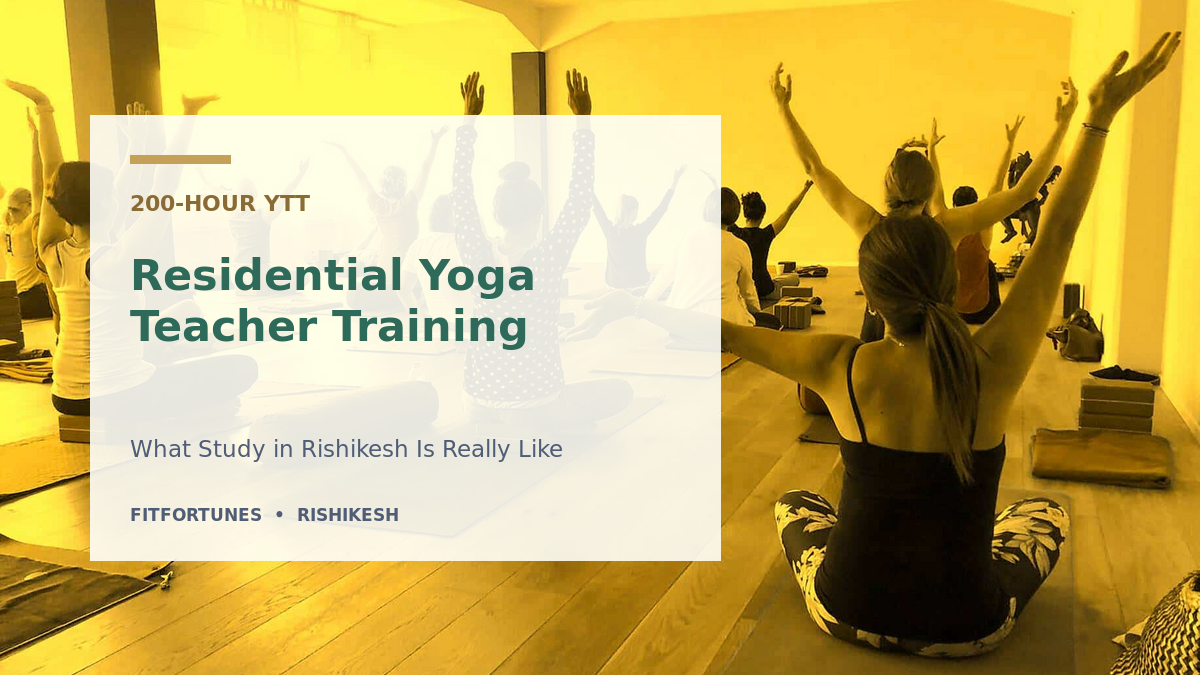
  • 200-Hour Yoga Teacher Training in Rishikesh: What Residential Study Is Really Like

    200-Hour Yoga Teacher Training in Rishikesh: What Residential Study Is Really Like

    A 200-hour yoga teacher training in Rishikesh is not the same thing as a yoga retreat. You live in a residential setting, but the main purpose is structured study rather than a holiday schedule. A normal day combines physical practice, pranayama, meditation, philosophy, teaching methodology, assignments, meals, and practicum. The residential format can make learning easier because accommodation, food, and classes are organised around the course, but it also means you need enough energy and concentration for several weeks of regular study.

    Why people call residential YTT a retreat

    The word retreat is often used because students stay in one place, eat together, practise yoga every day, and spend less time on normal work or home responsibilities. That part can feel similar to a retreat. The difference is the educational load. A 200-hour teacher training includes a defined curriculum, teaching practice, assignments, observation, feedback, and assessment, so it should be treated as a course with residential support rather than a wellness holiday with a certificate at the end.

    This distinction matters before you book because the daily rhythm is much fuller than many retreat schedules. A person who wants rest, gentle yoga, sightseeing, and large blocks of free time may be happier with a short wellness retreat. A person who wants to study how yoga is practised and taught, and is ready for several weeks of theory and practicum, is a better fit for teacher training. Neither choice is better; they simply serve different goals.

    How long is the current FitFortunes 200-hour course?

    FitFortunes currently structures its residential 200-hour program over 21 days, with monthly arrivals on the 2nd. The longer calendar gives time for regular practice, theory, teaching methodology, Ayurveda, sequencing, supervised practicum, self-study, and final assessment without trying to compress everything into a very short intensive. Students should still check the live course page before booking because operational details such as dates, room availability, and inclusions can change.

    The final days are used for assessment, with practical exams before the written test on the last day. That matters when planning flights because leaving early can interfere with course completion. International students should book travel with enough room around the official arrival and departure dates rather than assuming the certificate can be issued before all required work is finished.

    What a normal training day feels like

    The current FitFortunes training day runs roughly from early morning until evening, with practice and classroom study separated by meals and short breaks. Students may begin with meditation, pranayama, or asana, then move into subjects such as philosophy, anatomy, teaching methodology, Ayurveda, sequencing, or practicum later in the day. The exact order can vary, but the important point is that a residential YTT is a full study schedule rather than one or two yoga classes followed by free time.

    That schedule can feel demanding during the first week, especially after international travel. The body is adapting to regular practice while the mind is also taking in new terminology, philosophy, teaching cues, and assignments. Sleep and recovery therefore matter. Students who treat every free minute as sightseeing time often become more tired than students who use part of the day for rest, notes, laundry, and quiet preparation for the next class.

    What you actually study in 200 hours

    A serious 200-hour program should connect personal practice with the skills needed to guide other people. At FitFortunes, the current base is Hatha Yoga with Vinyasa Krama practice, together with pranayama, meditation, philosophy, teaching methodology, Ayurveda, sequencing, and practicum. The course also includes self-study and assignments outside the formal teaching hours, so the learning day is broader than the time spent physically inside the yoga hall.

    • Hatha-based asana study and regular physical practice.
    • Vinyasa Krama practice.
    • Pranayama and meditation.
    • Yoga philosophy and selected classical texts.
    • Teaching methodology, communication, sequencing, and class planning.
    • Ayurveda, including practical lifestyle concepts.
    • Practicum, observation, feedback, assignments, and final assessment.

    The FitFortunes curriculum guide explains these subjects in more detail. This article has a different purpose: it explains what living inside that course feels like from day to day, including the parts students often underestimate before they arrive.

    Accommodation is part of the study environment

    Residential accommodation removes the need to travel across town for every class, which is useful during a long training day. FitFortunes offers shared and private room options. A shared room can reduce the course cost and may suit someone who enjoys company, while a private room can make rest easier for students who need quiet after several hours of practice and theory. The useful choice depends on sleep habits, budget, and personal comfort rather than one option being more suitable for yoga.

    Before arrival, ask what is included in the room and how far it is from the teaching space. Small details such as bathroom access, hot water, Wi-Fi, laundry, noise, and storage matter much more after two or three weeks than they seem to matter while reading a sales page. If you are a light sleeper or work online in limited free time, mention that before choosing a room category.

    Meals need to support a full training day

    FitFortunes serves satvik vegetarian meals and can work with vegan and gluten-free needs when arranged in advance. The purpose of the meal plan is practical: students need enough food to support daily movement, study, and recovery. A teacher training is not the right time for aggressive fasting or a restrictive detox plan simply because the course takes place in Rishikesh. If you have a medical diet or serious allergy, discuss it directly with the school before paying.

    International students may also need a few days to adjust to different meal times, spices, climate, and travel fatigue. Tell staff if you are repeatedly hungry, unable to eat the available food, or need a dietary adjustment that was agreed before arrival. Good residential training should make the daily routine sustainable rather than treating discomfort as part of spiritual discipline.

    How much free time do students really have?

    There is some personal time, but a 200-hour course should not be planned like a long sightseeing trip. Breaks are often used for meals, showering, laundry, messages home, assignments, reading, or simple rest. Some local activities may be arranged by the school, but students should not assume that trekking, long tours, or several free afternoons are built into the training unless the current schedule says so. FitFortunes includes local sightseeing rather than trekking as part of the course arrangement.

    If you want to travel around India, it is usually easier to add extra days before or after training. This also reduces the pressure to miss classes. The Rishikesh YTT packing guide and Delhi to Rishikesh travel guide can help you plan the practical side without using class days for travel problems.

    What teaching practice is like

    Practicum is often the part that changes how students understand teacher training. It is one thing to know a posture and another to stand in front of people, explain it clearly, observe different bodies, manage time, and adjust the plan when a cue does not work. Students usually become more comfortable through repeated short teaching tasks, peer observation, sequencing work, and feedback rather than by waiting until the final exam to teach for the first time.

    The goal is not to make every graduate look polished after one month. A 200-hour course is a foundation. It should help students understand how to prepare, communicate, observe, practise within scope, and continue learning after graduation. That is why the teaching hours, assignments, and final assessment matter more than a certificate photo at the end of the course.

    Does the certificate let you teach anywhere?

    No single yoga certificate creates a worldwide teaching licence. FitFortunes is connected with yoga registration organisations, but those registrations should not be described as legal permission to teach in every country. Studios, insurers, employers, and local jurisdictions can have additional requirements. A course-completion certificate is evidence of training, while professional registration and local work requirements are separate questions.

    If international teaching is your goal, read our guide on whether a 200-hour YTT is enough to teach in the US, UK, or Australia. That article focuses on employment and registration questions, while this page stays focused on the residential study itself.

    Who may find residential YTT difficult?

    The course may be harder for someone who expects large amounts of unstructured free time, is not comfortable with regular physical practice, or is travelling with an injury that has not been discussed with the school. It can also be demanding for people trying to maintain a full remote-work schedule during training. You do not need advanced flexibility, but you do need enough general capacity to take part in long study days and enough honesty to modify when the body needs less.

    Beginners can still join when the course is designed to teach them properly. Our beginner YTT readiness guide explains what basic preparation helps before arrival. If you have a significant medical condition, recent surgery, or an injury that may affect daily practice, speak with an appropriate healthcare professional and the school before booking rather than waiting until the first class.

    Frequently asked questions

    Is a 200-hour YTT in Rishikesh a retreat?

    It is residential and may have a retreat-like setting, but the main purpose is education. A 200-hour program includes structured learning, practicum, assignments, and assessment, so students should expect more work than in a normal wellness retreat. If your main goal is rest and personal practice rather than teacher education, a short retreat may be a better fit.

    How long is the FitFortunes 200-hour course?

    The current FitFortunes residential program is structured over 21 days with monthly arrivals on the 2nd. The calendar includes physical practice, theory, teaching methodology, self-study, practicum, and final assessment. Check the live course page before booking flights because the published course page is the best source for current dates and room availability.

    Can I work online during teacher training?

    Small amounts of work may be possible during free time, but it is risky to plan several guaranteed working hours every day. Training, meals, assignments, laundry, rest, and personal study already use much of the schedule. If remote work is essential, ask for the current timetable before enrolling and make sure your financial plan does not depend on being able to work a normal job during the course.

    Do I need advanced yoga before joining?

    No. Advanced postures are not a sensible entry test for a foundation course. It helps to have some regular practice, basic familiarity with common movements, and enough health for the daily schedule. A beginner who listens, studies, and respects personal limits can make better use of training than a flexible student who treats the course only as a physical challenge.

    What is included in the current FitFortunes fee?

    The current residential offer includes the training program together with accommodation and vegetarian meals, with shared and private room choices. The listed 200-hour price is USD 1,199 for a shared room and USD 1,499 for a private room. Inclusions and policies should be checked on the current 200-hour course page before payment because package details can change over time.

    Residential training works best when you know what you are joining

    A 200-hour teacher training can feel focused and supportive because practice, meals, accommodation, and study are organised around one purpose. It can also feel intense if you arrive expecting a holiday. Read the timetable, understand the curriculum, plan enough rest, and keep extra travel outside the core course dates when possible. The residential setting is valuable because it supports the education, not because living in Rishikesh automatically makes the course better.

  • Yoga Teacher Liability Insurance

    Yoga Teacher Liability Insurance

    If you’re preparing to step into the world of teaching yoga, you might be wondering: “Do I really need yoga teacher liability insurance?” It’s a question many international students ask when they enroll in a residential Yoga Teacher Training program in India. Liability insurance is often overlooked in the excitement of learning poses, philosophy, and meditation, but it’s a cornerstone of professional teaching.

    From my years of guiding students through their 200-hour Yoga Teacher Training journey, I’ve seen firsthand how proper insurance protects your peace of mind. It’s not just paperwork, it’s a safety net that allows you to focus fully on your teaching, without the fear of legal or financial troubles arising from accidents or misunderstandings in class.

    What Is Yoga Teacher Liability Insurance?

    Yoga teacher liability insurance is essentially a safety net for instructors. It protects you in case a student gets injured during a class or claims damages. This might sound intimidating, but it’s not about expecting the worst. Think of it as part of your professional toolkit, like your mat or teaching blocks.

    There are a few common types of insurance for yoga teachers:

    • General Liability Insurance: Covers physical injuries or property damage in your class.
    • Professional Liability (E&O Insurance): Protects against claims of negligence or not providing proper guidance.
    • Yoga Studio or Event Insurance: For those hosting workshops, retreats, or teacher training courses.

    For international students planning to teach in India or abroad, understanding these distinctions is essential. It ensures you’re covered whether you teach a small local class, a corporate session, or online classes across time zones.

    Why International Yoga Students Need Liability Insurance

    Many students come to India focused on deepening their practice, sometimes overlooking professional risks. But here’s the reality:

    • Accidents happen, even with the most experienced instructors.
    • Legal systems vary internationally. A small injury in class can quickly become complicated if a student or parent decides to take action.
    • Some studios, retreats, or online platforms require proof of insurance before you can teach.

    Think of insurance as a form of professional respect, for yourself and your students. It also signals credibility, showing studios and clients that you take your teaching seriously.

    Choosing the Right Policy: Practical Tips

    When looking for yoga teacher insurance, keep the following points in mind:

    1. Coverage Limits: Make sure your policy covers the potential costs if something goes wrong. Typical limits are $1 million per occurrence.
    2. Scope: Check if it covers in-person classes, online sessions, workshops, or retreats. Some policies only cover local studio teaching.
    3. Duration: If you plan to teach occasionally while traveling, short-term or travel-specific policies may work.
    4. Provider Reputation: Choose providers familiar with yoga teaching needs, such as Yoga Alliance-endorsed insurers or specialized platforms.
    5. International Applicability: As a student from another country, confirm your policy is valid in India or any country where you plan to teach.

    For beginners, start with general liability. Intermediates may add professional liability. Advanced teachers running retreats or online platforms should consider full coverage with worldwide protection.

    Real-Life Insights from the Classroom

    I remember teaching a group of international students during their 200 hour Yoga Teacher Training. One student asked me, “I’ve been careful for years, why should I worry about insurance?”

    I shared a story from my early teaching days: a student fainted in a hot yoga class, and though no lasting harm occurred, the liability claim took weeks to resolve. Insurance covered the legal and medical costs, and the incident didn’t derail my teaching career.

    Students often feel insurance is optional, but in reality, it’s part of your professional foundation. Many studios in India and abroad won’t let you teach without it. It’s a small investment for long-term security and peace of mind.

    Cost Considerations

    Insurance cost varies depending on coverage, location, and teaching hours:

    • Beginner Teachers: $100–$200/year for basic coverage.
    • Intermediate Teachers: $200–$400/year for broader liability.
    • Advanced Teachers or Retreat Hosts: $400–$1,000/year depending on global coverage.

    Many students are surprised that insurance for online teaching is also available at a reasonable rate. If you’re planning to teach virtual classes to students worldwide, make sure your policy explicitly mentions online coverage.

    Insurance for Yoga Teacher Training & Retreats

    If you plan to run teacher training courses or retreats, something many international graduates do, insurance becomes even more crucial:

    • Retreats: Coverage protects against injuries, property damage, and travel-related incidents.
    • Teacher Training Programs: You’ll need policies covering your trainees during classes, workshops, and excursions.
    • Workshops: Even short-term events require insurance to ensure everyone’s safety and your liability protection.

    Many training schools, including FitFortunes Yoga Teacher Training, advise students on obtaining insurance before they start teaching independently. It’s part of building a responsible teaching career.

    Choosing Providers & Comparing Policies

    Here are some practical tips for selecting a provider:

    1. Compare multiple insurers: Look at Yoga Alliance-endorsed providers and local specialists.
    2. Check reviews from other teachers: Real experiences give insight into claim handling and customer service.
    3. Ask about add-ons: Some providers offer property, equipment, or travel insurance as extras.
    4. Understand exclusions: Know what’s not covered, like extreme acrobatics or certain alternative therapies.

    When students share experiences, I notice that those who invest in good insurance feel more confident teaching. It’s a small administrative step that adds a lot of professional credibility.

    Advanced Teachers and Retreat Leaders

    Experienced teachers who manage studios, international retreats, or therapy sessions should:

    • Consider high-limit policies.
    • Ensure your policy covers multiple locations, especially if teaching in hotels, rented spaces, or public parks.
    • Include online and hybrid teaching coverage.

    Practical Tip: Always read the fine print. Some insurance policies exclude high-risk activities or specific injury types. Clarify coverage before teaching advanced students or hosting events with complex poses.

    Common Misconceptions

    1. “Yoga is safe, so I don’t need insurance.”
      Even gentle practices carry risk. Students with pre-existing conditions or injuries can unintentionally harm themselves.
    2. “My studio covers me.”
      Some studios provide partial coverage, but it often doesn’t extend to private sessions, retreats, or online classes.
    3. “Insurance is too expensive.”
      Affordable plans exist for teachers at all levels. Compare quotes, international students often find reasonable options through providers familiar with global teaching requirements.

    Practical Advice for Every Level

    • Beginners: Start with basic general liability coverage; focus on understanding what claims could arise in your local context.
    • Intermediate Teachers: Add professional liability coverage and check online teaching protection.
    • Advanced Teachers / Retreat Hosts: Consider global coverage, equipment insurance, and retreat-specific policies.

    Remember, insurance isn’t just a legal requirement, it’s a teaching tool that protects your peace, reputation, and career.

    Conclusion

    Yoga teacher liability insurance is more than a formality—it’s an essential part of your journey as a responsible instructor. Whether you’re a beginner stepping out of your 200 hour Yoga Teacher Training, or an experienced teacher running retreats and online classes, the right coverage safeguards your students, your career, and your peace of mind.

    For international students coming to India, understanding your options and choosing a policy that fits your teaching style ensures you can focus fully on the practice, philosophy, and joy of sharing yoga. Investing in insurance is investing in your professional freedom. So, before you teach your first class, make sure your yoga teacher liability insurance is in place—it’s a small step with a lifetime of benefits.

    FAQ Section

    1. Do yoga teachers need liability insurance in India?
      Yes. While not legally mandatory for all studios, it’s highly recommended for professional protection.
    2. How much does yoga teacher liability insurance cost?
      Costs vary from $100–$1,000/year depending on coverage, location, and teaching activities.
    3. Does insurance cover online yoga classes?
      Many policies do, but always confirm that virtual sessions are explicitly included.
    4. Can liability insurance cover retreats and workshops?
      Yes, with the right policy, you can protect yourself during multi-day events or teacher training programs.
    5. What happens if a student gets injured?
      Insurance covers legal fees and claims, protecting your finances and career.
    6. How do I choose the best provider?
      Compare Yoga Alliance-endorsed insurers, check reviews, and confirm international coverage if needed.
  • Solo Female Travel in Rishikesh: Practical Guide for First-Time Visitors

    Solo Female Travel in Rishikesh: Practical Guide for First-Time Visitors

    Is Rishikesh Safe for Solo Female Travelers Doing Yoga Training?

    Is Rishikesh Safe for Solo Female Travelers Doing Yoga Training?

    I still remember the day a young woman from Germany asked me, “Is Rishikesh safe for solo female travelers doing yoga training?” She looked nervous, clutching her backpack, eyes wide with curiosity and a touch of fear. It’s a question I hear often. And it’s a fair one. Traveling alone to India can feel overwhelming, especially for women.

    Rishikesh, nestled on the banks of the Ganga river and framed by the Himalayan foothills, has long been a haven for yoga seekers. Thousands of women come here every year to join residential 200-hour Yoga Teacher Training programs. They arrive curious, sometimes anxious, and leave transformed. But safety is a real concern, and rightly so.

    Let me share what I have learned in decades of teaching international students. I’ll give you practical advice, real-life experiences, and guidance so you can feel confident traveling here alone.

    Understanding Rishikesh as a Solo Female Traveler

    Rishikesh is unlike the bustling cities of India. There are no high-rise office towers, no endless traffic jams. Instead, you find ashrams, temples, quiet streets, and the steady flow of the Ganga. For a solo female traveler, this city has a gentle rhythm.

    Yet, as with any new place, the key is awareness. Some areas are quiet and peaceful; others, especially the markets, can be crowded. Choosing the right yoga school and accommodation is vital. Many schools now offer women-only rooms or sections, which gives a sense of comfort and safety from day one.

    At FitFortunes, for instance, we make safety a priority. Rooms are secure, staff are trained to assist international students, and the community fosters support for women traveling alone.

    Choosing the Right Yoga School

    Not all yoga schools are the same when it comes to welcoming female students. Look for a few simple things:

    • Women-only accommodation: This is not always advertised, so ask directly.
    • Experienced staff: Schools with staff who understand international student needs can help you navigate the local culture safely.
    • Transparent policies: Check if there are rules for guests, curfews, and emergency procedures.
    • Student reviews: Seek experiences from women who have attended before. They often give the most honest insight.

    A good school will also help you adjust to the ashram lifestyle, which can feel unusual at first. Meals, meditation, and yoga classes are structured, giving a sense of rhythm and security.

    Practical Safety Tips

    • Stay in reputable accommodations: Don’t rely solely on online ratings. Ask for student testimonials.
    • Travel light, travel smart: Keep essential documents safe. A small sling bag is usually enough for day trips.
    • Dress appropriately: Loose, modest clothing helps you respect local customs and avoid unwanted attention.
    • Stay connected: Let someone know your daily plans. Most ashrams have Wi-Fi, or staff can assist in emergencies.
    • Be cautious after dark: Stick to well-lit streets. Avoid wandering alone at night.
    • Learn a few local phrases: Even basic Hindi words like namaste (hello), dhanyavaad (thank you), and madad (help) go a long way.

    Thousands of women safely attend yoga courses every year. Awareness and preparation make the journey enjoyable, not fearful.

    Real-Life Experiences

    A student from Sweden arrived anxious, worried about cultural differences. By the second day, she had joined morning yoga by the Ganga, shared meals with fellow students, and even took a short solo walk along the riverbank. By the end of her 200-hour course, she was confidently navigating Rishikesh, making local friends, and practicing meditation independently.

    Another student from Canada was worried about transport. She wanted to explore temples and local markets. I suggested she go with small groups of students or hire a trusted driver from the ashram. She returned every day with new stories, photographs, and a sense of empowerment.

    These experiences show that Rishikesh is safe when approached thoughtfully, and the structured environment of a residential yoga school supports women immensely.

    Accommodation and Ashram Life

    • Safety in numbers: Living with other students reduces vulnerability.
    • Structured routine: Classes, meals, and meditation sessions create a predictable rhythm.
    • Cultural immersion: Shared meals, group chanting, and festivals give you a safe way to experience Indian culture.

    When choosing a program, consider:

    • Women-only dorms or floors
    • Distance to markets and hospitals
    • Emergency contacts and support staff

    FitFortunes emphasizes comfort and security. Female students feel at home, supported, and free to focus on their yoga journey.

    Safety Outside the Ashram

    • Travel in groups whenever possible.
    • Use pre-arranged taxis or auto-rickshaws. Avoid wandering alone at night.
    • Stay alert in crowded areas.
    • Keep emergency numbers handy, including your embassy and local contacts.

    Solo female travelers following these steps often feel safe and empowered, even in an unfamiliar environment.

    Yoga Training Levels and Travel Safety

    • Beginners: Focus on postures, alignment, and meditation. Avoid long walks alone in the first week.
    • Intermediate Students: Explore more, like gentle trekking or nearby temples. Group activities are safest.
    • Advanced Students: Some enjoy longer solo walks for meditation or photography. Stick to familiar routes and inform staff of your plans.

    Awareness complements structured safety measures and allows you to grow in confidence.

    Cultural Tips for Women

    • Dress modestly, covering shoulders and knees.
    • Remove shoes and speak softly in temples.
    • Accept hospitality politely but cautiously.
    • Use namaste instead of physical greetings.

    Respectful behavior often ensures a safe, warm reception from locals.

    Practical Travel Advice

    • Bring a refillable water bottle and personal hygiene items.
    • Carry a small first-aid kit.
    • Keep digital copies of important documents.
    • Join community activities—this provides safety and friendship.
    • Take local advice seriously; locals know which areas are safe at which times.

    Conclusion

    So, is Rishikesh safe for solo female travelers doing yoga training? Yes, absolutely. With preparation, awareness, and the right choice of school, women can have a life-changing experience here. Residential 200-hour programs, like those at FitFortunes, provide safety, structure, and community.

    Traveling alone can be empowering. Rishikesh offers sacred rivers, Himalayan views, and centuries of yoga wisdom. With mindfulness and respect for local culture, your journey will be not only safe but transformative.

    FAQ

    1. Are women-only yoga programs available in Rishikesh? Yes, many schools offer women-only accommodations or separate dorms for female students.
    2. Can I safely travel alone in India for yoga training? Yes. Choose reputable schools, stay aware, and follow local cultural guidelines.
    3. What should I wear as a solo female traveler in Rishikesh? Loose, modest clothing—cotton yoga wear and skirts covering knees are ideal.
    4. Are yoga schools prepared for emergencies? Yes. Professional ashrams maintain emergency contacts and provide staff support.
    5. How can I stay safe outside the ashram? Travel in groups, use trusted transport, avoid dark streets, and keep emergency contacts handy.
    6. Do solo female students feel comfortable in 200-hour YTT programs? Absolutely. Structured programs and community living help build confidence and a sense of security.