
A yoga and wellness retreat in India should give you a clear daily structure, comfortable accommodation, suitable food, and enough support to practise without guessing what happens next. For international visitors, the retreat itself is only one part of the decision. You also need to think about travel, climate, safety, room type, dietary needs, class level, and how much free time you want. This guide focuses on those practical details so you can compare retreats without relying on vague wellness promises.
What is a yoga and wellness retreat?
A yoga retreat is a short residential program built around regular yoga practice and a quieter daily routine. Depending on the school, it may include Hatha Yoga, gentle Vinyasa, pranayama, meditation, Yoga Nidra, sound sessions, philosophy, local cultural activities, or wellness treatments. The important point is that the retreat schedule should be published clearly. A visitor should know whether the program is mainly yoga, mainly relaxation, or a mix of several activities before booking.
A retreat is also different from yoga teacher training. Teacher training includes educational hours, teaching methodology, practicum, assignments, and assessment, while a retreat is usually designed for personal practice and rest. Someone who wants a few structured days in Rishikesh does not need to enrol in a 100-hour or 200-hour training simply to spend time practising yoga. Keeping those two products separate also makes it easier to choose the right level of commitment.
Who is a yoga retreat suitable for?
Many retreats accept beginners, but “beginner-friendly” should still be checked rather than assumed. A new student may need slower instruction, simpler posture options, and teachers who are comfortable answering basic questions. A more experienced student may want longer practices, stronger asana, pranayama, or more meditation. The best retreat is not the one with the most activities; it is the one whose pace and teaching match what you can realistically do each day.
- Beginners: look for clear instructions, sensible modifications, and a manageable daily schedule.
- Regular practitioners: check whether the retreat offers enough practice depth without turning every session into an advanced class.
- Solo travellers: ask about location, room access, evening transport, and who can be contacted if help is needed.
- Couples or friends: confirm whether shared rooms, private rooms, and mixed-gender bookings are available.
What a typical day can look like in Rishikesh
A useful retreat day has enough structure to keep the practice consistent without filling every hour. At FitFortunes, the current retreat schedule runs roughly from 7:30 in the morning to 8:00 in the evening and includes two yoga sessions, one meditation session, meals, and time between activities. Breakfast is around 9:30, lunch around 13:30, and dinner around 20:00. The exact timetable should still be confirmed on the current retreat page before arrival.
The spaces between classes matter too. International visitors may need time for sleep, laundry, walking, reading, calls home, or simply sitting quietly after travel. A schedule that looks impressive on a sales page can become exhausting if there is no recovery time. Ask whether every activity is compulsory and whether you can rest when your body needs a lighter day.
Yoga, meditation and other retreat activities
Retreat activities should support the main purpose rather than become a long list of extras. Two well-taught yoga classes can be more useful than several unrelated sessions squeezed into one day. Meditation can be simple and accessible, while pranayama should be introduced according to the student’s level. If sound healing, Ayurveda, Kirtan, or local cultural activities are included, the school should explain whether they are part of the package or optional additions.
Be careful with claims such as “detox,” “trauma release,” or guaranteed emotional healing. A retreat can provide structured movement, rest, nutritious meals, and time away from a busy routine, but it should not promise to diagnose or cure medical or psychological conditions. If you have an injury, health condition, or treatment plan, tell the school before arrival and speak with an appropriate healthcare professional when needed.
Accommodation can change the whole retreat
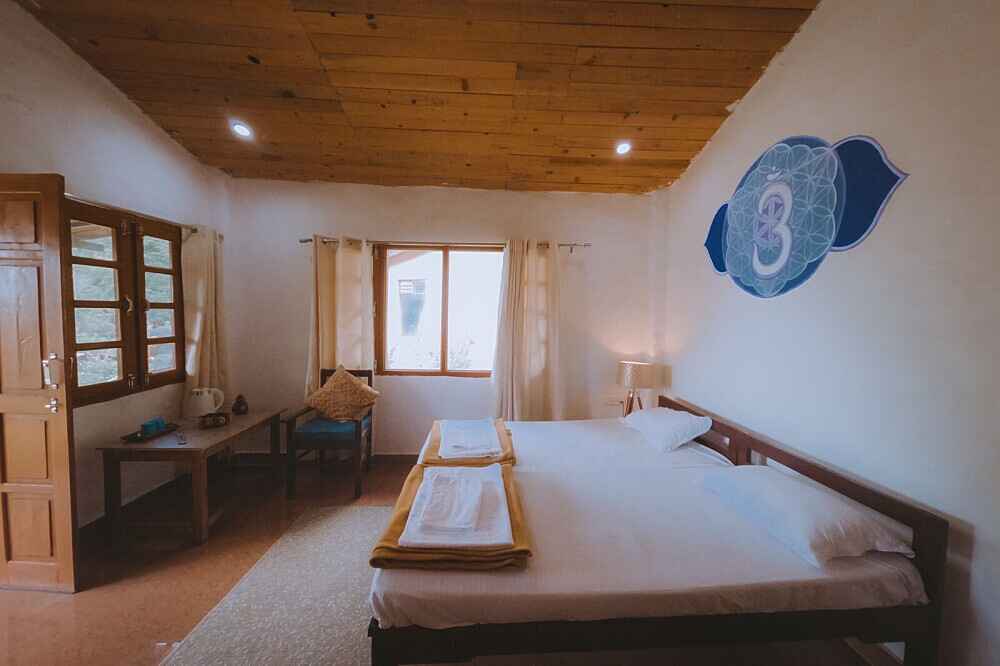
A room that looks unimportant while booking becomes very important after two yoga sessions and a full day of activities. Check whether the room is private or shared, whether the bathroom is private, how far the accommodation is from the yoga hall, and whether there is reliable hot water, Wi-Fi, and basic housekeeping. Light sleepers should also ask about road noise, nearby construction, temple sounds, and the normal quiet hours of the building.
FitFortunes offers private and shared room options for its residential programs. The school is in Rishikesh near the Ganga, so students should also think about walking routes, seasonal weather, and how easily they can reach shops or pharmacies. Room preference should be chosen for comfort and budget, not because one option is presented as more “spiritual” than another.
Food and dietary needs
Most yoga retreats in Rishikesh serve vegetarian food, but the exact menu and meal frequency vary. FitFortunes uses a satvik vegetarian meal plan and can work with vegan and gluten-free needs when arranged in advance. If you have a serious allergy, intolerance, or medical diet, do not rely only on a general statement such as “healthy food.” Ask how the kitchen handles your specific requirement and whether cross-contact is possible.
International students may also need a few days to adjust to meal times, spices, climate, and water habits. Eat enough to support the amount of yoga you are doing and tell staff if the portions or timing are not working for you. A retreat should encourage sensible eating rather than restrictive “cleanses” that leave students weak during practice.
What international students should plan before travel
Good preparation removes many of the problems that have nothing to do with yoga. Check your passport, current Indian visa rules, travel insurance, arrival route, local transport, payment methods, and weather before you leave home. Save the school address and contact number offline. If you arrive through Delhi, decide how you will reach Rishikesh before a long flight leaves you tired and making decisions at the airport.
Our Delhi to Rishikesh travel guide compares taxi, flight, train, and bus options. The Rishikesh packing guide was written for teacher-training students, but most of the advice on clothing, medicines, documents, money, and electronics also applies to retreat guests.
Is Rishikesh suitable for solo female retreat guests?
Many women travel to Rishikesh alone, but no destination should be described as completely safe. A school can reduce risk by giving clear arrival instructions, secure accommodation, reachable staff, and sensible support after evening activities. Guests should still use normal travel precautions, avoid isolated routes late at night, keep phones charged, and use known transport when needed. Safety is better discussed with specific habits than with a blanket promise.
Our Rishikesh safety guide for solo female yoga students covers arrival planning, accommodation, transport, boundaries, river safety, and emergency contacts in more detail. The same precautions are useful for retreat guests, especially anyone visiting India for the first time.
How to compare yoga and wellness retreats
Compare what is actually included rather than choosing from photographs alone. Two retreats with similar prices may have different room standards, class sizes, meal plans, teacher contact, and activity schedules. Look for current information instead of an old package from a previous season. If a retreat page does not show who teaches, where you stay, what you eat, or what a normal day looks like, ask before paying the deposit.
- Exact number and type of yoga classes each day.
- Meditation, pranayama, sound, Ayurveda, or cultural activities included.
- Private or shared accommodation and bathroom arrangement.
- Number of meals and ability to manage dietary needs.
- Teacher names and class size.
- Deposit, cancellation, and date-change rules.
- Airport or local transfers, if offered, and whether they cost extra.
Retreat or yoga teacher training?
Choose a retreat when you want regular practice, a structured break, and time in Rishikesh without the academic demands of teacher education. Choose teacher training when you specifically want a curriculum, teaching methodology, practicum, assessment, and a course-completion certificate. The longer program is not automatically the better choice. A five-day retreat can be more appropriate for someone who needs a short introduction before deciding whether formal training is right for them.
FitFortunes currently offers a five-day wellness and yoga retreat in Rishikesh as well as separate teacher-training programs. Keep the booking purpose clear: the retreat is for personal practice and wellness time, while the 200-hour teacher training is a longer educational program with a different timetable and outcome.
Frequently asked questions
Do I need yoga experience before joining a retreat in India?
Not always. Many retreats accept beginners, but you should confirm the daily practice level before booking. A beginner-friendly retreat should offer clear instruction and simpler options rather than expecting everyone to follow an advanced class. If you have never practised yoga, tell the school so the teacher knows you may need more explanation during the first sessions.
What is normally included in a yoga retreat package?
Residential packages commonly include the scheduled yoga and meditation sessions, accommodation, and the listed meals. Other activities such as sound healing, Ayurveda treatments, excursions, transfers, or private sessions may be included or may cost extra. Read the current inclusions line by line instead of assuming every activity shown on the website is part of the base price.
Is five days enough for a yoga retreat?
Five days can be enough to settle into a regular routine, attend several yoga and meditation sessions, and get a useful introduction to residential yoga study. It is not enough to guarantee lasting health or emotional changes. What you take home depends partly on whether you continue any useful habits after the retreat rather than expecting a short stay to solve every problem.
Can a yoga retreat help with stress?
A quieter routine, regular movement, meditation, meals, sleep, and time away from normal work demands may help some people feel less stressed. That is different from treating an anxiety disorder or another mental-health condition. If stress is severe, persistent, or connected with trauma or depression, a retreat should not be used as a substitute for qualified professional care.
What should I pack for a yoga retreat in Rishikesh?
Bring comfortable yoga clothing, simple town clothes, weather-appropriate layers, regular medicines, travel documents, chargers, a power adapter, and more than one payment method. The exact list changes by season. Check the Rishikesh forecast shortly before you travel rather than packing from a generic India weather chart, and ask whether the school provides yoga mats and basic props.
Choose clear information over big promises
A good yoga retreat does not need exaggerated language to be valuable. Clear teachers, a realistic schedule, suitable food, comfortable accommodation, and reliable support can make a short residential stay useful and enjoyable. Compare the details that affect your actual day, ask questions before payment, and choose a program that fits your level and reason for coming to India rather than the one that makes the biggest promise.