A 200-hour yoga teacher training in Rishikesh is not the same thing as a yoga retreat. You live in a residential setting, but the main purpose is structured study rather than a holiday schedule. A normal day combines physical practice, pranayama, meditation, philosophy, teaching methodology, assignments, meals, and practicum. The residential format can make learning easier because accommodation, food, and classes are organised around the course, but it also means you need enough energy and concentration for several weeks of regular study.
Why people call residential YTT a retreat
The word retreat is often used because students stay in one place, eat together, practise yoga every day, and spend less time on normal work or home responsibilities. That part can feel similar to a retreat. The difference is the educational load. A 200-hour teacher training includes a defined curriculum, teaching practice, assignments, observation, feedback, and assessment, so it should be treated as a course with residential support rather than a wellness holiday with a certificate at the end.
This distinction matters before you book because the daily rhythm is much fuller than many retreat schedules. A person who wants rest, gentle yoga, sightseeing, and large blocks of free time may be happier with a short wellness retreat. A person who wants to study how yoga is practised and taught, and is ready for several weeks of theory and practicum, is a better fit for teacher training. Neither choice is better; they simply serve different goals.
How long is the current FitFortunes 200-hour course?
FitFortunes currently structures its residential 200-hour program over 21 days, with monthly arrivals on the 2nd. The longer calendar gives time for regular practice, theory, teaching methodology, Ayurveda, sequencing, supervised practicum, self-study, and final assessment without trying to compress everything into a very short intensive. Students should still check the live course page before booking because operational details such as dates, room availability, and inclusions can change.
The final days are used for assessment, with practical exams before the written test on the last day. That matters when planning flights because leaving early can interfere with course completion. International students should book travel with enough room around the official arrival and departure dates rather than assuming the certificate can be issued before all required work is finished.
What a normal training day feels like
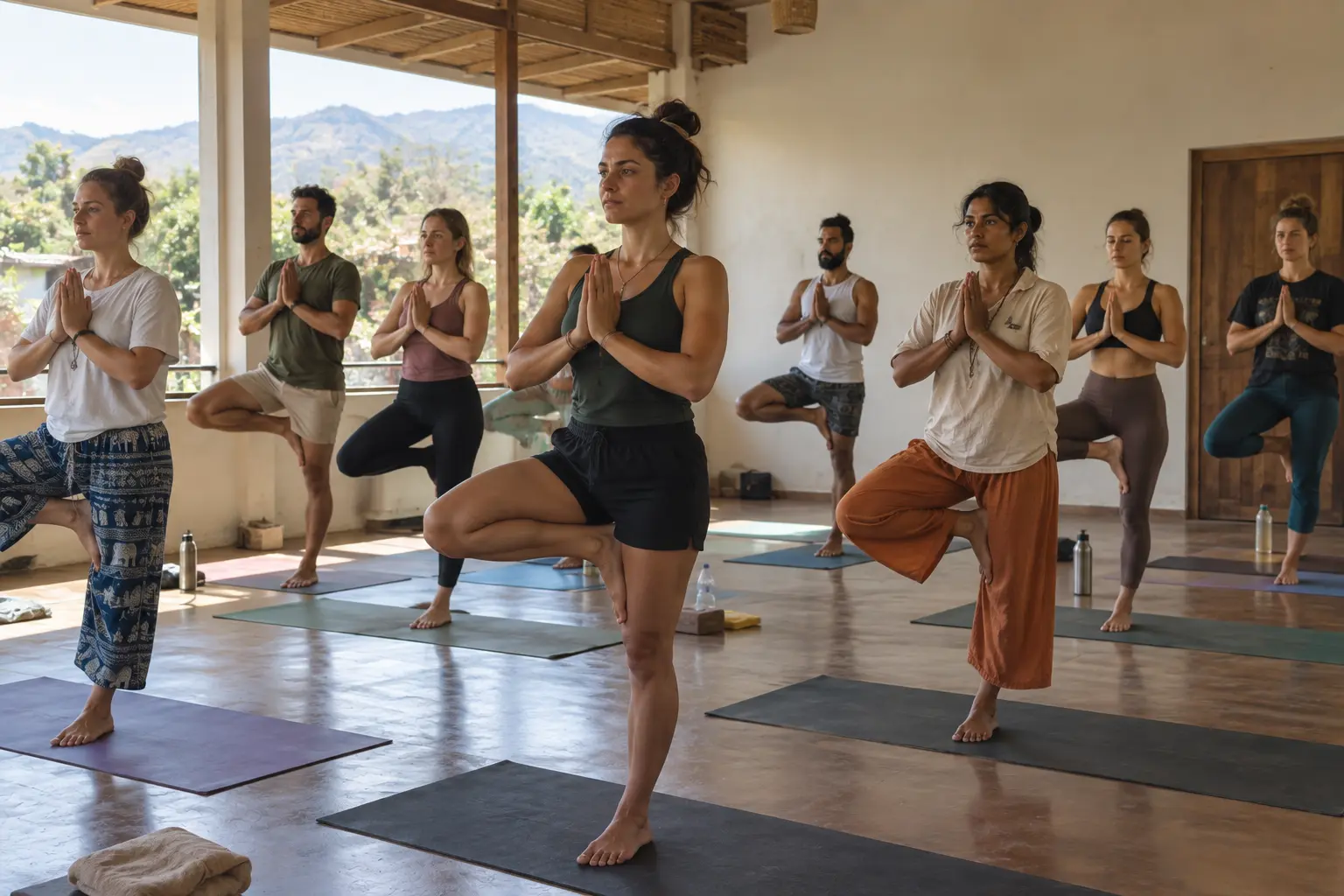
The current FitFortunes training day runs roughly from early morning until evening, with practice and classroom study separated by meals and short breaks. Students may begin with meditation, pranayama, or asana, then move into subjects such as philosophy, anatomy, teaching methodology, Ayurveda, sequencing, or practicum later in the day. The exact order can vary, but the important point is that a residential YTT is a full study schedule rather than one or two yoga classes followed by free time.
That schedule can feel demanding during the first week, especially after international travel. The body is adapting to regular practice while the mind is also taking in new terminology, philosophy, teaching cues, and assignments. Sleep and recovery therefore matter. Students who treat every free minute as sightseeing time often become more tired than students who use part of the day for rest, notes, laundry, and quiet preparation for the next class.
What you actually study in 200 hours
A serious 200-hour program should connect personal practice with the skills needed to guide other people. At FitFortunes, the current base is Hatha Yoga with Vinyasa Krama practice, together with pranayama, meditation, philosophy, teaching methodology, Ayurveda, sequencing, and practicum. The course also includes self-study and assignments outside the formal teaching hours, so the learning day is broader than the time spent physically inside the yoga hall.
- Hatha-based asana study and regular physical practice.
- Vinyasa Krama practice.
- Pranayama and meditation.
- Yoga philosophy and selected classical texts.
- Teaching methodology, communication, sequencing, and class planning.
- Ayurveda, including practical lifestyle concepts.
- Practicum, observation, feedback, assignments, and final assessment.
The FitFortunes curriculum guide explains these subjects in more detail. This article has a different purpose: it explains what living inside that course feels like from day to day, including the parts students often underestimate before they arrive.
Accommodation is part of the study environment
Residential accommodation removes the need to travel across town for every class, which is useful during a long training day. FitFortunes offers shared and private room options. A shared room can reduce the course cost and may suit someone who enjoys company, while a private room can make rest easier for students who need quiet after several hours of practice and theory. The useful choice depends on sleep habits, budget, and personal comfort rather than one option being more suitable for yoga.
Before arrival, ask what is included in the room and how far it is from the teaching space. Small details such as bathroom access, hot water, Wi-Fi, laundry, noise, and storage matter much more after two or three weeks than they seem to matter while reading a sales page. If you are a light sleeper or work online in limited free time, mention that before choosing a room category.
Meals need to support a full training day
FitFortunes serves satvik vegetarian meals and can work with vegan and gluten-free needs when arranged in advance. The purpose of the meal plan is practical: students need enough food to support daily movement, study, and recovery. A teacher training is not the right time for aggressive fasting or a restrictive detox plan simply because the course takes place in Rishikesh. If you have a medical diet or serious allergy, discuss it directly with the school before paying.
International students may also need a few days to adjust to different meal times, spices, climate, and travel fatigue. Tell staff if you are repeatedly hungry, unable to eat the available food, or need a dietary adjustment that was agreed before arrival. Good residential training should make the daily routine sustainable rather than treating discomfort as part of spiritual discipline.
How much free time do students really have?
There is some personal time, but a 200-hour course should not be planned like a long sightseeing trip. Breaks are often used for meals, showering, laundry, messages home, assignments, reading, or simple rest. Some local activities may be arranged by the school, but students should not assume that trekking, long tours, or several free afternoons are built into the training unless the current schedule says so. FitFortunes includes local sightseeing rather than trekking as part of the course arrangement.
If you want to travel around India, it is usually easier to add extra days before or after training. This also reduces the pressure to miss classes. The Rishikesh YTT packing guide and Delhi to Rishikesh travel guide can help you plan the practical side without using class days for travel problems.
What teaching practice is like
Practicum is often the part that changes how students understand teacher training. It is one thing to know a posture and another to stand in front of people, explain it clearly, observe different bodies, manage time, and adjust the plan when a cue does not work. Students usually become more comfortable through repeated short teaching tasks, peer observation, sequencing work, and feedback rather than by waiting until the final exam to teach for the first time.
The goal is not to make every graduate look polished after one month. A 200-hour course is a foundation. It should help students understand how to prepare, communicate, observe, practise within scope, and continue learning after graduation. That is why the teaching hours, assignments, and final assessment matter more than a certificate photo at the end of the course.
Does the certificate let you teach anywhere?
No single yoga certificate creates a worldwide teaching licence. FitFortunes is connected with yoga registration organisations, but those registrations should not be described as legal permission to teach in every country. Studios, insurers, employers, and local jurisdictions can have additional requirements. A course-completion certificate is evidence of training, while professional registration and local work requirements are separate questions.
If international teaching is your goal, read our guide on whether a 200-hour YTT is enough to teach in the US, UK, or Australia. That article focuses on employment and registration questions, while this page stays focused on the residential study itself.
Who may find residential YTT difficult?
The course may be harder for someone who expects large amounts of unstructured free time, is not comfortable with regular physical practice, or is travelling with an injury that has not been discussed with the school. It can also be demanding for people trying to maintain a full remote-work schedule during training. You do not need advanced flexibility, but you do need enough general capacity to take part in long study days and enough honesty to modify when the body needs less.
Beginners can still join when the course is designed to teach them properly. Our beginner YTT readiness guide explains what basic preparation helps before arrival. If you have a significant medical condition, recent surgery, or an injury that may affect daily practice, speak with an appropriate healthcare professional and the school before booking rather than waiting until the first class.
Frequently asked questions
Is a 200-hour YTT in Rishikesh a retreat?
It is residential and may have a retreat-like setting, but the main purpose is education. A 200-hour program includes structured learning, practicum, assignments, and assessment, so students should expect more work than in a normal wellness retreat. If your main goal is rest and personal practice rather than teacher education, a short retreat may be a better fit.
How long is the FitFortunes 200-hour course?
The current FitFortunes residential program is structured over 21 days with monthly arrivals on the 2nd. The calendar includes physical practice, theory, teaching methodology, self-study, practicum, and final assessment. Check the live course page before booking flights because the published course page is the best source for current dates and room availability.
Can I work online during teacher training?
Small amounts of work may be possible during free time, but it is risky to plan several guaranteed working hours every day. Training, meals, assignments, laundry, rest, and personal study already use much of the schedule. If remote work is essential, ask for the current timetable before enrolling and make sure your financial plan does not depend on being able to work a normal job during the course.
Do I need advanced yoga before joining?
No. Advanced postures are not a sensible entry test for a foundation course. It helps to have some regular practice, basic familiarity with common movements, and enough health for the daily schedule. A beginner who listens, studies, and respects personal limits can make better use of training than a flexible student who treats the course only as a physical challenge.
What is included in the current FitFortunes fee?
The current residential offer includes the training program together with accommodation and vegetarian meals, with shared and private room choices. The listed 200-hour price is USD 1,199 for a shared room and USD 1,499 for a private room. Inclusions and policies should be checked on the current 200-hour course page before payment because package details can change over time.
Residential training works best when you know what you are joining
A 200-hour teacher training can feel focused and supportive because practice, meals, accommodation, and study are organised around one purpose. It can also feel intense if you arrive expecting a holiday. Read the timetable, understand the curriculum, plan enough rest, and keep extra travel outside the core course dates when possible. The residential setting is valuable because it supports the education, not because living in Rishikesh automatically makes the course better.