Author: Pravesh Narwal

  • The Best Yoga Mat Carrier: Your Guide to Choosing the Right Yoga Accessory

    The Best Yoga Mat Carrier: Your Guide to Choosing the Right Yoga Accessory

    A good yoga mat carrier should make your mat easier to carry without making the bag itself a problem. The best choice depends on the size and weight of your mat, how far you usually walk, whether you carry clothes or a water bottle, and how much protection you want from dust or rain. A simple sling can be enough for a short walk to class, while a full bag or backpack makes more sense for commuting or travel.

    Why use a yoga mat carrier?

    A carrier keeps the mat rolled, gives your hands more freedom, and reduces the chance of dragging the mat against the ground or a dirty floor. It can also protect the surface from dust, light rain, and contact with other items in a car or public transport. The useful question is not whether every yogi needs one, but whether carrying your particular mat is awkward enough that a strap, bag, or backpack would make daily use easier.

    The main types of yoga mat carriers

    Yoga mat carriers fall into a few simple groups, and each solves a different problem. A sling uses very little material and is quick to put on. A zippered mat bag gives more protection. A tote adds room for small items, while a backpack is usually the better choice when the mat is only one part of what you carry to class, work, or travel.

    Yoga mat sling

    A sling is the lightest option because it is usually just one adjustable strap with loops at both ends. It works well when you walk a short distance and do not need weather protection or extra storage. The downside is that the mat remains exposed, so the outer surface can still collect dust or rain while you carry it.

    Zippered yoga mat bag

    A full bag covers the mat and usually includes a shoulder strap, zipper, and one or more small pockets. It is useful when you want the mat protected in a car, train, locker, or storage area. Before buying one, measure the rolled length and diameter of your mat because thick mats can be surprisingly difficult to fit inside bags designed for thin studio mats.

    Yoga tote

    A tote works well when you normally carry a towel, bottle, notebook, or light clothing together with the mat. Some totes place the mat through external straps, while others use a large central compartment. This style can be convenient for short urban trips, but check the shoulder straps carefully because a large bag becomes uncomfortable quickly when it is loaded unevenly.

    Yoga backpack

    A backpack is often the most practical option for longer walks, cycling, airports, or commuting because the weight sits across both shoulders. Some designs hold the mat outside the bag while others use a dedicated vertical compartment. The extra storage is useful, but the backpack should still feel balanced when the mat is attached instead of pulling to one side.

    What to check before you buy

    Start with the actual size of your rolled mat rather than the product photo. Check the carrier length, opening diameter, strap adjustment, stitching, ventilation, and whether the material can be cleaned easily. If you already use a thick mat, read our 3mm vs 5mm yoga mat guide because mat thickness changes both weight and the amount of space the carrier needs.

    • Measure the rolled mat length and diameter.
    • Choose a strap that adjusts enough for your height and clothing.
    • Look for strong stitching around the strap attachment points.
    • Check whether the carrier needs ventilation after sweaty classes.
    • Decide whether you really need pockets for a phone, keys, bottle, or clothes.
    • If you walk outdoors often, consider a fabric that handles light rain better.

    Which carrier is best for a thick yoga mat?

    Thick mats usually need either an adjustable sling or a bag with a clearly stated large opening. Do not rely on labels such as “fits most mats” because two mats with the same length can have very different rolled diameters. Measure your mat after rolling it normally, then compare that number with the carrier dimensions so you are not forcing the zipper every time you leave class.

    What works best for travel?

    For travel, the carrier should be light enough that it does not cancel the advantage of bringing a travel mat. A sling is easy to pack inside luggage, while a slim backpack can be useful when you also carry documents, water, and a light layer. If the mat will go through airports or bus storage, a closed bag gives more protection than an open strap system.

    Material matters less than good construction

    Cotton, canvas, polyester, recycled fabrics, hemp, and mixed materials can all work well when the stitching and design are good. Natural fibres may appeal to someone who prefers them, while synthetic fabrics can dry faster and resist moisture better. Instead of choosing from marketing words alone, look at seam quality, strap strength, cleaning instructions, and whether the carrier suits the way you actually travel to practice.

    How to keep a mat carrier clean

    Do not put a very wet or sweaty mat straight into a closed bag for hours. Let the mat dry when possible, empty small pockets regularly, and follow the washing instructions for the carrier fabric. A clean bag will not replace cleaning the mat itself, so use our yoga mat cleaning guide for care instructions based on the mat material.

    Do you need an expensive yoga mat bag?

    No. A simple carrier can work for years when the size, stitching, and strap are right. Paying more may give you better fabric, stronger hardware, extra storage, or a particular design, but price alone does not tell you whether the carrier will be comfortable. For most students, fit and daily usefulness matter more than branding.

    Frequently asked questions

    Is a yoga sling better than a bag?

    A sling is lighter and faster to use, while a bag protects the mat and usually provides storage. The better option depends on how far you carry the mat, the weather, and whether you take other items to class. Someone walking five minutes to a studio may be happier with a sling than with a large bag.

    Can a yoga mat carrier fit a 5mm mat?

    Some can and some cannot. A 5mm mat rolls thicker than a thin travel mat, so compare the rolled diameter of your mat with the carrier opening before buying. Adjustable slings usually handle different diameters more easily than tightly fitted zippered bags.

    Can I use a normal backpack for a yoga mat?

    Yes, if the backpack has external straps or another secure way to hold the rolled mat. Do not leave the mat hanging loosely where it can hit people, catch on doors, or shift your balance. A dedicated yoga backpack is convenient, but it is not essential if your existing bag already carries the mat safely.

    Should the carrier be waterproof?

    Full waterproofing is unnecessary for many students, but some water resistance is useful when you regularly walk outside. Remember that a water-resistant outer fabric does not mean the zipper and seams are completely waterproof. In heavy rain, keep the mat inside a more protected bag or use an additional cover.

    Yoga Mat Carrier: Quick Decision Guide

    Your routineBest carrier typeWhy
    Short walk to classSling or strapLightweight and fast to use
    Public transportZippered bagProtects the mat and keeps it contained
    Bike or scooterBackpack-style carrierKeeps hands free and load more stable
    TravelFoldable tote or light bagEasier to pack in luggage

    Before You Buy

    1. Measure the rolled mat diameter.
    2. Check strap length and padding.
    3. Decide whether you need pockets.
    4. Look at washing instructions.
    5. Choose the lightest option that fits your real route.

    Three Real Buying Examples

    • You walk 5 minutes to class: a simple sling is usually enough.
    • You commute by bus or train: choose a closed bag with a secure zipper and one small pocket.
    • You travel with a foldable mat: a lightweight tote or backpack often works better than a rigid mat tube.

    Common Yoga Mat Carrier Mistakes

    • Buying before measuring the rolled mat.
    • Choosing a heavy bag for a short daily walk.
    • Ignoring whether a sweaty mat can dry inside the carrier.
    • Choosing extra pockets you never use.
    • Using a narrow strap that digs into the shoulder on longer walks.

    Choose for your real routine

    The best yoga mat carrier is the one you can use without thinking about it every time you leave home. Measure the mat, decide how much storage you need, and choose the lightest design that handles your normal route comfortably. If you are still choosing the mat itself, compare our travel yoga mat guide and yoga mat thickness chart before buying the carrier.

  • Should Christians Do Yoga? Knowing Yoga Tradition and Philosophy

    Should Christians Do Yoga? Knowing Yoga Tradition and Philosophy

    Christians do not all answer the yoga question in the same way. Some Christians practise yoga mainly as movement, breathing, and attention. Others avoid it because they connect parts of yoga with Hindu philosophy, mantra, or religious symbolism. A useful answer begins by separating the physical practice from the wider history of yoga, then allowing each person to make a choice that fits their faith, church teaching, and conscience.

    Why do Christians ask whether yoga is acceptable?

    The question comes up because yoga developed in India and is connected with several Indian philosophical and religious traditions. Modern classes may include only posture and breathing, while other classes may also include Sanskrit chanting, meditation, devotional ideas, or references to Hindu texts. These are not all the same thing. A Christian deciding whether to attend a class should look at what that particular class teaches instead of judging every form of yoga from one example.

    Yoga is more than exercise, but it is not one single belief system

    Yoga has a long history with different schools, texts, methods, and aims. Patanjali’s Yoga Sutras describe an eight-limbed discipline that includes ethics, posture, breath regulation, concentration, meditation, and samadhi. The Bhagavad Gita also uses the word yoga in several ways, including disciplined action, knowledge, and devotion. Modern studio yoga often gives much more attention to physical postures than these older texts do.

    Because the word covers many traditions, saying that yoga is either “only exercise” or “one religion” can both be too simple. A gym-based posture class and a devotional ashram practice may share the word yoga while teaching very different things. For Christians, the practical question is therefore not only “Is this yoga?” but also “What exactly am I being asked to do, repeat, believe, or take part in?”

    What Guru Gorakh Nath says about divisions

    A verse attributed to Guru Gorakh Nath presents yoga as something that goes beyond social division and is linked with discipline, truth, and compassion. The verse is often used in Nath tradition to stress that yoga should not be reduced to caste or social separation. It does not settle a Christian theological question, but it helps show that Indian yoga traditions themselves have included broad ideas about who may practise.

    जोग अवरण जोग अभेद,
    जोग अखंडित जोग अछेद।
    जोग जति सति जोग दया,
    येहा ग्यान जति गोरख कह्या।।

    A simple meaning is: yoga is beyond social division; yoga points toward wholeness. Yoga includes discipline, truth, and compassion; this is wisdom, says Gorakh. Christians may read this as historical information about one Indian teaching rather than as a statement they are required to accept as part of Christian doctrine.

    Which parts of a yoga class may concern Christians?

    Most concerns are not about stretching itself. They are usually about prayer, mantra, deity names, spiritual initiation, ritual, or claims that conflict with a person’s beliefs. Some Christians are comfortable with neutral breath awareness and posture but prefer not to repeat a mantra they do not understand. Others avoid yoga altogether because they see the physical and spiritual history as too closely connected to separate.

    • Ask whether the class includes chanting or mantra.
    • Ask whether the teacher uses religious or devotional language.
    • Check whether meditation is simple attention practice or tied to a specific spiritual teaching.
    • Decide in advance which parts you are comfortable joining and which parts you will skip.
    • If church teaching matters to you, speak with a pastor, priest, or trusted Christian teacher who understands the actual class format.

    Can Christians practise yoga only for physical health?

    Some Christians do choose yoga mainly for mobility, strength, balance, breathing, or relaxation. In that setting, they may treat postures much like other movement exercises and leave out chanting or devotional material. Other Christians still prefer another form of exercise because the historical connection matters to them. Neither choice should be hidden behind a claim that every yoga class is spiritually identical, because the content of classes varies widely.

    If your goal is physical practice, ask the teacher directly what happens during class. A clear teacher should be able to explain whether the session contains posture, breath work, meditation, chanting, philosophy, or ritual. You can then decide with accurate information rather than relying on social-media arguments. This is especially useful when visiting India, where the word yoga may include more philosophy and traditional study than in a fitness studio.

    What about meditation, breathing, and prayer?

    Breathing and quiet sitting are methods, but the meaning given to them can differ. A Christian may use slow breathing to settle before prayer, while another yoga tradition may use breath as part of pranayama with a different philosophical framework. The same is true of meditation. Christians who want to keep the practice within their own faith can choose silence, Scripture reflection, or Christian prayer instead of repeating material they do not accept.

    It is also useful not to make medical promises about breath or meditation. These practices may help some people feel calmer, but they are not replacements for treatment of anxiety, trauma, heart disease, or another health condition. Our diaphragmatic breathing guide explains a simple breathing method without requiring a religious interpretation.

    Can yoga philosophy conflict with Christian belief?

    It can, depending on the teaching being discussed and the Christian tradition of the student. Classical Indian texts contain ideas about self, liberation, karma, rebirth, devotion, and ultimate reality that do not always match Christian theology. A teacher should not hide those differences by saying every religion teaches exactly the same thing. Respect is easier when similarities and differences are both explained clearly.

    Studying a text is also different from agreeing with every statement in it. Universities study Greek philosophy, Buddhism, Christianity, Islam, and Hindu traditions without requiring students to adopt each worldview. A Christian can read a yoga text historically or philosophically while keeping Christian beliefs, but whether that kind of study feels appropriate is a personal and denominational decision.

    How to choose a class when faith matters to you

    Look for a teacher who answers questions clearly and does not pressure students to repeat words or take part in practices they do not understand. A respectful class can explain the traditional name of a posture or breathing method without telling every student what they must believe. Consent should also apply to chanting, touch, hands-on adjustment, and personal spiritual discussion, not only to physical movement.

    • Read the class description before booking.
    • Ask what happens at the beginning and end of class.
    • Tell the teacher if you prefer not to chant or receive hands-on adjustments.
    • Choose another class if the teacher dismisses reasonable questions about belief or consent.
    • Do not assume that every Indian yoga school or every Western studio teaches the same philosophy.

    How FitFortunes teaches students from different faiths

    FitFortunes teaches yoga as an Indian tradition that includes physical practice, breath, meditation, and philosophy. Students are told where ideas come from instead of being told that all traditions are identical. A student can study Patanjali, the Bhagavad Gita, Hatha Yoga, or meditation as part of yoga education without being required to change religion. Questions and respectful disagreement are part of serious study.

    For students considering formal training, the yoga teacher training curriculum shows the main subjects taught at the school. The purpose of a curriculum page is to make the content clear before a student pays or travels. Someone whose faith places limits on chanting, ritual, or philosophy should ask those questions before joining any residential course.

    Frequently asked questions

    Is yoga a religion?

    Yoga is not a single organised religion with one creed, but it has deep links with Indian philosophical and religious traditions. Some modern classes are mostly physical, while others include devotional or spiritual practices. It is therefore more accurate to ask what a particular class teaches than to treat every form of yoga as exactly the same.

    Can a Christian skip chanting in yoga class?

    Yes, a student can choose not to repeat a chant or mantra. A responsible teacher should explain what is being used and allow students to stay quiet without pressure. If chanting is a central part of a particular course, ask before booking so you know whether the format fits your beliefs and comfort.

    Is doing a yoga posture an act of worship?

    A physical posture by itself does not tell you the intention of the person doing it. The same body position can be used for stretching, exercise, meditation, ritual, or prayer depending on the setting and meaning given to it. Christians who are concerned about worship should look at the intention and teaching of the class rather than only the shape of the body.

    Can Christians use yoga breathing before prayer?

    Some Christians use simple slow breathing to settle attention before prayer, while others prefer not to use methods associated with yoga. The breathing itself can be taught in a neutral physical way, but more formal pranayama may carry additional traditional ideas. If this matters to you, choose a simple method and keep the purpose clear.

    Should I ask my church before doing yoga?

    If your denomination has guidance on yoga, or if the question causes a real conflict for you, speaking with a trusted pastor, priest, or church leader can be useful. Give them the actual class description rather than asking only about the word yoga. That makes the discussion more specific and helps you make your own informed decision.

    A clear way to decide

    You do not need to accept a slogan from either side of the debate. Find out what the class contains, understand which parts are physical and which parts are philosophical or devotional, and compare that with your own beliefs. If you are comfortable with the practice, take part with clear boundaries. If you are not, there are many other ways to build mobility, strength, breathing awareness, and quiet attention.

  • Restorative Yoga Teacher Training Online: What to Check Before Enrolling

    Restorative Yoga Teacher Training Online: What to Check Before Enrolling

    An online restorative yoga teacher training can be useful when the course gives enough time to practise, observe, teach, and receive feedback. Restorative yoga may look simple because many poses are supported and held for longer periods, but teaching it well requires more than knowing where to place a bolster. A good online course should explain positioning, prop use, breath, class planning, contraindications, scope of practice, and how to adapt the same idea for different bodies and home setups.

    What is restorative yoga teacher training?

    Restorative yoga teacher training focuses on supported, low-effort postures that allow students to stay comfortable for longer periods. The teaching skill is not about pushing range or building a hard sequence. It is about choosing useful shapes, setting up props carefully, observing breathing and comfort, and knowing when a position should be changed. Training should also help teachers understand that relaxation practice is not the same as medical treatment or physical therapy.

    Online study can teach this material when the program is designed for the limits of remote learning. Video demonstrations, live practice, small-group teaching, recordings, written notes, and feedback can work well together. The weak version is a course made only from pre-recorded videos and a final certificate. Before enrolling, ask how much live interaction you receive and whether anyone actually watches you teach.

    What should an online restorative yoga course include?

    The course should explain the principles behind the practice rather than giving students a list of poses to copy. You should learn why a particular support is used, how to reduce strain, how long a position may be held, and what signs suggest that a student needs a different option. A teacher also needs to know how restorative work fits into a normal class, a private session, or the end of a more active yoga practice.

    • Purpose and principles of restorative yoga.
    • Use of bolsters, blankets, blocks, straps, chairs, and simple home alternatives.
    • Comfortable positioning and ways to reduce unnecessary effort.
    • Breath awareness without forcing deep breathing.
    • Sequencing for short and longer restorative classes.
    • Observation, communication, consent, and teacher boundaries.
    • Contraindications and when to refer a health question to an appropriate professional.
    • Practice teaching with feedback.

    Why practicum matters even more online

    Restorative teaching depends on details that are easy to miss when you practise alone. A student may look comfortable on camera while the neck is unsupported, the lower back is tense, or a prop is making it harder to breathe freely. Live practicum gives the trainer a chance to watch how you set up a posture, how clearly you explain options, and whether you can change the plan when the first setup does not work.

    Ask how practicum is assessed before you pay. A useful online course may require you to teach a short class to classmates, submit a recorded session, receive written or live feedback, and repeat part of the lesson after correction. That is much more meaningful than watching every video and automatically receiving a certificate. Teacher education should show that you can communicate and adapt, not only that you completed the lessons.

    What equipment do you need at home?

    You do not need a studio full of expensive props, but you do need enough support to practise the setups you are learning. A firm bolster is useful, and folded blankets can change height or support the head and limbs. Blocks, a strap, a stable chair, and wall space are common tools. If the training encourages home substitutes such as cushions or folded towels, the teacher should also explain their limits rather than pretending every household object works exactly like a yoga prop.

    • One firm bolster or a similar stable support.
    • Two or more blankets.
    • Two yoga blocks.
    • One yoga strap.
    • A stable chair without wheels.
    • A yoga mat and clear wall space.

    Can restorative yoga be called therapeutic?

    Be careful with that word. Restorative yoga can be used in wellness settings and may help some people rest, move comfortably, or pay attention to breathing, but a yoga teacher should not diagnose or treat a medical condition unless they also hold an appropriate healthcare qualification. Training should teach clear scope of practice. Claims about curing trauma, fixing hormones, treating anxiety, or healing injuries need far stronger evidence and professional responsibility than a general yoga certificate provides.

    This matters especially online because the teacher has less ability to observe a person from every angle or respond physically if something goes wrong. A responsible instructor asks useful screening questions, keeps instructions conservative, offers alternatives, and tells students when a medical issue is outside the class. The goal is not to make restorative yoga sound less valuable; it is to describe its value accurately without turning a wellness practice into a medical promise.

    How is restorative yoga different from Yin Yoga?

    The two styles can look similar because both may use props and slower pacing, but the intention is different. Restorative yoga normally uses enough support to reduce effort and make the position easy to maintain. Yin Yoga often uses longer holds with deliberate, mild stress on certain tissues and does not always try to remove sensation. A good teacher training should explain this difference so graduates do not use the two names as if they mean the same method.

    That distinction also affects sequencing and cueing. In restorative work, adding another blanket or changing the angle may be the correct decision if the body keeps working too hard. In Yin, some controlled sensation may be part of the method, though pain should still not be treated as progress. Teachers who study both approaches need to be able to explain which method they are using and why.

    Does an online certificate qualify you to teach?

    A certificate shows that you completed the course described by the training provider. It does not create one worldwide licence to teach restorative yoga, and different studios, insurers, employers, and registration organisations may have their own requirements. If a course advertises outside registration, check that organisation’s current rules and confirm whether the online format and the specific training are eligible before you enrol.

    If you are new to teaching altogether, a short restorative specialty course is not the same thing as a full foundational teacher training. A broader program normally gives more time to anatomy, philosophy, class management, teaching methodology, sequencing, practicum, and professional responsibilities. FitFortunes explains these foundation areas in its yoga teacher training curriculum and YTT syllabus guide.

    How to compare online restorative yoga trainings

    Start with the trainer rather than the sales page. Look for a clear professional background, real teaching experience, a published curriculum, live contact hours, practicum, assessment, and policies for refunds or course access. Then check the technical side: time zone, recording access, required props, class size, assignment deadlines, and whether you can ask questions outside live sessions. These details decide whether an online course is workable in your real schedule.

    • Who teaches the course and what restorative training have they completed?
    • How many hours are live rather than pre-recorded?
    • Is practice teaching required?
    • Will a trainer watch and correct your prop setups?
    • What equipment is required before the course starts?
    • How is the final assessment completed?
    • What exactly does the certificate represent?

    Online or residential training?

    Online training can be easier to fit around work and family, and it lets students practise with the props and space they actually have at home. Residential training gives more direct observation, easier partner practice, and more time around teachers and classmates. Neither format is automatically stronger. The important question is whether the course uses its format well and gives you enough supervised practice to become clearer and safer as a teacher.

    If you are comparing a specialty online course with a full residential foundation, make sure you are comparing the same educational goal. FitFortunes currently focuses its residential teacher-training offer on broader foundation programs in Rishikesh rather than presenting this article as a current restorative certification course. Students considering residential study can review the 200-hour teacher training in Rishikesh for current dates, subjects, room choices, and fees.

    Frequently asked questions

    Can beginners take restorative yoga teacher training online?

    Some specialty courses accept beginners, but that does not mean the course replaces a full foundation in yoga teaching. A beginner can still learn restorative practice for personal study or as an introduction, provided the school explains the level clearly. If your goal is professional teaching, check whether the provider expects a previous 200-hour qualification or another foundation before the restorative certificate.

    How long should an online restorative yoga training be?

    There is no one correct number because the purpose of courses varies. A short continuing-education course may focus on a limited group of poses, while a larger specialty training may include anatomy, sequencing, practicum, assignments, and assessment. Instead of judging only by hours, check how those hours are used and how much direct feedback you receive from a qualified trainer.

    Can I learn restorative yoga without expensive props?

    You can learn many principles with a modest home setup, but support needs to be stable and comfortable. Blankets, cushions, and a firm chair can sometimes replace specialist props for practice, while a bolster and yoga blocks make many setups easier to repeat. A good course should teach how to judge the support rather than telling students that any soft household item is automatically safe.

    Is restorative yoga the same as Yoga Nidra?

    No. Restorative yoga uses supported physical positions that are held with low effort, while Yoga Nidra is a guided relaxation or meditation practice commonly done while lying down. They can appear in the same class because both may involve stillness, but their teaching structures are different. Our Yoga Nidra guide for beginners explains that practice separately.

    Will an online restorative yoga certificate be accepted everywhere?

    No provider can guarantee universal acceptance. A studio may care mainly about your foundation qualification and teaching ability, while an insurer or registry may have specific requirements for training hours or delivery format. Ask the organisation that matters to you before paying for the course. The useful certificate is the one that matches your actual teaching goal, not simply the one with the strongest marketing claim.

    Choose a course that teaches, watches, and corrects

    An online restorative yoga teacher training can be useful when it combines clear theory with real supervised practice. Look for a teacher who explains the purpose of each setup, watches your practicum, corrects mistakes, and keeps health claims within the scope of yoga education. The screen is not the main problem with online learning. The bigger problem is a course that gives information without enough observation, feedback, or responsibility.

  • Yoga Nidra for Sleep: A Beginner Guide to Deep Rest

    Yoga Nidra for Sleep: A Beginner Guide to Deep Rest

    Yoga Nidra for sleep is a guided deep-rest practice done mainly while lying down. You stay physically still and follow a voice through body awareness, breathing, sensations, and quiet attention. Many people use it before bed because it can make the body feel settled without demanding effort or flexibility. Yoga Nidra is not the same as ordinary sleep, and it should not be sold as a cure for insomnia. Research is promising, but the studies are still small and use different methods. For a beginner, the useful goal is simple: practise conscious rest, notice how your body responds, and let sleep come naturally if it comes.

    In this guide

    What is Yoga Nidra?

    Yoga Nidra is often translated as “yogic sleep,” but that name can cause confusion. In practice, it is usually a guided method of deep relaxation in which the body rests while some awareness remains. Most sessions are done in Savasana, or another comfortable reclining position, with the eyes closed. A teacher or recording may guide attention through different body parts, the natural breath, feelings, images, or a short personal intention called a sankalpa.

    You do not need to be flexible and you do not need to hold a yoga pose. The practice is closer to structured rest than to an asana class. Some people remain awake for the whole session, some move in and out of light sleep, and some fall asleep. None of these experiences needs to be treated as a failure. The practice is learning to rest without constantly doing, fixing, or forcing.

    Claims such as “20 minutes of Yoga Nidra equals several hours of sleep” are common online, but they should not be treated as established medical facts. A short rest practice may leave you feeling refreshed, yet it does not replace the biological need for regular sleep.

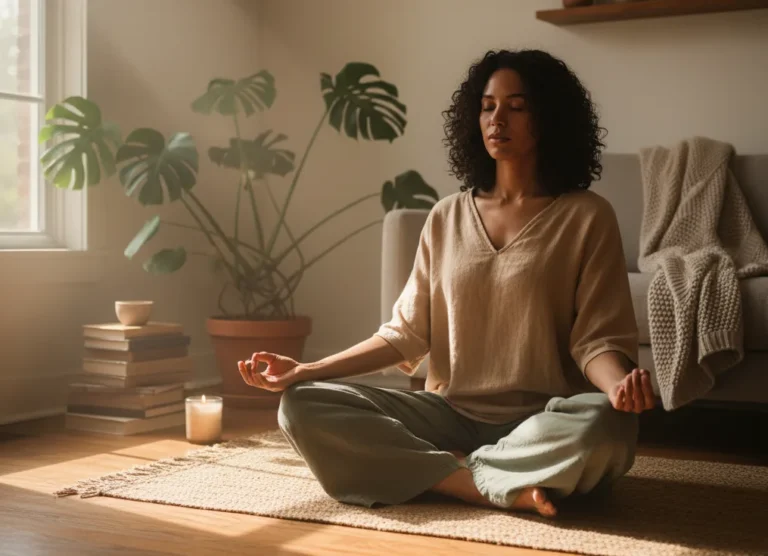
    Yoga Nidra for beginners during a guided deep-rest practice
    Yoga Nidra is usually practised lying down in a comfortable, supported position.

    Does Yoga Nidra help with sleep?

    There is a real reason Yoga Nidra is being studied for sleep, but the evidence needs careful language. A 2025 systematic review of randomized controlled trials included six studies with 244 participants. Most of the studies reported improvements in measures such as sleep quality, time taken to fall asleep, total sleep time, or sleep efficiency. However, the review also found important limits, including different Yoga Nidra methods, small samples, incomplete reporting, and moderate to high risk of bias in several studies.

    A smaller randomized study in people with chronic insomnia also reported improvements after Yoga Nidra practice. This is useful early evidence, not proof that Yoga Nidra will treat every sleep problem. Persistent insomnia, loud snoring with breathing pauses, severe daytime sleepiness, depression, or other ongoing sleep problems deserve proper medical assessment. If you are unsure whether a few poor nights count as insomnia, read our guide to insomnia and occasional poor sleep.

    For everyday use, a better way to think about Yoga Nidra is as a low-effort wind-down practice. It may help some people move from an alert evening state toward rest. If evenings are already part of your yoga routine, our guide on doing yoga at night explains which kinds of practice are usually easier to place close to bedtime.

    How Yoga Nidra works

    A Yoga Nidra session is not just “lie down and relax.” Traditional and modern schools arrange the stages differently, but there is usually a clear movement from outer awareness toward quieter inner awareness and then back again. The guide gives the mind one simple task at a time, so you are less likely to keep planning, scrolling, or replaying the day.

    A typical session may begin by noticing the room and the contact of the body with the floor. The teacher then guides a rotation of awareness through the body. Breath awareness may follow, without forcing the breath into a special rhythm. Some methods include opposite sensations, simple images, or a short sankalpa. At the end, attention returns slowly to the room before you move.

    The important point is not to chase a special state. If you spend the whole practice checking whether you are “deep enough,” the checking itself becomes work. Comfort, steady guidance, and regular practice matter more than trying to manufacture a dramatic experience.

    Beginner creating a quiet space for meditation and Yoga Nidra
    A quiet room, simple lighting, and fewer phone alerts can make deep-rest practice easier.

    A simple 20-minute Yoga Nidra practice for beginners

    For a first practice, keep the method simple. You can use a calm recording or ask a trained teacher to guide you. If you are practising alone, the following sequence gives you a basic structure without turning rest into another complicated task.

    1. Get comfortable. Lie on your back, or choose another position that lets the body rest without strain. Use a folded blanket under the head or knees if that helps.
    2. Arrive for one minute. Notice the room, the floor under you, and the simple fact that you do not need to go anywhere for the next few minutes.
    3. Choose a simple intention. If you use a sankalpa, keep it short and personal. Do not turn it into a long list of goals.
    4. Move awareness through the body. Notice the right hand, arm, shoulder, then other areas in a steady order. You are noticing, not stretching or contracting each part.
    5. Notice natural breathing. Feel the breath at the nose, chest, or abdomen. Let it change by itself rather than trying to make every breath slow or deep.
    6. Notice sensations. Warmth, coolness, heaviness, lightness, comfort, or restlessness can be observed without needing to fix them.
    7. Rest in wider awareness. For a few minutes, allow sounds, breath, and body sensations to be present together.
    8. Return slowly. Notice the room again, move the fingers and toes, bend the knees if comfortable, and open the eyes when you feel ready.

    Twenty minutes is not a rule. Ten minutes can be useful on a busy evening, while a longer guided practice may suit another day. Music is optional. A quiet voice and clear instructions are usually more useful than a complicated soundtrack.

    Yoga Nidra vs meditation and NSDR

    Yoga Nidra, meditation, and the modern term NSDR, or non-sleep deep rest, overlap but they are not exact synonyms. Meditation is a broad family of practices and is often done seated, although it does not have to be. Yoga Nidra is usually reclined and guided in a more structured sequence. NSDR is a newer umbrella term used for practices that encourage deep rest without ordinary sleep, and Yoga Nidra is often discussed under that umbrella.

    Yoga Nidra itself comes from Indian yoga traditions and has its own teaching lineages and methods. It does not need a newer label to make it useful. If seated meditation feels difficult when you are tired, a reclined guided practice can be an easier place to start. Our beginner guide to yoga and meditation explains how the two practices can fit together without making either one complicated.

    What is the best time to practise Yoga Nidra?

    There is no single best time for everyone. Before bed is popular because there is nothing else to do afterward. An afternoon session can also work when you want rest without automatically taking a long nap. Some students use Yoga Nidra after a gentle asana or pranayama practice because the body is already quieter.

    Try not to practise immediately after a very heavy meal if lying flat feels uncomfortable. If your goal is better sleep, consistency matters more than chasing the perfect hour. A familiar 15- or 20-minute practice at roughly the same part of the evening is easier to judge than changing the method every night.

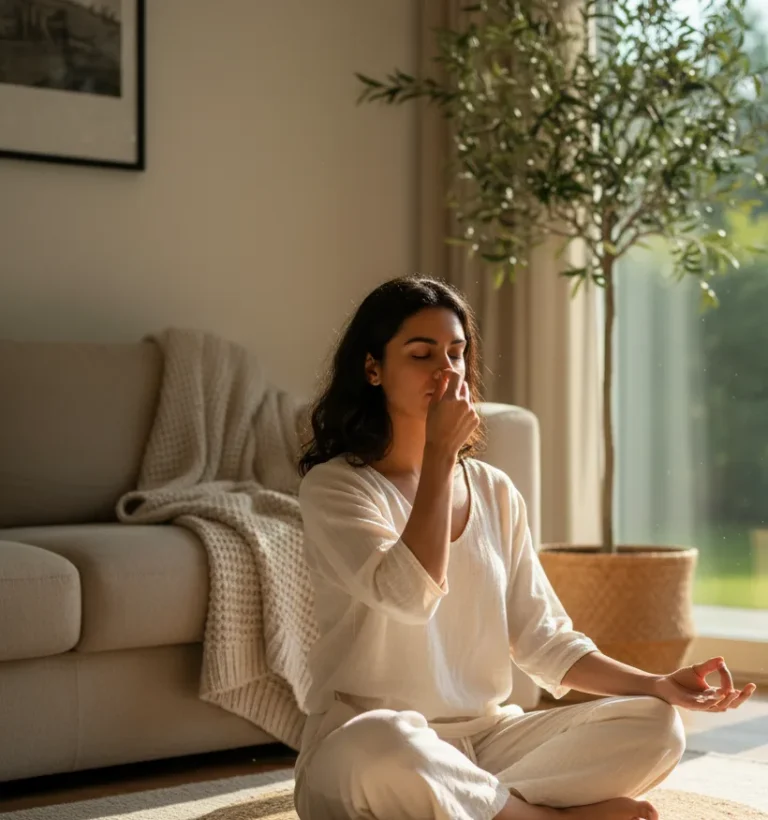
    Yoga student taking a calm breath before a guided rest practice
    A few quiet minutes before Yoga Nidra can help you settle. The practice itself does not require forced breathing.

    Safety and common mistakes

    Yoga Nidra is physically gentle for most people, but gentle does not mean that every session feels comfortable for every nervous system. Lying still with closed eyes can feel vulnerable for some people, especially when there is a history of trauma, panic, or strong anxiety. You can keep the eyes open, sit instead of lying down, shorten the session, or stop. A good teacher gives choices rather than insisting that everyone follow the same position.

    Do not use a Yoga Nidra recording while driving, cooking, bathing, or doing anything that needs full attention. If lying flat causes pain, reflux, breathing difficulty, dizziness, or another symptom, change position and seek appropriate professional advice when needed. Yoga Nidra can support rest, but it should not be used to delay care for a serious sleep or mental-health problem.

    Common beginner mistakes

    • Trying so hard to relax that the practice becomes another performance.
    • Forcing deep breathing when natural breathing feels better.
    • Using an uncomfortable position because Savasana seems “more correct.”
    • Changing recordings every day and never learning one simple method.
    • Feeling guilty for falling asleep during an evening practice.
    • Believing extreme online claims about replacing several hours of sleep.

    Yoga Nidra in yoga teacher training

    For a yoga teacher, guiding Yoga Nidra requires more than reading a script. Pacing, clear language, silence, choice of position, room temperature, props, and how you bring students back all affect the experience. Teachers also need to understand the difference between offering relaxation and making medical or psychological treatment claims.

    At FitFortunes, Yoga Nidra sits inside the wider study of relaxation, meditation, breath, philosophy, and teaching skills rather than being presented as a miracle technique. You can see how these subjects connect in our yoga teacher training curriculum guide. Students considering residential study can also check the current curriculum and practicum for the 200-hour yoga teacher training in Rishikesh before deciding whether the course matches their goals.

    Is Yoga Nidra for sleep worth trying?

    Yoga Nidra for sleep is worth trying as a simple rest practice if you enjoy guided relaxation and want a calmer way to end the day. It is easy to begin, needs little space, and can be adapted to your body. Research on sleep is encouraging, but it is still developing, so the practice is best approached with realistic expectations. Use it to build a better relationship with rest, not to prove that you can force yourself to sleep.

    Frequently asked questions

    Is Yoga Nidra the same as sleep?

    No. Yoga Nidra is usually a guided state of rest in which some awareness may remain. You may fall asleep during the practice, but ordinary sleep and Yoga Nidra are not the same thing.

    Can Yoga Nidra help insomnia?

    Some small clinical studies and recent reviews report better sleep outcomes, so the practice is promising. The evidence is not strong enough to treat it as a guaranteed cure. Persistent insomnia should be assessed properly, especially when it affects daily life.

    How long should a beginner do Yoga Nidra?

    Ten to twenty minutes is a practical starting range. A shorter practice you can repeat comfortably is more useful than forcing yourself through a long session.

    Can I do Yoga Nidra every night?

    Many people can use a gentle practice nightly if it feels comfortable. If it makes you more alert, distressed, or physically uncomfortable, change the timing, method, or position.

    What if I fall asleep during Yoga Nidra?

    Falling asleep is common, especially when you practise at bedtime. You do not need to feel that you failed. If your aim is to learn the full method while staying aware, try practising earlier in the day when you are less sleepy.

    Do I need headphones?

    No. Headphones can help when the room is noisy, but a speaker at a comfortable volume is fine. The important thing is that the guidance is easy to hear without being startling.

    Is Yoga Nidra safe for anxiety?

    Some people find it calming, while others may feel uncomfortable with stillness, closed eyes, or inward attention. Keep choices available, stop if distress rises, and seek qualified support when anxiety is severe or persistent.

    Is Yoga Nidra better than meditation for sleep?

    Not necessarily. They are different tools. Yoga Nidra can be easier when you are tired because you lie down and follow a guide. A seated meditation may suit someone else. The better practice is the one you can use consistently without strain.

  • Best Time for Hatha Yoga Teacher Training in India: Rishikesh by Season

    Best Time for Hatha Yoga Teacher Training in India: Rishikesh by Season

    The best time for Hatha Yoga teacher training in India depends on the climate you practise well in, not on one universal “best month.” In Rishikesh, many students first consider October-November or February-March because conditions are often moderate. Winter suits people who prefer cooler practice. Late spring and early summer are warmer, while July-September brings monsoon rain and more humidity.

    Weather matters during a residential course because you practise, study, eat and rest on a fixed daily rhythm for several weeks. Temperature can change warm-up time, hydration, sleep, clothing and travel planning. It should influence your choice, but it should never outweigh teacher quality, curriculum, practicum, accommodation and the real daily schedule. If Hatha is your main goal, compare the live 200-hour Hatha Yoga Teacher Training after choosing your preferred season.

    Table of contents

    Rishikesh Hatha YTT seasons at a glance

    PeriodTypical planning advantageMain thing to prepare for
    October-NovemberModerate conditions for many studentsCooler mornings as November progresses
    December-JanuaryGood for students who prefer cooler weatherWarm layers for early practice and evenings
    February-MarchBalanced spring conditionsBusier travel periods and warmer afternoons
    April-JuneSuitable if you handle heat wellHydration, ventilation and recovery
    July-SeptemberGreen monsoon settingRain, humidity and extra travel time

    October and November: comfortable for many students

    October and November are popular because the main monsoon period has normally passed and the strongest summer heat has eased. Morning Hatha practice can feel comfortable, while the middle of the day is often suitable for walking between classes. As November progresses, mornings and evenings become cooler, so simple layers are useful. Check the live forecast before travel because seasonal patterns do not guarantee the weather on your exact dates.

    If October is one of your choices, use the October YTT guide for Rishikesh for month-specific packing and travel details. This page compares the full year so you can choose a season first, then use the month-specific guide for final planning.

    December and January: cooler mornings and evenings

    Winter can feel cold before sunrise and after sunset, especially if you arrive from a tropical climate. The middle of the day may feel much milder, so layers work better than one heavy outfit. Ask about hot water, blankets and the yoga hall if you are sensitive to cold. A cooler room can also make long seated classes feel different from a warm afternoon practice.

    Cold weather does not make Hatha training unsuitable. It changes preparation. Give the body time to warm up, keep warm clothes nearby after practice and protect your sleep. Students who dislike heat may prefer these months, while people who struggle with cold mornings may be more comfortable in spring or autumn.

    February and March: a balanced spring option

    February and March often give students a useful middle ground. Mornings can still be cool, while daytime temperatures become warmer as spring develops. That range can make it easier to practise, study and move around Rishikesh without peak-summer heat. It can also be practical if you want a few travel days before or after the course.

    March can be busier because Rishikesh attracts more visitors and yoga events. This does not change the curriculum, but it can affect traffic and extra accommodation outside the school. If you plan to stay longer, book those additional nights separately from the training and keep enough buffer before an international flight.

    April to June: warmer conditions and more recovery planning

    Late spring and early summer become warmer. Students may sweat more and need more attention to hydration, sleep and recovery. Feeling warm can make the body seem more mobile, but warmth is not permission to force range of motion. Hatha practice should still be controlled, progressive and based on what the body can manage that day.

    Before booking a hotter month, ask about ventilation or cooling in the yoga hall and rooms. Check access to drinking water and whether the daily timetable gives real breaks between practical sessions. Students who tolerate heat well can train successfully in these months, but comfort outside class matters because residential study continues all day.

    July to September: monsoon training

    Monsoon changes the practical side of living in Rishikesh. Rain and humidity can make laundry slower to dry, footwear wetter and road journeys less predictable. The hills are green, but travel planning needs more flexibility. Most training happens indoors, so monsoon does not automatically stop a residential course.

    Bring quick-drying clothes, rain protection and waterproof storage for important documents and electronics. Give yourself more time for the journey to Rishikesh rather than booking a tight onward connection. Check current road and weather conditions near the travel date because a seasonal description cannot predict an individual day.

    How weather changes Hatha practice

    Residential teacher training moves between early practice, theory, meals, methodology, practicum and study across a full day. Weather can change how much warm-up, hydration, rest and clothing you need, but it should not change the educational standard of the course. A responsible Hatha teacher adjusts pace and preparation to the people in the room rather than forcing the same intensity in every season.

    Classical Hatha texts also place importance on measured practice and suitable conditions rather than physical display. The Hatha Yoga Pradipika discusses practice discipline, moderation and the environment in which practice is undertaken. A modern residential course should apply the same practical principle: practise consistently, observe the body and avoid treating weather as a test of toughness.

    The curriculum should not change with the season

    The calendar month should not quietly change what the same teacher-training program teaches. A Hatha batch in winter and a Hatha batch in spring should still follow the published learning structure for that course. Season can change warm-up, clothing and recovery, but the core education should remain clear: Hatha asana, pranayama, meditation, philosophy, anatomy, teaching methodology and supervised practice teaching.

    Use the FitFortunes Yoga Teacher Training Curriculum guide to understand the subject areas, and use the live course page for current batch details. This season guide helps you decide when to travel; the curriculum guide explains what you will study once you arrive.

    Current Hatha course timing at FitFortunes

    FitFortunes’ current 200-hour Hatha Yoga Teacher Training in Rishikesh is a 21-day residential program with regular arrivals on the 2nd of each month. That gives students a choice of seasons instead of forcing one annual intake. Confirm the live batch before booking flights because course dates and room availability should always come from the current course page.

    For destination information, the official Uttarakhand Tourism Rishikesh page is a useful external reference. It describes Rishikesh as a year-round destination and provides current travel information. Use seasonal guidance as planning context, then check the actual forecast shortly before departure.

    Packing changes with the season

    Keep the base packing list simple: comfortable practice clothes, modest everyday clothing, study materials, medicines, chargers and easy footwear. Then add only the seasonal layer you need. Winter needs warmer layers, monsoon needs rain protection and quick-dry clothing, and hotter months make breathable fabrics and hydration more important. This avoids carrying four seasons of clothing for one three-week course.

    • Comfortable yoga clothes.
    • Long trousers or simple town clothes.
    • A light jacket, sweatshirt, or shawl.
    • Socks for cooler mornings.
    • Walking shoes and easy sandals.
    • Prescription medicines and basic personal items.
    • Notebook, adapter, and chargers.

    The full Rishikesh YTT packing guide also covers documents, money, medicines, electronics, and what you can leave at home. Check the weather again a few days before departure and adjust the number of warm layers instead of packing for a generic idea of “winter in India.”

    Travel and visa planning

    November can be a busy travel period in North India, so flight and train availability may change as the date approaches. That does not mean there is one guaranteed cheap or expensive November fare. Compare your actual travel dates, leave enough time before the first training day, and avoid building the trip around a tight connection simply to save a small amount.

    For visa information, use the official Government of India visa portal. For the final journey after arriving in Delhi, read the Delhi to Rishikesh travel guide and choose a route that still feels manageable after a long flight.

    How to choose your month

    Start with your own tolerance. If cold affects your sleep, avoid the coolest period. If strong heat reduces your energy, choose autumn, winter or early spring. If rain makes road travel stressful, the monsoon may not be your first choice. The best month is the one in which you can arrive rested, practise consistently and recover well between study days.

    1. Choose the temperature range in which you normally sleep and exercise well.
    2. Check flight prices and how many arrival buffer days you can afford.
    3. Check the school’s room conditions and current batch dates.
    4. Then compare the teachers, curriculum and practicum; do not choose a weaker course just for prettier weather.

    The school is still the bigger decision. Teachers, curriculum, practicum, class size and accommodation affect every training day, while the month mainly affects weather and travel. Use the India YTT selection guide to compare those factors before the season makes the decision for you.

    Frequently asked questions

    Which months are easiest for beginners?

    Many beginners find moderate weather easier to manage, so October-November or February-March can be practical starting points. Beginner suitability still comes from the course design and teaching rather than the month. A beginner-friendly program should explain techniques clearly, give sensible options and provide enough time for questions and feedback. Read the beginner YTT guide if you are unsure whether the daily routine suits your current practice.

    Does the season change the certificate or curriculum?

    No. The calendar month does not create a different certification pathway when the same registered program is being taught. The season can affect clothing, warm-up and travel, but the published course requirements should remain consistent. Check the live program details rather than assuming a winter, spring or monsoon batch has a different certificate.

    Should I book months in advance?

    Book when you are confident about the school, dates, and travel plan. Earlier planning can help with room choice and transport prices, but there is no universal rule that every November student must book a fixed number of months ahead. Confirm the cancellation and transfer terms before paying so you understand what happens if travel plans change.

    Can I do Hatha Yoga teacher training during monsoon?

    Yes. Most residential classes are indoors, so rain does not automatically stop training. The bigger issues are humidity, wet clothing and travel delays. Bring rain protection, choose quick-drying clothes and leave extra time for the journey to Rishikesh.

    Choose the season you can study well in

    There is no prize for choosing the coldest, hottest or rainiest month. Choose a course because the teachers, curriculum, practicum and living conditions make sense for you. Then use the season to plan clothes, travel and arrival time so the weather supports the training instead of becoming the main reason you chose it.

  • Yoga Teacher Training in India: Costs, Courses & Locations

    Yoga Teacher Training in India: Costs, Courses & Locations

    Yoga teacher training in India can mean very different things, so the country alone should not decide your course. A useful comparison looks at the teachers, main yoga style, training hours, daily schedule, practicum, accommodation, assessment, and the registration pathway offered by the school. India gives students many choices, from residential study in Rishikesh to programs in Goa, Kerala, Mysuru, and other yoga centres, but the quality and purpose of those courses can differ a lot.

    Why students choose yoga teacher training in India

    India is the historical home of several yoga traditions and still has large communities of teachers, ashrams, schools, and students. That gives international students a chance to study physical practice together with pranayama, meditation, philosophy, teaching method, and Indian cultural context instead of seeing yoga only as a fitness class. The location can add depth, but it does not make every school traditional or every course suitable, so the actual curriculum still needs to be checked carefully.

    Residential training is also common in India. Students often live close to the school, eat meals together, and follow a full study timetable for several weeks. This can make it easier to focus because travel between home, work, and class is removed from the day. It can also feel intense, especially for a first-time visitor, so it is worth reading the schedule and understanding how much rest, self-study, and personal time the course really allows.

    Which yoga teacher training level should you choose?

    The hour number should match your present level and reason for studying. A shorter foundation can suit someone who wants structured learning without committing to a full teacher-training pathway, while a 200-hour course is the common starting point for students who want a broader foundation in practice and teaching. Advanced programs should build on earlier education rather than simply repeat the same material with a larger number attached to the certificate.

    • 100-hour training: a shorter foundation for students who want structured study, practice, and teaching fundamentals without the full 200-hour commitment.
    • 200-hour training: the common foundation level for students who want deeper study of asana, pranayama, meditation, philosophy, teaching methodology, and practicum.
    • 300-hour training: usually intended for students who have already completed a 200-hour foundation and want more advanced education.
    • 500-hour pathway: may be offered as one long program or as a 200-hour foundation followed by 300 additional hours, depending on the school and registration framework.

    FitFortunes currently offers a residential 100-hour course in Rishikesh and a longer 200-hour yoga teacher training. The 100-hour program is a 10-day foundation, while the current 200-hour program is structured over 21 days. Course dates, room choices, and inclusions should still be checked on the live course page before travel or payment because operational details can change.

    Yoga style matters more than a long list of labels

    A course that lists many styles is not automatically better. Students should ask which style forms the main practical base, how much time is actually spent on each method, and whether the teachers are qualified to teach those subjects in depth. Hatha, Vinyasa, modern Ashtanga Vinyasa, Yin, and other methods have different histories and teaching structures, so putting all of them on one sales page can create more confusion than useful choice.

    At FitFortunes, the current 200-hour Multi-Style structure uses traditional Hatha Yoga as the practical base, together with pranayama, meditation, yoga philosophy, teaching methodology, Ayurveda, sequencing, and supervised practicum. When the school discusses Patanjali’s Ashtanga Yoga in philosophy, that means the eight-limbed system described in the Yoga Sutras. It should not be confused with the modern Ashtanga Vinyasa Primary Series, which is not presented as the practical base of this course.

    What registration and certificates actually mean

    A course-completion certificate shows that you finished a particular training. Registration with an outside yoga organisation is a separate matter, and the wording should be checked carefully. For example, Yoga Alliance uses school and teacher registry designations such as RYS and RYT rather than issuing a government teaching licence. A student should verify the school in the organisation’s own directory and read the current requirements instead of relying only on a logo placed on a website.

    FitFortunes also refers to registrations with Yoga Alliance International and the World Yoga Federation. These organisations have their own systems, and their designations are not interchangeable with Yoga Alliance registration. None of these private yoga registries creates one worldwide legal right to teach. Studios, insurers, employers, and local jurisdictions may ask for different documents, so the useful question is what the certificate supports in the country where you plan to work.

    What should a good YTT curriculum include?

    A good curriculum should show more than pose names. Students need time to practise, understand why movements are taught, study breathing and meditation, learn relevant philosophy, understand basic anatomy, and practise communicating with real people. Teaching practicum is especially important because knowing how to perform a posture is different from explaining it, watching a class, managing time, giving safe options, and responding when a student does not understand a cue.

    • Asana practice and alignment principles.
    • Pranayama and breath awareness.
    • Meditation and concentration practices.
    • Yoga philosophy and selected classical texts.
    • Anatomy and movement principles relevant to teaching.
    • Teaching methodology, sequencing, communication, and class planning.
    • Repeated practicum, observation, feedback, and assessment.

    The FitFortunes curriculum guide explains how these areas are organised at the school, while the separate YTT syllabus guide explains how to judge any school’s published syllabus. Keeping those two pages separate helps avoid repeating the same search intent: one describes the FitFortunes curriculum, while the other teaches students how to evaluate a syllabus before they book.

    What daily life is like during residential training

    Residential yoga teacher training is usually a full study day rather than a holiday with one yoga class. A typical schedule may include morning practice, pranayama, meditation, theory, meals, afternoon study, teaching methodology, and practicum. Some schools also include chanting, cleansing practices, excursions, or evening activities, while others leave more personal time. Read the real timetable because two courses with the same number of training hours can feel very different in daily life.

    The physical workload is only one part of the course. Students also need concentration for lectures, note-taking, assignments, self-study, and practice teaching. That is why sleep, food, recovery, and realistic expectations matter. Our daily YTT schedule guide gives a clearer picture of how practice and classroom study fit together during residential training.

    How much does yoga teacher training in India cost?

    There is no reliable single price for all of India. Fees change with training length, location, room type, class size, meals, teacher experience, facilities, and what is included in the package. A cheaper course can still be good, and an expensive course can still be poorly organised. The useful comparison is the total cost of the trip and the amount of real teaching, accommodation, food, practicum, and support included in that price.

    As a current FitFortunes reference, the residential 200-hour program is listed at USD 1,199 for a shared room and USD 1,499 for a private room. These figures are for FitFortunes, not a claim about the whole Indian market. International students should also budget for flights, visa costs, local transport, travel insurance, personal spending, and extra accommodation around the course. The Rishikesh YTT cost guide covers those extra expenses in more detail.

    How Rishikesh, Goa, Kerala, and Mysuru differ

    Location changes the atmosphere around the course, but it should not replace curriculum quality as the main decision. Rishikesh has a dense yoga and ashram community and is popular for residential teacher training. Goa offers a coastal setting and many seasonal programs. Kerala is strongly associated with Ayurveda and South Indian culture, while Mysuru is closely connected with modern Ashtanga Vinyasa study. Each place can contain excellent and poor schools, so choose the teaching first and the scenery second.

    • Rishikesh: large teacher-training community, ashrams, the Ganga, and many residential schools.
    • Goa: coastal setting with many seasonal schools and retreat-style programs.
    • Kerala: useful for students interested in yoga alongside Ayurveda and South Indian traditions.
    • Mysuru: well known among students interested in modern Ashtanga Vinyasa practice.

    How to compare yoga schools without getting lost in marketing

    Start with information that can be checked. Look for named teachers, a real curriculum, a daily schedule, class size, practicum, assessment, room photos, meal information, booking terms, and a clear explanation of any outside registration. Be careful when a page relies mainly on words such as internationally recognised, ancient, authentic, or healing without explaining what those claims mean. Good schools should be able to answer practical questions without making the student decode sales language.

    • Who teaches asana, philosophy, anatomy, and teaching methodology?
    • What is the main practical yoga style?
    • How many students are in one batch?
    • How much supervised teaching practice is included?
    • How are students assessed before receiving a certificate?
    • What exactly is included in the residential fee?
    • What are the deposit, cancellation, and transfer terms?

    For a deeper school-selection checklist, use our guide to choosing a yoga teacher training in India. Students travelling from abroad should also read the international-student planning guide, which focuses on visas, flights, arrival, money, packing, and the practical side of studying in India rather than repeating this broad course comparison.

    Frequently asked questions

    How much does yoga teacher training cost in India?

    There is no single national fee because programs vary greatly in length, room type, meals, teacher team, facilities, and location. Compare the complete residential package and then add flights, visa costs, insurance, transfers, and personal spending. A very low price is not automatically a problem, but it should still come with a clear timetable, named teachers, practicum, accommodation details, and written booking terms.

    Do I need to be flexible before joining YTT in India?

    No. A beginner-friendly foundation course should not use advanced flexibility as an entrance test. You do need enough general health to follow the daily schedule and enough willingness to practise regularly, study theory, and receive feedback. If you have an injury, recent surgery, or another important health limitation, discuss it with the school before booking so the teaching team can explain whether the program is suitable.

    How long does a 200-hour yoga teacher training take in India?

    The calendar length varies because schools organise the required learning hours in different ways. Intensive residential programs commonly run for several weeks, while part-time courses can spread study over a much longer period. FitFortunes currently structures its residential 200-hour program over 21 days. Always check the live schedule rather than relying on an older blog, because course calendars can be revised.

    Does a 200-hour certificate let me teach anywhere in the world?

    No single yoga certificate creates a worldwide teaching licence. A training certificate can show that you completed a foundation program and may support registration with a private organisation when its requirements are met. Studios, insurers, employers, and countries can still have their own rules. If you plan to work abroad, check the requirements in that market before assuming one registration covers every situation.

    Is Rishikesh better than Goa or Kerala for yoga teacher training?

    Not automatically. Rishikesh has a very large yoga-training community and suits students who want a residential school environment around the Ganga and ashram culture. Goa may suit someone who prefers a coastal setting, while Kerala can appeal to students interested in Ayurveda and South Indian traditions. The stronger choice is the school whose teachers, curriculum, schedule, practicum, accommodation, and policies fit your needs.

    Choose the training, not the promise

    India gives yoga students a very wide range of training options, which is useful only when the differences are made clear. Compare what the school actually teaches, who teaches it, how much practice teaching you receive, where you will live, and what the certificate is meant to support. A strong location and an attractive website can help you feel interested, but the educational structure is what you will rely on once the course begins.

  • Should We Do Yoga Before or After Meditation

    Should We Do Yoga Before or After Meditation

    Table of Contents

    Should You Do Yoga Before or After Meditation? What Hatha Yoga Pradipika Says

    Are you wondering whether to practice yoga after or Before meditation? This is a common question for many seeking to optimize their routines and practices. To provide guidance, we’ll explore insights from the Hatha Yoga Pradipika, an ancient text that outlines the relationship between yoga and meditation. Understanding these teachings can help you decide the best approach for integrating these practices.

    Should You Do Yoga Before or After Meditation
    Should You Do Yoga Before or After Meditation?

    Why Practice Yoga Before Meditation?

    According to the Hatha Yoga Pradipika, doing asana before meditation is often the best choice. Here’s why practicing yoga first might work well:

        • Physical Preparation for Meditation: The Hatha Yoga Pradipika highlights that physical postures (asanas) and breathing exercises (pranayama) prepare the body for meditating. As stated in Shloka 1.17, “By practicing asanas, one can achieve a stable and comfortable posture, essential for meditation.” This preparation is crucial for sitting comfortably and focusing during meditation.
        • Improved Mental Focus: Yoga helps calm the mind and improve concentration. Shloka 2.66 of the Hatha Yoga Pradipika notes, “When the breath is controlled and the body is stable, the mind becomes clear and focused.” Doing yoga before meditation can help achieve this mental clarity, making meditation more effective.

        • Body Detox and Relaxation: Yoga may help release muscular tension and create a calmer transition into seated practice. This aligns with the text’s focus on creating a peaceful environment for meditation, which enhances the overall meditative experience.

      Asana Practice Before or After Meditation: What should be Goal

      In the Hatha Yoga Pradipika, the goal of yoga is to prepare for deeper meditation. Here’s how doing asana practice before meditation supports this goal:

      • Purification of Body and Mind: The text suggests that asana practice helps purify both the body and mind, making meditation more accessible and meaningful. This process aligns with the text’s holistic approach to combining physical and spiritual practices.

      • Smooth Transition to Meditation: By practicing Both, you ensure a smooth shift from physical exercise to mental focus. This approach fits with the Hatha Yoga Pradipika’s teachings on preparing the body and mind for effective meditation.

      Is It Beneficial to Meditate After Yoga?

      While the Hatha Yoga Pradipika suggests that asana is best done before meditating, meditating after yoga also has its benefits:

          • Deep Relaxation: Doing asana first can lead to a state of relaxation, making the following meditation practice more calm and peaceful. This combination supports a balanced approach to health.

          • Balanced Practice: Combining these 2 practices together offers a very good approach to well-being. This method aligns with the principles of the Hatha Yoga Pradipika, which promotes a balance between physical and mental practices.

        Finding the Right Balance in Your Yogic Practices

        The Hatha Yoga Pradipika suggests that practicing asana prior to meditation generally offers the best results. This approach prepares the body and mind for a more effective meditation practice, aligning with the text’s holistic view. However, meditating after yoga can also be beneficial, providing deep relaxation and a balanced practice. Experiment with both methods to discover what works best for you, and find a harmonious integration of both that supports your personal routine and goals.

        A Simple Order for Most People

        1. Begin with a few minutes of easy movement.
        2. Practise asana without rushing.
        3. Use simple breathing or pranayama if it suits you.
        4. Sit for meditation while the body is settled.
        5. Finish quietly instead of jumping straight into another task.

        This order is practical, not compulsory. Some people prefer a short meditation first, especially when they wake early and the mind is already quiet.

        Frequently Asked Questions

        Is it better to meditate before or after yoga?

        For many people, meditation after asana is easier because the body has moved and settled. But there is no rule that fits everyone.

        Can I meditate first in the morning?

        Yes. If you can sit comfortably and focus well before movement, meditation can come first.

        What should I read next?

        See our meditation vs yoga guide, pranayama guide, and eight limbs of yoga.

      1. What are The Benefits of Pranayama in Daily life ? How it improve the Yogic Practice

        What are The Benefits of Pranayama in Daily life ? How it improve the Yogic Practice

        What are The Benefits of Pranayama in Daily life ? How it improve the Yogic Practice

        Table of Contents

        What Are the Benefits of Pranayama?

        Pranayama is the practice of regulating the breath. Slow, comfortable breathing may support calm, focus and better awareness of breathing patterns. Different techniques have different effects, so beginners should start gently.

        PracticeSimple use
        Slow diaphragmatic breathingCalm and breath awareness
        Nadi ShodhanaSteady attention and slower breathing
        BhramariQuiet, focused exhalation
        UjjayiBreath control during some yoga practices

        Strong techniques such as forceful breathing or long breath retention are not ideal for every beginner. Related guides: yoga vs pranayama, 8 limbs of yoga, and yoga before or after meditation.

        Table of Contents

        Benefits of Pranayam
        What are the Benefit of Pranayama

        Understanding the benefits of Pranayama in daily life can significantly enhance both your overall well-being and your yoga practice. Pranayama, the art of controlled breathing, offers numerous physical and mental health advantages, from reducing stress to improving lung function. Integrating the benefits of Pranayama in daily life not only calms the mind but also prepares the body for deeper, more effective yoga sessions. By incorporating this powerful practice into your routine, you can experience a more balanced and fulfilling lifestyle.

        Understanding Prana: The Life Force Beyond Breath in Pranayama.

        Prana is the life force, an energy that drives the entire cycle of creation. Just as metals like gold and silver are purified when heated and exposed to a sacrificial fire, similarly, when a person practices pranayama, their senses become purified.

        Generally, prana is understood as breath, and pranayama as an exercise to increase oxygen levels in the body and strengthen the lungs. While these benefits do occur, they do not represent the true essence of pranayama. To truly understand what pranayama is, what it means, and its real nature, it is important to know the meaning of the words. Pranayama is composed of two words: “prana” and “ayama.” Before understanding pranayama, it is essential to know what prana is, as it is often mistaken for breath or considered synonymous with breathing. However, these two are different.

        What is the Importance of Pranayama in Yoga according to Patanjali

        Pranayam is much more than just breathing; it is the art of controlling the vital energy, or prana, within us. This practice helps in calming the mind and preparing the body for deeper meditation. In the Hatha Yoga Pradipika, Pranayam is described as a powerful method to cleanse the nadis, or energy channels. This purification is essential for reaching higher states of consciousness and spiritual enlightenment.

        The text Hatha Yoga Pradipika emphasizes the importance of Pranayama in the following shloka:

        श्रीतास्य प्राणायामस्य नाशकः सकलांघ्रिवन्धनानाम्।
        प्राणायामेन यथाऽशुद्धाः क्लेशा मरणम् तु ते।
        (Hatha Yoga Pradipika 2.2)
        “Just as the impurities of metal are removed by heating and contact with fire, in the same way, the impurities of the mind are removed by the practice of Pranayama.”

        This shloka highlights the purifying nature of Pranayama, indicating that it helps remove the mental and physical impurities that hinder spiritual growth.

        Moreover, Patanjali’s Yoga Sutras outline Pranayama as the fourth limb of the eightfold path of yoga, known as Ashtanga Yoga. Pranayama serves as a bridge between the physical practices of yoga, such as asanas (postures), and the more subtle practices of meditation and spiritual awareness.

        Patanjali mentions the significance of Pranayama in the following shloka:

        तस्मिन्सति श्वासप्रश्वासयोर्गति विच्छेदः प्राणायामः।
        (Yoga Sutras of Patanjali 2.49)
        “Pranayama is the regulation of the incoming and outgoing flow of breath with retention after securing steadiness in the posture.”

        This shloka underlines Pranayam as a crucial practice that balances the breath, which in turn stabilizes the mind, preparing it for meditation and higher spiritual practices.

        In essence, Pranayam is a foundational practice in yoga that not only purifies the body and mind but also serves as a gateway to meditation and self-realization. Whether described in the Hatha Yoga Pradipika or Yoga Sutras of Patanjali, the importance of Pranayama in achieving a balanced, peaceful, and enlightened state of being is undeniable.

        Importance of Pranayama According to Hatha Yoga Pradipika

        In the Hatha Yoga Pradipika, Pranayam is considered a vital practice for purifying the mind and body. The text emphasizes that controlling the breath is the key to controlling the mind, which is essential for spiritual growth. According to this ancient scripture, Pranayam helps cleanse the nadis (energy channels) and prepares the practitioner for deeper meditation and higher states of consciousness. It is believed that through regular practice of Pranayama, one can achieve balance in both the physical and mental realms, leading to improved health, inner peace, and spiritual awakening.

        Sanskrit Shloka from Hatha Yoga Pradipika:

        सूतः चले वाते चलं चित्तं निष्चले निष्चलं भवेत् | योगी स्थाणुत्वमाप्नोति ततो वायुं निरोधयेत् ||

        Transliteration:

        Sūtaḥ
        Chale vāte chalaṃ chittaṃ niścale niścalaṃ bhavet
        Yogī sthāṇutvamāpnoti tato vāyuṃ nirodhayet

        Translation:

        “When the breath moves, the mind also moves. When the breath is still, the mind becomes still. The yogi attains steadiness by restraining the breath.”

        What are the Benefits of Pranayama in Daily Yoga Practice

        Incorporating Pranayam into your daily yoga practice offers a wide range of benefits that enhance both physical and mental well-being. Firstly, Pranayam significantly improves lung capacity and respiratory health, which is particularly beneficial for individuals dealing with asthma or other respiratory conditions. By practicing controlled breathing techniques, the lungs become more efficient, leading to better oxygenation of the blood and improved overall respiratory function.

        Secondly, Pranayam is a powerful tool for reducing stress and anxiety. By focusing on the breath, practitioners can calm the mind, slow down the heart rate, and reduce mental chatter. This creates a sense of inner peace and relaxation, making it easier to manage daily stressors and maintain emotional balance.

        Additionally, Pranayam plays a crucial role in detoxifying the body. The deep, controlled breaths help in flushing out toxins from the body, supporting better digestion and overall metabolic health. This cleansing effect can also lead to clearer skin and a healthier immune system.

        Moreover, regular practice of Pranayam can boost energy levels and increase concentration. The increased oxygen intake during Pranayama revitalizes the body, making you feel more energized and focused throughout the day. This heightened concentration and mental clarity can be particularly beneficial for those seeking to improve their productivity or engage in meditation practices.

        How to incorporate Pranayama into your yoga routine:

        1. Start with a few minutes of breathing exercises before your yoga poses. This helps your mind and body get ready.

        2. Begin with basic techniques like Nadi Shodhana or Ujjayi. These are easy to learn and will help you feel better right away.

        3. As you get better, try more advanced techniques like Kapalabhati or Bhastrika.

        4. Practice Pranayam in a quiet place where you won’t be disturbed. This will help you focus on your breathing.

        Different Types of Pranayama Techniques

        There are various Pranayama techniques, each serving a unique purpose. For example, Nadi Shodhana, or alternate nostril breathing, is known for balancing the nervous system. It helps in calming the mind and reducing stress. Ujjayi Pranayama, often called “victorious breath,” is used to build internal heat and focus the mind. Kapalabhati, or “skull-shining breath,” is an energizing technique that cleanses the respiratory system. Each of these practices offers different benefits, yet they all share a common goal: to regulate the breath and control the flow of prana within the body.

        Here are 6 popular Pranayama techniques that are suitable for beginners

        • Nadi Shodhana
        • Ujjayi
        • Bhramari 
        • Anulom Vilom
        • Dirgha Pranayama
        • Bhastrika 
        • Sheetali 
        • Sitali 
        • Surya Bhedana Pranayama
        • Chandra Bhedana Pranayama
        • Brahmari
      2. What are the 8 Limbs of yoga in Yogic Philosophy? Who Wrote them?

        What are the 8 Limbs of yoga in Yogic Philosophy? Who Wrote them?

        Table of Contents

        Introduction: Understanding the 8 Limbs of Yoga

        The 8 Limbs of Yoga, also known as “Ashtanga Yoga” (अष्टाङ्ग योग), are a set of guidelines created by the sage Patanjali in the “Yoga Sutras.” These eight steps help people practice yoga in a way that brings balance to their body, mind, and spirit. Each step is a part of the journey towards living a more harmonious and fulfilling life.

        In this blog post, we will take a closer look at each of the 8 Limbs of Yoga, explaining them in simple language that anyone can understand. By learning and applying these teachings, you can improve your yoga practice and enjoy its many benefits.

        Which Book mention the 8 Limbs of Yoga


        The 8 Limbs of Yoga are outlined in the ancient text known as the Yoga Darshan or the “Yoga Sutras of Patanjali.” This foundational text, written by the sage Patanjali, is central to yoga philosophy and practice. It introduces the 8 Limbs, also referred to as “Ashtanga Yoga,” which provide a structured path for spiritual development and self-discipline, ultimately guiding practitioners to become better individuals.

        Furthermore, Yoga Darshan serves as the philosophy of yoga, deeply rooted in ancient Indian tradition. The term “Darshan” translates to “vision” or “view,” and in this context, it represents a specific perspective on understanding reality and the nature of existence through the practice of yoga.

        Chapters in Yoga Darshan

        Yoga Darshan, primarily found in the “Yoga Sutras of Patanjali,” is divided into four key parts, or “Padas.” Each Pada, in turn, focuses on different aspects of yoga philosophy and practice. To begin with, here is a brief overview of these four parts:

        1. Samadhi Pada (Chapter on Concentration)

          • Focus: The first part, Samadhi Pada, discusses the nature of the mind, its fluctuations, and how to achieve mental focus and concentration. It introduces the concept of Samadhi, the ultimate goal of yoga, which is a state of deep meditation and union with the divine.
        2. Sadhana Pada (Chapter on Practice)

          • Focus: The second part, Sadhana Pada, outlines the practical aspects of yoga. It introduces the 8 Limbs of Yoga (Ashtanga Yoga), which provide a step-by-step guide for living a disciplined and spiritually fulfilling life. This section emphasizes the importance of consistent practice (Sadhana) in achieving spiritual growth.
        3. Vibhuti Pada (Chapter on Powers)

          • Focus: The third part, Vibhuti Pada, delves into the various powers or siddhis that can be attained through advanced yoga practice. Specifically, this section explores how these powers emerge as by-products of deep meditation and concentration. However, it is important to note that Vibhuti Pada also warns against becoming attached to these powers, as they can ultimately distract from the ultimate goal of liberation.
        4. Kaivalya Pada (Chapter on Liberation)

          • Focus: The fourth and final part, Kaivalya Pada, addresses the nature of liberation (Kaivalya) and explores how it can be attained. In this section, the text delves into the concepts of Purusha (pure consciousness) and Prakriti (the material world). Additionally, it explains how one can transcend the limitations of the physical world to achieve spiritual freedom.
        8 limbs of yoga

        Table of Contents

        Introduction: Understanding the 8 Limbs of Yoga

        The 8 Limbs of Yoga, also known as “Ashtanga Yoga” (अष्टाङ्ग योग), are a set of guidelines created by the sage Patanjali in the “Yoga Sutras.” These eight steps help people practice yoga in a way that brings balance to their body, mind, and spirit. Each step is a part of the journey towards living a more harmonious and fulfilling life.

        In this blog post, we will take a closer look at each of the 8 Limbs of Yoga, explaining them in simple language that anyone can understand. By learning and applying these teachings, you can improve your yoga practice and enjoy its many benefits.

        Which Book mention the 8 Limbs of Yoga


        The 8 Limbs of Yoga are outlined in the ancient text known as the Yoga Darshan or the “Yoga Sutras of Patanjali.” This foundational text, written by the sage Patanjali, is central to yoga philosophy and practice. It introduces the 8 Limbs, also referred to as “Ashtanga Yoga,” which provide a structured path for spiritual development and self-discipline, ultimately guiding practitioners to become better individuals.

        Furthermore, Yoga Darshan serves as the philosophy of yoga, deeply rooted in ancient Indian tradition. The term “Darshan” translates to “vision” or “view,” and in this context, it represents a specific perspective on understanding reality and the nature of existence through the practice of yoga.

        Chapters in Yoga Darshan

        Yoga Darshan, primarily found in the “Yoga Sutras of Patanjali,” is divided into four key parts, or “Padas.” Each Pada, in turn, focuses on different aspects of yoga philosophy and practice. To begin with, here is a brief overview of these four parts:

        1. Samadhi Pada (Chapter on Concentration)

          • Focus: The first part, Samadhi Pada, discusses the nature of the mind, its fluctuations, and how to achieve mental focus and concentration. It introduces the concept of Samadhi, the ultimate goal of yoga, which is a state of deep meditation and union with the divine.
        2. Sadhana Pada (Chapter on Practice)

          • Focus: The second part, Sadhana Pada, outlines the practical aspects of yoga. It introduces the 8 Limbs of Yoga (Ashtanga Yoga), which provide a step-by-step guide for living a disciplined and spiritually fulfilling life. This section emphasizes the importance of consistent practice (Sadhana) in achieving spiritual growth.
        3. Vibhuti Pada (Chapter on Powers)

          • Focus: The third part, Vibhuti Pada, delves into the various powers or siddhis that can be attained through advanced yoga practice. Specifically, this section explores how these powers emerge as by-products of deep meditation and concentration. However, it is important to note that Vibhuti Pada also warns against becoming attached to these powers, as they can ultimately distract from the ultimate goal of liberation.
        4. Kaivalya Pada (Chapter on Liberation)

          • Focus: The fourth and final part, Kaivalya Pada, addresses the nature of liberation (Kaivalya) and explores how it can be attained. In this section, the text delves into the concepts of Purusha (pure consciousness) and Prakriti (the material world). Additionally, it explains how one can transcend the limitations of the physical world to achieve spiritual freedom.
        8 limbs of yoga

        Further Reading on Yoga

        What Are the 8 Limbs of Yoga?

        LimbSimple meaning
        YamaHow we relate to others
        NiyamaPersonal discipline and habits
        AsanaSteady posture
        PranayamaBreath regulation
        PratyaharaTurning attention inward
        DharanaConcentration
        DhyanaMeditation
        SamadhiDeep absorption

        The eight limbs are presented in Patanjali’s Yoga Sutras. They are not eight separate yoga styles. They describe a wider path that includes ethics, posture, breath, attention and meditation. Related reading: purpose of the 8 limbs, Ahimsa in yoga, and benefits of pranayama.

        Yoga is more than just doing poses. It’s a way of life that helps us feel better mentally and spiritually. The 8 Steps of Yoga are like a path to inner peace.


        1. Yamas (यमास) – Ethical Guidelines

        The Yamas are ethical guidelines that govern how we interact with the world around us. They represent our moral compass and lay the foundation for a mindful and compassionate life.

        Sutra 2.30 states:

        “Ahimsa Satya Asteya Brahmacharya Aparigraha Yamaḥ.”

        • Ahimsa (अहिंसा): Non-violence: Practicing kindness and compassion towards ourselves and others. This principle encourages us to act with empathy and avoid causing harm through words or actions.

        • Satya (सत्य): Truthfulness: Being honest and authentic in our interactions. Satya guides us to speak the truth while considering the impact of our words on others.

        • Asteya (अस्तेय): Non-stealing: Respecting the property and rights of others. This principle emphasizes the importance of integrity and honesty.

        • Brahmacharya (ब्रह्मचर्य): Moderation: Managing desires and maintaining balance. Brahmacharya encourages us to use our energy wisely and avoid excesses.

        • Aparigraha (अपरिग्रह): Non-attachment: Letting go of greed and material attachments. This Yama teaches us to live simply and appreciate what we have without clinging to it.


        2. Niyamas (नियमास) – Personal Observances

        Niyamas are personal observances that focus on self-discipline and spiritual growth. They help cultivate inner purity and personal integrity.

        Sutra 2.32 states:

        “Sauca Santosa Tapas Svadhyaya Isvarapraṇidhanani Niyamaḥ.”

        • Saucha (शौच): Cleanliness: Maintaining physical and mental cleanliness. Saucha encourages us to keep our surroundings and ourselves clean to support overall well-being.

        • Santosha (संतोष): Contentment: Finding satisfaction with what we have. Santosha teaches us to cultivate a sense of inner peace and contentment, regardless of external circumstances.

        • Tapas (तपस्): Discipline: Embracing self-discipline and perseverance. Tapas involves making consistent efforts and enduring challenges to achieve personal growth.

        • Svadhyaya (स्वाध्याय): Self-study: Engaging in self-reflection and learning. Svadhyaya encourages us to study sacred texts and reflect on our actions and thoughts to gain deeper self-awareness.

        • Ishvara Pranidhana (ईश्वर प्रणिधान): Surrender to a Higher Power: Trusting in a higher power or the divine. This Niyama involves letting go of ego and surrendering to a higher force or universal truth.


        3. Asana (आसन) – Physical Postures

        Asana refers to the physical postures practiced in yoga. These poses are designed to strengthen and balance the body, improve flexibility, and prepare the mind for meditation.

        Sutra 2.46 states:

        “Sthira-sukham asanam.”

        Sutra 2.46 states:
        “Prayatna-Saithilyam ananta-samapattibhyam.”

        • Purpose of Asanas: Asanas help to cultivate physical strength, balance, and flexibility. They also serve as a means to align the body and mind, creating a foundation for deeper practices.

        • Practicing Asanas: Start with basic poses and gradually progress to more advanced ones. Focus on maintaining proper alignment and breathing throughout your practice to maximize the benefits of each pose.


        4. Pranayama (प्राणायाम) – Breath Control

        Pranayama involves controlling and regulating the breath to enhance energy flow and mental clarity. It is a vital practice that connects the body and mind through the breath. Pranayama involves the conscious control of breathing patterns. This includes techniques to extend, slow down, and regulate the breath, which helps to harmonize the body’s energy and calm the nervous system

        Sutra 2.49 states:

        “Tasmin satii Svasa-prsvayoḥ gati-vicchedah praṇayamah.”
        Translation: “In that [state of posture], the regulation of the breath by controlling the inhalation and exhalation is Pranayama.”

        • Types of Pranayama: Techniques such as Deep Breathing (Dirgha Pranayama), Alternate Nostril Breathing (Nadi Shodhana), and Ujjayi (Victorious Breath), Full yogic Breathing help to balance energy and calm the mind.

        • Benefits of Pranayama: Regular practice of pranayama can improve respiratory function, reduce stress, enhance focus, and promote overall well-being.


        5. Pratyahara (प्रत्याहार) – Withdrawal of Senses

        Pratyahara involves withdrawing the senses from external distractions and turning inward. This practice helps to calm the mind and prepare it for deeper concentration.

        Sutra 2.54 states:

        “Yatantah Pratyaharah.”

        Translation: “Pratyahara is the withdrawal of the senses from external objects.”

        • Purpose of Pratyahara: By reducing sensory input, we can quiet the mind and increase awareness of our inner state. This practice supports mental clarity and concentration.

        • How to Practice: Engage in meditation or mindfulness practices to focus inward and observe your thoughts and sensations without judgment.


        6. Dharana (धारणा) – Concentration

        Dharana is the practice of concentration, or focusing the mind on a single point of focus. It is a crucial step in developing the ability to maintain sustained attention.

        Sutra 3.1 states:

        “Desa-bandhahs cittasya dharana.”

        Translation: “Concentration is the binding of the mind to a particular place or object.”

        • Techniques for Dharana: Use a physical object, mantra, or breath as a point of focus during meditation. This helps to train the mind to remain attentive and reduce distractions.

        • Benefits of Dharana: Enhanced concentration leads to better mental clarity and the ability to direct your attention effectively in daily life.


        7. Dhyana (ध्यान) – Meditation

        Dhyana is the practice of meditation, characterized by a state of uninterrupted flow of concentration. It involves deepening your awareness and connecting with a higher state of consciousness.

        Sutra 3.2 states:

        “Tatra pratyaya-ekatanata dhyanam.”

        Translation: “Meditation is the continuous flow of consciousness toward that object of focus.”

        • Purpose of Dhyana: Through meditation, we achieve a state of inner stillness and clarity. This practice helps to connect with our true self and experience profound peace.

        • How to Practice: Engage in regular meditation sessions, focusing on your breath or a specific object of meditation. Allow yourself to experience moments of silence and stillness.

          • Meditation: Dhyana involves sustained, uninterrupted attention and awareness on a particular object, thought, or concept. It is characterized by a deep sense of inner silence and immersion in the meditative experience.
          • Continuous Flow: Unlike Dharana (concentration), which focuses on a specific point or object, Dhyana represents the seamless and uninterrupted flow of awareness toward the object of meditation.
            Practice Techniques:
            • Object of Meditation: Practitioners may focus on a mantra, an image, a deity, or their own breath to facilitate meditation.
            • Mindfulness: Maintaining awareness of the present moment without distraction, allowing thoughts to pass without attachment.
            • Guided Meditation: Using guided practices or techniques to support and sustain the meditative state.
          • Benefits of Dhyana:
            • Inner Peace: Dhyana helps cultivate a profound sense of inner calm and tranquility.
            • Enhanced Awareness: Increases self-awareness and insight into one’s true nature and the nature of existence.
            • Emotional Balance: Reduces stress, anxiety, and negative emotions by fostering a deep sense of inner stability.

        8. Samadhi (समाधि) – Enlightenment

        Samadhi is the ultimate goal of yoga, representing a state of complete absorption and enlightenment. It is a state of unity with the divine or universal consciousness.

        Sutra 1.41: “Tasya prashanta-vahita-asmita-bhavanabhyam va.”
        Translation: “The continuous experience of the self in that state leads to a tranquil and all-pervading consciousness.”

        Sutra 1.42: “Tadā dṛṣṭuḥ svarūpe avasthānam.”
        Translation: “Then, the seer abides in its own true nature.”

        Sutra 1.43: “Vrttaya-pano anabhigataḥ.”
        Translation: “The fluctuations of the mind are subdued.”

        Sutra 1.44: “Tada kaivalyam prajnatiḥ.”
        Translation: “In that state, one attains liberation and complete knowledge.”

        • Achieving Samadhi: This state is reached through the culmination of the other seven limbs of yoga. It involves transcending the ego and experiencing a deep sense of oneness and connection. Samadhi is often described as a state of perfect spiritual absorption where the individual self merges with the universal consciousness. It is a state of profound inner peace and realization.

        • Experience of Samadhi: In Samadhi, you experience profound inner peace and spiritual awakening. This state of enlightenment represents the highest achievement in the practice of yoga. It signifies the culmination of the yogic path, where the practitioner experiences a sense of unity and oneness with the divine or the ultimate reality.

          Types of Samadhi:
          • Samprajnata Samadhi (With Awareness): This type involves meditative absorption where the object of meditation is still present in consciousness, but the practitioner experiences a deep sense of connection and clarity. It is characterized by insight and understanding.
          • Asamprajnata Samadhi (Without Awareness): This advanced state of Samadhi is beyond all dualities and concepts. The practitioner experiences pure consciousness without any object of meditation, reaching a state of complete unity and transcendence.
          Benefits of Samadhi:
          • Transcendental Awareness: Provides a direct experience of the ultimate reality and one’s true nature.
          • Inner Peace: Brings a profound sense of peace, joy, and fulfillment beyond ordinary experiences.
          • Spiritual Liberation: Represents the highest state of spiritual realization and liberation (Kaivalya), where the individual self merges with the universal consciousness.
      3. The Art of Sequencing in Yoga:How to Design Effective and Suitable Yoga Classes

        The Art of Sequencing in Yoga:How to Design Effective and Suitable Yoga Classes

        How Can You Master the Art of Sequencing: How to Design perfect and Effective Yoga Classes?

        Table of Contents

        Yoga Class Sequence

        Introduction: What is Sequencing in Yoga?

        Sequencing in yoga is an essential skill for both yoga teachers and practitioners. Specifically, it involves designing the order and flow of poses in a yoga class. This process ensures that each movement builds on the previous one. Consequently, this thoughtful arrangement allows students to move safely, steadily, and mindfully through their practice.

        Moreover, the art of sequencing goes beyond merely linking postures together. It is about crafting an experience that helps students connect with their bodies. Additionally, it allows them to deepen their practice and leave the class feeling balanced and refreshed. Whether you are a teacher planning a class or a practitioner designing your own home practice, understanding the principles of effective sequencing can greatly enhance the quality of your yoga experience.

        Why is Sequencing Important in Yoga?

        The importance of sequencing in yoga cannot be overstated. For instance, imagine entering a yoga class where the poses feel disjointed, with little to no flow between them. This situation can leave you feeling confused, unsteady, and even at risk of injury. Conversely, a well-sequenced class offers a smooth and natural experience. It guides your body and mind through a journey that begins with gentle warm-ups, builds to a peak, and concludes in relaxation.

        1. Enhancing Safety:

        • One of the primary reasons for thoughtful sequencing is safety. To begin with, starting with gentler poses helps warm up the muscles and joints. This preparation is essential for readying the body for more challenging postures. For instance, jumping straight into deep backbends without proper preparation can strain the spine and potentially lead to injury. In contrast, sequencing allows the body to gradually open up, thereby reducing the risk of strains or overstretching.
        2. Achieving a Balanced Practice:
        • A well-sequenced class ensures that all parts of the body are engaged and balanced. For example, after focusing on one area, such as the shoulders, the sequence should then move to another area, like the hips or legs. This approach creates a well-rounded practice. As a result, it helps prevent overworking any single muscle group, which could otherwise lead to discomfort or injury over time.

        3. Maintaining Flow and Focus:

        • Flow is a key aspect of yoga, and it is often associated with the concept of “vinyasa,” where movement is synchronized with breath. Consequently, effective sequencing maintains this flow, allowing students to transition seamlessly from one pose to the next. This smooth progression helps keep the mind focused and present. As a result, the practice becomes not just physical but also a form of moving meditation.
        4. Managing Energy Levels:
        • The energy in a yoga class should build and then gradually taper off. A well-planned sequence starts slow, gradually increases in intensity, reaches a peak, and then cools down. This natural rise and fall of energy levels help students leave the class feeling refreshed, not exhausted. It balances the nervous system, helping to relieve stress and promote relaxation.

        How to Start Creating an Effective Yoga Sequence?

        Creating a yoga sequence may seem daunting at first. However, by following a few basic principles, you can craft a class that flows naturally and feels cohesive. The process begins with setting an intention and understanding the needs of your students—or your own body if you’re practicing solo.

        1. Setting Your Intention:
        • The intention is the heart of your sequence, as it provides purpose and direction to the practice. For instance, are you focusing on building strength? Alternatively, perhaps you want to emphasize flexibility, or maybe your goal is relaxation and stress relief. Whatever your intention, it will guide your choice of poses and the overall structure of the class.

          For example, if your intention is to create a calming and restorative class, you might choose poses that are gentle, involve deep stretching, and emphasize longer holds. Conversely, a class designed to build strength might include more standing poses, balances, and core work.

        2. Choosing a Peak Pose:

        • The peak pose is the most challenging or central posture of your sequence. Everything before it prepares the body for this pose, and everything after it helps cool down and integrate the work done. Selecting a peak pose gives your sequence a clear focus and helps to structure the class logically.

        For instance, if your peak pose is Urdhva Dhanurasana (Upward Bow Pose), your sequence should include poses that open the chest, strengthen the arms, and prepare the spine for a deep backbend. This might include postures like Bhujangasana (Cobra Pose), Setu Bandhasana (Bridge Pose), and Virabhadrasana I (Warrior I Pose).

        3. Designing the Warm-Up:
        • A good warm-up is crucial for any yoga sequence. It prepares the body for the more intense work to come by gently stretching and mobilizing the muscles and joints. In the context of a morning yoga class, this could involve movements that wake up the spine, like Cat-Cow stretches, or poses that gently engage the legs and arms, such as Downward-Facing Dog or gentle lunges.

        The warm-up should be dynamic, moving through different planes of motion to ensure that the entire body is ready for the practice ahead. It’s also a good time to focus on breathing, helping students to connect with their breath, which will support them throughout the practice.

        4. Building the Flow:
        • After warming up, gradually introduce more challenging poses that lead towards your peak pose. This is the main body of your sequence and should be designed to flow smoothly from one posture to the next. For example, a sequence leading to Ardha Chandrasana (Half Moon Pose) might include preparatory poses like Utthita Trikonasana (Extended Triangle Pose), and Virabhadrasana II (Warrior II Pose), which build strength and balance.

        It’s important to maintain a sense of progression in this phase. The poses should build upon each other, increasing in intensity, but also providing opportunities for recovery and integration. This ensures that students are neither overwhelmed nor under-challenged.

        5. Cooling Down:
        • Once the peak pose has been completed, it’s time to cool down. The cool-down phase is all about bringing the body back to a state of rest. It should include poses that release any tension built up during the more active part of the sequence. Gentle forward bends, supine twists, and hip openers are excellent choices for cooling down.

        Cooling down helps to calm the nervous system, stretch out the muscles, and transition the body and mind into a more relaxed state. It’s the perfect preparation for the final relaxation pose, Savasana.

        6. Ending with Savasana:

        • Savasana, or Corpse Pose, is the final posture of almost every yoga class. While it may seem simple, it is one of the most important parts of the practice. Savasana allows the body to absorb all the benefits of the practice, promoting deep relaxation and a sense of peace.

        Encourage students to lie completely still, focusing on their breath, and letting go of any remaining tension. It’s a moment of surrender and stillness, providing the perfect end to a well-sequenced class.

        Tips for Effective Yoga Sequencing

        Creating a sequence that is safe, balanced, and enjoyable requires attention to detail and a deep understanding of the body’s needs. Here are some additional tips to help you refine your sequencing skills:

        1. Keep it Simple:

        • When planning a sequence, especially for beginners, simplicity is key. Avoid the temptation to include too many complex poses. Instead, focus on a few fundamental postures and explore them deeply. This approach not only makes the class more accessible but also helps students build a strong foundation.

        2. Listen to Your Body:

        • Whether you’re practicing on your own or teaching a class, it’s important to stay attuned to the body’s signals. If something doesn’t feel right, don’t hesitate to modify the pose or adjust the sequence. Flexibility in sequencing means being responsive to the needs of the moment, ensuring that the practice is always safe and beneficial.
        3. Balance Challenge and Rest:
        • A good yoga sequence should balance effort and ease. After a challenging pose like Virabhadrasana III (Warrior III Pose), it’s a good idea to follow with a more restful posture, such as Balasana (Child’s Pose). This approach prevents burnout and helps maintain a steady flow of energy throughout the practice.

        4. Use Transitions Mindfully:

        • Transitions are the glue that holds your sequence together. Moving smoothly from one pose to the next helps maintain the flow and keeps students engaged. Pay attention to how you guide students in and out of poses, ensuring that the transitions are as mindful as the postures themselves.

        5. Keep Your Students in Mind:

        • Always consider the experience level and physical limitations of your students when designing a sequence. What might be appropriate for an advanced class could be too challenging for beginners. Tailoring your sequence to the needs of your students is key to creating a successful yoga class.

        Common Mistakes to Avoid in Yoga Sequencing

        Even experienced yoga teachers can fall into common traps when creating sequences. Here are a few mistakes to watch out for:

        1. Skipping the Warm-Up:

        • Diving straight into challenging poses without adequate warm-up is a recipe for injury. Always take the time to prepare the body, even in shorter classes.
        2. Overloading the Sequence:
        • Including too many poses in a single class can overwhelm students and disrupt the flow. Instead of trying to fit in as many postures as possible, focus on quality and depth in each pose.

        3. Ignoring the Breath:

        • Breath is the foundation of yoga practice. Ensure that your sequence allows for deep, even breathing. If the pace is too fast or the poses too challenging, students may start to hold their breath, which can increase stress and tension.

        4. Lack of Balance:

        • A well-balanced sequence should address all parts of the body, not just one area. Make sure to include a variety of poses that engage different muscle groups and movements to create a holistic practice.

        Conclusion: Designing the Perfect Yoga Sequence

        Mastering the art of sequencing is a journey that requires both knowledge and intuition. By setting a clear intention, understanding the needs of your students, and carefully planning each stage of the class, you can create sequences that are not only effective but also deeply fulfilling.

        Furthermore, remember that the ultimate goal of yoga sequencing is to create a practice that feels harmonious and balanced. Whether you’re teaching a class or practicing on your own, thoughtful sequencing can transform your yoga practice into a powerful tool for physical, mental, and spiritual growth.

        With continued practice and attention to detail, you’ll soon find that creating effective yoga sequences becomes second nature. As a result, you will be able to share the beauty and benefits of yoga with others in a meaningful way