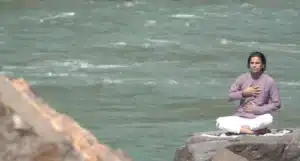

If you are coming to India for yoga teacher training, plan the trip in small steps. Check your entry documents, understand the route to Rishikesh, arrive with a little time to rest, carry more than one way to pay, pack for the season, and bring the medicines and travel information you actually need. Teacher training is easier when the travel part is simple and organised before you leave home.

1. Check your India entry requirements first
Visa and entry rules depend on your passport and can change. Use the official Government of India visa website before paying for non-refundable travel, and read the rules that apply to your nationality and planned stay. Do not rely only on an old blog, a travel forum, or a friend’s previous trip because entry requirements can be updated.
Keep digital and paper copies of your passport, visa approval, flight details, school address, insurance details, and emergency contacts. Store one copy somewhere separate from your passport so you still have the important information if a bag is lost or a phone stops working. A small amount of preparation here can save a lot of stress later.
2. How do international students reach Rishikesh?
Many international students first land in Delhi and then travel toward Rishikesh. Common options include going toward Dehradun and continuing by road, taking a direct taxi, or using a rail-and-road combination. The best choice depends on your arrival time, luggage, budget, and how comfortable you feel after a long flight, because the cheapest route is not always the easiest after ten or fifteen hours of travel.
Use our detailed Delhi to Rishikesh guide for international students to compare the practical options. Check the route again near your travel date because road, rail, and local transport conditions can change. Keep the school address saved offline in case your mobile data is not working when you arrive.
3. Do not schedule your arrival too tightly
If possible, avoid landing in India only a few hours before the first class. International flights can be delayed, immigration and baggage can take time, and the journey to Rishikesh adds another stage after a long flight. Arriving a little early gives you time to sleep, eat, find the school, and adjust to the local time before an intensive residential course begins.
Check the current course page for the exact start date before you book flights. Course dates can change, so plan travel around the live schedule rather than an older article, screenshot, or message. A small arrival buffer is especially useful when the training has early morning classes and a full study day from the beginning.
4. Bring more than one way to pay
International cards can work in India, but a bank can also block a card for fraud protection or one ATM may simply reject it. Carry more than one payment method when possible, tell your bank you are travelling, and keep a small amount of cash for local purchases. Do not keep all of your cards and cash in the same wallet or bag.
- Tell your bank that you are travelling internationally.
- Bring a backup card if possible.
- Keep a small amount of cash for local spending.
- Check foreign transaction and ATM fees before travel.
- Keep emergency money separate from your everyday wallet.
Your course budget should include more than tuition. The Rishikesh YTT cost guide covers flights, local transport, insurance, personal spending, and emergency money so you can plan the full trip rather than only the course fee.
5. Plan your phone and internet needs
A local SIM or eSIM can make maps, taxis, and communication easier, but availability and activation rules can change. Check current provider requirements near your travel date and download important addresses, travel documents, and maps before the final part of the journey. Do not assume that school or hotel Wi-Fi will solve every problem when you need directions or an important document quickly.
If you must work remotely during training, check the course schedule first. Intensive yoga teacher training usually leaves much less free time than students expect because the day includes practical classes, theory, study, meals, and assignments. Reliable internet does not create extra hours in the day, so plan work responsibilities realistically before the course starts.
6. Pack for Rishikesh, not for an Instagram picture
Rishikesh weather changes through the year, and morning or evening temperatures can feel very different from midday. Bring simple layers, comfortable practice clothes, a light shoulder cover when appropriate, footwear that is easy to remove, and something suitable for rain during wetter months. Yoga clothes do not need to be expensive; they need to let you move, sit, and study comfortably for many hours.
7. Food and water are part of your daily routine
FitFortunes residential training includes vegetarian meals. If you have a serious allergy or an important dietary need, tell the school before arrival and ask what can realistically be provided. When you eat elsewhere, choose places that look clean and busy, keep meals simple while your body adjusts, and use safe treated or bottled drinking water according to local guidance and your accommodation’s system.
Do not turn the first week into a food challenge. New spices, a different meal schedule, travel fatigue, and intensive practice can already be a lot for the body to manage at once. Simple, predictable meals and enough water are usually more useful during training than trying every local food immediately.
8. Bring the medicines and health information you need
Carry enough of your regular prescription medicine for the trip, in its original packaging where practical, and bring relevant prescription information. Check airline and entry rules for controlled medicines before travel. Travel insurance can also be useful for an international study trip, but compare policies carefully and understand what is covered rather than buying the cheapest option without reading it.
If you have an injury, recent surgery, or an important medical condition, get appropriate professional advice before intensive training and tell the school about limitations that are relevant to practice. Yoga teacher training is education, not medical treatment, and a teacher needs accurate information to help you make sensible practice choices within the course.
9. Understand what residential YTT feels like
A 200-hour teacher training course is not a sightseeing holiday with one yoga class in the morning. FitFortunes’ 200-hour course is an intensive residential program with practice and theory across the day. Students study subjects such as Hatha Yoga, Vinyasa Krama foundations, pranayama, meditation, anatomy, alignment, philosophy, teaching methodology, and practice teaching, so the daily routine requires focus and energy.
Read what a normal YTT day looks like before deciding whether you can combine the course with remote work, sightseeing, or another major commitment. The current course page should always be used for the latest timetable because schedules can change.
10. Respect local context without pretending to be someone else
You do not need to arrive in India acting as if you already understand every tradition. Curiosity and basic respect are enough. Listen before making assumptions, dress appropriately for the place you are visiting, remove shoes where requested, ask before photographing people or ceremonies, and learn how your school handles classes, meals, and shared spaces.
Yoga study in India can include unfamiliar words, customs, and ideas. You do not have to agree with everything immediately, but you do need to listen carefully enough to understand what is being taught. Treating the experience as study rather than performance usually makes it easier to learn from teachers and from the wider environment.
11. Pack light, but do not forget study items
Bring comfortable yoga clothes, a few everyday clothes, personal toiletries, medicines, adapters, a refillable bottle if suitable for your travel setup, and basic study items such as a notebook and pens. Our complete YTT packing guide gives a longer list. Do not fill your suitcase with things that are easy to buy in Rishikesh, and leave some space for the return journey.
12. Give yourself a departure buffer too
If your budget allows, avoid booking a difficult international connection immediately after the final course activity. Travel from Rishikesh to a major international airport takes time, and road, traffic, or weather conditions can affect the journey. A little margin at the end of the trip reduces stress and gives you time to organise your bags, documents, and onward transport properly.
Seven-day pre-flight checklist
Use the final week before travel to confirm the details that are difficult to fix at the airport. Recheck documents, school information, transport, payment methods, and medicines instead of adding unnecessary last-minute plans. A simple checklist makes it easier to notice what is missing before the travel day becomes busy.
- Recheck your passport, visa, and official entry requirements.
- Confirm your school address, start date, and arrival instructions.
- Download flight, insurance, and accommodation documents.
- Confirm your Delhi-to-Rishikesh route.
- Check bank cards and travel money.
- Pack prescription medicine and essential health information.
- Review the course schedule and beginner readiness guide.
Frequently asked questions
How early should I arrive in Rishikesh before YTT?
If possible, arrive at least a little before the first full training day so you can sleep, eat, and adjust to the local time. The exact amount of time depends on your flight, route, and budget, but arriving only a few hours before class creates unnecessary pressure. Always check the school’s current arrival instructions before booking.
Can I work remotely during yoga teacher training?
It may be possible for a small amount of work, but an intensive residential course leaves less free time than many students expect. Classes, theory, meals, study, assignments, and rest can fill most of the day. If you have important work commitments, compare them with the live timetable before you enrol rather than assuming evenings will always be free.
Do I need a lot of cash in Rishikesh?
No large amount should be carried unless there is a clear reason. Cards and digital payments are common, but systems can fail, so a small cash backup is useful for local purchases and transport. Keep backup money separate from your everyday wallet and check fees with your bank before travel.
What should I wear for yoga teacher training in Rishikesh?
Choose clothes that are comfortable for movement, sitting, and study rather than clothes chosen only for photographs. Bring layers because temperatures change through the day and across seasons. Simple, modest clothing is usually practical for class and for moving around Rishikesh, and weather-specific items should be chosen for the month you are travelling.
Make the travel boring so the learning can be interesting
The best travel plan is not exciting; it is clear. Documents are checked, transport is understood, money has a backup, your body has time to rest, and you know what the training asks from you. Once those details are handled, you can give more attention to the reason you came to India in the first place: learning yoga.
If Hatha Yoga is your main reason for coming to India, first compare where to learn Hatha Yoga in India so the location matches the style and study environment you want. Compare FitFortunes programs on the yoga courses page, or review the current 200-hour residential yoga teacher training for dates, curriculum, accommodation, and the latest practical information.
FINAL TRAVEL CHECK
Before you book your flight to India
Confirm the route, room type and packing plan before paying for non-refundable travel.