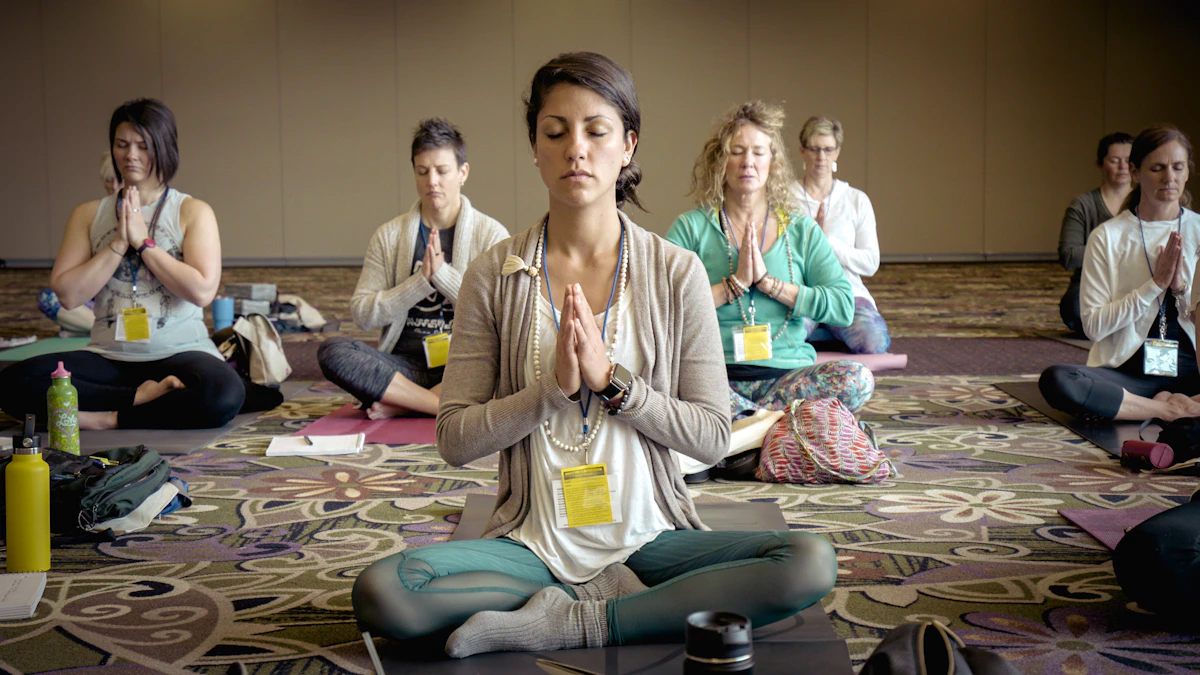
Yoga teacher training (YTT) is worth it if you have a clear reason to take it. That reason might be teaching, deepening your own practice, or adding yoga to an existing career in fitness, physical therapy, or wellness. It is often not worth it if you mainly expect a quick, reliable income, because teaching yoga is usually competitive and part-time at first.
This guide helps you decide by looking at what training includes, what it costs in money and time, who tends to benefit, and how to judge a program before you pay.
A useful first question is not “Will a certificate change my career?” It is “What do I want to be able to understand or teach after the course?” A strong answer makes it easier to compare schools without being distracted by discounts or vague promises.
If cost is your main concern, compare the full expense rather than tuition alone. Our yoga teacher training cost in Rishikesh guide explains tuition, accommodation and other common expenses separately.
Residential training value includes more than tuition. Accommodation, meals, teaching hours and the daily study environment all affect the real cost.
What Yoga Teacher Training Actually Includes
Most entry-level programs follow a 200-hour format. Yoga Alliance currently describes RYT 200 as the foundational credential for many new teachers. Registration is voluntary and it is not a government licence. A student who completes an eligible 200-hour course at a Registered Yoga School can apply for the RYT 200 credential.
That credential can be useful, but it is not the same as teaching skill. Supervised practice, feedback and continued study matter after graduation. Read our separate guide on whether Yoga Alliance certification is worth it if the credential is important to your plans.
🎯
Technique and Practice
Postures, breathing methods, and meditation, practiced in depth so you understand each one, not just perform it.
📐
Anatomy and Safety
Basic anatomy, alignment principles, injury awareness, and offering modifications for different bodies.
📋
Teaching Methodology
Sequencing, cueing, class management, and supervised practice teaching with feedback.
💡
Philosophy and Ethics
Yoga history, key texts, and the professional ethics of working with students.
Costs and Commitments to Weigh
Tuition is only part of the picture. Before enrolling, look at the full commitment.
Factor
What to Consider
Tuition
Varies widely by location, format, and school reputation
Format
Intensive (weeks), weekend-based (months), online, or hybrid
Extra costs
Books, travel, lodging for retreats, registry fees, insurance
Time off
Intensives may require unpaid leave from work
When It Is Worth It
You already practice regularly and want structured, deeper knowledge.
You work in fitness, coaching, or healthcare and want to add yoga to your services.
You have local studios, gyms, or community centers that hire new teachers.
You value personal growth even if you never teach a paid class.
When It May Not Be Worth It
You expect a full-time salary soon after graduating.
You are new to yoga and have not yet built a steady practice.
The cost would cause real financial strain.
You want physical fitness only; regular classes may serve you better.
How to Evaluate a Program
Two programs with the same hour count can differ greatly in quality. Use these checks:
Also check whether the course gives you enough real teaching practice. A certificate can help you meet an entry requirement, but employers and students still need you to communicate clearly, teach beginners responsibly and adapt to different bodies. Our guide on whether 200-hour yoga teacher training is enough explains that difference.
Lead trainers: Ask about their teaching experience and how many hours they personally lead.
Contact hours: Confirm how much is live versus self-paced or pre-recorded.
Practice teaching: Look for regular supervised teaching with feedback, not just one final class.
Graduate outcomes: Ask to speak with past students about what happened after training.
Policies: Read refund, makeup, and completion rules before paying.
💡 Tip: Take several classes with the lead trainers before enrolling. If you do not enjoy how they teach a single class, a 200-hour program with them is unlikely to suit you.
Edge Cases to Think About
Online-only training: It can be affordable and flexible, but some studios prefer in-person experience. Check local hiring expectations first.
Specialty trainings: Prenatal, children’s, or trauma-informed yoga usually build on a 200-hour foundation rather than replacing it.
Health conditions or injuries: Training can be physically demanding. Speak with a healthcare provider and tell the school about any limits in advance.
Teaching abroad: Requirements differ by country and employer, so research the specific places you hope to work.
Is residential yoga teacher training worth it?
Residential training can be good value when you want to focus on study without commuting every day. Accommodation and meals may also make the total cost easier to plan.
The trade-off is intensity. Residential courses can include early mornings, several classes a day, reading, self-study and teaching practice. If you need to keep full-time remote work or another demanding schedule, check the timetable before booking.
Score each statement from 1 to 5. A low score does not mean you should never take training. It may simply mean the timing is not right yet.
I know why I want to take teacher training.
I can afford the full cost without serious financial strain.
I can give the course my attention for the full training period.
I like the teaching style and curriculum.
I understand that certification does not guarantee income.
I am willing to keep learning after graduation.
If most answers are 4 or 5, training may be a sensible next step. If several are 1 or 2, waiting and taking more classes first may give you a better return later.
Usually not. Most schools want consistent practice and curiosity, not advanced postures. Many recommend at least several months to a year of regular practice beforehand.
Is a 200-hour certificate enough to teach?
For many studios and gyms, yes, as a starting point. Ongoing learning, liability insurance, and real teaching experience matter just as much over time.
Summary and Next Step
Yoga teacher training pays off when your goals, budget, and timing line up. Write down why you want to train, set a realistic budget, and attend classes with two or three schools before you commit.
Featured image: Pinkpanther0 / Wikimedia Commons, CC BY 4.0.
St. Pete Yoga Fest 2026 takes place on Saturday, November 7, at Spa Beach Park at St. Pete Pier. The day brings together yoga classes, meditation, music and local wellness businesses in St. Petersburg, Florida.
If you are visiting for the first time, this guide helps you decide which parts of the day suit you. Below are the venue details, types of practice, ticket options and things to bring. The photos come from the festival website and show earlier activities and local scenes.
When and where is St. Pete Yoga Fest 2026?
The festival runs from 9:00 AM to 10:00 PM on November 7, 2026, in local Florida time. The venue is Spa Beach Park at St. Pete Pier, St. Petersburg. Check the St. Pete Yoga Fest official website before travelling for the latest programme and event updates.
You do not need to spend the full day there. First decide whether you want one class, several practices or time to enjoy the public festival. That choice makes it easier to plan your arrival, breaks and return trip.
The organizer lists Vinyasa, restorative yoga, Hatha Yoga, Acro Yoga and partner yoga. Meditation and sound sessions are also part of the offering. Music, local businesses and community activities give visitors other ways to take part between classes.
Choose by the class description rather than its name alone. One Vinyasa class may move much faster than another. If you are new, look for a pace you can follow and tell the teacher about your experience. You can rest or leave out a movement when you need to.
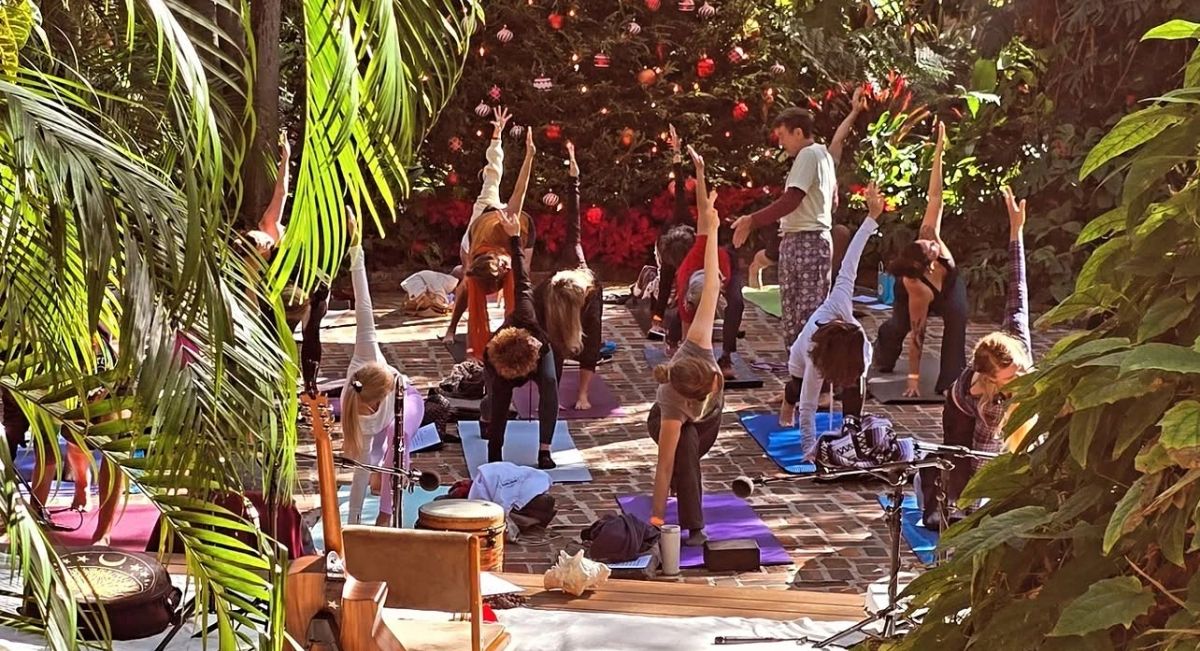
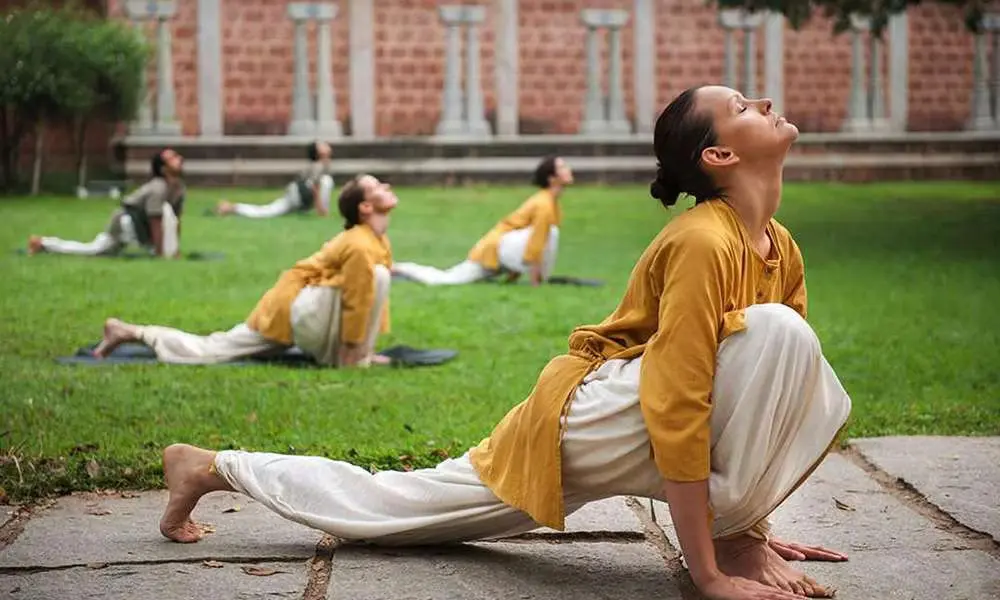
An outdoor yoga class shown on the organizer’s website. This is a past photo, not a photograph of the upcoming 2026 event. Photo source: St. Pete Yoga Fest official website.
A festival gives you a chance to hear different teachers explain familiar ideas. Notice how they guide the breath, offer options and give students time to settle. Trying several classes can be useful, but leave room for a break instead of rushing from one mat to the next.
Hatha Yoga and sound sessions
Hatha Yoga and sound healing appear on the festival’s list of offerings. They give visitors two different ways to take part. A movement class asks you to work with your body and breath. A sound session may involve sitting or lying down and listening.
Read the description of the session you choose. The festival name alone does not tell you its pace, length or format. Ask the teacher what to expect if you are unsure. During a sound session, choose a comfortable position and move farther from an instrument if its volume feels too strong.
Sound bowls and resting participants, from the organizer’s photo gallery. The image illustrates the practice, not a confirmed 2026 session. Photo source: St. Pete Yoga Fest official website.
For readers considering further study, our pages on Hatha Yoga teacher training and sound healing training in Rishikesh explain the school’s courses. A festival session is a short experience; training involves planned study and supervised practice over time.
Vandana Dillon and the festival
Vandana Dillon is the founder of St. Pete Yoga Fest. The festival website says she founded the event in 2011 to bring the community together through yoga and wellness. She is also President of the Florida Yoga Teachers Association.
The Florida Yoga Teachers Association describes Vandana as an E-RYT 200 teacher who has guided yoga and meditation in the Tampa Bay area for many years. Her work includes Yoga Nidra, sound healing, Reiki, meditation, retreats and community programs. She has also led and co-taught 200-hour teacher trainings.
General festival admission is free. Yoga classes need a paid pass. Choose an unlimited pass for several classes or a single-class ticket if you only want one session.
The organizer lists the regular unlimited yoga pass at USD 60 and a single class at USD 20. General entry is free. An unlimited pass may suit you if you plan to attend several classes. A single-class ticket gives you a smaller commitment.
The organizer also lists a USD 44 early-bird pass. Its current availability is not confirmed here. Check the official ticket information and festival booking page before paying. Prices and availability may change.
Planning your visit to St. Pete Pier
The organizers suggest arriving at least 15 minutes before your chosen class or workshop. Parking at the Pier is paid, and spaces can fill later in the day. Check the St. Pete Pier website for directions and parking. Carpooling or a ride-share may make arrival easier.
Plan a break between sessions, especially if you are trying several movement classes. Keep your first class easy to find and allow time to settle on your mat. You can come and go during the public festival. Check the current programme before choosing your final class.
What to bring and wear
Bring a yoga mat and a large towel or blanket, as the ground may be damp. Pack a refillable water bottle, sun protection and any props you normally use. Wear comfortable clothes you can move in. A light layer can be useful when the breeze picks up by the water.
Keep your ticket ready on your phone or bring a printed copy. Complete the required waiver and check the organizer’s instructions before leaving. Carry only what you need for the day, so it is easy to move between practice areas.
Weather and access
The event is listed as rain or shine. The organizer describes the Pier and event spaces as wheelchair accessible, while noting uneven grass in much of the festival area. Contact the festival team before visiting if you need help with access or choosing a suitable practice space.
Plan Your St. Pete Yoga Fest Visit in 5 Steps
Check the official class schedule close to November 7.
Choose your pass based on how many classes you actually want.
Pack a mat, towel, water and sun protection.
Allow extra arrival time for parking, walking and finding your practice area.
Check weather and accessibility updates before leaving home.
Quick Festival Checklist
Item
Why
Yoga mat
Required for most classes
Large towel or blanket
Useful if grass is damp
Water bottle
Outdoor classes can be warm
Ticket or pass
Needed for class access
Common questions
Is St. Pete Yoga Fest free to attend?
General festival admission is free. Yoga classes require a paid pass or a single-class ticket.
Can beginners join the yoga classes?
Yes. The organizer says classes welcome all levels. Read each class description and tell your teacher if you are new.
Do I need to book each class separately?
The festival FAQ says you can attend classes with your yoga pass without separate class registration. Check current instructions before your visit.
Can children attend?
Yes, with a parent or guardian. Children taking part in yoga need the required registration and waiver.
What happens if it rains?
The festival is listed as rain or shine. Check the organizer’s updates for any weather-related changes.
Does a festival pass qualify me to teach yoga?
No. A festival pass gives access to classes. It is not a teacher-training qualification or a Yoga Alliance credential.
For St. Pete Yoga Fest 2026, start with the classes that interest you, then plan your pass and arrival. Check the St. Pete Yoga Fest official website close to the date, as the programme and ticket availability can change.
KEEP READING
From a festival class to deeper study
A festival is useful for meeting teachers and trying different practices. If one session makes you want to study the method in more depth, use these guides next.
FitFortunes is a yoga and sound healing school in Rishikesh, India. We publish practical guides for students comparing yoga training, travel and residential study.
The best way to prepare for Hatha Yoga teacher training in India is to make your routine more stable, not more extreme. In the month before training, focus on regular practice, sleep, simple study, travel planning, and honest awareness of your current limits. You do not need advanced postures. You do need enough consistency to handle a structured residential day without spending the first week recovering from poor sleep, last-minute travel, or overtraining.
This 30-day plan is written for students preparing for foundational Hatha teacher training in India. It is especially useful for residential courses where mornings start early and the day includes asana, pranayama, philosophy, anatomy, teaching methodology, meals, practicum, and study. If you are still deciding whether Hatha is the right format, compare it with our Hatha vs Multi-Style Yoga Teacher Training guide first.
Preparing for residential training also means planning for Rishikesh weather, travel and a different daily rhythm.
Use the first ten days to make practice predictable. Aim for regular sessions instead of one or two very hard classes. If you already practise four or five days a week, keep that rhythm steady. If you practise only occasionally, add shorter sessions gradually rather than suddenly doubling the volume. The aim is to make movement, breathing, and quiet attention feel normal before you enter a full residential schedule.
This is also the right time to notice recovery. Pay attention to sleep, soreness, old injuries, and how long your body needs between harder sessions. A training course is not helped by arriving with an irritated knee, shoulder, or lower back because you tried to get ready too aggressively. Preparation should reduce surprises, not create a new problem.
Practise on several days each week.
Keep at least one lighter day after a demanding session.
Notice where you regularly hold unnecessary tension.
Write down any injury or limitation you should tell the school about.
Begin moving your sleep schedule earlier if your normal routine is very late.
Days 20-14: add study, breathing and quiet sitting
Teacher training asks for more than physical practice, so the second phase should include short periods of study and sitting. Spend ten to twenty minutes reading, taking notes, or reviewing basic yoga terms. Add five to ten minutes of quiet sitting or simple breath awareness. You are not trying to master philosophy or pranayama before the course. You are getting used to the mental shift between movement and study.
Patanjali describes practice through the idea of abhyasa, sustained effort over time, rather than one dramatic session. The Hatha Yoga Pradipika also values moderation, steadiness, and suitable conditions for practice. Those ideas are useful preparation principles today: regular practice, enough rest, and less unnecessary excess usually help more than trying to prove your dedication in the final weeks before training.
Days 13-7: start matching the training rhythm
During the third phase, make your day look a little more like residential study. Wake earlier if needed, practise before breakfast on a few mornings, and spend part of the day without constant phone use. If your course includes early pranayama or meditation, try sitting quietly soon after waking. Small routine changes make the first week of training less of a shock.
This is also the time to check the actual daily schedule. Do not assume a 200-hour course means a few yoga classes with free afternoons. Read what a normal YTT day is really like and compare it with your work obligations, remote calls, sleep habits, and travel plans. If you are trying to maintain a full-time online job during residential training, make that decision before you arrive rather than after the timetable begins.
Days 6-1: reduce friction before travel
The final week is not the time for harder practice. Reduce unnecessary intensity and finish practical tasks. Confirm your arrival instructions, accommodation, payment balance, transport, passport and visa documents, medicines, and weather-specific clothing. Use the Hatha YTT packing checklist before closing your bag. Sleep matters more now than squeezing in one more difficult class.
Keep the final two or three days simple. Walk, practise gently, breathe normally, and leave enough time to pack without rushing. If you are travelling internationally, long flights and time-zone changes already add physical load. Your goal is to arrive ready to learn, not to arrive feeling as if the training has already started at home.
How much yoga practice is enough before Hatha teacher training?
Readiness is about consistency, not advanced poses
There is no useful universal number of months that proves readiness. A steady beginner can be better prepared than someone with years of inconsistent practice. What helps most is familiarity with common movements, the ability to follow simple instructions, and enough body awareness to stop when something feels wrong. You do not need splits, handstands, or extreme backbends.
For Hatha training, focus on steady foundational work. Standing postures, simple forward folds, basic twists, gentle backbends, seated positions, simple balance work, and relaxation are more useful than chasing advanced shapes. Pranayama preparation should also stay simple. Breath awareness, comfortable diaphragmatic breathing, and calm observation are a better base than experimenting with strong techniques without guidance.
If you are a beginner and still unsure about readiness, use our Yoga Teacher Training for Beginners guide. It explains what matters more than flexibility and how to judge whether the daily workload fits your current practice.
What should you read before Hatha Yoga teacher training?
Three useful texts are enough to begin
Do not try to finish a shelf of yoga books in one month. A small amount of careful reading is more useful. The Yoga Sutras of Patanjali can introduce the wider framework of yoga, including practice, discipline, concentration, and the eight limbs. The Bhagavad Gita gives a different philosophical context around action, discipline, and steadiness. For Hatha specifically, the Hatha Yoga Pradipika is useful because it shows that Hatha includes more than asana.
You do not need to agree with or memorise every passage. Read enough to recognise the names and ideas when they appear in class. Keep a few questions in your notebook. Teacher training works better when you arrive curious rather than trying to arrive already certain about every concept.
Preparing your body without overtraining
More practice is not always better preparation. Teacher training can involve repeated movement, long periods of sitting, early mornings, and several hours of attention. That means recovery capacity matters as much as flexibility. Regular walking, adequate sleep, simple strength work, and normal daily movement can support the body as much as adding another hard yoga class.
If you have a previous injury, recent surgery, or persistent pain, seek appropriate professional advice before an intensive course. Tell the school about relevant limitations. A yoga teacher can modify practice within their scope, but teacher training is not a substitute for medical or rehabilitation care. Hiding a problem because you are afraid of being refused admission is usually worse than discussing it early.
Travel, sleep and arrival planning
For international students, travel preparation is part of training preparation. Check official India visa information, confirm the route to Rishikesh, keep digital and paper copies of important documents, and avoid arriving only a few hours before the first class if your schedule allows. A buffer day can help with sleep, food, luggage problems, and time-zone adjustment.
The international student YTT guide covers travel, money, phone access, and other practical details. For the final journey, use the Delhi to Rishikesh travel guide. These logistical details may sound separate from yoga, but they strongly affect how you feel during the first training days.
The mindset that helps most during Hatha training
The most useful mindset is willingness to be a student. You may find that a posture you have practised for years is taught differently. A teacher may ask you to slow down, use less range, or explain why you chose a certain cue. Practicum may feel uncomfortable at first. None of this means you are failing. Training is where assumptions are tested and teaching habits begin to form.
Do not arrive trying to impress the room. Arrive prepared to observe. The student who listens carefully, writes useful notes, asks clear questions, and changes an approach after feedback usually learns more than the student who only wants to demonstrate advanced ability. Hatha training rewards patience because its methods make more sense through repetition and context.
A simple 30-day preparation checklist
Practise regularly, but do not suddenly double your training volume.
Move your sleep and wake times closer to the course routine.
Add five to ten minutes of quiet sitting most days.
Read a small amount of yoga philosophy and write down questions.
Tell the school about injuries or important health limitations.
Review the actual curriculum and daily schedule.
Confirm passport, visa, insurance, and travel plans.
Pack for the season rather than for every possible condition.
Reduce hard practice in the final week.
Arrive rested enough to learn.
For FitFortunes, the current 200-hour Hatha Yoga Teacher Training in Rishikesh is a 21-day residential course. Its Hatha framework includes Asana, Pranayama, Mudra & Bandha, and Nadanusandhana/Nada Yoga, supported by philosophy, anatomy, teaching methodology, and practicum. Use the live course page for current dates, rooms, fees, and arrival details before booking travel.
Frequently asked questions
Do I need to practise yoga every day before YTT?
No. Regularity matters more than a perfect daily streak. Several consistent sessions each week, combined with rest, walking, and sleep, can prepare you better than daily hard practice that leaves you sore or tired.
Should I learn advanced pranayama before Hatha training?
No. Basic breath awareness is enough preparation. Stronger pranayama methods should be learned progressively with appropriate guidance, especially when retention, bandha, or more demanding techniques are involved.
Do I need to read the Hatha Yoga Pradipika before I arrive?
No. Reading a little can help, but teacher training should teach the text in context. It is enough to know that Hatha includes asana, pranayama, mudra, bandha, meditation, and related practices rather than only slow postures.
How early should I arrive in Rishikesh?
If your travel plan allows it, arriving with at least some buffer before the first full training day can make jet lag and transport problems easier to manage. Follow the school’s live arrival instructions before booking extra nights.
What if I am not flexible?
Flexibility is not an entrance exam for foundational teacher training. Safe participation, body awareness, willingness to learn, and respect for your limits matter more than reaching a particular pose shape.
Prepare for the routine, not for a performance
A good final month before Hatha teacher training should make your life more organised and your practice more consistent. It should not make you exhausted. Build habits that help you wake, practise, study, eat, rest, and pay attention. Those habits will support you far more during residential training than one last month of chasing advanced postures.
WHAT TO READ NEXT
Continue preparing for your course
You have the 30-day routine. The next useful step is to check the course format, packing list and daily workload before you book travel.
Considering Hatha Yoga teacher training in Rishikesh?
FitFortunes runs a 21-day residential 200-hour Hatha Yoga Teacher Training. Review the live course page for curriculum, rooms, dates and fees before making travel plans.
Hatha Yoga teacher training anatomy and alignment should help a trainee observe movement, explain options, and teach within a clear professional scope. It should not turn a yoga teacher into a doctor or reduce every posture to one ‘perfect’ shape. The useful question is whether anatomy changes how the trainee sees breathing, joints, balance, load, range of motion, and individual difference. In a good course, anatomy is connected with the postures students practise every day. Alignment then becomes a practical way to organise movement rather than a rigid visual standard.
This matters especially in Hatha training because postures may be held long enough to notice detail. A teacher can observe effort, breathing, balance and control before deciding whether a variation is needed. The aim is not to make every body look identical. It is to understand the purpose of the posture and help the student work with control.
Area
What a trainee should learn
Why it matters
Anatomy
Basic joint actions, breathing mechanics, mobility and stability
Helps explain movement without pretending to diagnose
Alignment
How position changes with body structure, control and purpose
Avoids forcing every student into one shape
Teaching
Observation, simple cues, variations, consent and referral
Anatomy becomes useful when it improves a teaching decision. Trainees need a working understanding of major joints, common movement directions, basic muscle actions, spinal organisation, breathing mechanics, and the difference between mobility and stability. They do not need to memorise every anatomical structure without knowing how it relates to practice. The teacher should be able to look at a movement, understand its basic demand, and decide whether the student needs more support, less range, or a different setup.
This is also why anatomy should appear beside practical classes rather than as an isolated lecture subject. A hip lesson can be connected with standing poses, seated positions, and forward folds. A shoulder lesson can be connected with downward-facing dog, plank, and arm position. When theory and practice are linked, students remember more and are less likely to repeat anatomy terms without understanding them.
What alignment should mean in a Hatha class
Alignment should describe how a body is organised for the purpose of a posture. It should not mean that every knee, pelvis, shoulder, or foot must appear in exactly the same place for every student. Bone proportions, joint structure, mobility, strength, injury history, pain, fear, and previous training all affect how a posture looks. A useful alignment cue helps the student create a stable and understandable position without pretending that one external shape is universally correct.
A trainee should therefore learn to ask three questions before giving a correction: What is the posture trying to do? What is this student currently doing? What is the smallest useful change? This reduces over-cueing and makes teaching clearer. It also helps new teachers stop chasing cosmetic symmetry when the student is already practising safely and with control.
Alignment teaching starts with observation. Students need room to organise a posture before a teacher decides whether a cue or adaptation is useful.
Joints, range of motion and individual difference
Teacher trainees should understand that range of motion is not the same for every person. One student may have a large passive range but poor control. Another may have a smaller range and excellent stability. A third may be limited by bone shape rather than tight muscle. This is why ‘go deeper’ is not a useful universal instruction and why a teacher should not assume that every restriction can be stretched away.
Basic joint knowledge helps trainees make better choices without diagnosing conditions. For example, the hip allows several directions of movement, but a student may need a wider stance or bent knees to keep a forward fold comfortable. The shoulder also depends on the relationship between the arm, shoulder blade, rib cage, and spine. Teaching improves when the trainee observes the whole movement rather than one body part in isolation.
Breathing mechanics are part of alignment
Breath gives immediate information about how demanding a posture is. If a student can no longer breathe comfortably, the position may be too intense, too compressed, or too effortful for the purpose of that moment. Trainees should learn the basic role of the diaphragm, rib movement, abdominal pressure, and posture in breathing. They should also notice that forcing a ‘big breath’ is not always appropriate when the body is under load.
This connects Hatha asana with pranayama study. The physical position should support the breathing method being taught rather than fight against it. A seated pranayama position does not need to look impressive. It needs enough stability and comfort for the student to stay attentive without creating unnecessary strain.
Load, stability and force matter more than flexibility alone
Yoga injuries are often discussed only in terms of flexibility, but trainees also need to understand load. A joint experiences different demands depending on body position, leverage, speed, repetition, fatigue, and external support. A pose that feels easy once may feel very different after many repetitions or at the end of a long training day. Stability and gradual exposure are therefore as important as range of motion.
New teachers should learn to change more than depth. They can shorten a lever, reduce time, use support, change stance, lower repetition, or simplify the transition. These options help a class remain useful without turning every modification into a completely different practice. The goal is to keep the main purpose while reducing unnecessary demand.
Observation should come before correction
A teacher cannot correct well without first seeing what is happening. Trainees should practise where to stand, what to watch, and how to separate important information from visual noise. They can observe breathing, weight distribution, balance, joint position, facial tension, pace, and whether the student understands the instruction. This creates a better teaching process than constantly walking around and adjusting people because the class looks different from the teacher’s own body.
Observation also includes listening. A student may report discomfort even when a posture looks normal from outside. That information matters. A yoga teacher should not dismiss the report because the alignment appears visually correct. The teacher can reduce the demand, offer another option, or stop the movement and recommend appropriate professional assessment when needed.
Verbal cues, demonstrations and hands-on adjustments
Hands-on adjustment should never be the automatic answer to an alignment issue. Often a clear verbal cue, a demonstration, a prop, or a change in setup is enough. Trainees should learn to communicate before touching and to respect consent every time. A student may not want physical contact even if an adjustment is technically possible.
When touch is used within the school’s teaching method, its purpose should be clear and conservative. The teacher should not push a student deeper simply because more range is available. The adjustment should support understanding, stability, or orientation. If the same result can be achieved through words or setup, that may be the better choice.
Professional scope: what a yoga teacher should not pretend to do
Anatomy education does not make a yoga teacher a physiotherapist, doctor, osteopath, or rehabilitation specialist. A teacher can observe movement, adapt a class, explain basic anatomy, and stay within the limits of their training. They should not diagnose injuries, promise treatment, or tell a student to ignore medical advice. Clear scope is part of professional skill, not a weakness.
Trainees should also learn referral language. Instead of saying, ‘Your hip is damaged,’ a teacher can say, ‘This movement is causing pain today, so I would stop it and get the issue assessed by a qualified healthcare professional.’ That language is factual, calm, and within scope. It protects the student and keeps yoga teaching honest.
How classical Hatha texts fit into anatomy and alignment study
The Hatha Yoga Pradipika and Gheranda Samhita are important sources for understanding Hatha practice, but they are not modern anatomy manuals. They discuss asana, pranayama, mudra, bandha, cleansing, concentration, meditation, and other practices within historical systems. A modern teacher-training course should respect those sources while being honest that biomechanics, contemporary anatomy, consent, and professional scope come from later educational needs.
Patanjali’s Yoga Sutras also gives useful context. The familiar idea of a posture being steady and comfortable is often discussed in relation to Sutra 2.46. That does not provide a modern alignment checklist, but it supports an important teaching principle: stability and ease matter. A course should avoid turning a classical aphorism into a claim that one modern posture shape is historically required.
How FitFortunes connects anatomy with Hatha teaching
FitFortunes uses anatomy as a practical support for Hatha teaching rather than as a separate medical subject. Lead teacher Pravesh Narwal is an E-RYT 500 and Ministry of AYUSH Level-3 Health & Wellness Teacher with long professional experience in orthopedic rehabilitation support. That background informs the school’s emphasis on movement observation, sensible variation, and clearer alignment language. The course still keeps yoga teaching within a yoga teacher’s professional scope.
Practical anatomy and alignment checklist for trainees
Use this list to judge whether you are learning anatomy in a way that will improve real teaching. You do not need to know everything at once. You do need to be able to connect the information to a student standing in front of you.
Can I explain the basic purpose of the posture in simple language?
Can I identify the main joints and movement directions involved?
Can I see whether the student has control, not only range?
Can I offer at least one easier setup without changing the whole purpose?
Can I notice when breathing becomes strained?
Can I ask before touching and teach without touch when needed?
Can I recognise when the issue is outside my scope and refer appropriately?
If those answers improve during training, anatomy is doing useful work. The goal is not to impress students with technical terms. It is to make teaching clearer, safer, and more adaptable.
Frequently asked questions
Do I need to memorise every muscle for Hatha teacher training?
No. A foundation course should teach the anatomy that helps you understand common yoga movements and observe students. Detailed memorisation can come later. Practical understanding matters more than reciting long lists.
Is there one correct alignment for every yoga posture?
No. A posture has a purpose, but different bodies may need different positions to work toward that purpose. Structure, mobility, control, pain history, and proportions all affect how a posture looks.
Should yoga teachers physically adjust students?
Hands-on adjustment is optional, not automatic. Clear verbal cues, demonstration, props, and setup changes may work better. When touch is used, informed consent and professional boundaries are essential.
Can a yoga teacher diagnose an injury after studying anatomy?
No. Yoga anatomy education supports observation and class adaptation. Diagnosis and medical treatment belong to appropriately qualified healthcare professionals.
How is Hatha alignment different from forcing a textbook shape?
Useful Hatha alignment looks at purpose, stability, breathing, control, and the individual student. It does not assume that the deepest or most symmetrical-looking version is automatically better.
The useful test is better teaching
Anatomy and alignment deserve time in Hatha teacher training because they improve observation and decision-making. The trainee should leave better able to explain a posture, see differences between students, offer useful options, respect consent, and stay within scope. That is more valuable than memorising anatomy that never changes how a class is taught.
KEEP LEARNING
Use anatomy inside real teaching decisions
Continue with the parts of teacher training that turn observation into class planning, cueing and practicum.
If you want to learn Hatha Yoga in India, choose the school before you choose the city. Rishikesh, Goa, Mysore and quieter Himalayan settings can all support serious study, but they do not offer the same daily experience. The useful question is not which destination looks most impressive online. It is which place gives you the teachers, course structure, practice style and routine that fit your reason for training.
For teacher training, the word “Hatha” in a title is not enough. Read the timetable and ask what is taught every day. A serious program should explain its approach to asana, pranayama, meditation, philosophy, anatomy, teaching methodology and practicum. If it also uses terms such as mudra, bandha or nada, those subjects should have a clear place in the course rather than appearing only in a long marketing list.
Rishikesh offers a strong residential yoga-study setting, but the school and syllabus still matter more than the city name.
Quick comparison: Rishikesh, Goa, Mysore and Himalayan settings
Each location has strengths and trade-offs. Rishikesh offers a large yoga community and many residential schools. Goa gives students a coastal setting and often mixes Hatha with modern flow styles. Mysore has a strong modern asana culture, while smaller Himalayan or rural centres can offer fewer distractions but may have simpler facilities and more travel planning.
Location
Common reason students choose it
What to check carefully
Rishikesh
Residential yoga study, pranayama, philosophy and a strong yoga-school ecosystem
Whether Hatha is truly the main practical method and how much practicum is included
Goa
Coastal setting and programs that may combine Hatha with Vinyasa or other styles
Season, exact style mix, daily schedule and whether the course is more retreat-like or teacher-training focused
Mysore
Established modern asana culture and disciplined practice environments
Whether the program you are considering is actually Hatha-focused rather than mainly Ashtanga Vinyasa
Himalayan or rural campus
Quiet study, smaller communities and fewer outside distractions
Transport, medical access, internet, weather, room comfort and teacher credentials
Rishikesh for traditional residential Hatha study
Rishikesh is one of India’s best-known centres for residential yoga study. Students can find Hatha Yoga, pranayama, meditation, philosophy and teacher training in the same area, often within walking distance of the Ganga. The daily rhythm can suit people who want yoga to shape the whole study day rather than sit beside a normal holiday schedule. Early mornings, simple meals, theory classes and regular practice are common parts of residential training.
The large number of schools is both an advantage and a risk. You have more choice, but the word “Hatha” can mean different things from one school to another. Ask whether the main asana class is Hatha, whether the course also teaches other styles, and how much time is given to teaching practice. A famous location should never replace checking the teacher, curriculum and timetable.
If your goal is focused Hatha teacher training, start with the school’s actual course page after choosing the location that suits you. FitFortunes has a separate 200-hour Hatha Yoga Teacher Training in Rishikesh page with current course details, while this guide helps you compare Rishikesh, Goa, Mysore and quieter training settings first.
Goa for a coastal training environment
Goa appeals to students who want teacher training near the coast. Many programs there combine Hatha with Vinyasa, Yin, Ashtanga Vinyasa or other modern class formats. That can work well when you want variety and the school explains how the methods fit together. It is less useful when a program lists many styles but gives only a small amount of time to each one.
Season also matters. Some coastal schools are strongly seasonal, and heat, humidity or monsoon conditions can change the day-to-day experience. Check whether the yoga hall is comfortable, what accommodation is included and whether the timetable leaves enough recovery time between practical classes. If you are unsure whether a mixed program suits you, read the comparison of Hatha vs Multi-Style Yoga Teacher Training before you book.
Goa offers a very different study setting from inland or Himalayan yoga centres. Photo by Kiran Patel on Pexels; used under the Pexels free-use licence.
Mysore for a strong asana culture
Mysore has an established international reputation for modern Ashtanga Vinyasa practice. Hatha courses are also available, but students should read the syllabus carefully instead of assuming every yoga program in the city has the same focus. A school may use Hatha as one part of a broader physical curriculum. If your main reason for travelling is classical Hatha study, make sure the timetable gives it enough time.
Mysore can suit students who enjoy disciplined practice and want to live in a city with a strong yoga culture. It may be especially attractive to people who already know they want a physically structured daily routine. The key is intent. Choose Mysore because the specific teacher and course fit you, not because the city name alone sounds authoritative.
Mysuru has a long-established international yoga culture, but students should still verify the exact style and syllabus of any Hatha course. Photo by Sumit Kumar on Pexels; used under the Pexels free-use licence.
Himalayan and rural training settings
Smaller mountain or rural campuses can give students more quiet and fewer distractions. This can help when the course includes early practice, study, meditation and self-study. Small communities may also make it easier to know the teachers and other students. The trade-off is that remote schools can require more planning than a school inside a major yoga town.
Check transport before arrival, especially during monsoon or winter. Ask about internet access, room heating or cooling, drinking water, nearby medical care and how students reach the property. A peaceful setting is useful only when basic arrangements are clear. Do not treat remoteness as proof that a school is more traditional or more authentic.
What should a serious Hatha curriculum contain?
Classical Hatha sources make one point very clear: Hatha is broader than a slow posture class. The Hatha Yoga Pradipika, attributed to Svātmārāma, is organised across four chapters that move through asana, pranayama and purification, mudra and bandha, and later meditation, samadhi and nada. The Gheranda Samhita is another important Hatha text and presents its own multi-part system of cleansing, posture, mudra, breath, meditation and related practices. Modern schools do not all follow one fixed historical syllabus, but they should be able to explain what they mean when they use the word “traditional.”
For a teacher-training student, the practical curriculum also needs modern educational areas. Anatomy, movement observation, teaching methodology, ethics, sequencing, supervised practicum and assessment matter because the student is learning to teach other people. A course can respect classical Hatha sources while also using current anatomy and clear professional boundaries. Our detailed Yoga Teacher Training Curriculum guide explains how those areas can fit together.
Hatha asana with clear purpose, progression and appropriate variations.
Pranayama taught progressively rather than as a list of advanced techniques.
Meditation and concentration practice with enough context to understand why they are used.
Mudra and bandha where they belong to the course tradition and are taught responsibly.
Yoga philosophy and named source texts rather than vague claims about “ancient wisdom.”
Functional anatomy, movement observation and basic safety.
Teaching methodology, sequencing, practicum and specific feedback.
Clear assessment and completion requirements.
How to compare Hatha schools before you book
Start with facts that are difficult to fake. Read the timetable. Check the names and qualifications of the teachers who actually teach the course. Look at how much supervised practice teaching is included and how students are assessed. Then compare room type, meals, class size, attendance rules, deposit terms and the total residential cost.
A five-minute check before you shortlist a school
Open the timetable and identify the main daily asana style.
Open the teacher pages and check who teaches the core subjects.
Find the practicum and assessment details, not only the curriculum list.
Check the full residential cost, room type, meals and cancellation terms.
Save only the schools that answer all four points clearly, then compare location and travel convenience.
Next, check whether the school’s language matches the real program. If the page says “traditional Hatha” but most practical classes are Vinyasa, fitness sessions or unrelated wellness activities, ask for clarification. If the school claims international recognition, find out what organisation it means and what that recognition actually allows a graduate to apply for. The wider guide on how to choose a yoga teacher training in India gives a full comparison checklist.
Seven questions worth sending a school before payment
Which practical yoga style is taught every day?
Who teaches Hatha asana, pranayama, anatomy, philosophy and methodology?
How many students are normally in one batch?
How much supervised practice teaching is included?
What assessment must I complete?
Exactly what is included in the residential fee?
What credential can I apply for after successful completion?
How FitFortunes approaches Hatha training in Rishikesh
FitFortunes separates its Hatha training from its Multi-Style program so students can understand the difference before booking. The current Hatha course is a 21-day residential 200-hour program in Rishikesh, with regular arrivals on the 2nd of each month. Hatha is the main practical identity rather than one style hidden inside a long list. Current dates, accommodation and other booking details should always be checked on the live course page before travel.
Lead teacher Pravesh Narwal is an E-RYT 500 and Ministry of AYUSH Level-3 Health & Wellness Teacher. His long background in orthopedic rehabilitation support also shapes the school’s emphasis on alignment, movement observation and sensible variation. FitFortunes describes its traditional Hatha framework through four practical areas: Asana, Pranayama, Mudra & Bandha, and Nadanusandhana/Nada Yoga, supported by philosophy, anatomy, teaching methodology and supervised teaching practice. Students comparing all current programs can also use the FitFortunes Yoga Courses hub.
Book and standards references used in this guide
The historical Hatha references behind this article are the Hatha Yoga Pradipika of Svātmārāma and the Gheranda Samhita. They are useful for understanding why Hatha cannot be reduced to posture alone, but they are not identical manuals and modern teacher-training schools interpret their material differently. For modern professional training, Yoga Alliance publishes its current Registered Yoga School standards separately. Students who care about RYS or RYT pathways should verify the current rules directly on the official Yoga Alliance standards page.
Frequently asked questions
Where is the best place to learn Hatha Yoga in India?
There is no single best place for everyone. Rishikesh suits many students who want residential Hatha study with pranayama, philosophy and a large yoga community. Goa can suit students who like a coastal setting and are comfortable with Hatha mixed with other styles. Mysore has a strong modern asana culture, while quieter Himalayan campuses can suit people who want fewer distractions.
Is Rishikesh good for Hatha Yoga teacher training?
Yes, Rishikesh has many residential yoga schools and a long association with yoga study. Quality still varies widely. Check the exact practical style, teachers, practicum, class size, room arrangements and assessment before choosing a school.
Can a beginner learn Hatha Yoga in India?
Many programs accept beginners, but beginner-friendly does not mean effortless. Regular basic practice, willingness to study, early mornings and a realistic attitude toward feedback make residential training easier. Always check the school’s stated prerequisites before booking.
Is traditional Hatha Yoga the same as a slow yoga class?
No. A slower asana pace may be used, but historical Hatha traditions include much more than posture speed. Pranayama, mudra, bandha, purification, concentration, meditation and nada can all appear in Hatha sources and lineages.
Does Yoga Alliance decide which Hatha style a school must teach?
No single Hatha asana style is imposed on every registered school. Yoga Alliance uses educational standards for Registered Yoga Schools, while schools still teach according to their approved tradition and program structure. Students should therefore compare the actual curriculum as well as registration status.
Continue your Hatha training research in the right order
Choose the training environment that helps you study well, but let the teacher and curriculum make the final decision. A beach, famous yoga town or remote mountain campus cannot compensate for weak instruction or almost no practicum. Compare the real timetable, teaching team, learning outcomes and residential details before you pay. Once those facts are clear, the location becomes a useful part of the decision instead of the whole decision.
NEXT STEP
If Rishikesh is on your shortlist
Move from destination research to practical course comparison. These guides answer the questions most students need before booking.
Hatha and Multi-Style yoga teacher training are different learning paths. A Hatha-focused training gives more time to one main practice framework. A Multi-Style course combines more than one approach so students can compare pacing, sequencing, alignment, and class structure. Neither option is automatically better. The right course depends on how you want to practise, what you want to teach, and how much variety you want during training.
For students comparing yoga teacher training in India, the course title alone is not enough. Two schools may both use the words “Hatha” or “Multi-Style” while teaching very different schedules. The useful comparison is the real curriculum, daily practice, teacher experience, practice-teaching hours, assessment, and how clearly the school explains what is included. This guide compares the two paths without treating one as a winner.
Hatha vs Multi-Style Yoga Teacher Training: quick comparison
Point
Hatha-focused YTT
Multi-Style YTT
Main purpose
Study one main practice framework in greater depth
Learn more than one approach and understand how they differ
Asana emphasis
Classical Hatha practice, steadier pace, posture study and alignment
Depends on the school; at FitFortunes the practical focus is Hatha Yoga and Vinyasa Krama
Sequencing
Usually built around Hatha principles and progression
Students compare different sequencing methods and pacing
Best suited to
Students who want a clear traditional base and less style-switching
Students who want a broader teaching vocabulary and more than one practical method
Teaching preparation
Should still include methodology, practicum, anatomy and professional topics
Should still include the same core teacher-training areas, not only extra asana styles
The most important point is that “Multi-Style” is not a universal syllabus. One school may combine Hatha and Vinyasa. Another may add several unrelated styles and spend very little time on each. Ask the school to name the exact practical styles and show how many hours are given to each. A clear answer is more useful than a long list of yoga names on a sales page.
What Hatha yoga teacher training usually focuses on
A Hatha-focused teacher training normally gives more attention to steady asana practice, alignment, breathing, classical techniques, and the relationship between posture and breath. The pace is often slower than a continuous flow class, but slower does not mean easy. Holding a posture, refining position, and learning how to teach it clearly can be demanding. Students usually repeat key movements often enough to notice details that are easy to miss when the sequence changes every day.
A strong Hatha course should also go beyond physical postures. Pranayama, meditation, mudra, bandha, philosophy, anatomy, teaching skills, observation, and practice teaching may all be part of the program. The exact balance depends on the school and its teaching tradition. If a course uses “traditional Hatha” in its title, ask what that means in its real timetable rather than assuming the phrase has one fixed definition.
A small-group yoga practice illustrating the steady, attentive class setting discussed in Hatha-focused training. Photo by Pavel Danilyuk on Pexels; used under the Pexels free-use license.
What Multi-Style yoga teacher training usually means
Multi-Style training is useful when the styles are chosen for a clear reason. The aim should not be to collect as many yoga labels as possible. A well-planned program uses each method to teach something distinct, such as pacing, sequencing, transitions, alignment, class structure, or adaptation. Students should finish knowing why a method is used and when it may or may not suit a class.
At FitFortunes, the current 200-hour Multi-Style Yoga Teacher Training in Rishikesh uses Hatha Yoga and Vinyasa Krama as its practical style focus. Vinyasa Krama is taught as progressive sequencing rather than as a race through poses. Hatha provides the steadier base. This keeps the combination limited enough for students to understand the differences instead of moving through many styles superficially.
Teacher guidance during a yoga practice, used here to show why alignment, observation and feedback matter in both Hatha and Multi-Style training. Photo by Yan Krukau on Pexels; used under the Pexels free-use license.
Who may prefer a Hatha-focused teacher training?
Hatha training may suit you if you want to spend more time with one main practice method and build confidence through repetition. It can be a good fit for students who value alignment, breath awareness, classical techniques, and a steadier learning pace. It may also suit people who do not want their first teacher training divided between several asana systems. The benefit comes from depth, not from the word “Hatha” itself.
You prefer a steadier practice pace.
You want more repetition before teaching a posture or sequence.
You want one main asana framework rather than several.
You are interested in pranayama, meditation and traditional Hatha practices alongside asana.
You want a clear base before adding faster or more varied sequencing later.
Who may prefer a Multi-Style teacher training?
Multi-Style training may suit students who want to understand how more than one method changes the way a class is built. It can be useful when you enjoy both steady posture work and progressive movement. The value is strongest when the program connects the styles instead of teaching them as separate random classes. Students should be able to explain how pacing, transitions, breath, and sequencing change from one approach to another.
You enjoy both Hatha practice and structured movement sequences.
You want to compare different ways of building a class.
You want a broader base before deciding what you prefer to teach most.
You are comfortable learning two practical systems during the same course.
You want sequencing practice to be a visible part of the training.
What a good 200-hour curriculum should still include
The style name should not replace the teacher-training curriculum. Yoga Alliance’s RYS 200 standards organise the core curriculum into four broad educational areas: Techniques, Training and Practice; Anatomy and Physiology; Yoga Humanities; and Professional Essentials. The standards allow schools flexibility to teach according to their tradition while keeping a common educational framework. You can read the current Yoga Alliance RYS standards directly.
In practical terms, a 200-hour course should not be judged only by how many asana styles appear in the brochure. Look for anatomy, safety, teaching methodology, ethics, philosophy, sequencing, observation, practicum, feedback, and enough guided practice to use the material responsibly. A course with two well-taught practical styles can be more useful than a course listing six styles with very little time for each. The schedule should show how the hours support actual learning.
How to compare yoga schools without getting distracted by style labels
Start with the timetable and curriculum, not the headline. Check how many hours are spent on asana, pranayama, meditation, anatomy, philosophy, methodology, practicum, and assessment. Then look at who actually teaches those subjects. A detailed teacher bio is more useful than a page full of broad claims about “master teachers” or “ancient wisdom.”
Next, check the practical details that affect the whole residential experience. Confirm course length, arrival date, room type, meals, class days, attendance rules, exam or teaching-demo requirements, and what is not included. Read the cancellation and deposit terms before paying. If the school cannot answer simple factual questions clearly before booking, a polished website should not be enough to make the decision.
Questions worth asking before you book
Which yoga styles are actually taught in daily practical classes?
How many practice-teaching hours are included?
Who teaches anatomy, philosophy and teaching methodology?
What assessment must students complete?
Are accommodation and meals included in the listed price?
What happens if I miss classes because of illness?
What does the certificate allow me to apply for after completion?
How the two FitFortunes 200-hour options differ
FitFortunes currently offers separate 200-hour Hatha and Multi-Style training paths in Rishikesh. Both are residential teacher-training options, but the practical emphasis is different. The 200-hour Hatha Yoga Teacher Training keeps Traditional Hatha Yoga as the main style. The 200-hour Multi-Style course combines Hatha Yoga with Vinyasa Krama.
The current 200-hour Multi-Style course runs for 21 days, with regular arrivals on the 2nd of each month. The residential fee is USD 1,199 for a shared room or USD 1,499 for a private room, including accommodation and vegetarian meals. Students who complete the applicable registered training requirements can use their school certificate when applying for the relevant Yoga Alliance registration; Yoga Alliance registration itself is a separate process and should not be described as a teaching licence.
If you are not ready for a complete 200-hour program, the 100-hour Multi-Style foundation course is a shorter preparation option. It is designed for fundamentals and training preparation rather than as a promise that a student can teach after ten days. Choosing the shorter course can make sense when your first goal is personal study or testing whether residential training suits you.
A simple decision checklist
Choose based on the way you want to learn, not on which label sounds more advanced. If you want repetition, a steadier method, and one main practical framework, Hatha-focused training may fit better. If you want to compare steady Hatha practice with progressive sequencing and learn how class pace can change, a limited Multi-Style program may fit better. In both cases, the quality of teaching and practicum matters more than the number of styles printed on the certificate.
Use this five-step check before paying a deposit
Write down whether your priority is depth in one method or experience with two compatible methods.
Open the real timetable and count the hours for practical classes, methodology, anatomy, philosophy and practicum.
Read the lead teachers’ qualifications and check who teaches each major subject.
Compare the total residential cost, room type, meals, attendance rules and assessment requirements.
Only then choose the course whose daily training structure matches the way you actually want to learn.
Is Hatha yoga teacher training easier than Multi-Style training?
Not necessarily. Hatha may move at a steadier pace, but detailed alignment work, longer holds, pranayama, philosophy, and repeated teaching practice can still be demanding. Multi-Style training adds the challenge of understanding more than one sequencing method. Difficulty depends more on the timetable, teaching hours, physical load, assignments, and assessment than on the course label.
Can a beginner choose either Hatha or Multi-Style YTT?
Yes, some 200-hour programs accept beginners, but “beginner-friendly” should not mean no preparation is needed. A student should be ready for regular practice, study, early mornings, feedback, and teaching exercises. Ask the school what baseline practice it expects and whether injuries or mobility limits can be accommodated safely.
Is Multi-Style yoga teacher training less traditional?
Not by definition. A Multi-Style course can still include yoga philosophy, pranayama, meditation, ethics, and traditional Hatha practices. The important question is whether the styles are taught with a clear framework or simply added as marketing labels. Read the real curriculum and daily schedule before deciding.
Does Yoga Alliance require a specific yoga style in a 200-hour course?
Yoga Alliance structures RYS 200 education around core educational categories rather than requiring every school to teach the same named asana style. Schools have room to honour their own lineage or teaching approach while meeting the applicable standards. That is why two registered 200-hour programs can have different practical emphasis.
Which course is better if I want to teach after graduation?
Choose the course that gives you stronger practice teaching, feedback, sequencing skill, safety knowledge, and a method you understand well enough to teach within your competence. A larger number of styles does not automatically make someone more employable. Employers and countries can also have their own requirements beyond one 200-hour certificate.
How can I tell if a Multi-Style course is trying to teach too much?
Look at the timetable. If many styles are advertised but the school cannot show meaningful hours for each one, the list may be mainly promotional. A focused combination of two compatible methods is easier to study properly than several styles squeezed into short sessions. Also check whether methodology and practicum have enough time after the asana classes are counted.
The practical answer
Hatha training is usually the clearer choice when you want depth in one main physical practice. Multi-Style training is useful when you want to understand more than one way of sequencing and teaching, provided the course keeps the combination focused. Before paying a deposit, compare the real timetable, teachers, practicum, assessment, accommodation, meals, and course policies. The style name should help you understand the training, not replace the details. If you are also deciding between Indian locations, compare where to learn Hatha Yoga in India before choosing the city first.
COMPARE THE TWO COURSES
See the actual course structure before choosing
Hatha
One main physical method with a steadier Hatha focus.
October is one of the easier months for many international students to attend yoga teacher training in Rishikesh. The heavy monsoon period is usually ending, days are warm rather than extremely hot, and evenings become noticeably cooler.
Historical climate sources commonly show October daytime temperatures around the high 20s Celsius, with cooler nights around the mid-teens. Weather varies from year to year, so use these figures for packing rather than as a daily forecast.
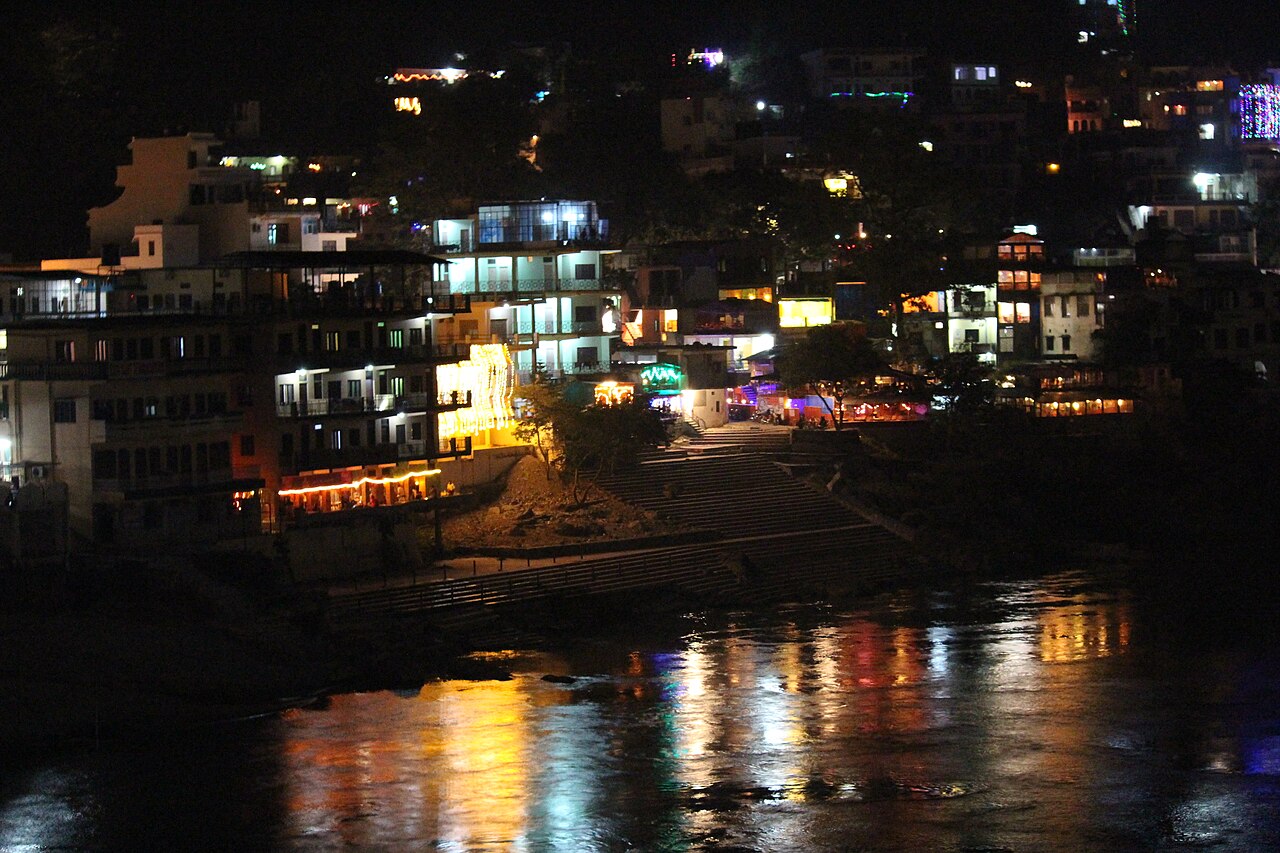
October in Rishikesh is usually a transition from the monsoon period toward cooler autumn weather.
Is October a good month for yoga teacher training in Rishikesh?
For many students, yes. October usually offers a useful balance between warm daytime weather and cooler mornings and evenings. That can make early practice, walking around Rishikesh and long residential training days more comfortable than the hottest summer months.
It is also a popular travel period. That means flights, taxis and rooms outside your course package can become busier around Indian festival dates. If you plan to arrive several days early or stay after training, book those extra nights in advance.
What is Rishikesh weather usually like in October?
Climate averages from several weather sources place October daytime highs at roughly 29-30°C and overnight lows around 15-17°C. Rainfall is much lower than during July and August, although occasional rain is still possible.
The temperature difference between afternoon and early morning matters more than the average number. You may feel warm in the middle of the day and want a light layer before sunrise, after sunset or in an air-conditioned room.
Typical October conditions
Warm days, often around the upper 20s Celsius.
Cooler early mornings and evenings.
Much less rain than peak monsoon months.
Clearer mountain views are common after the rains.
Weather generally becomes cooler as the month progresses.
Always check a current forecast during the week before you travel. Climate averages help with planning, but they cannot tell you what a specific October day will be like.
What should you pack for October yoga teacher training?
Pack for both yoga practice and a wider daily temperature range. Heavy winter clothing is usually unnecessary in Rishikesh itself in October, but one light warm layer can make early mornings much more comfortable.
Useful clothing
Comfortable yoga clothes that allow easy movement.
Lightweight tops and trousers for warm afternoons.
A light sweater, fleece or shawl for mornings and evenings.
Modest casual clothes for walking around town and visiting temples or public places.
Sandals plus comfortable walking shoes.
A light rain layer or compact umbrella, especially in early October.
Yoga teacher training often begins early. A cool morning can feel pleasant for pranayama, meditation and asana, but your body may need more gradual warming than it does on a hot afternoon. Do not assume cooler weather means you should immediately push deeper into postures.
Hydration also remains important. Warm afternoons, several classes and walking around Rishikesh can add up. Keep water nearby and pay attention to how your energy changes through the day.
What does an October training day feel like?
The weather is only one part of the experience. Residential teacher training is structured around classes, meals, study, self-practice and rest. October can make moving between these parts of the day easier because the heat is generally less intense than late spring and early summer.
If you are considering the FitFortunes 200-hour program, check the current 200-hour yoga teacher training in Rishikesh page for course dates, room options, fees and the current curriculum.
Residential training combines daily practice, study and group learning.
Will October be crowded in Rishikesh?
October is a popular month for visitors because the monsoon has usually eased and outdoor travel becomes easier. Yoga students, Indian holiday travellers and international visitors can all be present at the same time.
Crowds vary by week. Festival periods may affect road traffic, train demand, domestic flights and hotel prices. If your training accommodation is included, the main planning issue is usually your arrival and departure rather than finding a room during the course.
October is a popular travel period in Rishikesh, so allow extra time around busy festival dates.
How early should you arrive?
For an international student, arriving at least one day before the course begins is usually more comfortable than reaching Rishikesh immediately before the first class. Extra time helps with jet lag, local transport and settling into the room.
If you are travelling through Delhi, our Delhi to Rishikesh travel guide explains common flight, taxi, train and road options.
Do you need winter clothes in October?
Usually not heavy winter clothing for Rishikesh town, but students who feel cold easily should bring one warmer layer. Late October mornings can feel very different from afternoon sunshine.
If you plan mountain excursions at higher altitude before or after training, those places can be considerably colder than Rishikesh. Pack for the highest place you actually plan to visit, not only for the yoga school.
What about mosquitoes and insects?
Insect activity can still be present after the monsoon. A simple personal insect repellent can be useful, especially around vegetation and during evenings. Avoid overpacking specialist products that you can easily buy locally.
Can October rain disrupt travel?
October is much drier than peak monsoon season, but rain and road delays are still possible. Weather in the Himalayan foothills should never be treated as perfectly predictable. Keep some time between connecting travel legs and avoid planning an extremely tight transfer from an international flight to the first class.
October compared with November
October is generally warmer, particularly at night. November is cooler and drier. Students who dislike heat may prefer later autumn, while those who want warmer afternoons often find October comfortable.
Check the course itself before focusing too much on weather. Teacher experience, curriculum, teaching practice, accommodation, food, room choice, certification information and clear communication matter more than choosing a month with a perfect temperature.
October can make the residential experience comfortable, but the quality of training still depends on the school and how well the course matches your goals.
One week before you travel: a simple October checklist
Check the current Rishikesh weather forecast, not only monthly averages.
Confirm your course start date, accommodation and arrival instructions.
Keep one light warm layer in your hand luggage for early mornings and evenings.
Allow extra transfer time if you are arriving through Delhi during a busy festival period.
Keep your passport, visa documents, insurance details and school contact information together.
Do not overpack yoga clothes. Leave space for practical items you may buy locally.
If you are joining a residential course, the most useful preparation is simple: arrive rested, know how you are getting to Rishikesh, and bring clothes that work for warm afternoons and cooler mornings.
Frequently asked questions
Is October too hot for yoga teacher training in Rishikesh?
Usually no. Afternoons can still be warm, but October is generally cooler than the hottest pre-monsoon months. Early mornings and evenings are often much milder.
Does it rain in Rishikesh in October?
Rain is possible, especially early in the month, but historical averages show much less rainfall than during July and August.
What temperature should I expect?
Historical October averages are roughly around 29-30°C for daytime highs and around 15-17°C for lows. Check a live forecast before travelling because actual conditions vary.
Should I bring a jacket?
Bring at least one light warm layer. A sweater, fleece or shawl is usually more useful than a heavy winter coat in Rishikesh itself during October.
Is October good for solo international students?
October is a common travel period and can be practical for solo students. Normal travel care still applies. Arrange your arrival, confirm accommodation and keep the school contact details available.
Sources for weather planning
For climate context, this guide uses historical October averages published by Timeanddate and other Rishikesh weather references. Use a current weather forecast close to departure for short-term decisions.
PLAN THE NEXT STEP
Turn the weather check into an arrival plan
Once October works for you, check the practical parts that affect the first training day.
Choosing between a private room and a shared room may look like a small part of booking yoga teacher training in Rishikesh. In practice, it can affect your sleep, study time, budget and how comfortable you feel during an intensive residential course.
At FitFortunes Holistic Wellness Yoga School, the current 200-hour residential program offers a shared room for USD 1,199 and a private room for USD 1,499. Both options are meant for students joining the same training. The main difference is whether you want your own room or are comfortable sharing.
Accommodation is part of the residential yoga teacher training experience.
Private room or shared room: the short answer
Choose a private room if quiet time, sleep, personal space and recovery are especially important to you. Choose a shared room if you want to reduce the total course cost and are comfortable living with another student during the training.
Neither choice is better for everyone. The right option depends on your sleep habits, budget, need for privacy and how you normally recharge after a full day of classes.
What a private room gives you
A private room gives you your own space at the end of the training day. This can matter during yoga teacher training because the schedule includes physical practice, theory, philosophy, pranayama, meditation, study and teaching work. Many students appreciate being able to close the door, rest and process the day quietly.
A private room can be particularly useful if you are a light sleeper, need regular video calls with family, work online for a short period, prefer an early bedtime, or simply know that you recover better when you have personal space.
Advantages of a private room
More privacy and quiet time.
Easier sleep if you are sensitive to noise.
Your own space for reading, journaling and self-study.
Less need to coordinate lights, alarms and room habits with another person.
Useful for students who need more time alone after group classes.
The trade-off is cost. At FitFortunes, the private-room option for the current 200-hour program is USD 300 more than the shared-room option.
What a shared room gives you
A shared room reduces the residential course cost and gives you a roommate who is usually going through the same training experience. For some students, that makes the first days in India feel easier. You have someone nearby to talk with about the schedule, classes and practical questions.
Sharing can also be a good choice if you are naturally social, sleep easily and do not need much private space. The important point is to be realistic about your habits rather than choosing only by price.
Advantages of a shared room
Lower total course fee.
More social contact outside class.
A roommate can make the first days feel less unfamiliar.
Useful for students who enjoy communal residential learning.
The main challenge is that two people may have different sleeping times, alarm times, temperature preferences or study habits. A shared room works best when both people communicate respectfully.
How much does each option cost at FitFortunes?
Room option
Current 200-hour fee
Best suited to
Shared room
USD 1,199
Students who want a lower fee and are comfortable sharing
Private room
USD 1,499
Students who value privacy, quiet and personal recovery time
Before paying a deposit, always check the current course page because fees, room inventory and future availability can change. You can see the current program details on the 200-hour multi-style yoga teacher training in Rishikesh page.
Does the room choice change the training?
No. Your room choice does not change the classes, curriculum or teaching. Students attend the same training. The room decision is about residential comfort rather than academic level.
This distinction is useful when comparing schools. Some yoga schools show a low headline price that applies only to a shared room, while private accommodation costs more. Current Rishikesh listings commonly present shared and private prices separately, so compare like with like when looking at course fees.
Questions to ask before choosing accommodation
Before you reserve, ask practical questions instead of relying only on attractive room photos. Useful questions include whether the bathroom is attached, whether hot water is available, how far the accommodation is from the yoga hall, whether Wi-Fi is available, what laundry arrangements exist, and whether the room shown in photographs is representative of the room you will receive.
If you have a medical, mobility or sleep-related requirement, tell the school before booking. It is easier to solve practical needs before arrival than during the course.
Which option is better for a solo traveller?
Travelling alone does not automatically mean you should choose a shared room. Some solo students enjoy the immediate companionship of a roommate. Others choose a private room because the rest of the day already contains enough group interaction.
If your main concern is meeting people, remember that residential teacher training naturally creates contact through classes, meals, study and practice. A private room does not mean you will be isolated.
Which option is better for first-time visitors to India?
Both can work. A shared room may provide reassurance during the first few days. A private room may feel easier if travel, heat, noise or a new environment already takes a lot of energy from you. Think about how you normally respond when you travel, not how you think a yoga student is supposed to behave.
Can couples or friends request a room together?
If you are travelling with a friend or partner, ask the school before booking. Room arrangements depend on current inventory and the accommodation setup for that batch. Do not assume two bookings will automatically be placed together.
What should you choose?
If USD 300 is manageable and you strongly value privacy, a private room can make a demanding training period more comfortable. If budget matters more and you are relaxed about sharing, the shared room is the more economical option.
The important question is not which room sounds more luxurious. It is which environment helps you sleep, study and practise consistently for the full residential course.
Quick room decision checklist
Choose private if noise easily affects your sleep.
Choose shared if keeping the total course cost lower matters more than privacy.
Ask about attached bathroom, hot water, Wi-Fi and laundry before paying a deposit.
If you have a specific mobility, sleep or dietary need, tell the school before arrival.
If you are travelling with a friend or partner, confirm the room arrangement in writing rather than assuming you will be placed together.
For a 21-day residential course, sleep and recovery matter. Choose the room type that will help you follow the full training schedule consistently rather than choosing only by the lowest price.
Frequently asked questions
Is accommodation included in yoga teacher training in Rishikesh?
Many residential programs include accommodation in the course fee, but inclusions vary by school. Check the exact course page before booking.
Is a private room worth the extra cost during yoga teacher training?
It can be worth it if sleep, quiet and personal space strongly affect your energy. Students who are comfortable sharing may prefer to save the difference.
Will I still meet people if I book a private room?
Yes. Teacher training includes group classes, meals, practice, discussion and study, so most social contact happens outside the bedroom.
Can I change from a shared room to a private room after arrival?
Only if a private room is available. If privacy matters to you, reserve the correct room type before travelling.
Where can I check current FitFortunes room prices?
If a friend came to Rishikesh for only two days, I would not hand them a list of ten famous places and tell them to finish it. I would start with the river before breakfast, leave the busiest roads early, walk one proper hill route, sit in one temple long enough to notice where I am, and eat in places that make sense for the route instead of crossing town because a cafe is famous online.
The well-known places still matter. Neer Garh Waterfall is worth seeing when you go early. Parmarth Niketan is worth reaching before sunset. Triveni Ghat is worth seeing because it belongs to the old city, not because every travel page mentions it. Bhootnath Temple is worth the uphill walk. Jhilmil Gufa is worth the longer morning because the road and forest are part of the day, not only the cave at the end.
What I would avoid is spending the whole trip between crowded cafes, bridge viewpoints and photo stops. Rishikesh has quieter ghats, lanes where local life continues without caring about tourism, hill roads that become green very quickly, and small food places where you can sit without waiting for the table everyone wants. The city is much easier to remember when the days have a rhythm: river, walk, meal, temple, rest, aarti.
This diary follows that rhythm. Day 1 stays mainly around the upper river, Tapovan, Neer Garh and the Swarg Ashram side. Day 2 goes toward the Neelkanth hills first, then returns through Bharat Mandir, Rishikund and Triveni Ghat. The times are practical, but they are not rules. If one place feels good, stay longer and remove the next stop. That is a better use of Rishikesh than rushing because an itinerary says 45 minutes.
First, a 2026 reality check about the bridges
A lot of Rishikesh travel pages are already out of date. The old Laxman Jhula bridge is still closed to crossing; the Laxman Jhula neighbourhood remains open, and the newer Bajrang Setu nearby is the useful pedestrian crossing in this part of town. There is another temporary change right now: Ram Jhula was fully closed for repair work in July 2026 and officials said it was expected to remain closed until December. That makes Janki Setu, Bajrang Setu and road routes more important than usual.
Day 1: Sai Ghat at first light → Aarcana breakfast → Neer Garh Waterfall → Cafe Royale → Bhootnath Temple → Parmarth Niketan Ganga Aarti → quiet dinner.
Day 2: early drive toward Neelkanth → Jhilmil Gufa forest walk → late lunch in Tapovan → Bharat Mandir → old city lanes and Rishikund → Triveni Ghat Aarti.
This is a full schedule, but it is not meant to feel rushed. If the weather is hot, the waterfall trail is wet, or you simply want another hour beside the river, remove one stop. Rishikesh is better when you leave a little empty time between places.
Day 1: River morning, waterfall, a hill temple and Parmarth Aarti
5:45-6:45 AM - Start at Sai Ghat before the town wakes up
My first hour would go to Sai Ghat, not to a cafe and not to a bridge selfie. There are Sai-named ghats around the upper Rishikesh area, including Sri Sathya Sai Ghaat in Tapovan and the better-known Sai Ghat around the Laxman Jhula side. Use the one closest to where you stay. The important part is the hour, not the exact pin.
At six in the morning the river is the main thing. You hear water before traffic. Local walkers come and go. Some people sit for prayer, some bathe, some simply watch the opposite bank. I would leave the phone in the bag for at least part of this hour. Rishikesh looks very different before shop shutters open and before scooters begin filling the narrow lanes.
If you want photographs, take them after sitting for a while rather than arriving with the camera already raised. Morning light on the water changes quickly, and the hills hold shadow longer than the river. Do not walk onto wet steps or empty river rocks just because they look safe from a distance. The Ganga can move much faster than it appears.
Why I stop here: quiet Ganga time, morning light and very little traffic. Allow 45-60 minutes. Sai Ghat on Google Maps. If your room is in Tapovan, also check Sri Sathya Sai Ghaat and choose whichever keeps the route simple.
A quiet Ganga ghat in Rishikesh. Photo: Rakami Art Studio / Wikimedia Commons, CC BY-SA 4.0.
7:00-8:00 AM - Breakfast at Aarcana, before the waterfall road gets busy
Aarcana sits on Secret Waterfall Road in the upper Tapovan side. It is the kind of place I would choose in the morning because the road itself starts to move you away from the busiest cafe strip. Current listings show it opening early, around 7 AM. The attraction here is not a giant menu board or an Instagram queue; it is coffee, breakfast, art, outdoor space and a slower start close to the route you are about to take.
Why I stop here: early breakfast, coffee, creative setting and a useful location before the Neer Garh side. Current 2026 listing: roughly morning to evening; closing times differ slightly by source, so check that day. Google Maps + current photos.
8:15-11:00 AM - Walk up to Neer Garh Waterfall
Neer Garh is not a secret, but the way you visit it changes the day. Go early, before large groups begin arriving. The trail leaves the road and starts climbing through a green side valley with small water channels, footbridges and pools. If you only stop at the first easy section, you see the busiest part and miss most of the walk.
I would allow two to three hours from the lower approach, including breaks. That gives you time to climb without rushing, sit near the water and come back before the strongest midday heat. Carry drinking water even though small stalls may be open. Keep some cash for entry or tea, and wear shoes with real grip. Wet stone here can be smooth.
The waterfall also changes a lot by season. After rain it can look stronger and greener, but that is also when the path becomes more slippery. In drier months the flow may be gentler, but walking is easier. I would never force this stop during heavy rain simply because the itinerary says Day 1. A river walk, Bhootnath and a long lunch can make a better rainy morning.
If you swim anywhere, use obvious safe areas and local advice. Do not climb above a pool just for a photograph. The most memorable part for me is the walk itself: getting away from engines, hearing water and seeing the town fall behind the trees.
11:45 AM-1:00 PM - Cross toward Cafe Royale and sit by the Ganga
After the waterfall, I would not rush into one of the loudest restaurants in Tapovan. I would cross toward the Laxman Jhula-Swarg Ashram side using the current open route and stop at Cafe Royale Rishikesh. It sits beside the Ganga and has a wide vegetarian menu with vegan choices. Current listings show it open from about 8:30 AM to 11:30 PM, so it also works as a late meal stop.
Why I stop here: Ganga-side seating, coffee, vegetarian/vegan meals and a menu that moves from Indian food to Italian, Mexican and Israeli-style dishes. Some listings also mention live music on selected evenings. Google Maps + current photos. Give yourself a proper hour here; this is your recovery stop before the afternoon climb.
1:30-3:30 PM - Walk up to Bhootnath Temple
Bhootnath Temple is one of the places I would choose over another hour of souvenir shopping. It rises above the Swarg Ashram side, away from the main riverside lane. The road gets steeper as you go, and that is part of the reason the temple feels different from places where a car drops you at the gate.
Do not treat the climb like a race. Stop where the town opens below you. The temple has several levels, bells and different shrines, and the higher you go the more clearly you see the Ganga cutting between the two sides of Rishikesh. On a clear day the view is wide enough to make the crowded streets below feel very small.
I would dress simply, carry water and keep my voice low inside. If you are visiting in hot weather, early afternoon can be harder than it looks because much of the climb is exposed. Anyone with knee trouble can take a vehicle part of the way and still visit without turning the day into a fitness test.
Why I stop here: the uphill walk, temple bells, a less hurried atmosphere and one of the clearest ways to see how the town sits beside the river. Allow 60-90 minutes including the climb. Bhootnath Temple on Google Maps with current photos.
Bhootnath Temple in Rishikesh. FitFortunes archive photo.
4:30 PM onward - Parmarth Niketan before the lamps are lit
Do not arrive at Parmarth only when somebody starts ringing a bell. The better visit begins earlier. Walk the Swarg Ashram lanes, see the Ganga from the ghat, sit down and let the place fill around you. Parmarth’s official schedule says its Ganga Aarti begins every day at sunset, with the yagna beginning about half an hour before. The exact time moves with the season, so check the same day and arrive 45-60 minutes early.
Why I stop here: sunset Ganga Aarti with chanting and lamps beside the river. Best approach: arrive before the crowd, not during it. Google Maps + current photos. If you only have one big aarti evening, I would choose Parmarth on Day 1 and save Triveni for Day 2 so you see two very different sides of Rishikesh.
7:30-9:00 PM - Dinner somewhere calm, not somewhere famous
If you are back around upper Tapovan, I would choose Chakra House or Fork & Flora rather than crossing town for a restaurant you saw on a reel. Chakra House is useful when you want a Pahadi-style meal, Thai food and a quieter upper-Tapovan setting. Fork & Flora is a small garden cafe on Yoga Street and suits a slower dinner; its current listings show split daytime and evening hours.
Day 2: Jhilmil Gufa, the mountain road and old Rishikesh
6:00-7:30 AM - Take the Neelkanth road before traffic builds
Day 2 needs an early vehicle. Hire a local taxi or check the shared-jeep situation toward Neelkanth Mahadev. I would treat Neelkanth mainly as the access side for the morning, not as a place where you must spend hours. The mountain road itself is part of the day: forest, bends, river-cut valleys and a very different scale from Tapovan’s cafes and lanes.
If the weather is poor, do not force this plan. The road and forest paths are not the right place to prove anything after heavy rain. Ask your driver or hotel about the same-day route before leaving and carry water, a light snack, covered shoes and enough cash for small local payments.
7:30-10:30 AM - Walk to Jhilmil Gufa
Jhilmil Gufa is the kind of place that changes the whole second day because you have to leave the town behind to reach it. The cave lies in the forested hill area beyond the Neelkanth side, and the final approach is on foot. Vehicle access and the walking point can vary, so I would never promise an exact walking time. Plan roughly an hour each way from the usual approach and keep extra time.
The road there matters. Once you leave the main Rishikesh traffic, the bends, forest and valleys start taking over. This is one of the few parts of a short trip where I would happily spend more time in transit because the road itself gives you the mountain feeling you do not get from a rooftop cafe.
On the trail, keep the pace easy. Carry water and a light snack, and do not depend on mobile signal for every turn. If local people tell you the path is muddy, damaged or unsafe after rain, listen. A cave is not worth a fall on a wet hillside. I would also avoid starting late in the afternoon because the return is much less enjoyable when you are racing darkness.
The cave is a religious place, so dress and behave accordingly. Keep noise low and do not treat the inside like a photo studio. The better memory is often the walk, the cool air and the fact that the town has disappeared behind the trees.
The green hill country around Rishikesh is worth giving half a day, not just viewing from a rooftop.
12:30-2:00 PM - Come back hungry and pick a small cafe
After a mountain morning, this is when a small cafe earns its place in an itinerary. Lily’s Cafe on Secret Waterfall Road is a good option when its split opening hours match your return. It has far fewer reviews than the headline cafes and feels more like a neighbourhood stop. If it is between service hours, Chakra House or another nearby Tapovan cafe keeps the route simple.
Why I stop here: small, quieter cafe stop on the upper Tapovan side. Current listing: commonly shows a daytime session and an evening session, so check before walking there. Google Maps + current photos.
3:30-4:45 PM - Go to Bharat Mandir, not back to another bridge
Now change Rishikesh completely. Leave the backpacker-cafe side and go into the old city. Bharat Mandir, also called Hrishikesh Narayan Temple, is near Triveni Ghat and is dedicated to Lord Vishnu. Incredible India currently lists two opening windows: 5 AM-12 PM and 4 PM-9 PM, which is why this route reaches it just after 4 PM.
Why I stop here: one of the city’s old Vishnu shrines, black-stone Saligram deity and a very different local setting from Tapovan. Give yourself time for the temple and surrounding lanes rather than taking one picture and leaving. Google Maps + current photos.
Bharat Mandir in Rishikesh. Photo: Opliappan / Wikimedia Commons, CC BY-SA 4.0.
4:45-5:30 PM - Walk through Rishikund and the old-city temple area
From Bharat Mandir, keep the afternoon on foot where possible. Rishikund and Raghunath Temple sit close enough to make this a small temple circuit before the river. You are now in the part of Rishikesh that many international visitors barely see because their entire stay happens around Tapovan. Watch shopkeepers closing and reopening, buy fruit or chai, and let the city feel like a city rather than a wellness background.
Triveni Ghat is busy, and I am still putting it in this “beyond the usual spots” guide. Why? Because not every famous place is overhyped. Triveni belongs to the old city, and the crowd here is not the same as a cafe queue. Come before the aarti, walk the long ghat, watch families and pilgrims arrive, and then choose a place to sit.
The evening aarti is held around sunset; published times vary by season, so check locally and arrive 30-45 minutes early. Why I stop here: a larger, city-centred Ganga Aarti and one of the best places to see Rishikesh’s pilgrim side. Google Maps + current photos.
Ganga Aarti at Triveni Ghat. Photo: Bhuvi Uniyal / Wikimedia Commons, CC BY-SA 4.0.
Six cafes I would actually stop at
Rishikesh has excellent cafes, but popularity changes a place. A cafe with a river view can still be worth visiting, while another becomes a waiting room for people photographing the same table. These six are a mix of riverside, upper-Tapovan and garden stops. Hours below reflect current 2026 listings where available, but restaurant hours change quickly in Rishikesh, especially in monsoon and low season. Use each Google Maps link to see the latest hours and photographs before you leave.
1. Cafe Royale Rishikesh - for the Ganga without the rush
Cafe Royale works best when I am already walking the Laxman Jhula side and want a proper meal beside the Ganga. It is not a tiny unknown cafe, and I would not pretend it is. I like it because the river is close, the seating gives you more than one kind of view, and the menu is wide enough for a group where one person wants Indian food, another wants coffee and another needs vegan choices.
I would come after Neer Garh or after a long walk through the Laxman Jhula lanes, not as a separate sightseeing stop. Sit for an hour, order a real meal and let the body cool down. Current listings put it in the roughly ₹200-400 range for many cafe meals and show long opening hours, but I would still check the same-day listing before making a late-night plan.
Cafe Royale Rishikesh. Photo source: The Boho Living.
2. Aarcana - for breakfast near the waterfall road
Aarcana is on Secret Waterfall Road in Upper Tapovan, and that is why I use it in this route. I would go early, before the road gets busy, have breakfast and coffee, then continue toward Neer Garh. The garden and open seating are the stronger reason to stop. It feels more suitable for a slow morning than for a rushed lunch between two city attractions.
I would also keep expectations normal. Recent reviews are mixed, so I would not write that every plate is perfect just because the place photographs well. If service is slow on the day, have coffee and keep moving. Rishikesh has enough food choices that one cafe should never control half your day.
Aarcana, Upper Tapovan. Photo source: The Boho Living.
3. Vegan Shala - include it, but check the door before you plan the meal
Vegan Shala is here because people still search for it, but I would not send a traveller there without a warning. Map listings and older restaurant pages still show the Lower Balaknath Road name, while HappyCow reports the venue closed in 2026. Rishikesh cafes change names, owners and opening patterns more often than old travel posts suggest, so check the newest reviews or call before walking there.
When it was operating as Vegan Shala, the draw was simple: fully plant-based meals, breakfast, smoothies, bakery items and Indian as well as international vegan dishes. That made it useful for strict vegans who did not want to explain dairy-free requirements at every meal. If the current location is shut, I would simply move on to another vegan-friendly place in Tapovan rather than waste an hour looking for an old sign.
Older Vegan Shala location. Photo source: HappyCow. Check current status before going.
4. Bistro Nirvana - for a garden meal away from the main road
Bistro Nirvana is the place I would keep for a longer lunch or dinner when I want shade, trees and enough menu choice for a mixed group. It sits on Swami Omkarananda Saraswati Road near Green Valley Cottage in Tapovan, away from the strongest traffic of Badrinath Road.
The menu moves across Indian, Italian, Continental, Israeli, Chinese and Mexican food, so it works better for a group than a tiny bakery would. I would come here after a long walking day, order a full meal and stay put. Current sources do not completely agree on weekly hours, which is another reason to check the map on the day.
Bistro Nirvana, Tapovan. Photo from its Zomato listing.
5. Cafe Moktan - for coffee, bread and a quick stop
Cafe Moktan is not where I would go for a long river view. I would go when I want coffee and something baked, or when I need a simple stop between the hills and the old city. Its strength is the bakery side: pastries, cakes, croissants and coffee are what many repeat visitors talk about.
The place is small, which is part of the appeal. You can sit if there is space, but it also works well for takeaway. That makes it useful on Day 2 when you come back from the Neelkanth side hungry but do not want to spend two hours at lunch.
Cafe Moktan, Tapovan. Photo from its Zomato listing.
6. Pure Soul Cafe & Organic Kitchen - for a lighter vegetarian meal
Pure Soul is useful when I want a vegetarian breakfast or lunch that is a little lighter after several days of cafe food. Current listings show breakfast, lunch and dinner, outdoor seating, vegan options and a menu that mixes continental and North Indian dishes.
I would choose it in daylight because the mountain-facing side and terrace are part of the reason to go. It is also an easy option when people in the same group want different things: one can have coffee and breakfast food, another can choose an Indian meal, and a vegan still has clear options.
Where should you stay for this 2-day Rishikesh itinerary?
If food, yoga classes and upper-river walks matter most, Tapovan is the easiest base. You can reach Sai Ghat, Aarcana, Neer Garh and many cafes without starting every morning in a vehicle. Lower Tapovan is busier and easier for autos. Upper Tapovan is quieter but involves more slopes, narrow lanes and walking.
If Parmarth, Bhootnath, ashrams and evening river walks matter more, Swarg Ashram makes more sense. The pace changes once you are on this side. You are closer to Parmarth, the riverfront and several ashram lanes, and you do not need to cross the river late in the day after aarti.
If your trip is mainly Bharat Mandir, Triveni Ghat, the bus station, railway station and older city streets, stay closer to central Rishikesh. This is not the area people usually choose for a cafe-heavy stay, but it is very convenient for temple visits and onward transport.
I would choose the area before the hotel. A beautiful room on the wrong side of the river can cost you an hour every morning. For only two days, do not change hotels unless there is a real reason. Rishikesh is small on a map, but a bridge closure, traffic or a long auto route can make two nearby-looking points feel much farther apart.
How I would move around for these two days
For Tapovan, Laxman Jhula lanes, Sai Ghat and many cafes, walking is usually faster than trying to take a vehicle for every short distance. The problem is the slope. What looks like a ten-minute walk on a flat map can become a steep climb in Upper Tapovan, so wear shoes you can actually use all day.
For the old city, autos are simple and easy to find in the daytime. Agree on the fare before leaving if the driver is not using a fixed local rate. At night, especially after aarti, it is better to know how you are getting back before the crowd starts moving. Bridge closures can change the route a driver has to take, which also changes the price.
For Jhilmil Gufa and the Neelkanth side, I would arrange a taxi or local vehicle the evening before. Shared jeeps can be cheaper, but they are less useful when you want an early start and a specific return time. Ask your hotel or host where the local vehicles are actually leaving from that week rather than relying on an old blog.
I would not rent a scooter just because it looks convenient. Rishikesh traffic mixes tourists, local traffic, buses, animals, narrow roads and steep bends. If you already ride confidently in Indian hill traffic, that is different. If not, walking and local transport are a better use of two days.
A few traveller rules that make Rishikesh better
Start early. The river, ghats and hill roads feel completely different before 8 AM.
Do not swim just because the Ganga looks calm. Current and water levels can change fast. Use recognised bathing areas and local guidance.
Do not hike a waterfall or cave route after heavy rain. Wet rock, loose soil and sudden runoff matter more than your itinerary.
Dress for temples, not only for photographs. Carry something that covers shoulders and knees, and expect to remove footwear.
Carry some cash. Small stalls, entry points and local rides do not always work the way your payment app expects.
Ask the same day about aarti time. Sunset changes across the year, and schedules move with it.
Check bridge status before crossing town. September 2026 is a particularly important time to do this because Ram Jhula is under repair.
If you have a third morning: choose one mountain memory
If you stay one more day, I would not fill it with six more attractions. Choose one mountain morning. Kunjapuri Temple gives you a high sunrise view and a road into the hills, while a quieter forest walk on the Neelkanth side gives you more solitude. Kunjapuri is more famous, so leave very early if you want the mountain rather than the crowd.
Kunjapuri Temple near Rishikesh. Photo: Travel & Shit / Wikimedia Commons, CC BY-SA 2.0.
Frequently asked questions about things to do in Rishikesh
Is two days enough for Rishikesh?
Two days are enough for a strong first visit if you divide the city by area. One day can cover the upper river, waterfall, Bhootnath and Parmarth. A second can cover a hill walk and the old city around Bharat Mandir and Triveni. Three to five days are better if you also want rafting, regular yoga classes or more mountain time.
What are the best less-crowded things to do in Rishikesh?
Go to Sai Ghat early, walk up to Bhootnath Temple, visit Jhilmil Gufa with enough time for the forest approach, eat on upper Tapovan side rather than only the main cafe strip, and walk old Rishikesh around Bharat Mandir before Triveni Aarti. Timing matters as much as the place: even a famous waterfall is much calmer early in the morning.
Is Laxman Jhula open in 2026?
No. The old Laxman Jhula suspension bridge remains closed to crossing. The neighbourhood around it is open, and Bajrang Setu nearby now provides the useful pedestrian crossing. Check current local access because work and traffic rules can change.
Is Ram Jhula open right now?
As of September 2026, Ram Jhula is closed for repair and renovation work. Officials said in July that the closure was expected to continue until December. Use current alternatives such as Janki Setu or road routes and check again before your visit.
Which Rishikesh waterfall should a first-time visitor see?
Neer Garh is the easiest waterfall to place in a two-day Rishikesh plan because it is close to the Tapovan/Laxman Jhula side and includes a proper short walk. Go early, allow two to three hours and skip the trail during unsafe rain conditions.
Parmarth Aarti or Triveni Ghat Aarti: which is better?
They feel different rather than one being universally better. Parmarth is closely tied to the ashram setting, chanting and the Swarg Ashram riverfront. Triveni is larger and more connected to the old city and pilgrim side of Rishikesh. With two days, attend one each evening.
How do I get to Jhilmil Gufa?
The common approach is toward the Neelkanth Mahadev side by taxi or shared local transport, followed by a forest walk to the cave. Road and trail access can change, especially around monsoon, so confirm locally before starting. Carry water and avoid beginning the return after dark.
Which area has the best cafes in Rishikesh?
Tapovan and the Laxman Jhula side have the widest cafe choice, but the best plan is not to eat every meal on the main strip. Upper Tapovan, Secret Waterfall Road and Yoga Street have smaller places such as Aarcana, Lily’s, Chakra House and Fork & Flora. Check current hours before walking because small cafes change schedules often.
Rishikesh is better when you stop trying to finish it
The mistake I would avoid in Rishikesh is treating the town like a task list. Yes, see the big landmarks. But also give one hour to a ghat without an event, choose one uphill temple that asks you to walk, eat in one small cafe where you can stay through a second cup, and spend part of a morning where the buildings give way to forest. Those are usually the parts you remember after the famous bridge photograph has become another file on your phone.
That is what this two-day Rishikesh itinerary is built around: the Ganga, the hills, old temples, good food and enough distance from the busiest circuit to see how many versions of Rishikesh exist inside one small city.
STAYING LONGER?
Use Rishikesh as more than a two-day stop
If your visit includes yoga study, plan the practical side before adding more sightseeing.
A 200-hour yoga teacher training can be enough to start teaching yoga, but it is not one worldwide teaching licence. What you can do after graduation depends on the quality and recognition of your training, the rules of the studio or employer, insurance requirements, and your legal right to work in the country. The United States, United Kingdom, and Australia all use 200-hour training as an important entry point, but the professional details are different.
The short answer: is 200 hours enough?
A 200-hour YTT is best understood as an entry-level professional foundation. A strong course can prepare you to teach general yoga classes when it includes real practicum, anatomy, sequencing, ethics, communication, and assessment. It does not automatically qualify you for every specialist population or every type of work. Prenatal yoga, children’s yoga, yoga therapy, rehabilitation, and complex medical situations may require additional education and a different professional scope.
If your training was completed through an eligible Yoga Alliance Registered Yoga School, you may also be able to apply for the RYT 200 credential under Yoga Alliance’s current requirements. That can make your training easier for some employers to recognise, but it is still different from a government licence or permission to work in another country. A certificate, a professional registration, insurance, and immigration status are separate parts of the professional picture.
What does a 200-hour yoga teacher training actually prepare you for?
A serious 200-hour course should prepare you to teach foundational yoga within the scope you were trained for. That normally includes class planning, cueing, basic anatomy, asana, pranayama, meditation, philosophy, professional ethics, and supervised teaching practice. The number “200” has become a widely used entry point in the modern yoga industry, but the number alone does not show the quality of a course. Two programs with the same hours can provide very different amounts of practicum and feedback.
Studios and insurers may therefore ask about the school, curriculum, certificate, teaching experience, professional registration, or audition instead of looking only at the hour count. If you are comparing courses, our yoga teacher training syllabus guide explains what should be inside a serious teacher-training curriculum and why supervised practice matters.
Is a 200-Hour Yoga Teacher Training Enough to Teach in the US, UK or Australia? 41
Is 200 hours enough to teach yoga in the United States?
For many entry-level teaching situations, yes, but the United States does not have one federal yoga-teacher licence that a 200-hour certificate automatically grants. The U.S. Bureau of Labor Statistics groups yoga instructors with fitness trainers and group fitness instructors and notes that training requirements vary by specialty and employer. Studios, gyms, insurers, and private clients can set their own professional expectations, so the certificate is normally one part of a larger hiring or business decision.
Yoga Alliance provides one of the best-known professional credentialing pathways in the U.S. A graduate of an eligible RYS 200 program can apply for RYT 200 under its current standards. In practice, a studio may also ask for an audition, CPR or AED training, liability insurance, references, or previous teaching experience. A smaller studio may focus heavily on how you teach, while a larger gym or organisation may use a formal onboarding checklist.
A 200-hour teacher-training certificate.
RYT 200 registration where an employer requests it.
An audition or demonstration class.
CPR, AED, or first-aid training.
Professional liability insurance.
References or previous teaching experience.
Our separate guide on yoga teacher liability insurance explains why insurance becomes important when you teach professionally. A teaching certificate also does not give a non-U.S. citizen permission to work in the United States. Work authorisation is an immigration matter and must be checked separately from your yoga qualification.
What if you completed your training outside the United States?
Training in India or another country does not automatically make your certificate unusable in the United States. What matters is whether the studio, employer, insurer, or professional body accepts that training. If the school is currently registered with Yoga Alliance and the course supports the RYT 200 pathway, that can make the qualification easier for some employers to understand. You should still verify the school’s live status and the requirements of the place where you intend to teach.
Is 200 hours enough to teach yoga in the United Kingdom?
A 200-hour qualification can be enough to begin teaching in the UK, but there is no single national yoga-teacher licence that every teacher must hold. The UK National Careers Service lists yoga teaching as a career entered through college courses or specialist training offered by private organisations and professional bodies. Employers and venues can still set their own requirements, and professional insurance remains an important practical consideration for teachers working independently.
Yoga Alliance Professionals describes a 200-hour teacher-training qualification as a foundation from which teachers can work, while also noting that insurance and local professional rules matter. In practice, a UK teacher may need to show that the training is accepted by the studio or insurer, carry public liability or professional indemnity cover, and meet safeguarding requirements when working with children or vulnerable groups. Specialist classes should also remain within the teacher’s training and insurance scope.
If you trained in India, can you teach in the UK?
Potentially, yes. A qualification completed in India can be accepted when the school, employer, insurer, or professional body considers it suitable for the work you want to do. International training should therefore be checked against the market where you plan to teach rather than judged only by the country where the course took place. As in the United States, qualification recognition and immigration status are separate, so you also need the appropriate right to work in the UK.
Is 200 hours enough to teach yoga in Australia?
Australia has clearer professional registration levels, and 200 hours can support an entry or provisional teaching level in major professional pathways. Yoga Australia currently lists Provisional Teacher membership for teachers with 200 hours of training, while its Registered Level 1 pathway begins at a higher training level. This creates a useful distinction: 200 hours can be enough to enter the profession, but it does not place a new teacher at the same training level as someone with substantially more education and experience.
AUSactive also recognises a 200-hour pathway at provisional level, with supporting requirements that can include practicum evidence and current first-aid or CPR training. A teacher should check the current rules of the professional body, insurer, studio, or gym they plan to use because requirements can change. If you are not an Australian citizen or permanent resident, visa and work conditions also need to be checked separately from the yoga qualification.
Is a 200-Hour Yoga Teacher Training Enough to Teach in the US, UK or Australia? 42
US vs UK vs Australia: what changes?
The common pattern is simple: a 200-hour YTT can open the door, but what happens after graduation depends on the professional system around you. The United States often relies heavily on employer requirements and professional credentials, the UK combines training recognition with venue and insurance expectations, and Australia has clearer provisional registration levels in some professional bodies. In all three countries, the teacher still needs to consider insurance, scope of practice, and legal permission to work.
Country
Can 200 hours be enough to start?
What else may matter?
United States
Often yes
Employer rules, RYT registration where requested, CPR/AED, insurance, audition, work authorisation
United Kingdom
Often yes
Training recognition, insurance, venue rules, safeguarding for some groups, right to work
Australia
Yes at entry or provisional level in major pathways
First Aid/CPR, practicum evidence in some pathways, insurance, employer rules, visa conditions
When is a 200-hour YTT not enough?
A 200-hour qualification is not enough when the class you want to teach requires knowledge outside the training you actually completed. This can include prenatal or postnatal yoga, children’s yoga, yoga therapy, clinical or rehabilitation work, and specialist teaching for people with significant injuries or medical conditions. It may also be insufficient for mentoring teachers or leading teacher training. A foundational certificate should never be used to imply expertise that was not taught, practised, and assessed.
Prenatal or postnatal yoga.
Children’s yoga and some safeguarding-sensitive groups.
Yoga therapy or clinical work.
Rehabilitation and complex injury work.
Specialist modalities outside the original course.
Teacher training or mentoring other teachers.
Does RYT 200 mean you can teach anywhere in the world?
No. RYT 200 is a professional credential, not a worldwide work permit or government licence valid in every jurisdiction. It can make your training easier for some studios and employers to recognise, especially where Yoga Alliance is familiar, but you still need to meet local employment, insurance, visa, and venue requirements. Our guide Is Yoga Alliance Certification Worth It? explains the difference between RYS, RYT, and professional registration in more detail.
What should you do after completing 200 hours?
After graduation, keep your certificate and course records, check whether professional registration helps in your intended market, complete first-aid or CPR training where it is required, and arrange suitable insurance before teaching independently. Start within the populations and practices you were actually trained to teach, then build experience through real classes and feedback. Further education should solve a real teaching need rather than simply adding more certificates to your profile.
Keep your training certificate and course records.
Apply for professional registration if it helps your intended market.
Complete First Aid, CPR, or AED training where required.
Arrange professional insurance before teaching independently.
Teach within the scope you were trained for.
Build real teaching practice and ask for feedback.
Add specialist training when your students or teaching direction require it.
If you are still choosing your first course, our guide to choosing yoga teacher training in India covers teacher quality, practicum, class size, curriculum, and accreditation questions to check before paying.
So, is 200 hours really enough?
For many people, 200 hours is enough to begin teaching foundational yoga responsibly. It is not enough to teach every population, work automatically in every country, or stop studying after graduation. A strong course should leave you able to plan and teach a safe general class, understand your limits, and recognise where further education is needed. If you want to teach internationally, choose the training with the destination in mind rather than assuming every certificate carries the same professional value everywhere.
Frequently asked questions
Can I teach yoga immediately after a 200-hour YTT?
You may be able to start teaching general classes after graduation, but the certificate is only one part of being ready to work. An employer may ask for an audition, insurance, CPR, professional registration, or previous experience. New teachers also benefit from supervised classes and feedback because teaching real people is different from passing an exam. Start with the populations and practices you were trained for and build responsibility gradually.
Do I need RYT 200 to teach in the United States?
Not as one universal federal legal requirement. Some studios and employers prefer or request Yoga Alliance registration, while others look at the training certificate, audition, experience, insurance, and other professional evidence. RYT 200 can make your training easier for some organisations to recognise, but it does not replace employer rules or legal work authorisation. Check the requirements of the actual studio, gym, insurer, or market where you intend to teach.
Can an Indian 200-hour certificate be used in the UK?
It can be accepted, depending on the school, employer, insurer, and professional body involved. Training in India is not automatically disqualified because it was completed outside the UK. The important step is to verify how that specific certificate is treated in the professional context where you want to work. If international portability matters to you, check recognition before enrolling rather than assuming every 200-hour course will be treated in the same way.
Is 200 hours enough for Yoga Australia?
Yoga Australia currently provides a provisional membership pathway from 200 hours, while higher registration levels begin above that entry point. This means a 200-hour teacher can have a recognised starting level without being treated as having the same education as a more highly trained teacher. Check the current Yoga Australia requirements before applying because professional standards can change, and remember that studios, insurers, and other organisations may add their own requirements.
Do I need insurance after a 200-hour YTT?
If you teach professionally, insurance is commonly expected and may be required by studios, venues, or professional bodies. The exact policy and qualification requirements depend on where and how you teach, so the answer is not identical in every country. Do not assume that receiving a certificate automatically provides insurance cover. Check that your qualification and teaching activities fall within the policy before you begin independent classes or private sessions.
Is a 500-hour qualification better for international teaching?
A 500-hour qualification represents more formal training, but it still does not create a universal international licence. More training can provide broader education and may support higher professional registration levels, yet employers will still consider teaching quality, experience, insurance, and local requirements. The value of the extra hours depends on what was actually taught and practised. Choose further study because it deepens the work you want to do, not only because the number is larger.
Can a 200-hour yoga certificate give me a work visa?
No. A yoga qualification and permission to work in another country are separate matters. A certificate may help show your professional training, but it does not by itself create immigration status or work authorisation. If you plan to teach abroad, check the visa and employment rules for that country independently and do not rely on a school certificate as proof that you can legally take paid work there.
Official sources used for this guide
This guide uses public information from Yoga Alliance, the U.S. Bureau of Labor Statistics, the UK National Careers Service, Yoga Australia, and AUSactive. Because professional standards can change, use these sources to verify the current requirements before you make a training or employment decision. The links below are included so you can check the original organisations directly instead of relying only on a school’s summary.
If you are considering residential training in Rishikesh, you can review the current FitFortunes 200-Hour Multi-Style Yoga Teacher Training. Compare its live curriculum, practicum, dates, and current school registration with the requirements of the country where you intend to teach before paying a deposit.
BEFORE YOU ENROL
Check the training, then check the country
Use these guides to separate course quality, professional registration and practical teaching requirements.