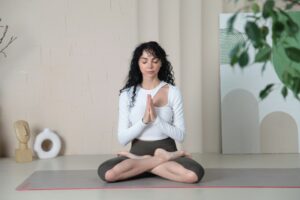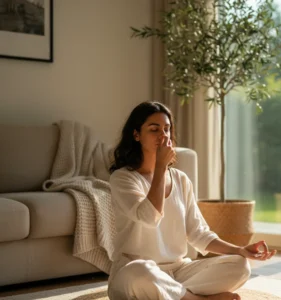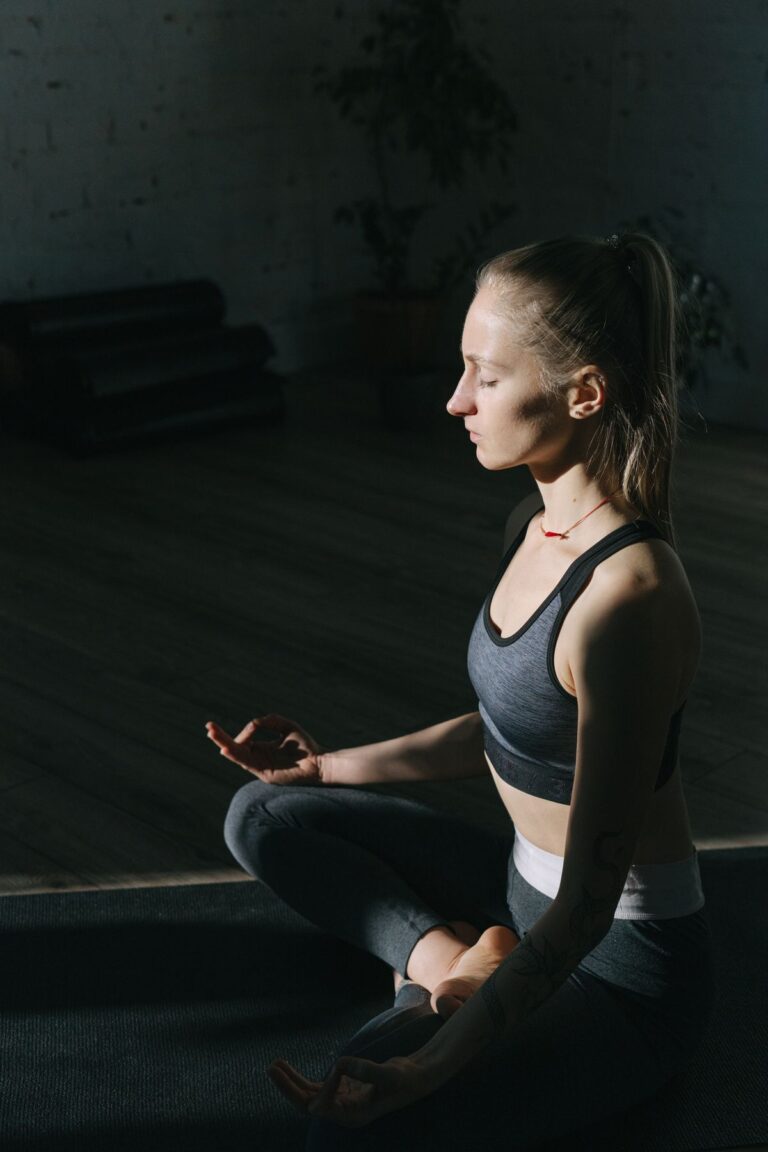
Can’t sit still to meditate? Start with one or two minutes of gentle movement. You can walk slowly, roll your shoulders, or try easy yoga movements from a chair. Keep your eyes open and let your breathing stay natural. If movement makes you feel worse, stop and rest. Yoga may support well-being, but it cannot replace treatment for an anxiety disorder.
Why does anxiety make it hard to sit still?
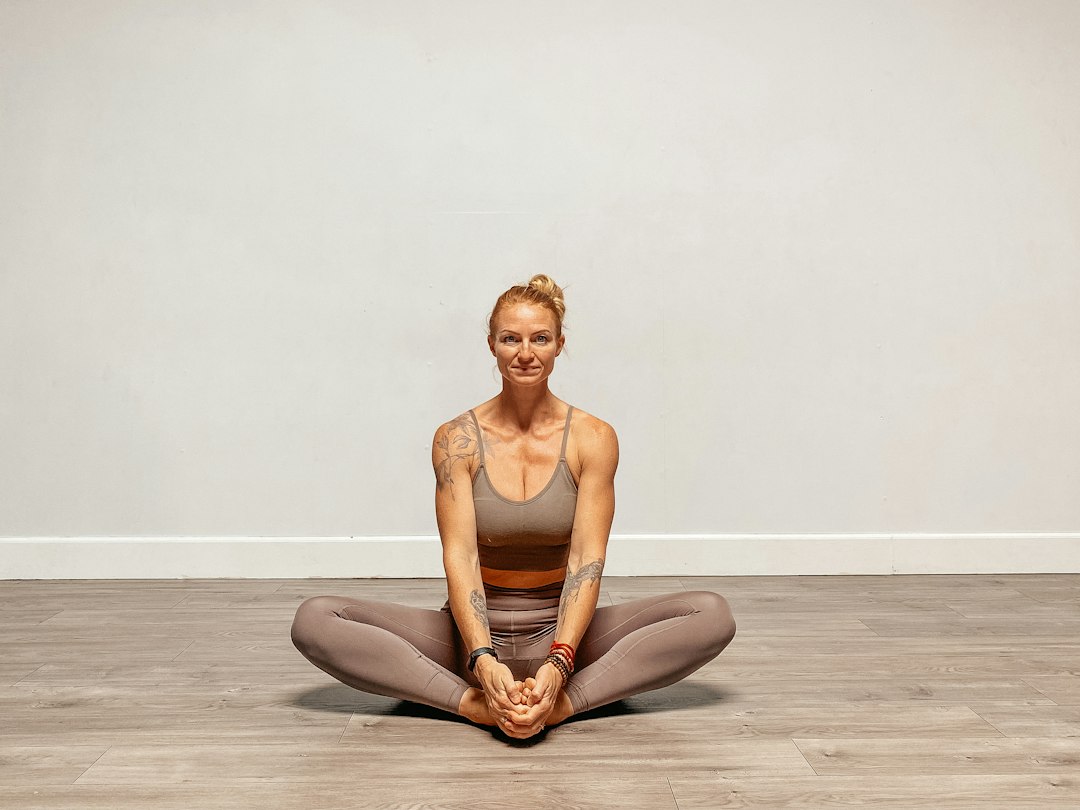
Quiet sitting works well for some people and poorly for others. During an anxious moment, you may notice a fast heartbeat, tense muscles, or a strong urge to move. If you can’t sit still while anxious, you are not bad at meditation. Choose a movement or a supported position that feels manageable today.
Traditional yoga is not limited to sitting with closed eyes. Posture, movement, breath and attention all have a place in many yoga traditions. The goal of this short session is modest: practise comfortable awareness while your body moves. You are not trying to eliminate every thought or manufacture an instant feeling of calm. Stop any action that increases distress.
What can I do if I can’t sit still to meditate?
Can I practise this yoga routine from a chair?
Choose an uncluttered place with a sturdy chair. Keep your eyes open if you prefer. Move within a pain-free range and avoid complex balances. If you feel dizzy, unwell, or unsafe standing, do the session seated. You can repeat a movement less often, shorten its duration, or skip it. The following timing is an easy example, not a medical prescription.
- Minute 1, meet the floor: Stand with soft knees or sit with feet supported. Shift your weight gently from one side to the other.
- Minute 2, shoulders: Roll one shoulder and then the other through small, easy circles. Do not push into a stretch.
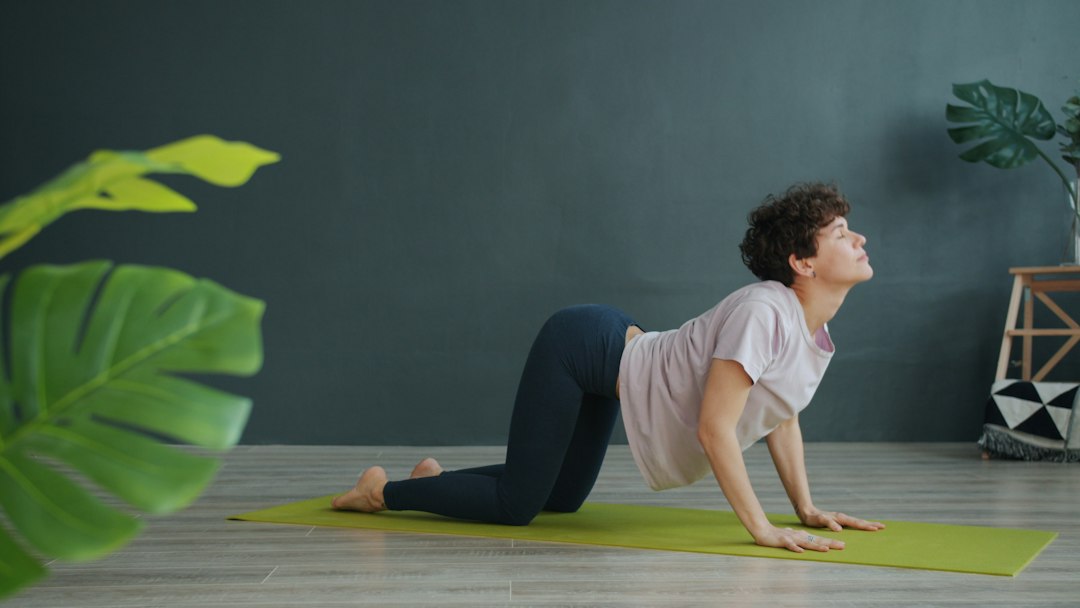
- Minutes 3–4, seated Cat-Cow: Sit on a firm chair. Slowly round and lengthen the upper back, keeping your neck comfortable.
- Minute 5, side reach: Reach an arm to the side or overhead only as far as feels pleasant. Change sides.
- Minute 6, short walk: Walk at a natural pace while noticing the ground under your feet.
- Minute 7, choose a pause: Sit or stand. Look around and name three ordinary objects.
Your breathing can stay natural throughout. You do not need to match every movement with a long inhale or exhale. After the sequence, drink water or return to a normal task. If being alone is unpleasant, practise near someone you trust. A short session is more useful than a longer routine under pressure. You do not have to sit still afterward; keep walking or finish the practice.
How can I calm anxiety without closing my eyes?
Grounding means drawing attention toward something present and ordinary. Feel the seat supporting you, look at shapes around the room, or listen for a familiar sound. You might name a chair, a window, and a book without judging what you notice. This is an optional tool for moments of worry. It does not require perfect concentration, and it is not meant to suppress feelings.
How do I use grounding during movement?
Grounding can follow simple yoga movement naturally. For example, after seated Cat-Cow, notice your feet touching the floor. Then turn your head slowly and look at one object near you. If focusing on sensations makes distress worse, return to a neutral task or seek support. Not every mindfulness or grounding technique suits every person.
What if focusing on my breathing makes anxiety worse?
You are allowed to leave breathwork out. During anxiety, paying close attention to breathing may make some people worry about every inhale. Forcing a bigger breath, holding air for long periods, or trying to reach a strict count can add discomfort. Let your breath return to its normal pattern. Moving gently, listening to sounds, or looking around can be enough.
If breath-focused practice feels comfortable on another day, see the five gentle breathing exercises for anxiety. For shortness of breath or a feeling of air hunger, read the separate guide to breathing discomfort during anxiety. Physical symptoms should not automatically be attributed to anxiety.
Should I move or rest when I feel anxious?
Sometimes movement is not the best response. If you feel faint or have difficulty balancing, sit with your back supported. If you have an injury or joint pain, replace stretches with a comfortable resting position. People with health conditions or pregnancy may need a modified routine. A qualified professional can advise about individual limitations, especially when symptoms are new or severe.
| If this feels hard | Try this instead |
|---|---|
| Sitting still | Walk slowly or shift weight with support. |
| Standing or balance | Keep both feet on the floor in a stable chair. |
| Counting breaths | Notice a sound, colour, or object without changing your breath. |
The NCCIH yoga safety guidance cautions beginners against forceful breathing and demanding postures. The same source describes limited evidence for yoga as a treatment for diagnosed anxiety disorders. Gentle practice is a choice you can make for well-being; it should not delay medical or mental health assessment.
Can moving meditation help if I can’t sit still?
Meditation often asks you to direct attention in a chosen way. Movement-first yoga gives attention an easy physical task, such as feeling your feet as you walk. You can later practise seated meditation if you enjoy it, but you do not have to progress to it. Yoga is not a ladder in which sitting still is always the final test of success.
For a broader overview, our yoga for anxiety and stress article explains general approaches. If worries grow stronger before bed, the stress-and-sleep pillar guide explains that pattern. These topics have different purposes: one is an immediate movement option, while the other describes longer daily habits.
FAQs about yoga for anxious restlessness
Is gentle yoga safe when I feel anxious?
Often, comfortable low-intensity movement is a reasonable choice for someone who can move safely. Avoid forceful breathing, challenging balances, and poses that cause pain. Stop if dizziness or distress increases. New severe chest pain, difficulty breathing, or fainting requires urgent medical attention. For persistent anxiety, professional assessment is more important than adding harder yoga exercises. A seated version is also reasonable when balance feels uncertain or the room is small.
Do I have to close my eyes to practise yoga?
No. Keep your eyes open if that feels safer. You can notice a wall, a tree, or a familiar object while moving slowly. Eyes-open practice can help you stay oriented to your surroundings. Closing the eyes is not required for the chair movements in this article, and it should never be forced when it makes a person uncomfortable. Keeping your gaze soft and steady can make practice feel easier without closing your eyes.
Can a short mindful walk help if I can’t sit still?
Yes, a walk can offer a simple chance to notice footsteps, sounds, or the feeling of the ground. It is not identical to every formal yoga or meditation method. Still, it may be a useful first step for someone who dislikes sitting. Keep the pace easy and avoid checking whether your mind is perfectly quiet. You may return to ordinary activity if close attention to each step creates more worry.
When should I seek help for anxiety?
Get support when worry, panic, or avoidance regularly affects sleep, work, relationships, or ordinary activities. A healthcare professional can check for other physical causes and discuss evidence-based mental health care. Yoga may remain part of a wider routine if it feels comfortable. It is not a way to diagnose yourself or replace treatment. Bring notes about how often symptoms happen and what they stop you from doing.
How do I learn to sit still for meditation?
Begin with a comfortable chair, feet supported and eyes open if you prefer. Sit for 30 to 60 seconds and rest your attention on a neutral object. If you need to change position, move without treating that as failure. Increase the time only when the practice feels manageable. You can also walk slowly before sitting. Stillness is not a test of endurance, and there is no reason to force it when you feel panicky, dizzy or in pain.
Sources and safety guidance
Sources: NCCIH on anxiety and complementary approaches, NCCIH on yoga safety, and NHS on anxiety, fear and panic. The seven-minute sequence is a gentle teaching example, not a tested medical treatment.
This article provides general practice guidance, not medical advice. Stop movements that cause pain or distress and get professional help for persistent or concerning symptoms.