Month: October 2025

  • The Best Yoga Mat Carrier: Your Guide to Choosing the Right Yoga Accessory

    The Best Yoga Mat Carrier: Your Guide to Choosing the Right Yoga Accessory

    A good yoga mat carrier should make your mat easier to carry without making the bag itself a problem. The best choice depends on the size and weight of your mat, how far you usually walk, whether you carry clothes or a water bottle, and how much protection you want from dust or rain. A simple sling can be enough for a short walk to class, while a full bag or backpack makes more sense for commuting or travel.

    Why use a yoga mat carrier?

    A carrier keeps the mat rolled, gives your hands more freedom, and reduces the chance of dragging the mat against the ground or a dirty floor. It can also protect the surface from dust, light rain, and contact with other items in a car or public transport. The useful question is not whether every yogi needs one, but whether carrying your particular mat is awkward enough that a strap, bag, or backpack would make daily use easier.

    The main types of yoga mat carriers

    Yoga mat carriers fall into a few simple groups, and each solves a different problem. A sling uses very little material and is quick to put on. A zippered mat bag gives more protection. A tote adds room for small items, while a backpack is usually the better choice when the mat is only one part of what you carry to class, work, or travel.

    Yoga mat sling

    A sling is the lightest option because it is usually just one adjustable strap with loops at both ends. It works well when you walk a short distance and do not need weather protection or extra storage. The downside is that the mat remains exposed, so the outer surface can still collect dust or rain while you carry it.

    Zippered yoga mat bag

    A full bag covers the mat and usually includes a shoulder strap, zipper, and one or more small pockets. It is useful when you want the mat protected in a car, train, locker, or storage area. Before buying one, measure the rolled length and diameter of your mat because thick mats can be surprisingly difficult to fit inside bags designed for thin studio mats.

    Yoga tote

    A tote works well when you normally carry a towel, bottle, notebook, or light clothing together with the mat. Some totes place the mat through external straps, while others use a large central compartment. This style can be convenient for short urban trips, but check the shoulder straps carefully because a large bag becomes uncomfortable quickly when it is loaded unevenly.

    Yoga backpack

    A backpack is often the most practical option for longer walks, cycling, airports, or commuting because the weight sits across both shoulders. Some designs hold the mat outside the bag while others use a dedicated vertical compartment. The extra storage is useful, but the backpack should still feel balanced when the mat is attached instead of pulling to one side.

    What to check before you buy

    Start with the actual size of your rolled mat rather than the product photo. Check the carrier length, opening diameter, strap adjustment, stitching, ventilation, and whether the material can be cleaned easily. If you already use a thick mat, read our 3mm vs 5mm yoga mat guide because mat thickness changes both weight and the amount of space the carrier needs.

    • Measure the rolled mat length and diameter.
    • Choose a strap that adjusts enough for your height and clothing.
    • Look for strong stitching around the strap attachment points.
    • Check whether the carrier needs ventilation after sweaty classes.
    • Decide whether you really need pockets for a phone, keys, bottle, or clothes.
    • If you walk outdoors often, consider a fabric that handles light rain better.

    Which carrier is best for a thick yoga mat?

    Thick mats usually need either an adjustable sling or a bag with a clearly stated large opening. Do not rely on labels such as “fits most mats” because two mats with the same length can have very different rolled diameters. Measure your mat after rolling it normally, then compare that number with the carrier dimensions so you are not forcing the zipper every time you leave class.

    What works best for travel?

    For travel, the carrier should be light enough that it does not cancel the advantage of bringing a travel mat. A sling is easy to pack inside luggage, while a slim backpack can be useful when you also carry documents, water, and a light layer. If the mat will go through airports or bus storage, a closed bag gives more protection than an open strap system.

    Material matters less than good construction

    Cotton, canvas, polyester, recycled fabrics, hemp, and mixed materials can all work well when the stitching and design are good. Natural fibres may appeal to someone who prefers them, while synthetic fabrics can dry faster and resist moisture better. Instead of choosing from marketing words alone, look at seam quality, strap strength, cleaning instructions, and whether the carrier suits the way you actually travel to practice.

    How to keep a mat carrier clean

    Do not put a very wet or sweaty mat straight into a closed bag for hours. Let the mat dry when possible, empty small pockets regularly, and follow the washing instructions for the carrier fabric. A clean bag will not replace cleaning the mat itself, so use our yoga mat cleaning guide for care instructions based on the mat material.

    Do you need an expensive yoga mat bag?

    No. A simple carrier can work for years when the size, stitching, and strap are right. Paying more may give you better fabric, stronger hardware, extra storage, or a particular design, but price alone does not tell you whether the carrier will be comfortable. For most students, fit and daily usefulness matter more than branding.

    Frequently asked questions

    Is a yoga sling better than a bag?

    A sling is lighter and faster to use, while a bag protects the mat and usually provides storage. The better option depends on how far you carry the mat, the weather, and whether you take other items to class. Someone walking five minutes to a studio may be happier with a sling than with a large bag.

    Can a yoga mat carrier fit a 5mm mat?

    Some can and some cannot. A 5mm mat rolls thicker than a thin travel mat, so compare the rolled diameter of your mat with the carrier opening before buying. Adjustable slings usually handle different diameters more easily than tightly fitted zippered bags.

    Can I use a normal backpack for a yoga mat?

    Yes, if the backpack has external straps or another secure way to hold the rolled mat. Do not leave the mat hanging loosely where it can hit people, catch on doors, or shift your balance. A dedicated yoga backpack is convenient, but it is not essential if your existing bag already carries the mat safely.

    Should the carrier be waterproof?

    Full waterproofing is unnecessary for many students, but some water resistance is useful when you regularly walk outside. Remember that a water-resistant outer fabric does not mean the zipper and seams are completely waterproof. In heavy rain, keep the mat inside a more protected bag or use an additional cover.

    Yoga Mat Carrier: Quick Decision Guide

    Your routineBest carrier typeWhy
    Short walk to classSling or strapLightweight and fast to use
    Public transportZippered bagProtects the mat and keeps it contained
    Bike or scooterBackpack-style carrierKeeps hands free and load more stable
    TravelFoldable tote or light bagEasier to pack in luggage

    Before You Buy

    1. Measure the rolled mat diameter.
    2. Check strap length and padding.
    3. Decide whether you need pockets.
    4. Look at washing instructions.
    5. Choose the lightest option that fits your real route.

    Three Real Buying Examples

    • You walk 5 minutes to class: a simple sling is usually enough.
    • You commute by bus or train: choose a closed bag with a secure zipper and one small pocket.
    • You travel with a foldable mat: a lightweight tote or backpack often works better than a rigid mat tube.

    Common Yoga Mat Carrier Mistakes

    • Buying before measuring the rolled mat.
    • Choosing a heavy bag for a short daily walk.
    • Ignoring whether a sweaty mat can dry inside the carrier.
    • Choosing extra pockets you never use.
    • Using a narrow strap that digs into the shoulder on longer walks.

    Choose for your real routine

    The best yoga mat carrier is the one you can use without thinking about it every time you leave home. Measure the mat, decide how much storage you need, and choose the lightest design that handles your normal route comfortably. If you are still choosing the mat itself, compare our travel yoga mat guide and yoga mat thickness chart before buying the carrier.

  • Should Christians Do Yoga? Knowing Yoga Tradition and Philosophy

    Should Christians Do Yoga? Knowing Yoga Tradition and Philosophy

    Christians do not all answer the yoga question in the same way. Some Christians practise yoga mainly as movement, breathing, and attention. Others avoid it because they connect parts of yoga with Hindu philosophy, mantra, or religious symbolism. A useful answer begins by separating the physical practice from the wider history of yoga, then allowing each person to make a choice that fits their faith, church teaching, and conscience.

    Why do Christians ask whether yoga is acceptable?

    The question comes up because yoga developed in India and is connected with several Indian philosophical and religious traditions. Modern classes may include only posture and breathing, while other classes may also include Sanskrit chanting, meditation, devotional ideas, or references to Hindu texts. These are not all the same thing. A Christian deciding whether to attend a class should look at what that particular class teaches instead of judging every form of yoga from one example.

    Yoga is more than exercise, but it is not one single belief system

    Yoga has a long history with different schools, texts, methods, and aims. Patanjali’s Yoga Sutras describe an eight-limbed discipline that includes ethics, posture, breath regulation, concentration, meditation, and samadhi. The Bhagavad Gita also uses the word yoga in several ways, including disciplined action, knowledge, and devotion. Modern studio yoga often gives much more attention to physical postures than these older texts do.

    Because the word covers many traditions, saying that yoga is either “only exercise” or “one religion” can both be too simple. A gym-based posture class and a devotional ashram practice may share the word yoga while teaching very different things. For Christians, the practical question is therefore not only “Is this yoga?” but also “What exactly am I being asked to do, repeat, believe, or take part in?”

    What Guru Gorakh Nath says about divisions

    A verse attributed to Guru Gorakh Nath presents yoga as something that goes beyond social division and is linked with discipline, truth, and compassion. The verse is often used in Nath tradition to stress that yoga should not be reduced to caste or social separation. It does not settle a Christian theological question, but it helps show that Indian yoga traditions themselves have included broad ideas about who may practise.

    जोग अवरण जोग अभेद,
    जोग अखंडित जोग अछेद।
    जोग जति सति जोग दया,
    येहा ग्यान जति गोरख कह्या।।

    A simple meaning is: yoga is beyond social division; yoga points toward wholeness. Yoga includes discipline, truth, and compassion; this is wisdom, says Gorakh. Christians may read this as historical information about one Indian teaching rather than as a statement they are required to accept as part of Christian doctrine.

    Which parts of a yoga class may concern Christians?

    Most concerns are not about stretching itself. They are usually about prayer, mantra, deity names, spiritual initiation, ritual, or claims that conflict with a person’s beliefs. Some Christians are comfortable with neutral breath awareness and posture but prefer not to repeat a mantra they do not understand. Others avoid yoga altogether because they see the physical and spiritual history as too closely connected to separate.

    • Ask whether the class includes chanting or mantra.
    • Ask whether the teacher uses religious or devotional language.
    • Check whether meditation is simple attention practice or tied to a specific spiritual teaching.
    • Decide in advance which parts you are comfortable joining and which parts you will skip.
    • If church teaching matters to you, speak with a pastor, priest, or trusted Christian teacher who understands the actual class format.

    Can Christians practise yoga only for physical health?

    Some Christians do choose yoga mainly for mobility, strength, balance, breathing, or relaxation. In that setting, they may treat postures much like other movement exercises and leave out chanting or devotional material. Other Christians still prefer another form of exercise because the historical connection matters to them. Neither choice should be hidden behind a claim that every yoga class is spiritually identical, because the content of classes varies widely.

    If your goal is physical practice, ask the teacher directly what happens during class. A clear teacher should be able to explain whether the session contains posture, breath work, meditation, chanting, philosophy, or ritual. You can then decide with accurate information rather than relying on social-media arguments. This is especially useful when visiting India, where the word yoga may include more philosophy and traditional study than in a fitness studio.

    What about meditation, breathing, and prayer?

    Breathing and quiet sitting are methods, but the meaning given to them can differ. A Christian may use slow breathing to settle before prayer, while another yoga tradition may use breath as part of pranayama with a different philosophical framework. The same is true of meditation. Christians who want to keep the practice within their own faith can choose silence, Scripture reflection, or Christian prayer instead of repeating material they do not accept.

    It is also useful not to make medical promises about breath or meditation. These practices may help some people feel calmer, but they are not replacements for treatment of anxiety, trauma, heart disease, or another health condition. Our diaphragmatic breathing guide explains a simple breathing method without requiring a religious interpretation.

    Can yoga philosophy conflict with Christian belief?

    It can, depending on the teaching being discussed and the Christian tradition of the student. Classical Indian texts contain ideas about self, liberation, karma, rebirth, devotion, and ultimate reality that do not always match Christian theology. A teacher should not hide those differences by saying every religion teaches exactly the same thing. Respect is easier when similarities and differences are both explained clearly.

    Studying a text is also different from agreeing with every statement in it. Universities study Greek philosophy, Buddhism, Christianity, Islam, and Hindu traditions without requiring students to adopt each worldview. A Christian can read a yoga text historically or philosophically while keeping Christian beliefs, but whether that kind of study feels appropriate is a personal and denominational decision.

    How to choose a class when faith matters to you

    Look for a teacher who answers questions clearly and does not pressure students to repeat words or take part in practices they do not understand. A respectful class can explain the traditional name of a posture or breathing method without telling every student what they must believe. Consent should also apply to chanting, touch, hands-on adjustment, and personal spiritual discussion, not only to physical movement.

    • Read the class description before booking.
    • Ask what happens at the beginning and end of class.
    • Tell the teacher if you prefer not to chant or receive hands-on adjustments.
    • Choose another class if the teacher dismisses reasonable questions about belief or consent.
    • Do not assume that every Indian yoga school or every Western studio teaches the same philosophy.

    How FitFortunes teaches students from different faiths

    FitFortunes teaches yoga as an Indian tradition that includes physical practice, breath, meditation, and philosophy. Students are told where ideas come from instead of being told that all traditions are identical. A student can study Patanjali, the Bhagavad Gita, Hatha Yoga, or meditation as part of yoga education without being required to change religion. Questions and respectful disagreement are part of serious study.

    For students considering formal training, the yoga teacher training curriculum shows the main subjects taught at the school. The purpose of a curriculum page is to make the content clear before a student pays or travels. Someone whose faith places limits on chanting, ritual, or philosophy should ask those questions before joining any residential course.

    Frequently asked questions

    Is yoga a religion?

    Yoga is not a single organised religion with one creed, but it has deep links with Indian philosophical and religious traditions. Some modern classes are mostly physical, while others include devotional or spiritual practices. It is therefore more accurate to ask what a particular class teaches than to treat every form of yoga as exactly the same.

    Can a Christian skip chanting in yoga class?

    Yes, a student can choose not to repeat a chant or mantra. A responsible teacher should explain what is being used and allow students to stay quiet without pressure. If chanting is a central part of a particular course, ask before booking so you know whether the format fits your beliefs and comfort.

    Is doing a yoga posture an act of worship?

    A physical posture by itself does not tell you the intention of the person doing it. The same body position can be used for stretching, exercise, meditation, ritual, or prayer depending on the setting and meaning given to it. Christians who are concerned about worship should look at the intention and teaching of the class rather than only the shape of the body.

    Can Christians use yoga breathing before prayer?

    Some Christians use simple slow breathing to settle attention before prayer, while others prefer not to use methods associated with yoga. The breathing itself can be taught in a neutral physical way, but more formal pranayama may carry additional traditional ideas. If this matters to you, choose a simple method and keep the purpose clear.

    Should I ask my church before doing yoga?

    If your denomination has guidance on yoga, or if the question causes a real conflict for you, speaking with a trusted pastor, priest, or church leader can be useful. Give them the actual class description rather than asking only about the word yoga. That makes the discussion more specific and helps you make your own informed decision.

    A clear way to decide

    You do not need to accept a slogan from either side of the debate. Find out what the class contains, understand which parts are physical and which parts are philosophical or devotional, and compare that with your own beliefs. If you are comfortable with the practice, take part with clear boundaries. If you are not, there are many other ways to build mobility, strength, breathing awareness, and quiet attention.

  • Restorative Yoga Teacher Training Online: What to Check Before Enrolling

    Restorative Yoga Teacher Training Online: What to Check Before Enrolling

    An online restorative yoga teacher training can be useful when the course gives enough time to practise, observe, teach, and receive feedback. Restorative yoga may look simple because many poses are supported and held for longer periods, but teaching it well requires more than knowing where to place a bolster. A good online course should explain positioning, prop use, breath, class planning, contraindications, scope of practice, and how to adapt the same idea for different bodies and home setups.

    What is restorative yoga teacher training?

    Restorative yoga teacher training focuses on supported, low-effort postures that allow students to stay comfortable for longer periods. The teaching skill is not about pushing range or building a hard sequence. It is about choosing useful shapes, setting up props carefully, observing breathing and comfort, and knowing when a position should be changed. Training should also help teachers understand that relaxation practice is not the same as medical treatment or physical therapy.

    Online study can teach this material when the program is designed for the limits of remote learning. Video demonstrations, live practice, small-group teaching, recordings, written notes, and feedback can work well together. The weak version is a course made only from pre-recorded videos and a final certificate. Before enrolling, ask how much live interaction you receive and whether anyone actually watches you teach.

    What should an online restorative yoga course include?

    The course should explain the principles behind the practice rather than giving students a list of poses to copy. You should learn why a particular support is used, how to reduce strain, how long a position may be held, and what signs suggest that a student needs a different option. A teacher also needs to know how restorative work fits into a normal class, a private session, or the end of a more active yoga practice.

    • Purpose and principles of restorative yoga.
    • Use of bolsters, blankets, blocks, straps, chairs, and simple home alternatives.
    • Comfortable positioning and ways to reduce unnecessary effort.
    • Breath awareness without forcing deep breathing.
    • Sequencing for short and longer restorative classes.
    • Observation, communication, consent, and teacher boundaries.
    • Contraindications and when to refer a health question to an appropriate professional.
    • Practice teaching with feedback.

    Why practicum matters even more online

    Restorative teaching depends on details that are easy to miss when you practise alone. A student may look comfortable on camera while the neck is unsupported, the lower back is tense, or a prop is making it harder to breathe freely. Live practicum gives the trainer a chance to watch how you set up a posture, how clearly you explain options, and whether you can change the plan when the first setup does not work.

    Ask how practicum is assessed before you pay. A useful online course may require you to teach a short class to classmates, submit a recorded session, receive written or live feedback, and repeat part of the lesson after correction. That is much more meaningful than watching every video and automatically receiving a certificate. Teacher education should show that you can communicate and adapt, not only that you completed the lessons.

    What equipment do you need at home?

    You do not need a studio full of expensive props, but you do need enough support to practise the setups you are learning. A firm bolster is useful, and folded blankets can change height or support the head and limbs. Blocks, a strap, a stable chair, and wall space are common tools. If the training encourages home substitutes such as cushions or folded towels, the teacher should also explain their limits rather than pretending every household object works exactly like a yoga prop.

    • One firm bolster or a similar stable support.
    • Two or more blankets.
    • Two yoga blocks.
    • One yoga strap.
    • A stable chair without wheels.
    • A yoga mat and clear wall space.

    Can restorative yoga be called therapeutic?

    Be careful with that word. Restorative yoga can be used in wellness settings and may help some people rest, move comfortably, or pay attention to breathing, but a yoga teacher should not diagnose or treat a medical condition unless they also hold an appropriate healthcare qualification. Training should teach clear scope of practice. Claims about curing trauma, fixing hormones, treating anxiety, or healing injuries need far stronger evidence and professional responsibility than a general yoga certificate provides.

    This matters especially online because the teacher has less ability to observe a person from every angle or respond physically if something goes wrong. A responsible instructor asks useful screening questions, keeps instructions conservative, offers alternatives, and tells students when a medical issue is outside the class. The goal is not to make restorative yoga sound less valuable; it is to describe its value accurately without turning a wellness practice into a medical promise.

    How is restorative yoga different from Yin Yoga?

    The two styles can look similar because both may use props and slower pacing, but the intention is different. Restorative yoga normally uses enough support to reduce effort and make the position easy to maintain. Yin Yoga often uses longer holds with deliberate, mild stress on certain tissues and does not always try to remove sensation. A good teacher training should explain this difference so graduates do not use the two names as if they mean the same method.

    That distinction also affects sequencing and cueing. In restorative work, adding another blanket or changing the angle may be the correct decision if the body keeps working too hard. In Yin, some controlled sensation may be part of the method, though pain should still not be treated as progress. Teachers who study both approaches need to be able to explain which method they are using and why.

    Does an online certificate qualify you to teach?

    A certificate shows that you completed the course described by the training provider. It does not create one worldwide licence to teach restorative yoga, and different studios, insurers, employers, and registration organisations may have their own requirements. If a course advertises outside registration, check that organisation’s current rules and confirm whether the online format and the specific training are eligible before you enrol.

    If you are new to teaching altogether, a short restorative specialty course is not the same thing as a full foundational teacher training. A broader program normally gives more time to anatomy, philosophy, class management, teaching methodology, sequencing, practicum, and professional responsibilities. FitFortunes explains these foundation areas in its yoga teacher training curriculum and YTT syllabus guide.

    How to compare online restorative yoga trainings

    Start with the trainer rather than the sales page. Look for a clear professional background, real teaching experience, a published curriculum, live contact hours, practicum, assessment, and policies for refunds or course access. Then check the technical side: time zone, recording access, required props, class size, assignment deadlines, and whether you can ask questions outside live sessions. These details decide whether an online course is workable in your real schedule.

    • Who teaches the course and what restorative training have they completed?
    • How many hours are live rather than pre-recorded?
    • Is practice teaching required?
    • Will a trainer watch and correct your prop setups?
    • What equipment is required before the course starts?
    • How is the final assessment completed?
    • What exactly does the certificate represent?

    Online or residential training?

    Online training can be easier to fit around work and family, and it lets students practise with the props and space they actually have at home. Residential training gives more direct observation, easier partner practice, and more time around teachers and classmates. Neither format is automatically stronger. The important question is whether the course uses its format well and gives you enough supervised practice to become clearer and safer as a teacher.

    If you are comparing a specialty online course with a full residential foundation, make sure you are comparing the same educational goal. FitFortunes currently focuses its residential teacher-training offer on broader foundation programs in Rishikesh rather than presenting this article as a current restorative certification course. Students considering residential study can review the 200-hour teacher training in Rishikesh for current dates, subjects, room choices, and fees.

    Frequently asked questions

    Can beginners take restorative yoga teacher training online?

    Some specialty courses accept beginners, but that does not mean the course replaces a full foundation in yoga teaching. A beginner can still learn restorative practice for personal study or as an introduction, provided the school explains the level clearly. If your goal is professional teaching, check whether the provider expects a previous 200-hour qualification or another foundation before the restorative certificate.

    How long should an online restorative yoga training be?

    There is no one correct number because the purpose of courses varies. A short continuing-education course may focus on a limited group of poses, while a larger specialty training may include anatomy, sequencing, practicum, assignments, and assessment. Instead of judging only by hours, check how those hours are used and how much direct feedback you receive from a qualified trainer.

    Can I learn restorative yoga without expensive props?

    You can learn many principles with a modest home setup, but support needs to be stable and comfortable. Blankets, cushions, and a firm chair can sometimes replace specialist props for practice, while a bolster and yoga blocks make many setups easier to repeat. A good course should teach how to judge the support rather than telling students that any soft household item is automatically safe.

    Is restorative yoga the same as Yoga Nidra?

    No. Restorative yoga uses supported physical positions that are held with low effort, while Yoga Nidra is a guided relaxation or meditation practice commonly done while lying down. They can appear in the same class because both may involve stillness, but their teaching structures are different. Our Yoga Nidra guide for beginners explains that practice separately.

    Will an online restorative yoga certificate be accepted everywhere?

    No provider can guarantee universal acceptance. A studio may care mainly about your foundation qualification and teaching ability, while an insurer or registry may have specific requirements for training hours or delivery format. Ask the organisation that matters to you before paying for the course. The useful certificate is the one that matches your actual teaching goal, not simply the one with the strongest marketing claim.

    Choose a course that teaches, watches, and corrects

    An online restorative yoga teacher training can be useful when it combines clear theory with real supervised practice. Look for a teacher who explains the purpose of each setup, watches your practicum, corrects mistakes, and keeps health claims within the scope of yoga education. The screen is not the main problem with online learning. The bigger problem is a course that gives information without enough observation, feedback, or responsibility.

  • Yoga Nidra for Sleep: A Beginner Guide to Deep Rest

    Yoga Nidra for Sleep: A Beginner Guide to Deep Rest

    Yoga Nidra for sleep is a guided deep-rest practice done mainly while lying down. You stay physically still and follow a voice through body awareness, breathing, sensations, and quiet attention. Many people use it before bed because it can make the body feel settled without demanding effort or flexibility. Yoga Nidra is not the same as ordinary sleep, and it should not be sold as a cure for insomnia. Research is promising, but the studies are still small and use different methods. For a beginner, the useful goal is simple: practise conscious rest, notice how your body responds, and let sleep come naturally if it comes.

    In this guide

    What is Yoga Nidra?

    Yoga Nidra is often translated as “yogic sleep,” but that name can cause confusion. In practice, it is usually a guided method of deep relaxation in which the body rests while some awareness remains. Most sessions are done in Savasana, or another comfortable reclining position, with the eyes closed. A teacher or recording may guide attention through different body parts, the natural breath, feelings, images, or a short personal intention called a sankalpa.

    You do not need to be flexible and you do not need to hold a yoga pose. The practice is closer to structured rest than to an asana class. Some people remain awake for the whole session, some move in and out of light sleep, and some fall asleep. None of these experiences needs to be treated as a failure. The practice is learning to rest without constantly doing, fixing, or forcing.

    Claims such as “20 minutes of Yoga Nidra equals several hours of sleep” are common online, but they should not be treated as established medical facts. A short rest practice may leave you feeling refreshed, yet it does not replace the biological need for regular sleep. Read how deep sleep works and which habits may help to understand the difference between guided rest and stage-three non-REM sleep.

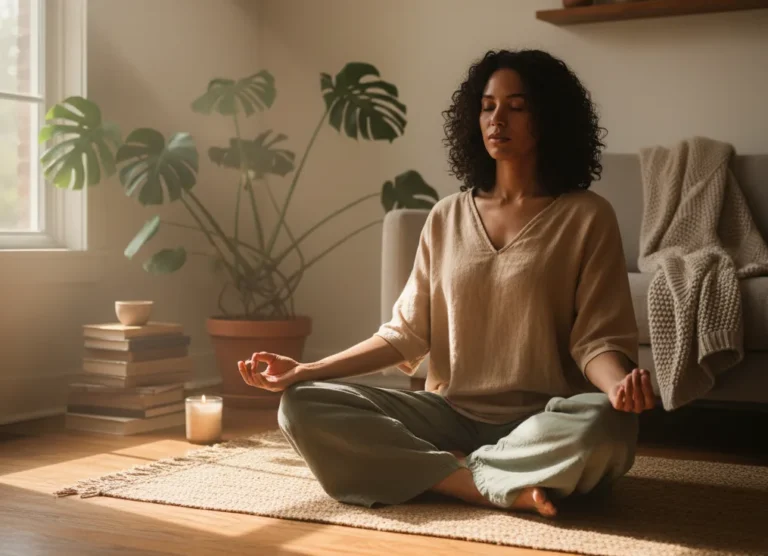
    Yoga Nidra for beginners during a guided deep-rest practice
    Yoga Nidra is usually practised lying down in a comfortable, supported position.

    Does Yoga Nidra help with sleep?

    There is a real reason Yoga Nidra is being studied for sleep, but the evidence needs careful language. A 2025 systematic review of randomized controlled trials included six studies with 244 participants. Most of the studies reported improvements in measures such as sleep quality, time taken to fall asleep, total sleep time, or sleep efficiency. However, the review also found important limits, including different Yoga Nidra methods, small samples, incomplete reporting, and moderate to high risk of bias in several studies.

    A smaller randomized study in people with chronic insomnia also reported improvements after Yoga Nidra practice. This is useful early evidence, not proof that Yoga Nidra will treat every sleep problem. Persistent insomnia, loud snoring with breathing pauses, severe daytime sleepiness, depression, or other ongoing sleep problems deserve proper medical assessment. If you are unsure whether a few poor nights count as insomnia, read our guide to insomnia and occasional poor sleep.

    For everyday use, a better way to think about Yoga Nidra is as a low-effort wind-down practice. It may help some people move from an alert evening state toward rest. If evenings are already part of your yoga routine, our guide on doing yoga at night explains which kinds of practice are usually easier to place close to bedtime.

    How Yoga Nidra works

    A Yoga Nidra session is not just “lie down and relax.” Traditional and modern schools arrange the stages differently, but there is usually a clear movement from outer awareness toward quieter inner awareness and then back again. The guide gives the mind one simple task at a time, so you are less likely to keep planning, scrolling, or replaying the day.

    A typical session may begin by noticing the room and the contact of the body with the floor. The teacher then guides a rotation of awareness through the body. Breath awareness may follow, without forcing the breath into a special rhythm. Some methods include opposite sensations, simple images, or a short sankalpa. At the end, attention returns slowly to the room before you move.

    The important point is not to chase a special state. If you spend the whole practice checking whether you are “deep enough,” the checking itself becomes work. Comfort, steady guidance, and regular practice matter more than trying to manufacture a dramatic experience.

    Beginner creating a quiet space for meditation and Yoga Nidra
    A quiet room, simple lighting, and fewer phone alerts can make deep-rest practice easier.

    A simple 20-minute Yoga Nidra practice for beginners

    For a first practice, keep the method simple. You can use a calm recording or ask a trained teacher to guide you. If you are practising alone, the following sequence gives you a basic structure without turning rest into another complicated task.

    1. Get comfortable. Lie on your back, or choose another position that lets the body rest without strain. Use a folded blanket under the head or knees if that helps.
    2. Arrive for one minute. Notice the room, the floor under you, and the simple fact that you do not need to go anywhere for the next few minutes.
    3. Choose a simple intention. If you use a sankalpa, keep it short and personal. Do not turn it into a long list of goals.
    4. Move awareness through the body. Notice the right hand, arm, shoulder, then other areas in a steady order. You are noticing, not stretching or contracting each part.
    5. Notice natural breathing. Feel the breath at the nose, chest, or abdomen. Let it change by itself rather than trying to make every breath slow or deep.
    6. Notice sensations. Warmth, coolness, heaviness, lightness, comfort, or restlessness can be observed without needing to fix them.
    7. Rest in wider awareness. For a few minutes, allow sounds, breath, and body sensations to be present together.
    8. Return slowly. Notice the room again, move the fingers and toes, bend the knees if comfortable, and open the eyes when you feel ready.

    Twenty minutes is not a rule. Ten minutes can be useful on a busy evening, while a longer guided practice may suit another day. Music is optional. A quiet voice and clear instructions are usually more useful than a complicated soundtrack.

    Yoga Nidra vs meditation and NSDR

    Yoga Nidra, meditation, and the modern term NSDR, or non-sleep deep rest, overlap but they are not exact synonyms. Meditation is a broad family of practices and is often done seated, although it does not have to be. Yoga Nidra is usually reclined and guided in a more structured sequence. NSDR is a newer umbrella term used for practices that encourage deep rest without ordinary sleep, and Yoga Nidra is often discussed under that umbrella.

    Yoga Nidra itself comes from Indian yoga traditions and has its own teaching lineages and methods. It does not need a newer label to make it useful. If seated meditation feels difficult when you are tired, a reclined guided practice can be an easier place to start. Our beginner guide to yoga and meditation explains how the two practices can fit together without making either one complicated.

    What is the best time to practise Yoga Nidra?

    There is no single best time for everyone. Before bed is popular because there is nothing else to do afterward. An afternoon session can also work when you want rest without automatically taking a long nap. Some students use Yoga Nidra after a gentle asana or pranayama practice because the body is already quieter.

    Try not to practise immediately after a very heavy meal if lying flat feels uncomfortable. If your goal is better sleep, consistency matters more than chasing the perfect hour. A familiar 15- or 20-minute practice at roughly the same part of the evening is easier to judge than changing the method every night.

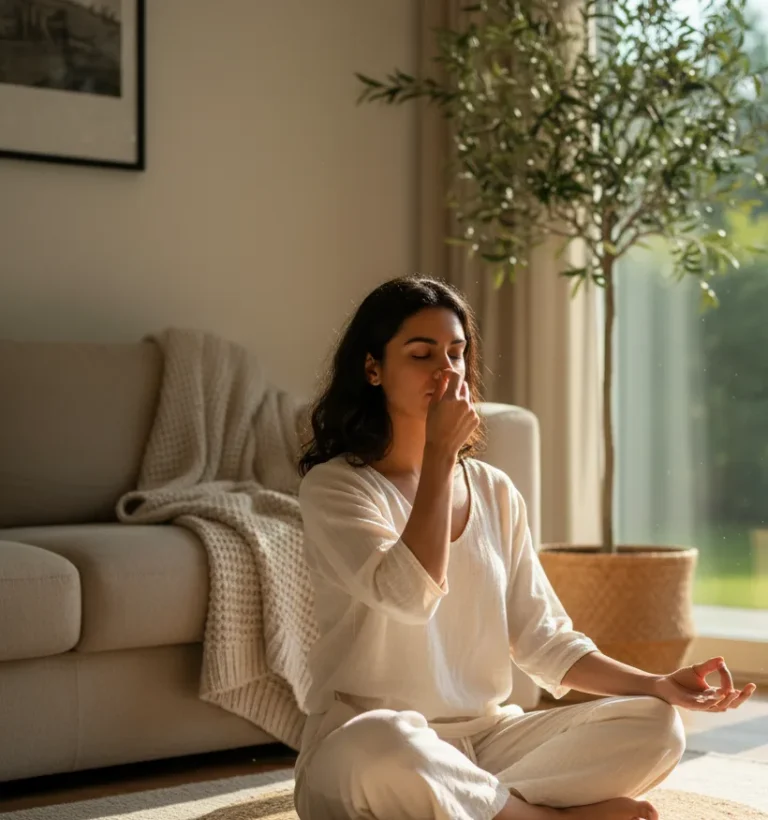
    Yoga student taking a calm breath before a guided rest practice
    A few quiet minutes before Yoga Nidra can help you settle. The practice itself does not require forced breathing.

    Safety and common mistakes

    Yoga Nidra is physically gentle for most people, but gentle does not mean that every session feels comfortable for every nervous system. Lying still with closed eyes can feel vulnerable for some people, especially when there is a history of trauma, panic, or strong anxiety. You can keep the eyes open, sit instead of lying down, shorten the session, or stop. A good teacher gives choices rather than insisting that everyone follow the same position.

    Do not use a Yoga Nidra recording while driving, cooking, bathing, or doing anything that needs full attention. If lying flat causes pain, reflux, breathing difficulty, dizziness, or another symptom, change position and seek appropriate professional advice when needed. Yoga Nidra can support rest, but it should not be used to delay care for a serious sleep or mental-health problem.

    Common beginner mistakes

    • Trying so hard to relax that the practice becomes another performance.
    • Forcing deep breathing when natural breathing feels better.
    • Using an uncomfortable position because Savasana seems “more correct.”
    • Changing recordings every day and never learning one simple method.
    • Feeling guilty for falling asleep during an evening practice.
    • Believing extreme online claims about replacing several hours of sleep.

    Yoga Nidra in yoga teacher training

    For a yoga teacher, guiding Yoga Nidra requires more than reading a script. Pacing, clear language, silence, choice of position, room temperature, props, and how you bring students back all affect the experience. Teachers also need to understand the difference between offering relaxation and making medical or psychological treatment claims.

    At FitFortunes, Yoga Nidra sits inside the wider study of relaxation, meditation, breath, philosophy, and teaching skills rather than being presented as a miracle technique. You can see how these subjects connect in our yoga teacher training curriculum guide. Students considering residential study can also check the current curriculum and practicum for the 200-hour yoga teacher training in Rishikesh before deciding whether the course matches their goals.

    Is Yoga Nidra for sleep worth trying?

    Yoga Nidra for sleep is worth trying as a simple rest practice if you enjoy guided relaxation and want a calmer way to end the day. It is easy to begin, needs little space, and can be adapted to your body. Research on sleep is encouraging, but it is still developing, so the practice is best approached with realistic expectations. Use it to build a better relationship with rest, not to prove that you can force yourself to sleep.

    Frequently asked questions

    Is Yoga Nidra the same as sleep?

    No. Yoga Nidra is usually a guided state of rest in which some awareness may remain. You may fall asleep during the practice, but ordinary sleep and Yoga Nidra are not the same thing.

    Can Yoga Nidra help insomnia?

    Some small clinical studies and recent reviews report better sleep outcomes, so the practice is promising. The evidence is not strong enough to treat it as a guaranteed cure. Persistent insomnia should be assessed properly, especially when it affects daily life.

    How long should a beginner do Yoga Nidra?

    Ten to twenty minutes is a practical starting range. A shorter practice you can repeat comfortably is more useful than forcing yourself through a long session.

    Can I do Yoga Nidra every night?

    Many people can use a gentle practice nightly if it feels comfortable. If it makes you more alert, distressed, or physically uncomfortable, change the timing, method, or position.

    What if I fall asleep during Yoga Nidra?

    Falling asleep is common, especially when you practise at bedtime. You do not need to feel that you failed. If your aim is to learn the full method while staying aware, try practising earlier in the day when you are less sleepy.

    Do I need headphones?

    No. Headphones can help when the room is noisy, but a speaker at a comfortable volume is fine. The important thing is that the guidance is easy to hear without being startling.

    Is Yoga Nidra safe for anxiety?

    Some people find it calming, while others may feel uncomfortable with stillness, closed eyes, or inward attention. Keep choices available, stop if distress rises, and seek qualified support when anxiety is severe or persistent.

    Is Yoga Nidra better than meditation for sleep?

    Not necessarily. They are different tools. Yoga Nidra can be easier when you are tired because you lie down and follow a guide. A seated meditation may suit someone else. The better practice is the one you can use consistently without strain.

  • Best Time for Hatha Yoga Teacher Training in India: Rishikesh by Season

    Best Time for Hatha Yoga Teacher Training in India: Rishikesh by Season

    The best time for Hatha Yoga teacher training in India depends on the climate you practise well in, not on one universal “best month.” In Rishikesh, many students first consider October-November or February-March because conditions are often moderate. Winter suits people who prefer cooler practice. Late spring and early summer are warmer, while July-September brings monsoon rain and more humidity.

    Weather matters during a residential course because you practise, study, eat and rest on a fixed daily rhythm for several weeks. Temperature can change warm-up time, hydration, sleep, clothing and travel planning. It should influence your choice, but it should never outweigh teacher quality, curriculum, practicum, accommodation and the real daily schedule. If Hatha is your main goal, compare the live 200-hour Hatha Yoga Teacher Training after choosing your preferred season.

    Table of contents

    Rishikesh Hatha YTT seasons at a glance

    PeriodTypical planning advantageMain thing to prepare for
    October-NovemberModerate conditions for many studentsCooler mornings as November progresses
    December-JanuaryGood for students who prefer cooler weatherWarm layers for early practice and evenings
    February-MarchBalanced spring conditionsBusier travel periods and warmer afternoons
    April-JuneSuitable if you handle heat wellHydration, ventilation and recovery
    July-SeptemberGreen monsoon settingRain, humidity and extra travel time

    October and November: comfortable for many students

    October and November are popular because the main monsoon period has normally passed and the strongest summer heat has eased. Morning Hatha practice can feel comfortable, while the middle of the day is often suitable for walking between classes. As November progresses, mornings and evenings become cooler, so simple layers are useful. Check the live forecast before travel because seasonal patterns do not guarantee the weather on your exact dates.

    If October is one of your choices, use the October YTT guide for Rishikesh for month-specific packing and travel details. This page compares the full year so you can choose a season first, then use the month-specific guide for final planning.

    December and January: cooler mornings and evenings

    Winter can feel cold before sunrise and after sunset, especially if you arrive from a tropical climate. The middle of the day may feel much milder, so layers work better than one heavy outfit. Ask about hot water, blankets and the yoga hall if you are sensitive to cold. A cooler room can also make long seated classes feel different from a warm afternoon practice.

    Cold weather does not make Hatha training unsuitable. It changes preparation. Give the body time to warm up, keep warm clothes nearby after practice and protect your sleep. Students who dislike heat may prefer these months, while people who struggle with cold mornings may be more comfortable in spring or autumn.

    February and March: a balanced spring option

    February and March often give students a useful middle ground. Mornings can still be cool, while daytime temperatures become warmer as spring develops. That range can make it easier to practise, study and move around Rishikesh without peak-summer heat. It can also be practical if you want a few travel days before or after the course.

    March can be busier because Rishikesh attracts more visitors and yoga events. This does not change the curriculum, but it can affect traffic and extra accommodation outside the school. If you plan to stay longer, book those additional nights separately from the training and keep enough buffer before an international flight.

    April to June: warmer conditions and more recovery planning

    Late spring and early summer become warmer. Students may sweat more and need more attention to hydration, sleep and recovery. Feeling warm can make the body seem more mobile, but warmth is not permission to force range of motion. Hatha practice should still be controlled, progressive and based on what the body can manage that day.

    Before booking a hotter month, ask about ventilation or cooling in the yoga hall and rooms. Check access to drinking water and whether the daily timetable gives real breaks between practical sessions. Students who tolerate heat well can train successfully in these months, but comfort outside class matters because residential study continues all day.

    July to September: monsoon training

    Monsoon changes the practical side of living in Rishikesh. Rain and humidity can make laundry slower to dry, footwear wetter and road journeys less predictable. The hills are green, but travel planning needs more flexibility. Most training happens indoors, so monsoon does not automatically stop a residential course.

    Bring quick-drying clothes, rain protection and waterproof storage for important documents and electronics. Give yourself more time for the journey to Rishikesh rather than booking a tight onward connection. Check current road and weather conditions near the travel date because a seasonal description cannot predict an individual day.

    How weather changes Hatha practice

    Residential teacher training moves between early practice, theory, meals, methodology, practicum and study across a full day. Weather can change how much warm-up, hydration, rest and clothing you need, but it should not change the educational standard of the course. A responsible Hatha teacher adjusts pace and preparation to the people in the room rather than forcing the same intensity in every season.

    Classical Hatha texts also place importance on measured practice and suitable conditions rather than physical display. The Hatha Yoga Pradipika discusses practice discipline, moderation and the environment in which practice is undertaken. A modern residential course should apply the same practical principle: practise consistently, observe the body and avoid treating weather as a test of toughness.

    The curriculum should not change with the season

    The calendar month should not quietly change what the same teacher-training program teaches. A Hatha batch in winter and a Hatha batch in spring should still follow the published learning structure for that course. Season can change warm-up, clothing and recovery, but the core education should remain clear: Hatha asana, pranayama, meditation, philosophy, anatomy, teaching methodology and supervised practice teaching.

    Use the FitFortunes Yoga Teacher Training Curriculum guide to understand the subject areas, and use the live course page for current batch details. This season guide helps you decide when to travel; the curriculum guide explains what you will study once you arrive.

    Current Hatha course timing at FitFortunes

    FitFortunes’ current 200-hour Hatha Yoga Teacher Training in Rishikesh is a 21-day residential program with regular arrivals on the 2nd of each month. That gives students a choice of seasons instead of forcing one annual intake. Confirm the live batch before booking flights because course dates and room availability should always come from the current course page.

    For destination information, the official Uttarakhand Tourism Rishikesh page is a useful external reference. It describes Rishikesh as a year-round destination and provides current travel information. Use seasonal guidance as planning context, then check the actual forecast shortly before departure.

    Packing changes with the season

    Keep the base packing list simple: comfortable practice clothes, modest everyday clothing, study materials, medicines, chargers and easy footwear. Then add only the seasonal layer you need. Winter needs warmer layers, monsoon needs rain protection and quick-dry clothing, and hotter months make breathable fabrics and hydration more important. This avoids carrying four seasons of clothing for one three-week course.

    • Comfortable yoga clothes.
    • Long trousers or simple town clothes.
    • A light jacket, sweatshirt, or shawl.
    • Socks for cooler mornings.
    • Walking shoes and easy sandals.
    • Prescription medicines and basic personal items.
    • Notebook, adapter, and chargers.

    The full Rishikesh YTT packing guide also covers documents, money, medicines, electronics, and what you can leave at home. Check the weather again a few days before departure and adjust the number of warm layers instead of packing for a generic idea of “winter in India.”

    Travel and visa planning

    November can be a busy travel period in North India, so flight and train availability may change as the date approaches. That does not mean there is one guaranteed cheap or expensive November fare. Compare your actual travel dates, leave enough time before the first training day, and avoid building the trip around a tight connection simply to save a small amount.

    For visa information, use the official Government of India visa portal. For the final journey after arriving in Delhi, read the Delhi to Rishikesh travel guide and choose a route that still feels manageable after a long flight.

    How to choose your month

    Start with your own tolerance. If cold affects your sleep, avoid the coolest period. If strong heat reduces your energy, choose autumn, winter or early spring. If rain makes road travel stressful, the monsoon may not be your first choice. The best month is the one in which you can arrive rested, practise consistently and recover well between study days.

    1. Choose the temperature range in which you normally sleep and exercise well.
    2. Check flight prices and how many arrival buffer days you can afford.
    3. Check the school’s room conditions and current batch dates.
    4. Then compare the teachers, curriculum and practicum; do not choose a weaker course just for prettier weather.

    The school is still the bigger decision. Teachers, curriculum, practicum, class size and accommodation affect every training day, while the month mainly affects weather and travel. Use the India YTT selection guide to compare those factors before the season makes the decision for you.

    Frequently asked questions

    Which months are easiest for beginners?

    Many beginners find moderate weather easier to manage, so October-November or February-March can be practical starting points. Beginner suitability still comes from the course design and teaching rather than the month. A beginner-friendly program should explain techniques clearly, give sensible options and provide enough time for questions and feedback. Read the beginner YTT guide if you are unsure whether the daily routine suits your current practice.

    Does the season change the certificate or curriculum?

    No. The calendar month does not create a different certification pathway when the same registered program is being taught. The season can affect clothing, warm-up and travel, but the published course requirements should remain consistent. Check the live program details rather than assuming a winter, spring or monsoon batch has a different certificate.

    Should I book months in advance?

    Book when you are confident about the school, dates, and travel plan. Earlier planning can help with room choice and transport prices, but there is no universal rule that every November student must book a fixed number of months ahead. Confirm the cancellation and transfer terms before paying so you understand what happens if travel plans change.

    Can I do Hatha Yoga teacher training during monsoon?

    Yes. Most residential classes are indoors, so rain does not automatically stop training. The bigger issues are humidity, wet clothing and travel delays. Bring rain protection, choose quick-drying clothes and leave extra time for the journey to Rishikesh.

    Choose the season you can study well in

    There is no prize for choosing the coldest, hottest or rainiest month. Choose a course because the teachers, curriculum, practicum and living conditions make sense for you. Then use the season to plan clothes, travel and arrival time so the weather supports the training instead of becoming the main reason you chose it.

  • Ashtanga Yoga Weight Loss: A Path to Strength, Balance, and Wellness

    Ashtanga Yoga Weight Loss: A Path to Strength, Balance, and Wellness

    Ashtanga yoga can support an active lifestyle, but it is not a guaranteed weight-loss method. Body weight changes through many factors, including food intake, total daily movement, sleep, stress, medication, health conditions, and genetics. A regular physical yoga practice can increase activity and build strength, but it should not be sold as a way to target belly fat or promise a certain number of kilograms lost.

    What people mean by Ashtanga yoga for weight loss

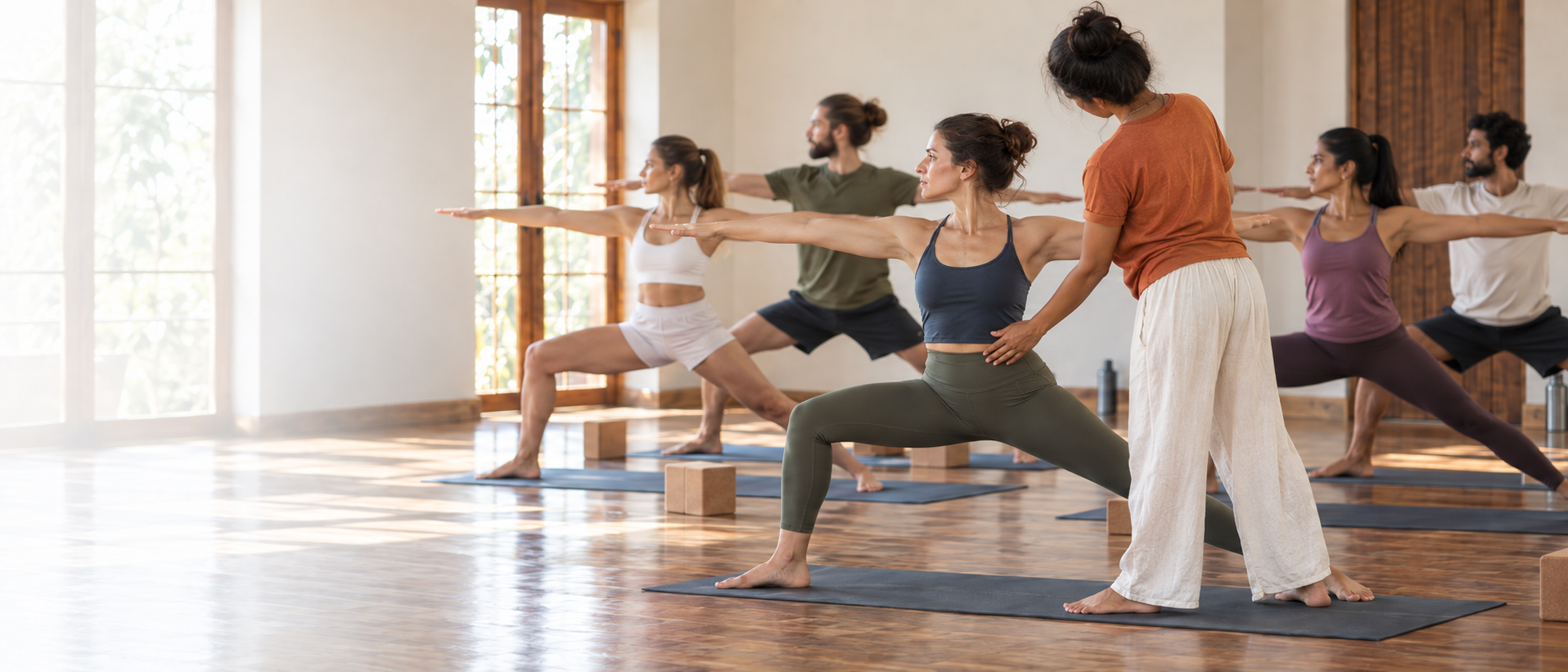
    Ashtanga Vinyasa yoga class illustrating the physically active sequence-based practice
    Ashtanga Vinyasa uses a structured sequence of postures and transitions; this is not a promise of weight loss.

    In modern classes, the phrase usually refers to Ashtanga Vinyasa Yoga, where postures are linked in a set sequence with steady breathing and repeated transitions. The practice can feel physically demanding because it includes standing poses, forward folds, balances, seated work, and repeated movements such as Sun Salutations. That makes it different from Patanjali’s Ashtanga Yoga, which means the eight-limbed path and is a broader philosophical system rather than one fixed exercise sequence.

    Can Ashtanga yoga help with body weight?

    It can contribute to overall physical activity, and regular activity is one part of long-term weight management. The practice also develops strength, coordination, mobility, and work capacity, which can make other forms of movement easier. What it cannot do is guarantee fat loss from one part of the body, overcome every dietary pattern, or replace medical care when weight change is connected with a health condition.

    Why consistency matters more than one hard class

    A very hard session once a week is not automatically more useful than a moderate practice you can repeat safely. Beginners often progress better when they learn the sequence gradually, allow recovery, and stop before technique breaks down. A routine that you can follow for months is more practical than forcing an advanced schedule for two weeks and then quitting because of pain, exhaustion, or lack of time.

    What the physical practice actually develops

    Ashtanga Vinyasa uses repeated weight-bearing positions, transitions, balancing work, and sustained attention to breathing. These elements can challenge the legs, shoulders, trunk, and general endurance while also asking for mobility and coordination. The useful goal is not to chase sweat as proof of success, but to move with enough control that the body can adapt without turning every class into a test.

    Sun Salutations

    Sun Salutations link several movements together and can raise the physical demand of the session when they are repeated. The important part for a beginner is learning stable positions and smooth transitions rather than moving as fast as possible. If wrists, shoulders, or the lower back feel overloaded, reduce repetitions and ask for a simpler variation instead of forcing the full sequence.

    Standing and balancing poses

    Standing postures build control through the legs and hips while balancing positions challenge coordination and attention. These poses can feel demanding even without constant movement, especially when they are held with steady breathing. Progress should come from better control and clearer technique, not from trying to make every posture deeper each week.

    Repeated transitions

    Movements such as lowering from plank and returning to standing can add a lot of work to an Ashtanga session. They are also where fatigue may change shoulder, wrist, or spinal control. Beginners do not need to perform every transition in its hardest form, and skipping or modifying one movement can be a sensible training choice rather than a failure.

    Breathing does not directly burn fat

    Breath control helps organise movement and attention, but it should not be described as a technique that directly melts fat or “boosts metabolism” in a special way. In Ashtanga Vinyasa, steady breathing helps students pace the sequence and notice when effort is becoming uncontrolled. For a simple introduction to breathing mechanics, use our diaphragmatic breathing guide.

    Food, sleep and total daily activity still matter

    No yoga style removes the need for basic health habits. If weight management is your goal, look at the whole week rather than only the time spent on the mat. Regular meals that suit your health needs, enough protein and fibre, reasonable portions, walking or other daily movement, adequate sleep, and recovery between hard sessions can all matter alongside yoga practice.

    A sensible starting routine for beginners

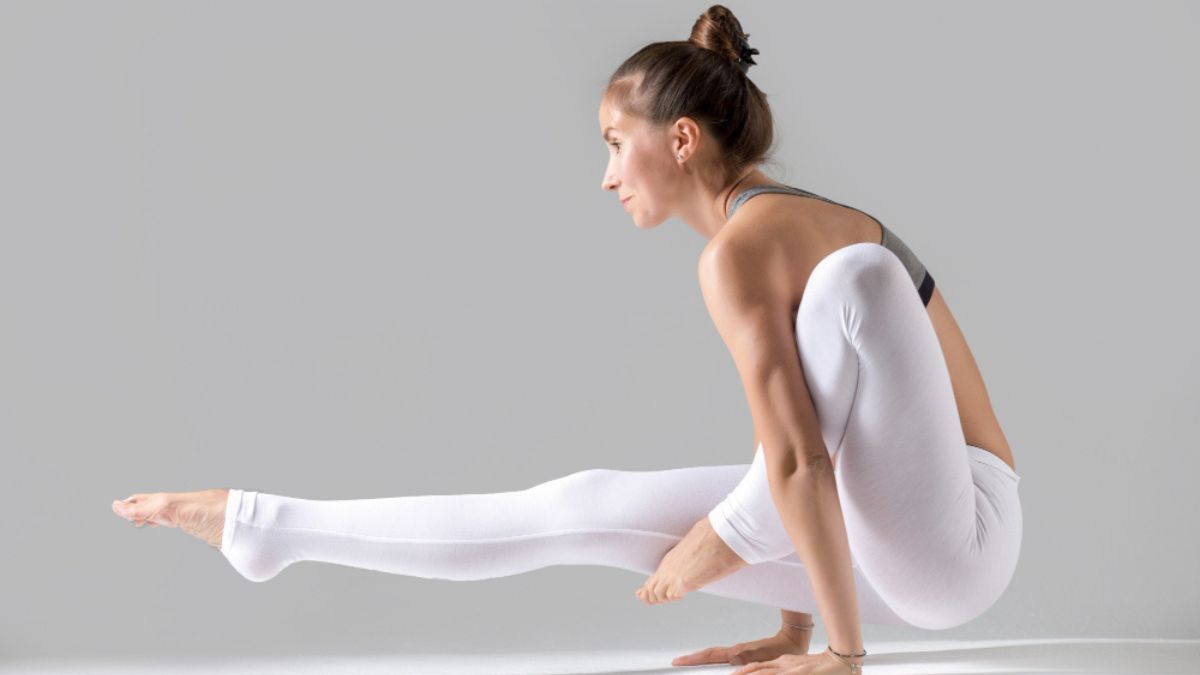
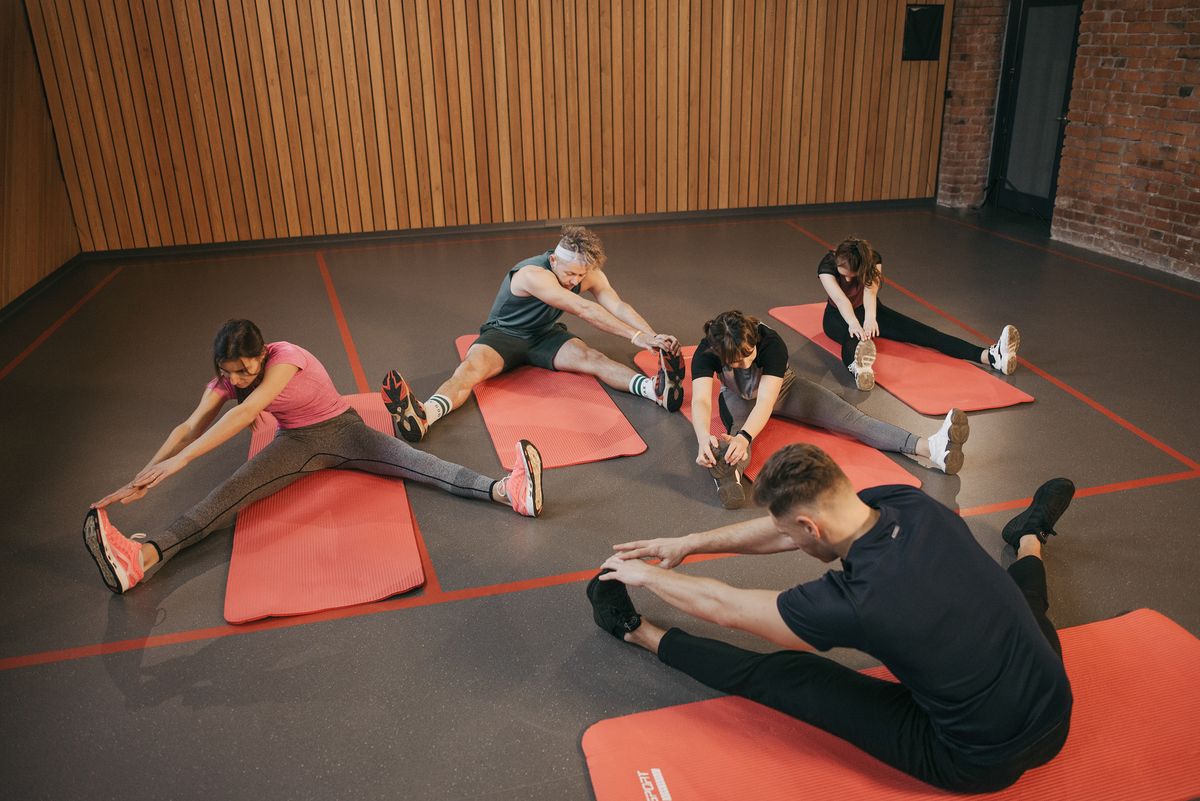
    Group practising an active yoga stretch in a class while building movement confidence
    Build consistency and movement skill before increasing intensity.

    Start with a shorter practice that lets you learn the sequence without rushing. Two or three guided sessions a week can be enough at first, with easier movement or walking on other days. As your technique and recovery improve, you can add time or another session, but there is no need to copy an advanced practitioner’s six-day schedule simply because it is traditional in some schools.

    • Learn the basic sequence before increasing speed.
    • Use modifications for wrists, knees, shoulders, or lower back when needed.
    • Keep at least one easier day when fatigue is high.
    • Do not use pain or dizziness as a sign that the practice is working.
    • Track consistency, energy, strength, and recovery instead of only scale weight.

    When weight loss should not be the main goal

    If you have a history of disordered eating, unexplained weight change, pregnancy, a medical condition, or medication that affects body weight, general internet advice may not be enough. In those situations, speak with an appropriate healthcare professional before using a demanding exercise routine mainly for weight loss. Yoga can still be useful, but the goal may need to shift toward strength, mobility, stress management, or maintaining a steady practice.

    Frequently asked questions

    Can beginners use Ashtanga yoga for fitness?

    Yes, but beginners should learn the sequence gradually and use modifications when needed. The full primary series is not a sensible starting target for everyone. A shorter guided practice can build familiarity and strength without making fatigue the centre of the session.

    Does Ashtanga yoga burn belly fat?

    No exercise can reliably choose where body fat is lost first. Ashtanga can contribute to total physical activity and may support overall weight management, but changes in body fat depend on many factors. Claims that one sequence specifically removes abdominal fat should be treated carefully.

    How often should I practise?

    There is no single number that suits everyone. Beginners can start with a few sessions each week and increase only when recovery is good and technique remains steady. Your age, training history, sleep, work demands, injuries, and other exercise all affect how much practice is sensible.

    Do I need cardio or strength training too?

    You do not have to combine every form of exercise, but a balanced week often includes different kinds of movement. Walking, general strength work, cycling, swimming, or another activity can add benefits that a yoga sequence may not provide in the same way. Choose forms of exercise you can recover from and continue consistently.

    Use Ashtanga as practice, not a promise

    Ashtanga Vinyasa can be a demanding and disciplined physical practice, and that can make it useful for people who enjoy structured movement. Its value does not depend on promising a particular body shape or a fixed weight-loss result. If you want to understand the wider meaning of Ashtanga beyond the modern sequence, read our guide to what Ashtanga Yoga means before choosing a practice or teacher-training course.

  • Yoga and Discipline: How to Build a Consistent Practice

    Yoga and Discipline: How to Build a Consistent Practice

    Yoga and discipline are closely connected, but discipline in yoga does not mean punishment, rigid rules, or forcing yourself through pain. It means creating enough consistency that practice continues even when motivation changes. A short practice done regularly can teach more than an ambitious routine that lasts only a few days. For practical steps, read our yoga teacher training guide for beginners.

    In practical terms, discipline is the ability to return. You return to movement, breath, study, or meditation without needing every session to feel inspiring. That steadiness gives the body and mind enough repetition to learn. It also helps you notice when a routine is realistic and when it needs to be changed.


    Why Discipline Matters in Yoga

    Regularity matters across asana, pranayama, meditation, and study because each develops through repetition. In Patanjali’s Yoga Sutras, tapas is one of the niyamas and is commonly translated as disciplined effort, austerity, or heat. It is better understood as steady effort than as an instruction to force the body or fight discomfort.

    Many beginners think yoga is about flexibility. But ask any long-term practitioner, and they’ll tell you: flexibility of the mind comes first. The discipline to show up daily is more important than how deep your forward fold looks.


    Discipline in Daily Practice

    Discipline often shows up in small choices: setting aside practice time, keeping the phone away during meditation, preparing the mat before you need it, and protecting enough sleep for the next day. None of these choices is dramatic, but together they make regular practice easier to maintain.

    For beginners, the best way to start is with a short daily routine. Ten minutes of breathwork, fifteen minutes of asana, and five minutes of stillness. Over time, the mind adjusts, and the body starts to crave this rhythm.


    Discipline Beyond the Mat

    Yoga is more than what happens on the mat. Discipline extends into food, rest, speech, and relationships. The way we eat, the way we speak to others, and the way we manage our thoughts all reflect yogic discipline.

    For example, mindful eating is a form of discipline. Choosing fresh, sattvic food over processed snacks supports both body and mind. Similarly, keeping a regular sleep cycle is part of yoga discipline. Skipping rest makes practice harder, while a well-rested body supports focus and energy.


    Discipline in Teacher Training

    Teacher training makes discipline more visible because the schedule is structured. Students may move between asana, pranayama, anatomy, philosophy, teaching methodology, practicum, meals, assignments, and self-study in the same day. Regular attendance matters because each subject connects with the next and teaching skills improve through repetition rather than last-minute study.

    A good course should also teach sustainable discipline. Students need enough consistency to learn without assuming that exhaustion proves commitment. The FitFortunes yoga teacher training curriculum shows how physical practice, philosophy, anatomy, teaching methodology, and practicum fit together across the training.


    Discipline for beginners

    Beginners usually do better with a small routine that is easy to repeat. Ten to twenty minutes can be enough to build the habit if you use that time well. Practise at a similar time when possible, keep the mat easy to reach, and choose a few movements you already understand instead of changing the entire routine every day.

    Do not judge the session by flexibility or difficulty. The useful question is whether you returned to practice and whether the routine still fits your body and schedule. If a plan keeps failing, shorten it before assuming you need more willpower.


    Discipline for intermediate students

    Intermediate students often need less novelty and more consistency. Instead of adding difficult postures every week, refine the movements you already know, keep the breath steady, and notice where technique changes when you become tired. A short practice diary can help you see patterns in sleep, energy, recovery, and concentration without turning the routine into a competition.

    This is also a useful stage for giving pranayama, meditation, and study a regular place beside asana. The aim is not simply to make practice longer. It is to make the different parts of practice more deliberate and easier to sustain.


    Discipline for advanced practitioners

    With more years of practice, discipline becomes less about doing more and more about choosing carefully. Advanced practitioners still need recovery, honest self-observation, and the willingness to simplify when the body or mind is not responding well. Longer meditation, study, teaching, or seva can be part of practice, but none of them should become a reason to ignore health, relationships, or basic responsibilities.

    More years of practice can also make habits harder to question. A mature practice keeps enough curiosity to notice when an old routine no longer serves its purpose. Discipline is not loyalty to one schedule at any cost; it is the ability to stay committed while adapting intelligently.


    The Role of Tapas in Yogic Philosophy

    In Patanjali’s Eight Limbs of Yoga, tapas is listed as one of the niyamas (personal observances). Tapas is the discipline to continue even when comfort says “stop.” This doesn’t mean forcing the body into pain. It means facing distractions and choosing practice instead.

    A student once told me, “I don’t have time.” The truth is, yoga discipline creates time. By waking early, focusing better, and wasting less energy, life becomes more spacious.


    Practical Ways to Build Yoga Discipline

    • Fix a practice space at home.
    • Join a class or community for accountability.
    • Start with realistic goals instead of aiming too high.
    • Remember your “why” health, peace, or self-discovery.
    • Reward yourself with rest and reflection after consistent practice.

    Common Struggles With Discipline

    Even experienced students face challenges. Some days the body feels heavy. Some days the mind resists. Discipline is not about never failing. It is about returning after failure. Missing one day does not break discipline. Giving up does.


    Discipline and the Modern Lifestyle

    Modern schedules can make regular practice difficult because work, screens, late nights, travel, and irregular meals compete for the same time. A useful routine does not try to remove every distraction. It creates a clear place for practice and keeps that place realistic enough to survive ordinary weeks.

    Motivation changes from day to day, so consistency should not depend on feeling inspired. A simple routine, a fixed practice window, and a realistic minimum session make it easier to continue when enthusiasm is low.


    Conclusion: Discipline as the True Teacher

    Yoga and discipline work best when discipline supports practice rather than controlling it. A steady routine gives you repeated chances to learn movement, breathing, attention, and self-observation. The aim is not to prove how strict you can be. It is to build a practice you can return to for years.

    If your routine keeps breaking down, reduce it to something you can maintain and build from there. Consistency is more useful than intensity when intensity leaves you exhausted, injured, or unable to continue.


    Frequently asked questions

    Why is discipline important in yoga?

    Yoga develops through repetition. Regular practice gives the body time to learn movement, gives the mind repeated practice in attention, and makes it easier to understand what supports or disrupts your routine. Discipline is the structure that keeps those repetitions happening without requiring perfect motivation.

    How can beginners build discipline in yoga?

    Start with a short routine that is realistic enough to repeat several times each week. Use a regular time and place, keep the first few steps simple, and judge success by whether you practised rather than by how difficult the session looked.

    What does tapas mean in yoga?

    Tapas is one of the niyamas described in Patanjali’s Yoga Sutras. It is commonly translated as disciplined effort, austerity, or inner heat. In practical terms, it can mean staying committed to useful practice without turning effort into self-punishment.

    Does discipline mean practising every day?

    No. Daily practice may suit some people, while others need more recovery or have schedules that make fewer sessions more realistic. Discipline means following a sensible plan consistently, including planned rest when it is needed.

    How do I restart after losing my yoga routine?

    Return with a smaller routine instead of trying to recover everything at once. Choose a realistic time, reduce the session to the essentials, and repeat it until the habit feels stable again. A simple restart is usually easier to maintain than a dramatic one.

  • Is Yin Yoga a Waste of Time

    Is Yin Yoga a Waste of Time

    Yin Yoga is not a waste of time, but it is also not a substitute for every other kind of movement. Its value depends on what you want from the practice. Yin uses long, relatively still positions with low-intensity effort, so it can be useful for people who want a slower session, time to notice sensation, or a contrast to faster yoga and strength work. It should not be sold as a magical way to “release fascia,” prevent all injuries, or heal emotions.

    What is Yin Yoga?

    Yin Yoga is a modern yoga style in which floor-based postures are commonly held for several minutes with relatively little muscular effort. Props may be used to change the amount of load and make the position more sustainable. The practice often focuses on hips, legs, and spine and gives students time to observe sensation instead of moving quickly from one posture to the next.

    The common explanation that Yin “targets fascia instead of muscles” is too simple because muscles, connective tissue, joints, nerves, and other structures are all affected by position and load. What makes Yin distinct is mainly the slower pace, longer holds, and lower active effort. Those features create a different experience from Vinyasa, Ashtanga Vinyasa, or a strength-focused Hatha class.

    Why does Yin Yoga feel like nothing is happening?

    Many people are used to judging exercise by sweat, speed, or muscular fatigue, so a quiet hold can feel unproductive. Yin asks for a different kind of attention because the challenge may be staying still, finding an appropriate level of sensation, and resisting the urge to keep increasing intensity. A practice does not have to feel exhausting to have a purpose, but that purpose should be clear.

    If your main goal is cardiovascular fitness or building high levels of strength, Yin alone is unlikely to provide everything you need. If your goal is to spend time in slow positions, explore comfortable range, or add a quieter session to a more active week, it may fit very well. The mistake is treating one style as if it must do every job.

    Can Yin Yoga improve flexibility?

    Longer holds can help some people become more comfortable in certain ranges of motion over time, especially when the positions are repeated consistently. But flexibility changes are influenced by nervous-system tolerance, joint structure, muscle length, training history, and many other factors. A deeper sensation does not automatically mean a better flexibility result.

    Use enough intensity to feel the position without forcing into pain, numbness, tingling, or a sense that the joint is being compressed. Progress can also come from strength through range, not only passive stretching, which is one reason Yin can work well alongside more active movement rather than replacing it.

    Does Yin Yoga work on fascia?

    Fascia and other connective tissues respond to load, but online claims about “melting fascia,” “breaking adhesions,” or reaching tissue that other exercise cannot reach are often overstated. During a Yin posture, the body experiences load through several tissues at once. The practical goal should be finding a sustainable position rather than imagining that one structure is being isolated.

    Can Yin Yoga help you relax?

    A quiet class with slower breathing, fewer transitions, and longer pauses can feel relaxing for some people because it reduces external stimulation and gives attention one simple task. Other people become restless or uncomfortable when asked to stay still for a long time. Neither reaction means they are doing yoga incorrectly; different nervous systems and preferences respond differently to stillness.

    Do not treat an emotional response during a pose as proof that “stored trauma” has been released from a body part. People can experience memories, sadness, frustration, or calm during many kinds of quiet practice, but trauma treatment belongs within appropriate mental-health care. Yoga teachers should create space for experience without making claims they cannot support.

    Yin Yoga vs restorative yoga

    These styles can look similar because both are slow and often use props, but the intention is usually different. Yin commonly keeps some noticeable stretch or load in the position for several minutes, while restorative yoga usually uses enough support to reduce effort and make rest the main purpose. A pose can look almost identical from across the room while feeling completely different to the person practising it.

    Yin Yoga vs somatic yoga

    Yin tends to use longer static holds, while somatic-style classes usually use smaller exploratory movements and ask students to notice changes in sensation while moving. Both can be slow, but they are not the same method. Our somatic yoga guide explains that modern approach in more detail without turning it into a cure-all wellness claim.

    How beginners should practise Yin Yoga

    Beginners do not need five- or ten-minute holds from the first session. Start with shorter positions, use props, and learn the difference between a steady stretch sensation and pain or neurological symptoms. Coming out of a long hold slowly is also important because the body may feel temporarily stiff or unfamiliar after staying still.

    • Begin with shorter holds, such as one to three minutes.
    • Use blocks, bolsters, cushions, or a wall to reduce strain.
    • Avoid pushing into sharp pain, numbness, tingling, or joint pinching.
    • Come out of long positions gradually.
    • Keep breathing comfortable rather than forcing a special pattern.

    When Yin Yoga may need modification

    People with recent injuries, acute pain, significant osteoporosis, joint instability, or certain medical conditions may need a different approach or professional guidance. Hypermobility also deserves attention because someone who can easily reach a large range may benefit more from control and strength than from repeatedly chasing deeper passive positions. Older age alone does not determine suitability; individual health and movement capacity matter more.

    If a posture produces pain that persists after class or neurological symptoms such as numbness or tingling, stop and seek appropriate assessment rather than assuming the sensation is a necessary “release.” A yoga teacher can offer general movement options within their training, but should not diagnose a joint or connective-tissue problem.

    Can Yin Yoga complement stronger practices?

    Yes, when the combination suits the person. Someone who does strength training, running, Ashtanga Vinyasa, or faster Vinyasa may enjoy a slower session on another day because it changes the pace and type of movement. That does not mean Yin automatically prevents injuries or is required for recovery. Good recovery also depends on sleep, total training load, nutrition, and how the active practice itself is managed.

    Frequently asked questions

    Is Yin Yoga enough on its own?

    It can be a meaningful yoga practice, but it does not train every physical quality equally. If your wider goals include cardiovascular fitness, substantial strength, power, or balance under load, other forms of movement can complement Yin. The right mix depends on what you want your weekly activity to do for you.

    How often should I do Yin Yoga?

    There is no required number of sessions. Some people enjoy one or two quieter practices each week, while others practise more often. Frequency should depend on how your body responds, what other training you do, and whether the holds leave you comfortable rather than irritated afterward.

    Does Yin Yoga burn many calories?

    It is generally less physically demanding than continuous flow or vigorous exercise, so calorie expenditure is not usually its main purpose. If your goal is weight management, look at total activity, food, sleep, and health rather than judging Yin by how much energy it burns in one session.

    Can Yin Yoga replace meditation?

    Yin can feel meditative because the pace is slow and attention stays with sensation for longer periods, but it is still a movement practice with its own structure. If formal meditation is important to you, Yin can sit beside it rather than needing to replace it.

    Who Yin Yoga May Suit

    SituationHow Yin may fit
    You already do strong trainingUse Yin as a slower practice on separate days
    You want long, quiet holdsChoose moderate ranges rather than forcing depth
    You are very flexibleFocus on control and avoid chasing more passive range
    You have acute pain or neurological symptomsGet appropriate assessment before long holds

    A Simple Weekly Example

    • 1–2 Yin sessions if they leave you comfortable.
    • 2–3 strength, walking, cardio or active yoga sessions based on your goals.
    • At least one easier recovery day when your total training load is high.

    Compare Yin with our Hatha vs Vinyasa guide, Somatic Yoga guide, and weekly yoga frequency guide.

    How to Modify a Yin Pose in 4 Steps

    1. Enter the pose only until you feel mild, manageable tension.
    2. Use a block, bolster or blanket to reduce strain.
    3. Shorten the hold if sensation keeps increasing.
    4. Come out slowly and notice whether the area feels comfortable afterward.

    If a position creates sharp pain, numbness, tingling or symptoms that persist, stop rather than treating discomfort as progress.

    So, is Yin Yoga a waste of time?

    No, when the practice matches your purpose. Yin offers a slower way to explore range, stillness, and sensation, but it does not need exaggerated claims to be worthwhile. If you expect it to replace strength, cardio, therapy, and meditation all at once, it will disappoint you. If you use it as one clear practice within a balanced routine, its slower pace can be useful precisely because it asks you to do something different.

  • Yoga and Self-Knowing: What Self-Study Means in Practice

    Yoga and Self-Knowing: What Self-Study Means in Practice

    Yoga and self-knowing meet most clearly in the practice of observation. Yoga does not make you understand yourself automatically, and a difficult posture does not reveal a hidden personality trait. What practice can do is give you repeated chances to notice breath, effort, attention, habits, reactions, and choices more clearly. In classical yoga, this kind of self-study is closely connected with svadhyaya.

    What does self-knowing mean in yoga?

    Self-knowing in yoga is not simply analysing your personality or trying to produce constant calm. It can include noticing how the mind reacts, what habits repeat, where attention goes, and how your actions match the values you say are important. Svadhyaya is commonly translated as self-study and is one of the niyamas described in Patanjali’s Yoga Sutras, where practice includes ethical discipline as well as meditation and physical preparation.

    Study can include classical texts, reflection, and observation of daily behaviour. The important point is that self-study is not limited to reading books and it is not limited to introspection either. Yoga asks whether understanding changes the way you act, speak, practise, and respond when life is not going the way you expected.

    Asana can show habits, but not hidden meanings

    Physical practice can reveal useful habits because you can notice whether you rush, hold the breath, compete, avoid difficulty, or push through pain. Those observations may tell you something about how you approach practice, but they do not prove that a tight hip represents a particular emotion or that one pose exposes a fixed personality trait. It is better to stay with what you can actually observe.

    For example, struggling in a balance pose may simply show fatigue, unfamiliarity, vision, ankle control, or concentration on that day. The self-study comes from noticing your response: do you become frustrated, laugh, slow down, or keep forcing the pose? That kind of observation is useful because it is grounded in behaviour rather than symbolic storytelling.

    Breath awareness and self-observation

    Breathing is useful for self-observation because changes in effort, speed, and tension are easy to notice. During practice, you may discover that the breath becomes shallow when you hurry or that the shoulders tighten when a posture feels difficult. That does not diagnose your emotional state, but it gives you immediate information about how the body is responding to the task.

    Beginners can start with simple breath awareness before using stronger pranayama techniques. Breath retention and forceful methods are not necessary for learning self-awareness and may be unsuitable for some people. Our diaphragmatic breathing guide gives a simple practice that focuses on comfortable observation rather than forcing the breath.

    Meditation makes patterns easier to notice

    Meditation gives you fewer external tasks, so distraction itself becomes easier to see. You may notice planning, remembering, judging, daydreaming, or repeatedly returning to the same concern. The goal is not to stop every thought immediately. A more useful first step is recognising that attention has moved and learning to return without turning the distraction into another reason for self-criticism.

    Five or ten minutes can be enough for a beginner to learn this pattern. Longer sessions are not automatically deeper, and restlessness does not mean the practice has failed. Our beginner meditation guide explains how to build a simple home practice without needing a complicated ritual.

    What yoga texts add to self-study

    Texts such as the Yoga Sutras and Bhagavad Gita give students language for examining discipline, attachment, action, attention, and the relationship between practice and daily life. They should not be reduced to motivational quotes. A verse becomes more useful when you study its context, compare interpretations, and ask how the idea changes the way you understand your own choices.

    FitFortunes includes yoga philosophy within teacher training because future teachers should understand more than posture names. The teacher training curriculum guide shows how philosophy, meditation, anatomy, teaching methodology, and practicum fit together rather than treating self-study as a separate inspirational topic.

    Journaling can support reflection

    Journaling is not a classical requirement for yoga, but it can be a practical modern tool for noticing patterns over time. Instead of writing pages after every class, record one or two observations that are specific enough to compare later. You might note where you rushed, what made concentration easier, how sleep affected practice, or which teaching cue finally made sense.

    • What did I notice before practice?
    • Where did I add unnecessary effort?
    • What distracted me most?
    • What changed after breathing or meditation?
    • Did anything from practice affect a decision later in the day?

    Self-knowing has to reach daily life

    Yoga becomes more meaningful when observation leaves the mat. You may begin to notice how quickly you interrupt someone, how you react when plans change, whether you keep promises to yourself, or how often you act from habit without considering the result. These are ordinary situations, but they give self-study something concrete to work with.

    The point is not to monitor every thought and become self-conscious all day. It is to create enough space to recognise a pattern before it controls the next action automatically. Sometimes that leads to a different choice; sometimes it simply shows you the same habit more clearly. Both can be part of learning.

    Common mistakes in self-study

    Self-study becomes less useful when it turns into constant judgement or mystical interpretation. Not every sensation needs a symbolic meaning and not every difficult day means you have discovered a deep inner problem. A grounded practice uses curiosity, context, and patience, especially when the subject is emotionally important.

    • Expecting one meditation session to create permanent clarity.
    • Comparing your inner experience with another student’s story.
    • Assuming every body sensation represents an emotion or memory.
    • Using “awareness” to ignore pain or other practical problems.
    • Reading quotes without studying their context.
    • Turning reflection into self-criticism.

    Frequently asked questions

    Is self-knowing the same as enlightenment?

    No. Self-study can be part of a larger philosophical or spiritual path, but noticing habits and reactions should not be confused with claiming a final spiritual state. Classical yoga traditions use different concepts and interpretations for liberation, knowledge, and meditation, so one modern phrase should not be made to carry all of them.

    Which yoga style is best for self-awareness?

    No single style owns self-awareness. Hatha, meditation, pranayama, and even a vigorous asana practice can support observation when they are taught with enough attention and context. A style that keeps you engaged and gives you room to notice your reactions may be more useful than choosing one because it is marketed as more spiritual.

    Can journaling replace meditation?

    They do different things. Journaling turns observations into words and can help you compare patterns over time, while meditation asks you to observe experience more directly without immediately explaining it. You can use both, one, or neither depending on your practice, but they should not be treated as identical methods.

    Can yoga help me manage emotions better?

    Yoga may help some people notice tension, breathing, and reactions earlier, which can create a pause before responding. That is different from treating an emotional or mental-health condition. When distress is persistent, severe, or difficult to manage, appropriate professional support is more important than expecting yoga alone to solve it.

    Self-knowing is a practice of attention

    Yoga does not hand you a finished answer about who you are. It gives you repeated situations in which you can observe attention, effort, habit, reaction, and choice. With time, those observations can become clearer and more useful, especially when practice is supported by study and honest reflection rather than dramatic interpretations of every pose or feeling.