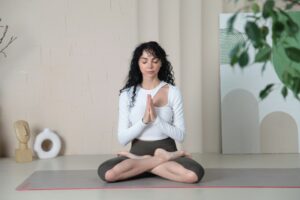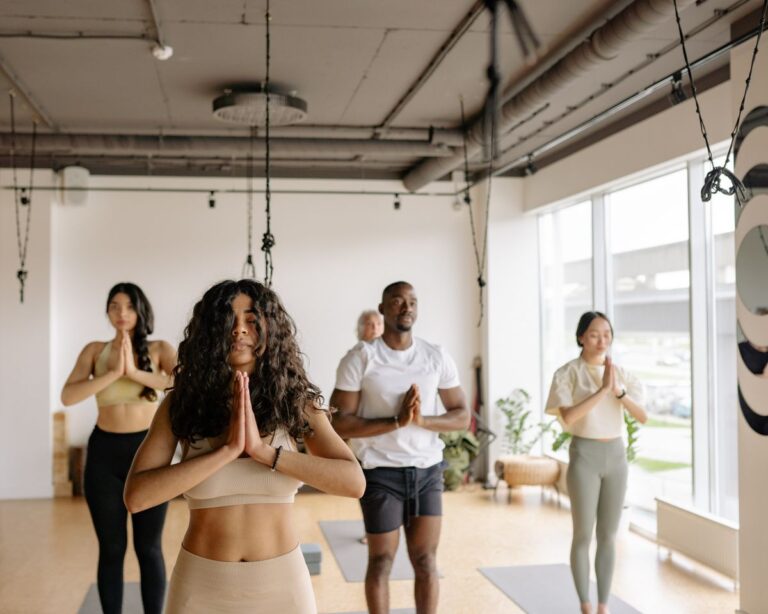
Hatha Yoga and Vinyasa Yoga often use many of the same postures, but the class experience is different. In a modern Hatha class, you usually have more time to enter a pose, stay for several breaths, and receive instruction. In Vinyasa, movement is linked more continuously with breathing, so transitions become part of the practice.
Hatha Yoga vs Vinyasa Yoga: quick comparison
| Point | Hatha Yoga class | Vinyasa Yoga class |
|---|---|---|
| Pace | Usually slower | Usually more continuous |
| Pose time | Longer holds are common | Shorter holds are common |
| Breath | Breathing continues while a pose is held | Breath often cues the transition |
| Teaching time | More room to explain one posture | More emphasis on sequence and rhythm |
| Physical demand | Varies from gentle to strong | Often more cardiovascular |
| Best fit | People who like time to learn and observe | People who enjoy movement and flow |
What does Hatha Yoga mean?
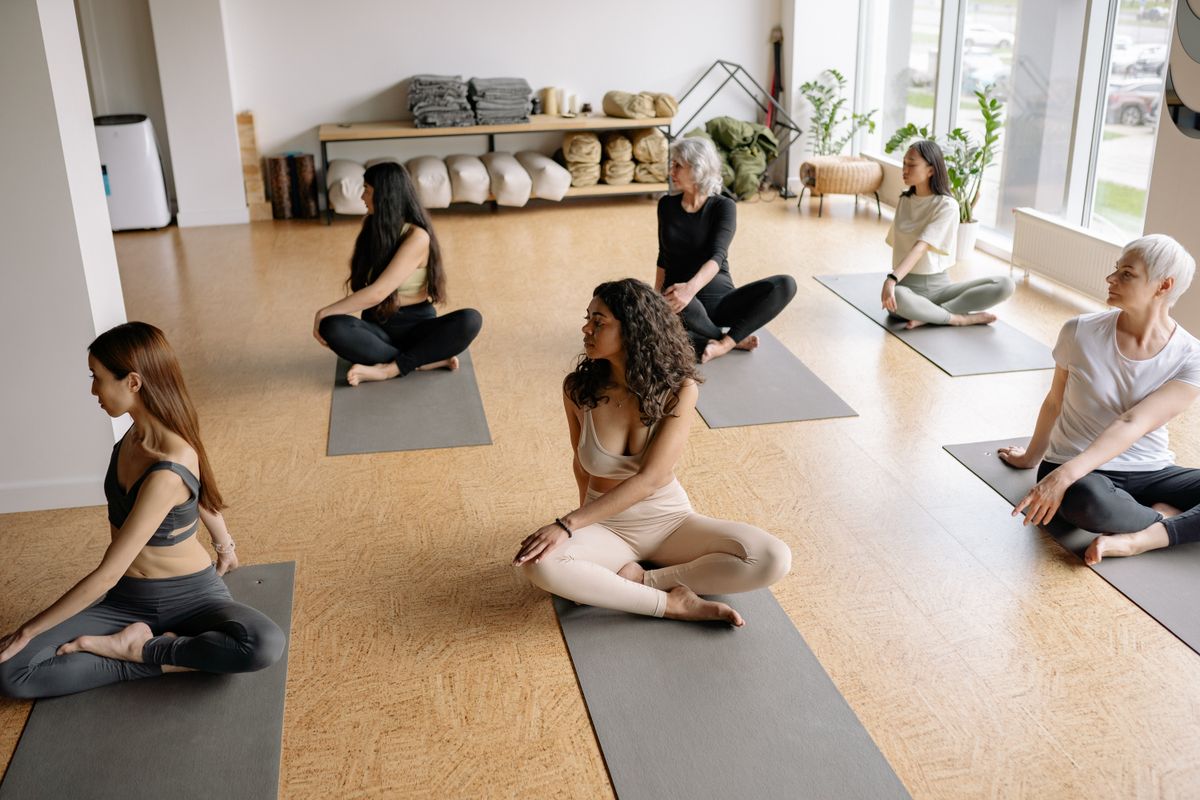
There are two useful meanings. In modern studio language, Hatha usually means a slower class where postures are held for several breaths. In classical Indian yoga literature, Hatha is much wider. It includes practices such as asana, pranayama, shatkarma, mudra, bandha, concentration, and meditation.
This difference matters. Saying “Hatha is slow yoga” describes a common modern timetable label, but it does not describe the whole Hatha tradition. Our Traditional Hatha Yoga guide explains what the larger system contains.
What does Vinyasa Yoga mean?
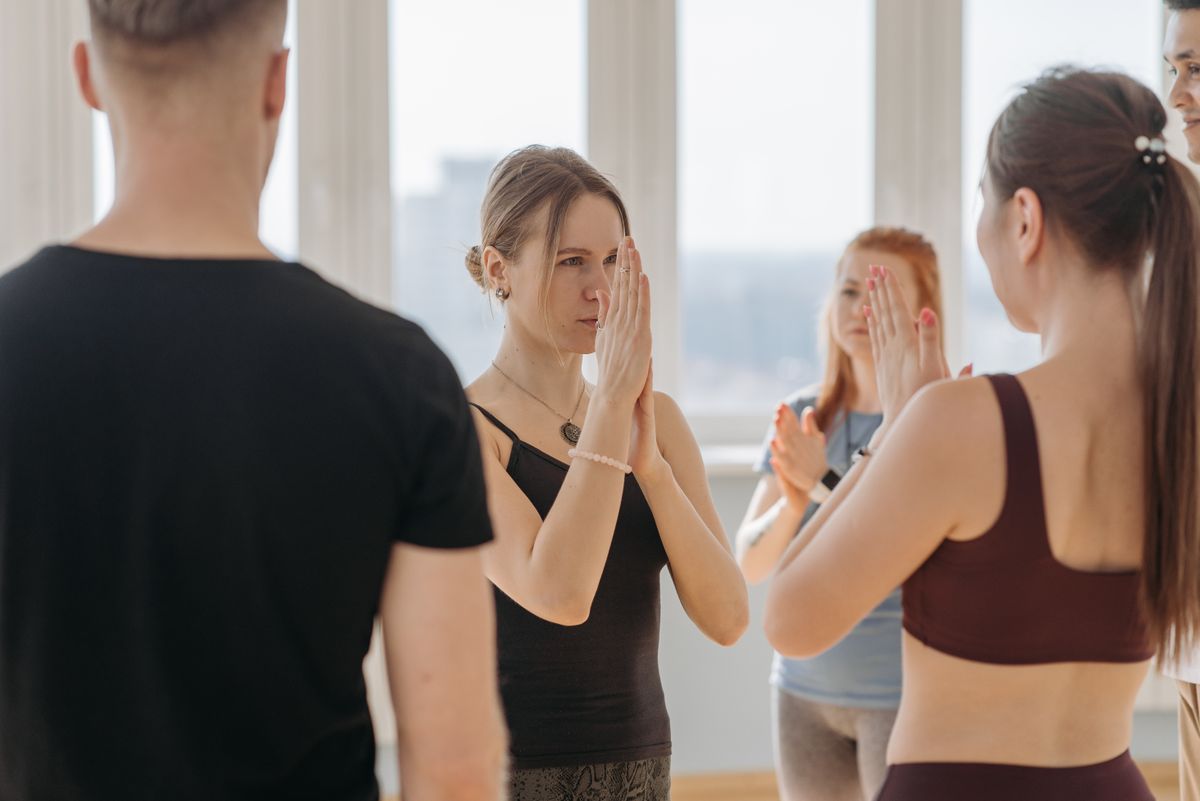
In a modern Vinyasa class, the teacher creates a sequence in which movement and breath are linked. You may move from a lunge into a plank, from plank toward a backbend, and then into Downward-Facing Dog with specific breathing cues. The transitions are part of the class rather than empty space between poses.
Vinyasa classes are not all fast. A teacher can teach a slow Vinyasa class or a very demanding one. The defining feature is the organised flow of movement, not simply speed. If you are new to the style, read our Vinyasa Yoga for beginners guide.
The biggest difference: breath inside a pose or breath moving the sequence
In Hatha, you may enter Trikonasana and remain there while taking several steady breaths. The teacher has time to explain the feet, pelvis, spine, gaze, and a suitable variation. Breathing supports the held position.
In Vinyasa, the breath often gives timing to movement. An inhale may lift the arms or chest. An exhale may take the body into a fold or transition. This demands more coordination because you are managing position, direction, and breathing at the same time.
Neither method is automatically more mindful. A slow class can become mechanical, and a flowing class can be very attentive. The quality depends on how the practice is taught and how the student responds.
Pace, posture holds and physical effort
Vinyasa often raises the heart rate more because the body keeps changing position. Repeated transitions may also increase work for the shoulders, arms, and trunk. Hatha can still be physically demanding, especially when a pose is held for time, but the workload feels different.
Many beginners assume slow means easy. That is not always true. Holding Warrior II for several breaths can be harder than moving through it quickly. A slow class also gives you more time to notice where you are using unnecessary effort.
If you enjoy a stronger fitness-led flow, compare both styles with Hatha Yoga vs Power Yoga. You can also read what Power Yoga is, where it came from, and who it suits. Power Yoga is a modern label and is usually more demanding than a general Vinyasa class.
What Indian yoga textbooks add to the comparison
Andhra University’s yoga syllabus teaches the Hatha Yoga Pradipika through asana, pranayama, shatkarma, mudra, samadhi, mind-prana relationships, and nada. Its published syllabus therefore supports a broader understanding of Hatha than the modern phrase “slow yoga.” You can read the university’s Hatha Yoga syllabus.
The Indira Gandhi National Centre for the Arts also catalogues manuscripts of the Hatha Yoga Pradipika. That is useful when separating a documented Indian Hatha tradition from modern class labels. Modern Vinyasa Flow is not presented as a chapter of the Hatha Yoga Pradipika. It developed through twentieth-century teaching lineages and later studio culture.
This is why we use the terms carefully: classical Hatha is a larger system; modern Hatha class is a slower class format; Vinyasa is a breath-linked sequencing approach.
Hatha or Vinyasa: which is better for beginners?
For many complete beginners, Hatha is easier to understand because there is more time to look, listen, and adjust. If you do not yet know how a lunge, plank, forward fold, or Downward-Facing Dog should feel, a slower pace can be useful.
Vinyasa can still be a good first class when it is labelled for beginners and the teacher explains transitions. Some people also stay focused better when they keep moving. The best starting point depends on the class level, teacher, mobility, fitness, and how comfortable you feel learning under time pressure.
If a movement causes sharp pain, numbness, dizziness, or unusual weakness, stop. A general yoga class cannot diagnose the cause of symptoms.
Which style fits your goal?
- Learn basic postures: start with a slower Hatha class.
- Build movement coordination: a beginner Vinyasa class can help.
- Prefer more instruction: Hatha usually gives more time per pose.
- Prefer continuous movement: Vinyasa may hold your attention better.
- Want both: use Hatha to study positions and Vinyasa to practise transitions.
- Want a stronger athletic class: compare Vinyasa with Power Yoga before choosing.
How FitFortunes teaches Hatha and Vinyasa Krama foundations
Our 200-hour multi-style yoga teacher training in Rishikesh is a 21-day residential program. It includes Hatha foundations and Vinyasa Krama foundations rather than treating every flowing class as the same style. The wider curriculum also includes pranayama, meditation, anatomy, philosophy, teaching methodology, and supervised practicum.
If you want a narrower traditional Hatha focus, compare the 200-hour Hatha Yoga teacher training. If you only want a short foundation, the 100-hour Hatha course is 10 days and is positioned as foundational study rather than a promise that you will be ready to teach.
Frequently asked questions
Is Hatha Yoga easier than Vinyasa?
Not always. Hatha is usually slower, but long holds can still be demanding. Vinyasa adds more continuous movement and coordination.
Does Vinyasa Yoga come from the Hatha Yoga Pradipika?
Not as a modern class style. The Hatha Yoga Pradipika is a classical Hatha text. Modern Vinyasa Flow developed much later through twentieth-century yoga teaching and studio practice.
Can I practise Hatha and Vinyasa in the same week?
Yes. Many students use slower classes to study positions and faster classes to practise sequencing and stamina. The balance should match your recovery and experience.
Which style is better for stress?
That depends on the person. Some people settle better in a slower class. Others find continuous movement easier to focus on. Consistency and a suitable teacher matter more than the label alone.
Use the difference to choose a better class, not a “better” yoga
Hatha and Vinyasa are not competitors. They organise practice differently. Hatha gives more time inside a posture. Vinyasa gives more attention to the path between postures. Try the style that matches your current needs, then learn from both instead of treating one as the correct version of yoga.
### Excerpt Compare Hatha Yoga vs Vinyasa Yoga by pace, breath, posture holds, beginner suitability, and practice style, with context from Indian Hatha sources.