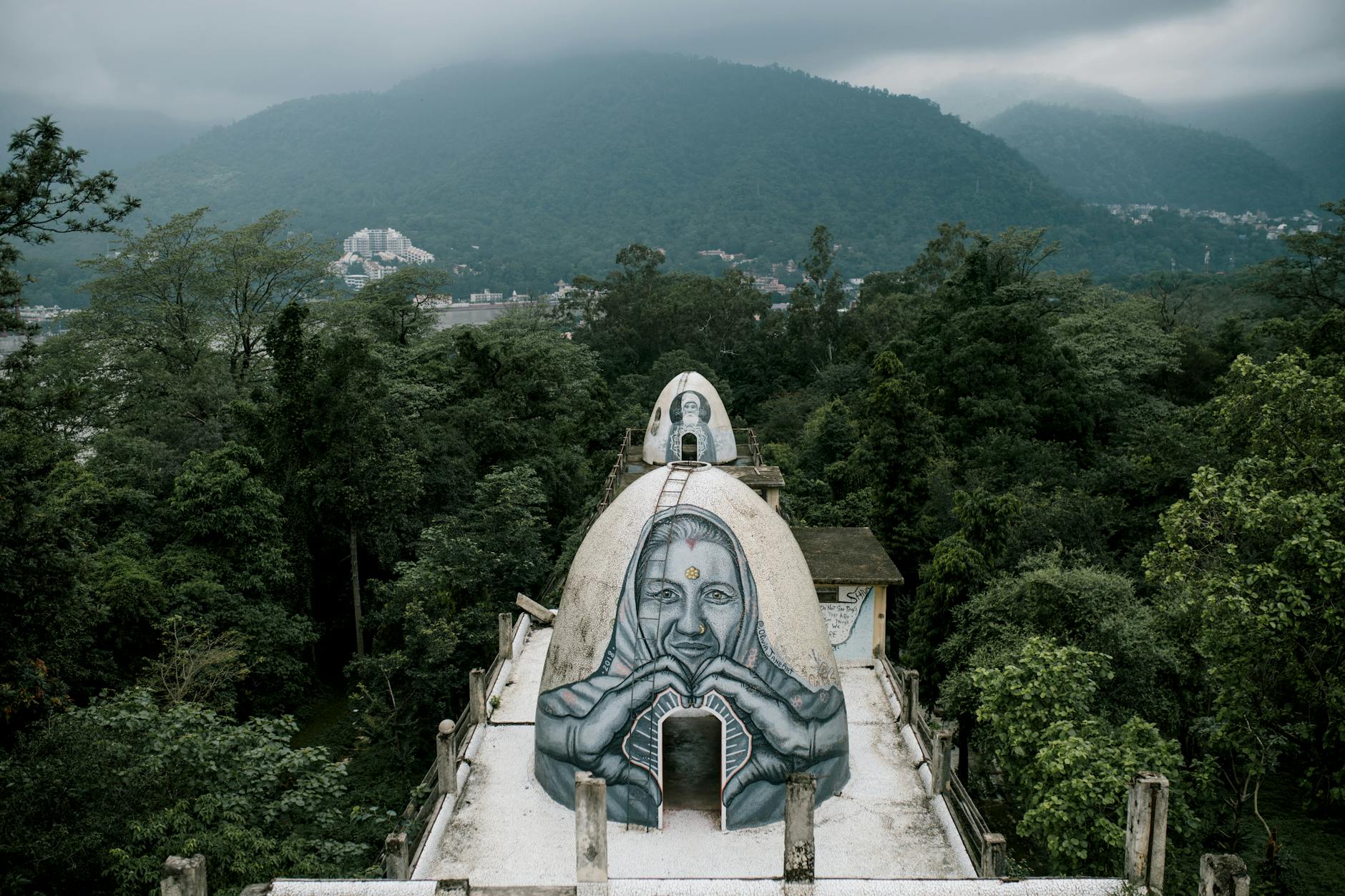
October is one of the easier months for many international students to attend yoga teacher training in Rishikesh. The heavy monsoon period is usually ending, days are warm rather than extremely hot, and evenings become noticeably cooler.
Historical climate sources commonly show October daytime temperatures around the high 20s Celsius, with cooler nights around the mid-teens. Weather varies from year to year, so use these figures for packing rather than as a daily forecast.
October in Rishikesh is usually a transition from the monsoon period toward cooler autumn weather.
Is October a good month for yoga teacher training in Rishikesh?
For many students, yes. October usually offers a useful balance between warm daytime weather and cooler mornings and evenings. That can make early practice, walking around Rishikesh and long residential training days more comfortable than the hottest summer months.
It is also a popular travel period. That means flights, taxis and rooms outside your course package can become busier around Indian festival dates. If you plan to arrive several days early or stay after training, book those extra nights in advance.
What is Rishikesh weather usually like in October?
Climate averages from several weather sources place October daytime highs at roughly 29-30°C and overnight lows around 15-17°C. Rainfall is much lower than during July and August, although occasional rain is still possible.
The temperature difference between afternoon and early morning matters more than the average number. You may feel warm in the middle of the day and want a light layer before sunrise, after sunset or in an air-conditioned room.
Typical October conditions
Warm days, often around the upper 20s Celsius.
Cooler early mornings and evenings.
Much less rain than peak monsoon months.
Clearer mountain views are common after the rains.
Weather generally becomes cooler as the month progresses.
Always check a current forecast during the week before you travel. Climate averages help with planning, but they cannot tell you what a specific October day will be like.
What should you pack for October yoga teacher training?
Pack for both yoga practice and a wider daily temperature range. Heavy winter clothing is usually unnecessary in Rishikesh itself in October, but one light warm layer can make early mornings much more comfortable.
Useful clothing
Comfortable yoga clothes that allow easy movement.
Lightweight tops and trousers for warm afternoons.
A light sweater, fleece or shawl for mornings and evenings.
Modest casual clothes for walking around town and visiting temples or public places.
Sandals plus comfortable walking shoes.
A light rain layer or compact umbrella, especially in early October.
Yoga teacher training often begins early. A cool morning can feel pleasant for pranayama, meditation and asana, but your body may need more gradual warming than it does on a hot afternoon. Do not assume cooler weather means you should immediately push deeper into postures.
Hydration also remains important. Warm afternoons, several classes and walking around Rishikesh can add up. Keep water nearby and pay attention to how your energy changes through the day.
What does an October training day feel like?
The weather is only one part of the experience. Residential teacher training is structured around classes, meals, study, self-practice and rest. October can make moving between these parts of the day easier because the heat is generally less intense than late spring and early summer.
If you are considering the FitFortunes 200-hour program, check the current 200-hour yoga teacher training in Rishikesh page for course dates, room options, fees and the current curriculum.
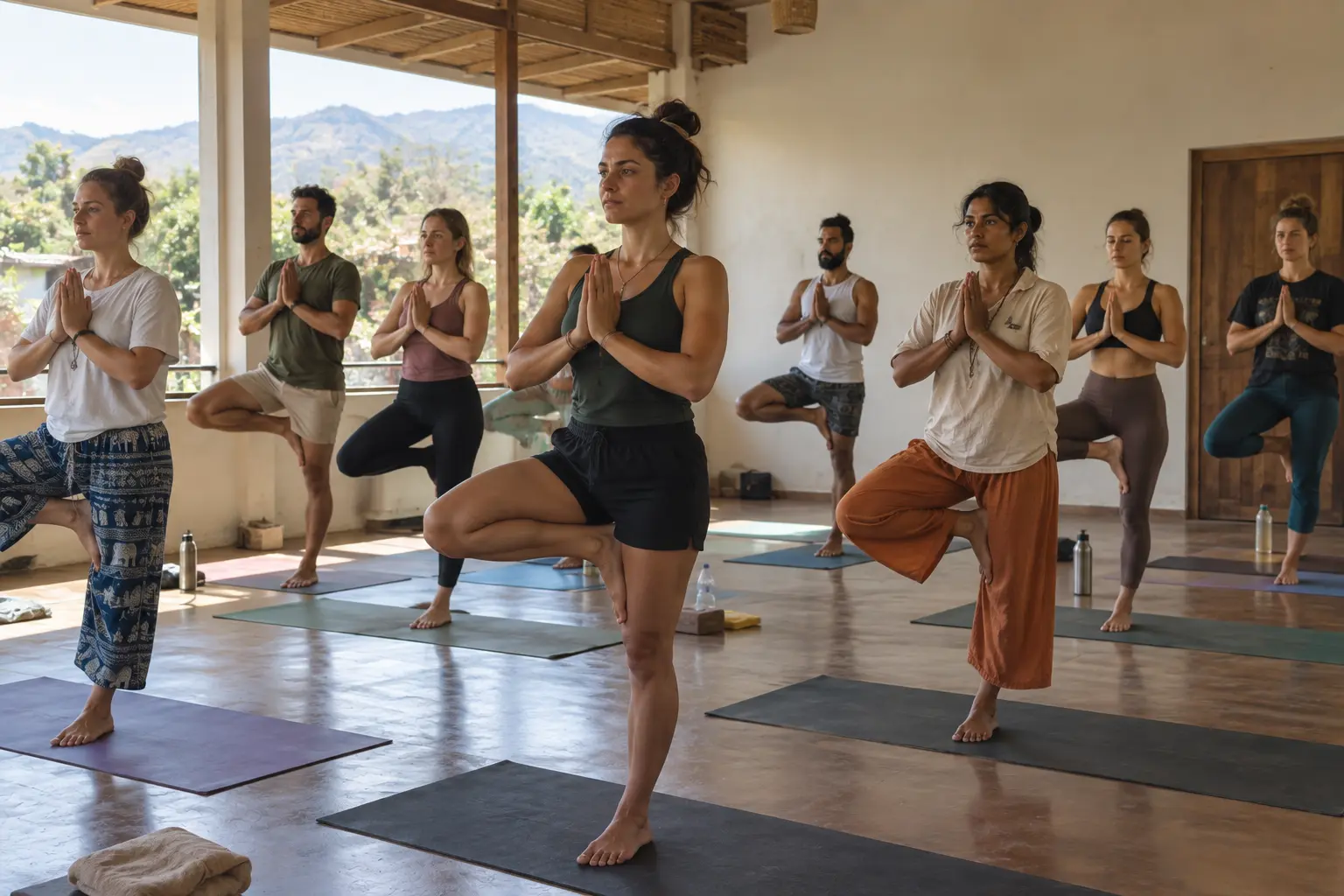
Residential training combines daily practice, study and group learning.
Will October be crowded in Rishikesh?
October is a popular month for visitors because the monsoon has usually eased and outdoor travel becomes easier. Yoga students, Indian holiday travellers and international visitors can all be present at the same time.
Crowds vary by week. Festival periods may affect road traffic, train demand, domestic flights and hotel prices. If your training accommodation is included, the main planning issue is usually your arrival and departure rather than finding a room during the course.
October is a popular travel period in Rishikesh, so allow extra time around busy festival dates.
How early should you arrive?
For an international student, arriving at least one day before the course begins is usually more comfortable than reaching Rishikesh immediately before the first class. Extra time helps with jet lag, local transport and settling into the room.
If you are travelling through Delhi, our Delhi to Rishikesh travel guide explains common flight, taxi, train and road options.
Do you need winter clothes in October?
Usually not heavy winter clothing for Rishikesh town, but students who feel cold easily should bring one warmer layer. Late October mornings can feel very different from afternoon sunshine.
If you plan mountain excursions at higher altitude before or after training, those places can be considerably colder than Rishikesh. Pack for the highest place you actually plan to visit, not only for the yoga school.
What about mosquitoes and insects?
Insect activity can still be present after the monsoon. A simple personal insect repellent can be useful, especially around vegetation and during evenings. Avoid overpacking specialist products that you can easily buy locally.
Can October rain disrupt travel?
October is much drier than peak monsoon season, but rain and road delays are still possible. Weather in the Himalayan foothills should never be treated as perfectly predictable. Keep some time between connecting travel legs and avoid planning an extremely tight transfer from an international flight to the first class.
October compared with November
October is generally warmer, particularly at night. November is cooler and drier. Students who dislike heat may prefer later autumn, while those who want warmer afternoons often find October comfortable.
Check the course itself before focusing too much on weather. Teacher experience, curriculum, teaching practice, accommodation, food, room choice, certification information and clear communication matter more than choosing a month with a perfect temperature.
October can make the residential experience comfortable, but the quality of training still depends on the school and how well the course matches your goals.
One week before you travel: a simple October checklist
Check the current Rishikesh weather forecast, not only monthly averages.
Confirm your course start date, accommodation and arrival instructions.
Keep one light warm layer in your hand luggage for early mornings and evenings.
Allow extra transfer time if you are arriving through Delhi during a busy festival period.
Keep your passport, visa documents, insurance details and school contact information together.
Do not overpack yoga clothes. Leave space for practical items you may buy locally.
If you are joining a residential course, the most useful preparation is simple: arrive rested, know how you are getting to Rishikesh, and bring clothes that work for warm afternoons and cooler mornings.
Frequently asked questions
Is October too hot for yoga teacher training in Rishikesh?
Usually no. Afternoons can still be warm, but October is generally cooler than the hottest pre-monsoon months. Early mornings and evenings are often much milder.
Does it rain in Rishikesh in October?
Rain is possible, especially early in the month, but historical averages show much less rainfall than during July and August.
What temperature should I expect?
Historical October averages are roughly around 29-30°C for daytime highs and around 15-17°C for lows. Check a live forecast before travelling because actual conditions vary.
Should I bring a jacket?
Bring at least one light warm layer. A sweater, fleece or shawl is usually more useful than a heavy winter coat in Rishikesh itself during October.
Is October good for solo international students?
October is a common travel period and can be practical for solo students. Normal travel care still applies. Arrange your arrival, confirm accommodation and keep the school contact details available.
Sources for weather planning
For climate context, this guide uses historical October averages published by Timeanddate and other Rishikesh weather references. Use a current weather forecast close to departure for short-term decisions.
PLAN THE NEXT STEP
Turn the weather check into an arrival plan
Once October works for you, check the practical parts that affect the first training day.
If a friend came to Rishikesh for only two days, I would not hand them a list of ten famous places and tell them to finish it. I would start with the river before breakfast, leave the busiest roads early, walk one proper hill route, sit in one temple long enough to notice where I am, and eat in places that make sense for the route instead of crossing town because a cafe is famous online.
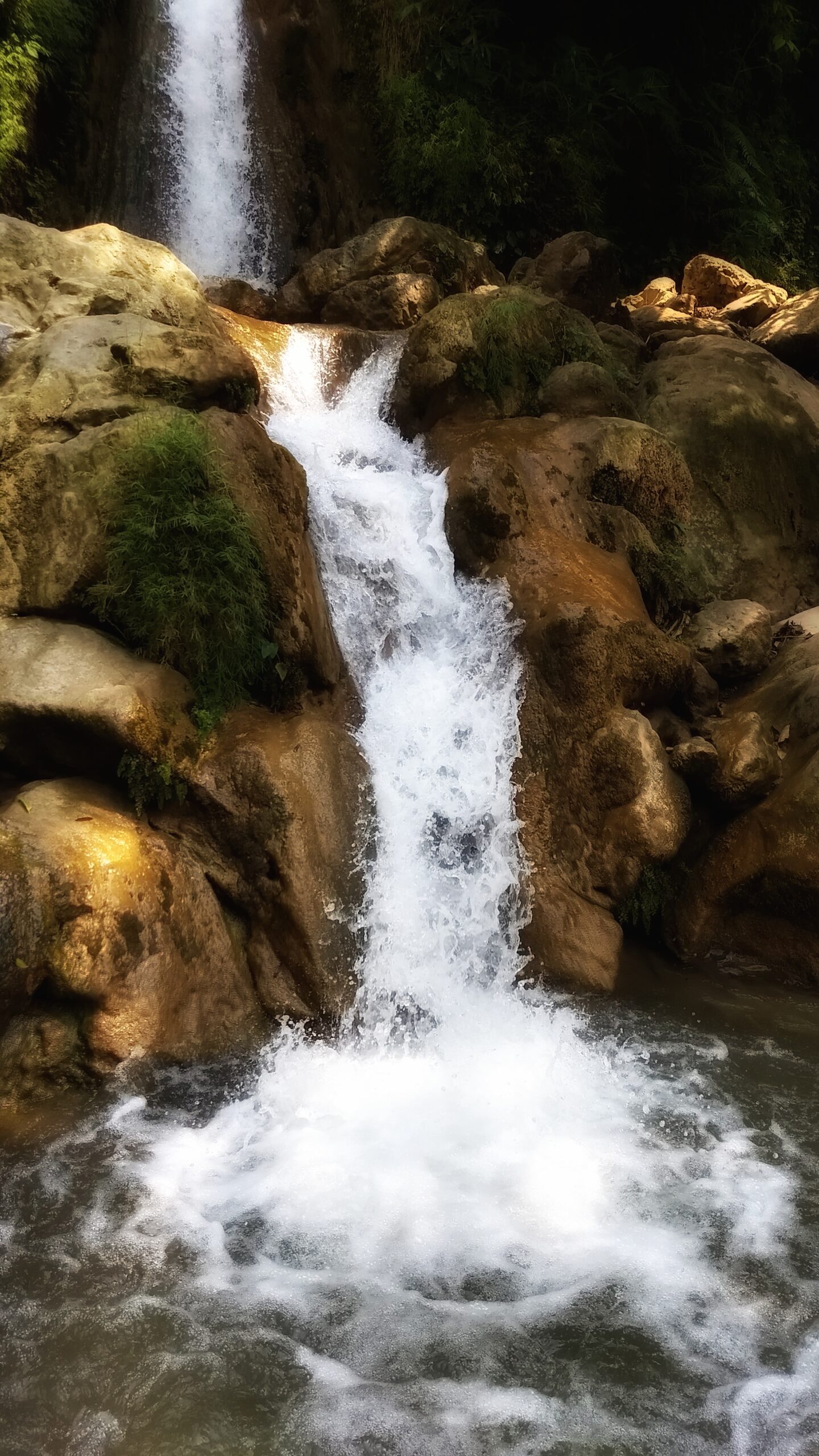
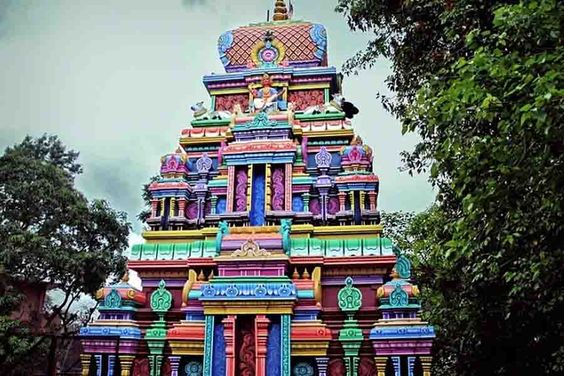
The well-known places still matter. Neer Garh Waterfall is worth seeing when you go early. Parmarth Niketan is worth reaching before sunset. Triveni Ghat is worth seeing because it belongs to the old city, not because every travel page mentions it. Bhootnath Temple is worth the uphill walk. Jhilmil Gufa is worth the longer morning because the road and forest are part of the day, not only the cave at the end.
What I would avoid is spending the whole trip between crowded cafes, bridge viewpoints and photo stops. Rishikesh has quieter ghats, lanes where local life continues without caring about tourism, hill roads that become green very quickly, and small food places where you can sit without waiting for the table everyone wants. The city is much easier to remember when the days have a rhythm: river, walk, meal, temple, rest, aarti.
This diary follows that rhythm. Day 1 stays mainly around the upper river, Tapovan, Neer Garh and the Swarg Ashram side. Day 2 goes toward the Neelkanth hills first, then returns through Bharat Mandir, Rishikund and Triveni Ghat. The times are practical, but they are not rules. If one place feels good, stay longer and remove the next stop. That is a better use of Rishikesh than rushing because an itinerary says 45 minutes.
First, a 2026 reality check about the bridges
A lot of Rishikesh travel pages are already out of date. The old Laxman Jhula bridge is still closed to crossing; the Laxman Jhula neighbourhood remains open, and the newer Bajrang Setu nearby is the useful pedestrian crossing in this part of town. There is another temporary change right now: Ram Jhula was fully closed for repair work in July 2026 and officials said it was expected to remain closed until December. That makes Janki Setu, Bajrang Setu and road routes more important than usual.
Day 1: Sai Ghat at first light → Aarcana breakfast → Neer Garh Waterfall → Cafe Royale → Bhootnath Temple → Parmarth Niketan Ganga Aarti → quiet dinner.
Day 2: early drive toward Neelkanth → Jhilmil Gufa forest walk → late lunch in Tapovan → Bharat Mandir → old city lanes and Rishikund → Triveni Ghat Aarti.
This is a full schedule, but it is not meant to feel rushed. If the weather is hot, the waterfall trail is wet, or you simply want another hour beside the river, remove one stop. Rishikesh is better when you leave a little empty time between places.
Day 1: River morning, waterfall, a hill temple and Parmarth Aarti
5:45-6:45 AM - Start at Sai Ghat before the town wakes up
My first hour would go to Sai Ghat, not to a cafe and not to a bridge selfie. There are Sai-named ghats around the upper Rishikesh area, including Sri Sathya Sai Ghaat in Tapovan and the better-known Sai Ghat around the Laxman Jhula side. Use the one closest to where you stay. The important part is the hour, not the exact pin.
At six in the morning the river is the main thing. You hear water before traffic. Local walkers come and go. Some people sit for prayer, some bathe, some simply watch the opposite bank. I would leave the phone in the bag for at least part of this hour. Rishikesh looks very different before shop shutters open and before scooters begin filling the narrow lanes.
If you want photographs, take them after sitting for a while rather than arriving with the camera already raised. Morning light on the water changes quickly, and the hills hold shadow longer than the river. Do not walk onto wet steps or empty river rocks just because they look safe from a distance. The Ganga can move much faster than it appears.
Why I stop here: quiet Ganga time, morning light and very little traffic. Allow 45-60 minutes. Sai Ghat on Google Maps. If your room is in Tapovan, also check Sri Sathya Sai Ghaat and choose whichever keeps the route simple.
A quiet Ganga ghat in Rishikesh. Photo: Rakami Art Studio / Wikimedia Commons, CC BY-SA 4.0.
7:00-8:00 AM - Breakfast at Aarcana, before the waterfall road gets busy
Aarcana sits on Secret Waterfall Road in the upper Tapovan side. It is the kind of place I would choose in the morning because the road itself starts to move you away from the busiest cafe strip. Current listings show it opening early, around 7 AM. The attraction here is not a giant menu board or an Instagram queue; it is coffee, breakfast, art, outdoor space and a slower start close to the route you are about to take.
Why I stop here: early breakfast, coffee, creative setting and a useful location before the Neer Garh side. Current 2026 listing: roughly morning to evening; closing times differ slightly by source, so check that day. Google Maps + current photos.
8:15-11:00 AM - Walk up to Neer Garh Waterfall
Neer Garh is not a secret, but the way you visit it changes the day. Go early, before large groups begin arriving. The trail leaves the road and starts climbing through a green side valley with small water channels, footbridges and pools. If you only stop at the first easy section, you see the busiest part and miss most of the walk.
I would allow two to three hours from the lower approach, including breaks. That gives you time to climb without rushing, sit near the water and come back before the strongest midday heat. Carry drinking water even though small stalls may be open. Keep some cash for entry or tea, and wear shoes with real grip. Wet stone here can be smooth.
The waterfall also changes a lot by season. After rain it can look stronger and greener, but that is also when the path becomes more slippery. In drier months the flow may be gentler, but walking is easier. I would never force this stop during heavy rain simply because the itinerary says Day 1. A river walk, Bhootnath and a long lunch can make a better rainy morning.
If you swim anywhere, use obvious safe areas and local advice. Do not climb above a pool just for a photograph. The most memorable part for me is the walk itself: getting away from engines, hearing water and seeing the town fall behind the trees.
11:45 AM-1:00 PM - Cross toward Cafe Royale and sit by the Ganga
After the waterfall, I would not rush into one of the loudest restaurants in Tapovan. I would cross toward the Laxman Jhula-Swarg Ashram side using the current open route and stop at Cafe Royale Rishikesh. It sits beside the Ganga and has a wide vegetarian menu with vegan choices. Current listings show it open from about 8:30 AM to 11:30 PM, so it also works as a late meal stop.
Why I stop here: Ganga-side seating, coffee, vegetarian/vegan meals and a menu that moves from Indian food to Italian, Mexican and Israeli-style dishes. Some listings also mention live music on selected evenings. Google Maps + current photos. Give yourself a proper hour here; this is your recovery stop before the afternoon climb.
1:30-3:30 PM - Walk up to Bhootnath Temple
Bhootnath Temple is one of the places I would choose over another hour of souvenir shopping. It rises above the Swarg Ashram side, away from the main riverside lane. The road gets steeper as you go, and that is part of the reason the temple feels different from places where a car drops you at the gate.
Do not treat the climb like a race. Stop where the town opens below you. The temple has several levels, bells and different shrines, and the higher you go the more clearly you see the Ganga cutting between the two sides of Rishikesh. On a clear day the view is wide enough to make the crowded streets below feel very small.
I would dress simply, carry water and keep my voice low inside. If you are visiting in hot weather, early afternoon can be harder than it looks because much of the climb is exposed. Anyone with knee trouble can take a vehicle part of the way and still visit without turning the day into a fitness test.
Why I stop here: the uphill walk, temple bells, a less hurried atmosphere and one of the clearest ways to see how the town sits beside the river. Allow 60-90 minutes including the climb. Bhootnath Temple on Google Maps with current photos.
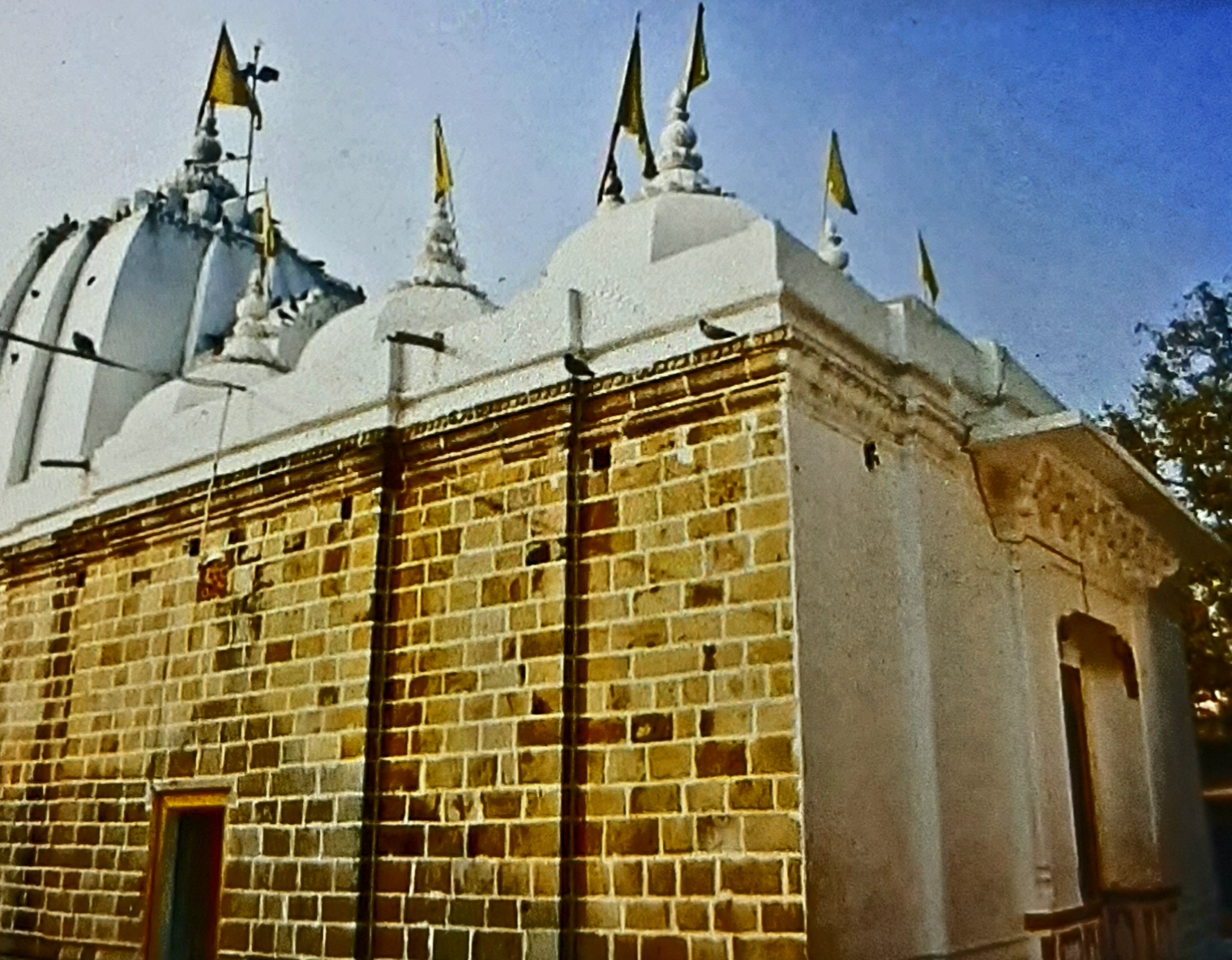
Bhootnath Temple in Rishikesh. FitFortunes archive photo.
4:30 PM onward - Parmarth Niketan before the lamps are lit
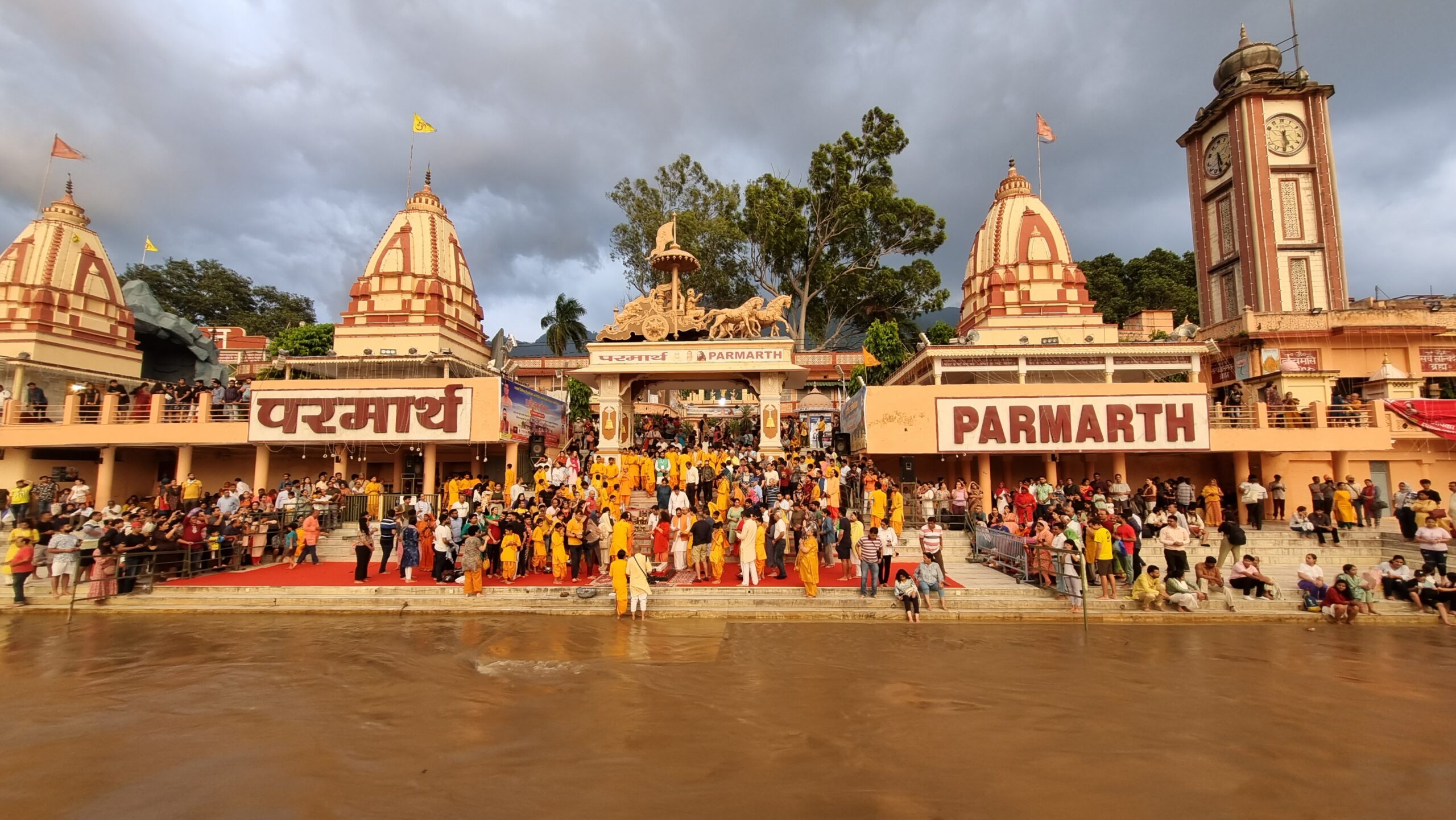
Do not arrive at Parmarth only when somebody starts ringing a bell. The better visit begins earlier. Walk the Swarg Ashram lanes, see the Ganga from the ghat, sit down and let the place fill around you. Parmarth’s official schedule says its Ganga Aarti begins every day at sunset, with the yagna beginning about half an hour before. The exact time moves with the season, so check the same day and arrive 45-60 minutes early.
Why I stop here: sunset Ganga Aarti with chanting and lamps beside the river. Best approach: arrive before the crowd, not during it. Google Maps + current photos. If you only have one big aarti evening, I would choose Parmarth on Day 1 and save Triveni for Day 2 so you see two very different sides of Rishikesh.
7:30-9:00 PM - Dinner somewhere calm, not somewhere famous
If you are back around upper Tapovan, I would choose Chakra House or Fork & Flora rather than crossing town for a restaurant you saw on a reel. Chakra House is useful when you want a Pahadi-style meal, Thai food and a quieter upper-Tapovan setting. Fork & Flora is a small garden cafe on Yoga Street and suits a slower dinner; its current listings show split daytime and evening hours.
Day 2: Jhilmil Gufa, the mountain road and old Rishikesh
6:00-7:30 AM - Take the Neelkanth road before traffic builds
Day 2 needs an early vehicle. Hire a local taxi or check the shared-jeep situation toward Neelkanth Mahadev. I would treat Neelkanth mainly as the access side for the morning, not as a place where you must spend hours. The mountain road itself is part of the day: forest, bends, river-cut valleys and a very different scale from Tapovan’s cafes and lanes.
If the weather is poor, do not force this plan. The road and forest paths are not the right place to prove anything after heavy rain. Ask your driver or hotel about the same-day route before leaving and carry water, a light snack, covered shoes and enough cash for small local payments.
7:30-10:30 AM - Walk to Jhilmil Gufa
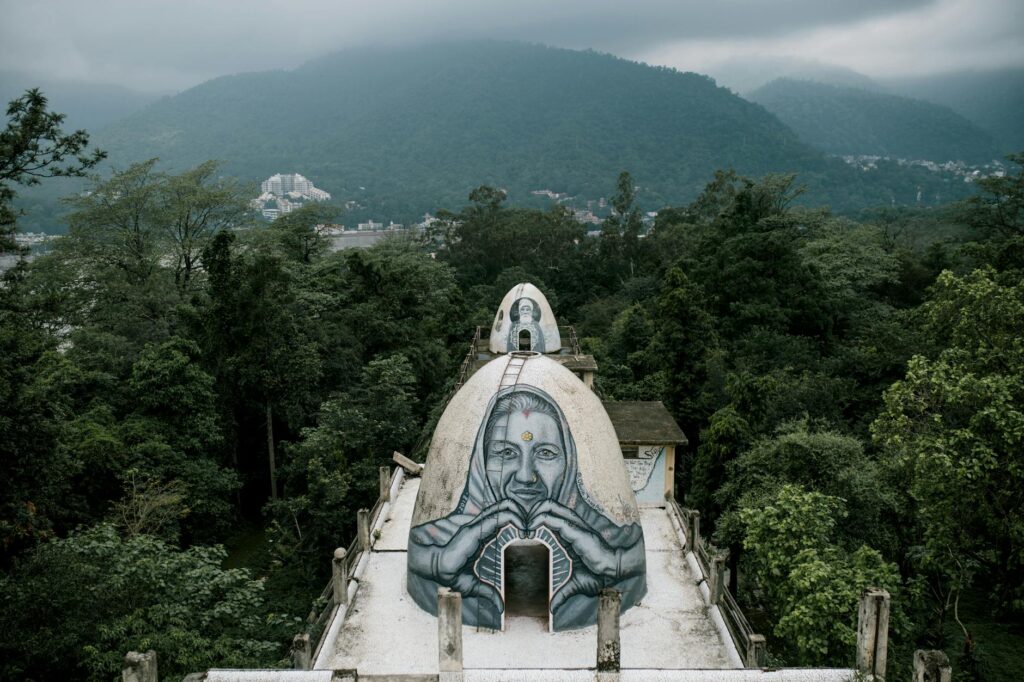
Jhilmil Gufa is the kind of place that changes the whole second day because you have to leave the town behind to reach it. The cave lies in the forested hill area beyond the Neelkanth side, and the final approach is on foot. Vehicle access and the walking point can vary, so I would never promise an exact walking time. Plan roughly an hour each way from the usual approach and keep extra time.
The road there matters. Once you leave the main Rishikesh traffic, the bends, forest and valleys start taking over. This is one of the few parts of a short trip where I would happily spend more time in transit because the road itself gives you the mountain feeling you do not get from a rooftop cafe.
On the trail, keep the pace easy. Carry water and a light snack, and do not depend on mobile signal for every turn. If local people tell you the path is muddy, damaged or unsafe after rain, listen. A cave is not worth a fall on a wet hillside. I would also avoid starting late in the afternoon because the return is much less enjoyable when you are racing darkness.
The cave is a religious place, so dress and behave accordingly. Keep noise low and do not treat the inside like a photo studio. The better memory is often the walk, the cool air and the fact that the town has disappeared behind the trees.
The green hill country around Rishikesh is worth giving half a day, not just viewing from a rooftop.
12:30-2:00 PM - Come back hungry and pick a small cafe
After a mountain morning, this is when a small cafe earns its place in an itinerary. Lily’s Cafe on Secret Waterfall Road is a good option when its split opening hours match your return. It has far fewer reviews than the headline cafes and feels more like a neighbourhood stop. If it is between service hours, Chakra House or another nearby Tapovan cafe keeps the route simple.
Why I stop here: small, quieter cafe stop on the upper Tapovan side. Current listing: commonly shows a daytime session and an evening session, so check before walking there. Google Maps + current photos.
3:30-4:45 PM - Go to Bharat Mandir, not back to another bridge
Now change Rishikesh completely. Leave the backpacker-cafe side and go into the old city. Bharat Mandir, also called Hrishikesh Narayan Temple, is near Triveni Ghat and is dedicated to Lord Vishnu. Incredible India currently lists two opening windows: 5 AM-12 PM and 4 PM-9 PM, which is why this route reaches it just after 4 PM.
Why I stop here: one of the city’s old Vishnu shrines, black-stone Saligram deity and a very different local setting from Tapovan. Give yourself time for the temple and surrounding lanes rather than taking one picture and leaving. Google Maps + current photos.
Bharat Mandir in Rishikesh. Photo: Opliappan / Wikimedia Commons, CC BY-SA 4.0.
4:45-5:30 PM - Walk through Rishikund and the old-city temple area
From Bharat Mandir, keep the afternoon on foot where possible. Rishikund and Raghunath Temple sit close enough to make this a small temple circuit before the river. You are now in the part of Rishikesh that many international visitors barely see because their entire stay happens around Tapovan. Watch shopkeepers closing and reopening, buy fruit or chai, and let the city feel like a city rather than a wellness background.
Triveni Ghat is busy, and I am still putting it in this “beyond the usual spots” guide. Why? Because not every famous place is overhyped. Triveni belongs to the old city, and the crowd here is not the same as a cafe queue. Come before the aarti, walk the long ghat, watch families and pilgrims arrive, and then choose a place to sit.
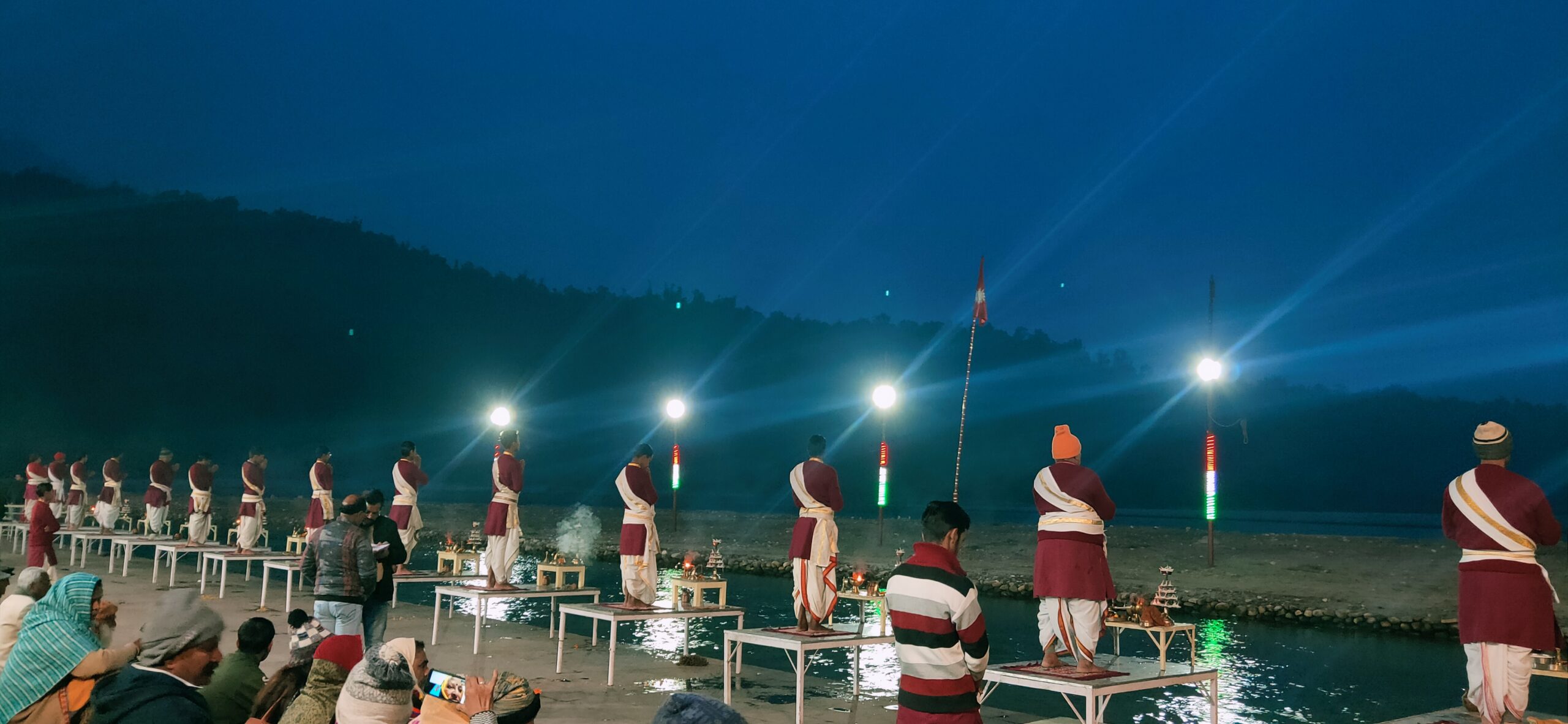
The evening aarti is held around sunset; published times vary by season, so check locally and arrive 30-45 minutes early. Why I stop here: a larger, city-centred Ganga Aarti and one of the best places to see Rishikesh’s pilgrim side. Google Maps + current photos.
Ganga Aarti at Triveni Ghat. Photo: Bhuvi Uniyal / Wikimedia Commons, CC BY-SA 4.0.
Six cafes I would actually stop at
Rishikesh has excellent cafes, but popularity changes a place. A cafe with a river view can still be worth visiting, while another becomes a waiting room for people photographing the same table. These six are a mix of riverside, upper-Tapovan and garden stops. Hours below reflect current 2026 listings where available, but restaurant hours change quickly in Rishikesh, especially in monsoon and low season. Use each Google Maps link to see the latest hours and photographs before you leave.
1. Cafe Royale Rishikesh - for the Ganga without the rush
Cafe Royale works best when I am already walking the Laxman Jhula side and want a proper meal beside the Ganga. It is not a tiny unknown cafe, and I would not pretend it is. I like it because the river is close, the seating gives you more than one kind of view, and the menu is wide enough for a group where one person wants Indian food, another wants coffee and another needs vegan choices.
I would come after Neer Garh or after a long walk through the Laxman Jhula lanes, not as a separate sightseeing stop. Sit for an hour, order a real meal and let the body cool down. Current listings put it in the roughly ₹200-400 range for many cafe meals and show long opening hours, but I would still check the same-day listing before making a late-night plan.
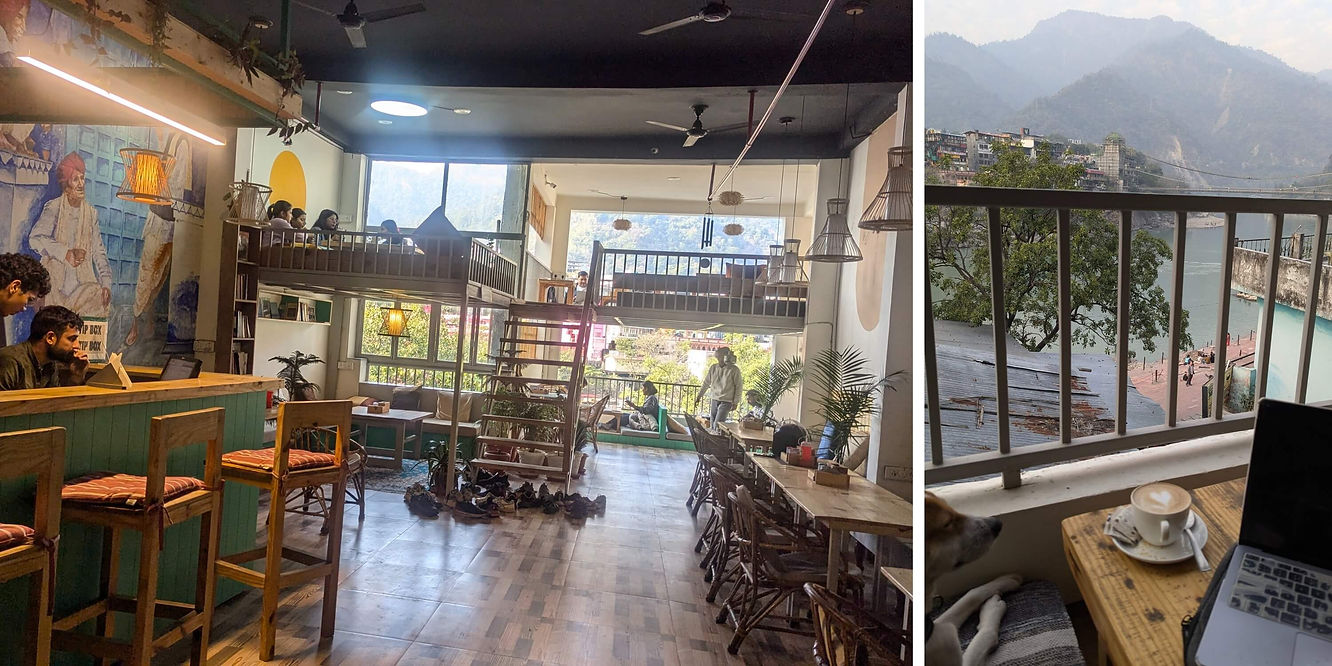
Cafe Royale Rishikesh. Photo source: The Boho Living.
2. Aarcana - for breakfast near the waterfall road
Aarcana is on Secret Waterfall Road in Upper Tapovan, and that is why I use it in this route. I would go early, before the road gets busy, have breakfast and coffee, then continue toward Neer Garh. The garden and open seating are the stronger reason to stop. It feels more suitable for a slow morning than for a rushed lunch between two city attractions.
I would also keep expectations normal. Recent reviews are mixed, so I would not write that every plate is perfect just because the place photographs well. If service is slow on the day, have coffee and keep moving. Rishikesh has enough food choices that one cafe should never control half your day.
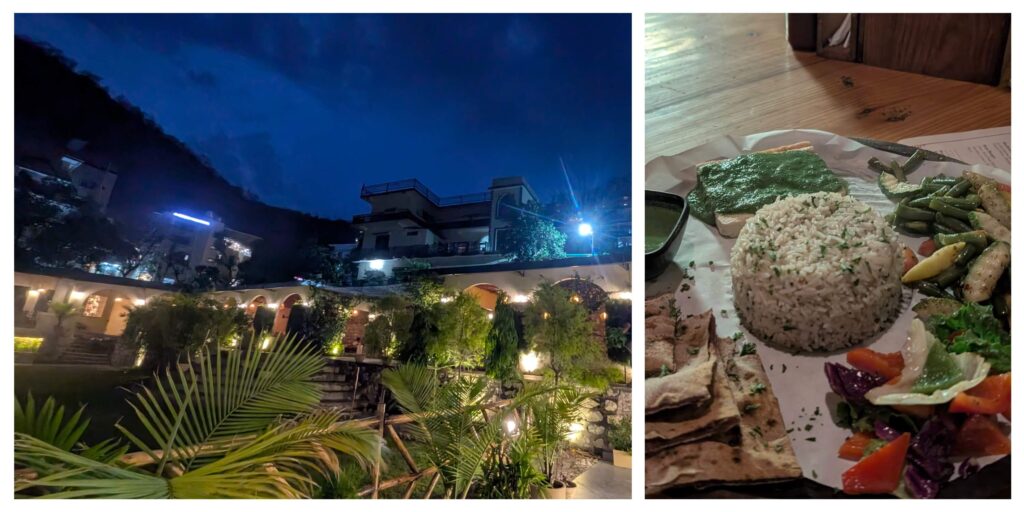
Aarcana, Upper Tapovan. Photo source: The Boho Living.
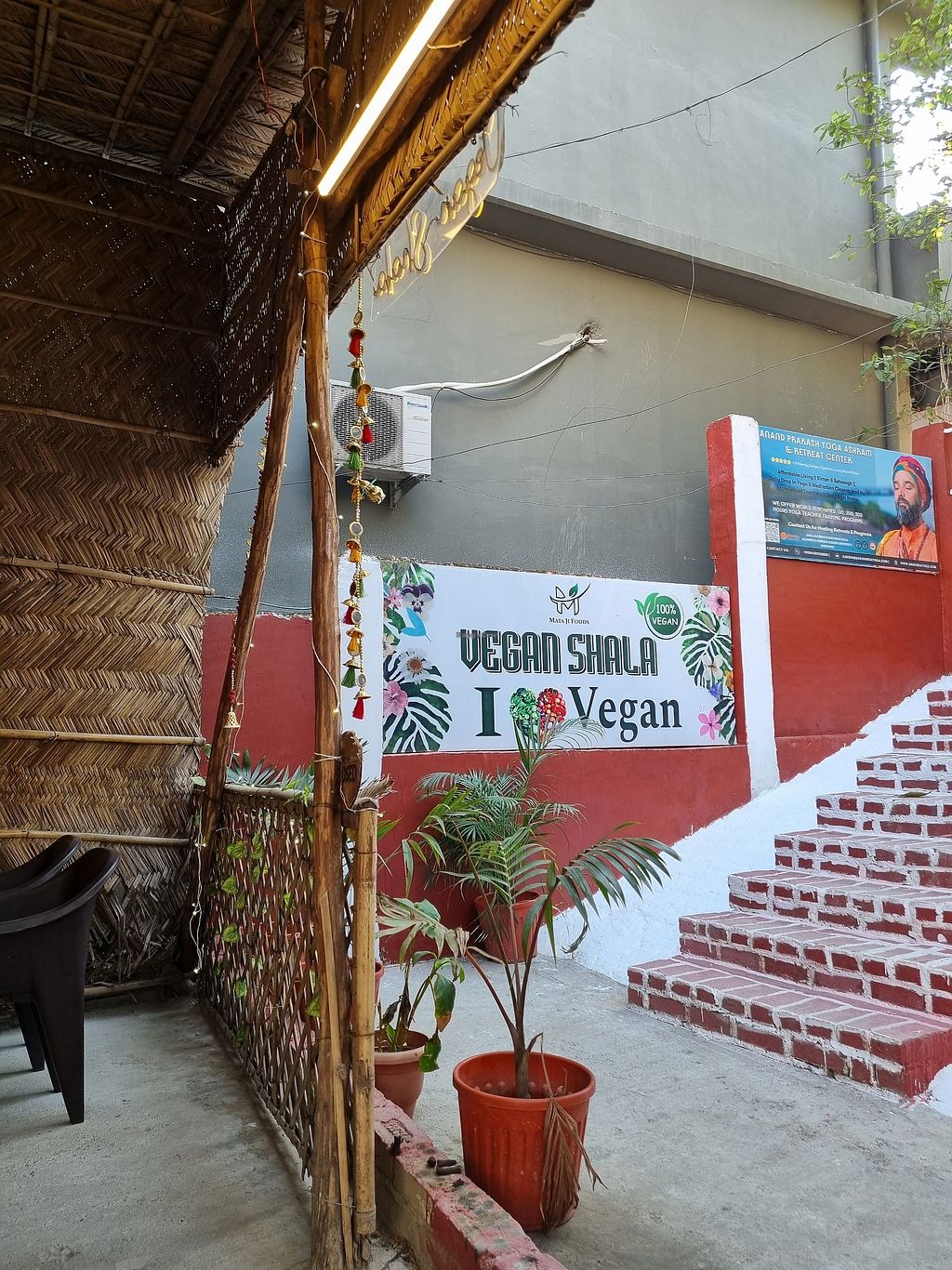
3. Vegan Shala - include it, but check the door before you plan the meal
Vegan Shala is here because people still search for it, but I would not send a traveller there without a warning. Map listings and older restaurant pages still show the Lower Balaknath Road name, while HappyCow reports the venue closed in 2026. Rishikesh cafes change names, owners and opening patterns more often than old travel posts suggest, so check the newest reviews or call before walking there.
When it was operating as Vegan Shala, the draw was simple: fully plant-based meals, breakfast, smoothies, bakery items and Indian as well as international vegan dishes. That made it useful for strict vegans who did not want to explain dairy-free requirements at every meal. If the current location is shut, I would simply move on to another vegan-friendly place in Tapovan rather than waste an hour looking for an old sign.
Older Vegan Shala location. Photo source: HappyCow. Check current status before going.
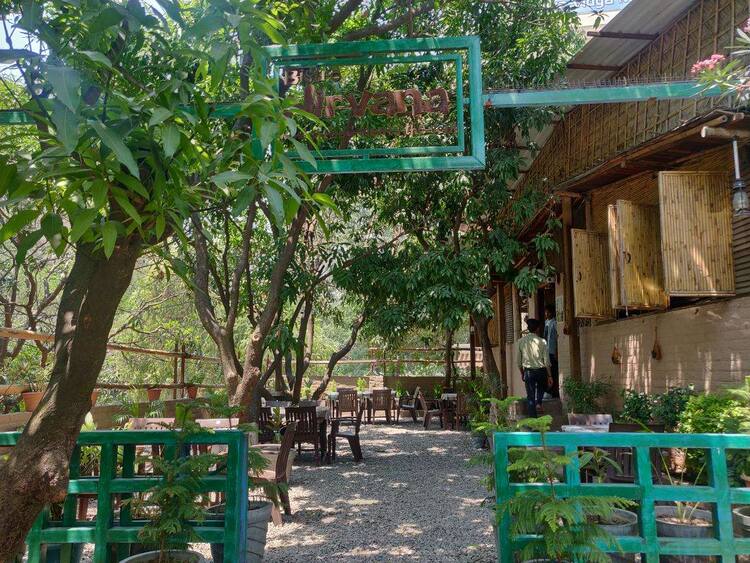
4. Bistro Nirvana - for a garden meal away from the main road
Bistro Nirvana is the place I would keep for a longer lunch or dinner when I want shade, trees and enough menu choice for a mixed group. It sits on Swami Omkarananda Saraswati Road near Green Valley Cottage in Tapovan, away from the strongest traffic of Badrinath Road.
The menu moves across Indian, Italian, Continental, Israeli, Chinese and Mexican food, so it works better for a group than a tiny bakery would. I would come here after a long walking day, order a full meal and stay put. Current sources do not completely agree on weekly hours, which is another reason to check the map on the day.
Bistro Nirvana, Tapovan. Photo from its Zomato listing.
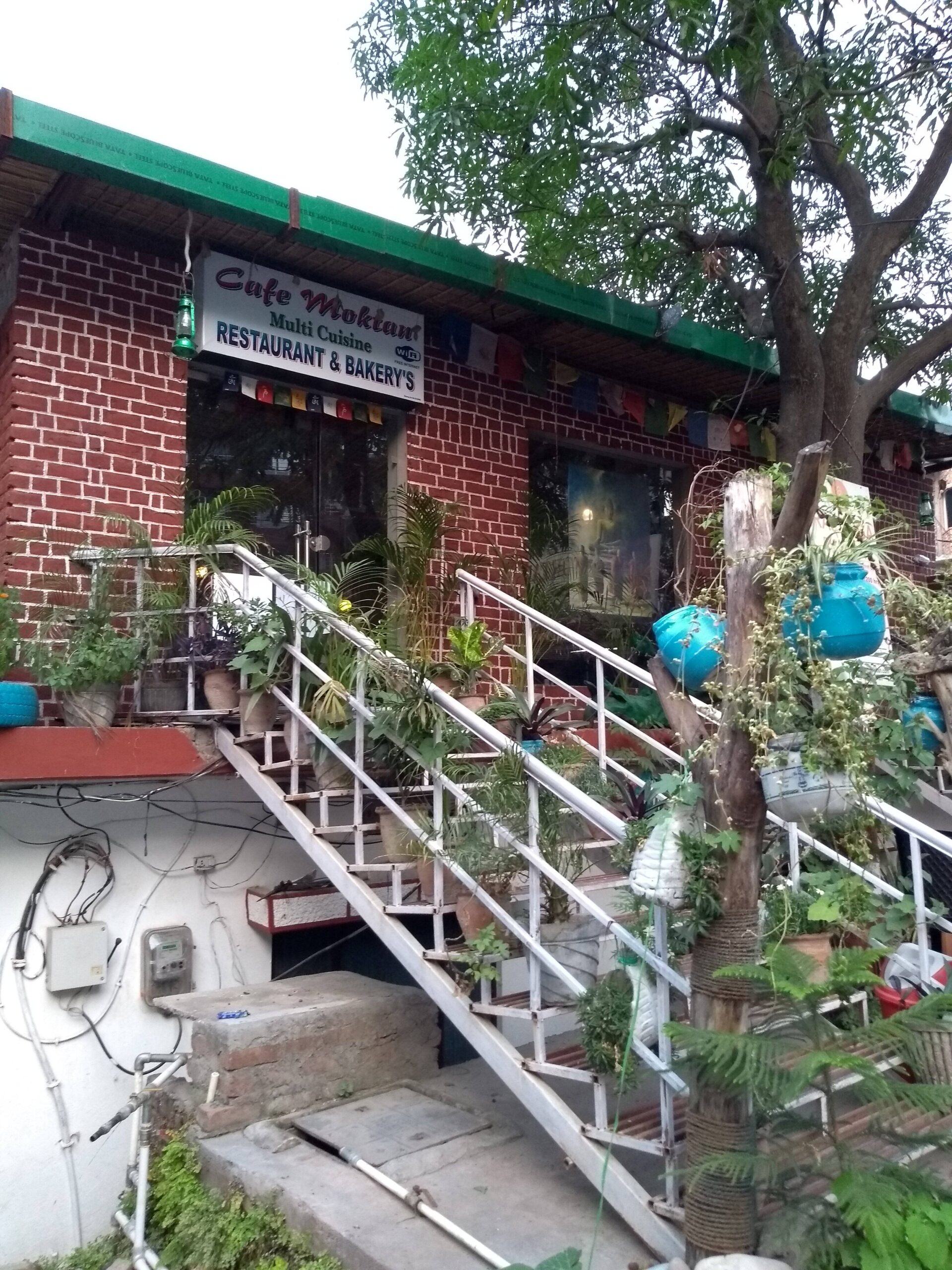
5. Cafe Moktan - for coffee, bread and a quick stop
Cafe Moktan is not where I would go for a long river view. I would go when I want coffee and something baked, or when I need a simple stop between the hills and the old city. Its strength is the bakery side: pastries, cakes, croissants and coffee are what many repeat visitors talk about.
The place is small, which is part of the appeal. You can sit if there is space, but it also works well for takeaway. That makes it useful on Day 2 when you come back from the Neelkanth side hungry but do not want to spend two hours at lunch.
Cafe Moktan, Tapovan. Photo from its Zomato listing.
6. Pure Soul Cafe & Organic Kitchen - for a lighter vegetarian meal
Pure Soul is useful when I want a vegetarian breakfast or lunch that is a little lighter after several days of cafe food. Current listings show breakfast, lunch and dinner, outdoor seating, vegan options and a menu that mixes continental and North Indian dishes.
I would choose it in daylight because the mountain-facing side and terrace are part of the reason to go. It is also an easy option when people in the same group want different things: one can have coffee and breakfast food, another can choose an Indian meal, and a vegan still has clear options.
Where should you stay for this 2-day Rishikesh itinerary?
If food, yoga classes and upper-river walks matter most, Tapovan is the easiest base. You can reach Sai Ghat, Aarcana, Neer Garh and many cafes without starting every morning in a vehicle. Lower Tapovan is busier and easier for autos. Upper Tapovan is quieter but involves more slopes, narrow lanes and walking.
If Parmarth, Bhootnath, ashrams and evening river walks matter more, Swarg Ashram makes more sense. The pace changes once you are on this side. You are closer to Parmarth, the riverfront and several ashram lanes, and you do not need to cross the river late in the day after aarti.
If your trip is mainly Bharat Mandir, Triveni Ghat, the bus station, railway station and older city streets, stay closer to central Rishikesh. This is not the area people usually choose for a cafe-heavy stay, but it is very convenient for temple visits and onward transport.
I would choose the area before the hotel. A beautiful room on the wrong side of the river can cost you an hour every morning. For only two days, do not change hotels unless there is a real reason. Rishikesh is small on a map, but a bridge closure, traffic or a long auto route can make two nearby-looking points feel much farther apart.
How I would move around for these two days
For Tapovan, Laxman Jhula lanes, Sai Ghat and many cafes, walking is usually faster than trying to take a vehicle for every short distance. The problem is the slope. What looks like a ten-minute walk on a flat map can become a steep climb in Upper Tapovan, so wear shoes you can actually use all day.
For the old city, autos are simple and easy to find in the daytime. Agree on the fare before leaving if the driver is not using a fixed local rate. At night, especially after aarti, it is better to know how you are getting back before the crowd starts moving. Bridge closures can change the route a driver has to take, which also changes the price.
For Jhilmil Gufa and the Neelkanth side, I would arrange a taxi or local vehicle the evening before. Shared jeeps can be cheaper, but they are less useful when you want an early start and a specific return time. Ask your hotel or host where the local vehicles are actually leaving from that week rather than relying on an old blog.
I would not rent a scooter just because it looks convenient. Rishikesh traffic mixes tourists, local traffic, buses, animals, narrow roads and steep bends. If you already ride confidently in Indian hill traffic, that is different. If not, walking and local transport are a better use of two days.
A few traveller rules that make Rishikesh better
Start early. The river, ghats and hill roads feel completely different before 8 AM.
Do not swim just because the Ganga looks calm. Current and water levels can change fast. Use recognised bathing areas and local guidance.
Do not hike a waterfall or cave route after heavy rain. Wet rock, loose soil and sudden runoff matter more than your itinerary.
Dress for temples, not only for photographs. Carry something that covers shoulders and knees, and expect to remove footwear.
Carry some cash. Small stalls, entry points and local rides do not always work the way your payment app expects.
Ask the same day about aarti time. Sunset changes across the year, and schedules move with it.
Check bridge status before crossing town. September 2026 is a particularly important time to do this because Ram Jhula is under repair.
If you have a third morning: choose one mountain memory
If you stay one more day, I would not fill it with six more attractions. Choose one mountain morning. Kunjapuri Temple gives you a high sunrise view and a road into the hills, while a quieter forest walk on the Neelkanth side gives you more solitude. Kunjapuri is more famous, so leave very early if you want the mountain rather than the crowd.
Kunjapuri Temple near Rishikesh. Photo: Travel & Shit / Wikimedia Commons, CC BY-SA 2.0.
Frequently asked questions about things to do in Rishikesh
Is two days enough for Rishikesh?
Two days are enough for a strong first visit if you divide the city by area. One day can cover the upper river, waterfall, Bhootnath and Parmarth. A second can cover a hill walk and the old city around Bharat Mandir and Triveni. Three to five days are better if you also want rafting, regular yoga classes or more mountain time.
What are the best less-crowded things to do in Rishikesh?
Go to Sai Ghat early, walk up to Bhootnath Temple, visit Jhilmil Gufa with enough time for the forest approach, eat on upper Tapovan side rather than only the main cafe strip, and walk old Rishikesh around Bharat Mandir before Triveni Aarti. Timing matters as much as the place: even a famous waterfall is much calmer early in the morning.
Is Laxman Jhula open in 2026?
No. The old Laxman Jhula suspension bridge remains closed to crossing. The neighbourhood around it is open, and Bajrang Setu nearby now provides the useful pedestrian crossing. Check current local access because work and traffic rules can change.
Is Ram Jhula open right now?
As of September 2026, Ram Jhula is closed for repair and renovation work. Officials said in July that the closure was expected to continue until December. Use current alternatives such as Janki Setu or road routes and check again before your visit.
Which Rishikesh waterfall should a first-time visitor see?
Neer Garh is the easiest waterfall to place in a two-day Rishikesh plan because it is close to the Tapovan/Laxman Jhula side and includes a proper short walk. Go early, allow two to three hours and skip the trail during unsafe rain conditions.
Parmarth Aarti or Triveni Ghat Aarti: which is better?
They feel different rather than one being universally better. Parmarth is closely tied to the ashram setting, chanting and the Swarg Ashram riverfront. Triveni is larger and more connected to the old city and pilgrim side of Rishikesh. With two days, attend one each evening.
How do I get to Jhilmil Gufa?
The common approach is toward the Neelkanth Mahadev side by taxi or shared local transport, followed by a forest walk to the cave. Road and trail access can change, especially around monsoon, so confirm locally before starting. Carry water and avoid beginning the return after dark.
Which area has the best cafes in Rishikesh?
Tapovan and the Laxman Jhula side have the widest cafe choice, but the best plan is not to eat every meal on the main strip. Upper Tapovan, Secret Waterfall Road and Yoga Street have smaller places such as Aarcana, Lily’s, Chakra House and Fork & Flora. Check current hours before walking because small cafes change schedules often.
Rishikesh is better when you stop trying to finish it
The mistake I would avoid in Rishikesh is treating the town like a task list. Yes, see the big landmarks. But also give one hour to a ghat without an event, choose one uphill temple that asks you to walk, eat in one small cafe where you can stay through a second cup, and spend part of a morning where the buildings give way to forest. Those are usually the parts you remember after the famous bridge photograph has become another file on your phone.
That is what this two-day Rishikesh itinerary is built around: the Ganga, the hills, old temples, good food and enough distance from the busiest circuit to see how many versions of Rishikesh exist inside one small city.
STAYING LONGER?
Use Rishikesh as more than a two-day stop
If your visit includes yoga study, plan the practical side before adding more sightseeing.
Pack light for yoga teacher training in Rishikesh. You need comfortable practice clothes, simple town clothes, one weather layer, regular medicines, travel documents, a power adapter, a notebook, and more than one way to pay. You do not need a suitcase full of yoga gear because basic daily items are easy to buy in Rishikesh if you forget something. If you are still planning your arrival, use our Delhi to Rishikesh travel guide to compare transport options before packing.
Clothes for practice and daily life
Bring enough practice clothes for several days between washes rather than packing a different outfit for every class. Four to six comfortable practice sets are enough for many students when laundry is available. Choose clothes you already know work for movement and sitting because a new pair of leggings, shorts, or tops can look good but feel uncomfortable during long training days.
Yoga trousers, leggings, shorts, or joggers.
Breathable T-shirts or practice tops.
Underwear and socks.
One or two simple outfits for town.
Sandals and comfortable walking shoes.
A light shawl, sweatshirt, or jacket.
Rishikesh is both a yoga town and an important pilgrimage town, so simple clothing works well in markets, temples, and local areas. You do not need to buy special “spiritual” clothes before travelling. Comfortable, clean, modest clothing is more practical than trying to look a particular way.
Pack for the month you are visiting
Rishikesh weather changes through the year, so check the current forecast shortly before you travel instead of packing for “India” as if the whole country has one climate. Winter mornings can feel cool, hotter months need lighter clothing, and monsoon periods can be humid and wet. One useful weather layer is usually better than carrying several bulky items you may never use.
Cooler months
Bring a light or medium jacket, long trousers, warm socks, and a shawl or extra layer for early mornings and evenings. Classrooms and rooms can feel different from the midday temperature, so layers are easier than one very heavy item. Choose things that can be used both for travel and for normal daily life during the course.
Hotter months
Light cotton clothing, quick-dry practice clothes, sun protection, and a hat can be useful when the weather is hot. You may practise more than once in a day, so clothes that dry quickly make laundry easier. Avoid packing only thick or dark clothing if you are travelling during a warm period.
Monsoon months
A compact umbrella or light rain shell, fast-drying footwear, and clothes that do not stay wet for a long time are useful during monsoon. Rain can affect short walks and local travel even when you spend most of the day in class. Keep important documents and electronics inside a simple waterproof pouch or protected section of your bag.
Medicines and basic health items
Bring the medicines you already use and keep prescription medicines in their original packaging when practical. Carry enough for the trip and keep important prescription information with you. A small personal kit can be useful, but you do not need to bring a full pharmacy because basic health and toiletry items are available locally.
Regular prescription medicines.
Plasters and basic personal first-aid items.
Oral rehydration salts.
Allergy medicine you normally use.
Menstrual products when needed.
Mosquito repellent and normal toiletries.
If you have a health condition, recent injury, or limitation that may affect yoga practice, tell the school before you arrive instead of waiting for the first class. That gives teachers time to understand what may need modification. Yoga teacher training is education, so relevant medical concerns should still be discussed with an appropriate healthcare professional when needed.
Passport, visa, and travel records
Keep your important documents together and easy to reach during travel, but also keep copies somewhere separate from the originals. Save digital copies of your passport, visa approval, insurance details, flight information, school address, and emergency contacts so you can still access the information if one bag or device is lost. Do not keep every important document in one place.
Passport.
Current visa or travel authorisation.
Travel insurance details.
Flight and onward-travel information.
School address and phone number.
Emergency contact information.
Visa rules can change, so use the official Government of India e-Visa website rather than relying on an old blog or an unofficial “express visa” page. Check the rules for your own passport and travel purpose before buying non-refundable tickets.
Electronics and study items
A universal travel adapter is useful, along with the normal chargers for the phone or laptop you actually plan to use. A small power bank can help on long travel days, but there is little value in carrying several devices you will barely touch during an intensive course. For study, one reliable notebook and pen are usually more useful than a stack of heavy yoga books.
Do you need to bring your own yoga mat?
Ask the school first because many residential schools provide mats and basic props for training. If you strongly prefer your own mat for hygiene, grip, or comfort, a lighter travel mat is easier to carry than a heavy premium mat. The extra weight matters more when you are also moving through airports, stations, or taxis with luggage.
If you do bring your own mat, keep it dry and clean between sessions and check the material before using strong cleaning products. Our yoga mat cleaning guide explains why different mat materials need different care.
Money and payment methods
Bring more than one way to pay because an international card can be blocked or fail at one machine even when it normally works. Keep a backup card separate from your main wallet and carry a small amount of cash for local purchases or transport. If your bank uses travel notifications, update it before departure and check international transaction fees in advance.
What you can leave at home
Most students bring too much rather than too little. Rishikesh has pharmacies, clothing shops, stationery stores, toiletries, and other everyday items, so there is no reason to carry large amounts of things that are easy to replace. Leave some space in your luggage for the return journey instead of packing every possible item “just in case.”
Several pairs of shoes.
A stack of heavy yoga books.
Large yoga props unless the school specifically requests them.
Expensive ceremonial items.
Large bottles of common toiletries.
Final packing checklist
Use a short final checklist the day before departure so important items do not get lost inside a long packing list. Documents, medicines, clothing, chargers, and the school address matter more than extra accessories. Keep anything essential for the first 24 hours in your hand luggage when airline rules allow it.
Passport and current travel documents.
Medication and important health information.
Comfortable yoga clothes.
Weather layer or rain protection.
Sandals and walking shoes.
Adapter, chargers, and phone.
Notebook and pen.
Reusable water bottle if suitable for your travel setup.
School address saved offline.
A small amount of cash and a backup payment method.
Frequently asked questions
How many yoga outfits should I bring?
Four to six comfortable practice sets are enough for many students when laundry is available, but the right number depends on the weather and how often you wash clothes. Quick-dry items are useful when you practise frequently. Pack clothes you have already worn in yoga rather than testing several new outfits during an intensive course.
Can I buy yoga clothes and toiletries in Rishikesh?
Yes, many everyday items are available locally, including basic clothing, toiletries, stationery, and pharmacy products. You may still prefer to bring specific brands, medicines, or personal products that are important to you. The point of packing light is not to arrive unprepared; it is to avoid carrying bulky items that are easy to replace.
Should I bring yoga books?
Usually only if there is one book you know you will use. Teacher training already includes notes, classes, assignments, and a full daily schedule, so a heavy stack often stays unopened. Digital copies or one selected text are easier to manage when you are travelling internationally.
Two things to do before you travel
First, choose your onward route with our Delhi to Rishikesh travel guide so you know how you will reach the school after your flight. Second, read the India YTT planning guide so visa, money, arrival, health, and course expectations are clear before you leave home.
Delhi to Rishikesh is one of the most common travel routes for international visitors coming to Uttarakhand. You can travel by private taxi, domestic flight, train, or bus. The right choice depends on your arrival time, luggage, budget, and how tired you are after your flight.
If this is your first visit to India, keep the first day simple. A route with fewer changes is usually easier than saving a small amount of money and changing transport several times. This guide explains the main options in plain English so you can choose the route that fits you.
Quick answer: what is the easiest way from Delhi to Rishikesh?
For many first-time international visitors, a pre-booked private taxi from Delhi Airport to Rishikesh is the simplest option. You leave the airport, meet the driver, and travel directly to your hotel, B&B, ashram, or yoga school. A flight from Delhi to Dehradun can reduce road time, while train and bus are usually better for travellers who want to spend less.
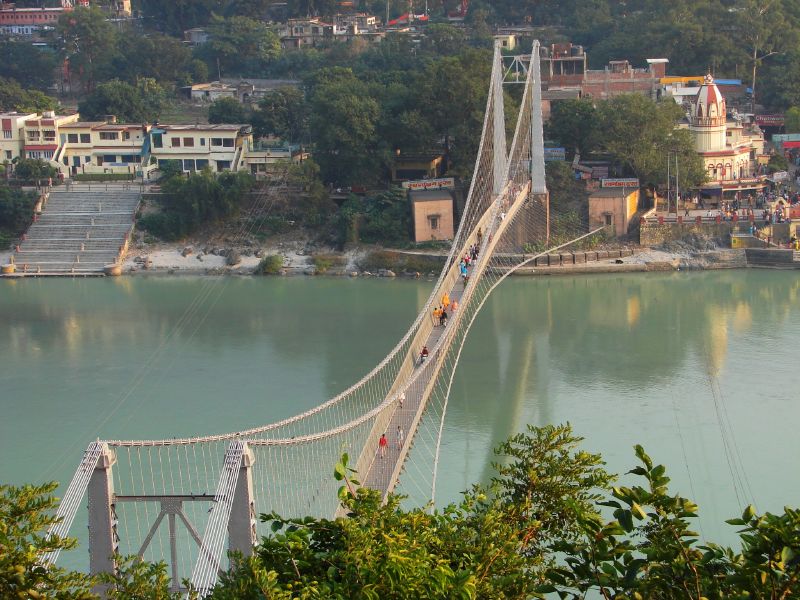
Ram Jhula over the Ganga in Rishikesh. Photo: Asis K. Chatterjee, Wikimedia Commons, CC BY-SA 2.0.
Travel times and prices change with traffic, season, ticket demand, road work, and the type of service you book. Use this table as a simple guide, then check your live fare and timetable before paying.
Route
Typical total time
Good for
Private taxi from Delhi Airport
About 5.5-7.5 hours
First visit, heavy luggage, late arrival
Flight to Dehradun + taxi
About 1 hour flight + airport transfer
Less road travel
Train to Haridwar + taxi or local transport
Usually 4-7 hours in total
Travellers comfortable with Indian rail travel
Bus from Delhi
Usually 5.5-8 hours
Lower-cost travel
Delhi Airport to Rishikesh by private taxi
A private taxi is the most direct road option from Indira Gandhi International Airport in Delhi. The driver can meet you at the airport and take you to your exact address in Rishikesh. This is useful when you have large bags, arrive after a long international flight, or do not want to move between stations.
Before travel, confirm the driver name, phone number, pickup terminal, total fare, toll arrangement, and your final Rishikesh address. Save these details offline. Delhi traffic can be heavy, and road conditions can change, so do not plan a tight appointment immediately after your expected arrival time.
If you are coming for 200 hour yoga teacher training in Rishikesh, send your arrival details to the school before you leave home. The same advice applies to any B&B, hotel, retreat, or ashram booking.
Delhi to Dehradun by flight, then taxi to Rishikesh
Dehradun Airport, also called Jolly Grant Airport, is the nearest commercial airport to Rishikesh. A domestic flight from Delhi can reduce the long road journey. After landing, you continue to Rishikesh by taxi.
This route can be useful when you prefer a shorter drive, but do not make the connection too tight. International arrival, immigration, baggage collection, terminal movement, security, and possible flight delays can take time. Leave a safe gap between flights.
Check the airline schedule and baggage allowance close to your travel date. A low domestic fare may become more expensive if your international luggage is above the domestic baggage limit.
Delhi to Rishikesh by train
Train travel is a good choice when you are already staying in Delhi or you are comfortable using Indian railway stations. Many visitors travel from Delhi to Haridwar and then continue to Rishikesh by taxi, auto, or another local service. Haridwar has stronger rail connections than central Rishikesh.
Delhi has several major railway stations, so check the exact station name before leaving for your train. Do not assume every train leaves from New Delhi Railway Station. Your station, platform, train number, and departure time should be checked again on the day of travel.
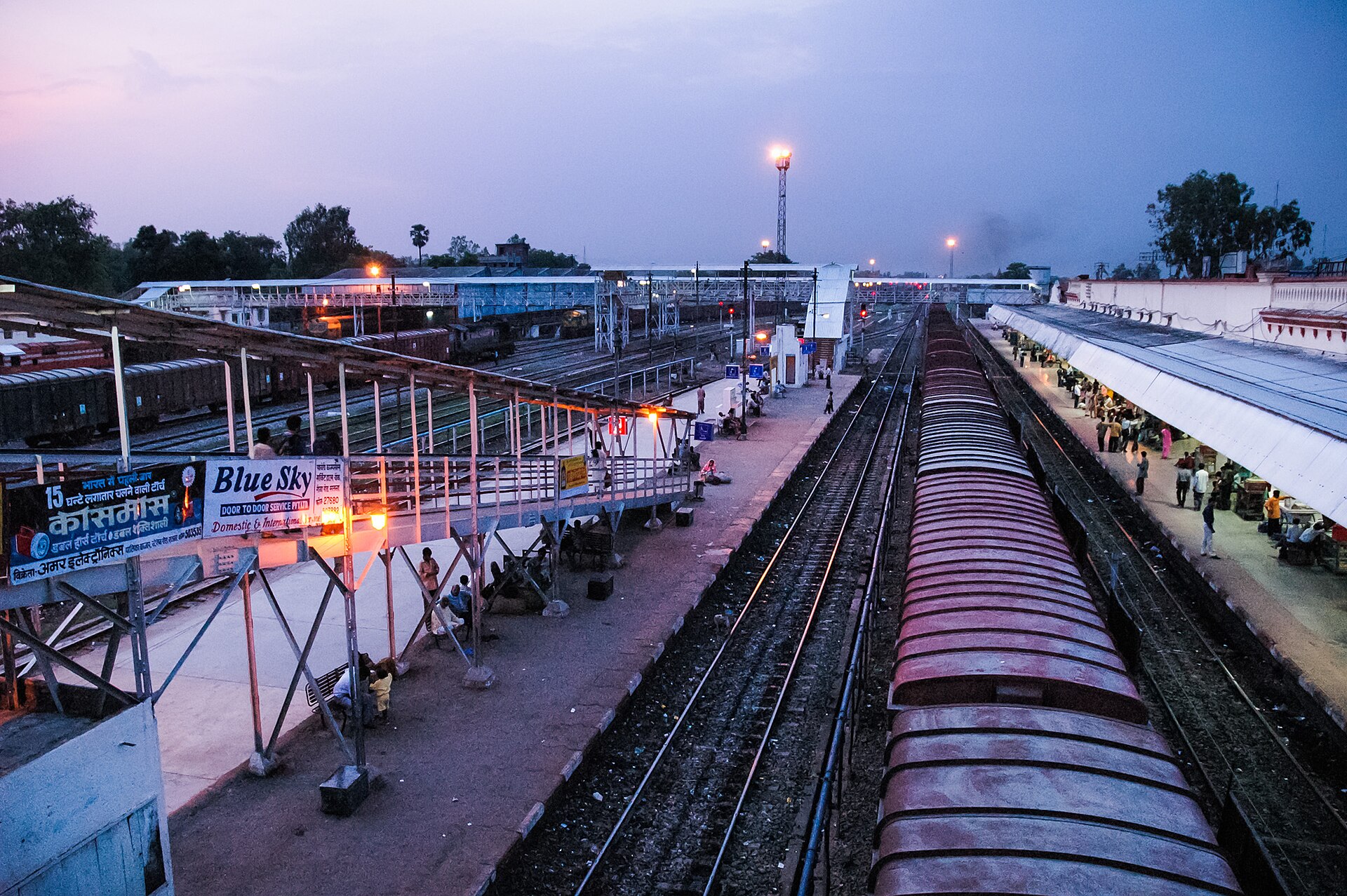
Rail travel in India. Photo: Angelo DeSantis, Wikimedia Commons, CC BY 2.0.
If you have just finished a long overnight flight, think about how much luggage you have before choosing rail. You may still need transport from Delhi Airport to the railway station and another transfer from Haridwar to your Rishikesh accommodation.
Delhi to Rishikesh by bus
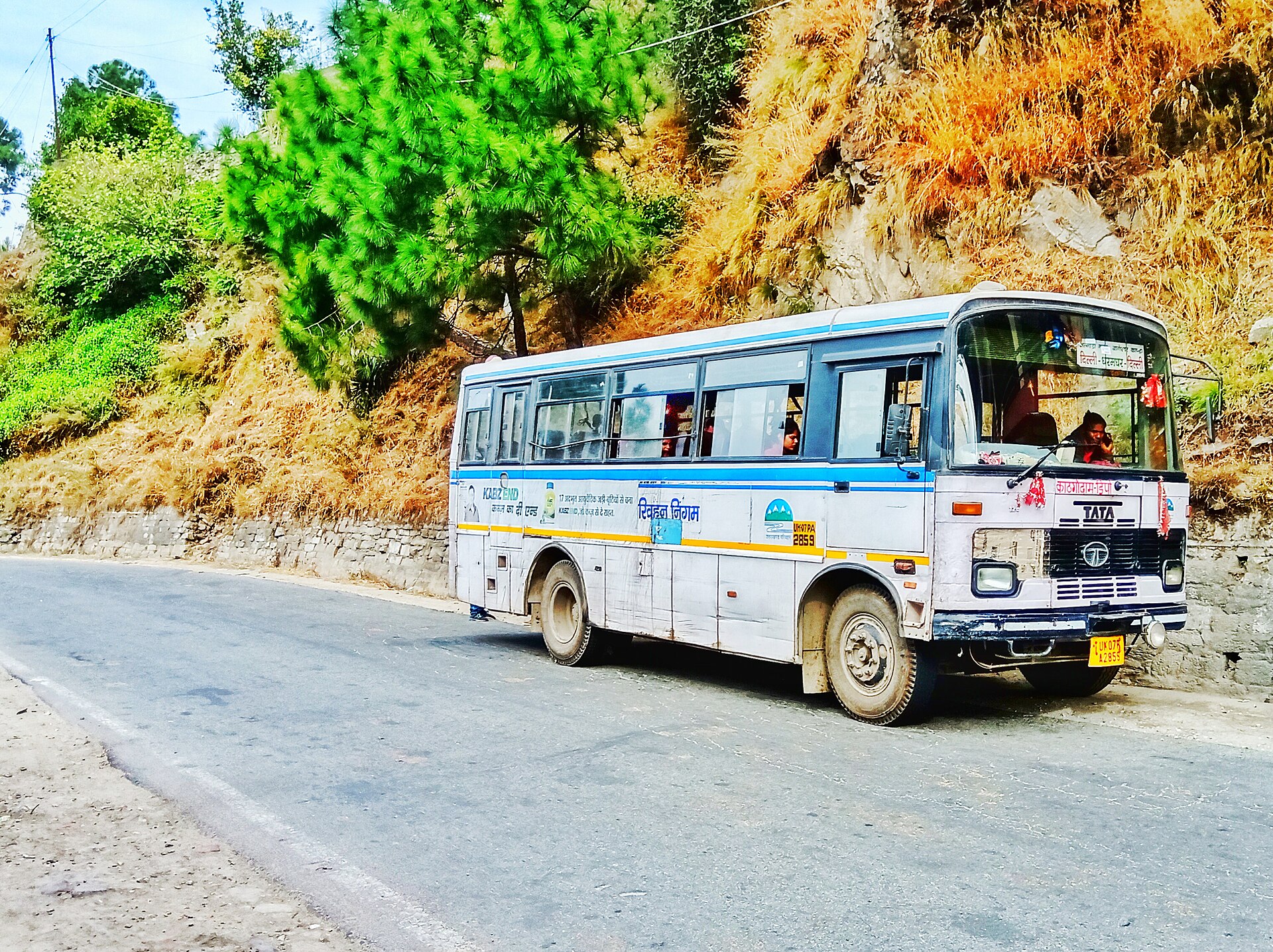
Bus travel is often one of the cheaper ways to reach Rishikesh. It is more convenient when you are already in Delhi and can reach the boarding point without stress. Buses may leave from Kashmere Gate ISBT or other private boarding points, depending on the operator.
Before booking, check the exact boarding point, luggage rules, bus type, final stop, and expected arrival area. Some services stop in Rishikesh, while others may leave you on a main road or at a point outside the area where you are staying.
A bus can save money, but it is not always the easiest first-night option after a long international trip. If you are very tired, travelling alone at night, or carrying several bags, a direct transfer may be simpler.
What is Nepali Farm near Rishikesh?
Nepali Farm is a road junction outside the main tourist areas of Rishikesh. Some buses and shared vehicles stop there. From Nepali Farm, you normally need another local ride to places such as Tapovan, Laxman Jhula, Swarg Ashram, Muni Ki Reti, or central Rishikesh.
This can work well for travellers with light luggage who understand the local route. It is less convenient for someone arriving in India for the first time, especially late at night.
Which Rishikesh area are you actually going to?
Rishikesh is not one small block. Your final travel time depends on where you are staying. Tapovan, Laxman Jhula, Swarg Ashram, Muni Ki Reti, Ram Jhula, and central Rishikesh are different areas. Ask your host for the exact map location before leaving Delhi.
This small step can prevent a common problem: reaching Rishikesh but then spending another hour trying to find the correct side of the river or the correct neighbourhood.
Simple arrival tips for international visitors
Prepare the first arrival before you fly. Keep the information you may need when mobile data is weak or your phone battery is low. The goal is not to plan every minute. It is to remove the common problems that happen when you are tired.
Save your accommodation address and phone number offline.
Keep your passport, visa copy, cards, phone, charger, and medicine in hand luggage.
Carry a small amount of Indian rupees for local payments.
Keep a power bank in your cabin bag if airline rules allow it.
Use a known taxi company, official counter, app, or pre-arranged driver.
Tell your host if a flight delay changes your arrival time.
Do not make a very tight train, bus, or domestic flight connection after an international landing.
Visa and travel documents
Visa and entry rules depend on your passport and can change. Check the official Government of India e-Visa website before travel. Keep digital and paper copies of your passport, visa, insurance, flight information, and accommodation address.
What should you pack for the Delhi to Rishikesh trip?
Keep the items you may need during the first day where you can reach them easily. Water, basic medicine, a light layer, phone charger, tissues, cash, and your address can save time. Do not put every important item in checked luggage.
If you are staying for yoga study, our Rishikesh packing guide covers clothes, weather, medicine, documents, and other useful items.
Frequently asked questions
How far is Rishikesh from Delhi?
The road distance is roughly 240 kilometres, but your actual route can vary. Travel time depends more on Delhi traffic, road conditions, stops, and where you are staying in Rishikesh than on distance alone.
Can I travel directly from Delhi Airport to Rishikesh?
Yes. A private taxi can take you directly from Delhi Airport to your Rishikesh accommodation. This is one of the simplest options for first-time visitors and people carrying large luggage.
Is Dehradun Airport closer to Rishikesh?
Yes. Dehradun’s Jolly Grant Airport is much closer to Rishikesh than Delhi Airport. You still need a road transfer from the airport to your final address.
Is there a direct train from Delhi to Rishikesh?
Rail options change by timetable. Many travellers use Haridwar as the main rail connection and continue by road to Rishikesh. Check current Indian Railways information for your travel date rather than relying on an old schedule.
Is bus travel from Delhi to Rishikesh safe for tourists?
Many tourists use buses on this route. Choose a known operator, confirm the boarding and arrival points, keep valuables with you, and think carefully before choosing a late-night arrival if you are new to the area.
Should I stay one night in Delhi before going to Rishikesh?
It depends on your flight time and energy. If you land very late after a long international flight, one night near Delhi can make the next day easier. If you arrive during the day and have a simple transfer booked, travelling onward the same day may be practical.
How much cash should I carry for the first day?
You do not need to carry a large amount. Keep enough Indian rupees for small local payments, food, or a short auto ride. Use normal safety habits and keep most of your money and cards secure.
Final travel advice
The best Delhi to Rishikesh route is the one you can manage comfortably after your real arrival, not the one that looks fastest on paper. First-time visitors often prefer a direct taxi. A domestic flight can reduce road time. Train and bus can cost less when you are comfortable making transfers.
Whichever route you choose, save your exact Rishikesh address, allow extra time, and check live schedules before travel. That simple preparation makes the first day much easier.
Yoga teacher training in India can mean very different things, so the country alone should not decide your course. A useful comparison looks at the teachers, main yoga style, training hours, daily schedule, practicum, accommodation, assessment, and the registration pathway offered by the school. India gives students many choices, from residential study in Rishikesh to programs in Goa, Kerala, Mysuru, and other yoga centres, but the quality and purpose of those courses can differ a lot.
Why students choose yoga teacher training in India
India is the historical home of several yoga traditions and still has large communities of teachers, ashrams, schools, and students. That gives international students a chance to study physical practice together with pranayama, meditation, philosophy, teaching method, and Indian cultural context instead of seeing yoga only as a fitness class. The location can add depth, but it does not make every school traditional or every course suitable, so the actual curriculum still needs to be checked carefully.
Residential training is also common in India. Students often live close to the school, eat meals together, and follow a full study timetable for several weeks. This can make it easier to focus because travel between home, work, and class is removed from the day. It can also feel intense, especially for a first-time visitor, so it is worth reading the schedule and understanding how much rest, self-study, and personal time the course really allows.
Which yoga teacher training level should you choose?
The hour number should match your present level and reason for studying. A shorter foundation can suit someone who wants structured learning without committing to a full teacher-training pathway, while a 200-hour course is the common starting point for students who want a broader foundation in practice and teaching. Advanced programs should build on earlier education rather than simply repeat the same material with a larger number attached to the certificate.
100-hour training: a shorter foundation for students who want structured study, practice, and teaching fundamentals without the full 200-hour commitment.
200-hour training: the common foundation level for students who want deeper study of asana, pranayama, meditation, philosophy, teaching methodology, and practicum.
300-hour training: usually intended for students who have already completed a 200-hour foundation and want more advanced education.
500-hour pathway: may be offered as one long program or as a 200-hour foundation followed by 300 additional hours, depending on the school and registration framework.
FitFortunes currently offers a residential 100-hour course in Rishikesh and a longer 200-hour yoga teacher training. The 100-hour program is a 10-day foundation, while the current 200-hour program is structured over 21 days. Course dates, room choices, and inclusions should still be checked on the live course page before travel or payment because operational details can change.
Yoga style matters more than a long list of labels
A course that lists many styles is not automatically better. Students should ask which style forms the main practical base, how much time is actually spent on each method, and whether the teachers are qualified to teach those subjects in depth. Hatha, Vinyasa, modern Ashtanga Vinyasa, Yin, and other methods have different histories and teaching structures, so putting all of them on one sales page can create more confusion than useful choice.
At FitFortunes, the current 200-hour Multi-Style structure uses traditional Hatha Yoga as the practical base, together with pranayama, meditation, yoga philosophy, teaching methodology, Ayurveda, sequencing, and supervised practicum. When the school discusses Patanjali’s Ashtanga Yoga in philosophy, that means the eight-limbed system described in the Yoga Sutras. It should not be confused with the modern Ashtanga Vinyasa Primary Series, which is not presented as the practical base of this course.
What registration and certificates actually mean
A course-completion certificate shows that you finished a particular training. Registration with an outside yoga organisation is a separate matter, and the wording should be checked carefully. For example, Yoga Alliance uses school and teacher registry designations such as RYS and RYT rather than issuing a government teaching licence. A student should verify the school in the organisation’s own directory and read the current requirements instead of relying only on a logo placed on a website.
FitFortunes also refers to registrations with Yoga Alliance International and the World Yoga Federation. These organisations have their own systems, and their designations are not interchangeable with Yoga Alliance registration. None of these private yoga registries creates one worldwide legal right to teach. Studios, insurers, employers, and local jurisdictions may ask for different documents, so the useful question is what the certificate supports in the country where you plan to work.
What should a good YTT curriculum include?
A good curriculum should show more than pose names. Students need time to practise, understand why movements are taught, study breathing and meditation, learn relevant philosophy, understand basic anatomy, and practise communicating with real people. Teaching practicum is especially important because knowing how to perform a posture is different from explaining it, watching a class, managing time, giving safe options, and responding when a student does not understand a cue.
Asana practice and alignment principles.
Pranayama and breath awareness.
Meditation and concentration practices.
Yoga philosophy and selected classical texts.
Anatomy and movement principles relevant to teaching.
Teaching methodology, sequencing, communication, and class planning.
Repeated practicum, observation, feedback, and assessment.
The FitFortunes curriculum guide explains how these areas are organised at the school, while the separate YTT syllabus guide explains how to judge any school’s published syllabus. Keeping those two pages separate helps avoid repeating the same search intent: one describes the FitFortunes curriculum, while the other teaches students how to evaluate a syllabus before they book.
What daily life is like during residential training
Residential yoga teacher training is usually a full study day rather than a holiday with one yoga class. A typical schedule may include morning practice, pranayama, meditation, theory, meals, afternoon study, teaching methodology, and practicum. Some schools also include chanting, cleansing practices, excursions, or evening activities, while others leave more personal time. Read the real timetable because two courses with the same number of training hours can feel very different in daily life.
The physical workload is only one part of the course. Students also need concentration for lectures, note-taking, assignments, self-study, and practice teaching. That is why sleep, food, recovery, and realistic expectations matter. Our daily YTT schedule guide gives a clearer picture of how practice and classroom study fit together during residential training.
How much does yoga teacher training in India cost?
There is no reliable single price for all of India. Fees change with training length, location, room type, class size, meals, teacher experience, facilities, and what is included in the package. A cheaper course can still be good, and an expensive course can still be poorly organised. The useful comparison is the total cost of the trip and the amount of real teaching, accommodation, food, practicum, and support included in that price.
As a current FitFortunes reference, the residential 200-hour program is listed at USD 1,199 for a shared room and USD 1,499 for a private room. These figures are for FitFortunes, not a claim about the whole Indian market. International students should also budget for flights, visa costs, local transport, travel insurance, personal spending, and extra accommodation around the course. The Rishikesh YTT cost guide covers those extra expenses in more detail.
How Rishikesh, Goa, Kerala, and Mysuru differ
Location changes the atmosphere around the course, but it should not replace curriculum quality as the main decision. Rishikesh has a dense yoga and ashram community and is popular for residential teacher training. Goa offers a coastal setting and many seasonal programs. Kerala is strongly associated with Ayurveda and South Indian culture, while Mysuru is closely connected with modern Ashtanga Vinyasa study. Each place can contain excellent and poor schools, so choose the teaching first and the scenery second.
Rishikesh: large teacher-training community, ashrams, the Ganga, and many residential schools.
Goa: coastal setting with many seasonal schools and retreat-style programs.
Kerala: useful for students interested in yoga alongside Ayurveda and South Indian traditions.
Mysuru: well known among students interested in modern Ashtanga Vinyasa practice.
How to compare yoga schools without getting lost in marketing
Start with information that can be checked. Look for named teachers, a real curriculum, a daily schedule, class size, practicum, assessment, room photos, meal information, booking terms, and a clear explanation of any outside registration. Be careful when a page relies mainly on words such as internationally recognised, ancient, authentic, or healing without explaining what those claims mean. Good schools should be able to answer practical questions without making the student decode sales language.
Who teaches asana, philosophy, anatomy, and teaching methodology?
What is the main practical yoga style?
How many students are in one batch?
How much supervised teaching practice is included?
How are students assessed before receiving a certificate?
What exactly is included in the residential fee?
What are the deposit, cancellation, and transfer terms?
For a deeper school-selection checklist, use our guide to choosing a yoga teacher training in India. Students travelling from abroad should also read the international-student planning guide, which focuses on visas, flights, arrival, money, packing, and the practical side of studying in India rather than repeating this broad course comparison.
Frequently asked questions
How much does yoga teacher training cost in India?
There is no single national fee because programs vary greatly in length, room type, meals, teacher team, facilities, and location. Compare the complete residential package and then add flights, visa costs, insurance, transfers, and personal spending. A very low price is not automatically a problem, but it should still come with a clear timetable, named teachers, practicum, accommodation details, and written booking terms.
Do I need to be flexible before joining YTT in India?
No. A beginner-friendly foundation course should not use advanced flexibility as an entrance test. You do need enough general health to follow the daily schedule and enough willingness to practise regularly, study theory, and receive feedback. If you have an injury, recent surgery, or another important health limitation, discuss it with the school before booking so the teaching team can explain whether the program is suitable.
How long does a 200-hour yoga teacher training take in India?
The calendar length varies because schools organise the required learning hours in different ways. Intensive residential programs commonly run for several weeks, while part-time courses can spread study over a much longer period. FitFortunes currently structures its residential 200-hour program over 21 days. Always check the live schedule rather than relying on an older blog, because course calendars can be revised.
Does a 200-hour certificate let me teach anywhere in the world?
No single yoga certificate creates a worldwide teaching licence. A training certificate can show that you completed a foundation program and may support registration with a private organisation when its requirements are met. Studios, insurers, employers, and countries can still have their own rules. If you plan to work abroad, check the requirements in that market before assuming one registration covers every situation.
Is Rishikesh better than Goa or Kerala for yoga teacher training?
Not automatically. Rishikesh has a very large yoga-training community and suits students who want a residential school environment around the Ganga and ashram culture. Goa may suit someone who prefers a coastal setting, while Kerala can appeal to students interested in Ayurveda and South Indian traditions. The stronger choice is the school whose teachers, curriculum, schedule, practicum, accommodation, and policies fit your needs.
Choose the training, not the promise
India gives yoga students a very wide range of training options, which is useful only when the differences are made clear. Compare what the school actually teaches, who teaches it, how much practice teaching you receive, where you will live, and what the certificate is meant to support. A strong location and an attractive website can help you feel interested, but the educational structure is what you will rely on once the course begins.
If you’re searching for the best yoga teacher training in Bali 2025, you’re not alone. Every year, hundreds of students from around the world come to Bali for yoga teacher training. And it’s not just the palm trees or the beaches. Bali offers something deeper calm surroundings, experienced teachers, and a strong yoga community.
But not all yoga schools are the same. Some focus on fast certifications. Others honor yogic tradition and teach with care. This guide is here to help you choose wisely.
Why Bali for Yoga Teacher Training?
Bali has become one of the most popular places for yoga training. It’s known for peaceful landscapes, welcoming people, and nourishing food.
Beyond that, many yoga schools in Bali follow international standards. Some even bring teachers from India. Most are Yoga Alliance certified, making your certificate valid worldwide.
The island also offers space to reflect, grow, and deepen your practice. Whether you’re a beginner or a serious practitioner, Bali has something for everyone.
What Makes a Yoga Teacher Training the Best?
A quality yoga course is not about pretty photos or Instagram posts. It’s about:
Experienced and knowledgeable teachers
A clear, authentic curriculum
Proper understanding of yogic philosophy
Clean, quiet accommodation
Healthy meals (often Satvik or vegetarian)
Daily structure with balance between asana, theory, and rest
Respect for yogic tradition without turning it into a trend
When researching, don’t just look at reviews. Read the daily schedule. Ask who is teaching. Find out if the school covers texts like the Yoga Sutras, Bhagavad Gita, or Hatha Yoga Pradipika.
Top Areas in Bali for YTT Courses
Ubud is known for spiritual retreats and traditional yoga. Most serious yoga schools are located here.
Canggu offers beach vibes and is more modern. Good for those who like a social atmosphere.
Sidemen and North Bali are quieter. Perfect for deep practice without distractions.
Wherever you choose, ensure the school aligns with your goals.
Some schools add cultural trips, sound healing, or Ayurveda modules.
How Much Does It Cost?
Prices vary. But most 200-hour courses in Bali range between $1800 to $3500.
Lower-cost programs may not include food or private rooms. High-end programs offer beachfront villas and gourmet meals.
Always ask what’s included. Cheap doesn’t always mean poor quality but read the details.
Best Time to Attend YTT in Bali
Bali has a tropical climate. The dry season (April to October) is the best time for training.
In 2025, many schools will run programs during these months. March, April, and May are popular. September and October are also good less tourist traffic.
Avoid December to February if you dislike heavy rain.
What Style of Yoga Should You Choose?
Most Bali YTTs offer one or a mix of the following:
Hatha Yoga: Traditional, steady, and deep.
Vinyasa Flow: Dynamic, modern, and creative.
Ashtanga Yoga: Structured, disciplined, and physically intense.
Yin Yoga: Gentle and meditative.
Pick the style that matches your intention. If you want to teach later, start with Hatha or Vinyasa for a balanced foundation.
Schools Known for Best Yoga Teacher Training in Bali 2025
These schools have good reputations. Always research current reviews and course updates:
All Yoga Training – Bali Based, Known for Good Teachers and Early Bird Discounts.
Radiantly Alive – Offers Vinyasa-based YTT with strong global teaching team.
Yoga Union – Long-running 200-hour and 300-hour programs.
Samyak Yoga (Bali branch) – Indian teachers and traditional content.
Inner Yoga Training – Offers 200-hour YTT with a mix of styles.
Each has a unique feel. Some are more modern, others rooted in traditional texts.
How to Choose the Right Course
Here are a few steps:
Decide what matters most price, philosophy, or location.
Read the full syllabus, not just headlines.
Ask about the teachers’ background.
Check if the course includes traditional yogic texts.
Compare reviews across platforms.
Make sure the certificate is Yoga Alliance approved.
Don’t rush. The best yoga teacher training in Bali 2025 will be the one that aligns with your purpose.
Spiritual and Cultural Experience in Bali
Bali is a Hindu island in a Muslim-majority country. Daily rituals, offerings, and temple culture are everywhere.
Joining a YTT here means more than learning poses. You get a chance to witness devotion, discipline, and local wisdom.
Respect is key. Dress modestly, be kind, and observe quietly.
Content Gap Considerations (That Good Schools Cover)
Some great YTTs in Bali offer:
Indian yoga philosophy in depth
Sanskrit chanting and meaning
Silent meditation days
Classes on Ayurveda basics
One-on-one teacher feedback
Satvik food philosophy
If you’re looking for more than just exercise, seek these.
Final Thoughts
Finding the best yoga teacher training in Bali 2025 isn’t about picking the trendiest school. It’s about what feels right to you.
Bali has many options. Choose the one that respects the roots of yoga, offers solid teaching, and creates a safe space for growth.
Ask questions. Read carefully. And most of all trust your gut.
FAQ: Best Yoga Teacher Training in Bali 2025
Q: How long is a 200-hour YTT in Bali? A: Usually 3–4 weeks. Some schools offer extended or flexible schedules.
Q: Is certification from Bali valid internationally? A: Yes—if it’s Yoga Alliance certified.
Q: What’s the daily schedule like? A: Typically includes two yoga classes, theory, meals, and rest time.
Q: Is it beginner-friendly? A: Many courses are open to all levels. Check the prerequisites.
Q: Do I need travel insurance? A: Yes, it’s strongly advised. Some schools require proof.
Q: Will I have time to explore Bali? A: Some weekends are free. But expect a structured schedule.
Q: Can I work while doing YTT? A: It’s not recommended. Focus fully on the training.
Q: What should I pack? A: Light clothes, a good mat, sandals, notebook, and open mind.
If you’re looking for the best yoga classes in Rishikesh, you’re in the right place. I’ve practiced yoga for over 25 years and taught for nearly two decades. I’ve walked through every alley of Rishikesh, visited countless ashrams, and attended many sunrise meditations by the Ganges. This guide isn’t a polished sales pitch. It’s a real-world account to help you find authentic yoga in Rishikesh.
Why Rishikesh Is the Yoga Capital of the World
Rishikesh isn’t just a city—it’s a feeling. Nestled in the foothills of the Himalayas, with the sacred Ganga flowing through, it offers something that no modern studio can: peace. Here, you’re not just doing yoga for fitness. You’re practicing in a place where saints meditated for years.
Most yoga centers in Rishikesh follow traditional styles like Hatha yoga, Ashtanga, or Kundalini. The emphasis is on the ancient way, not flashy poses.
Types of Yoga Classes in Rishikesh
Not every traveler wants the same thing. Some come for self-healing, others for a teacher training course (TTC), and some just want to attend drop-in yoga classes in Rishikesh. Here’s what you’ll find:
Beginner yoga classes: Perfect for those starting their journey.
Intermediate & advanced sessions: For students looking to deepen their practice.
Meditation classes: Includes Vipassana, guided meditation, and chakra balancing.
Pranayama & breathwork: Essential for energy control.
Yoga Nidra: Deep relaxation that feels like a reboot for your mind.
What Makes a Yoga Class Truly the Best?
After years of attending and teaching, here’s what separates a good class from the best:
Experienced Teachers: Teachers who’ve studied from Indian gurus or have decades of practice.
Small Class Sizes: Avoid places that pack 30 people into a room.
Peaceful Setting: Yoga next to the Ganga or in a quiet garden makes a difference.
Consistency: Daily classes that follow a proper rhythm.
Spiritual Insight: It’s not just asana. Look for teachings on yogic philosophy, mindfulness, and sattvic living.
Recommended Yoga Styles to Try in Rishikesh
Some styles are more popular and effective than others, depending on what you’re looking for:
Hatha Yoga in Rishikesh
Old-school and traditional. It focuses on posture, breathing, and mental clarity. Almost every ashram teaches this.
Ashtanga Yoga Retreats
More dynamic and structured. You’ll break a sweat. Ideal if you want a disciplined daily routine.
Kundalini Workshops
Not everyone’s cup of tea, but if done properly, it can awaken deep energy. Look for certified teachers only.
Vinyasa Flow Classes
These are a bit more modern, but you’ll find them in some retreats. Great for flexibility and movement.
Yoga Teacher Training in Rishikesh
Thousands come every year for their 200-hour YTT. Choose a school registered with Yoga Alliance. These schools offer full accommodation, vegetarian meals, and immersive learning. Prices vary. Budget schools start from INR 40,000, but quality matters more than cost.
Best Areas to Find Yoga Classes
Some parts of Rishikesh are better than others. Here’s a local breakdown:
Laxman Jhula area: Lots of yoga schools, hostels, and cafes. Very active.
Ram Jhula: More traditional. Famous ashrams like Parmarth Niketan are here.
Tapovan: Quieter, lots of nature, and peaceful guesthouses.
What to Expect in a Drop-In Yoga Class
You don’t need to commit to a whole course. Most centers offer drop-in yoga classes daily. These cost between 200–500 INR and usually last 90 minutes.
Bring your mat, wear simple clothes, and arrive a bit early. Classes often include sun salutations, pranayama, and a short meditation at the end.
Common Myths About Yoga in Rishikesh
Myth: You have to be flexible to join.
Truth: You only need an open mind.
Myth: Foreigners won’t fit in.
Truth: People from all over the world come here.
Myth: You must do a teacher training.
Truth: Regular classes are just as valuable.
Practical Tips from a Long-Term Practitioner
Start slow. Don’t attend four classes a day.
Hydrate. Rishikesh is warm and humid.
Eat sattvic food. Most cafes here serve it.
Talk to locals. They know which teachers are good.
Stay in a quiet area. Peace helps the mind settle.
Best Time to Attend Yoga Classes in Rishikesh
Avoid peak monsoon (July–August). The best time is October to April. Weather is cool, and most schools run full schedules.
Final Thoughts: Why Rishikesh Is Worth It
The best yoga classes in Rishikesh are not found through Instagram posts. They’re found through walking the town, listening to your heart, and asking the right questions. I’ve sat under trees here and meditated for hours. I’ve had chai with swamis and attended early morning chanting in temples.
It’s not just a yoga class. It’s an experience. And it stays with you forever.
FAQs: Best Yoga Classes in Rishikesh
Q1: Can beginners join yoga classes in Rishikesh? Yes, many schools offer beginner-friendly classes.
Q2: Are classes conducted in English? Most classes are in simple English, easy for all to follow.
Q3: How do I choose the right yoga teacher? Ask about their training, experience, and teaching style.
Q4: Is advance booking required? During peak season, yes. For drop-ins, just arrive early.
Q5: What should I bring to class? Comfortable clothes, water bottle, and a yoga mat.
Q6: Can I get certified in Rishikesh? Yes, many registered schools offer 200-hour YTT certifications.
Q7: Are there spiritual or silent retreats available? Yes. Vipassana and other silent meditation retreats are quite popular.
Whether you’re here for a week or a month, Rishikesh will change how you see yoga. It did for me.
Rishikesh, the spiritual hub of India, is home to the best yoga classes near the Ganges. Ancient sages meditated here, making it the birthplace of yoga. Today, it hosts top-rated yoga schools that offer traditional and certified yoga programs.
The Bhagavad Gita states, “Yoga is the journey of the self, through the self, to the self.” Learning yoga in Rishikesh connects you with its original essence. Whether you seek a professional yoga certification or a spiritual retreat, this city offers diverse training opportunities.
How to Choose the Best Yoga Classes Near Rishikesh
Selecting the right yoga school matters. Look for registered yoga academies that offer authentic teachings. Here are key factors to consider:
Certification – Opt for Yoga Alliance-certified courses.
Teaching Style – Hatha, Ashtanga, or Vinyasa, based on your interest.
Course Structure – A balance of theory, practice, and philosophy.
Location – Choose peaceful surroundings near nature.
Reviews & Ratings – Feedback from previous students helps.
Reputed yoga schools provide yoga certification in India that is recognized worldwide. These courses include practical sessions, yogic philosophy, and meditation techniques.
Yoga Teacher Training Centers in Rishikesh
Rishikesh is home to top yoga TTC programs that help individuals become certified instructors. Some well-known courses include:
RYT 200 & RYT 500 Programs – Ideal for beginners and advanced learners.
Hatha Yoga Training – Focuses on posture, breath control, and energy flow.
Ashtanga & Vinyasa Yoga Training – Dynamic styles emphasizing movement and breath coordination.
Meditation and Pranayama Workshops – Strengthen mental clarity and inner peace.
Kundalini Yoga Training – Awakens inner energy through chakras and kriyas.
These professional yoga training courses integrate yogic scriptures, including the Yoga Sutras of Patanjali and the Hatha Yoga Pradipika.
What Makes Rishikesh Yoga Schools Unique?
Unlike modern fitness-based yoga, Rishikesh preserves traditional yoga education. Teachers here follow gurukul-style learning, where students immerse in a disciplined yogic lifestyle. The best yoga institute in Rishikesh offers:
Small class sizes for personalized attention.
Ayurveda and yoga integration for holistic healing.
Yoga retreats and spiritual workshops.
Certification that allows you to teach worldwide.
Practicing yoga in this sacred land aligns your body, mind, and spirit with nature. Learning from experienced teachers ensures you grasp authentic techniques.
Benefits of Learning Yoga in Rishikesh
Studying at a yoga school in Rishikesh offers unmatched benefits:
Spiritual Growth – Meditate in the land of sages and spiritual seekers.
Authentic Teachings – Learn directly from traditional yoga masters.
Serene Environment – Practice amidst Himalayan landscapes.
Community Support – Connect with like-minded yogis from across the world.
Affordable Yoga Courses – India offers cost-effective training compared to Western countries.
These advantages make Rishikesh the best destination for yoga enthusiasts. Whether you’re seeking yoga instructor certification or deepening your practice, this city has everything you need.
Yoga Retreats and Short-Term Courses
For those not ready for a long-term commitment, yoga retreats in Rishikesh offer immersive experiences. Retreats typically include:
Morning and evening yoga sessions.
Guided meditation and pranayama classes.
Ayurvedic meals and wellness therapies.
Sound healing and yogic philosophy discussions.
Short-term yoga workshops cover various styles like Hatha, Ashtanga, and Vinyasa. These programs help you experience yoga before committing to a full-fledged course.
Finding the Right Yoga Academy in Rishikesh
With so many options, finding the best yoga academy in Rishikesh requires research. Here are some tips:
Visit schools in person, if possible.
Read reviews on Google and social media.
Check the qualifications of the instructors.
Look for structured curriculums with practical and theoretical knowledge.
Ensure the school follows ethical teaching practices.
Authentic yoga study in Rishikesh blends tradition with modern training. Choose a center that aligns with your goals and values.
Conclusion: Start your Yoga in Rishikesh
If you seek the best yoga classes near Rishikesh, this sacred city is the perfect destination. With a rich yogic heritage, certified yoga programs, and a peaceful environment, Rishikesh offers everything for spiritual and physical growth.
Enrolling in a yoga teacher training center in Rishikesh allows you to master traditional practices and gain global recognition. Whether for personal growth or professional certification, learning yoga in its birthplace is a life-changing experience.
Start your journey today and experience yoga in its most authentic form!
Upcoming Traditional Multi-Style 200 Hour Yoga Teacher Training 2025
Upcoming Traditional Multi-Style 200 Hour Yoga Teacher Training 2025
Kanwar Yatra is a deeply significant pilgrimage in Hinduism, especially observed during the holy month of Shravan. This journey powerfully expresses devotion and reverence toward Lord Shiva. Hindu beliefs hold that the month of Shravan, which occurs during the rainy season, has immense spiritual importance. Lord Shiva, known for his benevolence, is believed to be easily pleased with simple offerings like water. However, devotees are mindful that Shiva can also be quick to anger. To honor him, participants in the Kanwar Yatra avoid consuming meat, alcohol, and tamasic foods. They also ensure that the Kanwar—the wooden structure carrying the sacred water—never touches the ground, demonstrating deep respect.
Spiritual Practices and Symbolism
The Kanwar Yatra is summed up by the phrase “Shivobhootva Shivjam Jayet,” which means “Become Shiva to conquer Shiva.” This idea teaches that by being devoted to Shiva and serving him, one can achieve spiritual success. The journey also shows the importance of equality and brotherhood among devotees. During Shravan, a month of chanting, fasting, and simple living, devotees perform rituals like bathing the Shivalinga (a symbol of Shiva) and chanting special mantras like Panchakshara and Mahamrityunjaya. As part of the pilgrimage, they fill their Kanwars with holy water from the Ganges River and walk to different Shiva temples to offer the water to the Shivalinga.
What is Sawan Month or Shravan?
Sawan, or Shravan, is a deeply respected month in the Hindu calendar, usually occurring in July or August. This period honors Lord Shiva, one of Hinduism’s principal deities. Shiva devotees consider Sawan the holiest month, believing that offerings and prayers during this time carry special power. Sawan coincides with India’s monsoon season, symbolizing fertility, growth, and renewal.
During Sawan, devotees engage in various spiritual practices like fasting, meditation, and chanting to deepen their connection with the divine. They consider this time auspicious for starting new ventures or performing important ceremonies. Fasting, particularly on Mondays (known as Shravan Somvar), is a common observance dedicated to Lord Shiva. Devotees make special pujas and offerings, including water, milk, bilva leaves, and flowers, to Lord Shiva during this period.
One of the most significant events during Sawan is the Kanwar Yatra, where devotees carry holy water from the Ganges to offer at Shiva temples. Additionally, festivals like Haryali Teej, celebrated by married women seeking their husband’s long life and prosperity, and Nag Panchami, dedicated to snakes that symbolize the cyclical nature of life and death, are also observed during this sacred month. Sawan is a time of spiritual renewal, devotion, and celebration for Hindus, where people seek blessings, forgiveness, and harmony.
A Time of Spiritual Growth:
Sawan coincides with the monsoon season, symbolizing fertility, growth, and renewal.
Devotees engage in fasting, meditation, and chanting to deepen their connection with the divine.
Sawan is a time of spiritual renewal, devotion, and celebration, where people seek blessings, forgiveness, and harmony.
When Does Kanwar Yatra Take Place?
Kanwar Yatra is a significant Hindu pilgrimage that occurs during the month of Shravan, which usually falls between July and August according to the Hindu calendar. This period is particularly sacred for devotees of Lord Shiva, one of the principal deities in Hinduism. Shravan is considered the holiest month for worshiping Shiva, and it coincides with the monsoon season in India, a time associated with renewal, fertility, and spiritual growth.
During Kanwar Yatra, millions of devotees, known as Kanwariyas, undertake a journey to collect holy water from the Ganges River, which they carry back to offer at Shiva temples across the country. The pilgrimage is a demonstration of deep devotion and involves walking long distances, often barefoot, as a form of penance and spiritual purification.
The timing of Kanwar Yatra during Shravan is symbolic because this month is believed to be when the cosmos is most aligned for connecting with divine energies. The monsoon rains during this time also represent a period of cleansing and new beginnings, making it an ideal time for devotees to engage in spiritual practices such as fasting, chanting, and offering prayers to Lord Shiva.
How Long is the Kanwar Yatra and How Many Types of Kanwars Are There?
The Kanwar Yatra is a sacred pilgrimage undertaken by devotees of Lord Shiva, primarily during the month of Shravan (July-August). The length of the Yatra varies based on the starting point and the devotee’s destination. Typically, it can last anywhere from a few days to several weeks. Pilgrims, known as Kanwariyas, travel by foot, carrying holy water from the Ganges River to offer at Shiva temples, often covering hundreds of kilometers.
There are several types of Kanwars used in the Yatra, each with its unique significance:
Dak Kanwar: A fast-paced Yatra where the Kanwariyas run in relay teams, ensuring the holy water reaches the temple quickly.
Baithi Kanwar: In this type, the Kanwar is placed on a vehicle or a stationary spot while the devotee takes rest.
Dand Kanwar: Devotees lie prostrate after every few steps, covering the entire distance in this manner as an act of intense devotion.
Khadi Kanwar: The Kanwar is carried upright, symbolizing discipline and respect throughout the journey.
Can Anyone Participate in Kanwar Yatra?
Yes, Kanwar Yatra is open to everyone, regardless of age or gender. This pilgrimage is a journey of faith, and anyone who feels a connection to Lord Shiva can participate. However, participants are encouraged to observe traditional practices during the Yatra. These include fasting, abstaining from meat and alcohol, and maintaining a focus on spiritual discipline. This helps ensure that the journey remains a sacred and purifying experience for all involved.
What Do Participants Carry During Kanwar Yatra?
During the Kanwar Yatra, devotees carry a Kanwar, which is a wooden pole with pots attached at each end. These pots are filled with holy water from the Ganges River, which is considered sacred in Hinduism. The Kanwar is carefully balanced on the shoulders and is never placed on the ground as a sign of respect. Upon reaching their destination, devotees offer this water to the Shivalinga, a symbolic representation of Lord Shiva. This act is believed to cleanse the soul and bring blessings from Shiva.
What are the Rules for Participating in Kanwar Yatra?
Participants are expected to follow strict rules of purity and devotion during the Yatra, including fasting, avoiding non-vegetarian food, abstaining from alcohol, and refraining from placing the Kanwar on the ground.
Purity and Cleanliness:
Devotees must maintain personal and spiritual purity by bathing regularly and wearing clean clothes. The Kanwar, a decorated bamboo pole carried by devotees, must be kept clean and free from impurities.
Fasting:
Many participants fast during the Yatra, either by abstaining from certain foods or consuming only specific vegetarian foods. This practice purifies the body and helps focus on spiritual practices.
Avoiding Non-Vegetarian Food:
To maintain spiritual cleanliness, devotees avoid consuming non-vegetarian food, aligning with the principle of non-violence (Ahimsa) and enhancing the devotional experience.
Abstaining from Alcohol:
Alcohol consumption is strictly prohibited during the Yatra to maintain mental clarity and focus on the spiritual aspects of the pilgrimage.
Refraining from Placing the Kanwar on the Ground:
The Kanwar, a sacred symbol in the pilgrimage, must not touch the ground. This rule reflects respect for the sacred object and maintains its purity. Devotees often carry it throughout the Yatra or place it on a special stand.
Walking with Devotion:
Participants typically walk long distances to reach their destination, undertaking the journey with devotion and reverence as a reflection of their commitment to Lord Shiva.
Respect for Fellow Devotees:
Maintaining a respectful attitude towards other pilgrims and local residents is important. This fosters a harmonious and spiritual environment during the Yatra.
So, the Kanwar Yatra is a deeply spiritual journey that showcases devotion and faith. By following the important rules and participating with sincerity, devotees honor Lord Shiva and experience personal growth. The Yatra not only strengthens religious traditions but also offers a unique chance to connect with Indian spirituality and culture. Whether you’re a regular participant or new to the pilgrimage, the Kanwar Yatra provides a meaningful and enriching experience.
Unfold Your Yoga Journey in Rishikesh: The Magical Yoga Capital of India!
Why Yoga Teacher Training in Rishikesh is Your First Step to be a Yoga teacher
Why Yoga teacher Training in Rishikesh is a priority. Have you ever yearned to learn yoga or teaching yoga and sharing its benefit with others? Maybe you're or want to be a young yogi who wants to learn more about yoga poses (asanas) and become a yoga teacher after the yoga teacher training certificate! If so, then a yoga teacher training (YTT) in Rishikesh, India, might be the perfect place for you!
Rishikesh: An Ancient city of Sages, Yoga and Spirituality
Rishikesh is a special place in the foothills of the mighty Himalayas. A town where the holy Ganges River flows through, sparkling like a source of life and its spritiual importance in Indian Culture worldwide. This beautiful city isn't just a place; it's like a giant yoga school that's been around for thousands of years! Rishikesh is known as the "Yoga Capital of the World" because yoga was born on the land of India, and Rishikesh still a hub for yogis (people who practice yoga) from all over the world.
The Sacred River Ganga: A Symbol of Purity
The Ganges River is a big part of what makes Rishikesh so special. People in India believe the Ganges River is holy and has the power to wash away sins. Many yogis perform rituals and prayers along the riverbank, and you might even see people taking a dip in the cool water!
Choosing the Perfect Yoga Teacher Training (YTT) : Like Picking the Right Pair of Yoga Pants!
Just like finding the perfect pair of yoga pants that fit you well, choosing the right YTT program is important. Here are some things to consider:
What style of yoga are you interested in? Hatha yoga is a good starting point, but there are many other styles like Vinyasa or Ashtanga.
What's your budget? Prices for YTTs can vary, so do some research to find one that fits your needs.
Why Choose Rishikesh for Your YTT? Why Yoga Teacher Training in Rishikesh!
Now, let's talk about why Rishikesh is the best place for your YTT! Here are some reasons that will make you want to do a happy dance:
Rishikesh stands out as a prime location for Yoga Teacher Training (YTT) due to several unique advantages:
Yoga History Comes Alive: Rishikesh is like the birthplace of yoga, so it's the perfect place to learn directly from where it all began. Soak up the deep history and spiritual vibes of the place.
Learn from the Best Teachers: Rishikesh is full of yoga teachers who have been practicing for many years. You'll get to learn from real experts who can share their knowledge with you.
Yoga Everywhere You Look: Rishikesh is all about yoga. You can practice yoga poses outside with the mountains and the Ganges River all around you. It's a great way to experience yoga in a whole new way.
Learn More Than Just Poses: Yoga Teacher Training programs here teach you more than just how to do different yoga positions. You'll also learn about yoga philosophy, how to breathe properly (pranayama), and how to meditate.
Make Yoga Friends: Because Rishikesh is so popular with yoga lovers, you'll meet people from all over the world who share your passion for yoga. It's a great chance to make new friends who understand your love of yoga.
Rishikesh: A Paradise for Your Body and Mind
Imagine a place where the air is fresh, the mountains are majestic, and the sound of flowing water fills the air. That's the environment of Rishikesh! This peaceful setting is perfect for focusing on your yoga practice and finding inner peace.
When to Pack Your Yoga Mat: Choosing the Perfect Season
Rishikesh has two main seasons: spring (March to May) and fall (September to November). These seasons are perfect for practicing yoga because the weather is mild and comfortable. The summer months (June to August) can be hot and humid, while the winter (December to February) can be chilly in the mountains.
The nearest airport to Rishikesh is Jolly Grant Airport (JOG), located about 16 kilometers away. From the airport, you can take a taxi, rickshaw, or pre-booked car service to get to Rishikesh.
Closest International Airport: Indira Gandhi International Airport (DEL), Delhi, India
Distance: Approximately 230 kilometers (143 miles) from Rishikesh
Taxi Time: Travel by taxi from Delhi Airport to Rishikesh can take 5-7 hours, depending on traffic conditions. This is a significantly longer journey compared to the domestic option.
Become a Yoga Teacher in Rishikesh!
Learning yoga in Rishikesh is an incredible chance to grow, improve your skills, and share yoga with others. Imagine coming back from this trip feeling more sure of yourself, connected to others, and full of new ideas. So, grab your yoga mat, get ready for the special feeling of Rishikesh, and start your adventure to become a yoga teacher!
100 Hour Yoga Teacher Training Our 100-hour holistic yoga teacher training at FitFortunes Yoga School in Rishikesh will teach you how to use yoga as a way of living rather than just a form of exercise. Our program is recognized by both Yoga Alliance and Yoga Alliance International. Everyone is welcome, whether you’re new to yoga or want to get better at it. Come with us to FitFortunes Yoga School for a 100-hour yoga Teacher Training Course.
200 Hour Yoga Teacher Training Fitfortunes Yoga School, you can take our 200-hour holistic yoga teacher training, which is approved by the Yoga Alliance and the Yoga Alliance International. We teach standard yoga basics with a modern twist, and we focus on hatha and vinyasa karma primary series. People who want to learn and grow in their yoga journey are welcome in our classes. Come with us and learn how yoga can improve your life as a person and as a teacher.