If you’re searching for the best yoga teacher training in Bali 2025, you’re not alone. Every year, hundreds of students from around the world come to Bali for yoga teacher training. And it’s not just the palm trees or the beaches. Bali offers something deeper calm surroundings, experienced teachers, and a strong yoga community.
But not all yoga schools are the same. Some focus on fast certifications. Others honor yogic tradition and teach with care. This guide is here to help you choose wisely.
Why Bali for Yoga Teacher Training?
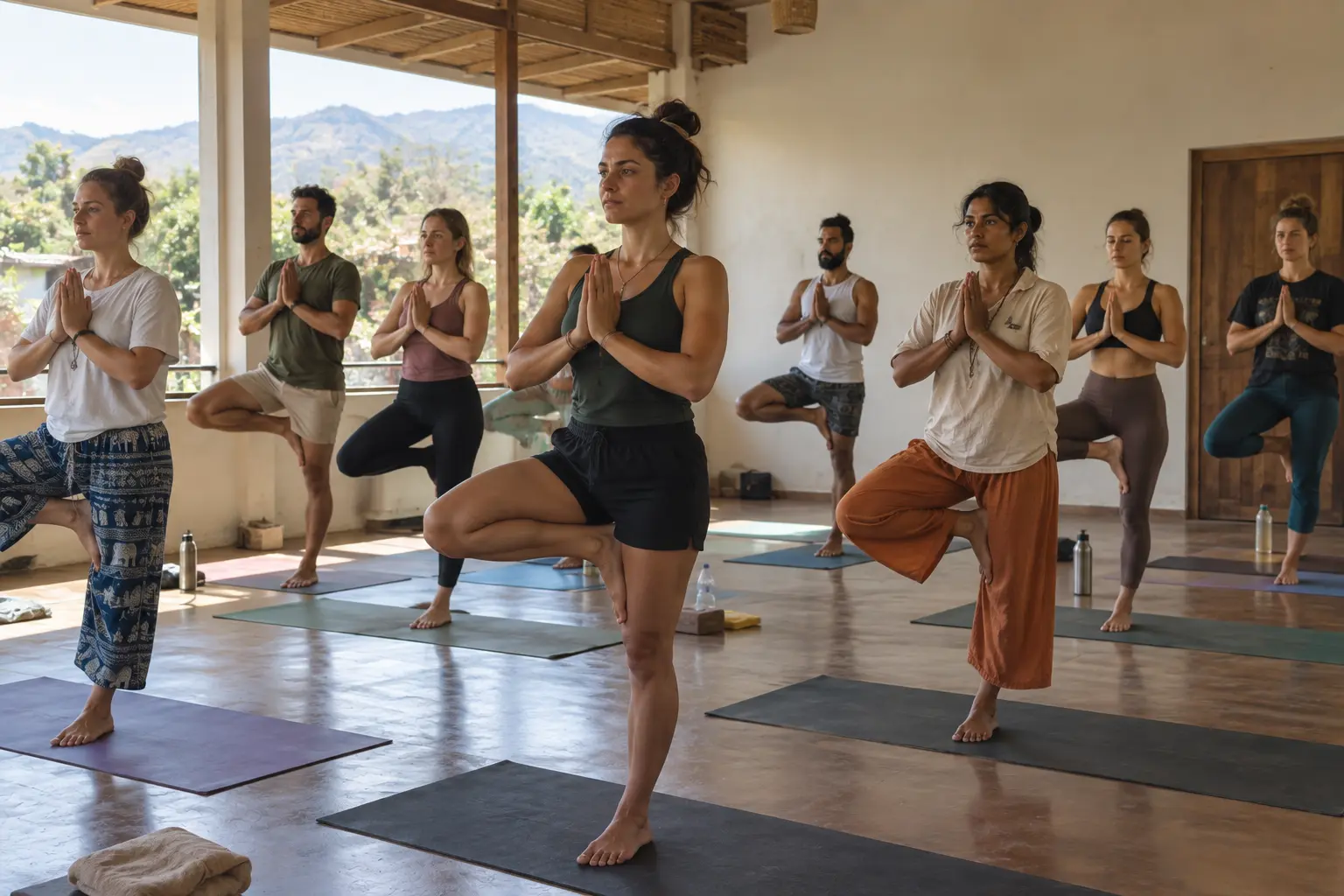
Bali has become one of the most popular places for yoga training. It’s known for peaceful landscapes, welcoming people, and nourishing food.
Beyond that, many yoga schools in Bali follow international standards. Some even bring teachers from India. Most are Yoga Alliance certified, making your certificate valid worldwide.
The island also offers space to reflect, grow, and deepen your practice. Whether you’re a beginner or a serious practitioner, Bali has something for everyone.
What Makes a Yoga Teacher Training the Best?
A quality yoga course is not about pretty photos or Instagram posts. It’s about:
- Experienced and knowledgeable teachers
- A clear, authentic curriculum
- Proper understanding of yogic philosophy
- Clean, quiet accommodation
- Healthy meals (often Satvik or vegetarian)
- Daily structure with balance between asana, theory, and rest
- Respect for yogic tradition without turning it into a trend
When researching, don’t just look at reviews. Read the daily schedule. Ask who is teaching. Find out if the school covers texts like the Yoga Sutras, Bhagavad Gita, or Hatha Yoga Pradipika.
Top Areas in Bali for YTT Courses
Ubud is known for spiritual retreats and traditional yoga. Most serious yoga schools are located here.
Canggu offers beach vibes and is more modern. Good for those who like a social atmosphere.
Sidemen and North Bali are quieter. Perfect for deep practice without distractions.
Wherever you choose, ensure the school aligns with your goals.
What’s Usually Included in the Program?
Most 200-hour YTT programs in Bali include:
- Daily yoga classes (Hatha, Vinyasa, or Ashtanga)
- Yogic philosophy sessions
- Teaching methodology
- Anatomy and alignment
- Pranayama and meditation
- Study of yogic texts
- Teaching practice
- Certification from Yoga Alliance
- Accommodation and three daily meals
Some schools add cultural trips, sound healing, or Ayurveda modules.
How Much Does It Cost?
Prices vary. But most 200-hour courses in Bali range between $1800 to $3500.
Lower-cost programs may not include food or private rooms. High-end programs offer beachfront villas and gourmet meals.
Always ask what’s included. Cheap doesn’t always mean poor quality but read the details.
Best Time to Attend YTT in Bali
Bali has a tropical climate. The dry season (April to October) is the best time for training.
In 2025, many schools will run programs during these months. March, April, and May are popular. September and October are also good less tourist traffic.
Avoid December to February if you dislike heavy rain.
What Style of Yoga Should You Choose?
Most Bali YTTs offer one or a mix of the following:
- Hatha Yoga: Traditional, steady, and deep.
- Vinyasa Flow: Dynamic, modern, and creative.
- Ashtanga Yoga: Structured, disciplined, and physically intense.
- Yin Yoga: Gentle and meditative.
Pick the style that matches your intention. If you want to teach later, start with Hatha or Vinyasa for a balanced foundation.
Schools Known for Best Yoga Teacher Training in Bali 2025
These schools have good reputations. Always research current reviews and course updates:
- All Yoga Training – Bali Based, Known for Good Teachers and Early Bird Discounts.
- Radiantly Alive – Offers Vinyasa-based YTT with strong global teaching team.
- Yoga Union – Long-running 200-hour and 300-hour programs.
- Samyak Yoga (Bali branch) – Indian teachers and traditional content.
- Inner Yoga Training – Offers 200-hour YTT with a mix of styles.
Each has a unique feel. Some are more modern, others rooted in traditional texts.
How to Choose the Right Course
Here are a few steps:
- Decide what matters most price, philosophy, or location.
- Read the full syllabus, not just headlines.
- Ask about the teachers’ background.
- Check if the course includes traditional yogic texts.
- Compare reviews across platforms.
- Make sure the certificate is Yoga Alliance approved.
Don’t rush. The best yoga teacher training in Bali 2025 will be the one that aligns with your purpose.
Spiritual and Cultural Experience in Bali
Bali is a Hindu island in a Muslim-majority country. Daily rituals, offerings, and temple culture are everywhere.
Joining a YTT here means more than learning poses. You get a chance to witness devotion, discipline, and local wisdom.
Respect is key. Dress modestly, be kind, and observe quietly.
Content Gap Considerations (That Good Schools Cover)
Some great YTTs in Bali offer:
- Indian yoga philosophy in depth
- Sanskrit chanting and meaning
- Silent meditation days
- Classes on Ayurveda basics
- One-on-one teacher feedback
- Satvik food philosophy
If you’re looking for more than just exercise, seek these.
Final Thoughts
Finding the best yoga teacher training in Bali 2025 isn’t about picking the trendiest school. It’s about what feels right to you.
Bali has many options. Choose the one that respects the roots of yoga, offers solid teaching, and creates a safe space for growth.
Ask questions. Read carefully. And most of all trust your gut.
FAQ: Best Yoga Teacher Training in Bali 2025
Q: How long is a 200-hour YTT in Bali?
A: Usually 3–4 weeks. Some schools offer extended or flexible schedules.
Q: Is certification from Bali valid internationally?
A: Yes—if it’s Yoga Alliance certified.
Q: What’s the daily schedule like?
A: Typically includes two yoga classes, theory, meals, and rest time.
Q: Is it beginner-friendly?
A: Many courses are open to all levels. Check the prerequisites.
Q: Do I need travel insurance?
A: Yes, it’s strongly advised. Some schools require proof.
Q: Will I have time to explore Bali?
A: Some weekends are free. But expect a structured schedule.
Q: Can I work while doing YTT?
A: It’s not recommended. Focus fully on the training.
Q: What should I pack?
A: Light clothes, a good mat, sandals, notebook, and open mind.


One response to “Yoga Teacher Training in Bali 2026: How to Compare Programs”
[…] Pingback: Best Yoga Teacher Training in Bali 2025 […]