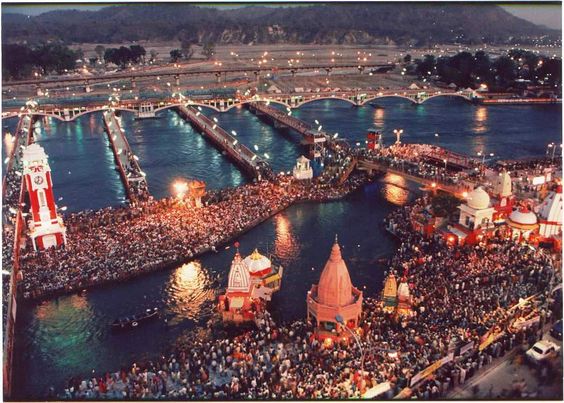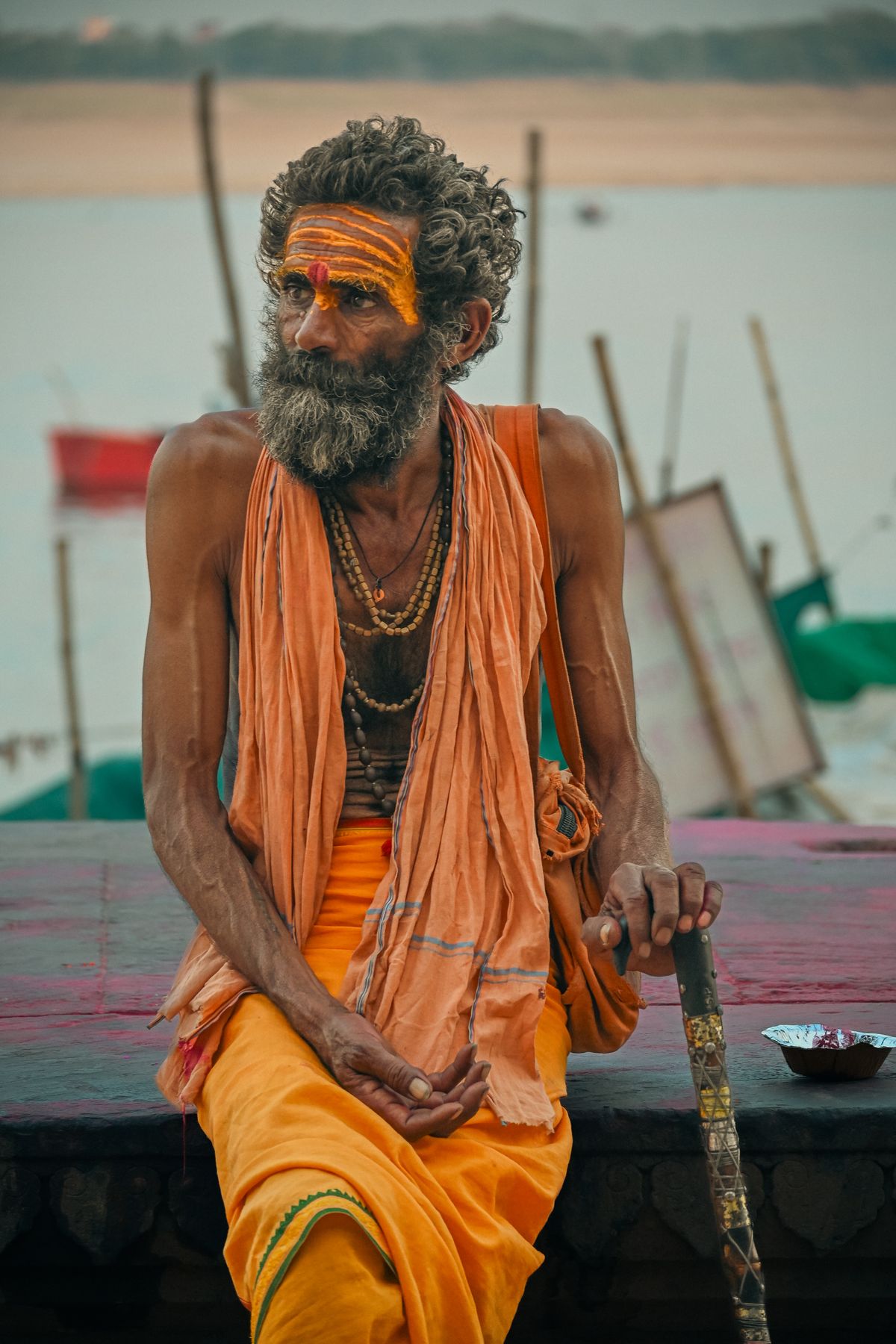
Aghoris are a small Hindu ascetic tradition linked with Shaivism and the worship of Shiva. They are often connected with Varanasi, cremation grounds, ash, skull symbolism and practices that challenge ordinary ideas of pure and impure.
They are also one of the most sensationalised groups in Indian religion. Online stories often mix real practices, rare practices, old reports, rumours and shock headlines. A fair explanation needs to separate documented Aghori ideas from stories that cannot be checked.
Who are the Aghoris?
Aghoris are renunciants within a Shaiva religious setting. “Renunciant” means a person who gives up much of ordinary household life to follow a spiritual discipline. Aghoris are especially known for practices that confront fear, death and social ideas about pollution.
Academic work on Aghori practitioners in Varanasi describes them as a small group of Hindu ascetics and Shiva worshippers. Their practices can be difficult for outsiders to understand because they intentionally work with places and objects that most people avoid.
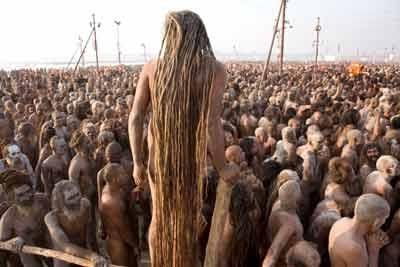
What does Aghor mean?
Aghor is commonly explained as a state beyond fear, disgust and rigid division. The larger idea is non-duality: the spiritual seeker tries to see the sacred without dividing life into simple boxes such as pure and impure, beautiful and ugly, life and death.
This does not mean every Aghori performs every extreme practice described on the internet. A religious tradition can contain different teachers, lineages and levels of practice.
Why are Aghoris linked with cremation grounds?
Death is normally something people fear or avoid. The cremation ground puts death directly in front of the practitioner. For some Aghori ascetics, this makes it an important place for meditation and for facing attachment, fear and the idea of the separate self.
Anthropologist Jonathan Parry has written about Aghori ascetics in relation to death, corpses and cremation grounds. A peer-reviewed study of Varanasi also discusses the Aghori use of the cremation ground and the way tourists react to it.

What Aghori practices are documented?
Scholarly writing documents practices linked with cremation grounds, the use of ash from cremation sites, skull bowls, meditation on death and strong forms of ascetic discipline. Some academic sources also describe rare transgressive practices involving human remains.
Those rare practices should not be turned into a cartoon of the whole tradition. A practice being documented does not mean every Aghori does it, does it often, or wants outsiders to watch it.
The aim of many transgressive practices is religious, not entertainment. They may be understood as ways to challenge disgust, fear, attachment and social boundaries.
Common myths and exaggerations about Aghoris
“All Aghoris are cannibals”
This is too broad. Scholarly sources describe rare ritual use of human remains among some practitioners. It is not accurate to use one extreme practice as the definition of every Aghori.
“Aghoris have supernatural powers”
Stories about magical powers belong to belief, folklore and personal testimony. They are not facts that can be independently proved. We should label them as beliefs rather than present them as evidence.
“Aghoris live for 150 years”
There is no reliable evidence that Aghoris as a group live to extraordinary ages. Claims like this need records, not rumours.
“Every person near a cremation ghat is an Aghori”
No. Varanasi’s cremation grounds include families, priests, workers, pilgrims, residents, visitors and different kinds of sadhus. Clothing or ash alone is not enough to identify a person’s tradition.
How to approach Aghoris respectfully
Do not treat a living religious tradition as a horror attraction. Ask before taking a close photo. Do not interrupt cremation rites. Do not pay someone to perform a shocking act for a camera. Do not assume a person wants to explain private practice to a tourist.
If you visit Varanasi, remember that a cremation ghat is first a funeral place. Families are grieving there. Their privacy matters more than a visitor’s photograph.
For a wider look at how Indian yoga and Tantra developed subtle-body and transgressive practices, see Geoffrey Samuel’s academic work from Cambridge University Press. A peer-reviewed study of Aghori rituals and tourism at Varanasi’s cremation grounds is available through the University of Groningen research portal.
A simple way to understand the Aghori path
The easiest starting point is not the most shocking ritual. It is the idea behind the practice: facing what the mind rejects, looking directly at death, and testing the boundary between sacred and impure.
That does not make every claim about Aghoris true. Careful study means respecting the tradition while still asking for evidence.
If you are reading about Indian spiritual traditions, you may also find our simple guides to the seven chakra names and meanings and the five koshas useful.
Simple questions about Aghoris
Are Aghoris Hindu?
Yes. They are generally described within a Shaiva Hindu ascetic tradition centred on Shiva.
Are Aghoris mainly found in Varanasi?
Varanasi is strongly associated with the tradition and is the place most visitors hear about. Aghori lineages and practitioners are not limited to one ghat or one city.
Why do some Aghoris use ash?
Ash is closely linked with Shiva, renunciation and the reality of death in several Shaiva settings. For Aghoris, cremation-ground symbolism can have an especially strong place in practice.
In short: Aghoris are a small Shaiva ascetic tradition. Their practices can be transgressive, but sensational internet stories should not replace careful, respectful evidence.