Category: Indian Cities

  • Things to Do in Rishikesh: A Detailed 2-Day Travel Diary

    Things to Do in Rishikesh: A Detailed 2-Day Travel Diary

    If a friend came to Rishikesh for only two days, I would not hand them a list of ten famous places and tell them to finish it. I would start with the river before breakfast, leave the busiest roads early, walk one proper hill route, sit in one temple long enough to notice where I am, and eat in places that make sense for the route instead of crossing town because a cafe is famous online.

    The well-known places still matter. Neer Garh Waterfall is worth seeing when you go early. Parmarth Niketan is worth reaching before sunset. Triveni Ghat is worth seeing because it belongs to the old city, not because every travel page mentions it. Bhootnath Temple is worth the uphill walk. Jhilmil Gufa is worth the longer morning because the road and forest are part of the day, not only the cave at the end.

    What I would avoid is spending the whole trip between crowded cafes, bridge viewpoints and photo stops. Rishikesh has quieter ghats, lanes where local life continues without caring about tourism, hill roads that become green very quickly, and small food places where you can sit without waiting for the table everyone wants. The city is much easier to remember when the days have a rhythm: river, walk, meal, temple, rest, aarti.

    This diary follows that rhythm. Day 1 stays mainly around the upper river, Tapovan, Neer Garh and the Swarg Ashram side. Day 2 goes toward the Neelkanth hills first, then returns through Bharat Mandir, Rishikund and Triveni Ghat. The times are practical, but they are not rules. If one place feels good, stay longer and remove the next stop. That is a better use of Rishikesh than rushing because an itinerary says 45 minutes.

    First, a 2026 reality check about the bridges

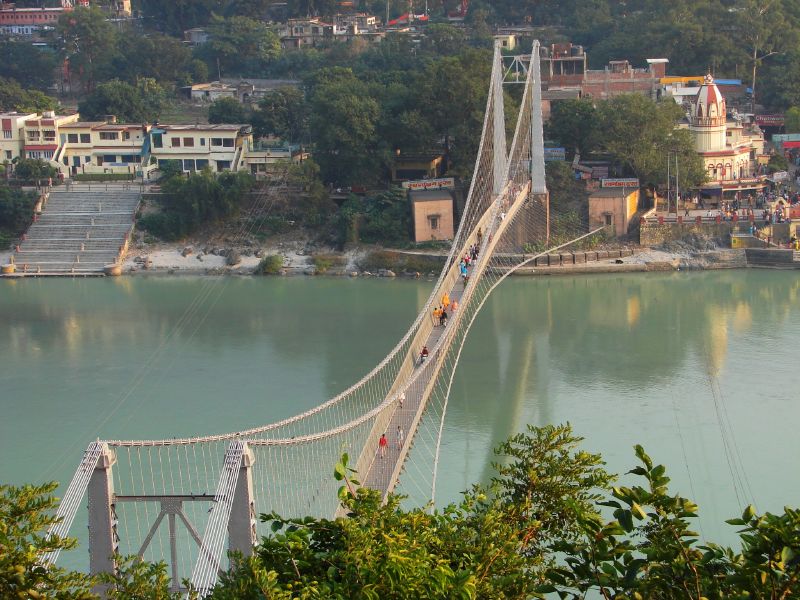
    A lot of Rishikesh travel pages are already out of date. The old Laxman Jhula bridge is still closed to crossing; the Laxman Jhula neighbourhood remains open, and the newer Bajrang Setu nearby is the useful pedestrian crossing in this part of town. There is another temporary change right now: Ram Jhula was fully closed for repair work in July 2026 and officials said it was expected to remain closed until December. That makes Janki Setu, Bajrang Setu and road routes more important than usual.

    This article is written in September 2026, so check the bridge position again on the day you travel. Do not let an old blog force you into a long detour. Bajrang Setu on Google Maps · Janki Setu on Google Maps. If you are arriving from Delhi, read our Delhi to Rishikesh travel guide before planning your first morning.

    My 2-day Rishikesh diary at a glance

    • Day 1: Sai Ghat at first light → Aarcana breakfast → Neer Garh Waterfall → Cafe Royale → Bhootnath Temple → Parmarth Niketan Ganga Aarti → quiet dinner.
    • Day 2: early drive toward Neelkanth → Jhilmil Gufa forest walk → late lunch in Tapovan → Bharat Mandir → old city lanes and Rishikund → Triveni Ghat Aarti.

    This is a full schedule, but it is not meant to feel rushed. If the weather is hot, the waterfall trail is wet, or you simply want another hour beside the river, remove one stop. Rishikesh is better when you leave a little empty time between places.

    Day 1: River morning, waterfall, a hill temple and Parmarth Aarti

    5:45-6:45 AM - Start at Sai Ghat before the town wakes up

    My first hour would go to Sai Ghat, not to a cafe and not to a bridge selfie. There are Sai-named ghats around the upper Rishikesh area, including Sri Sathya Sai Ghaat in Tapovan and the better-known Sai Ghat around the Laxman Jhula side. Use the one closest to where you stay. The important part is the hour, not the exact pin.


    At six in the morning the river is the main thing. You hear water before traffic. Local walkers come and go. Some people sit for prayer, some bathe, some simply watch the opposite bank. I would leave the phone in the bag for at least part of this hour. Rishikesh looks very different before shop shutters open and before scooters begin filling the narrow lanes.


    If you want photographs, take them after sitting for a while rather than arriving with the camera already raised. Morning light on the water changes quickly, and the hills hold shadow longer than the river. Do not walk onto wet steps or empty river rocks just because they look safe from a distance. The Ganga can move much faster than it appears.


    Why I stop here: quiet Ganga time, morning light and very little traffic. Allow 45-60 minutes. Sai Ghat on Google Maps. If your room is in Tapovan, also check Sri Sathya Sai Ghaat and choose whichever keeps the route simple.
    Ganga ghat in Rishikesh in the morning
    A quiet Ganga ghat in Rishikesh. Photo: Rakami Art Studio / Wikimedia Commons, CC BY-SA 4.0.

    7:00-8:00 AM - Breakfast at Aarcana, before the waterfall road gets busy

    Aarcana sits on Secret Waterfall Road in the upper Tapovan side. It is the kind of place I would choose in the morning because the road itself starts to move you away from the busiest cafe strip. Current listings show it opening early, around 7 AM. The attraction here is not a giant menu board or an Instagram queue; it is coffee, breakfast, art, outdoor space and a slower start close to the route you are about to take.

    Why I stop here: early breakfast, coffee, creative setting and a useful location before the Neer Garh side. Current 2026 listing: roughly morning to evening; closing times differ slightly by source, so check that day. Google Maps + current photos.

    8:15-11:00 AM - Walk up to Neer Garh Waterfall

    Neer Garh is not a secret, but the way you visit it changes the day. Go early, before large groups begin arriving. The trail leaves the road and starts climbing through a green side valley with small water channels, footbridges and pools. If you only stop at the first easy section, you see the busiest part and miss most of the walk.


    I would allow two to three hours from the lower approach, including breaks. That gives you time to climb without rushing, sit near the water and come back before the strongest midday heat. Carry drinking water even though small stalls may be open. Keep some cash for entry or tea, and wear shoes with real grip. Wet stone here can be smooth.


    The waterfall also changes a lot by season. After rain it can look stronger and greener, but that is also when the path becomes more slippery. In drier months the flow may be gentler, but walking is easier. I would never force this stop during heavy rain simply because the itinerary says Day 1. A river walk, Bhootnath and a long lunch can make a better rainy morning.


    If you swim anywhere, use obvious safe areas and local advice. Do not climb above a pool just for a photograph. The most memorable part for me is the walk itself: getting away from engines, hearing water and seeing the town fall behind the trees.


    Why I stop here: a short mountain walk, natural water and a cooler break from town. Plan about 2-3 hours. Neer Garh Waterfall on Google Maps with current photos.
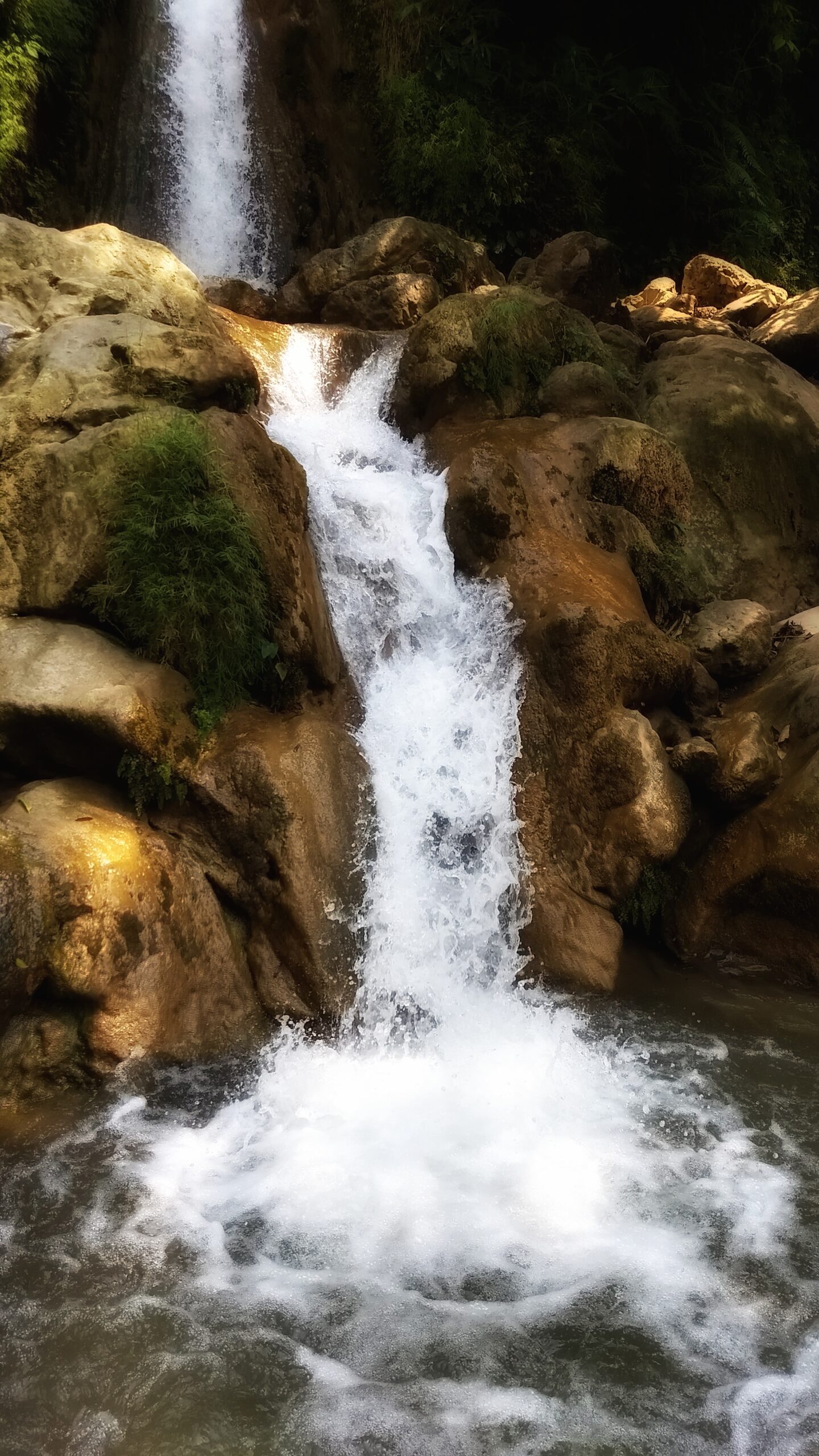
    Neer Garh Waterfall near Rishikesh
    Neer Garh Waterfall. Photo: Wittystef / Wikimedia Commons, CC BY-SA 4.0.

    11:45 AM-1:00 PM - Cross toward Cafe Royale and sit by the Ganga

    After the waterfall, I would not rush into one of the loudest restaurants in Tapovan. I would cross toward the Laxman Jhula-Swarg Ashram side using the current open route and stop at Cafe Royale Rishikesh. It sits beside the Ganga and has a wide vegetarian menu with vegan choices. Current listings show it open from about 8:30 AM to 11:30 PM, so it also works as a late meal stop.

    Why I stop here: Ganga-side seating, coffee, vegetarian/vegan meals and a menu that moves from Indian food to Italian, Mexican and Israeli-style dishes. Some listings also mention live music on selected evenings. Google Maps + current photos. Give yourself a proper hour here; this is your recovery stop before the afternoon climb.

    1:30-3:30 PM - Walk up to Bhootnath Temple

    Bhootnath Temple is one of the places I would choose over another hour of souvenir shopping. It rises above the Swarg Ashram side, away from the main riverside lane. The road gets steeper as you go, and that is part of the reason the temple feels different from places where a car drops you at the gate.


    Do not treat the climb like a race. Stop where the town opens below you. The temple has several levels, bells and different shrines, and the higher you go the more clearly you see the Ganga cutting between the two sides of Rishikesh. On a clear day the view is wide enough to make the crowded streets below feel very small.


    I would dress simply, carry water and keep my voice low inside. If you are visiting in hot weather, early afternoon can be harder than it looks because much of the climb is exposed. Anyone with knee trouble can take a vehicle part of the way and still visit without turning the day into a fitness test.


    Why I stop here: the uphill walk, temple bells, a less hurried atmosphere and one of the clearest ways to see how the town sits beside the river. Allow 60-90 minutes including the climb. Bhootnath Temple on Google Maps with current photos.
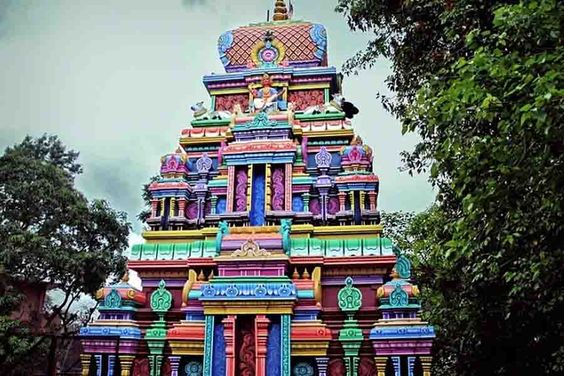
    Bhootnath Temple in Rishikesh
    Bhootnath Temple in Rishikesh. FitFortunes archive photo.

    4:30 PM onward - Parmarth Niketan before the lamps are lit

    Do not arrive at Parmarth only when somebody starts ringing a bell. The better visit begins earlier. Walk the Swarg Ashram lanes, see the Ganga from the ghat, sit down and let the place fill around you. Parmarth’s official schedule says its Ganga Aarti begins every day at sunset, with the yagna beginning about half an hour before. The exact time moves with the season, so check the same day and arrive 45-60 minutes early.

    Why I stop here: sunset Ganga Aarti with chanting and lamps beside the river. Best approach: arrive before the crowd, not during it. Google Maps + current photos. If you only have one big aarti evening, I would choose Parmarth on Day 1 and save Triveni for Day 2 so you see two very different sides of Rishikesh.
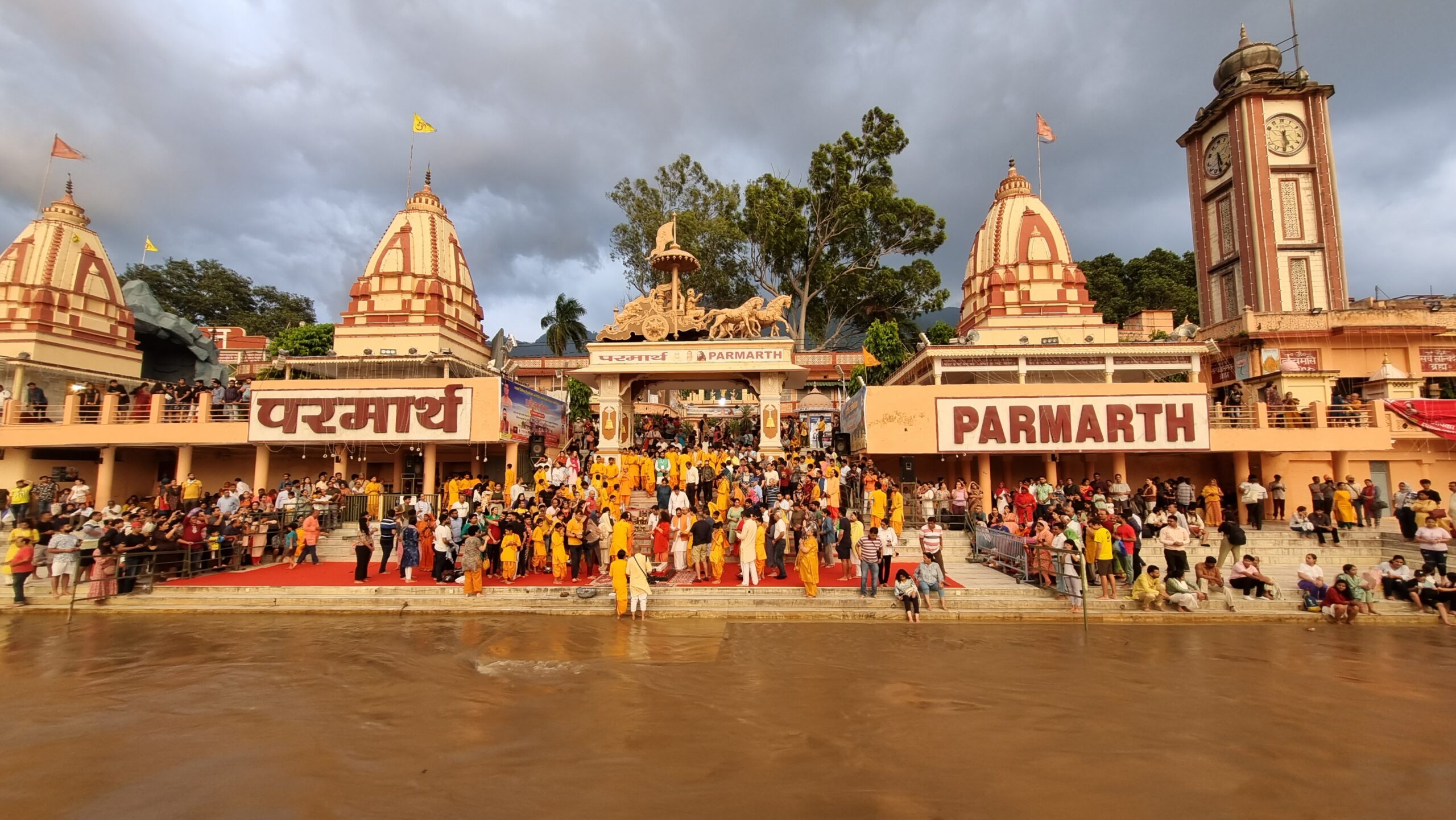
    Parmarth Niketan ghat on the Ganga in Rishikesh
    Parmarth Niketan Ghat. Photo: Yogabrata Chakraborty (Billjones94) / Wikimedia Commons, CC BY-SA 4.0.

    7:30-9:00 PM - Dinner somewhere calm, not somewhere famous

    If you are back around upper Tapovan, I would choose Chakra House or Fork & Flora rather than crossing town for a restaurant you saw on a reel. Chakra House is useful when you want a Pahadi-style meal, Thai food and a quieter upper-Tapovan setting. Fork & Flora is a small garden cafe on Yoga Street and suits a slower dinner; its current listings show split daytime and evening hours.

    Chakra House: map + photos · Fork & Flora: map + photos. Do not make Day 1 longer just because you can. The second morning starts in the hills.

    Day 2: Jhilmil Gufa, the mountain road and old Rishikesh

    6:00-7:30 AM - Take the Neelkanth road before traffic builds

    Day 2 needs an early vehicle. Hire a local taxi or check the shared-jeep situation toward Neelkanth Mahadev. I would treat Neelkanth mainly as the access side for the morning, not as a place where you must spend hours. The mountain road itself is part of the day: forest, bends, river-cut valleys and a very different scale from Tapovan’s cafes and lanes.

    If the weather is poor, do not force this plan. The road and forest paths are not the right place to prove anything after heavy rain. Ask your driver or hotel about the same-day route before leaving and carry water, a light snack, covered shoes and enough cash for small local payments.

    7:30-10:30 AM - Walk to Jhilmil Gufa

    Jhilmil Gufa is the kind of place that changes the whole second day because you have to leave the town behind to reach it. The cave lies in the forested hill area beyond the Neelkanth side, and the final approach is on foot. Vehicle access and the walking point can vary, so I would never promise an exact walking time. Plan roughly an hour each way from the usual approach and keep extra time.

    The road there matters. Once you leave the main Rishikesh traffic, the bends, forest and valleys start taking over. This is one of the few parts of a short trip where I would happily spend more time in transit because the road itself gives you the mountain feeling you do not get from a rooftop cafe.

    On the trail, keep the pace easy. Carry water and a light snack, and do not depend on mobile signal for every turn. If local people tell you the path is muddy, damaged or unsafe after rain, listen. A cave is not worth a fall on a wet hillside. I would also avoid starting late in the afternoon because the return is much less enjoyable when you are racing darkness.

    The cave is a religious place, so dress and behave accordingly. Keep noise low and do not treat the inside like a photo studio. The better memory is often the walk, the cool air and the fact that the town has disappeared behind the trees.

    Why I stop here: a forest pilgrimage walk, hill road and a quieter morning away from town. Jhilmil Gufa on Google Maps with current photos.
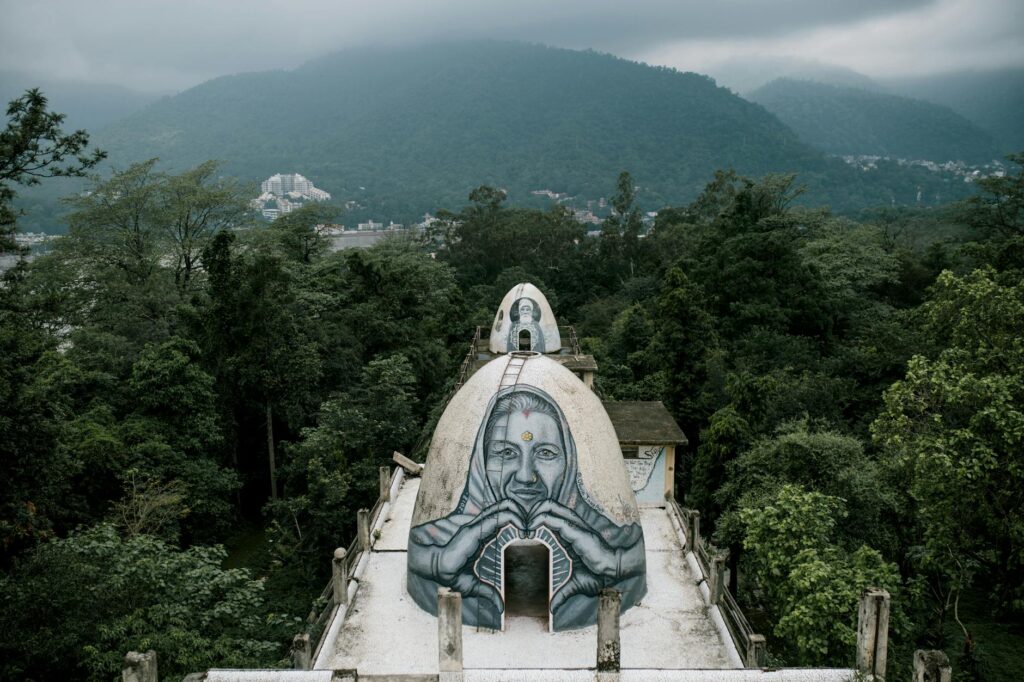
    Green mountain landscape around Rishikesh
    The green hill country around Rishikesh is worth giving half a day, not just viewing from a rooftop.

    12:30-2:00 PM - Come back hungry and pick a small cafe

    After a mountain morning, this is when a small cafe earns its place in an itinerary. Lily’s Cafe on Secret Waterfall Road is a good option when its split opening hours match your return. It has far fewer reviews than the headline cafes and feels more like a neighbourhood stop. If it is between service hours, Chakra House or another nearby Tapovan cafe keeps the route simple.

    Why I stop here: small, quieter cafe stop on the upper Tapovan side. Current listing: commonly shows a daytime session and an evening session, so check before walking there. Google Maps + current photos.

    3:30-4:45 PM - Go to Bharat Mandir, not back to another bridge

    Now change Rishikesh completely. Leave the backpacker-cafe side and go into the old city. Bharat Mandir, also called Hrishikesh Narayan Temple, is near Triveni Ghat and is dedicated to Lord Vishnu. Incredible India currently lists two opening windows: 5 AM-12 PM and 4 PM-9 PM, which is why this route reaches it just after 4 PM.

    Why I stop here: one of the city’s old Vishnu shrines, black-stone Saligram deity and a very different local setting from Tapovan. Give yourself time for the temple and surrounding lanes rather than taking one picture and leaving. Google Maps + current photos.
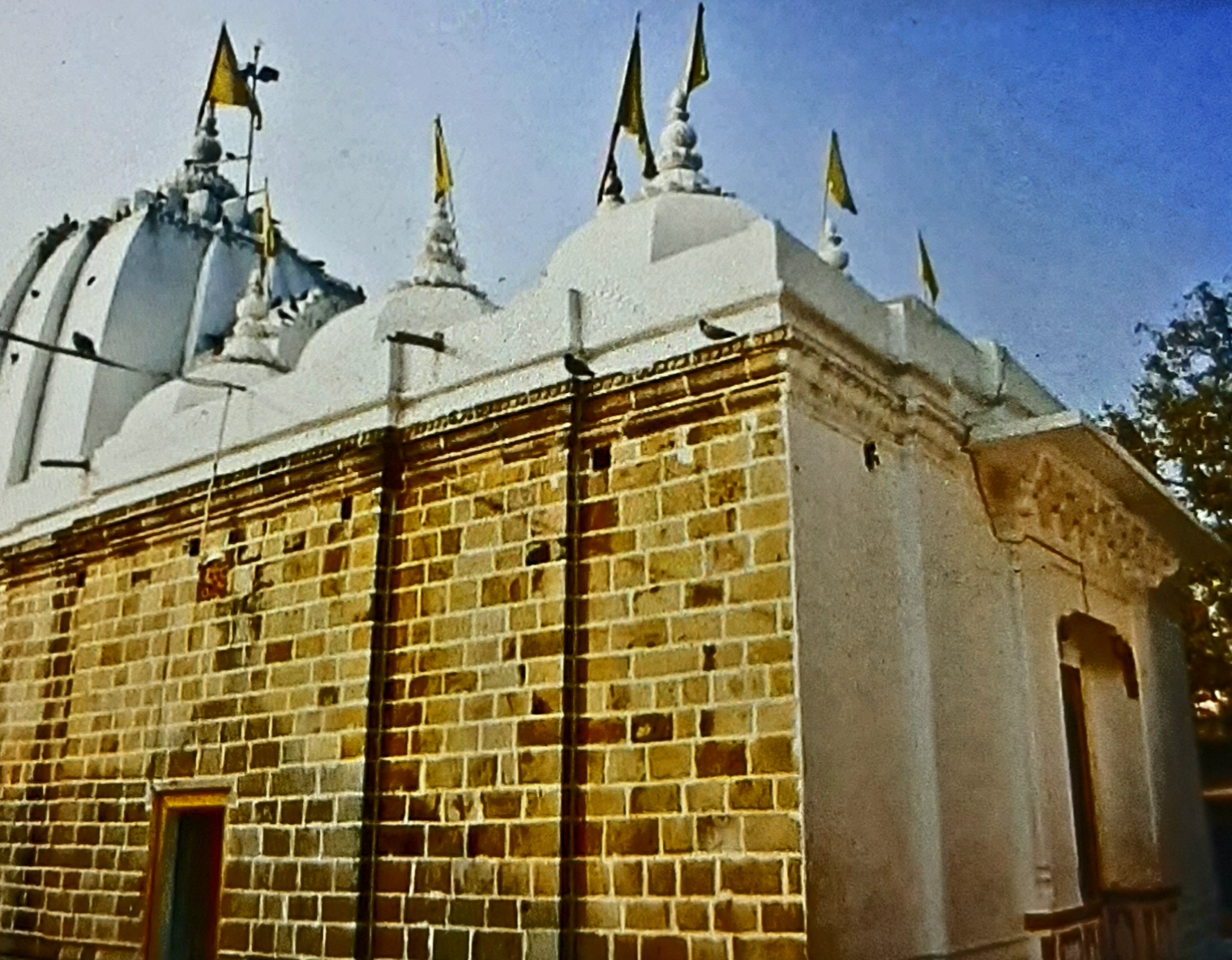
    Bharat Mandir temple in Rishikesh
    Bharat Mandir in Rishikesh. Photo: Opliappan / Wikimedia Commons, CC BY-SA 4.0.

    4:45-5:30 PM - Walk through Rishikund and the old-city temple area

    From Bharat Mandir, keep the afternoon on foot where possible. Rishikund and Raghunath Temple sit close enough to make this a small temple circuit before the river. You are now in the part of Rishikesh that many international visitors barely see because their entire stay happens around Tapovan. Watch shopkeepers closing and reopening, buy fruit or chai, and let the city feel like a city rather than a wellness background.

    Why I stop here: old-city lanes, temple architecture and a short local walking loop before Triveni. Raghunath Temple: map + photos · Rishikund: map + photos.

    5:30 PM onward - Finish at Triveni Ghat

    Triveni Ghat is busy, and I am still putting it in this “beyond the usual spots” guide. Why? Because not every famous place is overhyped. Triveni belongs to the old city, and the crowd here is not the same as a cafe queue. Come before the aarti, walk the long ghat, watch families and pilgrims arrive, and then choose a place to sit.

    The evening aarti is held around sunset; published times vary by season, so check locally and arrive 30-45 minutes early. Why I stop here: a larger, city-centred Ganga Aarti and one of the best places to see Rishikesh’s pilgrim side. Google Maps + current photos.
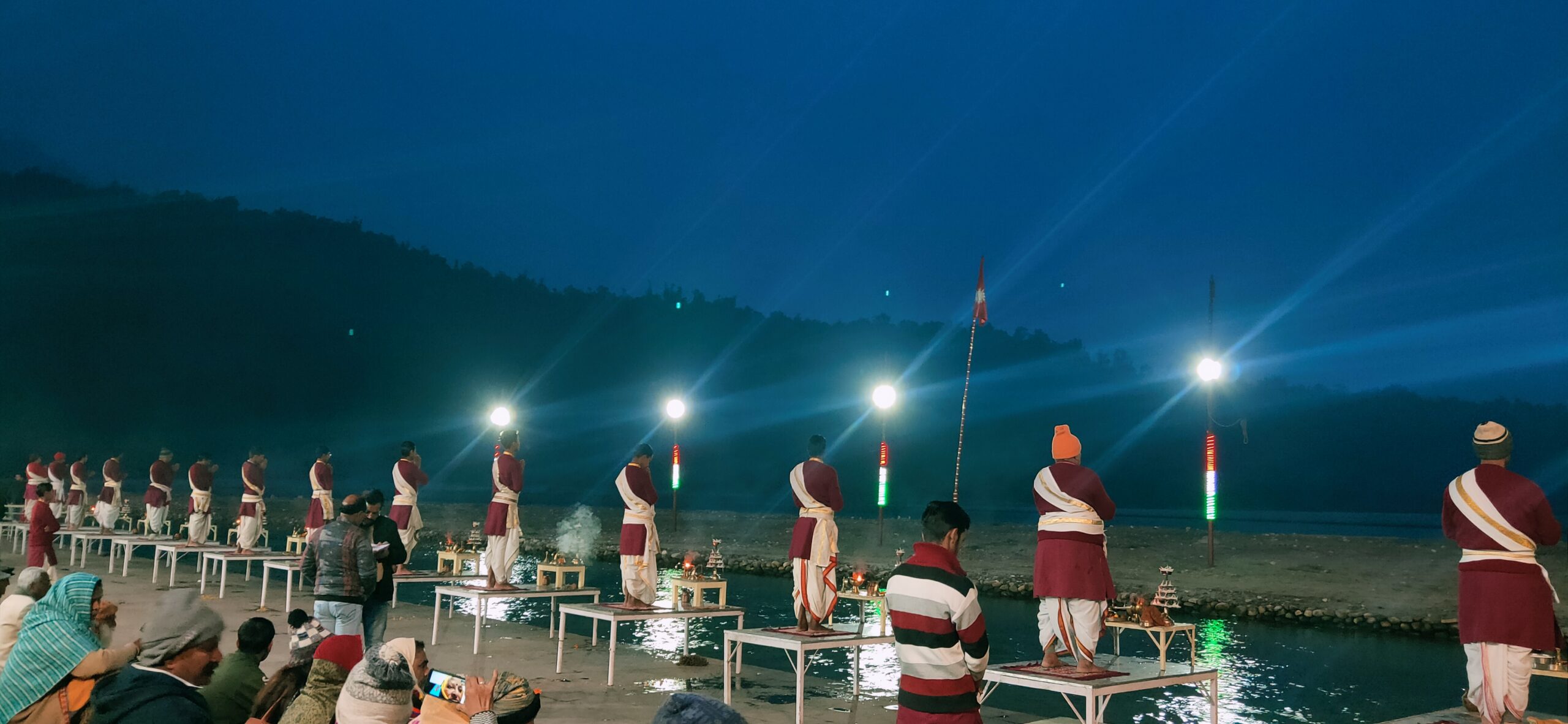
    Ganga Aarti at Triveni Ghat in Rishikesh
    Ganga Aarti at Triveni Ghat. Photo: Bhuvi Uniyal / Wikimedia Commons, CC BY-SA 4.0.

    Six cafes I would actually stop at

    Rishikesh has excellent cafes, but popularity changes a place. A cafe with a river view can still be worth visiting, while another becomes a waiting room for people photographing the same table. These six are a mix of riverside, upper-Tapovan and garden stops. Hours below reflect current 2026 listings where available, but restaurant hours change quickly in Rishikesh, especially in monsoon and low season. Use each Google Maps link to see the latest hours and photographs before you leave.

    1. Cafe Royale Rishikesh - for the Ganga without the rush

    Cafe Royale works best when I am already walking the Laxman Jhula side and want a proper meal beside the Ganga. It is not a tiny unknown cafe, and I would not pretend it is. I like it because the river is close, the seating gives you more than one kind of view, and the menu is wide enough for a group where one person wants Indian food, another wants coffee and another needs vegan choices.

    I would come after Neer Garh or after a long walk through the Laxman Jhula lanes, not as a separate sightseeing stop. Sit for an hour, order a real meal and let the body cool down. Current listings put it in the roughly ₹200-400 range for many cafe meals and show long opening hours, but I would still check the same-day listing before making a late-night plan.
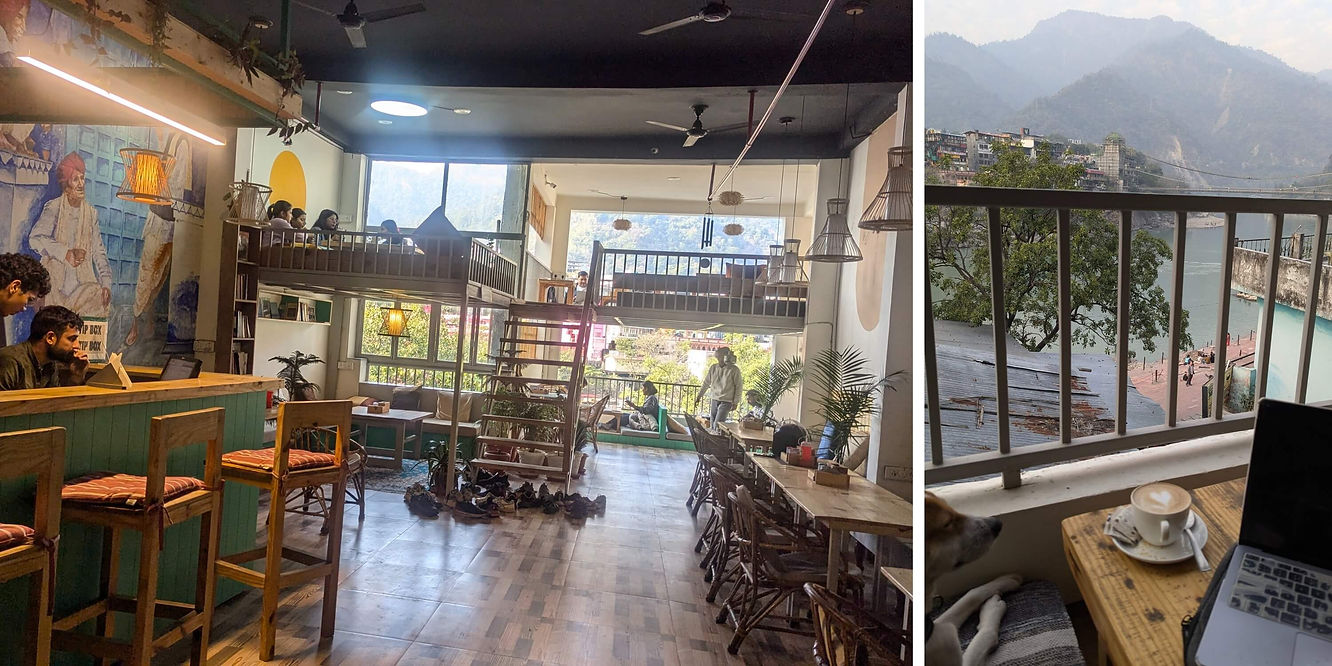
    Cafe Royale Rishikesh with Ganga-side seating

    Cafe Royale Rishikesh. Photo source: The Boho Living.

    Why I stop here: Ganga-side seating, coffee, vegetarian food, vegan options and a useful location after walking. Open Cafe Royale in Google Maps for the latest hours and photos.

    2. Aarcana - for breakfast near the waterfall road

    Aarcana is on Secret Waterfall Road in Upper Tapovan, and that is why I use it in this route. I would go early, before the road gets busy, have breakfast and coffee, then continue toward Neer Garh. The garden and open seating are the stronger reason to stop. It feels more suitable for a slow morning than for a rushed lunch between two city attractions.

    I would also keep expectations normal. Recent reviews are mixed, so I would not write that every plate is perfect just because the place photographs well. If service is slow on the day, have coffee and keep moving. Rishikesh has enough food choices that one cafe should never control half your day.
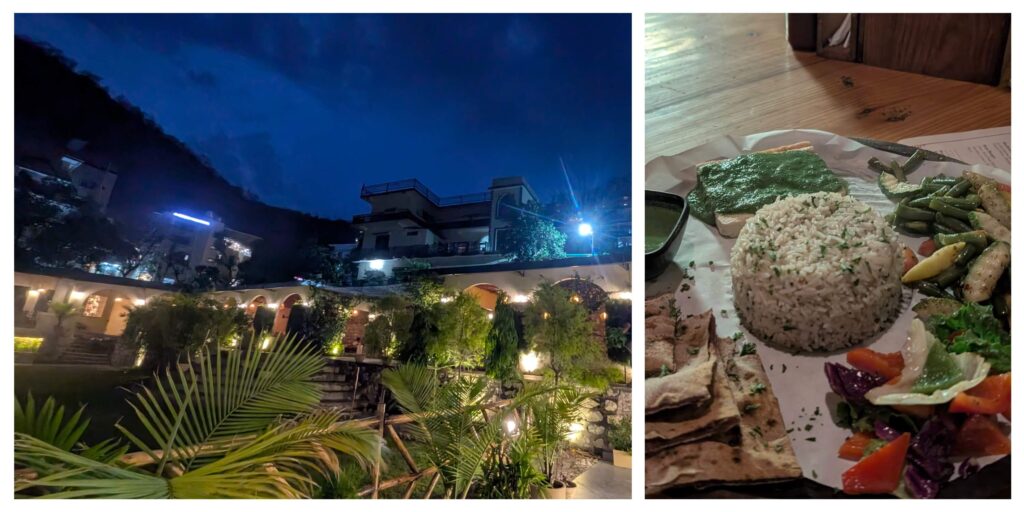
    Aarcana cafe in Upper Tapovan Rishikesh

    Aarcana, Upper Tapovan. Photo source: The Boho Living.

    Why I stop here: early breakfast, coffee, outdoor space and a location that fits naturally before the waterfall road. Open Aarcana in Google Maps for current hours and photos.

    3. Vegan Shala - include it, but check the door before you plan the meal

    Vegan Shala is here because people still search for it, but I would not send a traveller there without a warning. Map listings and older restaurant pages still show the Lower Balaknath Road name, while HappyCow reports the venue closed in 2026. Rishikesh cafes change names, owners and opening patterns more often than old travel posts suggest, so check the newest reviews or call before walking there.

    When it was operating as Vegan Shala, the draw was simple: fully plant-based meals, breakfast, smoothies, bakery items and Indian as well as international vegan dishes. That made it useful for strict vegans who did not want to explain dairy-free requirements at every meal. If the current location is shut, I would simply move on to another vegan-friendly place in Tapovan rather than waste an hour looking for an old sign.
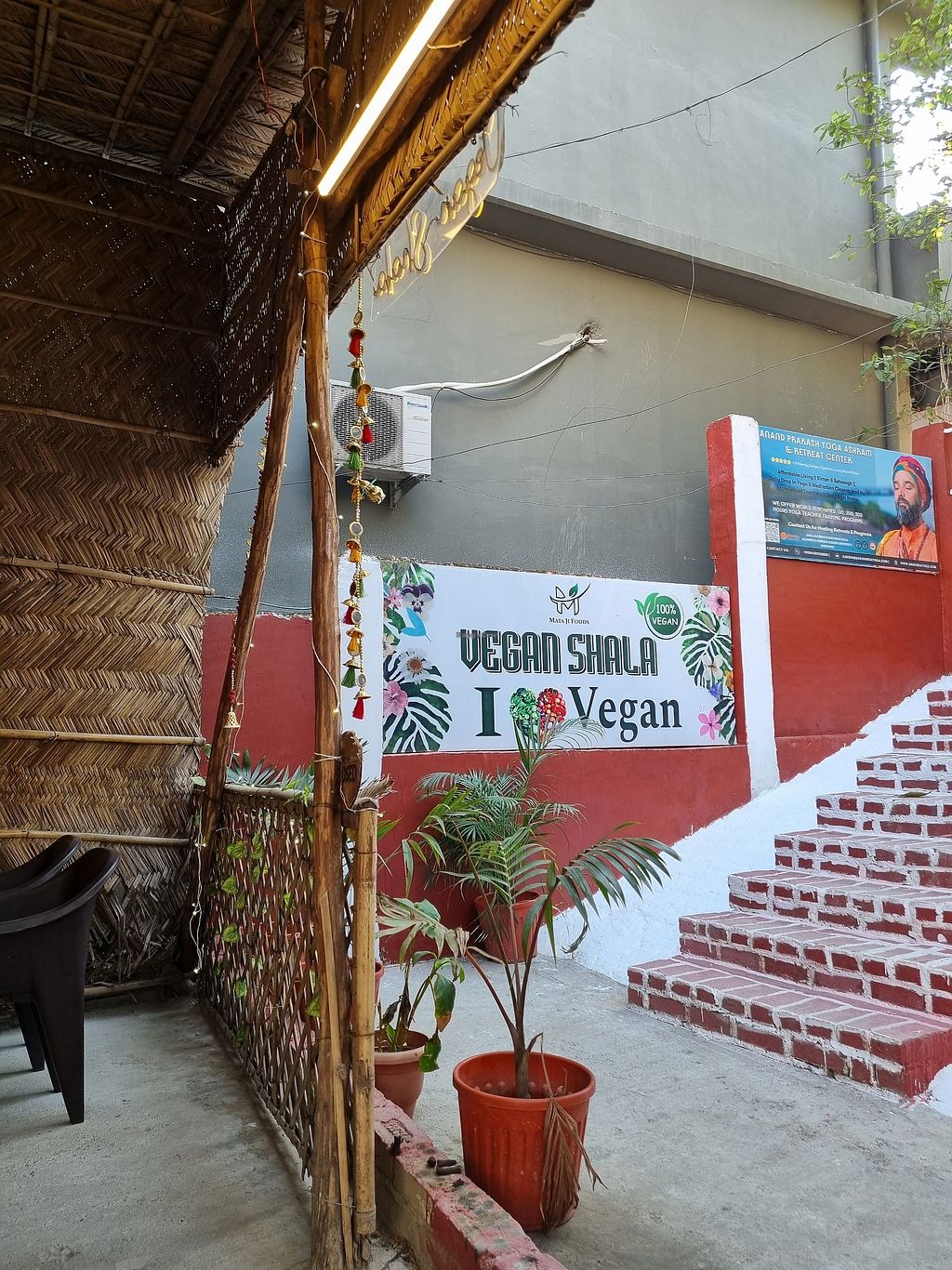
    Former Vegan Shala cafe in Tapovan Rishikesh

    Older Vegan Shala location. Photo source: HappyCow. Check current status before going.

    Why I include it: it is a useful example of why same-day checking matters in Rishikesh. Check the latest Vegan Shala map listing and photos.

    4. Bistro Nirvana - for a garden meal away from the main road

    Bistro Nirvana is the place I would keep for a longer lunch or dinner when I want shade, trees and enough menu choice for a mixed group. It sits on Swami Omkarananda Saraswati Road near Green Valley Cottage in Tapovan, away from the strongest traffic of Badrinath Road.

    The menu moves across Indian, Italian, Continental, Israeli, Chinese and Mexican food, so it works better for a group than a tiny bakery would. I would come here after a long walking day, order a full meal and stay put. Current sources do not completely agree on weekly hours, which is another reason to check the map on the day.
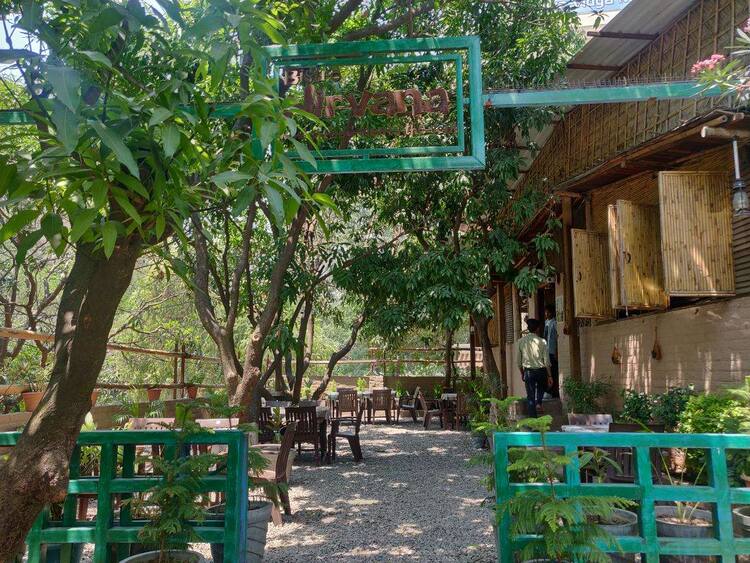
    Bistro Nirvana cafe garden seating in Tapovan Rishikesh
    Bistro Nirvana, Tapovan. Photo from its Zomato listing.

    Why I stop here: garden seating, a full meal and a quieter side road. Open Bistro Nirvana in Google Maps for current hours and photos.

    5. Cafe Moktan - for coffee, bread and a quick stop

    Cafe Moktan is not where I would go for a long river view. I would go when I want coffee and something baked, or when I need a simple stop between the hills and the old city. Its strength is the bakery side: pastries, cakes, croissants and coffee are what many repeat visitors talk about.

    The place is small, which is part of the appeal. You can sit if there is space, but it also works well for takeaway. That makes it useful on Day 2 when you come back from the Neelkanth side hungry but do not want to spend two hours at lunch.
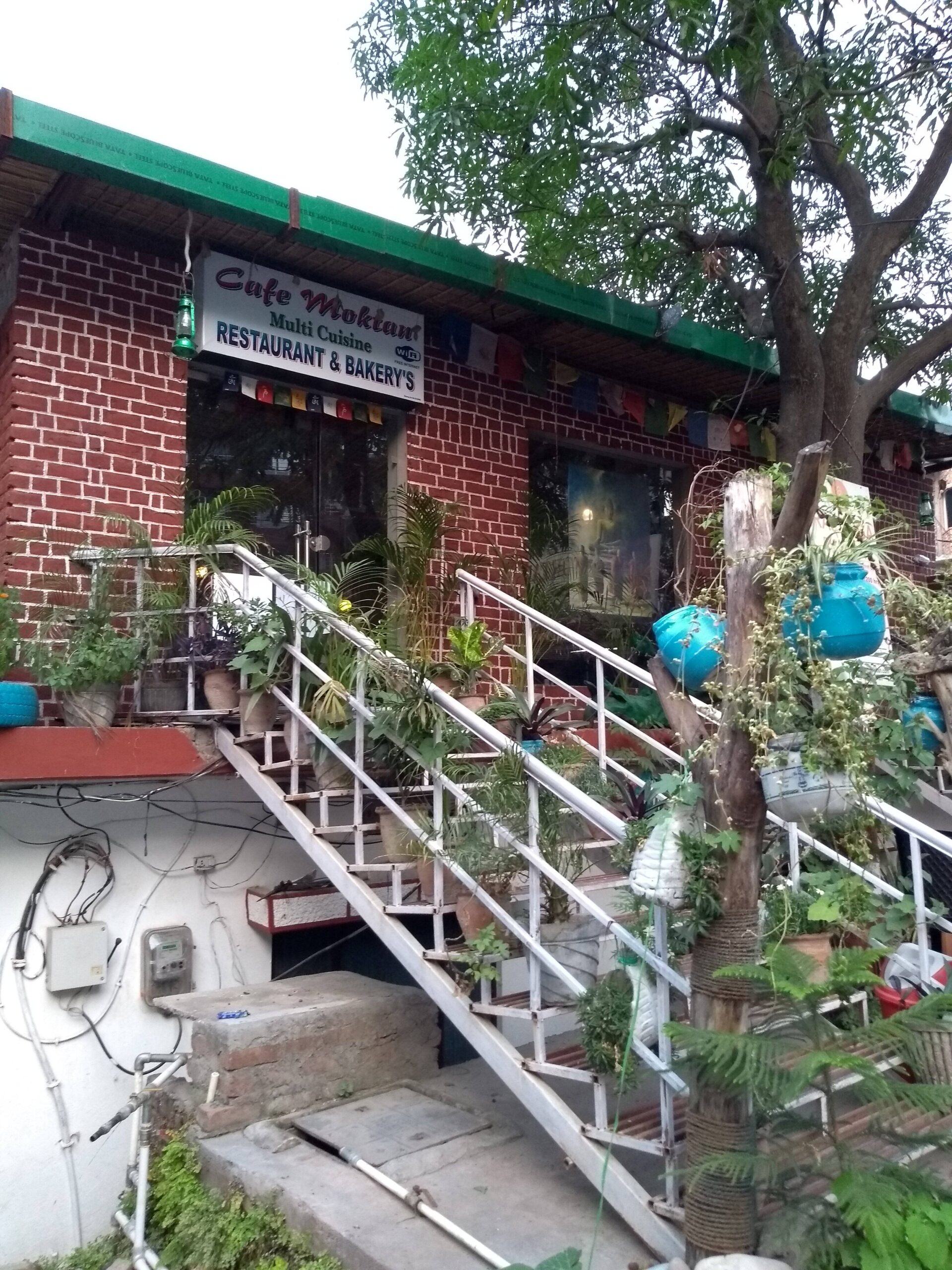
    Cafe Moktan entrance in Tapovan Rishikesh
    Cafe Moktan, Tapovan. Photo from its Zomato listing.

    Why I stop here: coffee, baked food and a quick meal without turning lunch into another attraction. Open Cafe Moktan in Google Maps for current hours and photos.


    6. Pure Soul Cafe & Organic Kitchen - for a lighter vegetarian meal

    Pure Soul is useful when I want a vegetarian breakfast or lunch that is a little lighter after several days of cafe food. Current listings show breakfast, lunch and dinner, outdoor seating, vegan options and a menu that mixes continental and North Indian dishes.

    I would choose it in daylight because the mountain-facing side and terrace are part of the reason to go. It is also an easy option when people in the same group want different things: one can have coffee and breakfast food, another can choose an Indian meal, and a vegan still has clear options.

    Why I stop here: vegetarian food, vegan choices, breakfast and a useful Tapovan location. Open Pure Soul Cafe in Google Maps for current hours and photos.


    Where should you stay for this 2-day Rishikesh itinerary?

    If food, yoga classes and upper-river walks matter most, Tapovan is the easiest base. You can reach Sai Ghat, Aarcana, Neer Garh and many cafes without starting every morning in a vehicle. Lower Tapovan is busier and easier for autos. Upper Tapovan is quieter but involves more slopes, narrow lanes and walking.

    If Parmarth, Bhootnath, ashrams and evening river walks matter more, Swarg Ashram makes more sense. The pace changes once you are on this side. You are closer to Parmarth, the riverfront and several ashram lanes, and you do not need to cross the river late in the day after aarti.

    If your trip is mainly Bharat Mandir, Triveni Ghat, the bus station, railway station and older city streets, stay closer to central Rishikesh. This is not the area people usually choose for a cafe-heavy stay, but it is very convenient for temple visits and onward transport.

    I would choose the area before the hotel. A beautiful room on the wrong side of the river can cost you an hour every morning. For only two days, do not change hotels unless there is a real reason. Rishikesh is small on a map, but a bridge closure, traffic or a long auto route can make two nearby-looking points feel much farther apart.

    How I would move around for these two days

    For Tapovan, Laxman Jhula lanes, Sai Ghat and many cafes, walking is usually faster than trying to take a vehicle for every short distance. The problem is the slope. What looks like a ten-minute walk on a flat map can become a steep climb in Upper Tapovan, so wear shoes you can actually use all day.

    For the old city, autos are simple and easy to find in the daytime. Agree on the fare before leaving if the driver is not using a fixed local rate. At night, especially after aarti, it is better to know how you are getting back before the crowd starts moving. Bridge closures can change the route a driver has to take, which also changes the price.

    For Jhilmil Gufa and the Neelkanth side, I would arrange a taxi or local vehicle the evening before. Shared jeeps can be cheaper, but they are less useful when you want an early start and a specific return time. Ask your hotel or host where the local vehicles are actually leaving from that week rather than relying on an old blog.

    I would not rent a scooter just because it looks convenient. Rishikesh traffic mixes tourists, local traffic, buses, animals, narrow roads and steep bends. If you already ride confidently in Indian hill traffic, that is different. If not, walking and local transport are a better use of two days.

    A few traveller rules that make Rishikesh better

    • Start early. The river, ghats and hill roads feel completely different before 8 AM.
    • Do not swim just because the Ganga looks calm. Current and water levels can change fast. Use recognised bathing areas and local guidance.
    • Do not hike a waterfall or cave route after heavy rain. Wet rock, loose soil and sudden runoff matter more than your itinerary.
    • Dress for temples, not only for photographs. Carry something that covers shoulders and knees, and expect to remove footwear.
    • Carry some cash. Small stalls, entry points and local rides do not always work the way your payment app expects.
    • Ask the same day about aarti time. Sunset changes across the year, and schedules move with it.
    • Check bridge status before crossing town. September 2026 is a particularly important time to do this because Ram Jhula is under repair.

    Solo travellers should also read our current guide on Rishikesh safety for solo female travellers and yoga students. It covers the practical side of moving around, transport, accommodation areas and what changes after dark.

    If you have a third morning: choose one mountain memory

    If you stay one more day, I would not fill it with six more attractions. Choose one mountain morning. Kunjapuri Temple gives you a high sunrise view and a road into the hills, while a quieter forest walk on the Neelkanth side gives you more solitude. Kunjapuri is more famous, so leave very early if you want the mountain rather than the crowd.

    Kunjapuri Temple: Google Maps + current photos. The point is not to collect another pin. Pick one place, carry breakfast, sit for a while and come down after the light has changed.
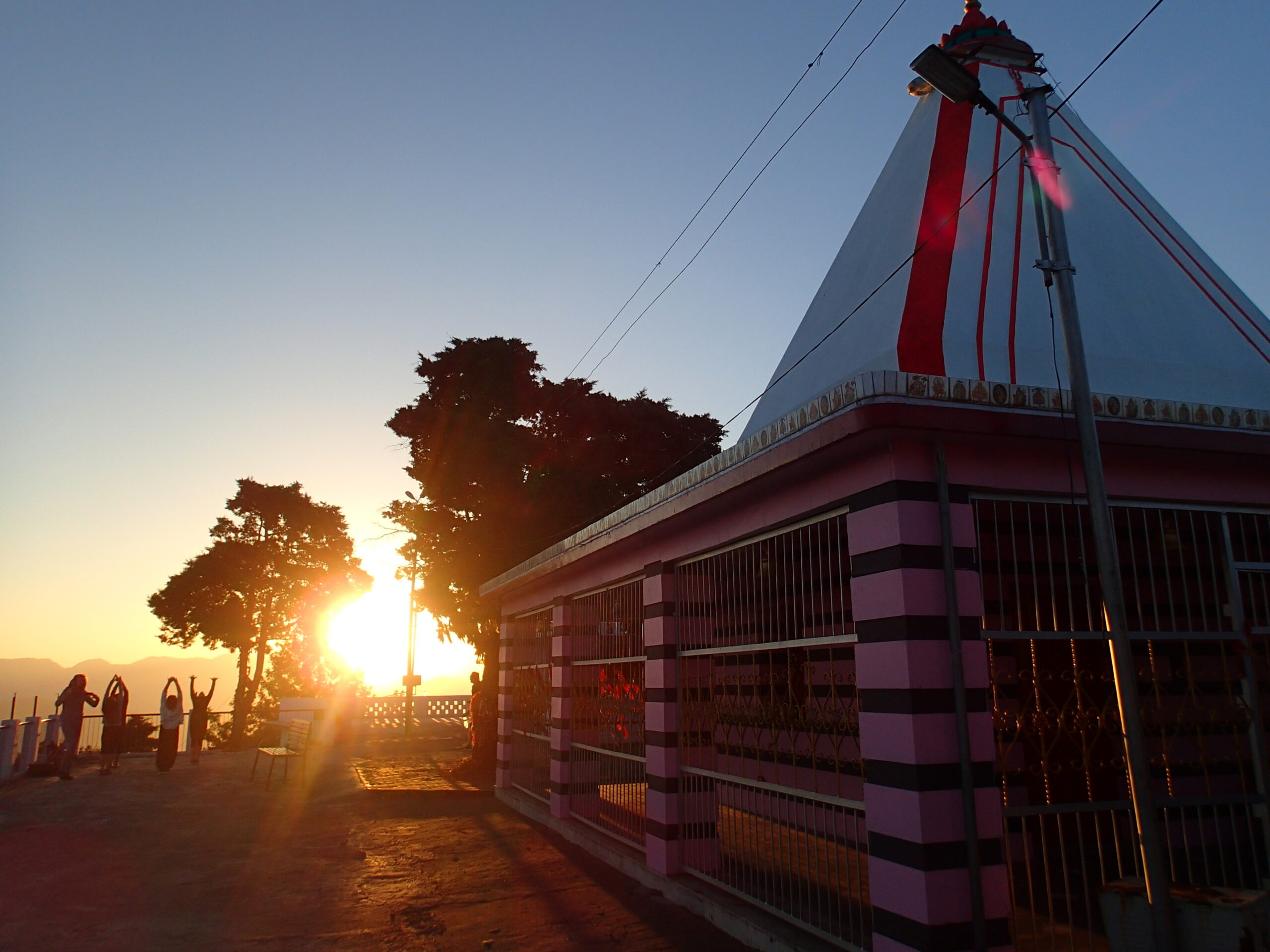
    Kunjapuri Temple near Rishikesh
    Kunjapuri Temple near Rishikesh. Photo: Travel & Shit / Wikimedia Commons, CC BY-SA 2.0.

    Frequently asked questions about things to do in Rishikesh

    Is two days enough for Rishikesh?

    Two days are enough for a strong first visit if you divide the city by area. One day can cover the upper river, waterfall, Bhootnath and Parmarth. A second can cover a hill walk and the old city around Bharat Mandir and Triveni. Three to five days are better if you also want rafting, regular yoga classes or more mountain time.

    What are the best less-crowded things to do in Rishikesh?

    Go to Sai Ghat early, walk up to Bhootnath Temple, visit Jhilmil Gufa with enough time for the forest approach, eat on upper Tapovan side rather than only the main cafe strip, and walk old Rishikesh around Bharat Mandir before Triveni Aarti. Timing matters as much as the place: even a famous waterfall is much calmer early in the morning.

    Is Laxman Jhula open in 2026?

    No. The old Laxman Jhula suspension bridge remains closed to crossing. The neighbourhood around it is open, and Bajrang Setu nearby now provides the useful pedestrian crossing. Check current local access because work and traffic rules can change.

    Is Ram Jhula open right now?

    As of September 2026, Ram Jhula is closed for repair and renovation work. Officials said in July that the closure was expected to continue until December. Use current alternatives such as Janki Setu or road routes and check again before your visit.

    Which Rishikesh waterfall should a first-time visitor see?

    Neer Garh is the easiest waterfall to place in a two-day Rishikesh plan because it is close to the Tapovan/Laxman Jhula side and includes a proper short walk. Go early, allow two to three hours and skip the trail during unsafe rain conditions.

    Parmarth Aarti or Triveni Ghat Aarti: which is better?

    They feel different rather than one being universally better. Parmarth is closely tied to the ashram setting, chanting and the Swarg Ashram riverfront. Triveni is larger and more connected to the old city and pilgrim side of Rishikesh. With two days, attend one each evening.

    How do I get to Jhilmil Gufa?

    The common approach is toward the Neelkanth Mahadev side by taxi or shared local transport, followed by a forest walk to the cave. Road and trail access can change, especially around monsoon, so confirm locally before starting. Carry water and avoid beginning the return after dark.

    Which area has the best cafes in Rishikesh?

    Tapovan and the Laxman Jhula side have the widest cafe choice, but the best plan is not to eat every meal on the main strip. Upper Tapovan, Secret Waterfall Road and Yoga Street have smaller places such as Aarcana, Lily’s, Chakra House and Fork & Flora. Check current hours before walking because small cafes change schedules often.

    Rishikesh is better when you stop trying to finish it

    The mistake I would avoid in Rishikesh is treating the town like a task list. Yes, see the big landmarks. But also give one hour to a ghat without an event, choose one uphill temple that asks you to walk, eat in one small cafe where you can stay through a second cup, and spend part of a morning where the buildings give way to forest. Those are usually the parts you remember after the famous bridge photograph has become another file on your phone.

    That is what this two-day Rishikesh itinerary is built around: the Ganga, the hills, old temples, good food and enough distance from the busiest circuit to see how many versions of Rishikesh exist inside one small city.

    STAYING LONGER?

    Use Rishikesh as more than a two-day stop

    If your visit includes yoga study, plan the practical side before adding more sightseeing.

    Read more Rishikesh and yoga guides →

  • What is Kanwar Yatra and Sawan Month in Hindu Calender

    What is Kanwar Yatra and Sawan Month in Hindu Calender

    What is Kawad Yatra in India - poster with a seated meditation silhouette
    Kanwar Yatra

    Table of Contents

    What is Kanwar Yatra in India?

    Kanwar Yatra is a deeply significant pilgrimage in Hinduism, especially observed during the holy month of Shravan. This journey powerfully expresses devotion and reverence toward Lord Shiva. Hindu beliefs hold that the month of Shravan, which occurs during the rainy season, has immense spiritual importance. Lord Shiva, known for his benevolence, is believed to be easily pleased with simple offerings like water. However, devotees are mindful that Shiva can also be quick to anger. To honor him, participants in the Kanwar Yatra avoid consuming meat, alcohol, and tamasic foods. They also ensure that the Kanwar—the wooden structure carrying the sacred water—never touches the ground, demonstrating deep respect.

    Spiritual Practices and Symbolism

    The Kanwar Yatra is summed up by the phrase “Shivobhootva Shivjam Jayet,” which means “Become Shiva to conquer Shiva.” This idea teaches that by being devoted to Shiva and serving him, one can achieve spiritual success. The journey also shows the importance of equality and brotherhood among devotees. During Shravan, a month of chanting, fasting, and simple living, devotees perform rituals like bathing the Shivalinga (a symbol of Shiva) and chanting special mantras like Panchakshara and Mahamrityunjaya. As part of the pilgrimage, they fill their Kanwars with holy water from the Ganges River and walk to different Shiva temples to offer the water to the Shivalinga.

    What is Sawan Month or Shravan?

    Sawan, or Shravan, is a deeply respected month in the Hindu calendar, usually occurring in July or August. This period honors Lord Shiva, one of Hinduism’s principal deities. Shiva devotees consider Sawan the holiest month, believing that offerings and prayers during this time carry special power. Sawan coincides with India’s monsoon season, symbolizing fertility, growth, and renewal.

    During Sawan, devotees engage in various spiritual practices like fasting, meditation, and chanting to deepen their connection with the divine. They consider this time auspicious for starting new ventures or performing important ceremonies. Fasting, particularly on Mondays (known as Shravan Somvar), is a common observance dedicated to Lord Shiva. Devotees make special pujas and offerings, including water, milk, bilva leaves, and flowers, to Lord Shiva during this period.

    One of the most significant events during Sawan is the Kanwar Yatra, where devotees carry holy water from the Ganges to offer at Shiva temples. Additionally, festivals like Haryali Teej, celebrated by married women seeking their husband’s long life and prosperity, and Nag Panchami, dedicated to snakes that symbolize the cyclical nature of life and death, are also observed during this sacred month. Sawan is a time of spiritual renewal, devotion, and celebration for Hindus, where people seek blessings, forgiveness, and harmony.

    A Time of Spiritual Growth:

    • Sawan coincides with the monsoon season, symbolizing fertility, growth, and renewal.
    • Devotees engage in fasting, meditation, and chanting to deepen their connection with the divine.
    • Sawan is a time of spiritual renewal, devotion, and celebration, where people seek blessings, forgiveness, and harmony.

    When Does Kanwar Yatra Take Place?

    Kanwar Yatra is a significant Hindu pilgrimage that occurs during the month of Shravan, which usually falls between July and August according to the Hindu calendar. This period is particularly sacred for devotees of Lord Shiva, one of the principal deities in Hinduism. Shravan is considered the holiest month for worshiping Shiva, and it coincides with the monsoon season in India, a time associated with renewal, fertility, and spiritual growth.

    During Kanwar Yatra, millions of devotees, known as Kanwariyas, undertake a journey to collect holy water from the Ganges River, which they carry back to offer at Shiva temples across the country. The pilgrimage is a demonstration of deep devotion and involves walking long distances, often barefoot, as a form of penance and spiritual purification.

    The timing of Kanwar Yatra during Shravan is symbolic because this month is believed to be when the cosmos is most aligned for connecting with divine energies. The monsoon rains during this time also represent a period of cleansing and new beginnings, making it an ideal time for devotees to engage in spiritual practices such as fasting, chanting, and offering prayers to Lord Shiva.

    How Long is the Kanwar Yatra and How Many Types of Kanwars Are There?

    The Kanwar Yatra is a sacred pilgrimage undertaken by devotees of Lord Shiva, primarily during the month of Shravan (July-August). The length of the Yatra varies based on the starting point and the devotee’s destination. Typically, it can last anywhere from a few days to several weeks. Pilgrims, known as Kanwariyas, travel by foot, carrying holy water from the Ganges River to offer at Shiva temples, often covering hundreds of kilometers.

    There are several types of Kanwars used in the Yatra, each with its unique significance:

    • Dak Kanwar: A fast-paced Yatra where the Kanwariyas run in relay teams, ensuring the holy water reaches the temple quickly.
    • Baithi Kanwar: In this type, the Kanwar is placed on a vehicle or a stationary spot while the devotee takes rest.
    • Dand Kanwar: Devotees lie prostrate after every few steps, covering the entire distance in this manner as an act of intense devotion.
    • Khadi Kanwar: The Kanwar is carried upright, symbolizing discipline and respect throughout the journey.

    Can Anyone Participate in Kanwar Yatra?

    Yes, Kanwar Yatra is open to everyone, regardless of age or gender. This pilgrimage is a journey of faith, and anyone who feels a connection to Lord Shiva can participate. However, participants are encouraged to observe traditional practices during the Yatra. These include fasting, abstaining from meat and alcohol, and maintaining a focus on spiritual discipline. This helps ensure that the journey remains a sacred and purifying experience for all involved.

    What Do Participants Carry During Kanwar Yatra?

    During the Kanwar Yatra, devotees carry a Kanwar, which is a wooden pole with pots attached at each end. These pots are filled with holy water from the Ganges River, which is considered sacred in Hinduism. The Kanwar is carefully balanced on the shoulders and is never placed on the ground as a sign of respect. Upon reaching their destination, devotees offer this water to the Shivalinga, a symbolic representation of Lord Shiva. This act is believed to cleanse the soul and bring blessings from Shiva.

    What are the Rules for Participating in Kanwar Yatra?

    Participants are expected to follow strict rules of purity and devotion during the Yatra, including fasting, avoiding non-vegetarian food, abstaining from alcohol, and refraining from placing the Kanwar on the ground.

    Purity and Cleanliness:

    Devotees must maintain personal and spiritual purity by bathing regularly and wearing clean clothes. The Kanwar, a decorated bamboo pole carried by devotees, must be kept clean and free from impurities.

    Fasting:

    Many participants fast during the Yatra, either by abstaining from certain foods or consuming only specific vegetarian foods. This practice purifies the body and helps focus on spiritual practices.

    Avoiding Non-Vegetarian Food:

    To maintain spiritual cleanliness, devotees avoid consuming non-vegetarian food, aligning with the principle of non-violence (Ahimsa) and enhancing the devotional experience.

    Abstaining from Alcohol:

    Alcohol consumption is strictly prohibited during the Yatra to maintain mental clarity and focus on the spiritual aspects of the pilgrimage.

    Refraining from Placing the Kanwar on the Ground:

    The Kanwar, a sacred symbol in the pilgrimage, must not touch the ground. This rule reflects respect for the sacred object and maintains its purity. Devotees often carry it throughout the Yatra or place it on a special stand.

    Walking with Devotion:

    Participants typically walk long distances to reach their destination, undertaking the journey with devotion and reverence as a reflection of their commitment to Lord Shiva.

    Respect for Fellow Devotees:

    Maintaining a respectful attitude towards other pilgrims and local residents is important. This fosters a harmonious and spiritual environment during the Yatra.

    So, the Kanwar Yatra is a deeply spiritual journey that showcases devotion and faith. By following the important rules and participating with sincerity, devotees honor Lord Shiva and experience personal growth. The Yatra not only strengthens religious traditions but also offers a unique chance to connect with Indian spirituality and culture. Whether you’re a regular participant or new to the pilgrimage, the Kanwar Yatra provides a meaningful and enriching experience.

  • Religious Tourism in India: Sacred Places and Respectful Travel

    Religious Tourism in India: Sacred Places and Respectful Travel

    Religious tourism in India includes pilgrimage, visits to sacred places, festivals and the study of religious heritage. A trip may be motivated by worship, architecture, history or several interests together. Temples are one part of a wider landscape that includes gurudwaras, monasteries, mosques, churches, shrines and sacred rivers. Plan around the purpose of your visit, respect worshippers and check each site’s current access rules.

    What does religious tourism in India involve?

    A pilgrim may travel for a specific ritual or sacred route, while a heritage visitor may focus on art and history. Both can share the same space without having the same belief. Avoid promising that every visitor will feel spiritually changed. Sacred places are living community spaces, so local customs and the needs of worshippers should guide the way tourists behave.

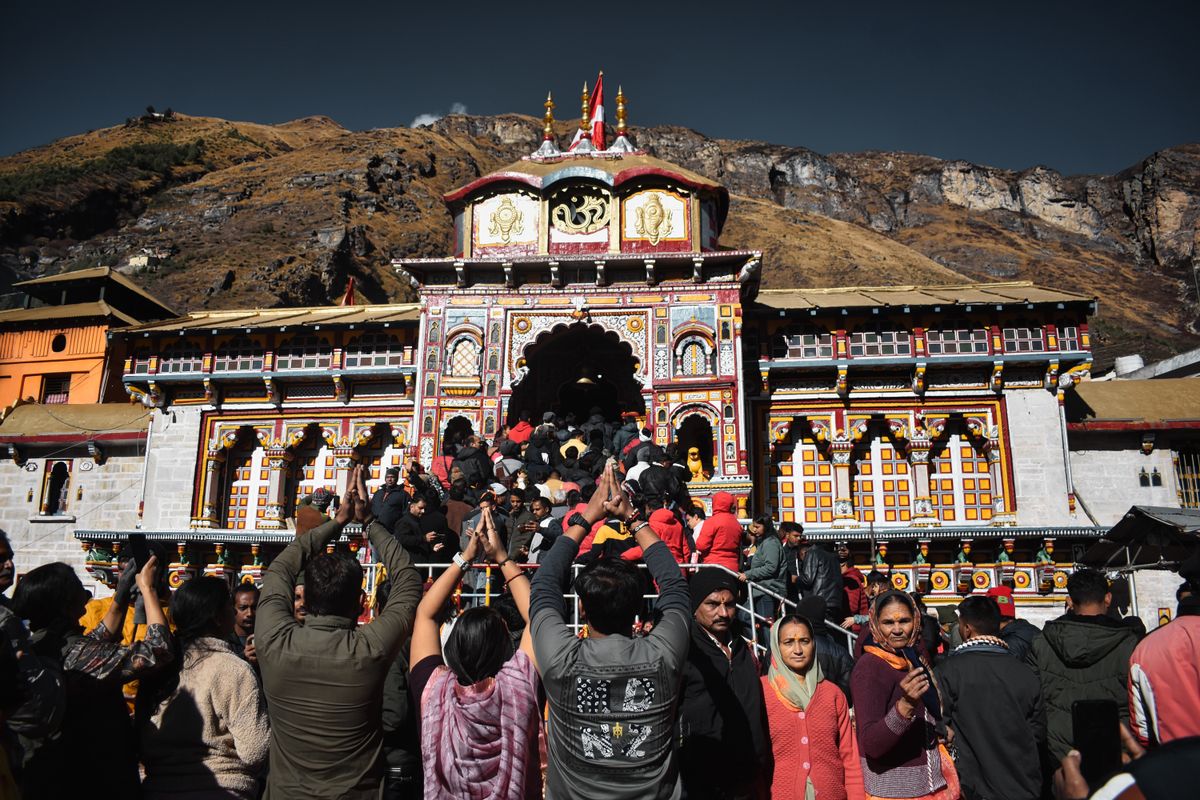
    Pilgrims at Badrinath Temple during religious tourism in India
    Badrinath Temple, a destination shared by the all-India and Uttarakhand Char Dham circuits. Editorial photograph.

    How do Char Dham and Chota Char Dham differ?

    The all-India Char Dham circuit traditionally refers to Badrinath, Dwarka, Puri and Rameswaram. Uttarakhand’s Chota Char Dham refers to Yamunotri, Gangotri, Kedarnath and Badrinath. They are different pilgrimage circuits. The Uttarakhand Tourism Char Dham guide describes the Himalayan route. Avoid assuming that one name always means the same four destinations.

    Mountain pilgrimage needs separate planning for weather, altitude, road access and walking demands. Temple opening seasons and registration rules can change. Check official information close to departure and choose a route that fits your health and mobility. A pilgrimage should not be planned only by counting how many sacred sites you can visit in a day.

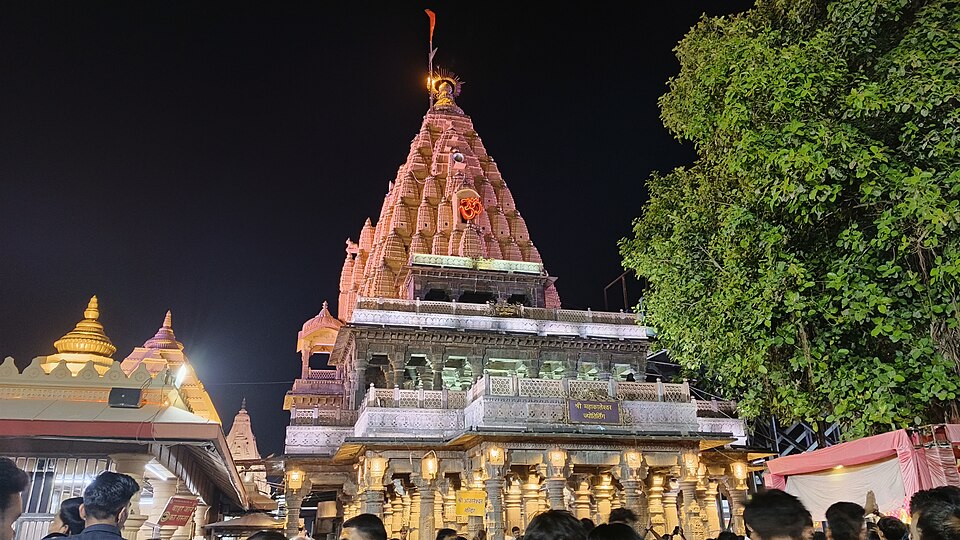
    Mahakaleshwar Temple in Ujjain at night
    Mahakaleshwar, Ujjain. Photo: Ashverse / Wikimedia Commons, CC BY-SA 4.0. Display resized; no crop.

    Which destinations show India’s religious diversity?

    Examples of different sacred settings
    PlaceReligious or heritage contextPlanning focus
    VaranasiHindu temples, ghats and Ganga worshipRespect ritual spaces and rules near the river.
    UjjainMahakaleshwar and other Hindu pilgrimage sitesCheck current darshan arrangements.
    AmritsarHarmandir Sahib, the Golden TempleFollow gurudwara dress and conduct guidance.
    Bodh GayaBuddhist pilgrimage and monastic traditionsRespect quiet practice and monastery access.
    AjmerA major Sufi shrine and pilgrimage settingAsk about entry, dress and photography rules.

    These are examples rather than a ranking of religions or sacred places. Communities and practices differ within each tradition. A local guide or official visitor service can explain the setting without requiring you to participate in worship. Read our Varanasi guide and Ujjain guide for focused planning.

    How should visitors behave at sacred places?

    Dress according to the site’s guidance, keep voices low where worship is taking place and ask before photographing people. Remove shoes or cover the head when required. Respect restricted areas and queues. Follow donation procedures provided by the institution rather than pressure from an unofficial intermediary. If you do not understand a custom, ask politely before acting.

    A practical religious-tourism planning checklist

    1. Choose a clear purpose: pilgrimage, heritage study, a festival or a short visit.
    2. Check official opening, registration and entry information close to travel.
    3. Allow time for queues, walking and rest rather than rushing several sites.
    4. Ask about access for older travellers, children or people with mobility needs.
    5. Carry suitable clothing, water and essential medication.
    6. Plan transport and accommodation around realistic distances.
    7. Leave worship spaces clean and respect local waste and river-safety rules.

    Large festivals need extra care with crowds, transport and accommodation. Check announcements from the responsible authority instead of relying on an old calendar in a blog. Our Kumbh Mela guide provides further context. The Ministry of Tourism’s pilgrimage-development information explains the broader tourism setting.

    Frequently asked questions

    Is religious tourism only for believers?

    No. Visitors may come to worship, learn about history or appreciate architecture. Some places welcome a wide range of visitors, while others restrict particular areas or access. Check the site’s rules rather than assuming that every location is open to everyone. Participation in a ritual should be voluntary. A respectful heritage visit does not require you to claim beliefs you do not hold.

    Does religious tourism in India include only Hindu temples?

    No. India’s sacred travel landscape includes several religious traditions and many kinds of sites. Gurudwaras, Buddhist monasteries, Sufi shrines, churches and other places may form part of a journey. Explain each destination in its own context rather than treating all customs as interchangeable. Follow the guidance of the institution you are visiting and avoid ranking communities by tourist appeal.

    Should I book rituals through a travel agent?

    Use the official institution’s booking system where one is provided, and check current instructions first. An agent may arrange transport or accommodation without controlling sacred-site entry. Understand exactly what is included and whether a booking guarantees anything. Avoid paying an unofficial intermediary for promises that cannot be verified. Keep confirmation details accessible and allow time for the stated entry procedures.

    Can I combine pilgrimage with yoga study?

    Yes, if the schedule leaves enough time for both. Yoga study and a pilgrimage are different activities, so do not assume a course includes temple visits or a particular religious practice. Ask the school what is actually taught and included. For an additional stay in Rishikesh, read our Rishikesh travel guide and choose the next step according to your interests.

  • Ujjain Temples: Mahakaleshwar, Sacred Sites and Visit Planning

    Ujjain Temples: Mahakaleshwar, Sacred Sites and Visit Planning

    Ujjain is a sacred city on the Shipra River in Madhya Pradesh, known for Mahakaleshwar and other pilgrimage sites. Plan time for temple queues, local travel and rest rather than trying to visit every shrine quickly. This Ujjain temples guide explains the main places, separates devotional tradition from documented history and points you toward official information for current darshan arrangements.

    What is Ujjain known for?

    Ujjain is also called Ujjayini and is associated with the historic region of Avanti. Mahakaleshwar is one of the twelve Jyotirlingas in Hindu tradition. The city is a venue for Simhastha, part of the wider Kumbh pilgrimage tradition. Sacred legends are important to devotees, but they should be identified as religious narratives rather than presented as verified historical events. See the district administration’s history page for historical context.

    Where should you stay and eat in Ujjain?

    Choose accommodation according to the area you intend to visit, transport access and the amount of walking you can manage. Confirm whether the room has the facilities you need and check recent information before booking. Temple festivals can change availability and travel times. The official district tourism directory links to local planning information.

    Choose food from places with clean preparation and sensible handling. Tell staff about allergies or dietary needs. Vegetarian options are common around pilgrimage areas, but check an individual restaurant’s menu rather than assuming every place serves the same food. Carry drinking water from a reliable source and plan pauses for meals and rest.

    The religious place to visit in Ujjain

    Mahakaleshwar Temple

    Illuminated Mahakaleshwar Temple among Ujjain temples at night
    Mahakaleshwar Temple at night. Photo: Ashverse / Wikimedia Commons, CC BY-SA 4.0. Display resized; no crop.

    Mahakaleshwar is Ujjain’s best-known Shiva temple and one of the twelve Jyotirlingas in Hindu tradition. Darshan and particular rituals may use different entry arrangements. Check the official Temple Management Committee website before visiting. Sandipani Ashram is a separate place associated in devotional tradition with Krishna’s education; it should not be confused with the Mahakaleshwar temple complex.

    Maha Kumbh Mela

    Ujjain’s Simhastha is a major Hindu pilgrimage gathering connected with ritual bathing in the Shipra. Kumbh-related gatherings take place in Ujjain, Nashik, Haridwar and Prayagraj, with different calendars and traditions. Check official announcements for the relevant event rather than assuming identical schedules. Crowd conditions, accommodation and road access can differ greatly from an ordinary temple visit.

    Ram Mandir Ghat

    Ram Ghat is on the Shipra River and is associated with bathing and devotional ceremonies. Check local information for current aarti arrangements and crowd conditions. Attendance is optional; plan around your interests and access needs.

    Chintaman Ganesh Temple

    Chintaman Ganesh Temple is an important local pilgrimage site. Devotional tradition regards the image as swayambhu, or self-manifested. That religious belief should be distinguished from a verified dating of the present structure or a promise that worship treats stress.

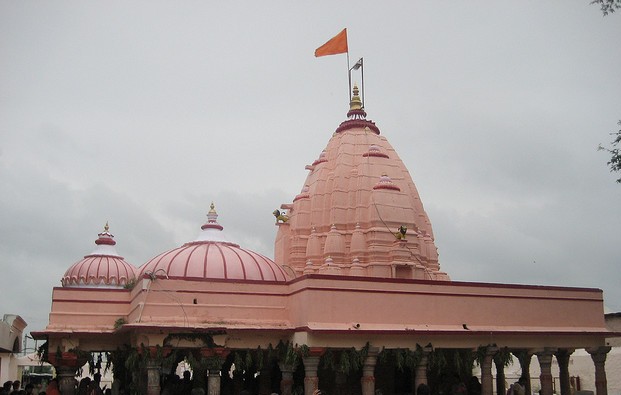
    Entrance to Chintaman Ganesh Temple in Ujjain
    Chintaman Ganesh Temple. Photo: Gyanendra_Singh_Chau… / Wikimedia Commons, CC BY 3.0. Display resized; no crop.

    Bhartrihari Caves

    Bhartrihari Caves are associated with the poet and ascetic Bhartrihari in local tradition. The setting is linked with devotional and Nath-related narratives. This guide does not establish an exact age for every part of the site or verify stories of secret tunnels. Expect uneven surfaces and possible steps, and ask about access if those features affect your visit.

    Ram Mandir

    Symbols of Lord Rama, Sita and Laksmana are there in this little
    temple. Need to climb lots of the stairs to reach to the top. One of
    the numerous great spots to visit in Ujjain

    Kal Bhairav Temple

    KalBhairav Temple Ujjain is a must visit temple acclaimed for its
    one of a kind convention of offering alcohol to god.

    The temple is devoted to KalBhairav. Situated on the banks of the
    Shipra River, it is a standout amongst the most dynamic temples
    in the city, visited by several devotees daily. Alcohol is one of the
    contributions made to the temple god

    ChaubisKhamba Temple

    This is one of the most established Temple in Ujjain with 24 pillar
    or Khambhat devoted to Choti Mata and Badimata, Near the
    The northern side of the entrance are two little temples dedicated to
    Mahalaya and Mahamaya goddess.

    Harsiddhi Temple

    Harsiddhi is an important goddess temple in Ujjain and is honoured within Shakti traditions. Devotees may connect visits here with worship at Mahakaleshwar, but that is a religious choice rather than an obligation for every visitor. Follow the temple’s conduct and photography guidance. Leave time to observe without obstructing worship or crowd movement.

    Pir Matsyendranath

    Pir Matsyendranath is associated with Matsyendranath, an important figure in Nath tradition. Accounts connect Matsyendranath with Gorakhnath and the wider history of yogic practice, but dates and narratives differ. Do not describe a whole religious tradition as the invention of one person without appropriate historical evidence. Visit respectfully and distinguish local devotional accounts from a documented chronology.

    So, what you waiting for, just grab the opportunity and
    must visit this religious place once in your life.

    Planning a spiritual visit to Ujjain

    • Give Mahakaleshwar and the old-city temple area enough time instead of rushing several sites in one hour.
    • Check current temple-entry and darshan rules before visiting.
    • Dress for heat and walking, and carry water.
    • Respect photography restrictions inside sacred places.

    Frequently asked questions about Ujjain temples

    What is the main temple in Ujjain?

    Mahakaleshwar is the city’s best-known pilgrimage temple. Visitors often combine it with nearby sacred sites, but a short trip should allow enough time for queues and rest. Use the district temple information and the Temple Management Committee website for context and current arrangements. Do not assume an old blog’s entry rules or fees still apply.

    How many days should I allow?

    A focused visit may fit into a day, while two days can allow a less rushed pace. The right plan depends on arrival time, desired rituals, mobility and crowd conditions. Choose a few priorities rather than treating the number of temples as the measure of a successful trip. Keep extra time around booked entry and avoid a tight onward connection after a major visit.

    How should I arrange Bhasma Aarti or other rituals?

    Check the official Temple Management Committee website for the current process, requirements and available arrangements. Different rituals may have separate booking rules and access conditions. This article does not promise a slot or quote a fixed fee. Be cautious with unofficial intermediaries and retain the details of any verified booking. Ask the responsible institution when instructions are unclear.

    Is every legend in this guide a historical fact?

    No. Ujjain has important devotional stories alongside a long documented history. A legend can have religious meaning without being presented as an established date or event. Read the source and context carefully, and ask a knowledgeable local guide about different accounts. The distinction helps visitors respect tradition while avoiding misleading claims about archaeology, chronology or scientific proof.

    Related reading: Kumbh Mela visitor guide, religious tourism in India, and the meaning of Aarti.

  • Why Rishikesh Is Famous for Yoga: The Yoga Capital Explained

    Why Rishikesh Is Famous for Yoga: The Yoga Capital Explained

    Rishikesh is famous for yoga because it combines a long tradition of spiritual study with ashrams, teachers, meditation centres, the Ganga, and an international community of students. The city is widely known as the Yoga Capital of the World, but that title is better understood as a description of its living yoga culture than as a claim that yoga began in one single place.

    Rishikesh sits in Uttarakhand at the foothills of the Himalayas. For many visitors, yoga here is not limited to a one-hour asana class. It can include pranayama, meditation, philosophy, mantra, traditional study, retreats, and residential teacher training.

    Ganga and Himalayan foothills in Rishikesh, Uttarakhand
    Why Rishikesh Is Famous for Yoga: The Yoga Capital Explained 26

    Why is Rishikesh called the Yoga Capital of the World?

    There is no single event that made Rishikesh a yoga centre. Its reputation grew over time through pilgrimage, ashram life, meditation, teachers, Indian philosophy, and the steady arrival of students who came to study for more than a short holiday.

    The Uttarakhand Tourism Department describes Rishikesh as the world capital of yoga and meditation. It also points to the city’s many ashrams and its annual International Yog Festival as part of the reason Rishikesh remains closely connected with yoga today.

    The Ganga and Himalayan setting matter

    Rishikesh is built around the Ganga as the river leaves the Himalayan foothills. The river, surrounding hills, temples, ghats, and older ashram areas give the city a very different rhythm from a large urban yoga studio. Students can move from practice to philosophy class, sit by the river, attend an evening aarti, or spend quiet time away from traffic and work routines.

    This setting does not make every yoga class automatically better. What it does provide is an environment where yoga, meditation, pilgrimage, and spiritual study are visible parts of everyday life.

    Ashrams made long-term study possible

    Rishikesh has a long ashram tradition. Well-known institutions such as the Divine Life Society and Parmarth Niketan helped make the city a place where students could stay, study, practise, and learn within a daily routine. Other centres developed around meditation, Vedanta, Hatha Yoga, devotional practice, and different teacher lineages.

    This residential style of learning is one reason Rishikesh became important for serious yoga students. Instead of separating practice from daily life, students can follow a schedule that includes movement, breath, study, meals, rest, and personal practice.

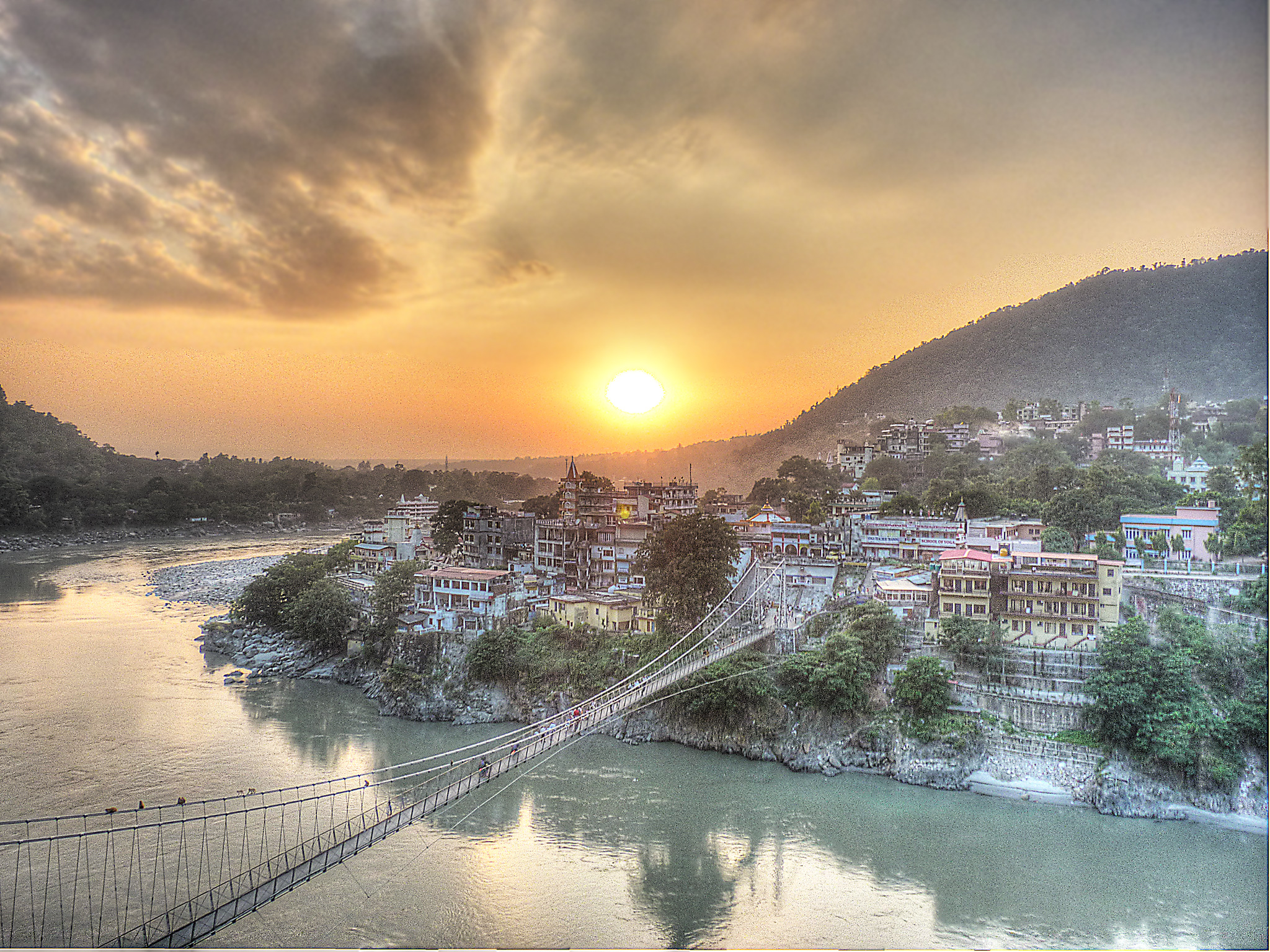
    Ganga and Ram Jhula area in Rishikesh, India
    Why Rishikesh Is Famous for Yoga: The Yoga Capital Explained 27

    Yoga in Rishikesh is broader than posture practice

    A common reason students choose Rishikesh is that yoga is often taught as more than physical exercise. A complete course may include asana, pranayama, meditation, philosophy, anatomy, alignment, teaching methodology, mantra, or traditional texts, depending on the school and course.

    This does not mean every school teaches the same method. Some focus on traditional Hatha Yoga, some on Vinyasa, some on meditation or philosophy, and others combine several subjects. Students should always read the actual syllabus instead of assuming that every course in Rishikesh is identical.

    The Beatles brought new international attention

    Rishikesh was already a spiritual and yoga centre before the 1960s, but the Beatles’ stay at Maharishi Mahesh Yogi’s ashram in 1968 brought major international attention to the city. Their visit connected Rishikesh with meditation and Indian spiritual study for a much wider global audience.

    International interest continued to grow after that. Today, students arrive from many countries for yoga classes, meditation retreats, teacher training, philosophy study, and longer residential programs.

    Is Rishikesh really the birthplace of yoga?

    It is common to see Rishikesh called the “birthplace of yoga,” but that phrase should be used carefully. Yoga developed across India over a very long period and cannot be reliably traced to one modern city as its single birthplace.

    A more accurate description is that Rishikesh is one of the world’s best-known living centres for yoga, meditation, ashram study, and teacher training. Its importance comes from continuity of practice and teaching, not from a simple claim that all yoga started here.

    What can you study in Rishikesh today?

    People come to Rishikesh for very different reasons. A visitor may join a single morning class, stay in an ashram, attend a meditation program, take a short retreat, or complete a residential yoga teacher training.

    • Drop-in yoga classes: useful for travellers who want regular practice without joining a full course.
    • Ashram stays: usually more focused on routine, simplicity, meditation, philosophy, or devotional practice.
    • Yoga retreats: shorter residential programs that combine practice with rest and wellness activities.
    • Teacher training: structured study for students who want deeper practice and, at the 200-hour level, a structured foundational teacher-training pathway.

    If you are comparing regular classes, read our guide to yoga classes in Rishikesh. If you are planning formal study, use the Yoga Teacher Training Courses in Rishikesh page to compare the current FitFortunes programs.

    What makes studying yoga in Rishikesh different?

    The main difference is concentration. A residential student can spend several weeks around people who are also practising, studying, eating on a regular schedule, and discussing yoga every day. That is very different from fitting two classes each week around a normal work routine.

    Rishikesh also gives students access to different styles, teachers, ashrams, lectures, meditation sessions, Sanskrit and philosophy study, and a large international yoga community. The variety is useful, but it also means students need to compare schools carefully. A famous location does not remove the need to check teachers, curriculum, class size, accommodation, fees, and certification details.

    How FitFortunes fits into the Rishikesh yoga tradition

    FitFortunes Holistic Wellness Yoga School is based in Rishikesh near the Laxman Jhula and Swargashram area. Its current residential teacher-training portfolio includes 100-hour foundation programs and 200-hour teacher-training programs, with Hatha Yoga and Vinyasa Krama forming the practical base of the current Multi-Style training.

    The current 100-Hour Multi-Style course is a 10-day foundation from the 2nd to the 12th of each month. The current 200-Hour Multi-Style course begins on the 2nd monthly and is 21 days long. Students can compare the current course structure, room options, and inclusions from the course hub rather than relying on general claims about yoga schools in Rishikesh.

    Planning a yoga stay in Rishikesh

    If you are travelling for yoga, plan the practical side as carefully as the course itself. Check your arrival route, weather, room type, food, course schedule, and how much free time you will actually have.

    For travel planning, read the Delhi to Rishikesh travel guide. For free time around the city, use our things to do in Rishikesh guide. Students travelling alone can also read the separate Rishikesh safety guide for solo female yoga students.

    Before choosing a yoga course in Rishikesh

    Rishikesh has many schools and very different course formats. Before paying a deposit, check the practical details rather than choosing only from photos or a low price.

    • Confirm the exact yoga styles and syllabus.
    • Check teacher names, experience, and qualifications.
    • Check the real course duration, daily hours, and attendance rules.
    • Confirm room type, meals, Wi-Fi, and what the fee does not include.
    • Read the certification wording carefully and do not treat a private certificate as a legal teaching licence everywhere.
    • Use the current course page for dates and prices before booking travel.

    For a broader pre-booking checklist, see the common questions before yoga teacher training in Rishikesh.


    Common questions about Rishikesh and yoga

    Why is Rishikesh famous for yoga?

    Rishikesh is famous for yoga because of its long spiritual tradition, ashrams, teachers, meditation culture, Ganga setting, and large number of modern yoga schools and residential programs.

    Why is Rishikesh called the Yoga Capital of the World?

    The name reflects the concentration of yoga and meditation study in the city. Rishikesh has long attracted Indian and international practitioners, and Uttarakhand Tourism itself describes it as the world capital of yoga and meditation.

    Is Rishikesh the birthplace of yoga?

    Not in a literal, historically proven sense. Yoga developed across India over centuries. Rishikesh is better described as an important centre where yoga, meditation, and spiritual study have been practised and taught for generations.

    Do I need to join a teacher training to practise yoga in Rishikesh?

    No. Rishikesh has drop-in classes, ashrams, meditation programs, retreats, and longer courses. Teacher training is only one option and is better suited to students who want structured, intensive study.

  • What is the History and Rituals of Holi Festival

    History and Rituals of Holi

    The festival of colours, “Holi” endows us with such special moments in which we can distribute love and compassion with our near and dear ones. People leave all the grudges in past and try to move on while celebrating the occasion of Holi.

    As per Hindu scriptures, Holika Dahan commences on the evening of Purnima (Pradosh Kaal), after Bhadra, in the month of Phalguna.

    In actual, Holika Dahan is the main reason behind the revels of this festival. Typically, there exist a plethora of myths which are supposed to be the main intellects but here is the description of the most famous myths among all.

    The Hindus Myth

    The myth is about the tale of a Vishu disciple Prahalada due to which we celebrate Holi. But his father Hiranyakashipu was an arrogant and witty person. Who could never tolerate anyone rising above him.
     

    Narasimha is described in Hindu tradition as the form of Vishnu who defeats Hiranyakashipu.

    So, Same happened when Prahalada refused to worship him in place of the God Vishnu. And then, his father tried his best to punish Prahalada. Actually, his father had a boon. That nobody could kill him. Neither the human or animal, in outdoor nor indoor, in day or night, by ashtra nor by shastra (weapons), neither in land nor water.
    End of Hiranyakashipu Era
    But, when they forced Prahalada to sit on fire in the lap of his aunt Holika. Then Prahalada survived and Vishnu killed his father in the role of Narasinha(body of half human and half lion ) at dusk. And yes, between the boundary line of door, in his own lap, by lion claws.
     
    Since that day, Holi celebrations occur on a particular day. Where Holika bonfire symbolizes the victory of goodness over the evil power. And, Holi as the celebration of that victory.

    The Sikhs History

    Sikhs have been celebrating the festival of Holi since the 19th century. Because the last human Sikh Guru, “Shri Guru Gobind Singh” presented it as a festival of three days. Among Sikh religion people, this festival called “Hola” or “Hola Mohalla’. In which people show martial arts and many other activities.

    Hola Mohalla is marked by Sikh martial-arts displays and community activities.

     
    As per the pages of history, the credit of its initiation goes to Maharaja Ranjit Singh. Who used 300 mounds of colours in Lahore along with his other officials in 1837. From that day, Holi getting celebrated among Sikhs with full enthusiasm.

    Rituals of Holi

    Here is the list of rituals performed on the spring festival “Holi” which may vary as per different cultures and regions. People celebrate Holi on the last full moon day of Hindu Calendar.
     
    They lit bonfires as Holika Dahan, one night before the main celebrations.
     
    Holika Dahan comprises a huge gathering in which singing, dancing, and other cultural activities.
     
    On the primary celebrations of Holi, people put colours on the faces of their family, relatives or friends in powdered and liquid form.
     
    At some places, people also play DJ music during celebrations to dance and enjoy.
     
    In a northern part of India, Holi has celebrated quite a unique way. Where women hit the men with a stick(lath) or soft ropes of cotton clothes. During this men save themselves with shields and pouring water and colors on women.
    See our Best Places to Celebrate Holi Guide.
     
    Over and all, every region has its own myth, name, and rituals as per their cultures and customs. But, the main purpose of Holi is to scatter happiness everywhere and leave the conflicts behind.
  • Best Places to Celebrate Holi in India: A Practical Guide

    Best Places to Celebrate Holi in India: A Practical Guide

    The best place to celebrate Holi depends on the kind of experience you want. Mathura, Vrindavan and Barsana are famous for Braj Holi traditions. Jaipur offers a city festival atmosphere. Other regions celebrate in their own local ways.

    Holi is a Hindu spring festival linked with colour, community, devotion and stories connected with Krishna, Radha and Prahlada. Large celebrations can be joyful but very crowded. Plan for colour, noise, wet clothes, blocked roads and slow transport.

    Mathura and Vrindavan: Braj Holi

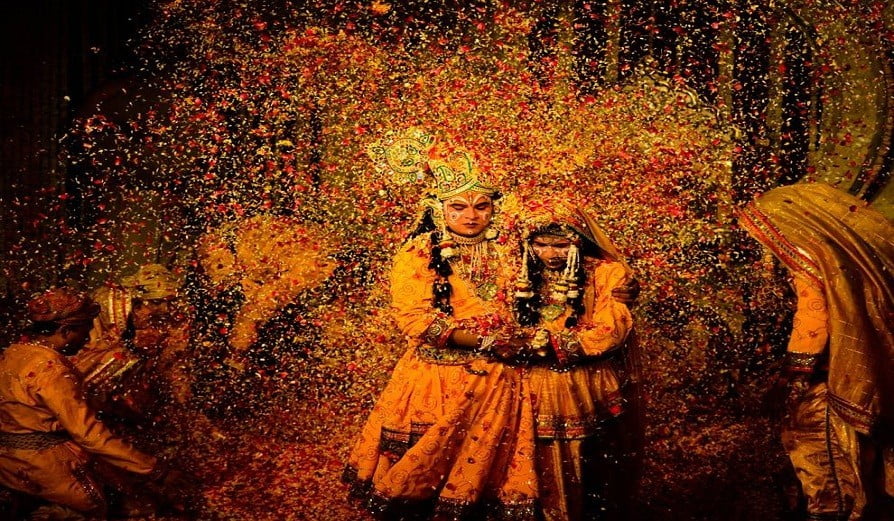
    Mathura and Vrindavan are strongly connected with Krishna traditions. Holi events in the wider Braj region can begin before the main Holi day and include temple celebrations, devotional singing, flowers and coloured powder.

    In Vrindavan, some temples hold special Holi programmes. Dates and access can change each year, so check local official tourism information before planning around one temple event.

    Flower Holi celebration in the Braj region of India

    Barsana: Lathmar Holi

    Barsana is known for Lathmar Holi, a local tradition connected with Radha and Krishna stories. In the staged custom, women symbolically strike shield-carrying men with sticks while crowds watch, sing and throw colour.

    This is a specific cultural event, not a rule for ordinary Holi behaviour. Visitors should not copy the action outside the organised tradition.

    Incredible India describes Barsana’s Lathmar Holi as one of the distinctive celebrations of the Braj region.

    Lathmar Holi celebration in Barsana, Uttar Pradesh

    Jaipur: Holi with a Rajasthan trip

    Jaipur can work well if Holi falls during a Rajasthan or Golden Triangle trip. Hotels, cultural venues and neighbourhoods may organise colour events, while public streets can also become busy.

    Do not assume every advertised “royal Holi” event is official or historic. Check who runs the event, what is included, and how you will return to your hotel after roads become crowded.

    Our Jaipur travel guide helps you plan the city before or after the festival.

    Other Holi traditions in India

    Shantiniketan and Basanta Utsav

    West Bengal has spring celebrations influenced by Rabindranath Tagore’s Basanta Utsav tradition. Music, dance and yellow clothing can be part of the event. Check the current organiser and access rules because event formats can change.

    Hola Mohalla in Punjab

    Hola Mohalla is a Sikh festival held around the same season, especially at Anandpur Sahib. It is not simply “Sikh Holi”. It has its own religious history, martial displays, processions and community practices.

    Local Holi

    Many Indian families and neighbourhoods celebrate in smaller ways. A local celebration can be easier to understand than a giant tourist crowd because you can follow the customs of the people hosting you.

    Simple Holi safety and respect tips

    • Ask before applying colour: not everyone wants colour on their face or clothes.
    • Protect your eyes: do not throw powder directly at another person’s face.
    • Keep your phone protected: water and coloured powder can damage it.
    • Wear simple clothes: colour may not wash out fully.
    • Plan your return: roads, taxis and public transport can become difficult during peak celebrations.
    • Stay with people you trust: large crowds can separate groups quickly.
    • Leave if the atmosphere feels unsafe: a festival does not require you to stay in a crowd you dislike.

    Large public celebrations can be rougher than private or organised events. Children, older visitors and anyone who dislikes dense crowds may prefer a smaller celebration.

    Holi and the Golden Triangle

    If Holi falls during your North India trip, you can combine it with Delhi, Agra and Jaipur. But festival travel can change opening hours and road conditions. Add extra time instead of keeping a tight schedule.

    Our Golden Triangle season guide explains the usual weather around these cities.

    Reliable Holi information

    For Braj traditions, use official tourism sources such as Incredible India’s Mathura information and its coverage of Lathmar Holi. Event dates follow the Hindu calendar and change from year to year.

    Simple questions about Holi travel

    Where is the most famous Holi celebration?

    Mathura, Vrindavan and Barsana are among the best-known places because of their connection with Krishna and Radha traditions.

    Is Holi on the same date every year?

    No. The date follows the Hindu lunar calendar, so it changes each year.

    Do I have to let strangers put colour on me?

    No. Consent still matters. You can say no, move away, or choose a smaller organised celebration.

    Is Hola Mohalla the same as Holi?

    No. It takes place around a similar time but is a distinct Sikh festival with its own history and practices.

    In short: choose Holi by the type of celebration you want, check current local dates, and plan for crowds, colour and transport before you go.

  • Jaipur Travel Guide: Best Places to Visit in the Pink City

    Jaipur Travel Guide: Best Places to Visit in the Pink City

    Jaipur is the capital of Rajasthan and the third city in India’s Golden Triangle. It is known for Amber Palace, Hawa Mahal, City Palace, Jantar Mantar, old markets and the pink-coloured streets of the historic centre.

    Two days is a good starting point for a first visit. Jaipur is spread out, so it helps to group sights by area instead of crossing the city again and again.

    Amber Palace

    Amber Palace, also called Amer Fort, stands on a hill outside the old city. Rajasthan Tourism describes it as a major Jaipur attraction with courtyards, halls, gateways and views over the surrounding hills.

    Go early in warmer months. The climb, open courtyards and crowds can make midday tiring.

    Amber Palace near Jaipur, Rajasthan

    Best places in Jaipur’s old city

    Hawa Mahal

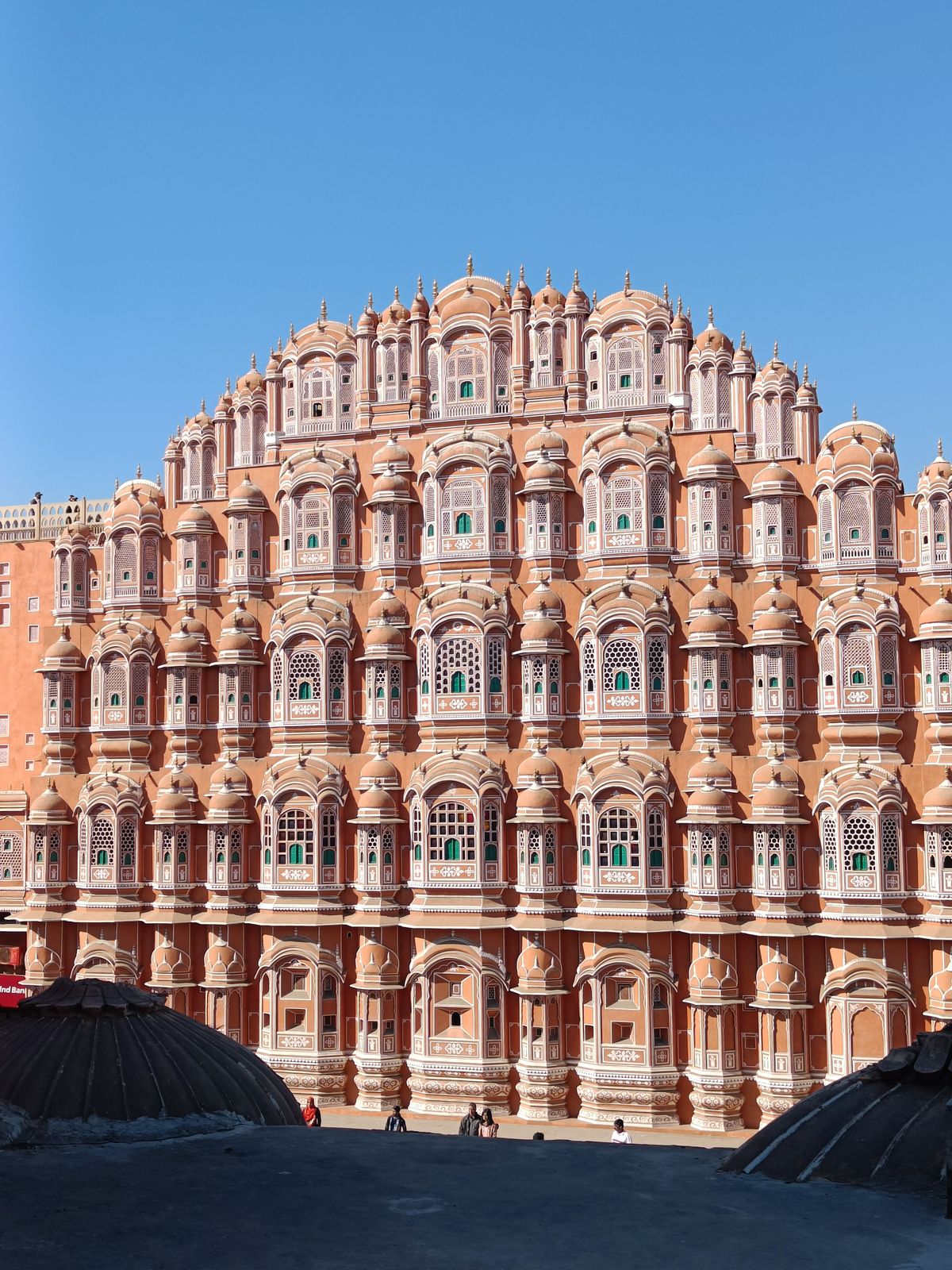
    Hawa Mahal is one of Jaipur’s best-known buildings. Its front has many small windows and screens. It was built so royal women could look toward the street while remaining screened from public view.

    City Palace

    City Palace sits in the old city and combines courtyards, gates, museums and royal buildings. Some parts have different ticket rules, so check the official site before paying for extra areas.

    Jantar Mantar

    Jantar Mantar is a UNESCO World Heritage Site. It is a collection of large astronomical instruments built in the early 18th century. A guide can make the instruments easier to understand because they are more than stone shapes.

    Historic architecture in Jaipur's Pink City

    Johari and Bapu bazaars

    Jaipur’s old markets are known for textiles, jewellery, shoes, handicrafts and everyday goods. Compare prices before buying. If a seller says an item is antique or made from a rare material, ask for proof before paying a high price.

    A simple two-day Jaipur plan

    Day 1: Amber Palace in the morning. Add Jal Mahal viewpoint on the return if it fits your route. Rest in the hottest part of the day.

    Day 2: Hawa Mahal, City Palace and Jantar Mantar. Finish with a short market walk if you still have energy.

    This keeps nearby places together and avoids spending half the day in traffic.

    When is the best time to visit Jaipur?

    The cooler months are easier for most visitors. Rajasthan Tourism shows that Jaipur’s late spring and summer temperatures can become very high. October to March is usually more comfortable for forts and long walks.

    July to September brings monsoon rain and humidity. Jaipur is still visitable, but outdoor plans need more flexibility.

    For the full Delhi–Agra–Jaipur season comparison, see our Golden Triangle weather guide.

    Simple Jaipur travel tips

    • Start early: forts are easier before the strongest heat.
    • Use licensed transport: agree on a fare or use a metered/app service where available.
    • Check current entry rules: prices and access can change.
    • Dress for heat and walking: light clothing, water and comfortable shoes help.
    • Respect religious places: follow dress and photography rules.

    Jaipur on the Golden Triangle

    Many travellers reach Jaipur after Agra and return toward Delhi. If you are building the whole route, the Golden Triangle guide helps with season and pacing.

    If your visit falls near the spring Holi festival, our guide to the best places to celebrate Holi in India explains what to expect before joining a large colour celebration.

    Reliable Jaipur sources

    Use Rajasthan Tourism for official Jaipur visitor information. UNESCO lists both Jaipur City and Jantar Mantar as World Heritage Sites.

    Simple questions about Jaipur

    Why is Jaipur called the Pink City?

    The historic centre is famous for its pink-toned buildings. The colour became an important part of the city’s visual identity.

    How many days do I need?

    Two days is enough for the main sights without rushing too much.

    Is Amber Palace inside the old city?

    No. It is outside central Jaipur, so give it its own half-day.

    Is Jaipur part of the Golden Triangle?

    Yes. The three main stops are Delhi, Agra and Jaipur.

    In short: give Amber Palace its own morning, keep the old-city sights together, and use official tourism pages for current entry details.

  • Agra Travel Guide: Taj Mahal, Agra Fort and More

    Agra Travel Guide: Taj Mahal, Agra Fort and More

    Agra is best known for the Taj Mahal, but the city has much more than one monument. Agra Fort, Mehtab Bagh and nearby Fatehpur Sikri add history and context to a visit. Agra is also one of the three main stops on India’s Golden Triangle route with Delhi and Jaipur.

    For many first-time visitors, one full day is enough for the main sights. Two days feels easier if you want a slower pace or a trip to Fatehpur Sikri.

    Taj Mahal

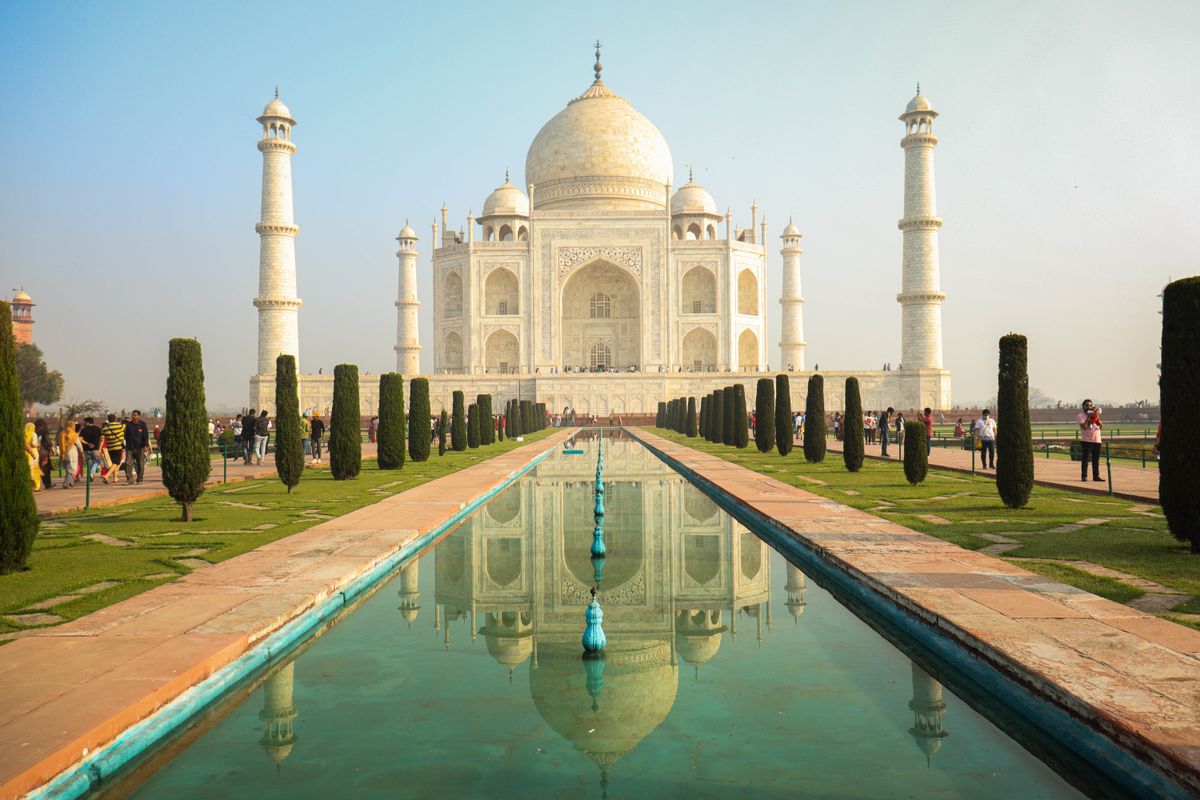
    The Taj Mahal is a 17th-century Mughal mausoleum built by Emperor Shah Jahan in memory of Mumtaz Mahal. UNESCO lists it as a World Heritage Site and describes it as a major work of Mughal architecture.

    Go early if you want softer light and cooler weather. Security rules can change, so check the official visitor information before you go. Do not plan your visit around ticket prices copied from old blogs because fees change.

    Taj Mahal in Agra, India

    Agra Fort

    Agra Fort is another UNESCO World Heritage Site. It is a large red sandstone fort that was used by Mughal rulers. Inside are palaces, courtyards, halls and views toward the Taj Mahal.

    If you only have one day in Agra, the Taj Mahal and Agra Fort are the two places to keep. They are close enough to combine without crossing the whole city.

    Red sandstone walls and buildings at Agra Fort

    Fatehpur Sikri

    Fatehpur Sikri is a historic Mughal city outside central Agra. Emperor Akbar made it an imperial capital in the 16th century. UNESCO lists it as a World Heritage Site.

    This visit needs extra travel time, so it works better if you have two days. Do not squeeze it into a very short day if you also want to enjoy the Taj Mahal and Agra Fort.

    Mehtab Bagh

    Mehtab Bagh is a garden across the Yamuna River from the Taj Mahal. It can give a quieter view of the monument from the opposite side of the river. It is useful near sunset, but opening times and access rules should be checked before you go.

    A simple one-day Agra plan

    Early morning: Taj Mahal.

    Late morning: breakfast or a short rest.

    Midday or afternoon: Agra Fort.

    Late afternoon: Mehtab Bagh or a relaxed walk near your hotel.

    Do not make the day harder by adding too many small stops. The two UNESCO monuments already need time.

    Simple Agra travel tips

    • Check Friday access: the Taj Mahal is normally closed to general visitors on Fridays, apart from mosque access for prayer.
    • Use official ticket sources: avoid agents who promise special access without proof.
    • Carry little: strict security makes a small bag easier.
    • Plan for heat: warmer months can be tiring in open monuments.
    • Leave time between cities: road and train delays can happen.

    Agra on the Golden Triangle

    Agra sits between Delhi and Jaipur on the classic Golden Triangle route. Our guide to the best time to visit the Golden Triangle helps you choose a season and build the route.

    Reliable sources for Agra

    Use the Agra district tourism page and Incredible India for current visitor information. UNESCO has official pages for the Taj Mahal, Agra Fort and Fatehpur Sikri.

    Simple questions about Agra

    Is one day enough for Agra?

    Yes for the Taj Mahal and Agra Fort. Two days is easier if you want Fatehpur Sikri too.

    Is the Taj Mahal the only reason to visit?

    No. Agra Fort and Fatehpur Sikri are also UNESCO World Heritage Sites.

    Is Agra part of the Golden Triangle?

    Yes. The three main cities are Delhi, Agra and Jaipur.

    In short: start with the Taj Mahal and Agra Fort, add Fatehpur Sikri only when you have enough time, and use official sources for current entry rules.

  • Delhi Travel Guide: Best Places to Visit and Simple Tips

    Delhi Travel Guide: Best Places to Visit and Simple Tips

    Delhi is India’s capital and one of the three cities in the Golden Triangle. It has old forts, Mughal tombs, busy markets, large gardens, temples, mosques, museums and modern neighbourhoods. A first visit can feel big, so it helps to choose a small number of places each day.

    For most first-time visitors, two or three days gives a useful introduction. Old Delhi and New Delhi feel very different, and travel between sights can take longer than the map suggests.

    Best places to visit in Delhi

    Delhi Tourism lists places such as Red Fort, Qutub Minar, Humayun’s Tomb, Lotus Temple, India Gate, Lodhi Garden, Akshardham and Agrasen Ki Baoli among the city’s major attractions. You do not need to see all of them on one trip.

    Red Fort

    The Red Fort is one of Delhi’s best-known Mughal monuments and a UNESCO World Heritage Site. Its red sandstone walls stand beside Old Delhi and Chandni Chowk.

    Red Fort in Old Delhi

    Humayun’s Tomb

    Humayun’s Tomb was built in the 16th century and is another UNESCO World Heritage Site. Delhi Tourism describes it as the first grand garden-tomb on the Indian subcontinent. Its garden layout later influenced Mughal architecture, including the Taj Mahal.

    Qutub Minar

    Qutub Minar and its surrounding monuments form a UNESCO World Heritage Site in south Delhi. It works well with Mehrauli if you want a half-day of history away from Old Delhi.

    Lotus Temple

    The Lotus Temple is a Bahá’í House of Worship known for its flower-like form. It is a quiet stop compared with many crowded monuments. Check current visitor hours before going.

    Lotus Temple in Delhi

    What to see in Old Delhi

    Old Delhi is busy, dense and full of food, markets and historic religious places. Chandni Chowk, Jama Masjid and the Red Fort can fit into the same area, but crowds make walking slow.

    Chandni Chowk is famous for markets and street food. If you eat from street stalls, choose places that are busy and where food is cooked fresh. If you have a sensitive stomach, keep meals simple.

    Jama Masjid is an active mosque, not only a sightseeing place. Dress respectfully and follow the rules at the entrance. Prayer times may affect access.

    What to see in New Delhi

    New Delhi has wider roads, government buildings, gardens and many later monuments. India Gate, Lodhi Garden, Humayun’s Tomb and nearby areas can be grouped into one day more easily than crossing the whole city several times.

    Akshardham is a large Hindu temple complex on the Yamuna side of the city. Security rules can be strict, including limits on phones and cameras. Check the official temple rules before your visit.

    A simple two-day Delhi plan

    Day 1: Red Fort, Chandni Chowk and Jama Masjid. Add one market or food stop. Do not overload the day.

    Day 2: Humayun’s Tomb, Lodhi Garden and India Gate. If you still have energy, add one more place such as Lotus Temple or Qutub Minar.

    Delhi Tourism publishes official sample itineraries for visitors. Use them as a starting point, not a race.

    Simple Delhi travel tips

    • Use the Metro: it can be faster than road travel for many parts of the city.
    • Leave extra time: traffic can change quickly.
    • Check monument rules: opening days and entry rules can change.
    • Carry water: especially in warmer months.
    • Keep valuables simple: crowded markets need normal city awareness.
    • Respect worship spaces: temples, mosques, gurudwaras and churches may have dress or photography rules.

    Delhi on the Golden Triangle route

    Delhi is usually the easiest starting point for the Golden Triangle. From Delhi, many travellers continue to Agra for the Taj Mahal, then to Jaipur for forts, palaces and the old city.

    If your trip falls around Holi, read our guide to the best places to celebrate Holi in India before adding festival days to the route.

    Official information

    The Delhi Tourism website is the best starting point for official visitor information. It lists major destinations and suggested city itineraries. UNESCO also lists Red Fort, Humayun’s Tomb and Qutub Minar as World Heritage Sites.

    Simple questions about visiting Delhi

    How many days are enough for Delhi?

    Two days covers a useful first visit. Three days feels less rushed.

    Is Delhi only about monuments?

    No. Food, markets, gardens, museums, neighbourhoods and religious places are also a large part of the city.

    What is the easiest way to move around?

    The Metro is useful for many routes. Taxis and auto-rickshaws help for the last part of a trip, but road traffic can be slow.

    Is Delhi part of the Golden Triangle?

    Yes. The three cities are Delhi, Agra and Jaipur.

    In short: choose a few Delhi areas each day, use official information, and do not try to cross the whole city for every famous sight in one day.