Jaipur is the capital of Rajasthan and the third city in India’s Golden Triangle. It is known for Amber Palace, Hawa Mahal, City Palace, Jantar Mantar, old markets and the pink-coloured streets of the historic centre.
Two days is a good starting point for a first visit. Jaipur is spread out, so it helps to group sights by area instead of crossing the city again and again.
Amber Palace
Amber Palace, also called Amer Fort, stands on a hill outside the old city. Rajasthan Tourism describes it as a major Jaipur attraction with courtyards, halls, gateways and views over the surrounding hills.
Go early in warmer months. The climb, open courtyards and crowds can make midday tiring.
Best places in Jaipur’s old city
Hawa Mahal
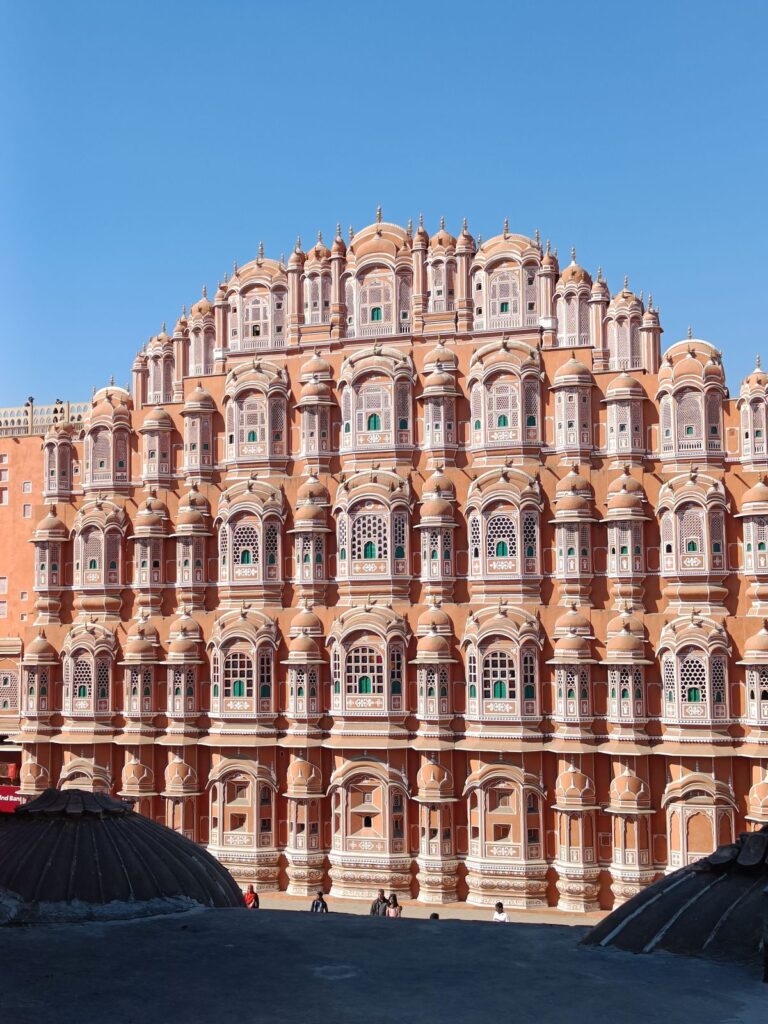
Hawa Mahal is one of Jaipur’s best-known buildings. Its front has many small windows and screens. It was built so royal women could look toward the street while remaining screened from public view.
City Palace
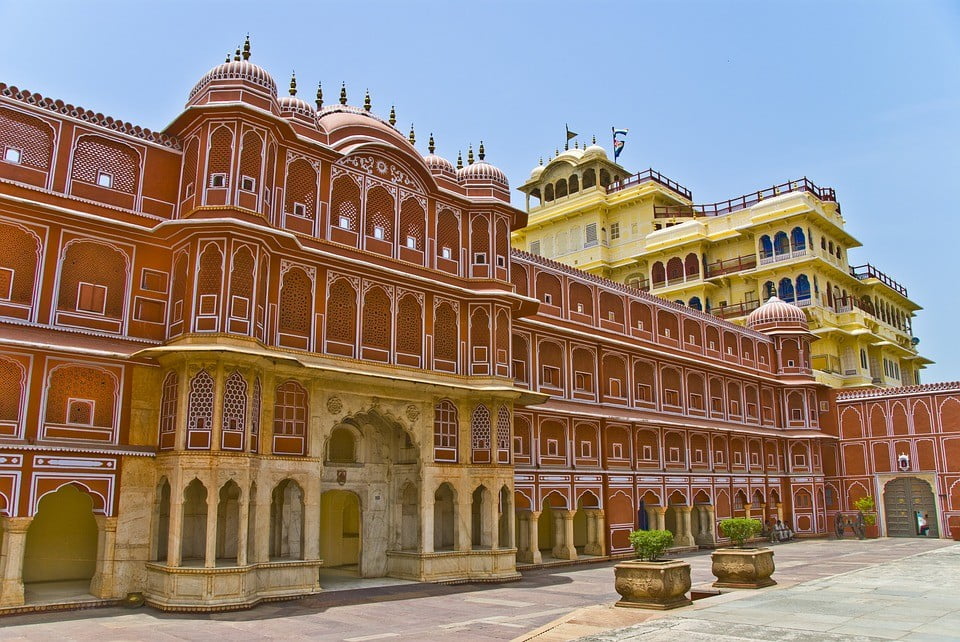
City Palace sits in the old city and combines courtyards, gates, museums and royal buildings. Some parts have different ticket rules, so check the official site before paying for extra areas.
Jantar Mantar
Jantar Mantar is a UNESCO World Heritage Site. It is a collection of large astronomical instruments built in the early 18th century. A guide can make the instruments easier to understand because they are more than stone shapes.

Johari and Bapu bazaars
Jaipur’s old markets are known for textiles, jewellery, shoes, handicrafts and everyday goods. Compare prices before buying. If a seller says an item is antique or made from a rare material, ask for proof before paying a high price.
A simple two-day Jaipur plan
Day 1: Amber Palace in the morning. Add Jal Mahal viewpoint on the return if it fits your route. Rest in the hottest part of the day.
Day 2: Hawa Mahal, City Palace and Jantar Mantar. Finish with a short market walk if you still have energy.
This keeps nearby places together and avoids spending half the day in traffic.
When is the best time to visit Jaipur?
The cooler months are easier for most visitors. Rajasthan Tourism shows that Jaipur’s late spring and summer temperatures can become very high. October to March is usually more comfortable for forts and long walks.
July to September brings monsoon rain and humidity. Jaipur is still visitable, but outdoor plans need more flexibility.
For the full Delhi–Agra–Jaipur season comparison, see our Golden Triangle weather guide.
Simple Jaipur travel tips
- Start early: forts are easier before the strongest heat.
- Use licensed transport: agree on a fare or use a metered/app service where available.
- Check current entry rules: prices and access can change.
- Dress for heat and walking: light clothing, water and comfortable shoes help.
- Respect religious places: follow dress and photography rules.
Jaipur on the Golden Triangle
Many travellers reach Jaipur after Agra and return toward Delhi. If you are building the whole route, the Golden Triangle guide helps with season and pacing.
If your visit falls near the spring Holi festival, our guide to the best places to celebrate Holi in India explains what to expect before joining a large colour celebration.
Reliable Jaipur sources
Use Rajasthan Tourism for official Jaipur visitor information. UNESCO lists both Jaipur City and Jantar Mantar as World Heritage Sites.
Simple questions about Jaipur
Why is Jaipur called the Pink City?
The historic centre is famous for its pink-toned buildings. The colour became an important part of the city’s visual identity.
How many days do I need?
Two days is enough for the main sights without rushing too much.
Is Amber Palace inside the old city?
No. It is outside central Jaipur, so give it its own half-day.
Is Jaipur part of the Golden Triangle?
Yes. The three main stops are Delhi, Agra and Jaipur.
In short: give Amber Palace its own morning, keep the old-city sights together, and use official tourism pages for current entry details.