
Category: Yoga Training

  • How to Teach Yoga Online: Equipment, Setup and First Class

    How to Teach Yoga Online: Equipment, Setup and First Class

    To teach yoga online, start with a class you can teach confidently, clear sound and a camera that shows your full movement. Rehearse from the student’s view before accepting bookings. This guide explains how to teach yoga online with a simple equipment setup, clear instructions and a plan for technical problems. It is for teachers preparing live lessons, rather than students choosing an online course.

    How to teach yoga online: where should you start?

    Start with one defined group and a lesson within your training and experience. Write down who the class suits, what students will practise and what preparation they need. A clear description helps people judge whether to join. For example, a gentle beginner movement class needs different instructions from an advanced practice for experienced students.

    Personal practice and teaching are different skills. You need to explain a starting position, notice confusion and offer suitable alternatives. If these skills still need work, practise teaching with feedback before charging for independent instruction. The Yoga Alliance Scope of Practice allows members to teach online while keeping instruction within their competence. It does not turn a video connection into a healthcare service.

    Keep the first offer narrow enough to describe in one sentence. Decide whether students need previous experience or particular props. Avoid promising to correct a medical condition. If you need a teaching foundation, compare the supervised learning described on our Hatha yoga teacher training course page with your current skills.

    What online yoga teaching equipment do you need?

    You can begin with an existing phone or laptop, a stable support, clear floor space and a dependable connection. Test this setup before buying anything. An expensive camera will not fix unclear instructions or poor sound. Add equipment when you can name the problem it solves, such as a voice that becomes faint during floor demonstrations.

    A practical starting setup
    ItemWhat to check firstWhen an upgrade helps
    Phone or laptop cameraThe full movement fits in the frameThe image stays unclear after improving light and position
    Stable stand or tripodThe device cannot tip or slipYour current support blocks the view or moves during class
    MicrophoneSpeech stays clear at mat distanceStudents cannot hear you when you turn or lie down
    Light sourceYour face, hands and feet remain visibleThe room becomes too dark at your actual class time
    Power and connectionThe lesson can run without interruptionTesting reveals dropouts, weak signal or battery trouble

    Keep charging leads and other cables outside the movement area. Set out the props you will actually teach with. Test adapters and microphones together with your chosen device and meeting app. A connector that fits physically may still fail to provide the audio input you expect. Buy only after checking compatibility and a suitable return policy.

    How should you position the camera for online yoga?

    Position the camera so students can see your whole demonstration, including hands and feet. There is no single correct distance for every room or lens. Test standing, a wide stance, overhead arms and floor work. If one position disappears from view, adjust the camera or simplify the demonstration before the lesson begins.

    A horizontal view often suits a mat-based class, but check the actual student display. Use a secure support rather than balancing a device on loose objects. Place light toward you instead of putting a bright window directly behind you. Keep the background simple enough that students can follow your limbs without visual clutter.

    Watch a short test on the smallest screen your students are likely to use. Does the picture show the action clearly? Can someone see where you put a hand or foot? Avoid adding several camera angles at first. One usable view is easier to manage while you learn to teach and observe at the same time.

    How can students hear you during movement?

    Test sound while moving through the positions you plan to demonstrate. Speaking beside a laptop is a different test from speaking at the far end of a mat. Turn your head and try a floor position. Ask a listener to repeat an instruction back. If words disappear, fix that problem before improving the picture.

    A clip-on microphone can help when the built-in microphone is too far away. Check for cable pulling and fabric rubbing. Wireless equipment needs a battery and connection check. Listen to the student-side sound, not just the microphone’s indicator light. Begin without music if it competes with your voice or adds another setting to manage.

    Close noisy apps and silence avoidable notifications before class. If a second device joins your test meeting, mute its microphone and speaker to prevent feedback. Explain how students can ask a question without everyone speaking at once. A brief agreed signal or a planned pause can make the class easier to follow.

    Which platform should you use to teach yoga online?

    Choose a platform that supports the lesson you intend to deliver. For a live class with observation, you need two-way communication and a usable participant view. Check the current meeting duration, participant limit, accessibility options and recording controls before choosing a plan. Features and prices change, so test the actual account you will use.

    Zoom’s guidance for live fitness teaching recommends clear cues, controlled meeting access and checking sound and video. It also warns that virtual backgrounds can cut off moving body parts. Apply those principles to your own platform. Send joining links through your booking process rather than publishing an unrestricted class link for anyone to enter.

    Decide how you will manage arrivals, microphones and questions. Explain any recording plan before students book. Consider making a separate teacher-only recording instead of capturing participants. Check the platform’s controls and the privacy requirements relevant to your work. Do not assume a recording notification settles every question about how a lesson may later be shared.

    Student follows a seated side bend demonstrated on a laptop screen at home
    From the student’s side, the screen may be small and viewed from an angle. Give cues that remain clear when someone looks away. Editorial home-practice photograph.

    How do you give clear instructions through a screen?

    Give one action at a time, starting with a clear body position. Name the movement, offer a suitable option and explain how to pause. Students may be looking away from the screen, so the voice must carry the instruction. Demonstrate when useful, then stop moving long enough to see whether people understood.

    Instead of: “Follow me and go further.” Try: “Sit on a stable chair with both feet on the floor. Slowly turn your head a little to the right. Stay within a comfortable range. Return to the middle, or leave the movement out.” This is a cueing example, not an individual exercise prescription.

    Use familiar words before adding Sanskrit names or technical detail. Make left and right instructions consistent. Avoid rapid changes that require students to twist toward the screen. You cannot see everything through a camera or assess a health problem from a video tile. Invite students to stop and tell you when an instruction does not suit them.

    Discuss camera preferences respectfully. A student may have privacy or connection reasons for leaving video off. Explain that you cannot observe their movement in that case, and agree whether the class remains suitable. Never describe a camera-off lesson as closely supervised personal instruction. Match the teaching format to the support you can actually provide.

    What should students receive before the class?

    Send a short joining note that answers practical questions before they become class interruptions. Include the date, time zone, level, props and access instructions. State the class length and the route for questions or technical trouble. Keep payment, cancellation and replay information consistent with what the student saw when booking.

    • Class name, intended experience level and any preparation.
    • Date and start time with the time zone written out.
    • Private joining instructions and the device or app needed.
    • Mat, chair or other props required for that lesson.
    • Camera, microphone and recording arrangements.
    • What happens if the teacher or student loses the connection.

    For international students, check the date as well as the hour. A late class in one country may fall on the next day elsewhere. Ask students to test access before the session rather than installing an app at the start. Our guide to yoga class formats and costs can help separate live group teaching, private sessions and recorded access.

    Hands write in a notebook beside an open laptop
    Keep a written checklist of access, audio, framing and connection issues, then retest each one. Editorial planning photograph: MJ Duford.

    How do you test an online yoga class as a student?

    Run a rehearsal through the same joining process your students will use. Ask a trusted tester to join from another device or location. Your own camera preview cannot show every access, sound or display problem. Test the invitation, the lesson and the end of the meeting, then fix the most disruptive issue first.

    1. Open the invitation and join without help from the teacher’s account.
    2. Check that the full demonstration stays visible.
    3. Repeat a spoken cue from standing and floor positions.
    4. Test how a student asks a question.
    5. Check the planned response to a lost connection.
    6. End the meeting and confirm what follow-up the student receives.
    Fix the problem you can observe
    Test problemFirst actionPass condition
    Hands or feet leave the pictureAdjust the position or demonstrationThe full planned movement stays visible
    Words become faintCheck input, distance and microphone positionThe listener can repeat the instruction
    Echo or feedbackCheck for two nearby devices playing meeting soundSpeech is clear without repeated audio
    Video repeatedly freezesCheck connection stability and other network useThe test lesson runs with usable sound and picture

    Do not judge the rehearsal only by whether the meeting opened. Ask the tester where they became uncertain. Was the joining note clear? Did a cue arrive before the movement changed? Keep a short list of actual faults and retest them. This gives you a reason for each improvement instead of a shopping list of upgrades.

    What should your first online yoga lesson include?

    Use familiar material and leave room to explain, observe and answer questions. The first lesson should test your teaching process as well as the equipment. Avoid adding advanced practices merely to make the session look impressive. Choose content for the students who booked, within the skills and training you already have.

    For example, a teacher might plan a welcome and equipment check, simple preparation, a small set of familiar movements and a quiet finish. Add time for questions and feedback. This is an illustrative planning outline, not a FitFortunes timetable or a fixed sequence. The exact practices depend on the class description and students’ needs.

    Before finishing, ask whether students could hear, see and follow the instructions. Those questions are more useful than asking only whether they enjoyed it. Change one specific fault before the next session. If you need to redesign the whole lesson to make it understandable, rehearse again before offering a larger group.

    What should you do if the connection fails?

    Agree on a simple pause-and-contact plan before movement begins. Tell students to stop following the sequence if your picture or sound disappears. They should return to a familiar comfortable rest position rather than guess the next instruction. Explain where you will post an update and when an interrupted lesson will end.

    Write down your own response too. You might reconnect once, send an update through the agreed channel and then end the session if teaching remains unreliable. Publish a clear interruption policy before taking payment. Do not keep students moving while you troubleshoot equipment away from the screen, and do not promise continuous supervision you cannot maintain.

    Check your arrangements with the relevant professionals before selling classes. Ask your insurer specifically about live online teaching, recordings and students in other countries. Our yoga teacher liability insurance guide provides questions to take to a provider. Teaching yoga does not qualify you to diagnose symptoms. Students with health concerns may need individual advice from an appropriate clinician.

    Build the teaching foundation before adding more technology

    Learning how to teach yoga online is mainly a task of communication, observation and preparation. Improve the equipment when a test shows a real limitation. If you are still developing your teaching skills, read about the practice, methodology and supervised teaching in FitFortunes’ residential Hatha teacher training in Rishikesh. Ask the school how the curriculum fits your learning needs.

    Frequently asked questions

    Can I start teaching online with only a phone?

    Yes, a phone can provide the camera, microphone and meeting connection if it passes your rehearsal. Secure it on a stable support and test the full movement view. The main limitation may be seeing students on a small screen while demonstrating. Ask a tester whether they can follow your cues, and check whether you can observe the group. Add another device only if it solves a specific problem.

    Do I need a separate online yoga teaching certificate?

    Check the requirements that apply to your work rather than relying on a universal yes or no. Your training and competence must suit the practices you teach. An employer, insurer or professional body may have additional conditions. Ask them directly about remote teaching and any training they expect. A platform account or completion certificate alone does not establish readiness to teach every student, style or specialist group.

    Can students join without switching their cameras on?

    They may be able to join, but the teaching limits should be clear before booking. You cannot observe movement through a camera that is off. Discuss privacy, connection needs and whether the lesson requires individual feedback. Offer another suitable format if those needs do not fit the class. Do not pressure a student to share their home on video or promise the same observation that a visible participant receives.

    How much room do I need to teach from home?

    You need enough clear space for your planned movements and a camera position that captures them. A mat fitting on the floor is not the whole test. Check overhead reach, movement beside the mat and floor positions without hitting furniture or cables. Different lenses and room shapes change the required distance. If your full lesson will not fit, change the demonstration or room before inviting students.

    When is it worth buying a better camera?

    Upgrade after you have tested lighting, position and the student’s view and can still identify a picture problem. Check sound first if instructions are hard to hear. A better camera may add setup steps without improving the lesson on a small screen. Compare compatibility, reliability and return options before buying. Choose equipment that fixes your measured limitation rather than copying another teacher’s studio or spending before a rehearsal.

    Prepared for FitFortunes Holistic Wellness Yoga School, Rishikesh. Sources checked: 18 October 2026.

  • Hatha Yoga Teacher Training Philosophy: What You Study Beyond Asana

    Hatha Yoga Teacher Training Philosophy: What You Study Beyond Asana

    Hatha yoga teacher training philosophy gives students the context behind the physical practice. Without philosophy, teacher training can become a collection of poses, breathing methods and teaching cues. Students may know what to do but not understand why these practices developed.

    A good Hatha yoga teacher training therefore includes history, classical texts, ethics and discussion alongside physical practice. The purpose is not to force students to adopt a belief system. It is to help future teachers understand the tradition they are teaching.

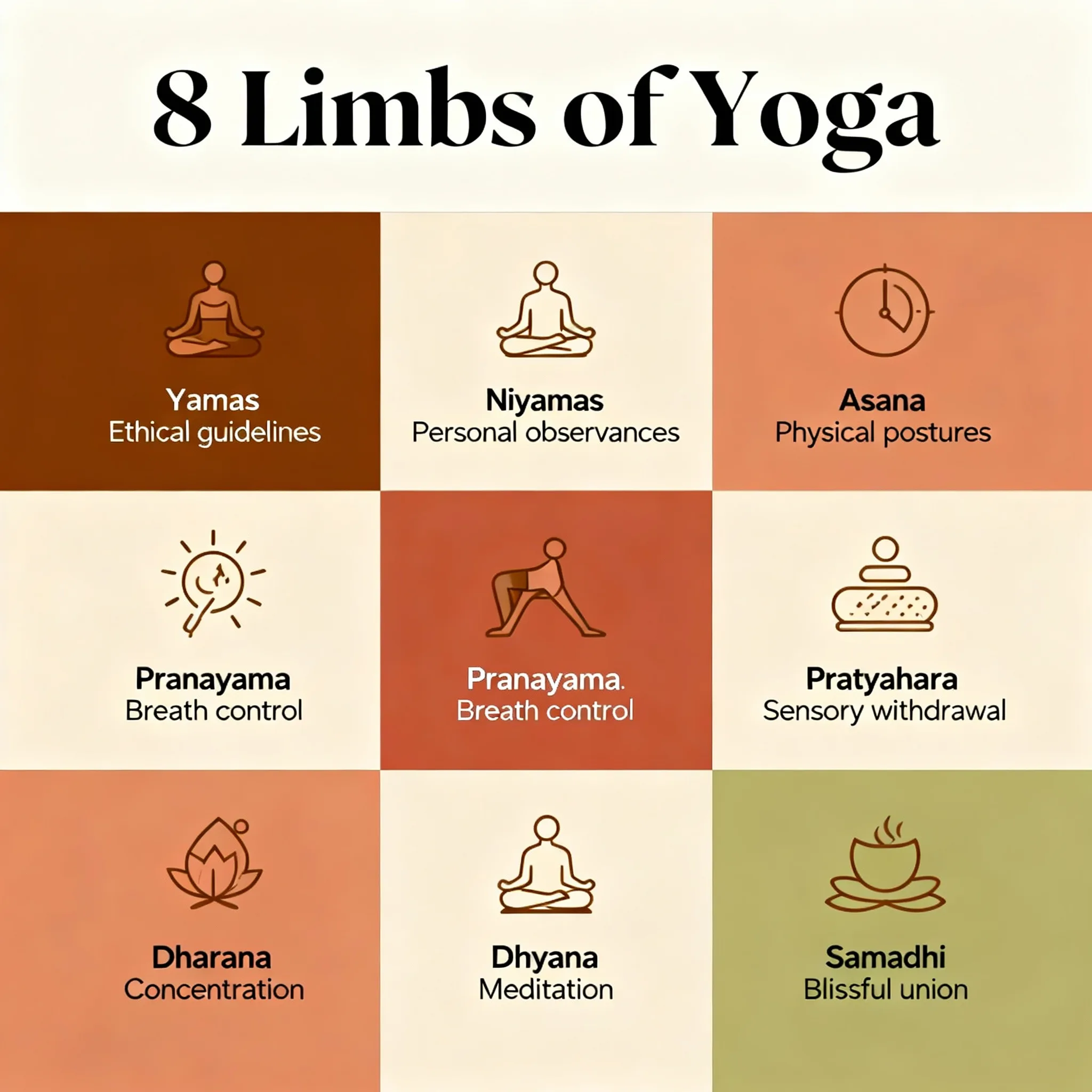
    Eight limbs of yoga study graphic
    The eight-limbed framework helps trainees place asana and pranayama inside a wider study of yoga.

    Table of contents

    Why philosophy belongs in Hatha yoga teacher training

    Yoga existed long before the modern studio class. Asana is important, but it represents only one part of the wider yoga tradition. Students studying Hatha Yoga should understand how posture, pranayama, concentration, meditation, discipline and ethical conduct relate to one another.

    Yoga Alliance’s current RYS 200 curriculum includes 30 hours of Yoga Humanities covering history, philosophy and ethics. It also lists familiarity with major yogic texts such as the Yoga Sutras, Bhagavad Gita, Upanishads and Hatha Yoga Pradipika.

    This means philosophy is not simply decorative content added after physical practice. It is part of teacher education.

    Which texts are studied in Hatha yoga teacher training?

    The exact texts depend on the school and teaching tradition. A 200-hour course cannot cover every classical yoga source in depth, so responsible training usually focuses on a smaller group of important ideas and texts.

    • Patanjali’s Yoga Sutras
    • Bhagavad Gita
    • Hatha Yoga Pradipika
    • Selected Upanishadic ideas
    • Other Hatha texts according to the school’s lineage

    Students do not need to become Sanskrit scholars. The goal is to understand important concepts well enough to discuss them clearly and connect them with practice.

    Patanjali’s Yoga Sutras and the eight limbs

    The Yoga Sutras are important because they present a systematic framework for yoga. Students often begin with definitions of yoga and then study the eight-limbed structure.

    1. Yama
    2. Niyama
    3. Asana
    4. Pranayama
    5. Pratyahara
    6. Dharana
    7. Dhyana
    8. Samadhi

    This immediately changes how a student sees yoga. Asana becomes one part of a wider discipline rather than the whole subject.

    The Yoga Sutras also introduce ideas such as practice, non-attachment, mental patterns, concentration and ethical conduct. These concepts give future teachers a vocabulary for discussing yoga without reducing every lesson to physical benefits.

    Yama and niyama in teacher training

    Yama and niyama are especially useful for future teachers because they ask students to think about conduct, habits and responsibility.

    Common yamas include non-harming, truthfulness, non-stealing, appropriate use of energy and non-grasping. Common niyamas include cleanliness, contentment, disciplined effort, self-study and orientation toward something larger than personal ego.

    The value comes from reflection rather than moral superiority. For example, non-harming can lead to practical teaching questions. Should a teacher push a student deeper into a pose? Should every person receive the same instruction? Should a teacher make health promises that exceed professional scope?

    What students learn from the Bhagavad Gita

    The Bhagavad Gita presents yoga through action, knowledge, devotion and disciplined living. Teacher trainees often find it useful because it discusses practice within ordinary responsibilities rather than only in isolation.

    Ideas such as karma yoga, steadiness, moderation and disciplined action help students understand how practice relates to daily life. The text also makes clear that yoga has never been limited to physical posture.

    Why the Hatha Yoga Pradipika matters

    The Hatha Yoga Pradipika is directly relevant to Hatha yoga teacher training philosophy. It discusses asana, pranayama, mudra, bandha, cleansing practices and other methods associated with Hatha Yoga.

    Students quickly see that classical Hatha Yoga contains much more than slow postures. Our article on what traditional Hatha yoga teacher training means explains this distinction in more detail.

    Historical texts also need careful teaching. A description found in a classical source should not automatically become a modern medical claim. Teachers need to separate historical context, yogic concepts and evidence-based health information.

    Is Hatha Yoga the same as Patanjali’s Ashtanga Yoga?

    No. Hatha Yoga and Patanjali’s eight-limbed framework are connected within modern yoga education, but they are not identical systems.

    This distinction matters because the word Ashtanga can cause confusion. In philosophy, Ashtanga means the eight limbs described in the Yoga Sutras. It does not automatically mean the modern Ashtanga Vinyasa Primary Series.

    A responsible teacher should know the difference and explain it clearly.

    Why yoga history matters

    Hatha yoga teacher training philosophy should include historical context. Students need a basic understanding of how yoga developed through different periods and texts.

    They should know that modern posture practice did not appear in exactly the same form thousands of years ago. Yoga changed over time, and different traditions placed different emphasis on meditation, philosophy, ritual, physical methods and renunciation.

    Understanding this history helps teachers avoid unsupported claims such as saying a modern pose has been practised in exactly the same way for thousands of years.

    Philosophy should not become religious pressure

    Yoga developed within Indian religious and philosophical cultures. That history should not be hidden. At the same time, teacher training should not force a student’s personal belief.

    People may come from Hindu, Christian, Buddhist, Muslim, secular or other backgrounds. A teacher can explain a text respectfully without demanding agreement.

    This approach allows honest study while keeping yoga connected to its cultural roots.

    Ethics for future yoga teachers

    Teacher ethics is one of the most practical parts of Hatha yoga teacher training philosophy. A new teacher may know how to demonstrate a pose but still need guidance on professional boundaries.

    • Respecting student consent
    • Avoiding exaggerated health promises
    • Staying within professional scope
    • Handling physical adjustments responsibly
    • Protecting student privacy
    • Avoiding manipulation
    • Giving credit to sources and teachers
    • Treating students fairly
    • Knowing when to refer someone to another professional

    These subjects are part of teaching competence. They should not be treated as secondary material.

    How philosophy changes the way you teach asana

    Philosophy becomes useful when it changes teaching behaviour. A teacher who understands non-harming may become more careful with pressure. A teacher who understands non-attachment may avoid making difficult poses the main measure of progress.

    A teacher who studies self-observation may encourage students to notice their own experience rather than copy a perfect shape. A teacher who understands moderation may avoid turning every class into maximum effort.

    Philosophy therefore affects the physical class. It changes priorities.

    Philosophy and pranayama belong together

    Hatha texts often connect physical methods with breathing and mental training. Without context, pranayama can become a list of breathing exercises. With context, students begin to understand why breathing, concentration and asana were studied together.

    Our companion guide to pranayama in Hatha yoga teacher training explains the practical side of this relationship.

    Do students need to memorise Sanskrit?

    No. Sanskrit terminology can improve accuracy, but memorisation should not replace understanding. A student who can recite several Sanskrit terms but cannot explain them simply is not necessarily prepared to teach.

    Teacher training should help students understand meaning first. Pronunciation and terminology can then improve with continued study.

    How philosophy helps international students

    International students sometimes arrive in India knowing yoga mainly through studio classes. Philosophy gives historical and cultural context.

    It also corrects common assumptions. Hatha Yoga is not simply slow yoga. The eight limbs are not a modern fitness sequence. Meditation is not separate from the wider yoga tradition.

    Students comparing locations can also read our guide on where to learn Hatha Yoga in India.

    Philosophy is not about sounding spiritual

    New teachers sometimes feel pressure to use complicated spiritual language. That is unnecessary. Clear language usually shows better understanding.

    If the subject is ahimsa, explain non-harming clearly. If the subject is svadhyaya, explain self-study and reflection. If the subject is pranayama, distinguish traditional ideas from respiratory anatomy.

    Complicated language can hide confusion. Good teaching makes difficult ideas understandable without stripping away their meaning.

    How philosophy fits the FitFortunes curriculum

    At FitFortunes, the 200-hour curriculum includes dedicated Yoga Humanities study covering Yoga Sutra study, history, lifestyle and ethics. These subjects sit beside asana, pranayama, meditation, anatomy, teaching methodology and practicum.

    The 200-hour Hatha yoga teacher training in Rishikesh runs for 21 days. Students who want a shorter foundation can review the 100-hour Hatha yoga teacher training.

    If you want to compare Hatha with a broader format, read Hatha vs multi-style yoga teacher training in India.

    How to prepare for philosophy classes

    You do not need to finish several classical texts before training. Reading too much without guidance can create more confusion than clarity.

    A better approach is to read a short introduction, keep notes and write down questions. Notice terms that appear repeatedly and bring those questions into class.

    The Hatha yoga teacher training preparation checklist explains how to add short study periods before travelling to India.

    Questions to ask a school about philosophy

    1. Which texts are included?
    2. Who teaches philosophy?
    3. How many hours are given to the subject?
    4. Is philosophy connected with teaching practice?
    5. Are history and ethics included?
    6. Can students ask questions and discuss different interpretations?
    7. Are Sanskrit terms explained in simple English?

    Clear answers usually tell you more than a claim that a course teaches “authentic philosophy.”

    Frequently asked questions

    What philosophy is taught in Hatha yoga teacher training?

    Courses commonly cover yoga history, the Yoga Sutras, ethical principles, Hatha Yoga texts and selected ideas from the Bhagavad Gita.

    Do I need to be Hindu to study yoga philosophy?

    No. Students can study yoga’s historical and philosophical sources without being required to adopt a religion.

    Is the Bhagavad Gita a Hatha Yoga manual?

    No. It is an important yoga text that helps students understand wider ideas about action, knowledge, devotion and disciplined living.

    Is Hatha Yoga philosophy only about chakras and energy?

    No. It also includes history, ethics, classical texts, practice theory, meditation and relationships between different yoga methods.

    Why should a physical yoga teacher study philosophy?

    Because teachers represent more than exercises. Philosophy helps them understand terminology, tradition, ethics and the purpose behind different practices.

    Can I teach yoga without knowing Sanskrit?

    Yes. Sanskrit knowledge can help, but clear understanding and responsible teaching matter more than memorising terminology.

    Final thoughts

    Hatha yoga teacher training philosophy gives physical practice its wider context. It helps students understand where yoga methods came from, how different practices relate and what responsibilities come with teaching.

    A strong teacher does not need to become an academic philosopher. But a teacher should understand enough history, ethics and classical thought to represent yoga accurately.

    Reference: Yoga Alliance RYS 200 standards.

  • Pranayama in Hatha Yoga Teacher Training: What Students Actually Learn

    Pranayama in Hatha Yoga Teacher Training: What Students Actually Learn

    Pranayama in Hatha yoga teacher training is more than a few breathing exercises before asana. It is a structured part of traditional yoga study. Students learn how posture, breath, attention and teaching method connect, and why breathing practice should progress gradually rather than become a performance.

    A good Hatha yoga teacher training starts with awareness and control before advanced techniques. This helps students build a safe personal practice and prepares future teachers to give clear instructions without making exaggerated health claims.

    Yoga student practising pranayama before meditation
    Pranayama training begins with steady observation and simple breath awareness before stronger techniques are introduced.

    Table of contents

    What pranayama means in Hatha Yoga

    Pranayama is often translated as breath regulation or breath control. In traditional yoga, its meaning is wider than simply taking slow breaths. The breath is used as a practical bridge between physical practice, concentration and quieter states of attention.

    This is why pranayama sits naturally beside asana, meditation, mudra and bandha in Hatha Yoga. A student first learns to observe breathing, then regulate it with more skill. Advanced work should come only after the basic pattern is comfortable and steady.

    Why pranayama belongs in Hatha yoga teacher training

    Modern yoga classes often give most of their time to postures. Traditional Hatha study gives the breath a more important place. Teacher trainees need to understand breathing as a practice in its own right, not as a decorative five-minute exercise at the beginning of class.

    Yoga Alliance’s current RYS 200 standards include pranayama and subtle-body topics within Techniques, Training and Practice. The standards also refer to safe sequencing, alternatives and adaptations. A complete 200-hour training therefore needs more than posture instruction.

    Our guide to traditional Hatha yoga teacher training explains how pranayama, mudra, bandha, meditation and philosophy fit together within a wider Hatha framework.

    What students learn before formal pranayama

    Good training begins with ordinary breathing. Many students do not notice how much their breath changes during movement, stress or effort. Some lift the shoulders. Others hold the breath during difficult poses or create tension in the abdomen.

    Before named techniques, students should learn to observe these habits. They should notice whether the breath is smooth, whether sitting creates unnecessary strain and whether a practice causes dizziness, pressure or discomfort.

    • Basic breath awareness
    • Comfortable seated position
    • Movement of the diaphragm and rib cage
    • Relationship between posture and breathing
    • Difference between natural breathing and deliberate regulation
    • When to return to normal breathing

    Breathing mechanics and yoga anatomy

    Pranayama training also needs basic anatomy. Students should understand the diaphragm, rib cage, respiratory muscles and the movement of air through the respiratory system. This helps future teachers describe what is happening without confusing traditional concepts with modern anatomy.

    For example, prana is a yogic concept. Oxygen is a measurable gas used by the body. They should not be presented as the same thing. Clear language protects both the tradition and the student.

    Our article on Hatha yoga teacher training anatomy and alignment covers the wider movement and anatomy side of teacher education.

    Common pranayama techniques in Hatha yoga teacher training

    Different Hatha traditions teach different methods and may use a different order. The aim is not to collect as many techniques as possible. A smaller number of well-taught practices is more useful than a long list that students cannot explain or teach safely.

    PracticeMain learning focus
    Breath observationAwareness without forcing the breath
    Diaphragmatic breathingUnderstanding relaxed respiratory movement
    Nadi ShodhanaCoordination, attention and gradual breath regulation
    BhramariSteady exhalation and focused attention
    UjjayiControlled breathing and sound awareness
    KapalabhatiTechnique, classification and careful progression

    Kapalabhati deserves careful explanation because classical Hatha sources often classify it among cleansing practices rather than ordinary pranayama. Teacher training should give this context instead of treating every breathing method as the same type of exercise.

    Why Nadi Shodhana is commonly taught

    Alternate-nostril breathing is common because it combines several skills. The student sits steadily, coordinates the hand, follows a pattern and maintains attention without rushing.

    Beginners can first learn the hand position and simple breathing pattern. Ratios or retention can come later when appropriate. This gradual method is more useful than turning a basic practice into a test of endurance.

    What about breath retention?

    Breath retention is an important subject in classical pranayama, but it should not be approached casually. Long or forceful retention is not a beginner goal. Students first need comfortable breathing, an appropriate posture and clear instruction.

    A responsible teacher also understands that not every student needs the same practice. Good teacher training develops observation and judgement, not only personal performance.

    Pranayama, mudra and bandha are related but different

    Students often hear pranayama, mudra and bandha taught together. They are connected within Hatha practice, but they are not identical. Pranayama concerns deliberate regulation of breathing. Bandha refers to specific yogic locks or engagements. Mudra includes a wider group of traditional seals and gestures.

    Training should explain each subject clearly before combining them. This prevents students from memorising Sanskrit words without understanding what they are doing.

    Pranayama should not become a competition

    A common mistake is assuming a longer inhalation, exhalation or retention means better practice. It does not. Straining the face, lifting the shoulders or forcing the lungs does not show mastery.

    A teacher should look for steadiness, comfort and awareness. This is especially important during an intensive residential course, where students already have a full study schedule.

    How pranayama supports asana and meditation

    Pranayama should not be isolated from the rest of training. Students learn to notice how effort, posture and concentration change breathing. A demanding pose may make the breath irregular even when the body looks stable from the outside.

    This helps future teachers observe students more carefully. It also explains why Hatha traditions connect physical practice with breathing and meditation rather than treating them as unrelated subjects.

    How trainees learn to teach pranayama

    Knowing how to perform a practice is different from teaching it. Trainees need to practise giving short, clear instructions. They also need to know common errors, suitable progression and when to stop adding complexity.

    1. Set up a comfortable position.
    2. Explain the breathing pattern simply.
    3. Give an appropriate pace.
    4. Watch for strain or confusion.
    5. Return the student to normal breathing when needed.
    6. Review the practice afterwards.

    This teaching skill is why practicum matters. A trainee must learn how to observe another person, not only follow instructions personally.

    Safety and responsible practice

    Breathing practices can affect people differently. A yoga teacher should avoid medical promises and should not use strong techniques without suitable preparation. Students with health concerns may need professional medical guidance before certain practices.

    Pregnancy, cardiovascular conditions, respiratory conditions, recent surgery and other situations can affect what is appropriate. A yoga teacher does not diagnose disease. The teacher works within yoga teaching scope and modifies or refers when necessary.

    How pranayama fits the FitFortunes curriculum

    At FitFortunes, pranayama has dedicated study time within the 200-hour curriculum. It sits beside asana, meditation, mudra, bandha, kriya, anatomy, yoga humanities, teaching methodology and practicum.

    The 200-hour Hatha yoga teacher training in Rishikesh is residential and runs for 21 days. Students who want a shorter foundation can review the 100-hour Hatha yoga teacher training.

    If you are preparing to travel for training, use the 30-day Hatha yoga teacher training preparation checklist as the next supporting guide in this cluster.

    Frequently asked questions

    Do beginners learn pranayama in Hatha yoga teacher training?

    Yes. A good course can begin with basic breathing awareness and progress gradually. Beginners do not need advanced breath retention before joining.

    Is pranayama the same as modern breathwork?

    Not exactly. Breathwork is a broad modern term. Pranayama belongs to specific yogic traditions, methods and philosophical frameworks.

    Do I need to hold my breath?

    No. Many useful practices can be learned without retention. Retention should be introduced according to the technique, student and level of preparation.

    Is Kapalabhati a pranayama?

    It is often taught beside pranayama today. Classical Hatha sources may classify Kapalabhati as a cleansing practice, so teacher training should explain the context.

    Can pranayama replace asana?

    They serve different purposes. Hatha yoga teacher training studies how physical practice, breathing, meditation and other methods work together.

    Final thoughts

    Pranayama in Hatha yoga teacher training teaches much more than how to inhale slowly or count an exhalation. Students learn observation, breathing mechanics, traditional concepts, safe progression and teaching skills.

    When pranayama is taught patiently, it becomes a practical bridge between asana, concentration and the wider study of Hatha Yoga.

    Reference: Yoga Alliance RYS 200 standards.

  • Is Yoga Teacher Training Worth It? A Practical 2026 Decision Guide

    Is Yoga Teacher Training Worth It? A Practical 2026 Decision Guide

    The Short Answer

    Yoga teacher training (YTT) is worth it if you have a clear reason to take it. That reason might be teaching, deepening your own practice, or adding yoga to an existing career in fitness, physical therapy, or wellness. It is often not worth it if you mainly expect a quick, reliable income, because teaching yoga is usually competitive and part-time at first.

    This guide helps you decide by looking at what training includes, what it costs in money and time, who tends to benefit, and how to judge a program before you pay.

    A useful first question is not “Will a certificate change my career?” It is “What do I want to be able to understand or teach after the course?” A strong answer makes it easier to compare schools without being distracted by discounts or vague promises.

    If cost is your main concern, compare the full expense rather than tuition alone. Our yoga teacher training cost in Rishikesh guide explains tuition, accommodation and other common expenses separately.

    Residential room at FitFortunes Yoga School in Rishikesh
    Residential training value includes more than tuition. Accommodation, meals, teaching hours and the daily study environment all affect the real cost.

    What Yoga Teacher Training Actually Includes

    Most entry-level programs follow a 200-hour format. Yoga Alliance currently describes RYT 200 as the foundational credential for many new teachers. Registration is voluntary and it is not a government licence. A student who completes an eligible 200-hour course at a Registered Yoga School can apply for the RYT 200 credential.

    That credential can be useful, but it is not the same as teaching skill. Supervised practice, feedback and continued study matter after graduation. Read our separate guide on whether Yoga Alliance certification is worth it if the credential is important to your plans.

    🎯

    Technique and Practice

    Postures, breathing methods, and meditation, practiced in depth so you understand each one, not just perform it.

    📐

    Anatomy and Safety

    Basic anatomy, alignment principles, injury awareness, and offering modifications for different bodies.

    📋

    Teaching Methodology

    Sequencing, cueing, class management, and supervised practice teaching with feedback.

    💡

    Philosophy and Ethics

    Yoga history, key texts, and the professional ethics of working with students.

    Costs and Commitments to Weigh

    Tuition is only part of the picture. Before enrolling, look at the full commitment.

    FactorWhat to Consider
    TuitionVaries widely by location, format, and school reputation
    FormatIntensive (weeks), weekend-based (months), online, or hybrid
    Extra costsBooks, travel, lodging for retreats, registry fees, insurance
    Time offIntensives may require unpaid leave from work

    When It Is Worth It

    • You already practice regularly and want structured, deeper knowledge.
    • You work in fitness, coaching, or healthcare and want to add yoga to your services.
    • You have local studios, gyms, or community centers that hire new teachers.
    • You value personal growth even if you never teach a paid class.

    When It May Not Be Worth It

    • You expect a full-time salary soon after graduating.
    • You are new to yoga and have not yet built a steady practice.
    • The cost would cause real financial strain.
    • You want physical fitness only; regular classes may serve you better.

    How to Evaluate a Program

    Two programs with the same hour count can differ greatly in quality. Use these checks:

    Also check whether the course gives you enough real teaching practice. A certificate can help you meet an entry requirement, but employers and students still need you to communicate clearly, teach beginners responsibly and adapt to different bodies. Our guide on whether 200-hour yoga teacher training is enough explains that difference.

    • Lead trainers: Ask about their teaching experience and how many hours they personally lead.
    • Contact hours: Confirm how much is live versus self-paced or pre-recorded.
    • Practice teaching: Look for regular supervised teaching with feedback, not just one final class.
    • Graduate outcomes: Ask to speak with past students about what happened after training.
    • Policies: Read refund, makeup, and completion rules before paying.
    💡 Tip: Take several classes with the lead trainers before enrolling. If you do not enjoy how they teach a single class, a 200-hour program with them is unlikely to suit you.

    Edge Cases to Think About

    Online-only training: It can be affordable and flexible, but some studios prefer in-person experience. Check local hiring expectations first.

    Specialty trainings: Prenatal, children’s, or trauma-informed yoga usually build on a 200-hour foundation rather than replacing it.

    Health conditions or injuries: Training can be physically demanding. Speak with a healthcare provider and tell the school about any limits in advance.

    Teaching abroad: Requirements differ by country and employer, so research the specific places you hope to work.

    Is residential yoga teacher training worth it?

    Residential training can be good value when you want to focus on study without commuting every day. Accommodation and meals may also make the total cost easier to plan.

    The trade-off is intensity. Residential courses can include early mornings, several classes a day, reading, self-study and teaching practice. If you need to keep full-time remote work or another demanding schedule, check the timetable before booking.

    FitFortunes runs a 21-day residential 200-hour yoga teacher training in Rishikesh. Students should plan around the full training day rather than treating it like a flexible retreat.

    A simple decision test before you enroll

    Score each statement from 1 to 5. A low score does not mean you should never take training. It may simply mean the timing is not right yet.

    • I know why I want to take teacher training.
    • I can afford the full cost without serious financial strain.
    • I can give the course my attention for the full training period.
    • I like the teaching style and curriculum.
    • I understand that certification does not guarantee income.
    • I am willing to keep learning after graduation.

    If most answers are 4 or 5, training may be a sensible next step. If several are 1 or 2, waiting and taking more classes first may give you a better return later.

    For a deeper comparison, use our guide to choosing yoga teacher training in India.

    FAQ

    Do I need to be advanced to join?

    Usually not. Most schools want consistent practice and curiosity, not advanced postures. Many recommend at least several months to a year of regular practice beforehand.

    Is a 200-hour certificate enough to teach?

    For many studios and gyms, yes, as a starting point. Ongoing learning, liability insurance, and real teaching experience matter just as much over time.

    Summary and Next Step

    Yoga teacher training pays off when your goals, budget, and timing line up. Write down why you want to train, set a realistic budget, and attend classes with two or three schools before you commit.

    Featured image: Pinkpanther0 / Wikimedia Commons, CC BY 4.0.

  • Hatha Yoga Teacher Training Preparation Checklist: 30 Days

    Hatha Yoga Teacher Training Preparation Checklist: 30 Days

    The best way to prepare for Hatha Yoga teacher training in India is to make your routine more stable, not more extreme. In the month before training, focus on regular practice, sleep, simple study, travel planning, and honest awareness of your current limits. You do not need advanced postures. You do need enough consistency to handle a structured residential day without spending the first week recovering from poor sleep, last-minute travel, or overtraining.

    This 30-day plan is written for students preparing for foundational Hatha teacher training in India. It is especially useful for residential courses where mornings start early and the day includes asana, pranayama, philosophy, anatomy, teaching methodology, meals, practicum, and study. If you are still deciding whether Hatha is the right format, compare it with our Hatha vs Multi-Style Yoga Teacher Training guide first.

    Mountain view near Rishikesh for yoga teacher training travel preparation
    Preparing for residential training also means planning for Rishikesh weather, travel and a different daily rhythm.

    Table of contents

    30-day preparation plan at a glance

    WhenMain focusWhat not to do
    Days 30-21Regular practice and recoverySuddenly double your practice volume
    Days 20-14Study, breath awareness and quiet sittingTry to master advanced pranayama
    Days 13-7Earlier mornings and course-like routineAssume evenings will be free for full-time work
    Days 6-1Sleep, travel, documents and packingTrain hard until the day of departure

    Days 30-21: build consistency before intensity

    Use the first ten days to make practice predictable. Aim for regular sessions instead of one or two very hard classes. If you already practise four or five days a week, keep that rhythm steady. If you practise only occasionally, add shorter sessions gradually rather than suddenly doubling the volume. The aim is to make movement, breathing, and quiet attention feel normal before you enter a full residential schedule.

    This is also the right time to notice recovery. Pay attention to sleep, soreness, old injuries, and how long your body needs between harder sessions. A training course is not helped by arriving with an irritated knee, shoulder, or lower back because you tried to get ready too aggressively. Preparation should reduce surprises, not create a new problem.

    • Practise on several days each week.
    • Keep at least one lighter day after a demanding session.
    • Notice where you regularly hold unnecessary tension.
    • Write down any injury or limitation you should tell the school about.
    • Begin moving your sleep schedule earlier if your normal routine is very late.

    Days 20-14: add study, breathing and quiet sitting

    Teacher training asks for more than physical practice, so the second phase should include short periods of study and sitting. Spend ten to twenty minutes reading, taking notes, or reviewing basic yoga terms. Add five to ten minutes of quiet sitting or simple breath awareness. You are not trying to master philosophy or pranayama before the course. You are getting used to the mental shift between movement and study.

    Patanjali describes practice through the idea of abhyasa, sustained effort over time, rather than one dramatic session. The Hatha Yoga Pradipika also values moderation, steadiness, and suitable conditions for practice. Those ideas are useful preparation principles today: regular practice, enough rest, and less unnecessary excess usually help more than trying to prove your dedication in the final weeks before training.

    Days 13-7: start matching the training rhythm

    During the third phase, make your day look a little more like residential study. Wake earlier if needed, practise before breakfast on a few mornings, and spend part of the day without constant phone use. If your course includes early pranayama or meditation, try sitting quietly soon after waking. Small routine changes make the first week of training less of a shock.

    This is also the time to check the actual daily schedule. Do not assume a 200-hour course means a few yoga classes with free afternoons. Read what a normal YTT day is really like and compare it with your work obligations, remote calls, sleep habits, and travel plans. If you are trying to maintain a full-time online job during residential training, make that decision before you arrive rather than after the timetable begins.

    Days 6-1: reduce friction before travel

    The final week is not the time for harder practice. Reduce unnecessary intensity and finish practical tasks. Confirm your arrival instructions, accommodation, payment balance, transport, passport and visa documents, medicines, and weather-specific clothing. Use the Hatha YTT packing checklist before closing your bag. Sleep matters more now than squeezing in one more difficult class.

    Keep the final two or three days simple. Walk, practise gently, breathe normally, and leave enough time to pack without rushing. If you are travelling internationally, long flights and time-zone changes already add physical load. Your goal is to arrive ready to learn, not to arrive feeling as if the training has already started at home.

    How much yoga practice is enough before Hatha teacher training?

    Readiness is about consistency, not advanced poses

    There is no useful universal number of months that proves readiness. A steady beginner can be better prepared than someone with years of inconsistent practice. What helps most is familiarity with common movements, the ability to follow simple instructions, and enough body awareness to stop when something feels wrong. You do not need splits, handstands, or extreme backbends.

    For Hatha training, focus on steady foundational work. Standing postures, simple forward folds, basic twists, gentle backbends, seated positions, simple balance work, and relaxation are more useful than chasing advanced shapes. Pranayama preparation should also stay simple. Breath awareness, comfortable diaphragmatic breathing, and calm observation are a better base than experimenting with strong techniques without guidance.

    If you are a beginner and still unsure about readiness, use our Yoga Teacher Training for Beginners guide. It explains what matters more than flexibility and how to judge whether the daily workload fits your current practice.

    What should you read before Hatha Yoga teacher training?

    Three useful texts are enough to begin

    Do not try to finish a shelf of yoga books in one month. A small amount of careful reading is more useful. The Yoga Sutras of Patanjali can introduce the wider framework of yoga, including practice, discipline, concentration, and the eight limbs. The Bhagavad Gita gives a different philosophical context around action, discipline, and steadiness. For Hatha specifically, the Hatha Yoga Pradipika is useful because it shows that Hatha includes more than asana.

    You do not need to agree with or memorise every passage. Read enough to recognise the names and ideas when they appear in class. Keep a few questions in your notebook. Teacher training works better when you arrive curious rather than trying to arrive already certain about every concept.

    Preparing your body without overtraining

    More practice is not always better preparation. Teacher training can involve repeated movement, long periods of sitting, early mornings, and several hours of attention. That means recovery capacity matters as much as flexibility. Regular walking, adequate sleep, simple strength work, and normal daily movement can support the body as much as adding another hard yoga class.

    If you have a previous injury, recent surgery, or persistent pain, seek appropriate professional advice before an intensive course. Tell the school about relevant limitations. A yoga teacher can modify practice within their scope, but teacher training is not a substitute for medical or rehabilitation care. Hiding a problem because you are afraid of being refused admission is usually worse than discussing it early.

    Travel, sleep and arrival planning

    For international students, travel preparation is part of training preparation. Check official India visa information, confirm the route to Rishikesh, keep digital and paper copies of important documents, and avoid arriving only a few hours before the first class if your schedule allows. A buffer day can help with sleep, food, luggage problems, and time-zone adjustment.

    The international student YTT guide covers travel, money, phone access, and other practical details. For the final journey, use the Delhi to Rishikesh travel guide. These logistical details may sound separate from yoga, but they strongly affect how you feel during the first training days.

    The mindset that helps most during Hatha training

    The most useful mindset is willingness to be a student. You may find that a posture you have practised for years is taught differently. A teacher may ask you to slow down, use less range, or explain why you chose a certain cue. Practicum may feel uncomfortable at first. None of this means you are failing. Training is where assumptions are tested and teaching habits begin to form.

    Do not arrive trying to impress the room. Arrive prepared to observe. The student who listens carefully, writes useful notes, asks clear questions, and changes an approach after feedback usually learns more than the student who only wants to demonstrate advanced ability. Hatha training rewards patience because its methods make more sense through repetition and context.

    A simple 30-day preparation checklist

    1. Practise regularly, but do not suddenly double your training volume.
    2. Move your sleep and wake times closer to the course routine.
    3. Add five to ten minutes of quiet sitting most days.
    4. Read a small amount of yoga philosophy and write down questions.
    5. Tell the school about injuries or important health limitations.
    6. Review the actual curriculum and daily schedule.
    7. Confirm passport, visa, insurance, and travel plans.
    8. Pack for the season rather than for every possible condition.
    9. Reduce hard practice in the final week.
    10. Arrive rested enough to learn.

    For FitFortunes, the current 200-hour Hatha Yoga Teacher Training in Rishikesh is a 21-day residential course. Its Hatha framework includes Asana, Pranayama, Mudra & Bandha, and Nadanusandhana/Nada Yoga, supported by philosophy, anatomy, teaching methodology, and practicum. Use the live course page for current dates, rooms, fees, and arrival details before booking travel.

    Frequently asked questions

    Do I need to practise yoga every day before YTT?

    No. Regularity matters more than a perfect daily streak. Several consistent sessions each week, combined with rest, walking, and sleep, can prepare you better than daily hard practice that leaves you sore or tired.

    Should I learn advanced pranayama before Hatha training?

    No. Basic breath awareness is enough preparation. Stronger pranayama methods should be learned progressively with appropriate guidance, especially when retention, bandha, or more demanding techniques are involved.

    Do I need to read the Hatha Yoga Pradipika before I arrive?

    No. Reading a little can help, but teacher training should teach the text in context. It is enough to know that Hatha includes asana, pranayama, mudra, bandha, meditation, and related practices rather than only slow postures.

    How early should I arrive in Rishikesh?

    If your travel plan allows it, arriving with at least some buffer before the first full training day can make jet lag and transport problems easier to manage. Follow the school’s live arrival instructions before booking extra nights.

    What if I am not flexible?

    Flexibility is not an entrance exam for foundational teacher training. Safe participation, body awareness, willingness to learn, and respect for your limits matter more than reaching a particular pose shape.

    Prepare for the routine, not for a performance

    A good final month before Hatha teacher training should make your life more organised and your practice more consistent. It should not make you exhausted. Build habits that help you wake, practise, study, eat, rest, and pay attention. Those habits will support you far more during residential training than one last month of chasing advanced postures.

    WHAT TO READ NEXT

    Continue preparing for your course

    You have the 30-day routine. The next useful step is to check the course format, packing list and daily workload before you book travel.

    Considering Hatha Yoga teacher training in Rishikesh?

    FitFortunes runs a 21-day residential 200-hour Hatha Yoga Teacher Training. Review the live course page for curriculum, rooms, dates and fees before making travel plans.

  • Hatha Yoga Teacher Training Anatomy and Alignment: What Students Should Learn

    Hatha Yoga Teacher Training Anatomy and Alignment: What Students Should Learn

    Hatha yoga teacher training anatomy and alignment should help you teach with care. You should learn how joints move, how to notice strain, and how to offer an easier option. You do not need to make every body look the same. Anatomy helps you understand a pose. Alignment helps you explain it to a student. Neither lets you diagnose an injury or act as a doctor.

    Hatha poses may be held long enough for a teacher to notice detail. Watch how a student breathes and balances. Can they control the movement? Do they need support or a smaller range? The aim is not a perfect pose. It is a clear, steady movement that suits that student.

    The Yoga Alliance RYS 200 standards include anatomy, biomechanics, joint movement and safe adaptations. These are teaching skills, not authority to diagnose injuries. The NCCIH yoga safety guidance also stresses suitable instruction and modifications for individual health needs.

    AreaWhat a trainee should learnWhy it matters
    AnatomyBasic joint actions, breathing mechanics, mobility and stabilityHelps explain movement without pretending to diagnose
    AlignmentHow position changes with body structure, control and purposeAvoids forcing every student into one shape
    TeachingObservation, simple cues, variations, consent and referralTurns theory into safer, clearer class decisions

    Table of contents

    What anatomy is for in Hatha teacher training

    Anatomy is useful when it helps you make a teaching choice. Learn the major joints and the basic ways they move. Learn how the ribs and diaphragm help us breathe. Know the difference between being mobile and being stable. You do not need to learn every muscle name at once. A teacher should know when to offer support, reduce range or change a pose.

    Teach anatomy during yoga practice, not only in a lecture. A lesson on hips can use a standing pose or a forward fold. A lesson on shoulders can use a plank or arm raise. Trainees learn more when they see the idea in a real movement.

    What alignment should mean in a Hatha class

    Alignment helps a student find a steady pose. It does not mean every foot, hip or knee must look the same. Bones, joints, strength and past injuries vary. A good cue tells the student what to do and why. It also leaves room for a different body shape.

    Before you correct a pose, ask three questions. What is the pose meant to do? What is this student doing now? What small change could help? This can prevent too many cues. A pose does not need to look the same in every body.

    Yoga teacher training students at FitFortunes in Rishikesh
    Alignment teaching starts with observation. Students need room to organise a posture before a teacher decides whether a cue or adaptation is useful.

    Joints, range of motion and individual difference

    Not everyone moves through the same range. One student can move far but may lack control. Another has a small range and good balance. A third may have a joint shape that limits a movement. Telling everyone to “go deeper” can be unhelpful. A teacher should not assume every limit needs more stretching.

    Basic joint knowledge makes cues more useful. In a forward fold, a wider stance or bent knees may feel better for one person. At the shoulder, arm movement also involves the shoulder blade, ribs and spine. Look at the full movement. Do not treat one joint as if it works alone.

    Breathing mechanics are part of alignment

    Breathing can show how hard a pose feels. If a student cannot breathe with ease, the pose may need to change. Trainees should learn how the diaphragm and ribs move. They should also notice when the belly or chest feels under too much pressure. A big, forced breath is not always helpful.

    Poses also affect breathwork. A seated pose should let a student breathe with ease. It need not look impressive. A stable chair can be better than a tight floor position. Choose a shape that fits the task and the student.

    Load, stability and force matter more than flexibility alone

    Flexibility is only one part of a pose. Joints also deal with load. Speed, body weight, support and fatigue can change that load. A pose that feels easy once may feel hard after many repeats. Trainees should learn to build effort in small steps and offer rest when needed.

    Changing a pose is not only about going less deep. You can reduce the time, use a wall, change the stance or lower the number of repeats. Choose the smallest change that still helps the student learn the main point.

    Observation should come before correction

    Yoga teacher observing students during a Warrior II alignment practice
    Observe how an individual moves before deciding whether a cue or variation would help.

    Observe before you offer a cue. Watch the student’s breathing, balance and pace. Notice whether they look tense or confused. Ask how the pose feels instead of guessing. Only then decide whether to offer support or a new option. There is no need to adjust each person just because their pose looks different from yours.

    Listening matters too. A student may feel pain even if their pose looks fine. Do not dismiss that report. Offer less effort or a different pose. Stop the movement if needed. When pain is new or lasts, suggest help from a health professional.

    Verbal cues, demonstrations and hands-on adjustments

    Touch should not be the first choice for every issue. A clear verbal cue, a prop or a demo may help. Ask for consent before any touch. A student can say no, even if the teacher believes an adjustment would help.

    If a teacher uses touch, the reason must be clear. Do not push someone deeper into a pose just because they can move farther. The goal may be balance, comfort or a better sense of direction. Words or a change of setup may work just as well.

    Professional scope: what a yoga teacher should not pretend to do

    Studying anatomy does not make someone a doctor or physiotherapist. Yoga teachers can watch movement, offer easier options and give clear cues. They must not diagnose injuries or promise a cure. A good teacher knows when to ask a student to seek medical help.

    Trainees need to know when to refer a student for care. Do not say, “Your hip is damaged.” Say, “This movement hurts today. Please stop and ask a health professional for advice.” Clear, calm words help the student. They also keep a yoga teacher within the right scope.

    How classical Hatha texts fit into anatomy and alignment study

    The Hatha Yoga Pradipika and Gheranda Samhita are key texts in Hatha yoga. They cover poses, breathwork and other practices. They are not modern anatomy books. Today’s lessons on joints, consent and safe teaching also need modern knowledge. Respect both kinds of learning.

    Patanjali’s Yoga Sutras offer a lesson about ease and steadiness in a pose. Sutra 2.46 does not give us a modern list of joint angles. A teacher can respect the ancient text without claiming that one exact pose shape came from it.

    How FitFortunes connects anatomy with Hatha teaching

    FitFortunes teaches anatomy alongside Hatha poses. Lead teacher Pravesh Narwal holds E-RYT 500 and AYUSH Level-3 wellness teaching credentials. He has also worked for years in orthopaedic rehabilitation support. This informs the school’s focus on movement, safe options and clear cues. A yoga teacher must still stay within the scope of yoga teaching.

    The FitFortunes 200-hour Hatha course runs for 21 days in Rishikesh. It covers asana, breathwork, anatomy, philosophy and teaching practice. See our training curriculum for the wider syllabus. Our Hatha guide explains the tradition and how it is taught.

    Practical anatomy and alignment checklist for trainees

    Use this list to check how well your training helps you teach. You do not need to know everything on day one. But you should be able to use what you learn when helping a real student.

    1. Can I explain the basic purpose of the posture in simple language?
    2. Can I identify the main joints and movement directions involved?
    3. Can I see whether the student has control, not only range?
    4. Can I offer at least one easier setup without changing the whole purpose?
    5. Can I notice when breathing becomes strained?
    6. Can I ask before touching and teach without touch when needed?
    7. Can I recognise when the issue is outside my scope and refer appropriately?

    If those answers improve during training, anatomy is doing useful work. The goal is not to impress students with technical terms. It is to make teaching clearer, safer, and more adaptable.

    A three-step observation exercise for trainee teachers

    1. Watch first. In a simple standing pose, notice balance, breathing and whether the student looks steady. Do not guess a diagnosis from posture.
    2. Offer a choice. Try a shorter stance or a chair for support. Ask whether the change feels more manageable rather than demanding a perfect shape.
    3. Ask for feedback. Let the student describe their effort. If pain or a health concern appears, stop that action and refer outside your teaching scope.

    In an anatomy lesson, trainees should try one safe option and explain why it helps. Always ask before touching a student. The Yoga Alliance Scope of Practice covers teacher boundaries and consent. This is an example task, not a claim about a set class at FitFortunes.

    Frequently asked questions

    Do I need to memorise every muscle for Hatha teacher training?

    No. A foundation course should teach the anatomy that helps you understand common yoga movements and observe students. Detailed memorisation can come later. Practical understanding matters more than reciting long lists.

    Is there one correct alignment for every yoga posture?

    No. A posture has a purpose, but different bodies may need different positions to work toward that purpose. Structure, mobility, control, pain history, and proportions all affect how a posture looks.

    Should yoga teachers physically adjust students?

    Hands-on adjustment is optional, not automatic. Clear verbal cues, demonstration, props, and setup changes may work better. When touch is used, informed consent and professional boundaries are essential.

    Can a yoga teacher diagnose an injury after studying anatomy?

    No. Yoga anatomy education supports observation and class adaptation. Diagnosis and medical treatment belong to appropriately qualified healthcare professionals.

    How is Hatha alignment different from forcing a textbook shape?

    Useful Hatha alignment looks at purpose, stability, breathing, control, and the individual student. It does not assume that the deepest or most symmetrical-looking version is automatically better.

    The useful test is better teaching

    Anatomy and alignment matter when they help you teach better. A trainee should be able to explain a pose, spot strain, offer choices and respect consent. Knowing these skills matters more than memorising long lists that never help a class.

    KEEP LEARNING

    Use anatomy inside real teaching decisions

    Continue with the parts of teacher training that turn observation into class planning, cueing and practicum.

    See how anatomy fits into the 200-hour Hatha course

    Review the live 21-day residential course page for curriculum, practicum, accommodation, dates and fees.

  • Where to Learn Hatha Yoga in India: Rishikesh, Goa or Mysore?

    Where to Learn Hatha Yoga in India: Rishikesh, Goa or Mysore?

    If you want to learn Hatha Yoga in India, choose the school before you choose the city. Rishikesh, Goa, Mysore and quieter Himalayan settings can all support serious study, but they do not offer the same daily experience. The useful question is not which destination looks most impressive online. It is which place gives you the teachers, course structure, practice style and routine that fit your reason for training.

    For teacher training, the word “Hatha” in a title is not enough. Read the timetable and ask what is taught every day. A serious program should explain its approach to asana, pranayama, meditation, philosophy, anatomy, teaching methodology and practicum. If it also uses terms such as mudra, bandha or nada, those subjects should have a clear place in the course rather than appearing only in a long marketing list.

    Ganga ghat in Rishikesh India
    Rishikesh offers a strong residential yoga-study setting, but the school and syllabus still matter more than the city name.

    Table of contents

    Quick comparison: Rishikesh, Goa, Mysore and Himalayan settings

    Each location has strengths and trade-offs. Rishikesh offers a large yoga community and many residential schools. Goa gives students a coastal setting and often mixes Hatha with modern flow styles. Mysore has a strong modern asana culture, while smaller Himalayan or rural centres can offer fewer distractions but may have simpler facilities and more travel planning.

    LocationCommon reason students choose itWhat to check carefully
    RishikeshResidential yoga study, pranayama, philosophy and a strong yoga-school ecosystemWhether Hatha is truly the main practical method and how much practicum is included
    GoaCoastal setting and programs that may combine Hatha with Vinyasa or other stylesSeason, exact style mix, daily schedule and whether the course is more retreat-like or teacher-training focused
    MysoreEstablished modern asana culture and disciplined practice environmentsWhether the program you are considering is actually Hatha-focused rather than mainly Ashtanga Vinyasa
    Himalayan or rural campusQuiet study, smaller communities and fewer outside distractionsTransport, medical access, internet, weather, room comfort and teacher credentials

    Rishikesh for traditional residential Hatha study

    Rishikesh is one of India’s best-known centres for residential yoga study. Students can find Hatha Yoga, pranayama, meditation, philosophy and teacher training in the same area, often within walking distance of the Ganga. The daily rhythm can suit people who want yoga to shape the whole study day rather than sit beside a normal holiday schedule. Early mornings, simple meals, theory classes and regular practice are common parts of residential training.

    The large number of schools is both an advantage and a risk. You have more choice, but the word “Hatha” can mean different things from one school to another. Ask whether the main asana class is Hatha, whether the course also teaches other styles, and how much time is given to teaching practice. A famous location should never replace checking the teacher, curriculum and timetable.

    If your goal is focused Hatha teacher training, start with the school’s actual course page after choosing the location that suits you. FitFortunes has a separate 200-hour Hatha Yoga Teacher Training in Rishikesh page with current course details, while this guide helps you compare Rishikesh, Goa, Mysore and quieter training settings first.

    Goa for a coastal training environment

    Goa appeals to students who want teacher training near the coast. Many programs there combine Hatha with Vinyasa, Yin, Ashtanga Vinyasa or other modern class formats. That can work well when you want variety and the school explains how the methods fit together. It is less useful when a program lists many styles but gives only a small amount of time to each one.

    Season also matters. Some coastal schools are strongly seasonal, and heat, humidity or monsoon conditions can change the day-to-day experience. Check whether the yoga hall is comfortable, what accommodation is included and whether the timetable leaves enough recovery time between practical classes. If you are unsure whether a mixed program suits you, read the comparison of Hatha vs Multi-Style Yoga Teacher Training before you book.

    Aerial view of the Goa coastline in India
    Goa offers a very different study setting from inland or Himalayan yoga centres. Photo by Kiran Patel on Pexels; used under the Pexels free-use licence.

    Mysore for a strong asana culture

    Mysore has an established international reputation for modern Ashtanga Vinyasa practice. Hatha courses are also available, but students should read the syllabus carefully instead of assuming every yoga program in the city has the same focus. A school may use Hatha as one part of a broader physical curriculum. If your main reason for travelling is classical Hatha study, make sure the timetable gives it enough time.

    Mysore can suit students who enjoy disciplined practice and want to live in a city with a strong yoga culture. It may be especially attractive to people who already know they want a physically structured daily routine. The key is intent. Choose Mysore because the specific teacher and course fit you, not because the city name alone sounds authoritative.

    Mysore Palace in Mysuru, Karnataka, India
    Mysuru has a long-established international yoga culture, but students should still verify the exact style and syllabus of any Hatha course. Photo by Sumit Kumar on Pexels; used under the Pexels free-use licence.

    Himalayan and rural training settings

    Smaller mountain or rural campuses can give students more quiet and fewer distractions. This can help when the course includes early practice, study, meditation and self-study. Small communities may also make it easier to know the teachers and other students. The trade-off is that remote schools can require more planning than a school inside a major yoga town.

    Check transport before arrival, especially during monsoon or winter. Ask about internet access, room heating or cooling, drinking water, nearby medical care and how students reach the property. A peaceful setting is useful only when basic arrangements are clear. Do not treat remoteness as proof that a school is more traditional or more authentic.

    What should a serious Hatha curriculum contain?

    Classical Hatha sources make one point very clear: Hatha is broader than a slow posture class. The Hatha Yoga Pradipika, attributed to Svātmārāma, is organised across four chapters that move through asana, pranayama and purification, mudra and bandha, and later meditation, samadhi and nada. The Gheranda Samhita is another important Hatha text and presents its own multi-part system of cleansing, posture, mudra, breath, meditation and related practices. Modern schools do not all follow one fixed historical syllabus, but they should be able to explain what they mean when they use the word “traditional.”

    For a teacher-training student, the practical curriculum also needs modern educational areas. Anatomy, movement observation, teaching methodology, ethics, sequencing, supervised practicum and assessment matter because the student is learning to teach other people. A course can respect classical Hatha sources while also using current anatomy and clear professional boundaries. Our detailed Yoga Teacher Training Curriculum guide explains how those areas can fit together.

    • Hatha asana with clear purpose, progression and appropriate variations.
    • Pranayama taught progressively rather than as a list of advanced techniques.
    • Meditation and concentration practice with enough context to understand why they are used.
    • Mudra and bandha where they belong to the course tradition and are taught responsibly.
    • Yoga philosophy and named source texts rather than vague claims about “ancient wisdom.”
    • Functional anatomy, movement observation and basic safety.
    • Teaching methodology, sequencing, practicum and specific feedback.
    • Clear assessment and completion requirements.

    How to compare Hatha schools before you book

    Start with facts that are difficult to fake. Read the timetable. Check the names and qualifications of the teachers who actually teach the course. Look at how much supervised practice teaching is included and how students are assessed. Then compare room type, meals, class size, attendance rules, deposit terms and the total residential cost.

    A five-minute check before you shortlist a school

    1. Open the timetable and identify the main daily asana style.
    2. Open the teacher pages and check who teaches the core subjects.
    3. Find the practicum and assessment details, not only the curriculum list.
    4. Check the full residential cost, room type, meals and cancellation terms.
    5. Save only the schools that answer all four points clearly, then compare location and travel convenience.

    Next, check whether the school’s language matches the real program. If the page says “traditional Hatha” but most practical classes are Vinyasa, fitness sessions or unrelated wellness activities, ask for clarification. If the school claims international recognition, find out what organisation it means and what that recognition actually allows a graduate to apply for. The wider guide on how to choose a yoga teacher training in India gives a full comparison checklist.

    Seven questions worth sending a school before payment

    1. Which practical yoga style is taught every day?
    2. Who teaches Hatha asana, pranayama, anatomy, philosophy and methodology?
    3. How many students are normally in one batch?
    4. How much supervised practice teaching is included?
    5. What assessment must I complete?
    6. Exactly what is included in the residential fee?
    7. What credential can I apply for after successful completion?

    How FitFortunes approaches Hatha training in Rishikesh

    FitFortunes separates its Hatha training from its Multi-Style program so students can understand the difference before booking. The current Hatha course is a 21-day residential 200-hour program in Rishikesh, with regular arrivals on the 2nd of each month. Hatha is the main practical identity rather than one style hidden inside a long list. Current dates, accommodation and other booking details should always be checked on the live course page before travel.

    Lead teacher Pravesh Narwal is an E-RYT 500 and Ministry of AYUSH Level-3 Health & Wellness Teacher. His long background in orthopedic rehabilitation support also shapes the school’s emphasis on alignment, movement observation and sensible variation. FitFortunes describes its traditional Hatha framework through four practical areas: Asana, Pranayama, Mudra & Bandha, and Nadanusandhana/Nada Yoga, supported by philosophy, anatomy, teaching methodology and supervised teaching practice. Students comparing all current programs can also use the FitFortunes Yoga Courses hub.

    Book and standards references used in this guide

    The historical Hatha references behind this article are the Hatha Yoga Pradipika of Svātmārāma and the Gheranda Samhita. They are useful for understanding why Hatha cannot be reduced to posture alone, but they are not identical manuals and modern teacher-training schools interpret their material differently. For modern professional training, Yoga Alliance publishes its current Registered Yoga School standards separately. Students who care about RYS or RYT pathways should verify the current rules directly on the official Yoga Alliance standards page.

    Frequently asked questions

    Where is the best place to learn Hatha Yoga in India?

    There is no single best place for everyone. Rishikesh suits many students who want residential Hatha study with pranayama, philosophy and a large yoga community. Goa can suit students who like a coastal setting and are comfortable with Hatha mixed with other styles. Mysore has a strong modern asana culture, while quieter Himalayan campuses can suit people who want fewer distractions.

    Is Rishikesh good for Hatha Yoga teacher training?

    Yes, Rishikesh has many residential yoga schools and a long association with yoga study. Quality still varies widely. Check the exact practical style, teachers, practicum, class size, room arrangements and assessment before choosing a school.

    Can a beginner learn Hatha Yoga in India?

    Many programs accept beginners, but beginner-friendly does not mean effortless. Regular basic practice, willingness to study, early mornings and a realistic attitude toward feedback make residential training easier. Always check the school’s stated prerequisites before booking.

    Is traditional Hatha Yoga the same as a slow yoga class?

    No. A slower asana pace may be used, but historical Hatha traditions include much more than posture speed. Pranayama, mudra, bandha, purification, concentration, meditation and nada can all appear in Hatha sources and lineages.

    Does Yoga Alliance decide which Hatha style a school must teach?

    No single Hatha asana style is imposed on every registered school. Yoga Alliance uses educational standards for Registered Yoga Schools, while schools still teach according to their approved tradition and program structure. Students should therefore compare the actual curriculum as well as registration status.

    Continue your Hatha training research in the right order

    Once you have chosen a location, compare the training itself rather than opening another general “best school” list. Read what makes Hatha teacher training traditional, then check the anatomy and alignment guide. If Rishikesh is your choice, use the season guide, the 30-day preparation checklist, and the Hatha YTT packing checklist before you book travel.

    The practical way to choose

    Choose the training environment that helps you study well, but let the teacher and curriculum make the final decision. A beach, famous yoga town or remote mountain campus cannot compensate for weak instruction or almost no practicum. Compare the real timetable, teaching team, learning outcomes and residential details before you pay. Once those facts are clear, the location becomes a useful part of the decision instead of the whole decision.

    NEXT STEP

    If Rishikesh is on your shortlist

    Move from destination research to practical course comparison. These guides answer the questions most students need before booking.

    Compare the 21-day Hatha course in Rishikesh

    See the current curriculum, rooms, monthly dates and residential details before making a final decision.

  • Hatha vs Multi-Style Yoga Teacher Training in India: Which Course Fits You?

    Hatha vs Multi-Style Yoga Teacher Training in India: Which Course Fits You?

    Hatha and Multi-Style yoga teacher training are different learning paths. A Hatha-focused training gives more time to one main practice framework. A Multi-Style course combines more than one approach so students can compare pacing, sequencing, alignment, and class structure. Neither option is automatically better. The right course depends on how you want to practise, what you want to teach, and how much variety you want during training.

    For students comparing yoga teacher training in India, the course title alone is not enough. Two schools may both use the words “Hatha” or “Multi-Style” while teaching very different schedules. The useful comparison is the real curriculum, daily practice, teacher experience, practice-teaching hours, assessment, and how clearly the school explains what is included. This guide compares the two paths without treating one as a winner.

    Table of contents

    Hatha vs Multi-Style Yoga Teacher Training: quick comparison

    PointHatha-focused YTTMulti-Style YTT
    Main purposeStudy one main practice framework in greater depthLearn more than one approach and understand how they differ
    Asana emphasisClassical Hatha practice, steadier pace, posture study and alignmentDepends on the school; at FitFortunes the practical focus is Hatha Yoga and Vinyasa Krama
    SequencingUsually built around Hatha principles and progressionStudents compare different sequencing methods and pacing
    Best suited toStudents who want a clear traditional base and less style-switchingStudents who want a broader teaching vocabulary and more than one practical method
    Teaching preparationShould still include methodology, practicum, anatomy and professional topicsShould still include the same core teacher-training areas, not only extra asana styles

    The most important point is that “Multi-Style” is not a universal syllabus. One school may combine Hatha and Vinyasa. Another may add several unrelated styles and spend very little time on each. Ask the school to name the exact practical styles and show how many hours are given to each. A clear answer is more useful than a long list of yoga names on a sales page.

    What Hatha yoga teacher training usually focuses on

    A Hatha-focused teacher training normally gives more attention to steady asana practice, alignment, breathing, classical techniques, and the relationship between posture and breath. The pace is often slower than a continuous flow class, but slower does not mean easy. Holding a posture, refining position, and learning how to teach it clearly can be demanding. Students usually repeat key movements often enough to notice details that are easy to miss when the sequence changes every day.

    A strong Hatha course should also go beyond physical postures. Pranayama, meditation, mudra, bandha, philosophy, anatomy, teaching skills, observation, and practice teaching may all be part of the program. The exact balance depends on the school and its teaching tradition. If a course uses “traditional Hatha” in its title, ask what that means in its real timetable rather than assuming the phrase has one fixed definition.

    If that distinction matters to you, read what makes a Hatha Yoga teacher training traditional. For the physical-teaching side, the Hatha anatomy and alignment guide explains how movement observation, variation, breathing, and professional scope fit into teacher preparation.

    Small group practicing yoga together in a bright indoor studio
    A small-group yoga practice illustrating the steady, attentive class setting discussed in Hatha-focused training. Photo by Pavel Danilyuk on Pexels; used under the Pexels free-use license.

    What Multi-Style yoga teacher training usually means

    Multi-Style training is useful when the styles are chosen for a clear reason. The aim should not be to collect as many yoga labels as possible. A well-planned program uses each method to teach something distinct, such as pacing, sequencing, transitions, alignment, class structure, or adaptation. Students should finish knowing why a method is used and when it may or may not suit a class.

    At FitFortunes, the current 200-hour Multi-Style Yoga Teacher Training in Rishikesh uses Hatha Yoga and Vinyasa Krama as its practical style focus. Vinyasa Krama is taught as progressive sequencing rather than as a race through poses. Hatha provides the steadier base. This keeps the combination limited enough for students to understand the differences instead of moving through many styles superficially.

    Yoga teacher guiding a student with alignment during an indoor practice
    Teacher guidance during a yoga practice, used here to show why alignment, observation and feedback matter in both Hatha and Multi-Style training. Photo by Yan Krukau on Pexels; used under the Pexels free-use license.

    Who may prefer a Hatha-focused teacher training?

    Hatha training may suit you if you want to spend more time with one main practice method and build confidence through repetition. It can be a good fit for students who value alignment, breath awareness, classical techniques, and a steadier learning pace. It may also suit people who do not want their first teacher training divided between several asana systems. The benefit comes from depth, not from the word “Hatha” itself.

    • You prefer a steadier practice pace.
    • You want more repetition before teaching a posture or sequence.
    • You want one main asana framework rather than several.
    • You are interested in pranayama, meditation and traditional Hatha practices alongside asana.
    • You want a clear base before adding faster or more varied sequencing later.

    Who may prefer a Multi-Style teacher training?

    Multi-Style training may suit students who want to understand how more than one method changes the way a class is built. It can be useful when you enjoy both steady posture work and progressive movement. The value is strongest when the program connects the styles instead of teaching them as separate random classes. Students should be able to explain how pacing, transitions, breath, and sequencing change from one approach to another.

    • You enjoy both Hatha practice and structured movement sequences.
    • You want to compare different ways of building a class.
    • You want a broader base before deciding what you prefer to teach most.
    • You are comfortable learning two practical systems during the same course.
    • You want sequencing practice to be a visible part of the training.

    What a good 200-hour curriculum should still include

    The style name should not replace the teacher-training curriculum. Yoga Alliance’s RYS 200 standards organise the core curriculum into four broad educational areas: Techniques, Training and Practice; Anatomy and Physiology; Yoga Humanities; and Professional Essentials. The standards allow schools flexibility to teach according to their tradition while keeping a common educational framework. You can read the current Yoga Alliance RYS standards directly.

    In practical terms, a 200-hour course should not be judged only by how many asana styles appear in the brochure. Look for anatomy, safety, teaching methodology, ethics, philosophy, sequencing, observation, practicum, feedback, and enough guided practice to use the material responsibly. A course with two well-taught practical styles can be more useful than a course listing six styles with very little time for each. The schedule should show how the hours support actual learning.

    How to compare yoga schools without getting distracted by style labels

    Start with the timetable and curriculum, not the headline. Check how many hours are spent on asana, pranayama, meditation, anatomy, philosophy, methodology, practicum, and assessment. Then look at who actually teaches those subjects. A detailed teacher bio is more useful than a page full of broad claims about “master teachers” or “ancient wisdom.”

    Next, check the practical details that affect the whole residential experience. Confirm course length, arrival date, room type, meals, class days, attendance rules, exam or teaching-demo requirements, and what is not included. Read the cancellation and deposit terms before paying. If the school cannot answer simple factual questions clearly before booking, a polished website should not be enough to make the decision.

    Questions worth asking before you book

    • Which yoga styles are actually taught in daily practical classes?
    • How many practice-teaching hours are included?
    • Who teaches anatomy, philosophy and teaching methodology?
    • What assessment must students complete?
    • Are accommodation and meals included in the listed price?
    • What happens if I miss classes because of illness?
    • What does the certificate allow me to apply for after completion?

    How the two FitFortunes 200-hour options differ

    FitFortunes currently offers separate 200-hour Hatha and Multi-Style training paths in Rishikesh. Both are residential teacher-training options, but the practical emphasis is different. The 200-hour Hatha Yoga Teacher Training keeps Traditional Hatha Yoga as the main style. The 200-hour Multi-Style course combines Hatha Yoga with Vinyasa Krama.

    The current 200-hour Multi-Style course runs for 21 days, with regular arrivals on the 2nd of each month. The residential fee is USD 1,199 for a shared room or USD 1,499 for a private room, including accommodation and vegetarian meals. Students who complete the applicable registered training requirements can use their school certificate when applying for the relevant Yoga Alliance registration; Yoga Alliance registration itself is a separate process and should not be described as a teaching licence.

    If you are not ready for a complete 200-hour program, the 100-hour Multi-Style foundation course is a shorter preparation option. It is designed for fundamentals and training preparation rather than as a promise that a student can teach after ten days. Choosing the shorter course can make sense when your first goal is personal study or testing whether residential training suits you.

    A simple decision checklist

    Choose based on the way you want to learn, not on which label sounds more advanced. If you want repetition, a steadier method, and one main practical framework, Hatha-focused training may fit better. If you want to compare steady Hatha practice with progressive sequencing and learn how class pace can change, a limited Multi-Style program may fit better. In both cases, the quality of teaching and practicum matters more than the number of styles printed on the certificate.

    Use this five-step check before paying a deposit

    1. Write down whether your priority is depth in one method or experience with two compatible methods.
    2. Open the real timetable and count the hours for practical classes, methodology, anatomy, philosophy and practicum.
    3. Read the lead teachers’ qualifications and check who teaches each major subject.
    4. Compare the total residential cost, room type, meals, attendance rules and assessment requirements.
    5. Only then choose the course whose daily training structure matches the way you actually want to learn.

    For a broader comparison of current programs, see the FitFortunes yoga teacher training course hub. If you are still comparing schools rather than course styles, the guide on how to choose a yoga teacher training in India covers teacher credentials, curriculum, accommodation, costs, and warning signs in more detail.

    Frequently asked questions

    Is Hatha yoga teacher training easier than Multi-Style training?

    Not necessarily. Hatha may move at a steadier pace, but detailed alignment work, longer holds, pranayama, philosophy, and repeated teaching practice can still be demanding. Multi-Style training adds the challenge of understanding more than one sequencing method. Difficulty depends more on the timetable, teaching hours, physical load, assignments, and assessment than on the course label.

    Can a beginner choose either Hatha or Multi-Style YTT?

    Yes, some 200-hour programs accept beginners, but “beginner-friendly” should not mean no preparation is needed. A student should be ready for regular practice, study, early mornings, feedback, and teaching exercises. Ask the school what baseline practice it expects and whether injuries or mobility limits can be accommodated safely.

    Is Multi-Style yoga teacher training less traditional?

    Not by definition. A Multi-Style course can still include yoga philosophy, pranayama, meditation, ethics, and traditional Hatha practices. The important question is whether the styles are taught with a clear framework or simply added as marketing labels. Read the real curriculum and daily schedule before deciding.

    Does Yoga Alliance require a specific yoga style in a 200-hour course?

    Yoga Alliance structures RYS 200 education around core educational categories rather than requiring every school to teach the same named asana style. Schools have room to honour their own lineage or teaching approach while meeting the applicable standards. That is why two registered 200-hour programs can have different practical emphasis.

    Which course is better if I want to teach after graduation?

    Choose the course that gives you stronger practice teaching, feedback, sequencing skill, safety knowledge, and a method you understand well enough to teach within your competence. A larger number of styles does not automatically make someone more employable. Employers and countries can also have their own requirements beyond one 200-hour certificate.

    How can I tell if a Multi-Style course is trying to teach too much?

    Look at the timetable. If many styles are advertised but the school cannot show meaningful hours for each one, the list may be mainly promotional. A focused combination of two compatible methods is easier to study properly than several styles squeezed into short sessions. Also check whether methodology and practicum have enough time after the asana classes are counted.

    The practical answer

    Hatha training is usually the clearer choice when you want depth in one main physical practice. Multi-Style training is useful when you want to understand more than one way of sequencing and teaching, provided the course keeps the combination focused. Before paying a deposit, compare the real timetable, teachers, practicum, assessment, accommodation, meals, and course policies. The style name should help you understand the training, not replace the details. If you are also deciding between Indian locations, compare where to learn Hatha Yoga in India before choosing the city first.

    COMPARE THE TWO COURSES

    See the actual course structure before choosing

    Hatha

    One main physical method with a steadier Hatha focus.

    View 200-hour Hatha YTT →

    Multi-Style

    Hatha Yoga plus Vinyasa Krama with a broader sequencing focus.

    View 200-hour Multi-Style YTT →

    Browse more teacher-training guides →

  • Yoga Teacher Training in Rishikesh in October: Weather, Packing and What to Expect

    Yoga Teacher Training in Rishikesh in October: Weather, Packing and What to Expect

    October is one of the easier months for many international students to attend yoga teacher training in Rishikesh. The heavy monsoon period is usually ending, days are warm rather than extremely hot, and evenings become noticeably cooler.

    Historical climate sources commonly show October daytime temperatures around the high 20s Celsius, with cooler nights around the mid-teens. Weather varies from year to year, so use these figures for packing rather than as a daily forecast.

    Rishikesh mountain view in October
    October in Rishikesh is usually a transition from the monsoon period toward cooler autumn weather.

    Is October a good month for yoga teacher training in Rishikesh?

    For many students, yes. October usually offers a useful balance between warm daytime weather and cooler mornings and evenings. That can make early practice, walking around Rishikesh and long residential training days more comfortable than the hottest summer months.

    It is also a popular travel period. That means flights, taxis and rooms outside your course package can become busier around Indian festival dates. If you plan to arrive several days early or stay after training, book those extra nights in advance.

    What is Rishikesh weather usually like in October?

    Climate averages from several weather sources place October daytime highs at roughly 29-30°C and overnight lows around 15-17°C. Rainfall is much lower than during July and August, although occasional rain is still possible.

    The temperature difference between afternoon and early morning matters more than the average number. You may feel warm in the middle of the day and want a light layer before sunrise, after sunset or in an air-conditioned room.

    Typical October conditions

    • Warm days, often around the upper 20s Celsius.
    • Cooler early mornings and evenings.
    • Much less rain than peak monsoon months.
    • Clearer mountain views are common after the rains.
    • Weather generally becomes cooler as the month progresses.

    Always check a current forecast during the week before you travel. Climate averages help with planning, but they cannot tell you what a specific October day will be like.

    What should you pack for October yoga teacher training?

    Pack for both yoga practice and a wider daily temperature range. Heavy winter clothing is usually unnecessary in Rishikesh itself in October, but one light warm layer can make early mornings much more comfortable.

    Useful clothing

    • Comfortable yoga clothes that allow easy movement.
    • Lightweight tops and trousers for warm afternoons.
    • A light sweater, fleece or shawl for mornings and evenings.
    • Modest casual clothes for walking around town and visiting temples or public places.
    • Sandals plus comfortable walking shoes.
    • A light rain layer or compact umbrella, especially in early October.

    If you are unsure about general course packing, use our yoga teacher training packing guide as a broader checklist.

    How October weather affects daily yoga practice

    Yoga teacher training often begins early. A cool morning can feel pleasant for pranayama, meditation and asana, but your body may need more gradual warming than it does on a hot afternoon. Do not assume cooler weather means you should immediately push deeper into postures.

    Hydration also remains important. Warm afternoons, several classes and walking around Rishikesh can add up. Keep water nearby and pay attention to how your energy changes through the day.

    What does an October training day feel like?

    The weather is only one part of the experience. Residential teacher training is structured around classes, meals, study, self-practice and rest. October can make moving between these parts of the day easier because the heat is generally less intense than late spring and early summer.

    If you are considering the FitFortunes 200-hour program, check the current 200-hour yoga teacher training in Rishikesh page for course dates, room options, fees and the current curriculum.

    Yoga teacher training students practicing at FitFortunes in Rishikesh
    Residential training combines daily practice, study and group learning.

    Will October be crowded in Rishikesh?

    October is a popular month for visitors because the monsoon has usually eased and outdoor travel becomes easier. Yoga students, Indian holiday travellers and international visitors can all be present at the same time.

    Crowds vary by week. Festival periods may affect road traffic, train demand, domestic flights and hotel prices. If your training accommodation is included, the main planning issue is usually your arrival and departure rather than finding a room during the course.

    Ganga ghat in Rishikesh during the autumn travel season
    October is a popular travel period in Rishikesh, so allow extra time around busy festival dates.

    How early should you arrive?

    For an international student, arriving at least one day before the course begins is usually more comfortable than reaching Rishikesh immediately before the first class. Extra time helps with jet lag, local transport and settling into the room.

    If you are travelling through Delhi, our Delhi to Rishikesh travel guide explains common flight, taxi, train and road options.

    Do you need winter clothes in October?

    Usually not heavy winter clothing for Rishikesh town, but students who feel cold easily should bring one warmer layer. Late October mornings can feel very different from afternoon sunshine.

    If you plan mountain excursions at higher altitude before or after training, those places can be considerably colder than Rishikesh. Pack for the highest place you actually plan to visit, not only for the yoga school.

    What about mosquitoes and insects?

    Insect activity can still be present after the monsoon. A simple personal insect repellent can be useful, especially around vegetation and during evenings. Avoid overpacking specialist products that you can easily buy locally.

    Can October rain disrupt travel?

    October is much drier than peak monsoon season, but rain and road delays are still possible. Weather in the Himalayan foothills should never be treated as perfectly predictable. Keep some time between connecting travel legs and avoid planning an extremely tight transfer from an international flight to the first class.

    October compared with November

    October is generally warmer, particularly at night. November is cooler and drier. Students who dislike heat may prefer later autumn, while those who want warmer afternoons often find October comfortable.

    We also have a separate guide to yoga teacher training in Rishikesh in November if you are deciding between the two months.

    Before you book an October batch

    Check the course itself before focusing too much on weather. Teacher experience, curriculum, teaching practice, accommodation, food, room choice, certification information and clear communication matter more than choosing a month with a perfect temperature.

    October can make the residential experience comfortable, but the quality of training still depends on the school and how well the course matches your goals.

    One week before you travel: a simple October checklist

    • Check the current Rishikesh weather forecast, not only monthly averages.
    • Confirm your course start date, accommodation and arrival instructions.
    • Keep one light warm layer in your hand luggage for early mornings and evenings.
    • Allow extra transfer time if you are arriving through Delhi during a busy festival period.
    • Keep your passport, visa documents, insurance details and school contact information together.
    • Do not overpack yoga clothes. Leave space for practical items you may buy locally.

    If you are joining a residential course, the most useful preparation is simple: arrive rested, know how you are getting to Rishikesh, and bring clothes that work for warm afternoons and cooler mornings.

    Frequently asked questions

    Is October too hot for yoga teacher training in Rishikesh?

    Usually no. Afternoons can still be warm, but October is generally cooler than the hottest pre-monsoon months. Early mornings and evenings are often much milder.

    Does it rain in Rishikesh in October?

    Rain is possible, especially early in the month, but historical averages show much less rainfall than during July and August.

    What temperature should I expect?

    Historical October averages are roughly around 29-30°C for daytime highs and around 15-17°C for lows. Check a live forecast before travelling because actual conditions vary.

    Should I bring a jacket?

    Bring at least one light warm layer. A sweater, fleece or shawl is usually more useful than a heavy winter coat in Rishikesh itself during October.

    Is October good for solo international students?

    October is a common travel period and can be practical for solo students. Normal travel care still applies. Arrange your arrival, confirm accommodation and keep the school contact details available.

    Sources for weather planning

    For climate context, this guide uses historical October averages published by Timeanddate and other Rishikesh weather references. Use a current weather forecast close to departure for short-term decisions.

    PLAN THE NEXT STEP

    Turn the weather check into an arrival plan

    Once October works for you, check the practical parts that affect the first training day.

    See current 21-day training details →

  • Private vs Shared Room for Yoga Teacher Training in Rishikesh

    Private vs Shared Room for Yoga Teacher Training in Rishikesh

    Choose a private room for more privacy and quiet after class. Choose a shared room if you are happy to live with another student and want to save on the course fee. Both options are part of the same yoga teacher training in Rishikesh. Your sleep, budget and need for space should guide the choice.

    FitFortunes Holistic Wellness Yoga School lists its 200-hour residential course at USD 1,199 with a shared room or USD 1,499 with a private room. That is a USD 300 difference. Both room types are linked to the same training. Check the course page before you book, as rates and availability may change.

    Accommodation rooms for yoga teacher training in Rishikesh
    Accommodation is part of the residential yoga teacher training experience.

    Private room or shared room: the short answer

    Choose private if quiet and personal space matter most. Choose shared if you want to lower the price and are happy to live with another student. Both are part of the same yoga course.

    Neither choice is better for everyone. The right option depends on your sleep habits, budget, need for privacy and how you normally recharge after a full day of classes.

    What a private room gives you

    A private room gives you space to rest after classes. The training day includes yoga practice, study and teaching activities. You can close the door, read or take a break on your own. This may matter if you are a light sleeper or need quiet time.

    A private room may suit you if you sleep lightly. It can help if you make family video calls or work online for a short time. You can read, rest or go to bed early without asking a roommate to change their plans.

    Advantages of a private room

    • More privacy and quiet time.
    • Easier sleep if you are sensitive to noise.
    • Your own space for reading, journaling and self-study.
    • Less need to coordinate lights, alarms and room habits with another person.
    • Useful for students who need more time alone after group classes.

    The trade-off is cost. At FitFortunes, the private-room option for the current 200-hour program is USD 300 more than the shared-room option.

    What a shared room gives you

    A shared room costs less. You may also enjoy having a roommate during the course. It can be useful to talk about a class or plan the next day together. Still, sharing is a personal choice. You do not need a roommate to make friends at training.

    Sharing may suit you if you enjoy company and sleep well near others. Think about how you live at home. Do not decide by price alone.

    Advantages of a shared room

    • Lower total course fee.
    • More social contact outside class.
    • A roommate can make the first days feel less unfamiliar.
    • Useful for students who enjoy communal residential learning.

    The main challenge is that two people may have different sleeping times, alarm times, temperature preferences or study habits. A shared room works best when both people communicate respectfully.

    How much does each option cost at FitFortunes?

    Room optionCurrent 200-hour feeBest suited to
    Shared roomUSD 1,199Students who want a lower fee and are comfortable sharing
    Private roomUSD 1,499Students who value privacy, quiet and personal recovery time

    Check the 200-hour course page before paying. Fees and room space may change. Ask the school to confirm your room type and total price in writing.

    Does the room choice change the training?

    No. Your room choice does not change the classes, curriculum or teaching. Students attend the same training. The room decision is about residential comfort rather than academic level.

    A group yoga class demonstrating Hatha yoga practice
    Room selection affects personal space, not the training subjects. Class image for illustration.

    Compare the full fee when you look at yoga schools. A low headline price may be for a shared room only. A private room can cost more. Ask each school what the fee includes and compare the same room type.

    Questions to ask before choosing accommodation

    Ask about the room before you pay a deposit. Is the bathroom attached? Is hot water available? How far is the room from the yoga hall? What are the Wi-Fi and laundry options? Ask whether the photos show the actual room type you will receive.

    If you have a medical, mobility or sleep-related requirement, tell the school before booking. It is easier to solve practical needs before arrival than during the course.

    Which option is better for a solo traveller?

    You can travel alone and still book either room. Some students want a roommate. Others prefer to rest alone after group classes. Think about how you recharge at the end of a busy day.

    If your main concern is meeting people, remember that residential teacher training naturally creates contact through classes, meals, study and practice. A private room does not mean you will be isolated.

    Which option is better for first-time visitors to India?

    Both can work on your first trip to India. Sharing may help if you want company. A private room may suit you if travel, noise or a new setting leaves you tired. Think about what helps you rest on trips. There is no one correct choice for a yoga student.

    Can couples or friends request a room together?

    Travelling with a friend or partner? Ask about room options before you book. Room space can change from one batch to the next. Two bookings do not mean you will share a room.

    What should you choose?

    If USD 300 fits your budget and you value quiet, consider a private room. If saving money matters more, a shared room may be the better choice.

    Do not choose only because a room sounds more luxurious. Choose the place where you expect to sleep and study well during the 21-day course.

    Which room should you book? Three everyday examples

    Light sleeper: You wake when someone turns on a light. A private room may be worth the extra fee. Budget-focused student: You like sharing and want to spend less. A shared room may suit you. First visit to India: Ask about room noise, bathroom access and sleep arrangements before you decide.

    Ask for the room price, meal details, sharing rules and cancellation terms in writing. A sample photo may not show the exact room you receive. Check the 21-day course page for the current training details.

    How to choose a room before paying a deposit

    1. Check how you sleep. If another person’s light or alarm often wakes you, consider a private room.
    2. Set your budget. Compare the USD 300 room-price difference with other travel costs.
    3. Verify room features. Ask about attached bathroom, hot water, Wi-Fi, laundry and room photographs.
    4. Discuss personal needs. Tell the school about mobility, sleep or other relevant needs before arrival.
    5. Get details in writing. Confirm the room type, current total fee, deposit terms and any request to share with a friend.

    For a 21-day residential course, sleep and recovery matter. Choose the room type that will help you follow the full training schedule consistently rather than choosing only by the lowest price.

    Frequently asked questions

    Is accommodation included in yoga teacher training in Rishikesh?

    Many residential programs include accommodation in the course fee, but inclusions vary by school. Check the exact course page before booking.

    Is a private room worth the extra cost during yoga teacher training?

    It can be worth it if sleep, quiet and personal space strongly affect your energy. Students who are comfortable sharing may prefer to save the difference.

    Will I still meet people if I book a private room?

    Yes. Teacher training includes group classes, meals, practice, discussion and study, so most social contact happens outside the bedroom.

    Can I change from a shared room to a private room after arrival?

    Only if a private room is available. If privacy matters to you, reserve the correct room type before travelling.

    Where can I check current FitFortunes room prices?

    Check the official 200-hour yoga teacher training page for current fees, dates and program information, or contact FitFortunes with a specific accommodation question.

    BEFORE YOU BOOK

    Room choice is only one part of the decision

    Check the training format, daily workload and travel plan before paying a deposit.

    See current 21-day course and room details →