
Yoga Alliance registration can be useful, but the logo does not tell you how good a yoga teacher training course is. Its value depends on what you want to do after training and whether studios, insurers, or professional bodies in your market recognise the credential. A Registered Yoga School follows a recognised training framework, but students still need to examine the teachers, curriculum, practicum, class size, and assessment before choosing a course.
Yoga Alliance states that applicants for its Registered Yoga Teacher credentials must show that they completed eligible training with a Registered Yoga School. That makes the registration useful for people who want a clear professional pathway after graduation. It does not make every registered school equal, and it does not turn the credential into a universal government teaching licence. Yoga Alliance explains its certificate requirements here.
What does “Yoga Alliance certified” actually mean?
People often say “Yoga Alliance certified,” but Yoga Alliance normally uses terms such as RYS for Registered Yoga School and RYT for Registered Yoga Teacher. The school and the individual teacher are not the same registration. A school may hold RYS status for an eligible training program, while a graduate can later apply for the relevant RYT credential after completing the required training and registration process.
This distinction matters because graduating from an RYS 200 course does not automatically place your name on the Yoga Alliance teacher registry. The school issues your training certificate, and the graduate applies separately for RYT registration if they want it. Yoga Alliance checks the training information against the school record during that process. When a school advertises a “Yoga Alliance certificate,” students should understand which part is the school’s certificate and which part is the separate professional registration.
Is Yoga Alliance required to teach yoga?
Yoga Alliance is a professional registry, not one worldwide government licence that every yoga teacher must hold. The practical question is where you want to teach and what that studio, employer, insurer, retreat, or professional body expects. One studio may prefer graduates of an RYS, while another may care more about your teaching audition, experience, insurance, and references. Training recognition and legal permission to work in a country are also separate matters.
This is why a teacher can have a strong education without being personally registered as an RYT, and why an RYT credential alone does not prove teaching skill. Professional registration can make a qualification easier for some employers to understand, but it should be considered together with the quality of the education behind it. If you plan to teach internationally, check the requirements in the country where you intend to work before paying for a course.
RYS 200 and RYT 200 are not the same thing
RYS 200 refers to a Registered Yoga School offering an eligible 200-hour teacher training, while RYT 200 refers to an individual teacher who has completed the applicable training and registration process. A graduate does not become an “RYS 200 teacher.” The school remains the RYS, and the individual may apply for RYT 200. Keeping these terms separate makes it easier to understand what a school can promise and what a graduate must do afterward.
Hatha Yoga teacher training, RYS and RYT 200
A Hatha Yoga teacher training can be offered by a Registered Yoga School, but “Hatha” describes the practical and educational focus, not a separate Yoga Alliance teacher credential. If a student completes an eligible 200-hour program at an RYS and later meets the registration requirements, they may apply for RYT 200 in the same way as graduates of other eligible 200-hour styles. Students comparing Hatha programs should therefore check both the actual Hatha curriculum and the school’s current registration status rather than treating the words “Hatha” and “Yoga Alliance” as the same thing.
What does Yoga Alliance registration actually give you?
It is most useful to think of Yoga Alliance as a recognised training framework and professional credentialing pathway rather than a guarantee of excellence. Completing eligible training at an RYS keeps the option of applying for an RYT credential open. That can be useful when an employer, insurer, retreat organiser, or studio asks for a familiar professional registration. Yoga Alliance currently lists separate application and annual membership costs, so personal registration is also an ongoing professional choice rather than part of the school tuition.
A student can therefore make two separate decisions. First, decide whether training at an RYS is useful for your future plans. Second, after graduation, decide whether maintaining your own RYT registration gives enough value for the work you want to do. If you are studying mainly for personal practice and do not intend to teach, the second decision may matter much less than the quality of the teacher and the actual education.
What Yoga Alliance registration does not prove
Seeing a Yoga Alliance logo should not end your research. Registration does not tell you whether the teacher explains clearly, how much personal correction you will receive, how much supervised teaching practice is included, or whether the class is so large that students receive little feedback. It also does not mean that every graduate from every registered program will become an equally capable teacher. Those qualities depend on the people, structure, and teaching culture inside the course.

A 200-hour curriculum is a foundation. Real teaching also develops through observation, personal practice, supervised classes, feedback, clear communication, and knowing when something is outside your knowledge. A registry can set requirements, but it cannot create these qualities on its own. Students should therefore check how the course teaches, not only whether the school can display a registration badge.
Can a non-Yoga Alliance school be excellent?
Yes. A teacher with years of serious study does not lose that knowledge because their school is not registered with one professional organisation. This matters especially in India, where yoga education existed long before modern international credentialing systems. A traditional teacher may have deep knowledge of asana, pranayama, philosophy, or meditation without building the course around Yoga Alliance. The important question is whether that education will also meet the professional requirements you may face later.
Imagine two programs: one is registered but has very large classes and little supervised practicum, while another is not registered but has experienced teachers, small groups, careful corrections, and serious study. The logo alone does not tell you which education is stronger. But if you plan to apply to studios that specifically request training from an RYS, the professional value of registration becomes part of the decision. Education quality and credential portability should be checked together.
When does choosing an RYS make practical sense?
If you already know that you want to teach professionally, training through an RYS 200 can remove one future uncertainty because it keeps a recognised RYT pathway available after graduation. This may help if you expect to apply to different studios, move between countries, teach at retreats, or work with organisations that ask about Yoga Alliance. It does not mean you should accept weak training simply because the logo is familiar. The education still has to be strong enough for the work you want to do.
If international teaching is your goal, our country guide explains whether a 200-hour yoga teacher training is enough to teach in the US, UK, or Australia. Use that information together with the live requirements of employers, insurers, and professional bodies in your destination. A certificate and the legal right to work are separate issues, so immigration rules must also be checked independently.
When may Yoga Alliance matter much less?
If your main purpose is personal study, individual RYT registration may offer much less practical value. You may simply want several weeks of Hatha Yoga, pranayama, meditation, philosophy, and disciplined practice without building a teaching career. In that situation, the quality of the teacher, the depth of the curriculum, and the learning environment can matter more than joining a professional registry. A registration system serves a professional purpose; it should not become the definition of yoga education itself.
How should you compare two yoga teacher trainings?
If one course is Yoga Alliance registered and another is not, compare the actual education before you compare logos. Find out who will teach you, how much experience they have, how many students are in the group, how much supervised practicum is included, and how assessment works. Read the full curriculum rather than only counting hours. Then check whether the credential will be accepted by the studios, insurers, or professional bodies you may use after graduation.
- Check who will actually teach the course.
- Read the teachers’ real qualifications and experience.
- Read the curriculum instead of only counting hours.
- Ask how much supervised teaching practice is included.
- Check the class size and amount of individual feedback.
- Look at anatomy, alignment, philosophy, pranayama, and teaching methodology.
- Ask how students are assessed before graduation.
- Verify the school’s current registration independently if it matters to you.
Our Yoga Teacher Training Syllabus guide explains what to examine inside a serious curriculum. If Yoga Alliance is important for your plans, verify the school’s live status through the official directory before paying rather than relying only on a logo shown on the school website.
Is RYT 200 worth it after your training?
For a new teacher who wants professional opportunities, RYT 200 may be useful where studios, employers, or insurers recognise it. For someone who completed YTT only for personal study and does not intend to teach, maintaining a professional registry may have little purpose. The important point is that choosing an RYS and becoming an RYT are separate decisions. One concerns where you train; the other concerns whether you personally join and maintain the professional registry afterward.
Does Yoga Alliance registration guarantee a good teacher?
No. Credentials establish a framework, while teaching develops through practice and experience. A certificate can show that someone completed a course, but it cannot show how attentively they will watch a student, whether they can explain an instruction clearly, or whether they understand the limits of their own knowledge. Teacher training should therefore be seen as a professional foundation rather than the final stage of learning. Your first 200 hours are the beginning, not proof that there is nothing left to study.
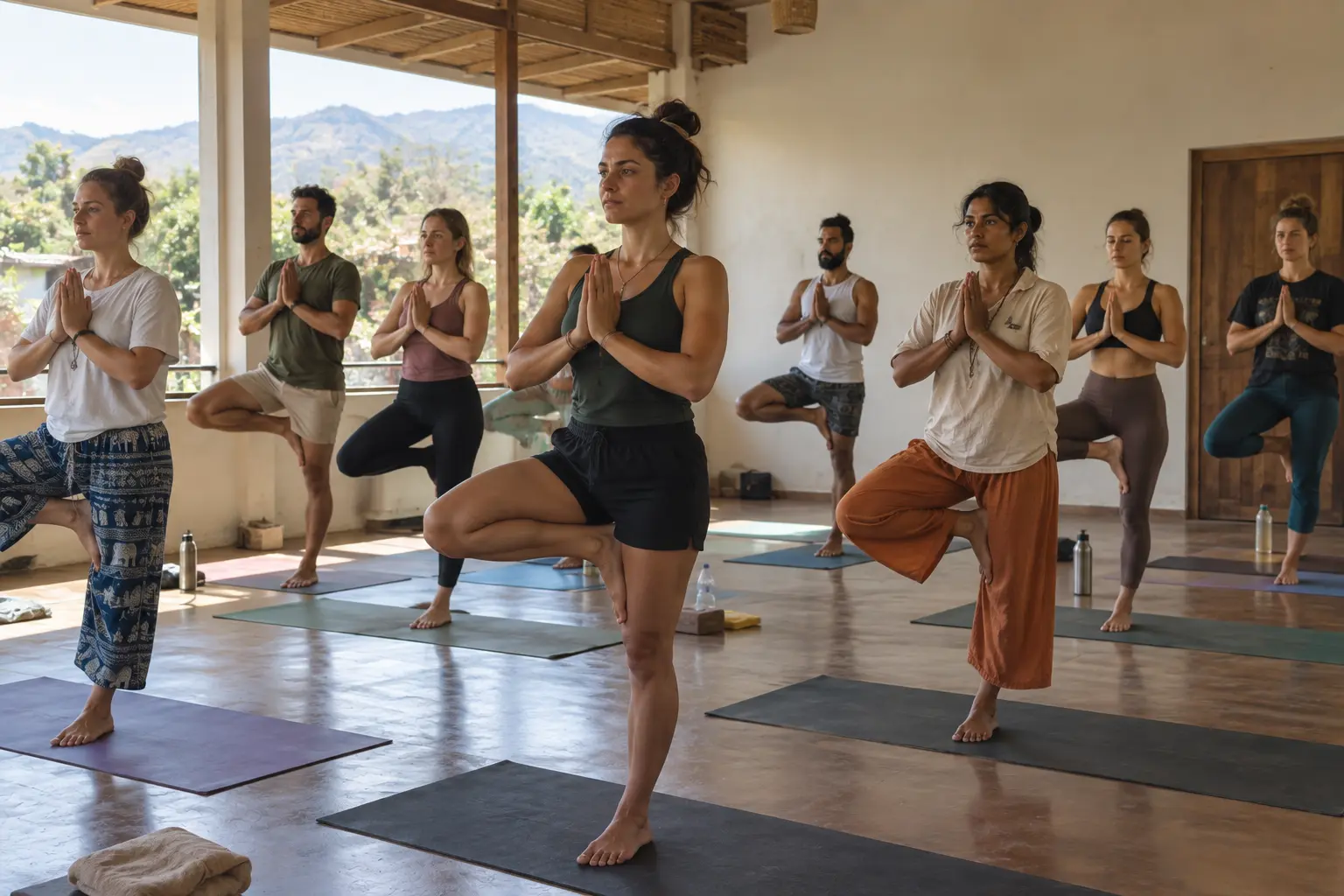
Yoga Alliance or non-Yoga Alliance training: what should you choose?
Use a practical test. If two programs appear equally strong educationally and you intend to teach professionally, the RYS program preserves an additional recognised credentialing option. If the non-registered program is clearly stronger for your purpose, investigate what choosing it would mean for employment, insurance, and professional registration where you plan to work. If your goal is personal study, do not let a registry logo outweigh the teacher and the actual education.
The most useful question is not simply “Is Yoga Alliance certification worth it?” Ask instead whether the training is strong enough to prepare you for what you intend to do after graduation. That question keeps the focus on education, teaching skill, and professional reality rather than treating one logo as the entire decision.
Frequently asked questions
Can I teach yoga without Yoga Alliance registration?
Yoga Alliance is a professional registry rather than a universal government teaching licence, so there is no single worldwide answer. The practical requirements depend on the country, employer, studio, venue, insurer, and type of students you want to teach. Some organisations prefer or require a familiar professional credential, while others focus more on your training certificate, audition, experience, and insurance. Check the actual market where you intend to work.
Can I become RYT 200 after attending a non-RYS school?
For the standard RYT pathway, Yoga Alliance requires evidence of eligible training from a Registered Yoga School. That is one reason to think about future professional plans before choosing a course. A non-registered school can still provide strong education, but it may not support the same registration pathway afterward. If RYT 200 is important to you, verify the school’s current RYS status directly before you enrol rather than assuming the option will be available later.
Does completing an RYS 200 course automatically make me RYT 200?
No. Completing an eligible RYS 200 course gives you the training evidence used for the application, but individual Yoga Alliance registration is a separate process. The school issues the training certificate, and the graduate applies for their own RYT credential if they want it. This is why students should not confuse the school’s registration with their personal registration. The two are connected, but they are not the same record.
Is a Yoga Alliance school automatically better?
No. RYS status tells you that the program participates in the Yoga Alliance credentialing framework, but it does not tell you everything about the daily education. You still need to examine the teachers, curriculum, class size, teaching practicum, feedback, and assessment. A recognised framework can be useful, but good education also depends on how the course is actually taught. Use registration as one factor rather than the only factor.
Should a beginner choose Yoga Alliance teacher training?
A beginner who intends to become a professional teacher may find an RYS 200 practical because it keeps the option of applying for RYT 200 open after eligible training. That does not mean the first registered course you find is the right one. Beginners often need clear instruction, patient correction, realistic class sizes, and enough supervised practice to build confidence. Check those qualities together with registration before making the final choice.
Before you pay for yoga teacher training
Verify the school’s current registration independently if Yoga Alliance matters to you, read the full curriculum, and investigate the teachers who will actually spend those training hours with you. These checks take more effort than looking at a badge, but they tell you much more about the education you are buying. If you are considering residential study in Rishikesh, you can review the current FitFortunes 200 Hour Multi-Style Yoga Teacher Training and compare its live details with your future professional needs.
MAKE THE CREDENTIAL USEFUL