Category: Yoga Training

  • Is Yoga Alliance Certification Worth It? What It Actually Means

    Is Yoga Alliance Certification Worth It? What It Actually Means

    Yoga Alliance registration can be useful, but the logo does not tell you how good a yoga teacher training course is. Its value depends on what you want to do after training and whether studios, insurers, or professional bodies in your market recognise the credential. A Registered Yoga School follows a recognised training framework, but students still need to examine the teachers, curriculum, practicum, class size, and assessment before choosing a course.

    Yoga Alliance states that applicants for its Registered Yoga Teacher credentials must show that they completed eligible training with a Registered Yoga School. That makes the registration useful for people who want a clear professional pathway after graduation. It does not make every registered school equal, and it does not turn the credential into a universal government teaching licence. Yoga Alliance explains its certificate requirements here.

    What does “Yoga Alliance certified” actually mean?

    People often say “Yoga Alliance certified,” but Yoga Alliance normally uses terms such as RYS for Registered Yoga School and RYT for Registered Yoga Teacher. The school and the individual teacher are not the same registration. A school may hold RYS status for an eligible training program, while a graduate can later apply for the relevant RYT credential after completing the required training and registration process.

    This distinction matters because graduating from an RYS 200 course does not automatically place your name on the Yoga Alliance teacher registry. The school issues your training certificate, and the graduate applies separately for RYT registration if they want it. Yoga Alliance checks the training information against the school record during that process. When a school advertises a “Yoga Alliance certificate,” students should understand which part is the school’s certificate and which part is the separate professional registration.

    Is Yoga Alliance required to teach yoga?

    Yoga Alliance is a professional registry, not one worldwide government licence that every yoga teacher must hold. The practical question is where you want to teach and what that studio, employer, insurer, retreat, or professional body expects. One studio may prefer graduates of an RYS, while another may care more about your teaching audition, experience, insurance, and references. Training recognition and legal permission to work in a country are also separate matters.

    This is why a teacher can have a strong education without being personally registered as an RYT, and why an RYT credential alone does not prove teaching skill. Professional registration can make a qualification easier for some employers to understand, but it should be considered together with the quality of the education behind it. If you plan to teach internationally, check the requirements in the country where you intend to work before paying for a course.

    RYS 200 and RYT 200 are not the same thing

    RYS 200 refers to a Registered Yoga School offering an eligible 200-hour teacher training, while RYT 200 refers to an individual teacher who has completed the applicable training and registration process. A graduate does not become an “RYS 200 teacher.” The school remains the RYS, and the individual may apply for RYT 200. Keeping these terms separate makes it easier to understand what a school can promise and what a graduate must do afterward.

    Hatha Yoga teacher training, RYS and RYT 200

    A Hatha Yoga teacher training can be offered by a Registered Yoga School, but “Hatha” describes the practical and educational focus, not a separate Yoga Alliance teacher credential. If a student completes an eligible 200-hour program at an RYS and later meets the registration requirements, they may apply for RYT 200 in the same way as graduates of other eligible 200-hour styles. Students comparing Hatha programs should therefore check both the actual Hatha curriculum and the school’s current registration status rather than treating the words “Hatha” and “Yoga Alliance” as the same thing.

    What does Yoga Alliance registration actually give you?

    It is most useful to think of Yoga Alliance as a recognised training framework and professional credentialing pathway rather than a guarantee of excellence. Completing eligible training at an RYS keeps the option of applying for an RYT credential open. That can be useful when an employer, insurer, retreat organiser, or studio asks for a familiar professional registration. Yoga Alliance currently lists separate application and annual membership costs, so personal registration is also an ongoing professional choice rather than part of the school tuition.

    A student can therefore make two separate decisions. First, decide whether training at an RYS is useful for your future plans. Second, after graduation, decide whether maintaining your own RYT registration gives enough value for the work you want to do. If you are studying mainly for personal practice and do not intend to teach, the second decision may matter much less than the quality of the teacher and the actual education.

    What Yoga Alliance registration does not prove

    Seeing a Yoga Alliance logo should not end your research. Registration does not tell you whether the teacher explains clearly, how much personal correction you will receive, how much supervised teaching practice is included, or whether the class is so large that students receive little feedback. It also does not mean that every graduate from every registered program will become an equally capable teacher. Those qualities depend on the people, structure, and teaching culture inside the course.

    Yoga teacher training students practising supervised teaching in Rishikesh
    Is Yoga Alliance Certification Worth It? What It Actually Means 4

    A 200-hour curriculum is a foundation. Real teaching also develops through observation, personal practice, supervised classes, feedback, clear communication, and knowing when something is outside your knowledge. A registry can set requirements, but it cannot create these qualities on its own. Students should therefore check how the course teaches, not only whether the school can display a registration badge.

    Can a non-Yoga Alliance school be excellent?

    Yes. A teacher with years of serious study does not lose that knowledge because their school is not registered with one professional organisation. This matters especially in India, where yoga education existed long before modern international credentialing systems. A traditional teacher may have deep knowledge of asana, pranayama, philosophy, or meditation without building the course around Yoga Alliance. The important question is whether that education will also meet the professional requirements you may face later.

    Imagine two programs: one is registered but has very large classes and little supervised practicum, while another is not registered but has experienced teachers, small groups, careful corrections, and serious study. The logo alone does not tell you which education is stronger. But if you plan to apply to studios that specifically request training from an RYS, the professional value of registration becomes part of the decision. Education quality and credential portability should be checked together.

    When does choosing an RYS make practical sense?

    If you already know that you want to teach professionally, training through an RYS 200 can remove one future uncertainty because it keeps a recognised RYT pathway available after graduation. This may help if you expect to apply to different studios, move between countries, teach at retreats, or work with organisations that ask about Yoga Alliance. It does not mean you should accept weak training simply because the logo is familiar. The education still has to be strong enough for the work you want to do.

    If international teaching is your goal, our country guide explains whether a 200-hour yoga teacher training is enough to teach in the US, UK, or Australia. Use that information together with the live requirements of employers, insurers, and professional bodies in your destination. A certificate and the legal right to work are separate issues, so immigration rules must also be checked independently.

    When may Yoga Alliance matter much less?

    If your main purpose is personal study, individual RYT registration may offer much less practical value. You may simply want several weeks of Hatha Yoga, pranayama, meditation, philosophy, and disciplined practice without building a teaching career. In that situation, the quality of the teacher, the depth of the curriculum, and the learning environment can matter more than joining a professional registry. A registration system serves a professional purpose; it should not become the definition of yoga education itself.

    How should you compare two yoga teacher trainings?

    If one course is Yoga Alliance registered and another is not, compare the actual education before you compare logos. Find out who will teach you, how much experience they have, how many students are in the group, how much supervised practicum is included, and how assessment works. Read the full curriculum rather than only counting hours. Then check whether the credential will be accepted by the studios, insurers, or professional bodies you may use after graduation.

    1. Check who will actually teach the course.
    2. Read the teachers’ real qualifications and experience.
    3. Read the curriculum instead of only counting hours.
    4. Ask how much supervised teaching practice is included.
    5. Check the class size and amount of individual feedback.
    6. Look at anatomy, alignment, philosophy, pranayama, and teaching methodology.
    7. Ask how students are assessed before graduation.
    8. Verify the school’s current registration independently if it matters to you.

    Our Yoga Teacher Training Syllabus guide explains what to examine inside a serious curriculum. If Yoga Alliance is important for your plans, verify the school’s live status through the official directory before paying rather than relying only on a logo shown on the school website.

    Is RYT 200 worth it after your training?

    For a new teacher who wants professional opportunities, RYT 200 may be useful where studios, employers, or insurers recognise it. For someone who completed YTT only for personal study and does not intend to teach, maintaining a professional registry may have little purpose. The important point is that choosing an RYS and becoming an RYT are separate decisions. One concerns where you train; the other concerns whether you personally join and maintain the professional registry afterward.

    Does Yoga Alliance registration guarantee a good teacher?

    No. Credentials establish a framework, while teaching develops through practice and experience. A certificate can show that someone completed a course, but it cannot show how attentively they will watch a student, whether they can explain an instruction clearly, or whether they understand the limits of their own knowledge. Teacher training should therefore be seen as a professional foundation rather than the final stage of learning. Your first 200 hours are the beginning, not proof that there is nothing left to study.
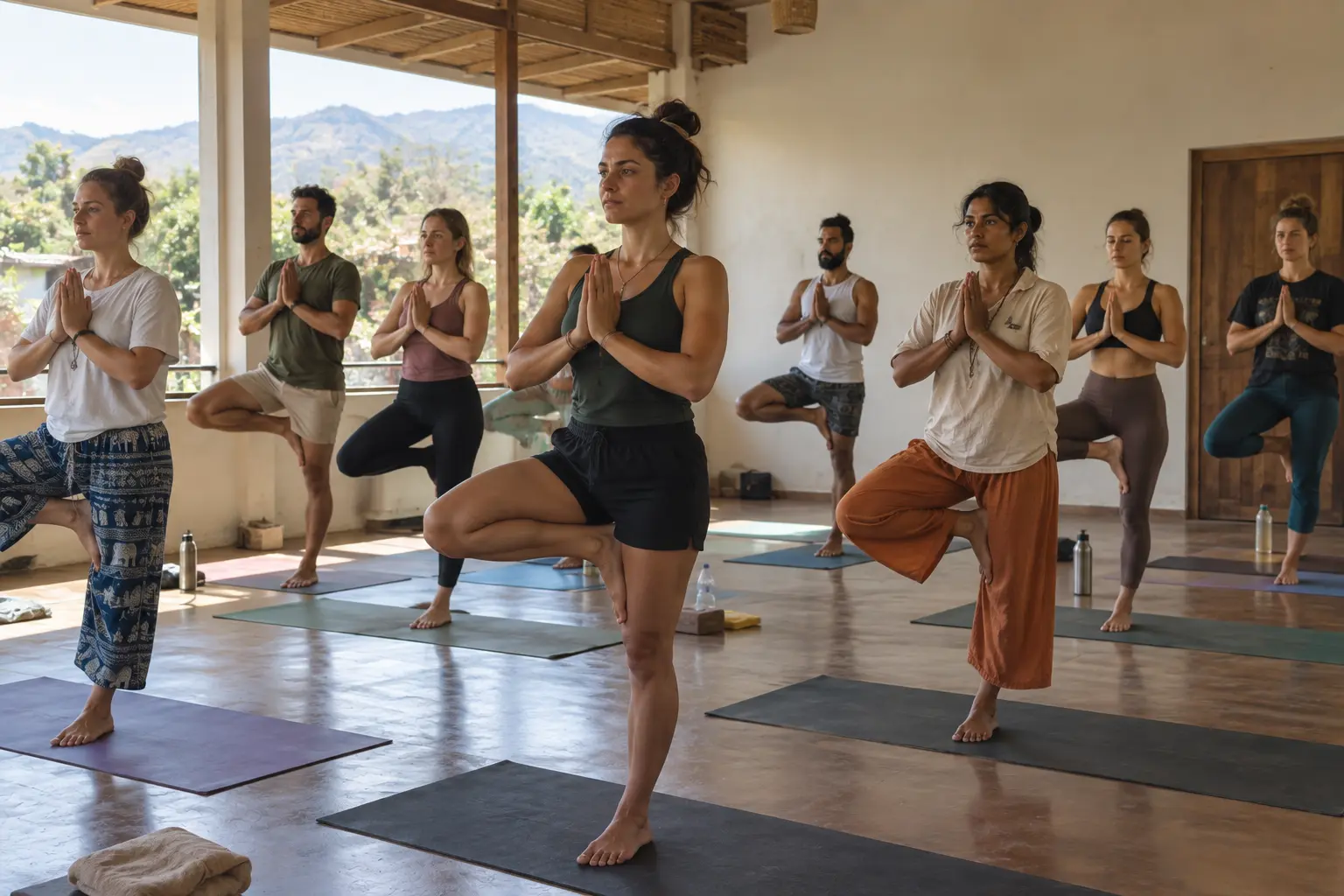
    Yoga teacher training students studying together during a residential course
    Is Yoga Alliance Certification Worth It? What It Actually Means 5

    Yoga Alliance or non-Yoga Alliance training: what should you choose?

    Use a practical test. If two programs appear equally strong educationally and you intend to teach professionally, the RYS program preserves an additional recognised credentialing option. If the non-registered program is clearly stronger for your purpose, investigate what choosing it would mean for employment, insurance, and professional registration where you plan to work. If your goal is personal study, do not let a registry logo outweigh the teacher and the actual education.

    The most useful question is not simply “Is Yoga Alliance certification worth it?” Ask instead whether the training is strong enough to prepare you for what you intend to do after graduation. That question keeps the focus on education, teaching skill, and professional reality rather than treating one logo as the entire decision.

    Frequently asked questions

    Can I teach yoga without Yoga Alliance registration?

    Yoga Alliance is a professional registry rather than a universal government teaching licence, so there is no single worldwide answer. The practical requirements depend on the country, employer, studio, venue, insurer, and type of students you want to teach. Some organisations prefer or require a familiar professional credential, while others focus more on your training certificate, audition, experience, and insurance. Check the actual market where you intend to work.

    Can I become RYT 200 after attending a non-RYS school?

    For the standard RYT pathway, Yoga Alliance requires evidence of eligible training from a Registered Yoga School. That is one reason to think about future professional plans before choosing a course. A non-registered school can still provide strong education, but it may not support the same registration pathway afterward. If RYT 200 is important to you, verify the school’s current RYS status directly before you enrol rather than assuming the option will be available later.

    Does completing an RYS 200 course automatically make me RYT 200?

    No. Completing an eligible RYS 200 course gives you the training evidence used for the application, but individual Yoga Alliance registration is a separate process. The school issues the training certificate, and the graduate applies for their own RYT credential if they want it. This is why students should not confuse the school’s registration with their personal registration. The two are connected, but they are not the same record.

    Is a Yoga Alliance school automatically better?

    No. RYS status tells you that the program participates in the Yoga Alliance credentialing framework, but it does not tell you everything about the daily education. You still need to examine the teachers, curriculum, class size, teaching practicum, feedback, and assessment. A recognised framework can be useful, but good education also depends on how the course is actually taught. Use registration as one factor rather than the only factor.

    Should a beginner choose Yoga Alliance teacher training?

    A beginner who intends to become a professional teacher may find an RYS 200 practical because it keeps the option of applying for RYT 200 open after eligible training. That does not mean the first registered course you find is the right one. Beginners often need clear instruction, patient correction, realistic class sizes, and enough supervised practice to build confidence. Check those qualities together with registration before making the final choice.

    Before you pay for yoga teacher training

    Verify the school’s current registration independently if Yoga Alliance matters to you, read the full curriculum, and investigate the teachers who will actually spend those training hours with you. These checks take more effort than looking at a badge, but they tell you much more about the education you are buying. If you are considering residential study in Rishikesh, you can review the current FitFortunes 200 Hour Multi-Style Yoga Teacher Training and compare its live details with your future professional needs.

  • What to Bring for Yoga Teacher Training in Rishikesh | Complete Packing Guide

    What to Bring for Yoga Teacher Training in Rishikesh | Complete Packing Guide

    Pack light for yoga teacher training in Rishikesh. You need comfortable practice clothes, simple town clothes, one weather layer, regular medicines, travel documents, a power adapter, a notebook, and more than one way to pay. You do not need a suitcase full of yoga gear because basic daily items are easy to buy in Rishikesh if you forget something. If you are still planning your arrival, use our Delhi to Rishikesh travel guide to compare transport options before packing.

    Clothes for practice and daily life

    Bring enough practice clothes for several days between washes rather than packing a different outfit for every class. Four to six comfortable practice sets are enough for many students when laundry is available. Choose clothes you already know work for movement and sitting because a new pair of leggings, shorts, or tops can look good but feel uncomfortable during long training days.

    • Yoga trousers, leggings, shorts, or joggers.
    • Breathable T-shirts or practice tops.
    • Underwear and socks.
    • One or two simple outfits for town.
    • Sandals and comfortable walking shoes.
    • A light shawl, sweatshirt, or jacket.

    Rishikesh is both a yoga town and an important pilgrimage town, so simple clothing works well in markets, temples, and local areas. You do not need to buy special “spiritual” clothes before travelling. Comfortable, clean, modest clothing is more practical than trying to look a particular way.

    Pack for the month you are visiting

    Rishikesh weather changes through the year, so check the current forecast shortly before you travel instead of packing for “India” as if the whole country has one climate. Winter mornings can feel cool, hotter months need lighter clothing, and monsoon periods can be humid and wet. One useful weather layer is usually better than carrying several bulky items you may never use.

    Cooler months

    Bring a light or medium jacket, long trousers, warm socks, and a shawl or extra layer for early mornings and evenings. Classrooms and rooms can feel different from the midday temperature, so layers are easier than one very heavy item. Choose things that can be used both for travel and for normal daily life during the course.

    Hotter months

    Light cotton clothing, quick-dry practice clothes, sun protection, and a hat can be useful when the weather is hot. You may practise more than once in a day, so clothes that dry quickly make laundry easier. Avoid packing only thick or dark clothing if you are travelling during a warm period.

    Monsoon months

    A compact umbrella or light rain shell, fast-drying footwear, and clothes that do not stay wet for a long time are useful during monsoon. Rain can affect short walks and local travel even when you spend most of the day in class. Keep important documents and electronics inside a simple waterproof pouch or protected section of your bag.

    Medicines and basic health items

    Bring the medicines you already use and keep prescription medicines in their original packaging when practical. Carry enough for the trip and keep important prescription information with you. A small personal kit can be useful, but you do not need to bring a full pharmacy because basic health and toiletry items are available locally.

    • Regular prescription medicines.
    • Plasters and basic personal first-aid items.
    • Oral rehydration salts.
    • Allergy medicine you normally use.
    • Menstrual products when needed.
    • Mosquito repellent and normal toiletries.

    If you have a health condition, recent injury, or limitation that may affect yoga practice, tell the school before you arrive instead of waiting for the first class. That gives teachers time to understand what may need modification. Yoga teacher training is education, so relevant medical concerns should still be discussed with an appropriate healthcare professional when needed.

    Passport, visa, and travel records

    Keep your important documents together and easy to reach during travel, but also keep copies somewhere separate from the originals. Save digital copies of your passport, visa approval, insurance details, flight information, school address, and emergency contacts so you can still access the information if one bag or device is lost. Do not keep every important document in one place.

    • Passport.
    • Current visa or travel authorisation.
    • Travel insurance details.
    • Flight and onward-travel information.
    • School address and phone number.
    • Emergency contact information.

    Visa rules can change, so use the official Government of India e-Visa website rather than relying on an old blog or an unofficial “express visa” page. Check the rules for your own passport and travel purpose before buying non-refundable tickets.

    Electronics and study items

    A universal travel adapter is useful, along with the normal chargers for the phone or laptop you actually plan to use. A small power bank can help on long travel days, but there is little value in carrying several devices you will barely touch during an intensive course. For study, one reliable notebook and pen are usually more useful than a stack of heavy yoga books.

    Do you need to bring your own yoga mat?

    Ask the school first because many residential schools provide mats and basic props for training. If you strongly prefer your own mat for hygiene, grip, or comfort, a lighter travel mat is easier to carry than a heavy premium mat. The extra weight matters more when you are also moving through airports, stations, or taxis with luggage.

    If you do bring your own mat, keep it dry and clean between sessions and check the material before using strong cleaning products. Our yoga mat cleaning guide explains why different mat materials need different care.

    Money and payment methods

    Bring more than one way to pay because an international card can be blocked or fail at one machine even when it normally works. Keep a backup card separate from your main wallet and carry a small amount of cash for local purchases or transport. If your bank uses travel notifications, update it before departure and check international transaction fees in advance.

    What you can leave at home

    Most students bring too much rather than too little. Rishikesh has pharmacies, clothing shops, stationery stores, toiletries, and other everyday items, so there is no reason to carry large amounts of things that are easy to replace. Leave some space in your luggage for the return journey instead of packing every possible item “just in case.”

    • Several pairs of shoes.
    • A stack of heavy yoga books.
    • Large yoga props unless the school specifically requests them.
    • Expensive ceremonial items.
    • Large bottles of common toiletries.

    Final packing checklist

    Use a short final checklist the day before departure so important items do not get lost inside a long packing list. Documents, medicines, clothing, chargers, and the school address matter more than extra accessories. Keep anything essential for the first 24 hours in your hand luggage when airline rules allow it.

    • Passport and current travel documents.
    • Medication and important health information.
    • Comfortable yoga clothes.
    • Weather layer or rain protection.
    • Sandals and walking shoes.
    • Adapter, chargers, and phone.
    • Notebook and pen.
    • Reusable water bottle if suitable for your travel setup.
    • School address saved offline.
    • A small amount of cash and a backup payment method.

    Frequently asked questions

    How many yoga outfits should I bring?

    Four to six comfortable practice sets are enough for many students when laundry is available, but the right number depends on the weather and how often you wash clothes. Quick-dry items are useful when you practise frequently. Pack clothes you have already worn in yoga rather than testing several new outfits during an intensive course.

    Can I buy yoga clothes and toiletries in Rishikesh?

    Yes, many everyday items are available locally, including basic clothing, toiletries, stationery, and pharmacy products. You may still prefer to bring specific brands, medicines, or personal products that are important to you. The point of packing light is not to arrive unprepared; it is to avoid carrying bulky items that are easy to replace.

    Should I bring yoga books?

    Usually only if there is one book you know you will use. Teacher training already includes notes, classes, assignments, and a full daily schedule, so a heavy stack often stays unopened. Digital copies or one selected text are easier to manage when you are travelling internationally.

    Two things to do before you travel

    First, choose your onward route with our Delhi to Rishikesh travel guide so you know how you will reach the school after your flight. Second, read the India YTT planning guide so visa, money, arrival, health, and course expectations are clear before you leave home.

  • Delhi to Rishikesh Travel Guide: Taxi, Flight, Train & Bus

    Delhi to Rishikesh Travel Guide: Taxi, Flight, Train & Bus

    Delhi to Rishikesh is one of the most common travel routes for international visitors coming to Uttarakhand. You can travel by private taxi, domestic flight, train, or bus. The right choice depends on your arrival time, luggage, budget, and how tired you are after your flight.

    If this is your first visit to India, keep the first day simple. A route with fewer changes is usually easier than saving a small amount of money and changing transport several times. This guide explains the main options in plain English so you can choose the route that fits you.

    Quick answer: what is the easiest way from Delhi to Rishikesh?

    For many first-time international visitors, a pre-booked private taxi from Delhi Airport to Rishikesh is the simplest option. You leave the airport, meet the driver, and travel directly to your hotel, B&B, ashram, or yoga school. A flight from Delhi to Dehradun can reduce road time, while train and bus are usually better for travellers who want to spend less.

    Ram Jhula suspension bridge over the Ganga in Rishikesh
    Ram Jhula over the Ganga in Rishikesh. Photo: Asis K. Chatterjee, Wikimedia Commons, CC BY-SA 2.0.

    Table of contents

    Delhi to Rishikesh route comparison

    Travel times and prices change with traffic, season, ticket demand, road work, and the type of service you book. Use this table as a simple guide, then check your live fare and timetable before paying.

    RouteTypical total timeGood for
    Private taxi from Delhi AirportAbout 5.5-7.5 hoursFirst visit, heavy luggage, late arrival
    Flight to Dehradun + taxiAbout 1 hour flight + airport transferLess road travel
    Train to Haridwar + taxi or local transportUsually 4-7 hours in totalTravellers comfortable with Indian rail travel
    Bus from DelhiUsually 5.5-8 hoursLower-cost travel

    Delhi Airport to Rishikesh by private taxi

    A private taxi is the most direct road option from Indira Gandhi International Airport in Delhi. The driver can meet you at the airport and take you to your exact address in Rishikesh. This is useful when you have large bags, arrive after a long international flight, or do not want to move between stations.

    Before travel, confirm the driver name, phone number, pickup terminal, total fare, toll arrangement, and your final Rishikesh address. Save these details offline. Delhi traffic can be heavy, and road conditions can change, so do not plan a tight appointment immediately after your expected arrival time.

    If you are coming for 200 hour yoga teacher training in Rishikesh, send your arrival details to the school before you leave home. The same advice applies to any B&B, hotel, retreat, or ashram booking.

    Delhi to Dehradun by flight, then taxi to Rishikesh

    Dehradun Airport, also called Jolly Grant Airport, is the nearest commercial airport to Rishikesh. A domestic flight from Delhi can reduce the long road journey. After landing, you continue to Rishikesh by taxi.

    This route can be useful when you prefer a shorter drive, but do not make the connection too tight. International arrival, immigration, baggage collection, terminal movement, security, and possible flight delays can take time. Leave a safe gap between flights.

    Check the airline schedule and baggage allowance close to your travel date. A low domestic fare may become more expensive if your international luggage is above the domestic baggage limit.

    Delhi to Rishikesh by train

    Train travel is a good choice when you are already staying in Delhi or you are comfortable using Indian railway stations. Many visitors travel from Delhi to Haridwar and then continue to Rishikesh by taxi, auto, or another local service. Haridwar has stronger rail connections than central Rishikesh.

    Delhi has several major railway stations, so check the exact station name before leaving for your train. Do not assume every train leaves from New Delhi Railway Station. Your station, platform, train number, and departure time should be checked again on the day of travel.

    Railway station in India for train travel to Rishikesh via Haridwar
    Rail travel in India. Photo: Angelo DeSantis, Wikimedia Commons, CC BY 2.0.

    If you have just finished a long overnight flight, think about how much luggage you have before choosing rail. You may still need transport from Delhi Airport to the railway station and another transfer from Haridwar to your Rishikesh accommodation.

    Delhi to Rishikesh by bus

    Bus travel is often one of the cheaper ways to reach Rishikesh. It is more convenient when you are already in Delhi and can reach the boarding point without stress. Buses may leave from Kashmere Gate ISBT or other private boarding points, depending on the operator.

    Before booking, check the exact boarding point, luggage rules, bus type, final stop, and expected arrival area. Some services stop in Rishikesh, while others may leave you on a main road or at a point outside the area where you are staying.

    Uttarakhand Roadways bus used for travel in Uttarakhand
    Uttarakhand Roadways bus. Photo: ArmouredCyborg, Wikimedia Commons, Creative Commons licensed.

    A bus can save money, but it is not always the easiest first-night option after a long international trip. If you are very tired, travelling alone at night, or carrying several bags, a direct transfer may be simpler.

    What is Nepali Farm near Rishikesh?

    Nepali Farm is a road junction outside the main tourist areas of Rishikesh. Some buses and shared vehicles stop there. From Nepali Farm, you normally need another local ride to places such as Tapovan, Laxman Jhula, Swarg Ashram, Muni Ki Reti, or central Rishikesh.

    This can work well for travellers with light luggage who understand the local route. It is less convenient for someone arriving in India for the first time, especially late at night.

    Which Rishikesh area are you actually going to?

    Rishikesh is not one small block. Your final travel time depends on where you are staying. Tapovan, Laxman Jhula, Swarg Ashram, Muni Ki Reti, Ram Jhula, and central Rishikesh are different areas. Ask your host for the exact map location before leaving Delhi.

    This small step can prevent a common problem: reaching Rishikesh but then spending another hour trying to find the correct side of the river or the correct neighbourhood.

    Simple arrival tips for international visitors

    Prepare the first arrival before you fly. Keep the information you may need when mobile data is weak or your phone battery is low. The goal is not to plan every minute. It is to remove the common problems that happen when you are tired.

    • Save your accommodation address and phone number offline.
    • Keep your passport, visa copy, cards, phone, charger, and medicine in hand luggage.
    • Carry a small amount of Indian rupees for local payments.
    • Keep a power bank in your cabin bag if airline rules allow it.
    • Use a known taxi company, official counter, app, or pre-arranged driver.
    • Tell your host if a flight delay changes your arrival time.
    • Do not make a very tight train, bus, or domestic flight connection after an international landing.

    Visa and travel documents

    Visa and entry rules depend on your passport and can change. Check the official Government of India e-Visa website before travel. Keep digital and paper copies of your passport, visa, insurance, flight information, and accommodation address.

    For a wider pre-flight checklist, read our India travel guide for international yoga students. Travellers coming alone may also find our Rishikesh safety guide for solo female visitors useful.

    What should you pack for the Delhi to Rishikesh trip?

    Keep the items you may need during the first day where you can reach them easily. Water, basic medicine, a light layer, phone charger, tissues, cash, and your address can save time. Do not put every important item in checked luggage.

    If you are staying for yoga study, our Rishikesh packing guide covers clothes, weather, medicine, documents, and other useful items.

    Frequently asked questions

    How far is Rishikesh from Delhi?

    The road distance is roughly 240 kilometres, but your actual route can vary. Travel time depends more on Delhi traffic, road conditions, stops, and where you are staying in Rishikesh than on distance alone.

    Can I travel directly from Delhi Airport to Rishikesh?

    Yes. A private taxi can take you directly from Delhi Airport to your Rishikesh accommodation. This is one of the simplest options for first-time visitors and people carrying large luggage.

    Is Dehradun Airport closer to Rishikesh?

    Yes. Dehradun’s Jolly Grant Airport is much closer to Rishikesh than Delhi Airport. You still need a road transfer from the airport to your final address.

    Is there a direct train from Delhi to Rishikesh?

    Rail options change by timetable. Many travellers use Haridwar as the main rail connection and continue by road to Rishikesh. Check current Indian Railways information for your travel date rather than relying on an old schedule.

    Is bus travel from Delhi to Rishikesh safe for tourists?

    Many tourists use buses on this route. Choose a known operator, confirm the boarding and arrival points, keep valuables with you, and think carefully before choosing a late-night arrival if you are new to the area.

    Should I stay one night in Delhi before going to Rishikesh?

    It depends on your flight time and energy. If you land very late after a long international flight, one night near Delhi can make the next day easier. If you arrive during the day and have a simple transfer booked, travelling onward the same day may be practical.

    How much cash should I carry for the first day?

    You do not need to carry a large amount. Keep enough Indian rupees for small local payments, food, or a short auto ride. Use normal safety habits and keep most of your money and cards secure.

    Final travel advice

    The best Delhi to Rishikesh route is the one you can manage comfortably after your real arrival, not the one that looks fastest on paper. First-time visitors often prefer a direct taxi. A domestic flight can reduce road time. Train and bus can cost less when you are comfortable making transfers.

    Whichever route you choose, save your exact Rishikesh address, allow extra time, and check live schedules before travel. That simple preparation makes the first day much easier.

  • Yoga Teacher Training Curriculum in Rishikesh

    Yoga Teacher Training Curriculum in Rishikesh

    A yoga teacher training curriculum should make it clear what students will study, practise, teach, and be assessed on before they book. At FitFortunes Holistic Wellness Yoga School in Rishikesh, the curriculum connects physical practice with breathing, meditation, philosophy, anatomy, teaching skills, sequencing, ethics, and supervised practicum. The aim is not to fill a timetable with as many subject names as possible. Each subject should help the student understand yoga more clearly and communicate it more responsibly. This guide explains what the main curriculum areas mean and how they fit together.

    FitFortunes currently offers a 10-day 100-hour foundation course and a 21-day 200-hour residential teacher-training program. The practical asana focus is Hatha Yoga and Vinyasa Krama, supported by pranayama, meditation, philosophy, anatomy, alignment, teaching methodology, and practice teaching. The exact timetable can change as a course develops, so the live course page remains the final source for current dates and daily scheduling. The curriculum below explains the learning structure rather than promising that every topic receives the same number of hours.

    Yoga teacher training curriculum at a glance

    A useful curriculum has a clear relationship between personal practice and teaching practice. Students first need to understand what they are doing in their own body and breath before they can guide someone else. They also need enough philosophy and ethics to understand yoga beyond exercise, enough anatomy to observe movement safely, and enough teaching practice to communicate clearly. These areas should support each other instead of appearing as separate subjects that never connect. In a well-planned course, what happens in the morning practice should make more sense after the anatomy, philosophy, or methodology class later in the day.

    • Hatha Yoga and Vinyasa Krama asana practice.
    • Pranayama, meditation, and selected subtle-body practices.
    • Yoga philosophy, ethics, and classical context.
    • Anatomy, movement, alignment, and basic safety.
    • Teaching methodology, cueing, observation, and class management.
    • Sequencing and lesson planning.
    • Practicum, feedback, and teaching assessment.
    • Professional responsibility and scope of practice.

    Asana practice: Hatha Yoga and Vinyasa Krama

    Asana is the most visible part of a yoga teacher training course, but the curriculum should go beyond copying shapes. Students learn how to enter and leave a posture, coordinate movement with breath, notice stability and unnecessary effort, and understand what a posture is trying to develop. They also learn that different students may need different ranges of motion or simpler variations. A good class therefore combines personal practice with observation and explanation. The goal is to build a practical understanding that can later support safe and clear teaching.

    How the Hatha-focused curriculum differs

    Students who choose the 200-hour Hatha Yoga Teacher Training in Rishikesh follow a more Hatha-centred practical path. Its traditional practice framework gives specific attention to Asana, Pranayama, Mudra and Bandha, and Nadanusandhana (Nada Yoga), while still including philosophy, anatomy, alignment, teaching methodology, observation, and practicum. This is different from the Multi-Style program, where Hatha Yoga is paired with Vinyasa Krama. Keeping those two paths clear helps students choose by learning focus instead of seeing the courses as duplicate versions of the same program. The separate guide on what makes Hatha teacher training traditional explains the classical sources and practices behind that label.

    At FitFortunes, Hatha Yoga provides a steady foundation while Vinyasa Krama develops the idea of progressing through movement in a logical order. Students study how one movement can prepare for another, how transitions affect the body, and how pace changes the experience of a class. This is different from collecting difficult postures for display. It teaches students to think about purpose, preparation, breath, and the needs of the group. The same thinking later becomes important when students begin planning their own classes.

    Pranayama, meditation, and subtle practice

    Pranayama training should begin with breathing awareness, posture, and control of unnecessary tension. Students learn selected breathing methods step by step and are encouraged to understand preparation, pace, comfort, and purpose rather than simply memorising names. They also study when a technique should be simplified or avoided. This creates a more responsible approach than treating stronger breathing practices as a performance. The aim is to help students understand how breath practice fits into a wider yoga class and personal routine.

    Meditation develops attention, observation, and the ability to stay with a practice without constant external stimulation. Depending on the course format, students may also meet selected mudra, bandha, mantra, yoga nidra, or cleansing practices. These subjects should be introduced with enough context for students to understand why they are used. They should not be added only to make the curriculum look longer. When taught well, they help students see how asana, breathing, concentration, and meditation relate to one another.

    Yoga philosophy, ethics, and classical context

    Yoga philosophy gives students a framework for understanding yoga beyond physical exercise. A foundational curriculum may introduce ideas from Patanjali’s Yoga Sutras, the Bhagavad Gita, and selected Hatha Yoga texts, together with self-study, discipline, meditation, and ethical conduct. The purpose is not to turn a student into a Sanskrit scholar in a few weeks. It is to give enough context to understand key ideas and avoid repeating unsupported claims. Philosophy becomes useful when students can connect it with practice, teaching, and everyday decisions.

    Clear terminology is part of that responsibility. Patanjali’s Ashtanga Yoga refers to an eight-limbed framework and should not automatically be treated as the same thing as the modern Ashtanga Vinyasa Primary Series. A teacher should know when the same word is being used in different historical or teaching contexts. Ethics also includes professional boundaries, consent, honesty about qualifications, and knowing when a student needs support outside a yoga teacher’s scope. These subjects protect both the teacher and the people they teach.

    Anatomy, alignment, and movement observation

    Anatomy is most useful when it changes how a trainee observes movement. Students study basic joints, muscles, breathing mechanics, balance, load, and common movement limits, then connect those ideas with the postures they are practising. The goal is not to memorise a long medical vocabulary that is never used in class. Instead, students learn to notice how different bodies organise the same movement. This makes anatomy practical rather than decorative.

    Alignment is taught as a way to improve organisation, awareness, and safety rather than as one perfect shape for every person. Two students can have different proportions, mobility, injury history, strength, and movement habits. A teacher therefore needs to understand the purpose of a posture and offer sensible options without pretending to diagnose a medical condition. Observation, communication, and restraint are as important as knowing a textbook position. This is especially important for new teachers who may otherwise try to correct every student into the same shape. The Hatha anatomy and alignment guide goes deeper into movement observation, breath, variation, pain, and professional scope.

    Teaching methodology and class sequencing

    Teaching methodology turns personal knowledge into instructions another person can understand. Students practise verbal cueing, demonstration, observation, class pacing, time management, simple modifications, and professional boundaries. They learn that a cue should arrive before the movement it describes and that a demonstration should not prevent the teacher from seeing the group. They also learn to reduce unnecessary words so students can follow the class more easily. Good teaching is not measured by how much a teacher says, but by how clearly the class can respond.

    Sequencing is part of the same skill. A sequence should have a purpose, an understandable order, enough preparation for more demanding movements, and suitable periods of rest. Students learn how to connect the opening of a class with its main work and closing instead of placing postures together at random. They also see how breath, timing, repetition, and transitions affect the experience of the sequence. A plan should be simple enough to teach well, because a complicated sequence that cannot be communicated clearly is not an effective class.

    • Clear verbal cueing and demonstration.
    • Observation without over-correcting.
    • Class planning, timing, and pacing.
    • Simple modifications and accessible options.
    • Professional boundaries, consent, and teacher ethics.

    Practicum, observation, and feedback

    Practicum is where information becomes teaching experience. Students may guide a warm-up, teach a short sequence, observe another trainee, or lead a longer class while a teacher watches. Each attempt gives the trainee something specific to review. They learn how their voice, timing, demonstration, instructions, and position in the room affect the class. This is one of the most important parts of a teacher-training curriculum because it shows what a student can actually apply.

    Useful feedback should be specific enough to act on. A trainee can improve when they learn that a cue came too late, a transition confused the group, or a demonstration blocked their view of students. General praise may feel good, but it does not always improve teaching. Repeated practice allows the student to make one correction and then test it again. Over time, that process builds more confidence than simply being told that the class was good.

    Ayurveda and yogic lifestyle where included

    Some FitFortunes training formats also include introductory study of Ayurveda and yogic lifestyle. These classes may discuss daily routine, food, basic constitutional ideas, and how personal habits can affect practice and recovery. The purpose is educational, not medical diagnosis or treatment. A yoga teacher should not present introductory Ayurveda study as a licence to treat health conditions. When included, these subjects are most useful when they help students think more carefully about routine, rest, food, and sustainable practice.

    The residential routine itself also teaches practical discipline. Students follow regular practice, study, meals, rest, and shared learning over several days rather than treating yoga as an occasional class. This makes lifestyle ideas easier to understand because students experience a structured schedule directly. The emphasis should remain realistic and practical. A course does not need dramatic promises about changing a person’s life in order to teach useful habits.

    How Yoga Alliance standards relate to the curriculum

    Yoga Alliance groups the RYS 200 core curriculum into four broad areas: Techniques, Training and Practice; Anatomy and Physiology; Yoga Humanities; and Professional Essentials. These categories create a common framework, but registered schools still decide how their approved program teaches and connects the material. This means two 200-hour courses can share the same credential level while using different teaching methods, schedules, and emphasis. Students should therefore look at the real curriculum and teachers rather than judging a program only by a logo. The current categories and requirements can be checked on the official Yoga Alliance RYS standards page.

    For FitFortunes, the important point is that the curriculum should be understandable before a student arrives. Course pages should state the training style, duration, core subjects, practicum, and current schedule clearly. Students should also be able to distinguish school registration from their own later teacher-registration process. This kind of factual clarity helps prospective students compare programs and also makes the page easier for search engines and AI systems to interpret correctly. Clear facts are more useful than broad claims about becoming a different person in a few weeks.

    How the 100-hour and 200-hour curriculum differ

    The 100-hour Multi-Style Yoga Teacher Training is a 10-day foundation course that runs from the 2nd to the 12th of the month. It introduces Hatha and Vinyasa Krama foundations together with breathing, meditation, philosophy, anatomy, and basic teaching concepts. It is useful for personal study or preparation for longer training. It should not be presented as the same professional training outcome as a complete 200-hour program. The shorter format means the main subjects are introduced rather than studied to the same depth.

    The 200-hour Multi-Style Yoga Teacher Training in Rishikesh is currently a 21-day residential program. It gives more time to methodology, sequencing, anatomy, philosophy, practice teaching, observation, and assessment. Students who successfully complete an eligible 200-hour training with a Yoga Alliance Registered Yoga School may then apply separately for the relevant Yoga Alliance teacher credential, subject to Yoga Alliance requirements. The school registration and the student’s later RYT application are two different things. This distinction should remain clear on every course and informational page.

    What students should be able to do with the curriculum

    A curriculum is useful only when students can apply what they studied. By the end of a foundational teacher-training program, students should be better able to practise with awareness, explain basic yoga concepts accurately, plan a simple class, communicate instructions clearly, observe common movement differences, and stay within an appropriate teaching scope. They should also understand that completing a course is the beginning of teaching development rather than the end of it. Experience grows through continued practice, study, observation, and teaching. A good curriculum gives the student a structure for that continued learning.

    • Practise and explain foundational asana with clearer purpose.
    • Use basic pranayama and meditation methods with appropriate context.
    • Understand key philosophical and ethical ideas without exaggerating them.
    • Plan and teach a simple, logical class sequence.
    • Observe students and offer sensible options without diagnosing medical problems.
    • Receive feedback and continue improving after the course.

    Frequently asked questions about YTT curriculum

    Does a 200-hour yoga teacher training curriculum teach only asana?

    No. Asana is important, but a complete foundational curriculum also includes breathing, meditation, anatomy, philosophy, ethics, teaching methodology, sequencing, and practicum. These subjects are not side topics. They help a trainee understand what they are teaching and how to communicate it responsibly. A course that focuses almost entirely on physical practice may leave important teaching skills underdeveloped.

    Why is practicum important in yoga teacher training?

    Practicum lets students test what they have learned in front of real people. Speaking clearly, watching a group, managing time, and changing a plan are skills that cannot be learned only from notes. Feedback helps the trainee see details they may miss while teaching. Repeated practice then gives them a chance to correct those details. This is why practicum should be treated as a core part of teacher preparation rather than an optional final exercise.

    Do I need to memorise yoga philosophy?

    No. A foundation course should help students understand key ideas and their context rather than memorise quotations without knowing what they mean. Good philosophy teaching gives enough background to discuss yoga responsibly, recognise important terms, and understand how practice relates to ethics and self-study. Students should also learn when two traditions use the same word differently. Understanding matters more than reciting text from memory.

    Is yoga anatomy taught like a medical course?

    No. Yoga anatomy should focus on movement knowledge that is useful within a yoga teacher’s professional scope. Students learn basic structures, breathing mechanics, joint movement, balance, and common limitations so they can observe more carefully. The training does not make a yoga teacher a doctor, physiotherapist, or rehabilitation professional. It should instead help the teacher communicate more safely and know when a concern is outside their role.

    Does a 100-hour YTT have the same curriculum as a 200-hour YTT?

    No. A 100-hour course can introduce many of the same broad subjects, but it has less time for depth, assessment, and supervised teaching. At FitFortunes, the 100-hour Multi-Style course is positioned as a foundation and preparation program. The 200-hour course allows more time for methodology, sequencing, practicum, and evaluation. The two programs should therefore be compared by purpose, not only by the number printed in the course title.

    How should I compare two yoga teacher training curriculums?

    Compare how the important subjects are actually taught rather than counting how many topics appear on the page. Look at the teachers, practice-teaching opportunities, daily schedule, assessment, teaching style, and whether the course explains what students should be able to do by the end. A long list can still be shallow if every topic receives very little time. For a broader comparison checklist, read what a good yoga teacher training syllabus should include. That article explains how to judge a syllabus, while this page focuses on what the curriculum itself contains.

    Use the curriculum with the live course information

    This article explains the learning areas behind a yoga teacher training curriculum, but the live course page should always be checked before booking. Dates, timetable details, subject emphasis, room choices, and other practical information can change as a program is updated. For the current residential training, use the 200-hour Multi-Style Yoga Teacher Training page. If you want to understand how those subjects fit into a normal training day, read the real YTT daily schedule guide. Together, those pages give a clearer picture of what students study and how the study fits into the residential routine.

  • Yoga Teacher Training Syllabus: What a Good YTT Should Include

    Yoga Teacher Training Syllabus: What a Good YTT Should Include

    A good yoga teacher training syllabus should tell you what you will study, how you will practise teaching, and how the school checks your learning. The longest syllabus is not automatically the best one. A clear structure with real teaching time, practical work, and assessment is more useful than a page filled with impressive subject names that receive almost no attention.

    Curriculum and syllabus are not the same thing

    The curriculum is the larger learning plan for the course, while the syllabus is the practical map of what students study inside that plan. A useful syllabus should show subjects, learning goals, practice teaching, and assessment clearly enough that a student can understand how the training is organised. Two schools can both advertise 200 hours and still use those hours in very different ways.

    This distinction matters when you compare schools. A curriculum may say that anatomy, philosophy, methodology, and practicum are all included, but the syllabus should help you see how much attention those areas actually receive and how they connect with the daily training. The hour number by itself does not tell you whether the education is balanced.

    Asana and movement practice

    The syllabus should name the main physical practice clearly and explain how it is taught. Ask whether the course is centred on Hatha Yoga, another defined asana method, or a combination of practices, then ask how much real time each one receives. A course that lists many yoga styles may only provide a short introduction to most of them, which is very different from serious study.

    Also watch for unclear use of the word Ashtanga. Patanjali’s Ashtanga Yoga refers to the eight-limbed path and is not automatically the same thing as a modern asana system using the Ashtanga name. A good syllabus should use terminology precisely enough that a student knows whether the school is talking about philosophy, physical practice, or both.

    What should a traditional Hatha Yoga teacher training syllabus include?

    A Hatha-focused syllabus should show more than a list of postures. At FitFortunes, the traditional practical framework is organised around Asana, Pranayama, Mudra and Bandha, and Nadanusandhana (Nada Yoga). These practices sit alongside meditation, philosophy, functional anatomy, alignment, teaching methodology, observation, and practicum. Students comparing a 200-hour Hatha Yoga teacher training in Rishikesh should ask how each area develops across the course rather than assuming every school uses the word “Hatha” in the same way.

    Pranayama and meditation

    A good syllabus should show whether breathing is taught as basic awareness, formal pranayama, or both. It should also explain how meditation develops through the course rather than listing many techniques with no progression. Preparation, posture, effort, and safe practice matter more than collecting the largest number of breathing exercises.

    Students should understand why a technique is being used and how to recognise when it needs to be simplified. Meditation should also be taught as a practice that develops attention over time, not as a promise of instant mental change. Clear progression is usually more useful than novelty.

    Anatomy and movement science

    Anatomy should help future teachers make better decisions in real classes. Useful topics include joints, basic muscle action, breathing mechanics, range of motion, balance, load, and common movement limits. The subject becomes valuable when students can connect what they learn with the postures and movements they are practising instead of only memorising names.

    Be careful with courses that promise one perfect alignment for every body. Structure, mobility, injury history, and proportions differ between students, so a teacher needs to understand the purpose of a posture and recognise when a variation is more appropriate. Anatomy should improve observation and judgement rather than create rigid rules.

    Yoga philosophy and history

    Look for named texts and clear topics instead of broad claims about “ancient wisdom.” Patanjali’s Yoga Sutras, the Bhagavad Gita, and selected Hatha Yoga texts can all be relevant, but they come from different historical and philosophical contexts. A short teacher-training course cannot teach the whole history of Indian philosophy, but it can give students enough context to avoid common misunderstandings.

    Good philosophy teaching also connects ideas with practice and professional behaviour. Ethics, discipline, self-study, meditation, and the purpose of yoga should not appear as isolated quotations. Students should leave with a clearer sense of what a text is saying and where their own knowledge still has limits.

    Teaching methodology and practicum

    This is one of the most important parts of a teacher-training syllabus because personal practice and teaching are different skills. Students need to learn how to plan, cue, demonstrate, observe, manage time, sequence, offer appropriate options, and communicate professional boundaries. Those skills become useful only when trainees have repeated chances to apply them.

    • Class planning and sequencing.
    • Clear verbal cueing.
    • Demonstration and observation.
    • Time management and pacing.
    • Simple modifications and options.
    • Teacher boundaries and ethics.
    • Repeated practice teaching.
    • Specific feedback after practicum.

    A course with many posture names but almost no practicum is missing an important part of teacher education. Trainees need to discover what happens when they stand in front of real people, explain a movement, watch the room, and adjust a plan. That experience cannot be replaced by reading or listening alone.

    How should students be assessed?

    Completion should involve more than simply being present. The exact assessment system can differ between schools, but the school should be able to explain what students must do to complete the training and how practical teaching is evaluated. Clear assessment helps students understand that the certificate represents participation and demonstrated learning rather than attendance alone.

    • Attendance requirements.
    • Written work or study tasks.
    • Practical teaching.
    • Observation and feedback.
    • Quizzes, oral checks, or other knowledge review.
    • A final teaching assessment where the course uses one.

    Red flags in a YTT syllabus

    A weak syllabus is often unclear about how learning actually happens. One warning sign alone does not automatically make a school poor, but several together should make you ask more questions before paying. A serious school should be able to explain its teachers, practicum, assessment, and use of course time without relying on vague promises.

    • Too many yoga styles for the available time.
    • Little or no supervised practicum.
    • No named teachers for important subjects.
    • Medical or therapy claims outside teacher-training scope.
    • “Internationally recognised” with no explanation of what that means.
    • Yoga terminology used in a confusing or inconsistent way.
    • Guaranteed job or income claims after graduation.

    How this differs from the FitFortunes curriculum page

    This article explains how to judge any yoga teacher training syllabus, so its purpose is comparison rather than selling one school. If you want the actual subject areas used at FitFortunes, read the FitFortunes Yoga Teacher Training Curriculum. Keeping these two pages separate helps each one answer a different search question instead of repeating the same information.

    For the day-to-day experience, read what yoga teacher training is really like. That guide shows how practical classes, theory, meals, practicum, and study can fit into a residential routine, while this page focuses on what should appear in the learning plan itself.

    Frequently asked questions

    How detailed should a YTT syllabus be?

    It should be detailed enough to show the main subjects, teaching practice, and assessment without becoming an unreadable list of every lesson. A prospective student should be able to understand what the course prioritises and ask sensible follow-up questions. If the school cannot explain how its hours are used, the hour number alone is not very informative.

    Should every 200-hour syllabus look the same?

    No. Schools can organise foundational training differently while still covering important educational areas. What matters is whether the program has a coherent structure, qualified teachers, enough practical work, and a clear assessment process. Differences are not automatically a problem when the school can explain why the syllabus is designed that way.

    How much practicum should I look for?

    There is no single useful number without context, but practicum should be substantial enough that students teach more than once and receive real feedback. Ask whether practice teaching begins early, whether students teach both short sections and longer classes, and whether they get a chance to correct mistakes before the final assessment.

    Does a longer syllabus mean a better course?

    No. A long list can hide shallow coverage if each subject receives only a short introduction. A shorter, clearer syllabus may provide deeper learning when important areas receive enough time and practise. Judge the structure, teachers, practicum, and assessment rather than counting how many topics appear on the sales page.

    One simple rule before you book

    Do not choose a course because the syllabus looks long. Choose it because the school can explain what it teaches, who teaches it, how students practise, how they receive feedback, and how learning is assessed. Clear answers make it much easier to compare two programs that both use the same 100-hour or 200-hour label.

  • Should Christians Do Yoga? Knowing Yoga Tradition and Philosophy

    Should Christians Do Yoga? Knowing Yoga Tradition and Philosophy

    Christians do not all answer the yoga question in the same way. Some Christians practise yoga mainly as movement, breathing, and attention. Others avoid it because they connect parts of yoga with Hindu philosophy, mantra, or religious symbolism. A useful answer begins by separating the physical practice from the wider history of yoga, then allowing each person to make a choice that fits their faith, church teaching, and conscience.

    Why do Christians ask whether yoga is acceptable?

    The question comes up because yoga developed in India and is connected with several Indian philosophical and religious traditions. Modern classes may include only posture and breathing, while other classes may also include Sanskrit chanting, meditation, devotional ideas, or references to Hindu texts. These are not all the same thing. A Christian deciding whether to attend a class should look at what that particular class teaches instead of judging every form of yoga from one example.

    Yoga is more than exercise, but it is not one single belief system

    Yoga has a long history with different schools, texts, methods, and aims. Patanjali’s Yoga Sutras describe an eight-limbed discipline that includes ethics, posture, breath regulation, concentration, meditation, and samadhi. The Bhagavad Gita also uses the word yoga in several ways, including disciplined action, knowledge, and devotion. Modern studio yoga often gives much more attention to physical postures than these older texts do.

    Because the word covers many traditions, saying that yoga is either “only exercise” or “one religion” can both be too simple. A gym-based posture class and a devotional ashram practice may share the word yoga while teaching very different things. For Christians, the practical question is therefore not only “Is this yoga?” but also “What exactly am I being asked to do, repeat, believe, or take part in?”

    What Guru Gorakh Nath says about divisions

    A verse attributed to Guru Gorakh Nath presents yoga as something that goes beyond social division and is linked with discipline, truth, and compassion. The verse is often used in Nath tradition to stress that yoga should not be reduced to caste or social separation. It does not settle a Christian theological question, but it helps show that Indian yoga traditions themselves have included broad ideas about who may practise.

    जोग अवरण जोग अभेद,
    जोग अखंडित जोग अछेद।
    जोग जति सति जोग दया,
    येहा ग्यान जति गोरख कह्या।।

    A simple meaning is: yoga is beyond social division; yoga points toward wholeness. Yoga includes discipline, truth, and compassion; this is wisdom, says Gorakh. Christians may read this as historical information about one Indian teaching rather than as a statement they are required to accept as part of Christian doctrine.

    Which parts of a yoga class may concern Christians?

    Most concerns are not about stretching itself. They are usually about prayer, mantra, deity names, spiritual initiation, ritual, or claims that conflict with a person’s beliefs. Some Christians are comfortable with neutral breath awareness and posture but prefer not to repeat a mantra they do not understand. Others avoid yoga altogether because they see the physical and spiritual history as too closely connected to separate.

    • Ask whether the class includes chanting or mantra.
    • Ask whether the teacher uses religious or devotional language.
    • Check whether meditation is simple attention practice or tied to a specific spiritual teaching.
    • Decide in advance which parts you are comfortable joining and which parts you will skip.
    • If church teaching matters to you, speak with a pastor, priest, or trusted Christian teacher who understands the actual class format.

    Can Christians practise yoga only for physical health?

    Some Christians do choose yoga mainly for mobility, strength, balance, breathing, or relaxation. In that setting, they may treat postures much like other movement exercises and leave out chanting or devotional material. Other Christians still prefer another form of exercise because the historical connection matters to them. Neither choice should be hidden behind a claim that every yoga class is spiritually identical, because the content of classes varies widely.

    If your goal is physical practice, ask the teacher directly what happens during class. A clear teacher should be able to explain whether the session contains posture, breath work, meditation, chanting, philosophy, or ritual. You can then decide with accurate information rather than relying on social-media arguments. This is especially useful when visiting India, where the word yoga may include more philosophy and traditional study than in a fitness studio.

    What about meditation, breathing, and prayer?

    Breathing and quiet sitting are methods, but the meaning given to them can differ. A Christian may use slow breathing to settle before prayer, while another yoga tradition may use breath as part of pranayama with a different philosophical framework. The same is true of meditation. Christians who want to keep the practice within their own faith can choose silence, Scripture reflection, or Christian prayer instead of repeating material they do not accept.

    It is also useful not to make medical promises about breath or meditation. These practices may help some people feel calmer, but they are not replacements for treatment of anxiety, trauma, heart disease, or another health condition. Our diaphragmatic breathing guide explains a simple breathing method without requiring a religious interpretation.

    Can yoga philosophy conflict with Christian belief?

    It can, depending on the teaching being discussed and the Christian tradition of the student. Classical Indian texts contain ideas about self, liberation, karma, rebirth, devotion, and ultimate reality that do not always match Christian theology. A teacher should not hide those differences by saying every religion teaches exactly the same thing. Respect is easier when similarities and differences are both explained clearly.

    Studying a text is also different from agreeing with every statement in it. Universities study Greek philosophy, Buddhism, Christianity, Islam, and Hindu traditions without requiring students to adopt each worldview. A Christian can read a yoga text historically or philosophically while keeping Christian beliefs, but whether that kind of study feels appropriate is a personal and denominational decision.

    How to choose a class when faith matters to you

    Look for a teacher who answers questions clearly and does not pressure students to repeat words or take part in practices they do not understand. A respectful class can explain the traditional name of a posture or breathing method without telling every student what they must believe. Consent should also apply to chanting, touch, hands-on adjustment, and personal spiritual discussion, not only to physical movement.

    • Read the class description before booking.
    • Ask what happens at the beginning and end of class.
    • Tell the teacher if you prefer not to chant or receive hands-on adjustments.
    • Choose another class if the teacher dismisses reasonable questions about belief or consent.
    • Do not assume that every Indian yoga school or every Western studio teaches the same philosophy.

    How FitFortunes teaches students from different faiths

    FitFortunes teaches yoga as an Indian tradition that includes physical practice, breath, meditation, and philosophy. Students are told where ideas come from instead of being told that all traditions are identical. A student can study Patanjali, the Bhagavad Gita, Hatha Yoga, or meditation as part of yoga education without being required to change religion. Questions and respectful disagreement are part of serious study.

    For students considering formal training, the yoga teacher training curriculum shows the main subjects taught at the school. The purpose of a curriculum page is to make the content clear before a student pays or travels. Someone whose faith places limits on chanting, ritual, or philosophy should ask those questions before joining any residential course.

    Frequently asked questions

    Is yoga a religion?

    Yoga is not a single organised religion with one creed, but it has deep links with Indian philosophical and religious traditions. Some modern classes are mostly physical, while others include devotional or spiritual practices. It is therefore more accurate to ask what a particular class teaches than to treat every form of yoga as exactly the same.

    Can a Christian skip chanting in yoga class?

    Yes, a student can choose not to repeat a chant or mantra. A responsible teacher should explain what is being used and allow students to stay quiet without pressure. If chanting is a central part of a particular course, ask before booking so you know whether the format fits your beliefs and comfort.

    Is doing a yoga posture an act of worship?

    A physical posture by itself does not tell you the intention of the person doing it. The same body position can be used for stretching, exercise, meditation, ritual, or prayer depending on the setting and meaning given to it. Christians who are concerned about worship should look at the intention and teaching of the class rather than only the shape of the body.

    Can Christians use yoga breathing before prayer?

    Some Christians use simple slow breathing to settle attention before prayer, while others prefer not to use methods associated with yoga. The breathing itself can be taught in a neutral physical way, but more formal pranayama may carry additional traditional ideas. If this matters to you, choose a simple method and keep the purpose clear.

    Should I ask my church before doing yoga?

    If your denomination has guidance on yoga, or if the question causes a real conflict for you, speaking with a trusted pastor, priest, or church leader can be useful. Give them the actual class description rather than asking only about the word yoga. That makes the discussion more specific and helps you make your own informed decision.

    A clear way to decide

    You do not need to accept a slogan from either side of the debate. Find out what the class contains, understand which parts are physical and which parts are philosophical or devotional, and compare that with your own beliefs. If you are comfortable with the practice, take part with clear boundaries. If you are not, there are many other ways to build mobility, strength, breathing awareness, and quiet attention.

  • Restorative Yoga Teacher Training Online: What to Check Before Enrolling

    Restorative Yoga Teacher Training Online: What to Check Before Enrolling

    An online restorative yoga teacher training can be useful when the course gives enough time to practise, observe, teach, and receive feedback. Restorative yoga may look simple because many poses are supported and held for longer periods, but teaching it well requires more than knowing where to place a bolster. A good online course should explain positioning, prop use, breath, class planning, contraindications, scope of practice, and how to adapt the same idea for different bodies and home setups.

    What is restorative yoga teacher training?

    Restorative yoga teacher training focuses on supported, low-effort postures that allow students to stay comfortable for longer periods. The teaching skill is not about pushing range or building a hard sequence. It is about choosing useful shapes, setting up props carefully, observing breathing and comfort, and knowing when a position should be changed. Training should also help teachers understand that relaxation practice is not the same as medical treatment or physical therapy.

    Online study can teach this material when the program is designed for the limits of remote learning. Video demonstrations, live practice, small-group teaching, recordings, written notes, and feedback can work well together. The weak version is a course made only from pre-recorded videos and a final certificate. Before enrolling, ask how much live interaction you receive and whether anyone actually watches you teach.

    What should an online restorative yoga course include?

    The course should explain the principles behind the practice rather than giving students a list of poses to copy. You should learn why a particular support is used, how to reduce strain, how long a position may be held, and what signs suggest that a student needs a different option. A teacher also needs to know how restorative work fits into a normal class, a private session, or the end of a more active yoga practice.

    • Purpose and principles of restorative yoga.
    • Use of bolsters, blankets, blocks, straps, chairs, and simple home alternatives.
    • Comfortable positioning and ways to reduce unnecessary effort.
    • Breath awareness without forcing deep breathing.
    • Sequencing for short and longer restorative classes.
    • Observation, communication, consent, and teacher boundaries.
    • Contraindications and when to refer a health question to an appropriate professional.
    • Practice teaching with feedback.

    Why practicum matters even more online

    Restorative teaching depends on details that are easy to miss when you practise alone. A student may look comfortable on camera while the neck is unsupported, the lower back is tense, or a prop is making it harder to breathe freely. Live practicum gives the trainer a chance to watch how you set up a posture, how clearly you explain options, and whether you can change the plan when the first setup does not work.

    Ask how practicum is assessed before you pay. A useful online course may require you to teach a short class to classmates, submit a recorded session, receive written or live feedback, and repeat part of the lesson after correction. That is much more meaningful than watching every video and automatically receiving a certificate. Teacher education should show that you can communicate and adapt, not only that you completed the lessons.

    What equipment do you need at home?

    You do not need a studio full of expensive props, but you do need enough support to practise the setups you are learning. A firm bolster is useful, and folded blankets can change height or support the head and limbs. Blocks, a strap, a stable chair, and wall space are common tools. If the training encourages home substitutes such as cushions or folded towels, the teacher should also explain their limits rather than pretending every household object works exactly like a yoga prop.

    • One firm bolster or a similar stable support.
    • Two or more blankets.
    • Two yoga blocks.
    • One yoga strap.
    • A stable chair without wheels.
    • A yoga mat and clear wall space.

    Can restorative yoga be called therapeutic?

    Be careful with that word. Restorative yoga can be used in wellness settings and may help some people rest, move comfortably, or pay attention to breathing, but a yoga teacher should not diagnose or treat a medical condition unless they also hold an appropriate healthcare qualification. Training should teach clear scope of practice. Claims about curing trauma, fixing hormones, treating anxiety, or healing injuries need far stronger evidence and professional responsibility than a general yoga certificate provides.

    This matters especially online because the teacher has less ability to observe a person from every angle or respond physically if something goes wrong. A responsible instructor asks useful screening questions, keeps instructions conservative, offers alternatives, and tells students when a medical issue is outside the class. The goal is not to make restorative yoga sound less valuable; it is to describe its value accurately without turning a wellness practice into a medical promise.

    How is restorative yoga different from Yin Yoga?

    The two styles can look similar because both may use props and slower pacing, but the intention is different. Restorative yoga normally uses enough support to reduce effort and make the position easy to maintain. Yin Yoga often uses longer holds with deliberate, mild stress on certain tissues and does not always try to remove sensation. A good teacher training should explain this difference so graduates do not use the two names as if they mean the same method.

    That distinction also affects sequencing and cueing. In restorative work, adding another blanket or changing the angle may be the correct decision if the body keeps working too hard. In Yin, some controlled sensation may be part of the method, though pain should still not be treated as progress. Teachers who study both approaches need to be able to explain which method they are using and why.

    Does an online certificate qualify you to teach?

    A certificate shows that you completed the course described by the training provider. It does not create one worldwide licence to teach restorative yoga, and different studios, insurers, employers, and registration organisations may have their own requirements. If a course advertises outside registration, check that organisation’s current rules and confirm whether the online format and the specific training are eligible before you enrol.

    If you are new to teaching altogether, a short restorative specialty course is not the same thing as a full foundational teacher training. A broader program normally gives more time to anatomy, philosophy, class management, teaching methodology, sequencing, practicum, and professional responsibilities. FitFortunes explains these foundation areas in its yoga teacher training curriculum and YTT syllabus guide.

    How to compare online restorative yoga trainings

    Start with the trainer rather than the sales page. Look for a clear professional background, real teaching experience, a published curriculum, live contact hours, practicum, assessment, and policies for refunds or course access. Then check the technical side: time zone, recording access, required props, class size, assignment deadlines, and whether you can ask questions outside live sessions. These details decide whether an online course is workable in your real schedule.

    • Who teaches the course and what restorative training have they completed?
    • How many hours are live rather than pre-recorded?
    • Is practice teaching required?
    • Will a trainer watch and correct your prop setups?
    • What equipment is required before the course starts?
    • How is the final assessment completed?
    • What exactly does the certificate represent?

    Online or residential training?

    Online training can be easier to fit around work and family, and it lets students practise with the props and space they actually have at home. Residential training gives more direct observation, easier partner practice, and more time around teachers and classmates. Neither format is automatically stronger. The important question is whether the course uses its format well and gives you enough supervised practice to become clearer and safer as a teacher.

    If you are comparing a specialty online course with a full residential foundation, make sure you are comparing the same educational goal. FitFortunes currently focuses its residential teacher-training offer on broader foundation programs in Rishikesh rather than presenting this article as a current restorative certification course. Students considering residential study can review the 200-hour teacher training in Rishikesh for current dates, subjects, room choices, and fees.

    Frequently asked questions

    Can beginners take restorative yoga teacher training online?

    Some specialty courses accept beginners, but that does not mean the course replaces a full foundation in yoga teaching. A beginner can still learn restorative practice for personal study or as an introduction, provided the school explains the level clearly. If your goal is professional teaching, check whether the provider expects a previous 200-hour qualification or another foundation before the restorative certificate.

    How long should an online restorative yoga training be?

    There is no one correct number because the purpose of courses varies. A short continuing-education course may focus on a limited group of poses, while a larger specialty training may include anatomy, sequencing, practicum, assignments, and assessment. Instead of judging only by hours, check how those hours are used and how much direct feedback you receive from a qualified trainer.

    Can I learn restorative yoga without expensive props?

    You can learn many principles with a modest home setup, but support needs to be stable and comfortable. Blankets, cushions, and a firm chair can sometimes replace specialist props for practice, while a bolster and yoga blocks make many setups easier to repeat. A good course should teach how to judge the support rather than telling students that any soft household item is automatically safe.

    Is restorative yoga the same as Yoga Nidra?

    No. Restorative yoga uses supported physical positions that are held with low effort, while Yoga Nidra is a guided relaxation or meditation practice commonly done while lying down. They can appear in the same class because both may involve stillness, but their teaching structures are different. Our Yoga Nidra guide for beginners explains that practice separately.

    Will an online restorative yoga certificate be accepted everywhere?

    No provider can guarantee universal acceptance. A studio may care mainly about your foundation qualification and teaching ability, while an insurer or registry may have specific requirements for training hours or delivery format. Ask the organisation that matters to you before paying for the course. The useful certificate is the one that matches your actual teaching goal, not simply the one with the strongest marketing claim.

    Choose a course that teaches, watches, and corrects

    An online restorative yoga teacher training can be useful when it combines clear theory with real supervised practice. Look for a teacher who explains the purpose of each setup, watches your practicum, corrects mistakes, and keeps health claims within the scope of yoga education. The screen is not the main problem with online learning. The bigger problem is a course that gives information without enough observation, feedback, or responsibility.

  • Best Time for Hatha Yoga Teacher Training in India: Rishikesh by Season

    Best Time for Hatha Yoga Teacher Training in India: Rishikesh by Season

    The best time for Hatha Yoga teacher training in India depends on the climate you practise well in, not on one universal “best month.” In Rishikesh, many students first consider October-November or February-March because conditions are often moderate. Winter suits people who prefer cooler practice. Late spring and early summer are warmer, while July-September brings monsoon rain and more humidity.

    Weather matters during a residential course because you practise, study, eat and rest on a fixed daily rhythm for several weeks. Temperature can change warm-up time, hydration, sleep, clothing and travel planning. It should influence your choice, but it should never outweigh teacher quality, curriculum, practicum, accommodation and the real daily schedule. If Hatha is your main goal, compare the live 200-hour Hatha Yoga Teacher Training after choosing your preferred season.

    Table of contents

    Rishikesh Hatha YTT seasons at a glance

    PeriodTypical planning advantageMain thing to prepare for
    October-NovemberModerate conditions for many studentsCooler mornings as November progresses
    December-JanuaryGood for students who prefer cooler weatherWarm layers for early practice and evenings
    February-MarchBalanced spring conditionsBusier travel periods and warmer afternoons
    April-JuneSuitable if you handle heat wellHydration, ventilation and recovery
    July-SeptemberGreen monsoon settingRain, humidity and extra travel time

    October and November: comfortable for many students

    October and November are popular because the main monsoon period has normally passed and the strongest summer heat has eased. Morning Hatha practice can feel comfortable, while the middle of the day is often suitable for walking between classes. As November progresses, mornings and evenings become cooler, so simple layers are useful. Check the live forecast before travel because seasonal patterns do not guarantee the weather on your exact dates.

    If October is one of your choices, use the October YTT guide for Rishikesh for month-specific packing and travel details. This page compares the full year so you can choose a season first, then use the month-specific guide for final planning.

    December and January: cooler mornings and evenings

    Winter can feel cold before sunrise and after sunset, especially if you arrive from a tropical climate. The middle of the day may feel much milder, so layers work better than one heavy outfit. Ask about hot water, blankets and the yoga hall if you are sensitive to cold. A cooler room can also make long seated classes feel different from a warm afternoon practice.

    Cold weather does not make Hatha training unsuitable. It changes preparation. Give the body time to warm up, keep warm clothes nearby after practice and protect your sleep. Students who dislike heat may prefer these months, while people who struggle with cold mornings may be more comfortable in spring or autumn.

    February and March: a balanced spring option

    February and March often give students a useful middle ground. Mornings can still be cool, while daytime temperatures become warmer as spring develops. That range can make it easier to practise, study and move around Rishikesh without peak-summer heat. It can also be practical if you want a few travel days before or after the course.

    March can be busier because Rishikesh attracts more visitors and yoga events. This does not change the curriculum, but it can affect traffic and extra accommodation outside the school. If you plan to stay longer, book those additional nights separately from the training and keep enough buffer before an international flight.

    April to June: warmer conditions and more recovery planning

    Late spring and early summer become warmer. Students may sweat more and need more attention to hydration, sleep and recovery. Feeling warm can make the body seem more mobile, but warmth is not permission to force range of motion. Hatha practice should still be controlled, progressive and based on what the body can manage that day.

    Before booking a hotter month, ask about ventilation or cooling in the yoga hall and rooms. Check access to drinking water and whether the daily timetable gives real breaks between practical sessions. Students who tolerate heat well can train successfully in these months, but comfort outside class matters because residential study continues all day.

    July to September: monsoon training

    Monsoon changes the practical side of living in Rishikesh. Rain and humidity can make laundry slower to dry, footwear wetter and road journeys less predictable. The hills are green, but travel planning needs more flexibility. Most training happens indoors, so monsoon does not automatically stop a residential course.

    Bring quick-drying clothes, rain protection and waterproof storage for important documents and electronics. Give yourself more time for the journey to Rishikesh rather than booking a tight onward connection. Check current road and weather conditions near the travel date because a seasonal description cannot predict an individual day.

    How weather changes Hatha practice

    Residential teacher training moves between early practice, theory, meals, methodology, practicum and study across a full day. Weather can change how much warm-up, hydration, rest and clothing you need, but it should not change the educational standard of the course. A responsible Hatha teacher adjusts pace and preparation to the people in the room rather than forcing the same intensity in every season.

    Classical Hatha texts also place importance on measured practice and suitable conditions rather than physical display. The Hatha Yoga Pradipika discusses practice discipline, moderation and the environment in which practice is undertaken. A modern residential course should apply the same practical principle: practise consistently, observe the body and avoid treating weather as a test of toughness.

    The curriculum should not change with the season

    The calendar month should not quietly change what the same teacher-training program teaches. A Hatha batch in winter and a Hatha batch in spring should still follow the published learning structure for that course. Season can change warm-up, clothing and recovery, but the core education should remain clear: Hatha asana, pranayama, meditation, philosophy, anatomy, teaching methodology and supervised practice teaching.

    Use the FitFortunes Yoga Teacher Training Curriculum guide to understand the subject areas, and use the live course page for current batch details. This season guide helps you decide when to travel; the curriculum guide explains what you will study once you arrive.

    Current Hatha course timing at FitFortunes

    FitFortunes’ current 200-hour Hatha Yoga Teacher Training in Rishikesh is a 21-day residential program with regular arrivals on the 2nd of each month. That gives students a choice of seasons instead of forcing one annual intake. Confirm the live batch before booking flights because course dates and room availability should always come from the current course page.

    For destination information, the official Uttarakhand Tourism Rishikesh page is a useful external reference. It describes Rishikesh as a year-round destination and provides current travel information. Use seasonal guidance as planning context, then check the actual forecast shortly before departure.

    Packing changes with the season

    Keep the base packing list simple: comfortable practice clothes, modest everyday clothing, study materials, medicines, chargers and easy footwear. Then add only the seasonal layer you need. Winter needs warmer layers, monsoon needs rain protection and quick-dry clothing, and hotter months make breathable fabrics and hydration more important. This avoids carrying four seasons of clothing for one three-week course.

    • Comfortable yoga clothes.
    • Long trousers or simple town clothes.
    • A light jacket, sweatshirt, or shawl.
    • Socks for cooler mornings.
    • Walking shoes and easy sandals.
    • Prescription medicines and basic personal items.
    • Notebook, adapter, and chargers.

    The full Rishikesh YTT packing guide also covers documents, money, medicines, electronics, and what you can leave at home. Check the weather again a few days before departure and adjust the number of warm layers instead of packing for a generic idea of “winter in India.”

    Travel and visa planning

    November can be a busy travel period in North India, so flight and train availability may change as the date approaches. That does not mean there is one guaranteed cheap or expensive November fare. Compare your actual travel dates, leave enough time before the first training day, and avoid building the trip around a tight connection simply to save a small amount.

    For visa information, use the official Government of India visa portal. For the final journey after arriving in Delhi, read the Delhi to Rishikesh travel guide and choose a route that still feels manageable after a long flight.

    How to choose your month

    Start with your own tolerance. If cold affects your sleep, avoid the coolest period. If strong heat reduces your energy, choose autumn, winter or early spring. If rain makes road travel stressful, the monsoon may not be your first choice. The best month is the one in which you can arrive rested, practise consistently and recover well between study days.

    1. Choose the temperature range in which you normally sleep and exercise well.
    2. Check flight prices and how many arrival buffer days you can afford.
    3. Check the school’s room conditions and current batch dates.
    4. Then compare the teachers, curriculum and practicum; do not choose a weaker course just for prettier weather.

    The school is still the bigger decision. Teachers, curriculum, practicum, class size and accommodation affect every training day, while the month mainly affects weather and travel. Use the India YTT selection guide to compare those factors before the season makes the decision for you.

    Frequently asked questions

    Which months are easiest for beginners?

    Many beginners find moderate weather easier to manage, so October-November or February-March can be practical starting points. Beginner suitability still comes from the course design and teaching rather than the month. A beginner-friendly program should explain techniques clearly, give sensible options and provide enough time for questions and feedback. Read the beginner YTT guide if you are unsure whether the daily routine suits your current practice.

    Does the season change the certificate or curriculum?

    No. The calendar month does not create a different certification pathway when the same registered program is being taught. The season can affect clothing, warm-up and travel, but the published course requirements should remain consistent. Check the live program details rather than assuming a winter, spring or monsoon batch has a different certificate.

    Should I book months in advance?

    Book when you are confident about the school, dates, and travel plan. Earlier planning can help with room choice and transport prices, but there is no universal rule that every November student must book a fixed number of months ahead. Confirm the cancellation and transfer terms before paying so you understand what happens if travel plans change.

    Can I do Hatha Yoga teacher training during monsoon?

    Yes. Most residential classes are indoors, so rain does not automatically stop training. The bigger issues are humidity, wet clothing and travel delays. Bring rain protection, choose quick-drying clothes and leave extra time for the journey to Rishikesh.

    Choose the season you can study well in

    There is no prize for choosing the coldest, hottest or rainiest month. Choose a course because the teachers, curriculum, practicum and living conditions make sense for you. Then use the season to plan clothes, travel and arrival time so the weather supports the training instead of becoming the main reason you chose it.

  • Yoga Teacher Training Age Requirements in India

    Yoga Teacher Training Age Requirements in India

    “Am I too young for Yoga Teacher Training?” or “Is it too late for me to join?”
    These are some of the most common questions I hear from students. Age carries both curiosity and hesitation when it comes to Yoga Teacher Training (YTT). On one hand, younger students worry about maturity and discipline. On the other, older practitioners doubt if their bodies will allow them to complete the training.

    If you are considering joining a Yoga Teacher Training in India, it helps to know the real age requirements both minimum and maximum. In this blog, I’ll share what schools in India typically expect, how age affects your training, and why Yoga has no expiry date.

    Minimum Age Requirement for Yoga Teacher Training in India

    Most Yoga schools in India, including 200-Hour Yoga Teacher Training programs, set the minimum age at 18 years. This is for practical reasons:

    • At 18, students are legally adults and can live independently.
    • The training involves discipline, self-study, and sometimes emotional breakthroughs. Maturity helps handle this.
    • International students under 18 often face visa and travel restrictions.

    That said, some schools welcome younger students if they have strong practice experience and parental consent. I’ve personally seen 16–17 year olds join with special permission. They usually do well when guided by experienced teachers.

    Maximum Age Limit in Yoga– Is There Really One?

    Here’s the beautiful part: there is no strict upper age limit for Yoga Teacher Training in India.

    I’ve had students in their 60s and even 70s complete a 200-hour course with dedication. Yoga adapts to the practitioner. While physical poses may need adjustments, the deeper aspects breath, meditation, philosophy often come easier with life experience.

    Some points to consider:

    • Schools rarely refuse students because of age.
    • What matters is your health, mobility, and willingness to learn.
    • Modifications and props make the practice accessible to everyone.

    In fact, older students often bring patience and wisdom that enrich the whole group.

    Why Age is Not a Barrier in Yoga

    Yoga is not a competitive sport. It is a lifelong journey. Age only changes the way you approach it.

    • Young students (18–25): Energy, flexibility, and openness. Sometimes struggle with patience.
    • Middle-aged students (30–50): Balance of strength and maturity. Often juggling careers and families.
    • Older students (50+): Gentle, mindful practice. Deep interest in meditation, philosophy, and healing.

    I often remind students: Your practice is your teacher. What you bring curiosity, discipline, and an open heart matters more than your date of birth.

    Recommendations by Age Group

    18–25 Years: Building Foundations

    • Focus on discipline, lifestyle, and consistency.
    • Use your physical energy but also learn patience.
    • Explore advanced asanas but don’t push beyond safe limits.

    25–40 Years: Deepening Practice

    • Ideal stage to balance career, health, and teaching goals.
    • Embrace philosophy and pranayama, not just physical practice.
    • Use YTT as a tool for self-discovery and life direction.

    40–60 Years: Teaching with Experience

    • Perfect age to shift towards mindful practice.
    • Use props for safe alignment.
    • Your life experience adds depth to teaching. Students often resonate with older teachers.

    60+ Years: Lifelong Learners

    • Training is still possible with modifications.
    • Focus on restorative, therapeutic Yoga, and philosophy.
    • Many schools happily welcome senior students.

    Common Concerns About Age and YTT

    1. Will I be able to keep up with younger students?
      Yes. Training is not a competition. Teachers encourage working at your own pace.
    2. Do I need to be very flexible to join?
      No. Flexibility is developed during training. The only requirement is consistency.
    3. What if I have health issues?
      Always consult a doctor before applying. Most schools allow students with mild conditions, as long as you can manage basic practice.
    4. Can older students become professional Yoga teachers?
      Absolutely. Many students in their 50s or 60s finish training and successfully teach in their communities.

    👉 Related blog: Brahmacharya in Daily Life – A Yogic Lifestyle Guide

    Conclusion

    So, what are the Yoga Teacher Training age requirements in India?

    • Minimum: Usually 18 years, with rare exceptions for younger students.
    • Maximum: None at all students in their 60s and 70s complete training every year.

    Age should never stop you from exploring Yoga. Your body may set limits, but Yoga always offers a path forward. If you feel called, trust that the right school and teachers will guide you.

    FAQ Section

    Q1. Can I join Yoga Teacher Training at 17 years old?
    Some schools allow it with parental consent, but 18 is the standard minimum.

    Q2. Is there a maximum age to join Yoga Teacher Training in India?
    No. Older students are always welcome as long as they are medically fit.

    Q3. Do schools in India reject students because of age?
    Not usually. Commitment and health matter more than age.

    Q4. I’m 55. Can I still become a Yoga teacher?
    Yes. Many in their 50s and 60s successfully complete training and teach worldwide.

    Q5. Will I be able to handle daily practice if I’m not very flexible?
    Yes. Yoga is adapted to your body. Props and modifications make it safe.

    👉 Related blog: 200 Hour Yoga Teacher Training in India – A Complete Guide

    Upcoming Traditional Multi-Style 200 Hour Yoga Teacher Training 2025

    Upcoming Traditional Multi-Style 200 Hour Yoga Teacher Training 2025

    Date Shared Room Book Private Room Book
  • Scope of Yoga: Career Paths, Qualifications and Opportunities

    Scope of Yoga: Career Paths, Qualifications and Opportunities

    Many students ask me, “What is the real scope of yoga? Can it be a career, or is it only a practice for health?”
    It’s a genuine question. Years ago, yoga was practiced mainly for personal growth and spiritual well-being. But today, the scope of yoga has expanded into education, healthcare, wellness tourism, therapy, and international teaching.

    For those who dream of becoming a yoga teacher or instructor, the possibilities are wider than ever. Whether you are a beginner curious about training, a student planning a career, or a professional looking for international opportunities, yoga offers both personal fulfillment and financial stability.

    Understanding the Scope of Yoga

    The scope of yoga is not limited to asanas or meditation. It covers a wide spectrum — from teaching in schools and universities, working in wellness centers, leading retreats, offering online classes, or even practicing as a yoga therapist.

    In India, organizations like Ministry of AYUSH support yoga as part of healthcare. Globally, Yoga Alliance (USA), International Yoga Federation, and World Yoga Federation have helped standardize certifications. This means that a certified yoga teacher from India can teach almost anywhere in the world.

    Scope of Yoga in India

    India, being the birthplace of yoga, offers countless opportunities. Many schools, colleges, and universities now include yoga education in their curriculum. There are government jobs for yoga instructors under AYUSH, state education boards, and wellness centers.

    For example, yoga teachers can work in:

    • Schools and colleges as instructors.
    • Government hospitals and wellness camps.
    • Private yoga studios or fitness chains.
    • Corporate offices for employee wellness programs.

    The salary of a yoga teacher in India varies, but demand is growing. Starting earnings may be modest, yet with experience and recognition, many teachers create stable and respectable careers.

    👉 If you’re considering formal training, explore our detailed guide on Yoga Teacher Training in India.

    Scope of Yoga Abroad

    Outside India, the demand for certified yoga teachers is much higher. Countries like the USA, UK, Germany, UAE, and Australia have a consistent shortage of qualified instructors. Studios prefer teachers who are Yoga Alliance certified, which most schools in Rishikesh and other Indian cities offer.

    International salaries are often more attractive compared to India. A yoga instructor in the US or Europe can earn between $25–60 per class, depending on location and experience. Many also run private workshops, retreats, or online sessions to increase income.

    The added advantage is cultural respect — Indian-trained yoga teachers often carry higher credibility because they studied at the source.

    Scope of Yoga Therapy

    Another growing branch is yoga therapy. Unlike general instruction, therapy focuses on applying yogic practices to specific health conditions. For example:

    • Yoga for back pain and arthritis.
    • Yoga for diabetes and hypertension.
    • Yoga for stress, anxiety, and depression.
    • Post-rehabilitation yoga for injuries.

    This field has growing scope in hospitals, wellness resorts, and rehabilitation centers. A certified yoga therapist is valued almost as much as a physiotherapist or counselor in many wellness setups.

    Yoga as a Career After 12th

    Many students ask if yoga can be pursued right after school. The answer is yes. Universities in India and abroad now offer Bachelor’s and Master’s degrees in Yoga Science. After a 12th-grade education, you can either:

    For those who want quicker entry, teacher training courses are practical. For those seeking an academic foundation, degree programs are ideal.

    Online Teaching and Freelance Scope

    The digital age has created a new career path — online yoga classes. Many instructors earn through:

    • Zoom or Google Meet group classes.
    • Subscription-based online courses.
    • YouTube channels or apps.
    • Private one-to-one sessions for international clients.

    Freelancing as a yoga instructor offers freedom, flexibility, and global reach. A teacher sitting in Rishikesh can teach students in New York, Berlin, or Dubai without leaving home.

    Earnings and Financial Scope of Yoga Teachers

    Yoga is not always about money, but financial stability is important for a career. Here’s a breakdown:

    • India (entry-level): ₹15,000 – ₹40,000/month in studios or institutions.
    • International (entry-level): $1500 – $4000/month depending on classes and hours.
    • Online Freelance: Potentially unlimited, depending on student base and marketing.
    • Retreats/Workshops: Seasonal but very rewarding; many teachers earn in weeks what they would in months of regular classes.

    Of course, earnings grow with experience, specialization, and reputation. Teachers with advanced training in therapy, Ayurveda, or meditation often charge higher rates.

    Yoga for Beginners: Where to Start?

    If you are just beginning, focus on building your foundation:

    • Enroll in a 200-hour teacher training course to get certified.
    • Practice daily to improve strength, flexibility, and teaching confidence.
    • Start with community classes or free sessions to gain teaching experience.

    👉 For a guide on affordable training options, check our blog on Affordable Yoga Teacher Training in Rishikesh.

    Upcoming Traditional Multi-Style 200 Hour Yoga Teacher Training 2025

    Upcoming Traditional Multi-Style 200 Hour Yoga Teacher Training 2025

    Date Shared Room Book Private Room Book

    Intermediate Level: Expanding Scope

    Once you have some experience:

    • Upgrade to 300-hour or 500-hour teacher training.
    • Specialize in a field (yoga therapy, prenatal yoga, children’s yoga, Ayurveda-based yoga).
    • Start small workshops or retreats to build a loyal student base.

    At this stage, networking with other teachers and wellness professionals can open new doors.

    Advanced Level: Building a Legacy

    For advanced teachers:

    • Lead teacher training programs yourself.
    • Collaborate with resorts, ashrams, or international studios.
    • Build your own yoga brand, retreat center, or online academy.

    Advanced teachers also contribute by publishing books, creating training manuals, or mentoring new teachers.

    Yoga Before vs. After Exercise

    Students often ask whether yoga should be done before or after gym workouts or sports.

    • Before Exercise: Gentle yoga works as a warm-up, increasing flexibility and blood flow. Avoid deep stretches that may cause fatigue.
    • After Exercise: Yoga helps release tension, stretch tight muscles, and calm the nervous system. Poses like forward bends, twists, and pranayama are best after workouts.

    For those who only practice yoga (without gym training), mornings are best for energizing practices, while evenings are good for restorative sessions.

    Conclusion

    The scope of yoga today is broader than ever. From India to international platforms, yoga teachers, therapists, and trainers are in demand. Whether you want to teach in schools, guide therapy sessions, lead retreats, or build an online academy, yoga offers both meaningful work and professional growth.

    If you are planning to step into this field, begin with proper certification, practice sincerely, and build steadily. Yoga may begin as a passion, but with the right approach, it can also become a rewarding profession.

    FAQ Section

    1. What is the scope of yoga in India?
      The scope includes teaching in schools, government institutions, wellness centers, studios, and corporate programs.
    2. Can yoga be a full-time career?
      Yes, yoga can be a full-time career, both in India and abroad. Many teachers also work online.
    3. How much does a yoga teacher earn?
      Earnings vary: ₹15,000–₹40,000/month in India, and $1500–$4000 abroad, with potential for more via retreats and online teaching.
    4. Do I need Yoga Alliance certification to teach abroad?
      Most international studios prefer Yoga Alliance-certified teachers, especially in the USA, Europe, and Australia.
    5. What is the scope of yoga therapy?
      Yoga therapy is growing in demand for physical rehabilitation, stress management, and chronic health conditions.
    6. Which countries have the highest demand for yoga teachers?
      The USA, Germany, UK, UAE, and Australia consistently show high demand for certified instructors.