Category: Yoga Tutorials

  • Yoga : Be Your Own Super Hero

    Yoga : Be Your Own Super Hero

    Yoga: A Journey to Your Superpower!

    Yoga: A Journey to Your Superpower!

    Introduction

    Have you ever wondered how superheroes get so strong and focused? Maybe they have a secret training routine? Well, believe it or not, their secret might be something called yoga! Yoga isn’t just for grown-up superheroes though. It’s a powerful tool that anyone, including YOU, can use to become your own kind of superhero – a Super You! But wait a minute, isn’t yoga just about stretching and weird poses? Not quite! Yoga is like a magical toolbox filled with different tools to help you become super healthy in all sorts of ways – from your body all the way to your spirit!

    Make your self Strong Physically

    Imagine your body as a superhero’s awesome headquarters. Just like a strong fort needs thick walls, your body needs to be strong and flexible to handle all your adventures! This is where yoga poses come in. Think of a pose like Mountain Pose. Stand tall like a mighty oak tree, feet flat on the ground, arms by your side. Feel your legs getting strong and your back getting straight. Now, let’s try Downward-Facing Dog. Imagine you’re a playful puppy stretching after a nap. Hands and feet flat on the ground, your body makes a cool upside-down V shape! This pose stretches your whole back and makes your arms strong. There are many different yoga poses, each with a unique superpower. Some, like Tree Pose, help you balance like a superhero on a tightrope. Others, like Warrior Pose, make you feel powerful and brave, just like your favorite comic book hero! The more you practice these poses, the stronger and more flexible your body becomes. It’s like adding bricks to your superhero headquarters, making it even tougher!

    Calming Your Super Mind

    Being a superhero isn’t just about physical strength. Sometimes, bad guys like stress and worry can cloud your mind and make it hard to focus. This is where another amazing yoga tool comes in – breathing exercises! Imagine you’re a superhero facing a tricky puzzle. You need to be calm and focused to find the answer. Breathing exercises like Bee Breath help you do just that! Close your mouth and take a deep breath in through your nose, like smelling a delicious flower. Then, breathe out slowly making a buzzing sound like a happy bee. This calms your mind and helps you concentrate. Another cool breathing exercise is called Lion’s Breath. Imagine you’re a mighty lion roaring at your enemies! Stick your tongue out a little, breathe in deeply through your nose, then open your mouth wide and roar out (without making a sound!) as you breathe out. This releases any built-up tension and helps you feel refreshed. By practicing these breathing exercises regularly, you can control your super mind and focus your energy on whatever challenges you face, just like a superhero facing a villain!

    Know the Power of Your Spirit

    Being a superhero isn’t just about physical strength and mental focus. It’s also about having a kind and happy spirit! The final tool in your yoga toolbox helps you with this. Yoga teaches you something called mindfulness. This means paying attention to the present moment, right here, right now. Imagine you’re a superhero who can slow down time to think clearly during a battle. Mindfulness helps you do the same thing in everyday life! During yoga practice, there’s time to sit quietly and focus on your breath, the sounds around you, and how your body feels. This helps you appreciate the good things in your life and become more grateful. It also helps you be kind to yourself, which is a super important superpower! Think about it: how can you fight bad guys if you’re feeling grumpy all the time? Yoga helps you cultivate a happy and peaceful spirit, making you a stronger and more positive superhero!

    Putting Your Superpower into Action!

    Now that you’ve explored the amazing tools in your yoga toolbox, it’s time to put them into action! Imagine yourself waking up in the morning feeling stiff and grumpy (like a superhero who just lost their cape!). You can use your yoga poses to stretch out your body and wake up your muscles. A few deep breaths can help you feel calm and focused for the day ahead. Throughout the day, whenever you feel stressed or overwhelmed, you can use your breathing exercises to calm your mind and refocus. If you’re feeling down, some mindful moments can help you appreciate all the good things around you. Yoga practice isn’t just about what you do on the mat. It’s about using these tools throughout your day to become a Super You! Be kind to others, be strong and helpful, and face challenges with a calm and positive spirit.
  • Karma The Things Behind Theory of Karma

    Karma The Things Behind Theory of Karma

    Karma, A Sanskrit word means– “actions” or “deeds”. Law of karma occupies a central position in Indian philosophy. The spiritual law which was, sometimes compared metaphorically with Newton’s third law, although the two ideas belong to different fields and should not be treated as scientifically equivalent. “To every action, there is an equal and opposite reaction.”
    Thus, According to Indian philosophy, we are because of our Karma. So, it decides our future in this or the next birth.

    आत्मानं सततं ज्ञात्वा कालं नय महामते।
    प्रारब्धमखिलं भुञ्जन्नोद्वेगं कर्तुमर्हसि ॥

    aatmaanan satatan gyaatva kaalan naymahaamate.

    praarabdhamakhilan bhunjannodvegan kartumarhasi .

    Hey intelligent man, spend your life always in the knowing the supreme bliss, enjoying the whole of your Life without making any complaint.

    As we all know, good deeds bring you a good result and your bad deeds bring bad for you. As time progress your Karma processed, calculated and incorporated gradually in your life. Indian soteriologies predict that future rebirths and your situations get planned accordingly. Thus, The actions you perform in your present life gets reflected.
    In Addition, Karma serves two main purposes in Indian philosophy. One, motivate you to live a moral life. Next, providing you with an explanation of the primary existence of evil.

    Theory of Karma
    Theory of Karma

    All the four systems of Yoga – Jnana, Raja, Bhakti and Karma teach us to live positively. Either in thoughts, words and deeds. Good actions support in producing positive memories.

    Yajnavalkya, The first philosopher of human history. And, introduced the concept of Karma, mentioned in the book Brihadaranyaka Upanishads. Yet, the person, good or bad. He gets what he does.

    Let’s know a few things about Our Cycle- Theory of Karma

    Sanchita

    Sanchita Basically it means “what we reap, what we sow”. The deeds either good or bad gathered together. Starting from the present including all the previous ones considered. But at this level, the good karma does not cut the effect of the bad. All the karma needs to be resolved. This karma symbolized arrows in a quiver. The arrows show your accumulated karma.

    Praarabdha

    It’s like the arrows are discharges and are on their flight. Also, the part of Sanchita. And is ready for the action. Prarabdha, that portion of the past actions, which is responsible for the present self. This symbolizes that the arrow has left the bow and flying through the sky ready to hit the target.

    Kriyamanna

    Kriya means Action Going on at Present. Kriyamanna, The active or the current one. The arrow has just hit the target. And the target is feeling the pressure. The degree of main is the degree we experience. The result of this act creates a new one for you.

    Aagami

    This can also be referred to as the future self. It follows Sanchita. It’s more like the arrow is ready to discharge from the bow. If all the environment and conditions are favourable, it leads to Praarabdha. This is the stage when the arrows are set in the bow.

    Here is a video to know it more clearly

    Controlling your Karma

    There are various meditation techniques that help us to burn out the Sanchita Karma. Also, many People know through dream awareness about the effect of Aagamikarma. Even so, Through proper medication and appropriate actions, one can kill and destroy Agami karma. Life provides you with various situations to prove yourselves. It’s us on how we react. A humble and peaceful approach may help us to reduce the effect.
    Stopping Praarabdha  requires a real understanding of yoga and spiritual power.
    So, The effect of all these can be easily eliminated by self-knowledge, determination and “Om medication”. Silent Japa of “Om” would guide one to cross the ocean of Samsara and attain the freedom of rounds of birth and rebirth attaining moksha.

    Karma in simple terms

    • Karma: action or deed.
    • Karma Yoga: disciplined action without clinging to personal reward.
    • Sanchita: accumulated karma in later traditional explanations.
    • Prarabdha: karma described as already bearing fruit.
    • Agami: karma connected with actions being created now.

    Different Indian traditions explain karma in different ways. It is a philosophical and religious concept, not a physics law.

    Frequently asked questions

    Does karma mean punishment?

    Not simply. Karma refers to action and its consequences within Indian philosophical traditions. It is broader than the idea of instant reward or punishment.

    How does the Bhagavad Gita discuss karma?

    The Gita gives major attention to action, duty and attachment to results. See our Bhagavad Gita Chapter 2 summary and Karma Yoga guide.

  • Pancha Mahabhutas and Their Importance

    Pancha Mahabhutas and Their Importance

    Pancha Mahabhutas and Their Importance

    Panchamahabhutas
    Panchamahabhutas

    Panchamahabhuta , Our lives are governed by different elements and sensations. How we think, consume and reciprocate to the universe around us depends upon the essence of the world.
    These essences perceived by us as 5 elements. Known Panchamahabhutas.
    According to Ayurveda, all objects in the universe including human body are composed of these 5 basic elements.
    They govern our sensory nerves and help us achieve an understanding of our actions.
    But, each of the Tanmantras connects to elements of nature. Akash(sky), Vayu(air), Aag(fire), Jal (water), Dharti(earth). They blend while giving us a simpler understanding of how each function works.

    1.Ether (Akash)

    Ether or Akash means infinite freedom. It is a limitless space with the power to create movement between objects and have them correspond, creating Shabda (sound), the ether Tanmantra.
    When two atoms or objects physically touch, the small sound of thud or a tap is resonated throughout the space. It forms a frequency of soundwave which we feel through auditory senses.

    Sky
    Aakash


    2. Air (Vayu)

    The function of air is to help elements relocate and travel. It is in constant movement, helping different molecules to come across each other creating a small touch. The Tanmantra for such a sensation is called Sparsha (Touch). The skin is sensitive and can perceive any small change over the surface. If there is an amount of pressure, drop of water or a fallen leaf the skin will sense it immediately and detect the different feel of different elements.

    Vayu
    Vayu


    3. Fire (Tej)

    Fire, Created through aggressive friction of two elements. When two elements touch during movement through Vayu, they might spark a heat and thus the birth of tej. This bright fire is blazing and a bright source of light. This light can be visualized in front of us with the help of Vision (Rupa). Rupa means the physical manifestation of an element which is perceived steadily.

    candles 1645551 340
    Aag


    4. Water (Jala)

    Water brings about fluidity. it helps in connecting two molecules together which help both in a proper formation. The function of water, To glue two different objects to form one.
    In the same way, the use of our mouth is to chew and identify what we have eaten. The Tanmantra, Taste (Rasa) helps in forming a taste once food reaches your mouth. It binds a dry element with water, making it easier to shape.
    Jala helps a being taste food, understand the quality and appearance of the food inside your mouth and experience a sense of fulfilment. The saliva in our mouth acts as Jala in such a scenario.

    Jala
    Jal


    5. Earth (Prithvi)

    Earth, a solid mass. Hard on the outside, changes temperature along with seasons and has a solid foundation. So, A dense and hard structure to form on the surface of the earth. Parts of our bodies constitute of Prithvi. Our bones, muscles and physical strength are objects formed through the earth we live in.
    How we perceive the earth is through our nose. Yes, our sense of smell (Gandha) helps in identifying objects around us with the sense of smell. Gandha helps in understanding the quality and quantity of objects around us through our nasal sensory.

    Dharti
    Dharti


    Pancha Mahabhutas: five elements in one table

    ElementSanskritTraditional association
    SpaceAkashaOpenness and sound
    AirVayuMovement and touch
    FireAgni/TejasHeat and transformation
    WaterJalaFluidity and taste
    EarthPrithviStability and smell

    This is a traditional Indian philosophical and Ayurvedic framework. It should not be confused with the modern scientific periodic table or literal chemical elements.

    Frequently asked questions

    Are the Pancha Mahabhutas scientific elements?

    No. They are part of traditional Indian philosophical and medical models, not modern chemistry.

    How are they related to yoga philosophy?

    They appear in wider Indian thought about body, perception and nature. For related reading, see our three Gunas guide and Karma article.

  • Why Rishikesh Is Famous for Yoga: The Yoga Capital Explained

    Why Rishikesh Is Famous for Yoga: The Yoga Capital Explained

    Rishikesh is famous for yoga because it combines a long tradition of spiritual study with ashrams, teachers, meditation centres, the Ganga, and an international community of students. The city is widely known as the Yoga Capital of the World, but that title is better understood as a description of its living yoga culture than as a claim that yoga began in one single place.

    Rishikesh sits in Uttarakhand at the foothills of the Himalayas. For many visitors, yoga here is not limited to a one-hour asana class. It can include pranayama, meditation, philosophy, mantra, traditional study, retreats, and residential teacher training.

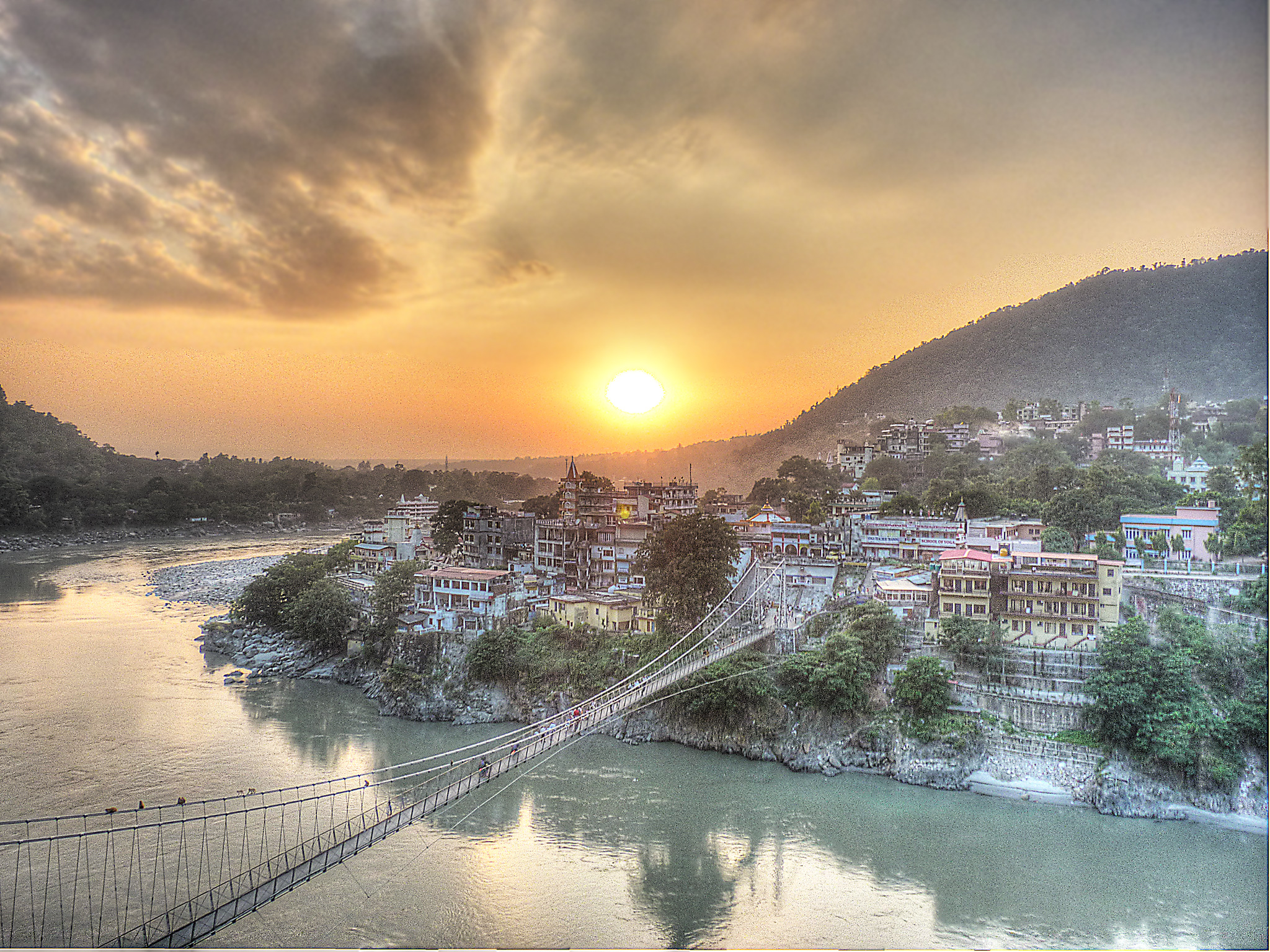
    Ganga and Himalayan foothills in Rishikesh, Uttarakhand
    Why Rishikesh Is Famous for Yoga: The Yoga Capital Explained 14

    Why is Rishikesh called the Yoga Capital of the World?

    There is no single event that made Rishikesh a yoga centre. Its reputation grew over time through pilgrimage, ashram life, meditation, teachers, Indian philosophy, and the steady arrival of students who came to study for more than a short holiday.

    The Uttarakhand Tourism Department describes Rishikesh as the world capital of yoga and meditation. It also points to the city’s many ashrams and its annual International Yog Festival as part of the reason Rishikesh remains closely connected with yoga today.

    The Ganga and Himalayan setting matter

    Rishikesh is built around the Ganga as the river leaves the Himalayan foothills. The river, surrounding hills, temples, ghats, and older ashram areas give the city a very different rhythm from a large urban yoga studio. Students can move from practice to philosophy class, sit by the river, attend an evening aarti, or spend quiet time away from traffic and work routines.

    This setting does not make every yoga class automatically better. What it does provide is an environment where yoga, meditation, pilgrimage, and spiritual study are visible parts of everyday life.

    Ashrams made long-term study possible

    Rishikesh has a long ashram tradition. Well-known institutions such as the Divine Life Society and Parmarth Niketan helped make the city a place where students could stay, study, practise, and learn within a daily routine. Other centres developed around meditation, Vedanta, Hatha Yoga, devotional practice, and different teacher lineages.

    This residential style of learning is one reason Rishikesh became important for serious yoga students. Instead of separating practice from daily life, students can follow a schedule that includes movement, breath, study, meals, rest, and personal practice.

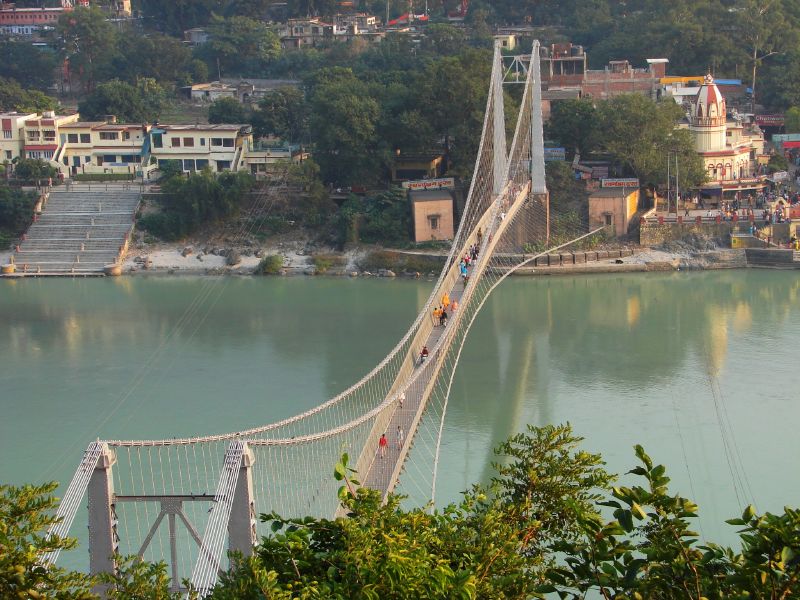
    Ganga and Ram Jhula area in Rishikesh, India
    Why Rishikesh Is Famous for Yoga: The Yoga Capital Explained 15

    Yoga in Rishikesh is broader than posture practice

    A common reason students choose Rishikesh is that yoga is often taught as more than physical exercise. A complete course may include asana, pranayama, meditation, philosophy, anatomy, alignment, teaching methodology, mantra, or traditional texts, depending on the school and course.

    This does not mean every school teaches the same method. Some focus on traditional Hatha Yoga, some on Vinyasa, some on meditation or philosophy, and others combine several subjects. Students should always read the actual syllabus instead of assuming that every course in Rishikesh is identical.

    The Beatles brought new international attention

    Rishikesh was already a spiritual and yoga centre before the 1960s, but the Beatles’ stay at Maharishi Mahesh Yogi’s ashram in 1968 brought major international attention to the city. Their visit connected Rishikesh with meditation and Indian spiritual study for a much wider global audience.

    International interest continued to grow after that. Today, students arrive from many countries for yoga classes, meditation retreats, teacher training, philosophy study, and longer residential programs.

    Is Rishikesh really the birthplace of yoga?

    It is common to see Rishikesh called the “birthplace of yoga,” but that phrase should be used carefully. Yoga developed across India over a very long period and cannot be reliably traced to one modern city as its single birthplace.

    A more accurate description is that Rishikesh is one of the world’s best-known living centres for yoga, meditation, ashram study, and teacher training. Its importance comes from continuity of practice and teaching, not from a simple claim that all yoga started here.

    What can you study in Rishikesh today?

    People come to Rishikesh for very different reasons. A visitor may join a single morning class, stay in an ashram, attend a meditation program, take a short retreat, or complete a residential yoga teacher training.

    • Drop-in yoga classes: useful for travellers who want regular practice without joining a full course.
    • Ashram stays: usually more focused on routine, simplicity, meditation, philosophy, or devotional practice.
    • Yoga retreats: shorter residential programs that combine practice with rest and wellness activities.
    • Teacher training: structured study for students who want deeper practice and, at the 200-hour level, a structured foundational teacher-training pathway.

    If you are comparing regular classes, read our guide to yoga classes in Rishikesh. If you are planning formal study, use the Yoga Teacher Training Courses in Rishikesh page to compare the current FitFortunes programs.

    What makes studying yoga in Rishikesh different?

    The main difference is concentration. A residential student can spend several weeks around people who are also practising, studying, eating on a regular schedule, and discussing yoga every day. That is very different from fitting two classes each week around a normal work routine.

    Rishikesh also gives students access to different styles, teachers, ashrams, lectures, meditation sessions, Sanskrit and philosophy study, and a large international yoga community. The variety is useful, but it also means students need to compare schools carefully. A famous location does not remove the need to check teachers, curriculum, class size, accommodation, fees, and certification details.

    How FitFortunes fits into the Rishikesh yoga tradition

    FitFortunes Holistic Wellness Yoga School is based in Rishikesh near the Laxman Jhula and Swargashram area. Its current residential teacher-training portfolio includes 100-hour foundation programs and 200-hour teacher-training programs, with Hatha Yoga and Vinyasa Krama forming the practical base of the current Multi-Style training.

    The current 100-Hour Multi-Style course is a 10-day foundation from the 2nd to the 12th of each month. The current 200-Hour Multi-Style course begins on the 2nd monthly and is 21 days long. Students can compare the current course structure, room options, and inclusions from the course hub rather than relying on general claims about yoga schools in Rishikesh.

    Planning a yoga stay in Rishikesh

    If you are travelling for yoga, plan the practical side as carefully as the course itself. Check your arrival route, weather, room type, food, course schedule, and how much free time you will actually have.

    For travel planning, read the Delhi to Rishikesh travel guide. For free time around the city, use our things to do in Rishikesh guide. Students travelling alone can also read the separate Rishikesh safety guide for solo female yoga students.

    Before choosing a yoga course in Rishikesh

    Rishikesh has many schools and very different course formats. Before paying a deposit, check the practical details rather than choosing only from photos or a low price.

    • Confirm the exact yoga styles and syllabus.
    • Check teacher names, experience, and qualifications.
    • Check the real course duration, daily hours, and attendance rules.
    • Confirm room type, meals, Wi-Fi, and what the fee does not include.
    • Read the certification wording carefully and do not treat a private certificate as a legal teaching licence everywhere.
    • Use the current course page for dates and prices before booking travel.

    For a broader pre-booking checklist, see the common questions before yoga teacher training in Rishikesh.


    Common questions about Rishikesh and yoga

    Why is Rishikesh famous for yoga?

    Rishikesh is famous for yoga because of its long spiritual tradition, ashrams, teachers, meditation culture, Ganga setting, and large number of modern yoga schools and residential programs.

    Why is Rishikesh called the Yoga Capital of the World?

    The name reflects the concentration of yoga and meditation study in the city. Rishikesh has long attracted Indian and international practitioners, and Uttarakhand Tourism itself describes it as the world capital of yoga and meditation.

    Is Rishikesh the birthplace of yoga?

    Not in a literal, historically proven sense. Yoga developed across India over centuries. Rishikesh is better described as an important centre where yoga, meditation, and spiritual study have been practised and taught for generations.

    Do I need to join a teacher training to practise yoga in Rishikesh?

    No. Rishikesh has drop-in classes, ashrams, meditation programs, retreats, and longer courses. Teacher training is only one option and is better suited to students who want structured, intensive study.

  • Seven Chakra Names and Meanings: A Simple Yoga Guide

    The seven chakras are a traditional yoga map of the subtle body. The word chakra means “wheel” in Sanskrit. In later yoga and Tantra traditions, chakras are described as points in a subtle system of channels and energy. They are not organs that doctors can see on an X-ray or scan.

    This simple guide explains the seven chakra names, their usual locations, and what each one means in yoga practice. Different traditions do not always use the same number of chakras or describe them in exactly the same way. The seven-chakra model below is the one most people meet in modern yoga.

    What is a chakra?

    In traditional yoga, a chakra is part of a subtle body model. “Subtle” means it is used to describe inner experience, breath, attention and meditation. It is different from the physical body studied in modern anatomy.

    Historical research shows that Indian and Tibetan traditions developed many subtle-body systems. They described channels called nadi and meeting points called chakra. These systems changed across texts and schools. So there is no single chakra chart that represents every yoga tradition.

    For readers who want the historical background, Cambridge University Press discusses the growth of subtle-body practices in Indian yoga and Tantra. A modern review indexed by PubMed also discusses the chakra system as a traditional contemplative model. These sources do not prove that chakras are physical organs.

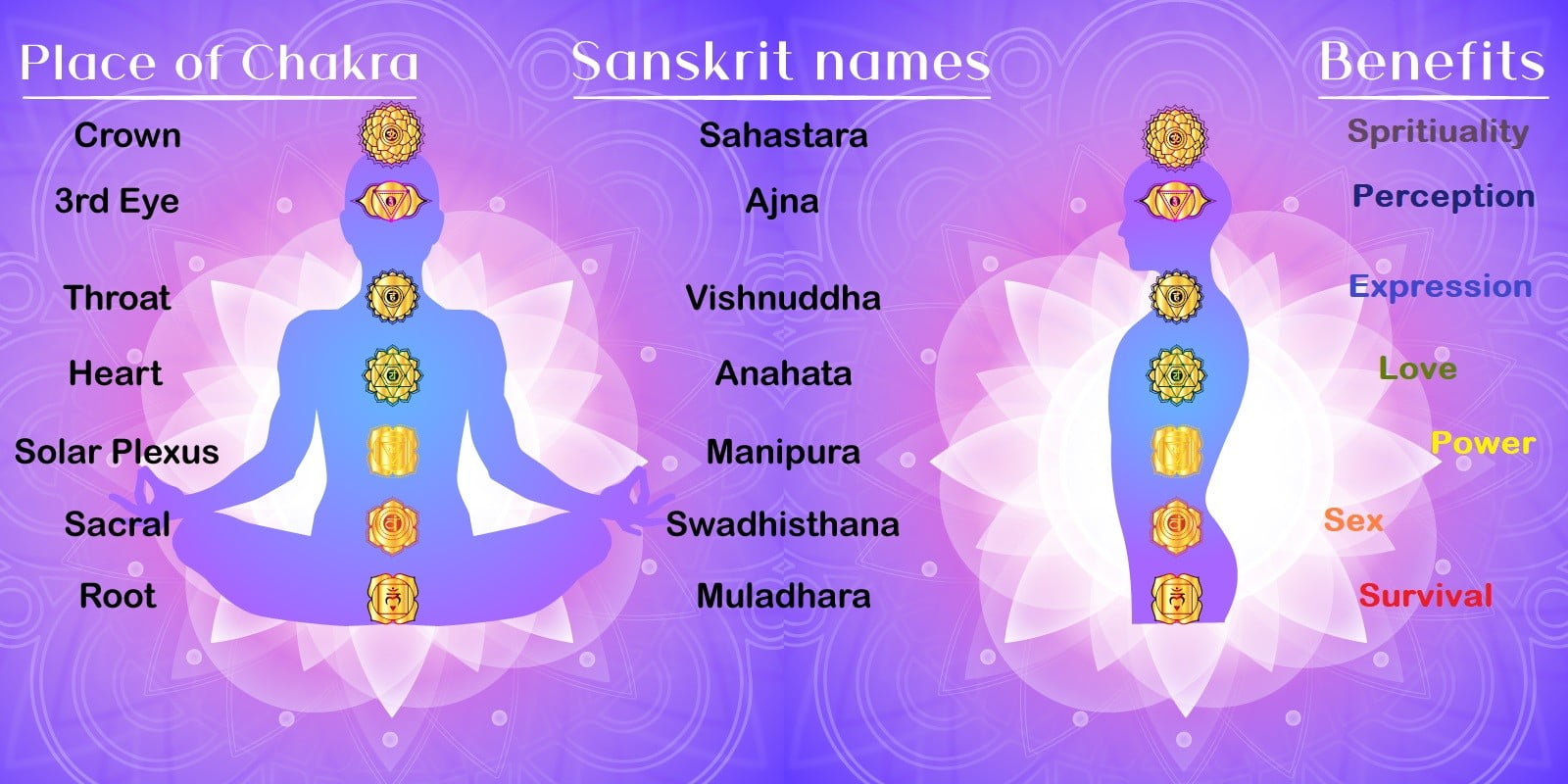
    Illustration showing the seven chakra positions along the body

    The seven chakra names

    In the common seven-chakra model, the names are usually given from the base of the body upward:

    1. Muladhara — root chakra
    2. Svadhisthana — sacral chakra
    3. Manipura — navel or solar plexus chakra
    4. Anahata — heart chakra
    5. Vishuddha — throat chakra
    6. Ajna — eyebrow or “third eye” chakra
    7. Sahasrara — crown chakra

    You may see slightly different spellings in English. That is normal when Sanskrit words are written in the Roman alphabet.

    What each chakra means

    1. Muladhara — Root

    Mula means root. This chakra is placed near the base of the spine in the common modern map. Yoga teachers often use it as a symbol of steadiness, support and being grounded. Its traditional element is earth.

    2. Svadhisthana — Sacral

    Svadhisthana is usually placed in the lower belly or pelvic area. It is often linked with feeling, desire and creative movement. Its traditional element is water.

    Yoga illustration of Svadhisthana, the sacral chakra

    3. Manipura — Navel or Solar Plexus

    Manipura is commonly placed around the navel or upper belly. It is linked in yoga teaching with will, effort and inner strength. Its traditional element is fire.

    4. Anahata — Heart

    Anahata is placed around the heart area in the common seven-chakra map. It is linked with love, care and connection. Its traditional element is air.

    5. Vishuddha — Throat

    Vishuddha is placed around the throat. It is often used as a symbol of clear speech, listening and honest expression. Its traditional element is space or ether.

    6. Ajna — Eyebrow Centre

    Ajna is usually placed between the eyebrows. In yoga practice it is linked with attention, insight and inner observation. Some people call it the third-eye chakra.

    7. Sahasrara — Crown

    Sahasrara is shown at or above the crown of the head. It is commonly linked with spiritual understanding and a sense of connection beyond the individual self. Some systems treat it differently from the lower six chakras, which is one reason chakra lists can vary.

    How are chakras used in yoga?

    Chakras may be used as points of attention during meditation, mantra, breath work and some forms of yoga. A teacher may ask a student to notice an area of the body, repeat a sound, or hold attention on a symbolic quality such as steadiness or compassion.

    You do not need to “open” every chakra to practise yoga. You also do not need to believe that chakras are physical objects. They can be studied as part of yoga history, philosophy and meditation practice.

    Students who want to understand how chakras fit beside nadis, breath work, meditation and yoga philosophy can also read our simple guide to the five koshas and our explanation of the eight limbs of yoga.

    Are chakras part of modern anatomy?

    No. Modern medicine does not classify chakras as physical organs or glands. This is important because many internet articles mix chakra symbolism with medical claims.

    Yoga traditions can still be meaningful without turning every traditional idea into a medical fact. A careful approach is to say: tradition describes chakras as part of a subtle-body system; modern anatomy describes the body in a different way.

    If you have pain, hormone problems, anxiety, sleep problems or another health concern, do not assume a “blocked chakra” is the cause. A qualified health professional can help assess a medical problem.

    Where can you study this in more depth?

    Chakras make more sense when studied with the rest of yoga, rather than as a stand-alone colour chart. In teacher training, they can sit beside yoga philosophy, pranayama, meditation and subtle anatomy. You can see how FitFortunes places these subjects in its yoga teacher training curriculum.

    For historical reading, see Geoffrey Samuel’s discussion of subtle bodies in Cambridge University Press. For a modern scholarly discussion, see the PubMed-indexed review of the subtle-body model.

    Simple questions about the seven chakras

    Are there always seven chakras?

    No. Different traditions describe different chakra systems. Seven is the best-known number in modern yoga, but it is not the only traditional model.

    Are chakras the same as nerves or glands?

    No. Chakras belong to a traditional subtle-body model. Nerves and glands belong to physical anatomy.

    Do I need to believe in chakras to practise yoga?

    No. You can study the chakra system as a part of yoga history and meditation. Personal belief is separate from learning what a tradition teaches.

    What is the easiest way to remember the order?

    Start at the base and move upward: Muladhara, Svadhisthana, Manipura, Anahata, Vishuddha, Ajna, Sahasrara. Learn one name at a time instead of trying to memorise everything at once.

    In short: the seven chakras are a traditional map used in many modern yoga teachings. Learn the names and meanings, but keep traditional symbolism separate from medical claims.