Category: Yoga Tutorials

  • Best Yoga Footwear: Barefoot, Grip Socks or Minimalist Shoes?

    Best Yoga Footwear: Barefoot, Grip Socks or Minimalist Shoes?

    When I first entered a yoga studio many years ago, one simple thought crossed my mind: Do I really need footwear for yoga? Most students were barefoot, some had socks, and one person even wore flexible sandals. That day, the question of what counts as the best yoga footwear stayed with me. Over time, while teaching residential yoga teacher training courses in India, I have seen how important this choice can be.

    Footwear in yoga is not about fashion. Our Rishikesh training packing guide also covers what to bring. It is about support, grip, safety, and sometimes about cultural and personal comfort. Many students who travel from abroad bring questions about yoga shoes, socks with grip, or minimalist slippers. Some are concerned about hygiene in shared studios. Others, especially seniors, want more stability. And then there are students curious about eco-friendly yoga footwear, including brands like Voshi Yoga.

    This blog will take you through the different sides of yoga footwear – what works, what doesn’t, and how to choose wisely.

    Do You Really Need Footwear for Yoga?

    Traditionally, yoga is practiced barefoot. It allows a strong connection with the mat and floor. Bare feet also give better control in balancing poses. Still, times have changed. Today, students practice in modern studios, gyms, and outdoor spaces where barefoot practice is not always comfortable or safe.

    Some beginners also ask: Can I wear sneakers for yoga class? The short answer is no. Sneakers are too rigid. They limit flexibility and create imbalance in asanas. Instead, modern yoga accessories now include non-slip yoga socks, lightweight sandals, and minimalist yoga shoes.

    Types of Yoga Footwear

    Over the years, I have seen students and teachers try different options. Each has its role depending on practice style, environment, and body needs.

    1. Barefoot Yoga Practice

    Most teacher training schools in India recommend barefoot practice. It improves awareness of alignment and grip. However, not every student feels comfortable barefoot.

    1. Yoga Socks with Grip

    Non-slip socks are among the most popular choices. They are simple, affordable, and easy to wash. For hot yoga or wooden floor studios, they prevent slipping. Seniors also benefit from them as they add safety without bulk.

    1. Minimalist Yoga Shoes

    These are very light and flexible shoes. They protect the foot while still giving a barefoot feel. Brands like Voshi Yoga design eco-friendly models made with breathable fabrics. Such footwear is ideal for those who move between indoor and outdoor practice.

    1. Yoga Sandals and Slippers

    Open-toe sandals or slippers are useful when practicing outdoors. Some students prefer them for travel yoga. However, they are not suitable for strong asana practice as they may slide.

    1. Eco-Friendly Footwear

    A rising trend is sustainable yoga shoes made from organic cotton, recycled rubber, or plant-based materials. They appeal to students conscious of the environment. Many residential students at our school ask about such options before arriving.

    Who Benefits Most from Yoga Footwear?

    Not every student needs footwear, but in some cases, it makes a big difference.

    • Seniors: Many older students face balance issues. Yoga shoes or socks with grip add stability.
    • Beginners: New students sometimes feel shy about practicing barefoot in shared spaces. Footwear gives comfort and confidence.
    • Travelers: Those practicing outdoors, on grass or sand, often need protective shoes or sandals.
    • Students with foot pain: Conditions like plantar fasciitis require extra cushioning. Padded sole yoga shoes can help.
    • Hot yoga practitioners: Sweat increases slipping risk. Non-slip socks or minimalist shoes are safer here.

    Yoga Shoes vs Barefoot: The Debate

    This is one of the most common topics in yoga communities. On one side, barefoot practice is authentic and traditional. On the other, footwear solves modern challenges.

    Barefoot advantages:

    • Better balance and grounding
    • Stronger foot muscles
    • More natural alignment

    Footwear advantages:

    • Hygiene in shared spaces
    • Support for weak or injured feet
    • Safer in outdoor or slippery environments

    In reality, the choice depends on individual needs. At our school, we suggest barefoot for main practice sessions but allow students to use socks or minimalist shoes during warm-ups or outdoor classes.

    How to Choose the Best Yoga Footwear

    When shopping for yoga shoes or socks, keep these points in mind:

    1. Grip – Non-slip soles are essential. Slipping during asanas can cause injury.
    2. Flexibility – Avoid rigid shoes. Footwear should bend easily with the foot.
    3. Breathability – Fabrics like cotton or mesh are better than synthetic.
    4. Lightweight design – Heavy shoes disturb balance.
    5. Eco-conscious choice – Look for sustainable brands like Voshi Yoga.
    6. Fit and comfort – Footwear should feel like a second skin, not bulky.

    Hidden Angles Most Students Miss

    From my experience, here are a few less-discussed but important points:

    • Yoga footwear for seniors: Very few blogs address this group, though it is crucial. Stability and safety matter more than style here.
    • Footwear for outdoor practice: Students who practice yoga while traveling need special attention. Grass, sand, and uneven ground call for protective shoes.
    • Medical conditions: Some students with foot pain or injuries benefit greatly from supportive yoga footwear.
    • Cultural view: Traditionalists may question shoes in yoga. Understanding the balance between respect for tradition and practical need is key.

    Best Yoga Footwear for Beginners

    If you are just starting, you do not need to buy expensive shoes right away. Begin barefoot to understand the basics. Later, if you feel the need, explore simple non-slip socks or minimalist shoes. Voshi Yoga footwear or other eco-friendly brands are good starting points.

    Teacher’s Note on Yoga Footwear

    As a teacher, I always advise students to keep two things in mind: safety and respect. If footwear adds safety, use it. But also respect studio rules and traditional practices. In many Indian ashrams and schools, shoes are not allowed in the yoga hall. This is not just about tradition but also about keeping the practice space clean.

    The best yoga footwear is not the same for everyone. For some, barefoot practice will always be enough. For others, non-slip socks, minimalist shoes, or eco-friendly footwear like Voshi Yoga offer real comfort and safety. The choice depends on your body, your practice style, and your environment.

    If you are preparing for a residential yoga teacher training in India, consider bringing both options: practice barefoot when possible, and keep a pair of lightweight, non-slip socks or shoes for situations where they are helpful.

    FAQ: Best Yoga Footwear

    Do you need footwear for yoga?
    Not always. Most students practice barefoot. Footwear is useful for safety, hygiene, or outdoor practice.

    Is barefoot better than yoga shoes?
    Yes, for balance and tradition. Still, shoes help in special cases like slippery floors or weak feet.

    What are the best non-slip socks for yoga?
    Choose breathable cotton socks with rubber grips on the sole.

    Can I wear sneakers for yoga class?
    No. Sneakers are too stiff and restrict natural movement.

    Which yoga footwear is eco-friendly?
    Brands like Voshi Yoga focus on sustainable, breathable designs.

    Are yoga shoes good for seniors?
    Yes. They add stability and reduce the risk of slipping.

    What footwear works for hot yoga?
    Non-slip socks or lightweight minimalist shoes are best.

    Is footwear allowed in yoga teacher training schools in India?
    Usually barefoot is recommended. However, schools often allow socks or flexible footwear if needed.
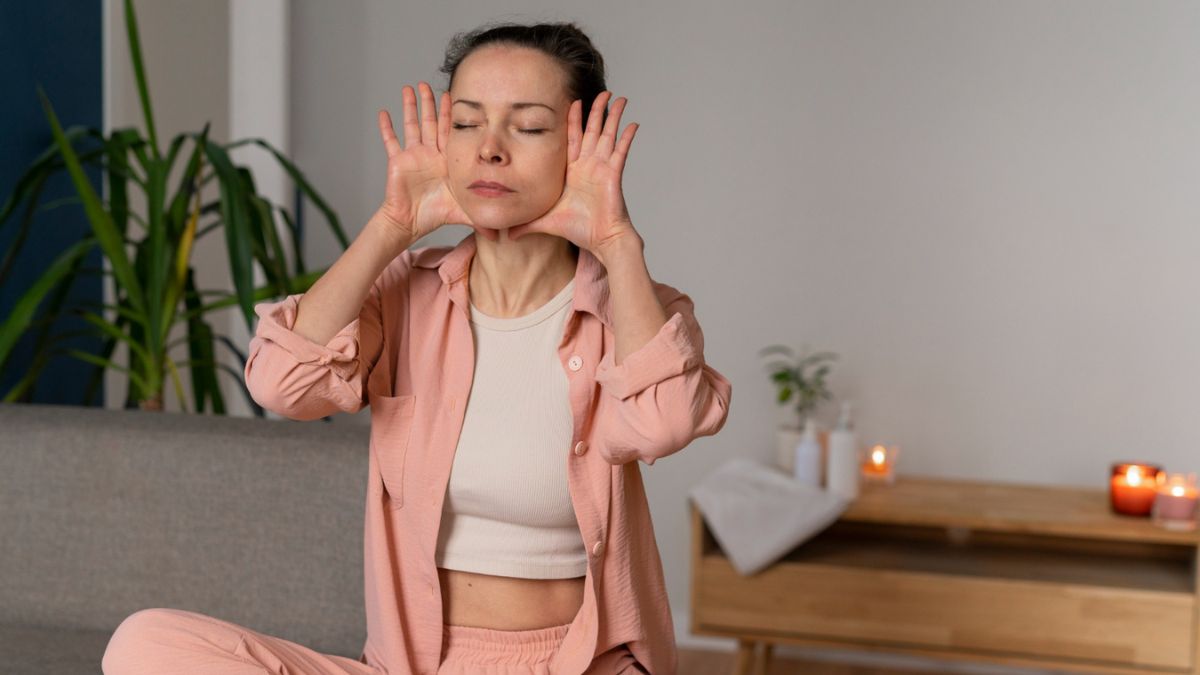
  • Face Yoga Exercises: Do They Work? Benefits, Limits and a Beginner Routine

    Face Yoga Exercises: Do They Work? Benefits, Limits and a Beginner Routine

    Face yoga exercises are gentle movements and awareness practices for the muscles of the face, jaw, and neck. They may help you notice tension and use facial muscles more deliberately, but the evidence for anti-ageing claims is still limited. One small study found modest changes in cheek fullness after a long exercise program, while newer reviews say the research is too small and mixed to promise reliable facial rejuvenation. Face yoga cannot be expected to burn face fat, remove a double chin, erase wrinkles, or replace dental, dermatology, or medical care. The most useful way to approach it is as mindful movement with realistic expectations.

    In this guide

    What is face yoga?

    “Face yoga” is a modern name used for facial exercises, controlled expressions, gentle massage, posture work, and awareness of tension around the jaw, eyes, forehead, cheeks, and neck. Different teachers use very different routines. Some focus on appearance, while others use the practice mainly to notice habitual clenching or effort.

    It is important not to rewrite yoga history to make the trend sound older than it is. Classical yoga texts do not describe the modern face-yoga routines commonly shown online today. Traditional Indian practices do include subtle movement, breath, concentration, and awareness of small parts of the body, so there can be a useful similarity in attitude. That does not mean every modern facial exercise should be presented as an ancient yogic technique.

    For a yoga practitioner, the sensible connection is awareness. We often notice tight shoulders but ignore a hard jaw, raised eyebrows, pressed lips, or a tongue held with unnecessary tension. A few minutes of gentle facial movement can become a way to observe these habits without turning the mirror into a place for judging your appearance.

    Face yoga exercises for beginners
    Face yoga is best approached as gentle facial movement and awareness, not as a promise of instant cosmetic change.

    Does face yoga really work?

    The short answer is: possibly for some limited changes, but the evidence is not strong enough for big promises. A widely discussed 2018 JAMA Dermatology pilot study taught 32 facial exercises to middle-aged women. Sixteen participants completed the 20-week program. Blinded raters found improved upper and lower cheek fullness and a lower estimated age at the end of the study.

    Those results are interesting, but the study had major limits. It was very small, included only middle-aged women, had many dropouts, and had no control group. That means we cannot confidently say the exercises alone caused the changes or that the same results would happen for men, younger people, older adults, or people following a different routine.

    A more recent systematic review of conservative facial rejuvenation methods looked at facial exercises, myofunctional methods, and massage. Some studies reported improvements in specific areas, but the review found that the evidence remained unclear because the studies were small and used different methods and outcome measures. An earlier systematic review reached a similar conclusion: there was not enough high-quality evidence to know whether facial exercises reliably rejuvenate the face.

    Realistic benefits and limits

    Face yoga is easier to use well when you separate what is plausible from what is marketing. Moving a muscle can improve your awareness and control of that muscle. A calm routine may also help you notice when you are clenching the jaw or holding tension around the eyes. Those are reasonable practice goals. Cosmetic outcomes are much harder to predict because facial appearance depends on many things beyond muscle activity.

    What face yoga may help with

    • Becoming more aware of jaw, forehead, cheek, and eye-area tension.
    • Practising gentle control of facial muscles without force.
    • Building a short pause away from screens and habitual expressions.
    • Noticing the connection between posture, breathing, and unnecessary facial effort.
    • Possibly changing muscle fullness in some areas over time, although research is still limited.

    What face yoga cannot reliably promise

    • Spot-reducing fat from the face or under the chin.
    • Permanently sculpting a sharp jawline.
    • Erasing wrinkles or reversing skin ageing.
    • Lifting loose skin in a predictable way.
    • Treating TMJ disorders, migraines, nerve pain, or other medical conditions.
    • Producing the same “before and after” result for every face.

    Facial ageing is affected by skin quality, sun exposure, genetics, changes in fat and bone, hormones, lifestyle, and time. Facial exercises act on only part of that picture. A responsible teacher should say this clearly instead of presenting a dramatic before-and-after photo as proof.

    Relaxed yoga practitioner with a soft face and neutral posture
    Keep the face soft between movements. More effort is not automatically better in face yoga.

    A simple face yoga routine for beginners

    You do not need tools, oils, or a long routine to begin. Start with clean hands and a comfortable seated or standing posture. Use a mirror only if it helps you check that you are not straining. The movements should feel controlled and easy. If an exercise causes pain, clicking, dizziness, headache, numbness, or skin irritation, stop.

    1. Settle the posture

    Let the shoulders drop and bring the head over the ribs instead of pushing the chin forward. Take two or three normal breaths. Notice whether the teeth are pressed together and whether the tongue is tense. Do not force a “perfect” posture. The aim is simply to remove obvious extra effort.

    2. Forehead release

    Place the fingertips lightly on the forehead. Without dragging the skin, notice whether you are lifting the eyebrows. Let the brow soften for several breaths. Then slowly raise and lower the eyebrows a few times with a small range of movement. Finish by relaxing completely.

    3. Eye-area relaxation

    Soften your gaze, blink naturally, then close the eyes without squeezing them shut. Notice the tiny muscles around the eyes. Hold for a few breaths and reopen the eyes gently. Avoid pulling the skin around the eyes or forcing exaggerated expressions.

    4. Gentle cheek activation

    Make a small, comfortable smile and feel the cheeks lift. Hold for two or three seconds, then release fully. Repeat a few times. Keep the jaw loose and avoid clenching the teeth to make the movement stronger.

    5. Jaw release

    Let the lips part slightly and allow a small space between the upper and lower teeth. Slowly open and close the mouth within a comfortable range. The movement should be smooth and quiet. If your jaw clicks, locks, or hurts, do not push through it.

    6. Chin and neck awareness

    Keep the gaze level and make a very small chin nod, as if lengthening the back of the neck. Return to neutral. Repeat gently. This is not a strong neck stretch and it is not a “double-chin remover.” It is simply a way to notice forward-head posture and unnecessary neck effort.

    7. Finish with stillness

    Relax the whole face for about thirty seconds. Notice the forehead, eyes, cheeks, lips, tongue, jaw, and throat. This quiet finish matters because the purpose is not to keep the facial muscles working all day. It is to learn when to use them and when to let them rest.

    If you enjoy this kind of body awareness, it can sit beside a simple meditation practice. Our beginner yoga and meditation guide gives a broader starting point that does not depend on appearance goals.

    Can face yoga define the jawline or reduce a double chin?

    This is one of the most searched questions around face yoga, and it needs a clear answer. There is not good evidence that facial exercises can selectively burn fat under the chin. The body does not normally choose one small area for fat loss just because the nearby muscles are exercised. A double chin can also be influenced by genetics, skin laxity, anatomy, body-fat distribution, and posture.

    Some exercises may make you more aware of head and neck position, and changes in muscle use can alter how the face looks in certain expressions. That is different from proving that face yoga removes submental fat or permanently sharpens the jawline. Be cautious with videos that use lighting, camera angle, facial expression, or short-term swelling changes as “proof” of fat loss.

    Can face yoga reduce wrinkles?

    There is not enough high-quality evidence to say that face yoga reliably removes wrinkles. The small studies on facial exercise mainly look at facial fullness or selected appearance measures, not a guaranteed reduction of every type of line. Wrinkles are affected by repeated expression, skin structure, sun exposure, age, genetics, and loss of volume, so one exercise routine cannot control all of these factors.

    More movement is also not automatically better. Very forceful, repetitive expressions or pulling on delicate skin do not become more effective simply because they feel intense. Keep the range small, avoid aggressive tugging, and treat any cosmetic change as uncertain rather than promised.

    How often should you practise face yoga?

    There is no proven ideal dose. The 2018 pilot study used a demanding 30-minute routine every day for eight weeks and then every other day, but that study was too small to establish a universal prescription. You do not need to copy its schedule to practise responsibly.

    For a beginner, five to ten gentle minutes three to five days a week is a reasonable way to learn the movements and observe how your face and jaw respond. If you feel sore, tense, or irritated afterward, reduce the effort or frequency. Consistency is more useful than making the routine harder.

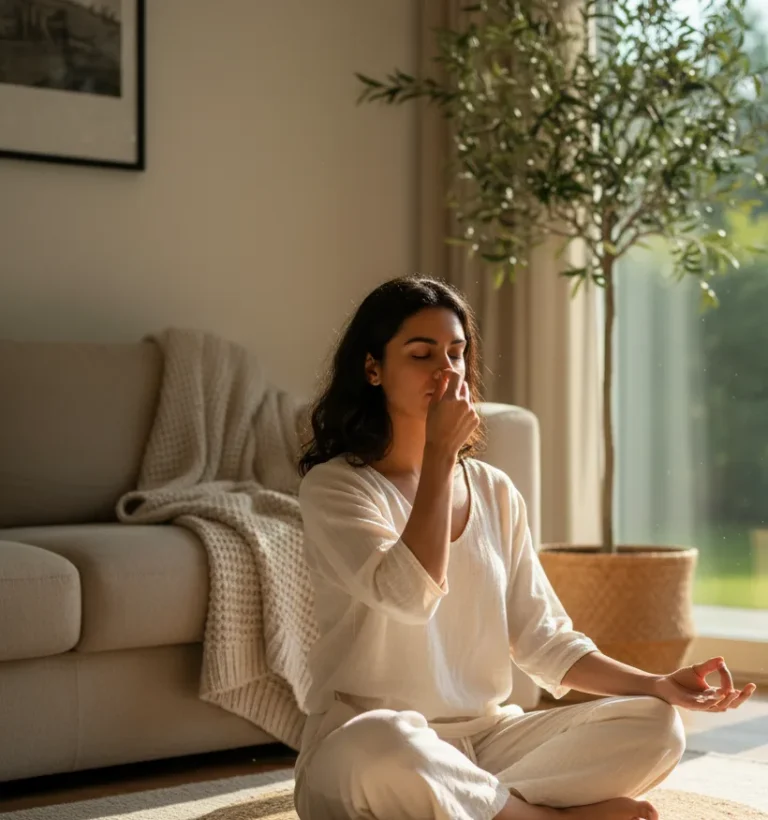
    Yoga practitioner using calm breathing before a gentle face yoga routine
    A relaxed breath and easy posture are useful preparation. Face yoga should not require forceful breathing.

    Safety and common mistakes

    Face yoga is low-risk for many healthy people when movements are gentle, but the face and jaw are sensitive areas. People with jaw pain or a diagnosed TMJ disorder, recent dental work, facial surgery, facial nerve problems, active skin irritation, or recent injectable cosmetic treatment should get advice from the relevant clinician before starting or changing a routine.

    Do not press through pain or copy extreme movements simply because they are popular online. If an exercise causes a new headache, jaw locking, facial numbness, sharp pain, or persistent discomfort, stop. A wellness practice should not ask you to ignore warning signs.

    Common mistakes to avoid

    • Pulling or stretching the skin aggressively.
    • Clenching the teeth while trying to “work” the jaw.
    • Holding the breath during facial movements.
    • Doing a long routine on the first day because faster results are promised.
    • Treating soreness as proof that the exercise is working.
    • Using filtered or differently lit before-and-after photos as evidence.
    • Turning every look in the mirror into a search for flaws.

    If stress is the main reason you hold tension in the jaw or forehead, a whole-body practice may be more useful than adding more facial exercises. Our guide to yoga styles for stress relief explains several gentler options.

    Face yoga should be about awareness, not fear of ageing

    Face yoga exercises can be a simple way to explore facial movement and tension, but they should come with honest limits. Research gives us a small signal that certain exercise programs may change cheek fullness or other local features, yet it does not support the large promises often made online. If you enjoy the routine, keep it gentle, consistent, and free from pressure. A practice that makes you more aware and comfortable in your face is useful even when it does not produce a dramatic before-and-after photo.

    Frequently asked questions

    Does face yoga really work?

    There is limited evidence that some structured facial exercise programs may change cheek fullness or selected appearance measures. The studies are small and inconsistent, so face yoga cannot be promised as a proven anti-ageing treatment.

    Can face yoga get rid of a double chin?

    There is no good evidence that it can selectively burn fat under the chin. Posture and muscle use may affect appearance, but that is different from proven local fat loss.

    Can face yoga sharpen the jawline?

    It may change muscle awareness or the way you hold the head and jaw, but a permanently sharper jawline is not a reliable or guaranteed result. Bone structure, fat distribution, skin, and genetics also affect the jawline.

    Can face yoga remove wrinkles?

    Current evidence does not show that facial exercises reliably erase wrinkles. Keep expectations modest and avoid forceful pulling or exaggerated repetitive movements.

    How long does face yoga take to show results?

    There is no established timeline because the research is limited and different routines use different methods. Be cautious with anyone who guarantees a visible result in a fixed number of days.

    Can I do face yoga every day?

    A gentle short routine may be comfortable for some people, but daily practice is not required. Start with a few days each week and reduce the frequency if you notice soreness, jaw tension, or skin irritation.

    Do I need a gua sha, roller, or face cream?

    No. Face yoga can be practised without tools. Tools and massage are separate practices with their own techniques and precautions. Clean hands and gentle movement are enough for a basic routine.

    Is face yoga safe if I have TMJ pain?

    Do not assume a general face-yoga routine will treat TMJ pain. Jaw disorders can have different causes, and some exercises may aggravate symptoms. Get advice from a dentist, physiotherapist, or other qualified clinician who understands your condition before doing repetitive jaw exercises.

  • Hard Yoga Poses for 2 People: Advanced Partner Yoga Safely

    Hard Yoga Poses for 2 People: Advanced Partner Yoga Safely

    Hard yoga poses for two people require shared balance, clear communication and a safe exit. Elevated AcroYoga poses are not beginner exercises. Begin with floor-based partner movements and work with an experienced teacher and spotter before attempting lifts or inversions.

    Most advanced partner balances shown here belong to modern partner yoga or AcroYoga. They should not be described as classical poses from ancient yoga texts. In this guide, we’ll explore challenging yoga poses for two people, their benefits, and expert tips to master them safely.

    What Skills Do Hard Partner Yoga Poses Require?

    Practicing advanced partner yoga goes beyond flexibility. It improves strength, balance, and trust. Here’s why it’s worth trying:

    ✅ Enhances Strength – Holding difficult poses requires full-body engagement.
    ✅ Builds Deep Trust – Partner yoga fosters connection and teamwork.
    ✅ Boosts Balance & Coordination – You learn to stabilize each other.
    ✅ Encourages Mindfulness – Every movement demands focus and awareness.
    ✅ Expands Flexibility – It stretches muscles deeper than solo practice.

    Modern yoga teachers emphasize that practicing with a partner can accelerate progress. However, it’s crucial to choose the right poses and follow safety tips.

    Hard Yoga Poses for Two People

    These advanced partner yoga poses require effort, patience, and strength. Start slow and progress safely.

    1. Double Downward Dog

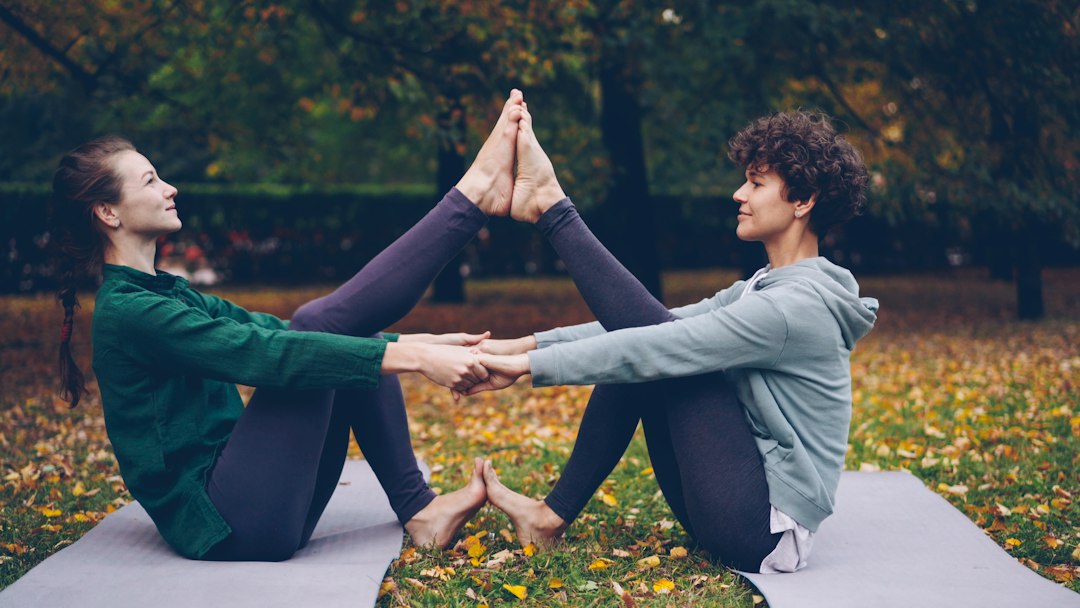
    Seated partner yoga balance

    🔹 Level: Intermediate-Advanced
    🔹 Targets: Shoulders, Core, Hamstrings

    How to Do It:

    1. One partner gets into a Downward Dog.
    2. The second partner places hands on the floor and rests their feet on the first partner’s back.
    3. Both maintain a straight spine and engage the core.
    4. Hold for 5-8 breaths.

    💡 Tip: Communicate clearly and keep weight balanced.

    1. Flying Bow Pose (AcroYoga Challenge)

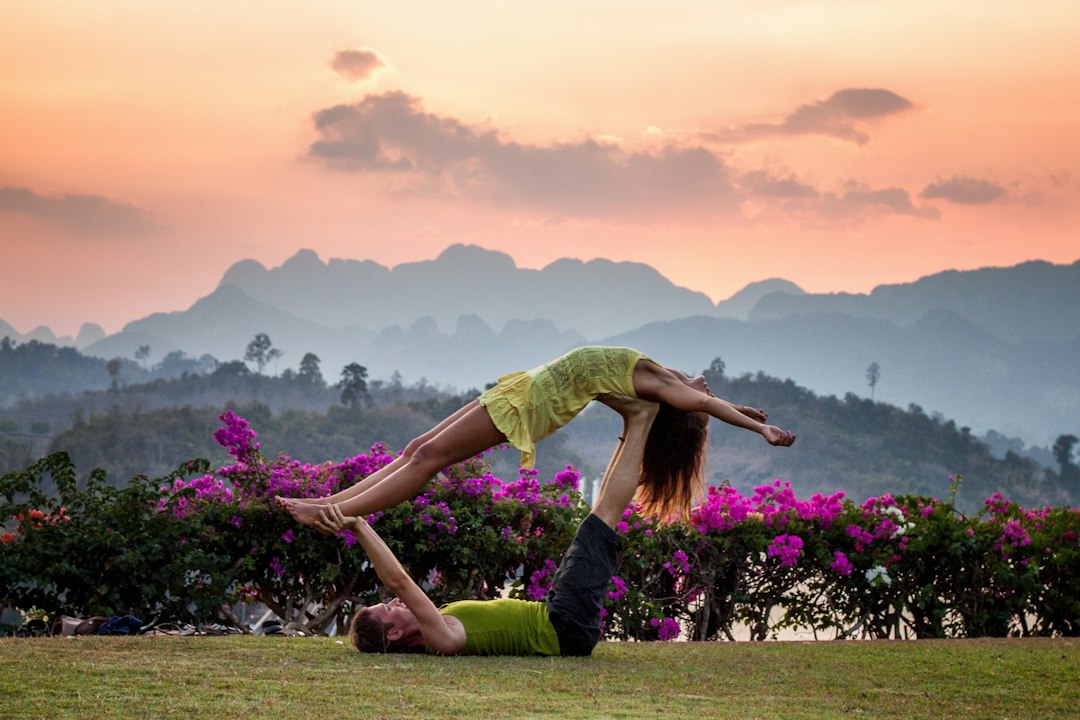
    AcroYoga partner balance example

    🔹 Level: Advanced
    🔹 Targets: Back, Hips, Core

    Steps to Perform:

    1. Base partner lies on the floor and lifts legs to 90 degrees.
    2. Flyer partner places hips on the base’s feet.
    3. Flyer bends knees and grabs ankles, forming a Bow Pose.
    4. Base supports the balance while the flyer extends.
    5. Hold for 5-10 breaths.

    🧘‍♂️ Ancient Wisdom: The bow pose represents energy expansion in Hatha Yoga. This modern partner balance should not be treated as an ancient chakra technique. Ask an experienced instructor to teach the base, flyer and spotter roles before trying it.

    1. Throne Pose (AcroYoga Balance Test)

    Throne Pose (AcroYoga Balance Test)

    🔹 Level: Expert
    🔹 Targets: Legs, Core, Arms

    Steps to Perform:

    1. Base partner lies on their back and lifts legs straight up.
    2. Flyer balances by sitting on the feet, keeping the spine upright.
    3. Flyer engages the core and extends arms forward.
    4. Hold the pose for 10-15 seconds before slowly dismounting.

    📌 Modern Insight: Throne Pose requires full-body strength. Yoga experts recommend gradual progression to avoid injuries.

    1. Double Plank Pose (For Core Strength)

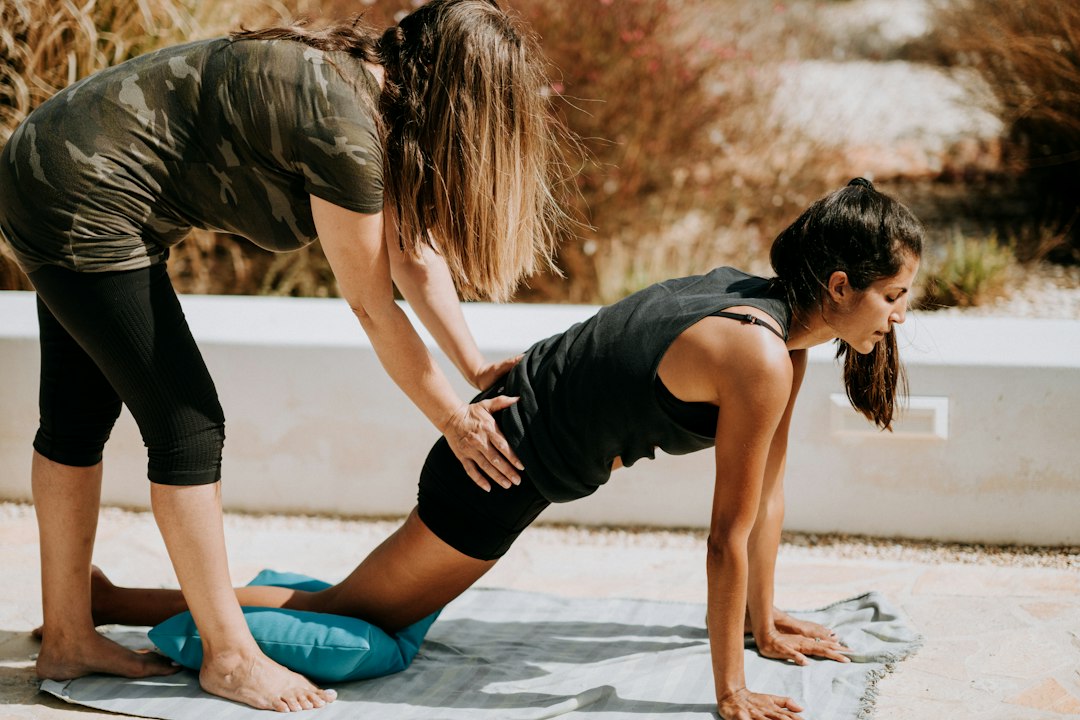
    Two adults practising partner strength exercises

    🔹 Level: Hard
    🔹 Targets: Core, Arms, Stability

    How to Perform:

    1. One partner holds a high plank position.
    2. The second partner places hands on the first partner’s ankles and forms a plank.
    3. Both keep their body straight and core tight.
    4. Hold for 10-20 seconds.

    💡 Safety Note: Avoid arching the back. Engage the core for support.

    1. Partner Handstand (Ultimate Balance Test)

    Adult practising handstand balance

    🔹 Level: Extreme
    🔹 Targets: Shoulders, Core, Arms

    Steps:

    1. One partner supports the other as they attempt a handstand.
    2. The supporting partner holds the flyer’s legs for balance.
    3. Gradually, the flyer stabilizes and maintains control.
    4. Hold for 5-10 breaths.

    🧘 Ancient Insight: Handstands are linked to mental clarity and focus in traditional yoga teachings. Avoid unsupported promises about brain circulation. Inversions involve risks for some students and need appropriate instruction.

    How to Practise Hard Partner Yoga More Safely

    1️⃣ Warm Up First – Avoid injuries by preparing your body.
    2️⃣ Communicate Clearly – Trust and verbal cues are key.
    3️⃣ Engage the Core – Stability comes from inner strength.
    4️⃣ Progress Gradually – Don’t rush into advanced poses.
    5️⃣ Use a Spotter – Extra support prevents falls.

    Work patiently and practise with a teacher who can supervise safe entries and exits. Follow these guidelines to practice safely.

    Common Mistakes to Avoid

    🚫 Skipping Warm-Ups – Leads to stiffness and strain.
    🚫 Overestimating Strength – Push gradually, not forcefully.
    🚫 Ignoring Breath Control – Yoga is about breath-body connection.
    🚫 Lack of Focus – Distractions cause imbalance and falls.

    Modern yoga teachers emphasize awareness and gradual learning. Avoid these mistakes for a safe and enjoyable practice.

    Frequently Asked Questions (FAQs)

    1. Are hard yoga poses for 2 people safe for beginners?

    No, these poses require experience. Beginners should start with easier partner yoga poses before progressing.

    1. How can I improve balance in partner yoga?

    Focus on core strength, maintain steady breathing, and practice trust-building exercises with your partner.

    1. What should I do if I lose balance?

    Slowly exit the pose and reset. Avoid sudden movements that could cause injury.

    1. Can couples practice hard yoga poses together?

    Yes! Couples can practise together, but both people need clear consent, suitable skills and a safe way to stop. Do not attempt lifts solely for photographs. Beginners should choose simple ground-level counterbalances.

    1. How often should I practice these poses?

    Start with 2-3 times a week. Gradually increase as your strength and flexibility improve.

    Conclusion

    Practicing hard yoga poses for 2 people challenges your strength, balance, and coordination. Advanced partner yoga poses require patient preparation and safe teamwork. By progressing safely and maintaining focus, you’ll build both physical power and mental clarity.

    Remember, both ancient and modern yoga teachers believe trust, discipline, and gradual progress is the Proper Phase of Practicing Yoga Asana. Start with stable ground-level partner work and choose challenges you can both exit safely.

  • How to Clean a Yoga Mat at Home Safely

    How to Clean a Yoga Mat at Home Safely

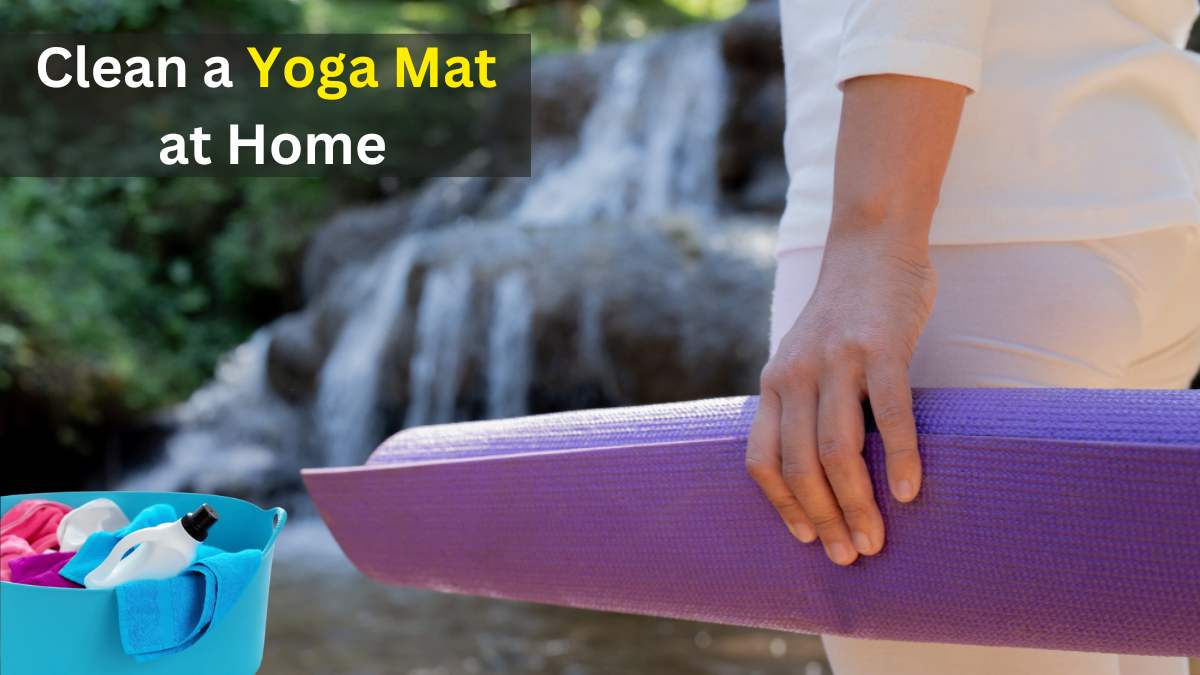
    A clean yoga mat is essential for a healthy and hygienic practice. Over time, sweat, dust, and bacteria build up, making it necessary to clean your mat regularly. But how do you do it at home without damaging the material?

    In this guide, we will explore simple, effective, and natural ways to clean your yoga mat at home. Whether you practice daily or occasionally, these methods will help maintain freshness and longevity.

    Why Should You Clean Your Yoga Mat?

    Yoga mats absorb sweat, oil, and dirt, which can lead to bacteria growth. This not only affects hygiene but also causes odor and skin irritation.

    Benefits of Regular Cleaning:

    ✔ Prevents germs and bacteria buildup
    ✔ Removes sweat and bad odor
    ✔ Extends the life of your mat
    ✔ Keeps your practice fresh and healthy

    How Often Should You Clean Your Yoga Mat?

    The cleaning frequency depends on how often you practice.

    • Daily Use: Wipe down after every session and deep clean weekly.
    • Occasional Use: Clean after every few sessions or at least once a month.
    • Hot Yoga or Outdoor Practice: Clean after every session to remove sweat and dirt.

    Best Ways to Clean a Yoga Mat at Home

    There are different cleaning methods depending on the type of yoga mat and level of dirtiness. Let’s explore the best DIY cleaning solutions.

    1. Basic Daily Wipe (For Light Cleaning)

    After each practice, wiping your mat helps prevent dirt buildup.

    What You Need:

    ✔ Microfiber cloth or soft sponge
    ✔ Lukewarm water
    ✔ Mild soap or liquid castile soap

    Steps:

    1. Mix a few drops of mild soap in water.
    2. Dip a soft cloth in the solution and wring it out.
    3. Wipe the entire mat, focusing on sweaty areas.
    4. Let it air dry before rolling up.

    🔹 Best for: Regular maintenance and light cleaning.

    1. Deep Cleaning (For a Thorough Wash)

    For a deeper clean, use natural ingredients that remove grime and bacteria effectively.

    What You Need:

    ✔ White vinegar (natural disinfectant)
    ✔ Water
    ✔ Essential oil (tea tree, lavender, or eucalyptus)
    ✔ Spray bottle
    ✔ Soft brush or cloth

    Steps:

    1. Mix one part vinegar with three parts water in a spray bottle.
    2. Add a few drops of essential oil for fragrance and extra germ protection.
    3. Spray the solution all over the mat.
    4. Wipe with a clean cloth or gently scrub with a soft brush.
    5. Rinse with water if needed.
    6. Hang the mat to air dry.

    🔹 Best for: Monthly deep cleaning or after intense workouts.

    1. Baking Soda Deodorizer (For Odor Removal)

    Baking soda neutralizes bad smells and absorbs sweat residue.

    What You Need:

    ✔ 1 tablespoon baking soda
    ✔ 1 cup water
    ✔ 3-5 drops of essential oil

    Steps:

    1. Mix all ingredients in a spray bottle.
    2. Spray lightly over the mat.
    3. Let it sit for 5 minutes and wipe with a cloth.
    4. Let the mat dry completely.

    🔹 Best for: Mats with lingering odors or excessive sweat buildup.

    1. Disinfecting Wipes (Quick Germ Removal)

    If you’re in a hurry, disinfecting wipes can help. However, avoid harsh chemicals that can damage the mat.

    Best Disinfecting Options:

    ✔ Alcohol-free baby wipes
    ✔ Natural disinfecting wipes
    ✔ DIY vinegar spray with a paper towel

    🔹 Best for: Quick cleaning on busy days.

    How to Dry a Yoga Mat Properly

    Never roll up your mat while it’s still damp. Moisture can cause bacteria growth.

    ✔ Air dry it completely before storing.
    ✔ Hang it over a chair, railing, or clothesline.
    ✔ Avoid direct sunlight, which can damage rubber mats.

    Cleaning Different Types of Yoga Mats

    Not all mats are made the same! Use the correct cleaning method based on material.

    Mat Type

    Best Cleaning Method

    PVC or Rubber

    Mild soap & water, vinegar spray

    TPE (Eco-friendly)

    Gentle soap & water, no harsh chemicals

    Cork

    Wipe with water & mild soap, avoid soaking

    Natural Jute

    Vinegar spray & soft cloth, no scrubbing

    How to Maintain Your Yoga Mat for Longer Life

    ✔ Store it properly – Keep in a dry, clean space.
    ✔ Avoid leaving it in the car – Heat and moisture can damage it.
    ✔ Use a yoga towel – Helps absorb sweat and reduces dirt buildup.
    ✔ Rotate sides – Avoid overuse of one area.

    What Ancient Texts Say About Cleanliness in Yoga

    In yoga philosophy, Saucha (cleanliness) is one of the Niyamas in Patanjali’s Yoga Sutras. It refers to both inner and outer cleanliness.

    Keeping your yoga mat clean aligns with Saucha, promoting purity of body and mind. The Bhagavad Gita also emphasizes a clean environment for spiritual progress.

    Frequently Asked Questions

    1. Can I wash my yoga mat in the washing machine?

    Most mats should not be machine-washed. Hand washing is best to avoid damage.

    1. How do I prevent my mat from smelling bad?

    Clean it regularly and allow it to dry completely before storing.

    1. Can I use alcohol-based cleaners?

    Avoid alcohol-based cleaners, as they can break down the material. Use mild, natural solutions instead.

    1. How do I clean my yoga mat naturally?

    Use a mixture of vinegar, water, and essential oils for a natural, chemical-free clean.

    Conclusion

    Cleaning your yoga mat at home is easy, affordable, and essential for a healthy practice. Whether you need a quick wipe-down or a deep clean, these methods will keep your mat fresh and germ-free.

    By maintaining a clean yoga mat, you honor the yogic principle of Saucha and create a healthier space for your practice. Try these DIY cleaning methods today and enjoy a clean, refreshing yoga experience!

  • Which Indian Text Defines Karma Yoga and Karma Yoga Practices?

    Which Indian Text Defines Karma Yoga and Karma Yoga Practices?

    Which Indian Text Defines Karma Yoga and Karma Yoga Practices
    Which Indian Text Defines Karma Yoga and Karma Yoga Practices? 15

    Introduction : What is Karma Yoga

    Karma Yoga, one of the four classical paths of yoga, is grounded in the teachings of the Bhagavad Gita, a sacred Hindu scripture. This path emphasizes selfless action performed without attachment to the results. It encourages practitioners to dedicate their actions to a higher purpose, fostering inner peace and spiritual growth. By focusing on duty and service, Karma Yoga helps individuals transcend the ego and cultivate a sense of unity with the world around them. The Bhagavad Gita is the Indian text most commonly associated with Karma Yoga, especially its discussions of action and duty.

    Understanding Karma Yoga: A Brief Overview

    Karma Yoga is known as the “Yoga of Action” and is one of the primary paths to spiritual enlightenment in Hindu philosophy. Unlike other yoga paths that may focus more on meditation or physical postures, Karma Yoga is all about action performed selflessly, without any desire for personal gain or recognition.

    Bhagavad Gita: The Source of Karma Yoga

    The teachings of Karma Yoga are primarily found in the Bhagavad Gita, a 700-verse Hindu scripture that is part of the Mahabharata. In the Gita, Lord Krishna advises Prince Arjuna on the importance of performing his duties without attachment to the results, laying the foundation for the principles of Karma Yoga.

    यत्करोषियदश्नासियज्जुहोषिददासियत् |यत्तपस्यसिकौन्तेयतत्कुरुष्वमदर्पणम् ||
    (Bhagavad Gita 9.27)

    “Whatever you do, whatever you eat, whatever you offer or give away, and whatever austerities you perform—do that, O son of Kunti, as an offering to Me.”

    What are The Core Principles of Karma Yoga         

    The core principles of Karma Yoga in the Bhagavad Gita center on selfless service, detachment from the results of actions, and fulfilling one’s duties with pure intention. Practitioners are encouraged to act without attachment to the outcomes, focusing instead on the righteousness of their actions and dedicating their efforts to a higher purpose or divine will. This approach fosters a sense of inner peace and spiritual fulfillment, as individuals transcend ego-driven desires and align their actions with the greater good. By following these principles, we can find a balanced and purposeful life, contributing positively to society while advancing on their spiritual journey.

    Selfless Action: The Heart of Karma Yoga (Nishkam Karma)

    At the heart of Karma Yoga is the concept of selfless action, known as Nishkama Karma. This principle encourages practitioners to perform their duties and actions without any attachment to the outcomes or personal gain. Here’s a deeper explanation of this concept and its significance:

    Nishkama Karma:

    • Definition: Nishkama Karma means performing actions without any expectation of rewards or results. The focus is on the action itself, not on the fruits it may bear.
    • Significance: By removing the desire for personal gain, individuals can act more ethically and with greater integrity. This approach leads to purer, more genuine efforts.
    1. Dedication to the Greater Good:
      • Service to Others: Actions are performed with the intention of benefiting others rather than oneself. This could include helping those in need, contributing to the community, or working towards the betterment of society.
      • Divine Service: In the spiritual context, actions are often dedicated to a higher power or the divine. This surrendering of personal motives transforms everyday activities into acts of worship.

    Purification of the Mind and Heart

    1. Reducing Ego and Attachment:
      • Ego Dissolution: Selfless action helps in reducing the ego, as the focus shifts from “I” and “mine” to the well-being of others.
      • Detachment: By not clinging to the results, one develops a sense of detachment. This detachment does not mean indifference, but rather a balanced perspective that accepts success and failure equally.
    2. Mental and Emotional Purification:
      • Inner Peace: Acting without selfish desires reduces stress and anxiety, leading to greater inner peace. The practitioner is not constantly worried about the outcomes.
      • Compassion and Empathy: Selfless actions cultivate compassion and empathy, as the focus is on helping and understanding others.

    How to apply Karma Yoga in Daily Life

    1. Everyday Actions:
      • Work and Responsibilities: Whether in professional or personal life, performing one’s duties with dedication and without selfish motives exemplifies Karma Yoga.
      • Acts of Kindness: Small, everyday acts of kindness, such as helping a neighbor or volunteering, are practical expressions of selfless action.
    2. Spiritual Practice:
      • Meditative Actions: Integrating selfless action into spiritual practices, such as meditation or prayer, enhances the spiritual journey by aligning actions with spiritual goals.
      • Devotion: Actions performed as offerings to a higher power or for the welfare of others deepen spiritual practice and understanding.

    Key Takeaways

    • Selflessness: The essence of Karma Yoga is selflessness. Actions are performed without seeking personal benefits, thus purifying the mind and heart.
    • Focus on Duty: Emphasis is on fulfilling one’s responsibilities and duties with sincerity and dedication, irrespective of the outcome.
    • Inner Growth: This practice leads to mental and emotional purification, fostering qualities like humility, compassion, and inner peace.

    Detachment from Outcomes: A Key Teaching (Vairagya)

    Detachment from the outcomes of one’s actions is a crucial teaching in Karma Yoga. By focusing on the process rather than the result, individuals can perform their duties without stress, anxiety, or fear of failure, leading to a more peaceful and contented state of mind.

    कर्मण्येवाधिकारस्तेमाफलेषुकदाचन |माकर्मफलहेतुर्भूर्मातेसङ्गोऽस्त्वकर्मणि ||
    (Bhagavad Gita 2.47)

    “You have a right to perform your prescribed duties, but you are not entitled to the fruits of your actions. Never consider yourself to be the cause of the results of your activities, nor be attached to inaction.”

    Duty and Dharma in Karma Yoga (Svadharma)

    In Karma Yoga, duty, often referred to as dharma, holds profound significance. It encompasses the idea that every individual has a unique role and responsibilities in life, and fulfilling these duties with dedication, integrity, and without selfish motives is essential for spiritual growth and harmony. Here’s a detailed explanation of duty and dharma in Karma Yoga:

    1. Definition of Dharma:
      • Personal Responsibility: Dharma refers to one’s inherent duty, role, or responsibility based on their position in society, family, and life circumstances.
      • Ethical Code: It also encompasses ethical principles and righteous conduct that guide individuals in their actions.
    2. Svadharma (Personal Duty):
      • Unique Role: Each person has a unique set of duties based on their talents, abilities, and station in life (varna and ashrama).
      • Fulfillment with Integrity: Svadharma emphasizes fulfilling these responsibilities with integrity and dedication, irrespective of personal preferences or outcomes.

    What is Role of Duty in Karma Yoga

    1. Integral to Spiritual Growth:
      • Purification of Intentions: Performing duties selflessly purifies the mind and heart, reducing selfish desires and ego.
      • Alignment with Universal Order: Fulfilling one’s dharma aligns individuals with the cosmic order (rita) and contributes to the harmony of society.
    2. Importance of Dedication:
      • Karma Yoga Practice: Practitioners of Karma Yoga integrate their actions into spiritual practice by performing their duties as offerings to a higher ideal or as service to others.
      • Inner Transformation: By embracing one’s duties wholeheartedly, individuals cultivate virtues such as patience, compassion, and resilience.

    Practical Application of Duty (Dharma)

    1. Examples of Svadharma:
      • Professions and Occupations: Embracing roles at work or in business with integrity and ethical conduct.
      • Family Responsibilities: Fulfilling responsibilities towards family members, such as caring for parents or nurturing children.
      • Community Service: Engaging in voluntary activities or social service that benefit the community.
    2. Ethical Guidance:
      • Righteous Conduct: Upholding moral principles and ethical standards in all actions.
      • Social Harmony: Contributing positively to society through responsible behavior and service-oriented actions.

    Spiritual and Ethical Development

    1. Integration with Yoga Practice:
      • Yogic Discipline: Practicing Karma Yoga helps individuals to refine their character and align their actions with spiritual principles.
      • Devotional Aspect: Actions performed as offerings to a higher power or for the welfare of others deepen spiritual devotion and understanding.
    2. Outcome Independence:
      • Detachment from Results: Karma Yoga teaches detachment from the outcomes of actions, focusing instead on the purity of intention and dedication to duty.
      • Inner Equanimity: This approach fosters inner peace and resilience, regardless of success or failure in external outcomes.

    Equanimity (Samatva)

    Equanimity, or Samatva, is a fundamental principle in Karma Yoga that advocates maintaining a balanced and steady mind amidst life’s ups and downs. This state of inner balance is crucial for practitioners as they engage in selfless action and navigate the consequences of their deeds. Here’s a detailed exploration of equanimity in the context of Karma Yoga:

    What is Equanimity (Samatva)

    1. Definition:
      • Balance and Stability: Samatva refers to mental and emotional equilibrium, where one remains poised and unaffected by external circumstances.
      • Staying Centered: It involves staying centered and unaffected by both favorable and unfavorable outcomes, pleasure and pain, success and failure.
    2. Core Principles:
      • Non-Attachment: Equanimity involves practicing non-attachment to the results of actions. This means performing actions with dedication but without being overly affected by their outcomes.
      • Inner Stability: It fosters a stable inner state, free from excessive emotional reactions such as elation or disappointment based on external events.

    Importance of Equanimity in Karma Yoga

    1. Integral to Spiritual Growth:
      • Spiritual Discipline: Practicing equanimity enhances spiritual discipline by reducing the fluctuations of the mind and promoting focus on selfless actions.
      • Inner Peace: It leads to inner peace and tranquility, which are essential for deepening meditative practices and spiritual contemplation.
    2. Practical Application:
      • Daily Life: In everyday situations, maintaining equanimity allows individuals to respond to challenges and achievements with calmness and clarity.
      • Social Interactions: It promotes harmonious relationships by preventing emotional reactivity and fostering empathy and understanding towards others.

    How to Practice Equanimity in Daily Life

    1. Mindfulness Practices:
      • Awareness of Thoughts and Emotions: Mindfulness meditation helps in observing thoughts and emotions without getting entangled in them, thus promoting equanimity.
      • Breath Awareness: Focusing on the breath helps in calming the mind and developing resilience against emotional disturbances.
    2. Perspective Shift:
      • Detached Observation: Viewing situations from a broader perspective helps in seeing the impermanence of circumstances and reducing attachment to specific outcomes.
      • Acceptance: Cultivating acceptance of the present moment and its inherent uncertainties supports the development of equanimity.

    Benefits of Equanimity

    1. Emotional Stability:
      • Stress Reduction: Equanimity reduces stress by preventing excessive worry and anxiety about future events.
      • Enhanced Decision-Making: It facilitates clearer and more objective decision-making, unaffected by emotional biases.
    2. Spiritual Evolution:
      • Self-Realization: Deepening equanimity leads to a deeper understanding of the self and the interconnectedness of all beings.
      • Transcendence of Ego: By transcending personal desires and attachments, practitioners move closer to spiritual liberation (moksha).

    Surrender to God (Ishvara Pranidhana)

    Dedicating all actions to God and seeing oneself as an instrument of the divine will. This principle involves surrendering the ego and personal desires, and performing actions as an offering to the higher power.

    Purity of Intent, known as Sattvic Action, is a crucial principle in Karma Yoga that emphasizes the quality of intentions behind every action. It goes beyond the mere performance of duties or actions and focuses on the ethical and moral purity of one’s motives. Here’s a detailed exploration of Sattvic Action and its significance:

    Understanding Sattvic Action

    1. Definition:
      • Pure Intentions: Sattvic Action involves performing actions with a sincere and selfless intention, aiming solely for the welfare and benefit of others.
      • Absence of Harm: It ensures that actions do not cause harm or suffering to any living being, embodying compassion and non-violence (ahimsa).
    2. Core Principles:
      • Selflessness: Actions are undertaken without selfish desires or personal gain, focusing instead on serving others and contributing positively to their well-being.
      • Ethical Conduct: Sattvic Action aligns with moral principles and values, promoting integrity, honesty, and fairness in all endeavors.

    Importance of Sattvic Action in Karma Yoga

    1. Spiritual Evolution:
      • Purification of Mind: Practicing Sattvic Action purifies the mind and cultivates virtues such as humility, kindness, and empathy.
      • Karmic Balance: It ensures that actions generate positive karma (good consequences) by fostering harmony and benefiting the collective welfare.
    2. Ethical Guidelines:
      • Righteousness: Upholding principles of righteousness (dharma) ensures that actions are in accordance with universal laws and contribute to social and cosmic order.
      • Conscious Living: Practicing Sattvic Action encourages conscious living, where individuals are mindful of the impact of their actions on others and the environment.

    Practical Application of Sattvic Action

    1. Intentions and Motives:
      • Clarity of Purpose: Before undertaking any action, practitioners of Karma Yoga reflect on their intentions, ensuring they are aligned with values of compassion and service.
      • Decision-Making: Sattvic Action guides ethical decision-making, considering the long-term consequences and ethical implications of choices.
    2. Service and Compassion:
      • Service Orientation: Actions are performed as acts of service to humanity, animals, and the environment, promoting well-being and harmony.
      • Non-Violence: Ahimsa (non-violence) is central to Sattvic Action, ensuring that actions do not cause physical, mental, or emotional harm to others.

    Benefits of Cultivating Sattvic Action

    1. Inner Peace and Contentment:
      • Harmonious Living: Sattvic Action fosters inner peace and contentment by aligning one’s actions with higher moral values and spiritual ideals.
      • Relationship Building: It enhances relationships based on trust, respect, and mutual understanding, promoting social harmony and cooperation.
    2. Spiritual Fulfillment:
      • Self-Transformation: Practicing Sattvic Action facilitates personal growth and spiritual evolution, leading to a deeper sense of fulfillment and purpose in life.
      • Alignment with Higher Consciousness: By acting selflessly and with pure intentions, individuals align themselves with higher consciousness and spiritual truths.

    The Role of Intention in Karma Yoga Practice

    In Karma Yoga, intention plays a pivotal role, shaping the quality and spiritual significance of actions. Here’s a comprehensive exploration of the role of intention in Karma Yoga practice:

    Importance of Intention in Karma Yoga

    1. Foundation of Actions:
      • Pure Intentions: Intention forms the foundation of Karma Yoga practice. It’s not solely about the outward action but the inward motive behind it.
      • Selflessness: Actions performed with selfless intentions, devoid of personal desires or attachments, contribute positively to spiritual evolution.
    2. Inner Transformation:
      • Overcoming the Ego: Intention shapes how actions impact the practitioner’s spiritual journey. By acting with pure intentions, individuals can transcend ego-driven desires and attachments.
      • Cultivating Virtues: Intentional actions cultivate virtues such as humility, compassion, and empathy, fostering inner growth and spiritual maturity.

    Characteristics of Intention in Karma Yoga

    1. Selfless Service (Nishkama Karma):
      • Benefiting Others: Intentions in Karma Yoga are oriented towards benefiting others and serving the greater good, without expecting personal gain or recognition.
      • Surrender to Higher Purpose: Intention involves surrendering actions to a higher purpose or divine will, acknowledging one’s role as an instrument of universal harmony.
    2. Alignment with Dharma:
      • Ethical Integrity: Intention ensures that actions align with moral and ethical principles (dharma), promoting righteousness and contributing to the collective welfare.
      • Conscious Decision-Making: Practitioners reflect on their intentions before acting, ensuring they uphold values of honesty, integrity, and non-violence (ahimsa).

    Practical Application in Karma Yoga Practice

    1. Mindfulness and Awareness:
      • Awareness of Motives: Practitioners cultivate mindfulness to become aware of their motives and intentions before undertaking any action.
      • Course Correction: By aligning actions with pure intentions, individuals can course-correct if they notice any deviation from selflessness or ethical conduct.
    2. Devotional Aspect:
      • Offering to the Divine: Intentions are often dedicated as offerings to a higher power or as acts of devotion, deepening spiritual connection and devotion (bhakti) in Karma Yoga.
      • Spiritual Alignment: Intentional actions align practitioners with their spiritual aspirations, fostering a sense of purpose and meaning in their lives.

    Benefits of Cultivating Pure Intentions

    1. Spiritual Growth and Fulfillment:
      • Inner Peace and Contentment: Acting with pure intentions promotes inner peace and contentment, reducing inner conflict and turmoil.
      • Karmic Consequences: Pure intentions lead to positive karmic consequences, supporting the practitioner’s spiritual progress and evolution.
    2. Harmonious Relationships:
      • Building Trust and Respect: Intentional actions build trust and respect in relationships, enhancing mutual understanding and fostering harmonious interactions.
      • Community Contribution: Contributing positively to society through intentional actions strengthens the fabric of community and social harmony.

    Karma Yoga in Daily Life: Practical Applications

    Karma Yoga, often described as the yoga of selfless action, offers a profound path to spiritual growth and fulfillment through everyday actions. Here are practical ways to integrate Karma Yoga into daily life:

    1. Acts of Kindness and Service

    • Random Acts of Kindness: Engage in small gestures of kindness throughout your day, such as helping someone carry groceries, holding the door open, or offering a smile.
    • Volunteering: Dedicate your time and skills to causes that resonate with you, whether it’s helping at a local shelter, tutoring children, or participating in environmental cleanup efforts.

    2. Performing Work with Dedication and Integrity

    • Work Ethic: Approach your professional responsibilities with dedication, honesty, and a sense of service to your colleagues, clients, or customers.
    • Ethical Conduct: Uphold ethical standards in your work, ensuring fairness, transparency, and respect in all interactions and decisions.

    3. Mindful and Compassionate Communication

    • Listening with Empathy: Practice active listening and empathetic communication, seeking to understand others’ perspectives without judgment or bias.
    • Speaking Kindly: Use words that uplift and inspire others, avoiding gossip, criticism, or harsh language that may cause harm.

    4. Daily Rituals and Spiritual Practices

    • Morning Intentions: Set positive intentions for your day, focusing on how you can contribute to the well-being of others and act selflessly in various situations.
    • Mindfulness Meditation: Cultivate mindfulness through meditation practices, enhancing awareness of your thoughts, emotions, and actions throughout the day.

    5. Cultivating Gratitude and Humility

    • Gratitude Practice: Reflect on and express gratitude for the blessings in your life, recognizing the interconnectedness of all beings and the opportunities to serve others.
    • Humility: Approach interactions with humility, acknowledging that each person has their own journey and challenges, and treating everyone with respect and dignity.

    6. Aligning Actions with Higher Principles

    • Reflective Practice: Regularly reflect on your actions and their impact on others, striving to align your behavior with universal values such as compassion, honesty, and non-violence (ahimsa).
    • Offering to the Divine: Dedicate your actions as offerings to a higher power or as acts of devotion, recognizing the sacredness and interconnectedness of all life.

    The Benefits of Practicing Karma Yoga

    Practicing Karma Yoga offers numerous benefits, including mental clarity, emotional stability, reduced stress, and a sense of fulfillment. It helps individuals cultivate virtues like compassion, humility, and detachment.

    • Inner Peace: Acting selflessly and with compassion brings a sense of inner peace and contentment, reducing stress and fostering emotional well-being.
    • Positive Impact: By making every action a conscious offering, you contribute positively to your community and society, promoting harmony and collective well-being.
    • Spiritual Growth: Practicing Karma Yoga cultivates virtues such as selflessness, empathy, and humility, supporting your journey towards spiritual growth and self-realization.

    In essence, Karma Yoga is not confined to formal practices or rituals but extends into every aspect of daily life. By approaching each moment with mindfulness, compassion, and a genuine desire to serve others, you embody the essence of Karma Yoga and contribute to creating a more compassionate and harmonious world.

    Karma Yoga and Spiritual Growth  

    Karma Yoga is a powerful tool for spiritual growth. By performing selfless actions, individuals purify their hearts and minds, making them more receptive to higher spiritual truths and experiences.

    Benefits of Spiritual Growth through Karma Yoga

    • Service Orientation: Engaging in selfless service enhances empathy and compassion towards others, fostering a deeper sense of interconnectedness and unity.
    • Understanding Others: By actively helping and supporting others, practitioners develop a broader perspective on life’s challenges and struggles.

    Devotion and Surrender (Bhakti):

    • Offering to the Divine: Karma Yoga encourages actions as offerings to a higher power or as acts of devotion, deepening spiritual connection and surrendering personal will to divine guidance.
    • Spiritual Devotion: This practice nurtures devotion (bhakti) and strengthens the bond with the spiritual essence within and beyond oneself.
    1. Inner Fulfillment and Contentment:
      • Self-Realization: As individuals purify their hearts and minds through selfless actions, they experience a deeper sense of inner fulfillment and contentment.
      • Spiritual Progress: Progressively, Karma Yogis advance towards self-realization and unity with the divine, transcending individual ego and identifying with the universal consciousness.
    2. Harmony and Unity:
      • Community Impact: By embodying principles of Karma Yoga, practitioners contribute to creating a harmonious and compassionate community, promoting peace and mutual respect.
      • Global Consciousness: Collectively, the practice of Karma Yoga fosters a global consciousness of interconnectedness and shared responsibility for the welfare of all beings.

    Inspiring Examples of Karma Yogis

    History and mythology are replete with inspiring examples of Karma Yogis who lived lives of selfless service. Indeed offer us numerous inspiring examples of Karma Yogis—individuals who dedicated their lives to selfless service and spiritual upliftment. Here are some notable examples across different cultures and time periods:

    • Known For: Mahatma Gandhi, the leader of India’s independence movement against British rule, exemplified Karma Yoga through his principle of Satyagraha (truth-force) and Ahimsa (non-violence).
    • Selfless Actions: He led numerous non-violent protests and movements, advocating for social justice, equality, and the upliftment of the marginalized.
    • Spiritual Influence: Gandhi’s life was deeply rooted in spiritual principles, integrating Karma Yoga into his daily life and inspiring millions worldwide with his dedication to service.

    • Known For: Mother Teresa, a Catholic nun and missionary, dedicated her life to serving the people with low living in Kolkata (Calcutta), India.
    • Selfless Service: She founded the Missionaries of Charity, a religious congregation that operates hospices, orphanages, and centers for people with disabilities.
    • Compassionate Actions: Mother Teresa’s compassionate care for the destitute and dying exemplified Karma Yoga, emphasizing love, empathy, and humanitarian service.

    • Known For: Swami Vivekananda was a key figure in the introduction of Indian philosophies of Vedanta and Yoga to the Western world.
    • Advocate of Service: He emphasized the practice of Karma Yoga as a means to spiritual realization, stressing the importance of selfless action and work as worship (Karma Yoga).
    • Intellectual Influence: Vivekananda’s teachings on Karma Yoga continue to inspire seekers worldwide, encouraging them to work for the welfare of others without attachment to results.

    • Known For: Florence Nightingale, a pioneer of modern nursing, exemplified Karma Yoga through her compassionate care for wounded soldiers during the Crimean War.
    • Nursing and Humanity: She established nursing as a respected profession, advocating for sanitary conditions and healthcare reforms that saved countless lives.
    • Service to Humanity: Nightingale’s commitment to alleviating suffering and promoting health epitomized Karma Yoga’s principles of selfless service and compassion.
      5. Harriet Tubman
    • Known For: Harriet Tubman was an Afro American abolitionist, humanitarian, and Union spy during the American Civil War.
    • Freedom Fighter: She helped liberate enslaved Afro Americans through the Underground Railroad, guiding them to freedom despite personal risks.
    • Courageous Actions: Tubman’s dedication to justice and freedom for others exemplifies Karma Yoga’s principles of courage, sacrifice, and service to humanity.

    Integrating Karma Yoga with other paths of yoga—Bhakti Yoga, Jnana Yoga, and Raja Yoga—creates a holistic framework for spiritual growth and enlightenment. Here’s how each path can complement and enhance the practice of Karma Yoga:

    1. Bhakti Yoga (Path of Devotion)

    • Focus on Love and Devotion: Bhakti Yoga emphasizes love, devotion, and surrender to a higher power or divine principle.
    • Integration with Karma Yoga: Practitioners of Karma Yoga can infuse their actions with devotion and see their service as an offering to the divine or as an expression of gratitude and love.
    • Example: Performing selfless actions with love and devotion, such as volunteering or helping others, becomes a way to deepen one’s connection with the divine and serve others as an act of devotion.

    2. Jnana Yoga (Path of Knowledge)

    • Quest for Self-Realization: Jnana Yoga focuses on self-inquiry, knowledge of the self, and understanding the nature of reality.
    • Integration with Karma Yoga: Practitioners can combine Jnana Yoga with Karma Yoga by reflecting on the deeper meaning of their actions. This includes understanding karma, embracing selfless service, and recognizing the interconnectedness of all beings.
    • Example: Reflect on the motives and consequences of your actions. Cultivate discernment (viveka) and wisdom (jnana) to act in ways that align with higher truths and principles.

    3. Raja Yoga (Path of Meditation)

    • Inner Exploration and Meditation: Raja Yoga focuses on meditation, concentration (dharana), and deep contemplation to reach spiritual union (samadhi).
    • Integration with Karma Yoga: Karma Yoga aids Raja Yoga by purifying the ego and reducing mental distractions through selfless actions, preparing the mind for deeper meditation.
    • Example: Practicing meditation to cultivate inner peace and clarity. It enhance the ability to perform selfless actions with focused attention and mindfulness.

    Synergies and Benefits

    • Holistic Development: Combining Karma Yoga with Bhakti, Jnana, and Raja Yoga creates a balanced spiritual path. This approach engages the heart (Bhakti), intellect (Jnana), and mind (Raja).
    • Comprehensive Spiritual Path: These paths together offer a complete framework for personal growth. They help purify intentions (Karma Yoga), deepen devotion (Bhakti Yoga), gain wisdom (Jnana Yoga), and find inner stillness (Raja Yoga).
    • Unity of Purpose: Integrating these paths unifies purpose. It aligns actions, thoughts, emotions, and spiritual goals towards self-realization and union with the divine.

    Practical Application

    • Daily Practice: Start the day with selfless actions (Karma Yoga). Then, engage in devotional practices (Bhakti Yoga). Study scriptures or philosophical texts (Jnana Yoga), and end with meditation (Raja Yoga).
    • Integration in Service: Serve others with love and wisdom. Recognize the interconnectedness of all beings. Treat every action as a chance for spiritual growth.
    • Lifelong Journey: Integrating these paths is a lifelong journey. It deepens as individuals gain more understanding and experience in spiritual practices.

    Integrating Karma Yoga with Bhakti, Jnana, and Raja Yoga creates a well-rounded spiritual path. This approach helps practitioners develop self-awareness, compassion, and a deeper understanding of higher truths.

  • How to Practice Kriya Yoga at Home Step-by-Step Guide

    How to Practice Kriya Yoga at Home Step-by-Step Guide

    Kriya Yoga is a profound old Indian spiritual practice. It is a methodical approach to meditation that supports people in achieving awareness and self-realization. Kriya Yoga has gained popularity recently because of its ease of use, efficiency, and home practicability. Your gateway to full well-being, Fitfortunes, offers an invitation to learn about the life-changing art of Kriya Yoga. Join us today to start your journey to self-realization and inner peace. follow below the content for know about How to Practice Kriya Yoga at Home

    How to Practice Kriya Yoga at Home Step-by-Step Guide
    How to Practice Kriya Yoga at Home

    What is Kriya Yoga?

    Kriya Yoga, popularized by Paramahansa Yogananda in his book “Autobiography of a Yogi, is a spiritual practice involving techniques to harness the life force within. It blends pranayama, meditation, and visualization to awaken spiritual energy. Whether in bustling cities or serene mountains, this technique empowers individuals to infuse everyday actions with divinity. Through breath control, Kriya Yoga offers pathways to inner peace, joy, and spiritual connection, making it accessible to all seeking transformative growth.

    How do I start practicing Kriya Yoga at Home?

    It’s essential to start Kriya Yoga for beginners at home with a basic practice. To begin, find a quiet time and place. Then, practice simple breathing techniques to help you relax. To monitor your development, use guided meditations and keep a journal. Online resources can be beneficial, but keep in mind that determination and regularity are essential on this profound journey. 

    Technique of Kriya Yoga at Home

    Set aside a dedicated space: Look for a calm, quiet area of your house where you may practice Kriya Yoga alone.

    Establish a regular practice:  Practice Kriya Yoga every day at the same time. Consistency is the key to enjoying the rewards of this age-old practice.

    Begin with relaxation: Start your practice by doing some light stretching and deep breathing to let your body and mind relax.

    Practice pranayama: To control your breathing and quiet your mind, use pranayama techniques like deep breathing and alternating nostril breathing.

    Meditate regularly: Meditation is the foundation of Kriya Yoga, so set aside some time for it. To still your racing thoughts, concentrate on your breathing or a mantra. 

    Follow a guided routine: Make use of materials like books, online guides, or videos to help you with Kriya Yoga at home.

    Stay committed: In your practice, exercise perseverance and patience. Have trust in the process and permit yourself to develop spiritually by making a continuous effort.

    Seek guidance if needed: To improve your knowledge of Kriya Yoga, if you’re new to the practice, think about going to courses or consulting with experienced practitioners.

    Step-by-Step Guide to 8 Steps of Kriya Yoga

    Preparation: Take a few deep breaths to calm your body and mind, close your eyes, and sit comfortably in a quiet area.

    Invocation: To assist and bless your practice, mentally give a prayer or invocation to the spiritual deity or guru of your choice.

    Pranayama: Practice pranayama to control your breathing and to activate your body’s panic energy.

    Mudras: To improve focus and channel energy flow, do certain hand gestures, or mudras.

    Visualization: Imagine spiritual light or energy cleaning your mind, elevating your consciousness, and entering your body.

    Chanting: Repeat mantras or holy prayers to increase your spiritual vibration and establish a connection with higher awareness.

    Meditation: Enter into a state of deep meditation by focusing your mind on a single point of concentration or by observing the natural flow of your breath. 

    Which is the best place to learn Kriya Yoga?

    The Fitfortunes Yoga course and facilities provide genuine Kriya Yoga instruction and training. It is essential to do your research and select a reputable teacher or institution that shares your values and spiritual goals. and you can join also join 200 Hour Yoga Teacher Training in Rishikesh 

    Conclusion

    Practicing Kriya Yoga at home can be a transformative journey towards self-discovery and spiritual awakening. By incorporating the principles and techniques of Kriya Yoga into your daily life, you can experience inner peace, harmony, and profound spiritual growth. Remember to approach your practice with sincerity, dedication, and an open heart, and you will surely reap the benefits of this ancient yogic science.

    FAQ

  • How to Become a yoga teacher : The Ultimate Guide to 200 Hour Yoga Teacher Training in Rishikesh

    How to Become a yoga teacher : The Ultimate Guide to 200 Hour Yoga Teacher Training in Rishikesh

    How to Become a yoga teacher : The Ultimate Guide to 200-Hour Yoga Teacher Training in Rishikesh

    How Do You Become a Yoga Teacher Step by Step?

    1. Build a regular personal practice.
    2. Choose a serious training course with named teachers.
    3. Study anatomy, philosophy and teaching method.
    4. Complete supervised practice teaching.
    5. Graduate from the course.
    6. Apply for any registration pathway you are eligible for.
    7. Keep teaching, learning and collecting feedback.

    Completing an eligible 200-hour program may make you eligible to apply for RYT-200 registration through Yoga Alliance. Graduation does not automatically register you.

    200-Hour Yoga Teacher Training in Rishikesh: What to Check

    Benefits of Becoming a Yoga Teacher

    Table of Contents

    Benefits of Becoming a Yoga Teacher

    Becoming a yoga teacher is not only a fulfilling career choice but also a transformative personal journey. As a yoga teacher, you have the opportunity to make a positive impact on the lives of others, helping them improve their physical and mental well-being. Teaching yoga allows you to share your passion for the practice, inspire others, and create a sense of community.Apart from the spiritual and emotional rewards, there are practical benefits to becoming a yoga teacher as well. Many yoga studios and wellness centers offer competitive salaries and flexible working hours. Moreover, as the demand for yoga continues to grow worldwide, the job prospects for certified yoga teachers are promising.

    Choosing the Right Yoga Teacher Training Program

    Before starting your journey to become a yoga teacher, it’s essential to choose the right yoga teacher training (YTT) program. With so many options available, it can be overwhelming to make a decision. Here are some factors to consider when selecting a YTT program:Accreditation: Ensure the training program is accredited by a reputable yoga alliance. This ensures that the program meets certain standards and that your certification will be recognized internationally.Curriculum: Look for a program that covers a comprehensive curriculum, including asanas (yoga postures), pranayama (breathing techniques), meditation, anatomy, philosophy, teaching methodology, and ethics.Teaching Style: Consider the teaching style of the program and whether it aligns with your personal preferences and goals. Some programs may focus more on the physical aspects of yoga, while others may have a more holistic approach.Location: Decide whether you prefer to do your YTT program close to home or in a different country. Rishikesh, being the birthplace of yoga, offers a unique and immersive experience for aspiring yoga teachers.

    Overview of 200-Hour Yoga Teacher Training

    The 200-hour yoga teacher training is the foundational level of certification for aspiring yoga teachers. It provides a solid base of knowledge and skills necessary to teach yoga safely and effectively. The training typically spans over a period of four to six weeks, although some programs may offer an intensive option to complete it in a shorter duration.During the training, you will delve deep into the various aspects of yoga, including asana practice, pranayama, meditation, anatomy, philosophy, teaching methodology, and ethics. The goal is not only to deepen your personal practice but also to equip you with the necessary tools and techniques to become a confident, knowledgeable, and compassionate yoga teacher.

    Why Choose Rishikesh for Yoga Teacher Training

    Rishikesh, nestled in the foothills of the Himalayas, has long been revered as the yoga capital of the world. It is the birthplace of yoga and is home to numerous ashrams, yoga schools, and spiritual retreats. Choosing Rishikesh for your yoga teacher training offers a unique and authentic experience that is hard to find elsewhere.The serene and tranquil environment of Rishikesh provides the perfect setting for deepening your yoga practice and connecting with your inner self. The sacred Ganges River flows through the city, adding to its spiritual aura. The presence of experienced and knowledgeable yoga teachers, many of whom have dedicated their lives to the practice, makes Rishikesh an ideal destination for aspiring yoga teachers.

    What to Expect During the 200-Hour Training

    The 200-hour yoga teacher training is an intensive and immersive experience that will challenge you both physically and mentally. Here’s what you can expect during the training:Daily Schedule: The training typically follows a structured daily schedule that includes asana practice, meditation, pranayama, lectures, and teaching practice. The schedule is designed to provide a balanced and holistic approach to yoga education.Physical Intensity: Be prepared for long hours of physical practice. You will be expected to participate in daily asana classes, which will help you deepen your understanding of the poses and improve your alignment.Theory and Philosophy: In addition to the physical practice, you will also delve into the theoretical aspects of yoga, including philosophy, anatomy, and teaching methodology. This knowledge will form the foundation of your teaching skills.Self-Reflection: The training offers ample opportunities for self-reflection and personal growth. You will be encouraged to explore your own practice, face your limitations, and develop a deeper understanding of yourself.

    Curriculum and Topics Covered in the Training

    The 200-hour yoga teacher training covers a wide range of topics to provide you with a well-rounded education in yoga. The curriculum may vary from one training program to another, but here are some common topics that are typically included:Asana Practice: You will learn and practice a variety of yoga poses, including standing poses, forward bends, backbends, twists, inversions, and balancing poses. Emphasis will be placed on proper alignment, modifications, and variations.Pranayama and Meditation: You will be introduced to various breathing techniques and meditation practices to cultivate breath awareness, concentration, and inner stillness.Anatomy and Physiology: Understanding the human body and its functions is crucial for teaching yoga safely. You will learn about the skeletal system, muscular system, respiratory system, and how they relate to yoga practice.Yoga Philosophy: You will explore the ancient yogic texts, such as the Yoga Sutras of Patanjali, and gain insights into the philosophy and principles of yoga.Teaching Methodology: You will learn the art of sequencing a yoga class, how to give clear instructions, use props effectively, offer modifications and adjustments, and create a safe and inclusive space for your students.Ethics and Professionalism: As a yoga teacher, it is essential to maintain ethical standards and professionalism. You will learn about the ethical guidelines for teaching yoga and how to establish a professional relationship with your students.

    Certification and Accreditation for Yoga Teachers

    Upon successful completion of the 200-hour yoga teacher training, you will receive a certification that qualifies you to teach yoga. It is important to ensure that the training program is accredited by a recognized yoga alliance, such as Yoga Alliance USA or Yoga Alliance International. This accreditation ensures that the program meets certain standards and that your certification will be recognized internationally.Having a certification not only adds credibility to your teaching but also allows you to become a registered yoga teacher (RYT) with the yoga alliance. This opens up opportunities for teaching in yoga studios, wellness centers, retreats, and even the possibility of starting your own yoga business.

    Tips for Preparing for Yoga Teacher Training

    Preparing for a 200-hour yoga teacher training requires physical, mental, and emotional readiness. Here are some tips to help you make the most of your training:Establish a Regular Yoga Practice: Prior to the training, establish a consistent yoga practice to build strength, flexibility, and familiarity with the basic yoga poses.Study Yoga Philosophy: Familiarize yourself with the basic principles and philosophy of yoga. Reading books such as the Bhagavad Gita and the Yoga Sutras of Patanjali can provide a solid foundation.Maintain a Healthy Lifestyle: Yoga teacher training can be physically and mentally demanding. Prioritize self-care by eating nutritious food, getting enough rest, and managing stress.Keep an Open Mind: Approach the training with an open mind and a willingness to learn. Be open to new experiences, perspectives, and challenges that may arise during the training.Connect with Fellow Students: Reach out to your fellow students before the training starts. Building connections and a support network can enhance your learning experience.

    Conclusion and Next Steps After Completing the 200-Hour Yoga Teacher Training

    Completing a 200-hour yoga teacher training in Rishikesh is a significant accomplishment and the beginning of a new chapter in your yoga journey. After receiving your certification, you may choose to start teaching yoga immediately or further enhance your skills through additional trainings and workshops.Remember that becoming a yoga teacher is an ongoing process of learning and growth. As you embark on this path, continue to deepen your own practice, seek guidance from experienced teachers, and embrace the transformative power of yoga. By sharing your knowledge and passion for yoga with others, you have the opportunity to make a positive impact on the lives of many.

    Upcoming Traditional Multi-Style 200 Hour Yoga Teacher Training 2024

    Date Shared Room Book Private Room Book### Excerpt The Ultimate Guide to 200-Hour Yoga Teacher Training in Rishikesh provides a comprehensive overview of what to expect from the foundational certification for aspiring yoga teachers. It highlights the benefits of becoming a yoga teacher, both spiritually and practically, and delves into the training’s curriculum, which includes asanas, pranayama, meditation, philosophy, and teaching methodology. The guide also emphasizes the importance of choosing an accredited program, preparing adequately, and the transformative experience of studying in Rishikesh, the world’s yoga capital.
    Upcoming Traditional Multi-Style 200 Hour Yoga Teacher Training

    Upcoming Traditional Multi-Style 200 Hour Yoga Teacher Training

    Date Shared Room Book Private Room Book
  • What is Asana & what is Yoga Asana ?

    What is Asana & what is Yoga Asana ?

    s

    Do you know what is Asana and what is yoga Asana ?

    The concept of "asana" is deeply rooted in our everyday gestures, even if we may not consciously realize it. When we invite someone to sit down, we're essentially extending a gesture of hospitality and comfort, encapsulated within the term "asana.

    Yes, Asana (आसन) , a word from Sanskrit, literally translates to "seat" or "posture." So, when you say "Have a seat," you're actually offering an Asana. It's a way of inviting someone to feel comfortable and welcome in your home.

    When you offer someone an Asana, you're inviting them to find comfort and stability. It's about creating a space where they can relax, unwind, and truly feel welcome.

    There's no hidden meaning or deeper philosophy here. It's just a kind gesture, a way to show your guest you care about their comfort. Whether it's a chair, the couch, or even a spot on the floor, offering an Asana is a universal act of warmth and hospitality.

    In that simple offer lies a beautiful concept rooted in Yoga philosophy – the idea of Asana. Asana, you see, means more than just sitting down. It translates to "seat" or "posture," but with a deeper meaning.

    Asana in Yogic Philosphy

    In yogic Philosphy Asana is any comfortable and stable bodily posture. It can be sitting, standing, kneeling, lying down, or even upside down! The key is that the body is held in a way that allows for:

  • Comfort: There should be no pain or strain.
  • Stability: You should be able to hold the posture without wobbling or fidgeting.
  • Alertness: The posture shouldn't induce drowsiness or sluggishness.
  • In Yoga, Asana goes beyond just sitting down.

  • Comfort is key: An Asana is any comfortable and stable bodily position. Imagine the perfect posture after a long journey – that's the essence of Asana. It can be sitting, standing, lying down, or even upside down!
  • More than physical ease: Asana isn't just about feeling good physically. It's about creating a foundation for a calm mind and a peaceful state of being. Think of it as setting the stage for inner peace.
  • Preparation for deeper practices: In some traditions, Asana might be used as a way to prepare the body and mind for meditation or other practices. It's like a warm-up for your inner journey.
  • Yoga Asana: The Superheroes of Yoga

    Yoga asana, or yoga poses, are super important in yoga. Yoga is a really old practice from India that helps your body, mind, and spirit feel good. Here’s some simple info about yogasana:

    Yoga asana is all about the poses or positions you do in yoga. It’s like sitting cross-legged or bending in different ways. The word "yoga" means being together or feeling peaceful, and "asana" means posture or position. So, when you do yogasana, you’re bringing together your body, mind, and feelings in a nice way. It's not just exercises; it's like taking care of yourself from the inside out.

    Historical Context:

    Long, long ago in India, people started doing yoga to feel better in every way. They found out about it from really old books like the Vedas and Upanishads. These books talked about how to be healthy and happy. Over time, different kinds of yoga came up, each focusing on different things like breathing, sitting still, or thinking deeply.

    Books on Yoga:

    1. The Yoga Sutras of Patanjali: This book was written around 200 CE by Sage named Patanjali. It’s like a guidebook for yoga, telling you how to do it and why it’s important.
    2. The Hatha Yoga Pradipika: Written in the 15th century CE, this book tells you all about Hatha Yoga, which is all about doing poses, breathing, and meditating.
    3. The Bhagavad Gita: This book is super old, from around 200 BCE. It talks about all kinds of important stuff, including yoga. It's like a story with lots of wisdom in it.

    Why Do We Do Yoga Asana?

    We talked about how fun yoga poses (yoga asana) can be, like being a superhero for your body and mind! But why do we actually do them? Here are some reasons why yoga poses are important in Daily life for everyone:

    1. Stronger and Healthier: Just like how superheroes need strong bodies, yoga poses can make your muscles stronger and your bones healthier. They also help you stretch and become more flexible, which is important for keeping your body happy and moving well.
    2. Calmer and More Focused: Holding a yoga pose isn't just about how you look, it's also about how you feel inside. When you focus on your breath and how your body feels in each pose, it helps you calm down and clear your mind. This can be especially helpful when you're feeling stressed or worried, just like taking a deep breath before a big test!
    3. Happy from the Inside Out!: Yoga isn't just good for your body and mind, it can also make you feel happy overall! Holding a pose and feeling strong and focused can give you a warm, happy feeling inside, kind of like a big hug!

    More Than Just Asanas!

    Remember, yoga poses (yoga asana) are just one part of yoga! There's also special breathing exercises and even thinking exercises that all work together to make you feel your best. But the poses are a great place to start because they're fun and easy to learn.

    So next time you see someone doing a yoga pose, don't think it's just about bending or stretching. They're building their inner superhero and feeling happy and healthy from the inside out! Doing yogasana doesn’t just help you during yoga class; it helps you all the time:

    1. Stress Less: Yoga asana helps you relax, so you can deal with stress better.
    2. Stand Tall: Yoga asana can fix your posture, making you stand straighter and feel more confident.
    3. Feel More Energetic: Doing yoga asana makes you feel awake and ready to take on the day.
    4. Sleep Better: When you relax with yoga asana, you sleep like a baby and wake up feeling refreshed.

    Forget just stretching! Yoga poses, or asanas, are like a secret weapon for feeling fantastic. They build strength and flexibility, keeping your body happy and healthy. But that's not all! Holding a pose and focusing on your breath helps you unwind and clear your mind, leaving you feeling calm and centered. Regular yoga practice is like giving yourself a daily dose of happiness, both inside and out. So, why not unleash your inner superhero and join the yoga fun?

  • What is Surya Namaskar? Your Guide to Sun Salutations.

    What is Surya Namaskar? Your Guide to Sun Salutations.

    Surya Namaskar: A Salute to the Sun

    Surya Namaskar: A Salute to the Sun

    A Tribute to the Sun God

    Surya Namaskar is steeped in ancient Indian tradition. The sun, revered as the life-giving force Surya , is honoured through this practice. Each movement represents the sun's journey across the sky, from rising to setting. It's a way to express gratitude for the sun's warmth, light, and the energy that sustains all living beings.

    A Dance of Body and Breath

    The twelve asanas of Surya Namaskar seamlessly flow into one another. Each posture stretches, strengthens, and invigorates different muscle groups. As you move, your breath synchronizes with the movements, creating a rhythmic dance between body and breath. This mindful flow promotes relaxation and helps center your mind.

    Why We Do Surya Namaskar

    Surya Namaskar is performed for several reasons:

    • To honour Surya: It's a way to express gratitude to the sun god, Surya, for his life-sustaining warmth and light.
    • To energize the body: The flowing movements stimulate the circulatory system, bringing fresh oxygen and nutrients throughout the body.
    • To improve flexibility: The postures stretch and lengthen various muscle groups, enhancing your overall flexibility.
    • To promote mindfulness: By focusing on your breath and movements, Surya Namaskar helps cultivate a sense of present-moment awareness.

    How Many Postures?

    There are twelve postures (asanas) that make up Surya Namaskar. These postures are performed in a continuous sequence, transitioning smoothly from one to the next.

    The 12 Surya Namaskar Poses

    1. Pranamasana (Prayer Pose)
    2. Urdhva Hastasana (Raised Hands Pose)
    3. Uttanasana (Standing Forward Fold Pose)
    4. Ashwa Sanchalanasana (Equestrian Pose - Right Leg)
    5. Chaturanga Dandasana (Four-Limbed Staff Pose)
    6. Ashtanga Namaskar (Eight-Point Salute)
    7. Bhujangasana (Cobra Pose)
    8. Adho Mukha Svanasana (Downward-Facing Dog Pose)
    9. Ashwa Sanchalanasana (Equestrian Pose - Left Leg)
    10. Uttanasana (Standing Forward Fold Pose)
    11. Urdhva Hastasana (Raised Hands Pose)
    12. Pranamasana (Prayer Pose)

    Mantras: Adding Depth (Optional)

    Traditionally, twelve mantras are associated with the twelve postures of Surya Namaskar. Each mantra is a Sanskrit chant that praises Surya using different names and aspects. While mantras can add a deeper layer of meaning, focusing on the postures and your breath is crucial initially. You can incorporate the mantras as you become more comfortable with the practice.

    Here are the twelve mantras:

    1. Om Mitraya Namaha
    2. Om Ravaye Namaha
    3. Om Suryaya Namaha
    4. Om Bhaanave Namaha
    5. Om Khagaya Namaha
    6. Om Pushne Namaha
    7. Om Hiranya Garbhaya Namaha
    8. Om Mareechaya Namaha
    9. Om Aadityaaya Namaha
    10. Om Savitre Namaha
    11. Om Arkaaya Namaha
    12. Om Bhaskaraya Namaha

    Benefits of Surya Namaskar

    Regular practice of Surya Namaskar offers a multitude of benefits:

    • Improved cardiovascular health: The flowing movements get your heart rate up, promoting cardiovascular health.
    • Increased strength and flexibility: Surya Namaskar strengthens and tones various muscle groups while enhancing flexibility.
    • Weight management: The practice can help boost your metabolism and aid in weight management.
    • Stress reduction: Focusing on your breath and movements can promote relaxation and reduce stress levels.
    • Improved mental clarity: The practice can help clear your mind and enhance focus.

    When to Do Surya Namaskar

    The ideal time to practice Surya Namaskar is early in the morning, on an empty stomach. This allows you to harness the fresh energy of the rising sun and avoid digestive discomfort. However, you can also perform it in the evening if mornings aren't feasible. Listen to your body and choose a time that works best for you.

    Summary

    Surya Namaskar is a beautiful and accessible yoga practice suitable for all ages and fitness levels. It's a way to honor the sun, energize your body, and cultivate inner peace. So, why not roll out your yoga mat and greet the day with a sun salutation?

  • What and when is the Solar eclipse, Who is Surya according to Ancient India

    What and when is the Solar eclipse, Who is Surya according to Ancient India

    Surya Grahan: The Solar Eclipse Phenomenon

    Surya Grahan: The Solar Eclipse Phenomenon

    Surya the Sun according to Ancient India

    In the vast and ancient land of India, the sun isn't just a giant ball of fire in the sky, it's also a revered god – Surya! People have worshipped Surya for thousands of years, seeing him as the source of life, light, and warmth.

    Think about it this way: without sunshine, plants wouldn't grow, we wouldn't have daylight, and it would be pretty chilly! So, it's no wonder people felt such immense respect for Surya.

    Some main Things About Surya (Sun):

    • Many Names, One God: Surya has many names, like Aditya, Ravi, and Bhaskar, all reflecting different aspects of the sun.
    • Riding a Chariot: Imagine a fiery chariot pulled by seven majestic horses, that's how Surya is often pictured!
    • The Power of Light: Surya is seen as a symbol of chasing away darkness and ignorance, just like the sun brings light to the day.

    Surya is considered as one of the most prominent deities in Hinduism today, also his importance throughout history is undeniable. People built grand temples to honour him, and even today, many Hindus offer prayers to Surya at sunrise, thanking him for his life-giving power.

    Surya Namaskar : A Salute to the Sun God

    Surya Namaskar, also known as Sun Salutation, is a beautiful and powerful yoga practice with deep connections to Surya, the sun god in Indian tradition. It's a series of twelve flowing postures that act as a way to show respect and gratitude to Surya for his life-giving energy.

    There are twelve postures in total that make up Surya Namaskar. These twelve postures are performed in a flowing sequence, transitioning from one to the next. It's almost like a yoga dance that honours the sun god Surya.

    Movement like the Sun: The twelve postures in Surya Namaskar mimic the path of the sun across the sky throughout the day, from rising to setting. As you move through the sequence, you're symbolically acknowledging Surya's journey and its importance to life on Earth.

    Expressing Gratitude: By practicing Surya Namaskar, you're expressing gratitude to Surya for his warmth, light, and the energy that sustains all living things. It's a way of saying "thank you" for the very things that make life possible.

    Harnessing Solar Power: The postures in Surya Namaskar are designed to energize and invigorate your body. Just like the sun fuels life on Earth, this practice aims to awaken your inner energy and leave you feeling revitalized.

    Surya Namaskar isn't just a physical exercise; it's a mindful practice that connects you to the natural world and the power of the sun. It's a way to honor the ancient traditions of India while also taking care of your physical and mental well-being.

    Sun Salutation and the Mantras

    While Surya Namaskar can be practiced without mantras, there are traditionally twelve mantras associated with the twelve postures.

    Each mantra is a Sanskrit chant that praises Surya using different names and aspects. These mantras add a deeper layer of meaning and connection to the practice. However, focusing on perfecting the postures and your breath is important initially. You can incorporate the mantras later as you become more comfortable with Surya Namaskar.

    Affects or Benefits of Solar Eclipse

    In traditional Indian texts, there isn't a strong emphasis on scientific benefits of a solar eclipse. The focus is more on its astrological and spiritual significance.

    While specific mentions of benefits in solar eclipses might not be prevalent, some ancient Indian texts do touch upon eclipses and their significance.

    Here's what texts might say about Surya Grahan (Solar eclipse ):

    • A Time of Change: Eclipses, including solar eclipses, are often seen as indicators of change or transformation. It's a time to reflect on your life and consider making positive changes.
    • Spiritual Cleansing: Some texts suggest that a solar eclipse can be a powerful time for spiritual cleansing. This might involve practices like meditation, chanting, or offering prayers.
    • Cautions and Precautions: Some traditional beliefs advise taking precautions during a solar eclipse, such as avoiding eating cooked food or going outside unnecessarily. However, these beliefs are not based on scientific evidence.

    It's important to remember that these are interpretations from ancient texts and may not resonate with everyone. The most important thing during a solar eclipse is to observe it safely with proper eye protection.

    Upcoming Solar Eclipse

    Here's a breakdown of the past 3 solar eclipses (including the upcoming one) with details on region, time, and visibility:

    1. Total Solar Eclipse - December 14, 2020
      Region: Visible across parts of South America, Antarctica, the Pacific and Atlantic Oceans.
      Time and Visibility: This eclipse wasn't visible from most populated areas.
    2. Partial Solar Eclipse - June 10, 2021
      Region: Visible across parts of northern North America, Europe, and Asia.
      Time and Visibility: Visibility varied depending on location. Some areas experienced a very slight dimming of the sun, while others saw a larger portion obscured.
    3. Total Solar Eclipse - April 8, 2024 (This just happened!)
      Region: Visible across a band covering parts of North America, from Mexico to Canada, and crossing the contiguous United States.
      Time and Visibility: The exact timing of totality varied depending on location. During totality, the sky darkened dramatically, and the sun's corona became visible (Note: Observing a solar eclipse requires special eye protection).
    4. Upcoming Solar Eclipse - October 2, 2024
      Region: Visible across parts of South America, Antarctica, the Pacific and Atlantic Oceans.
      Time and Visibility: This will be an annular eclipse, where the moon appears slightly smaller than the sun, so it won't completely block the sun's light. Visibility will vary depending on location.