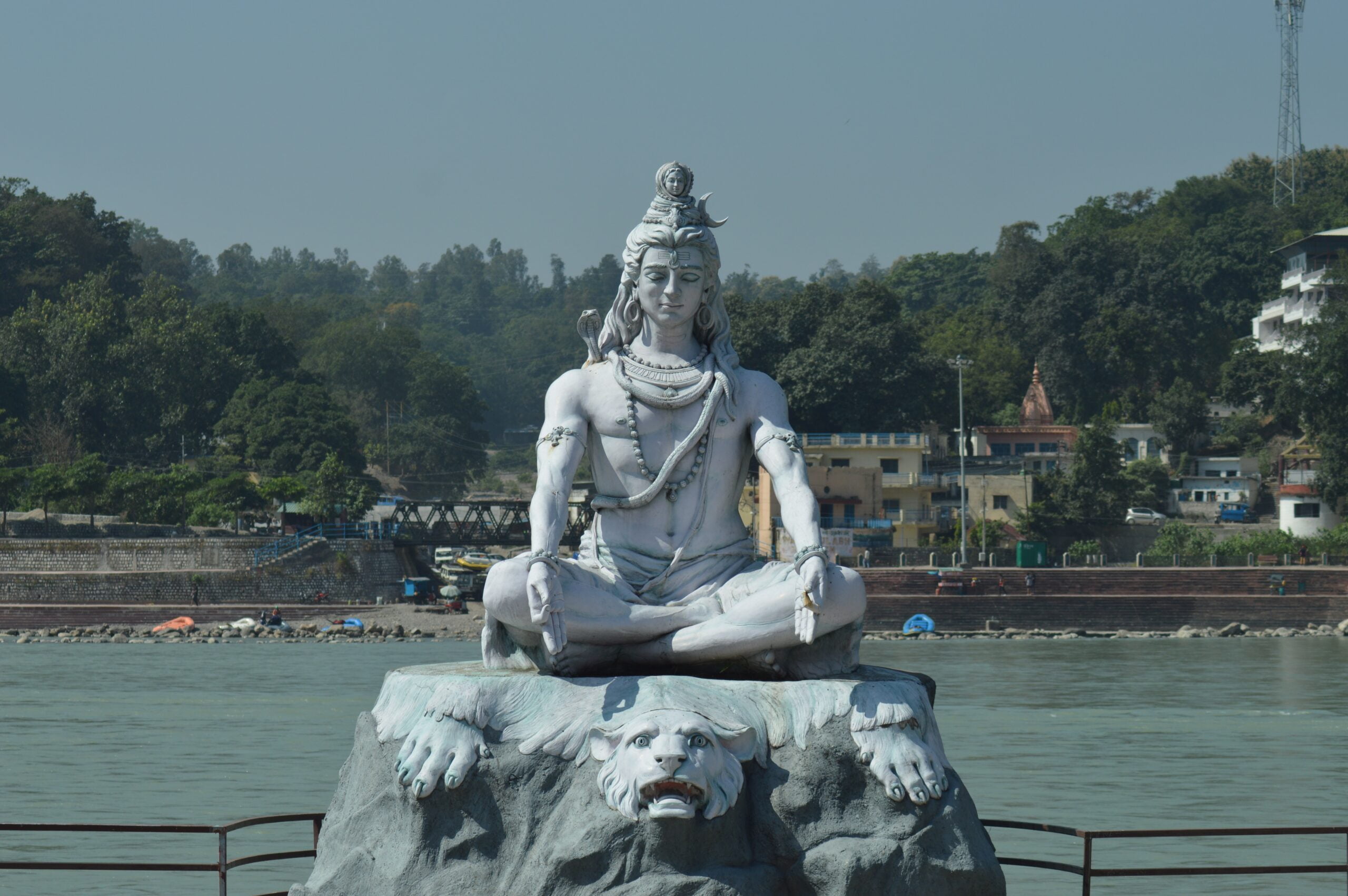
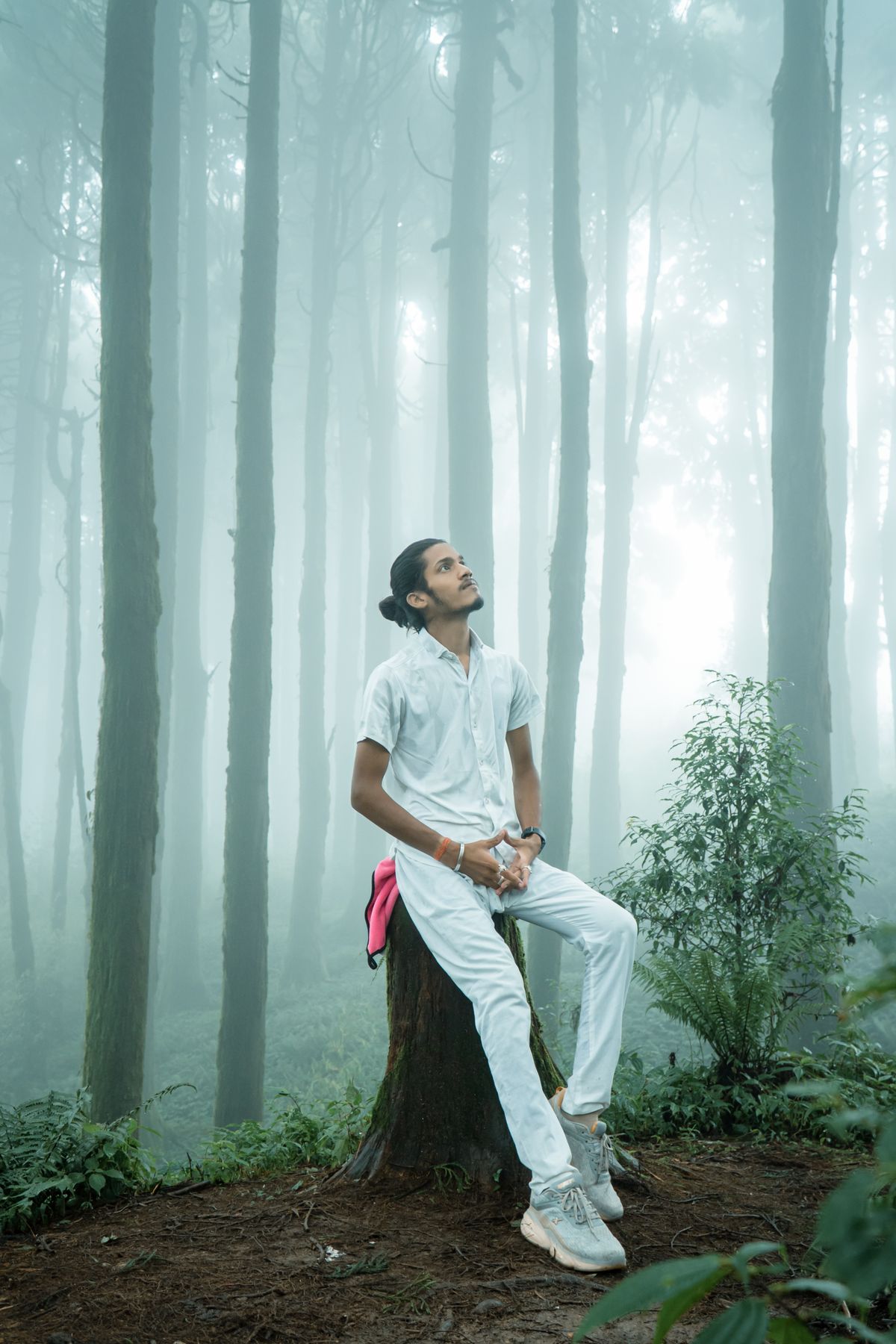
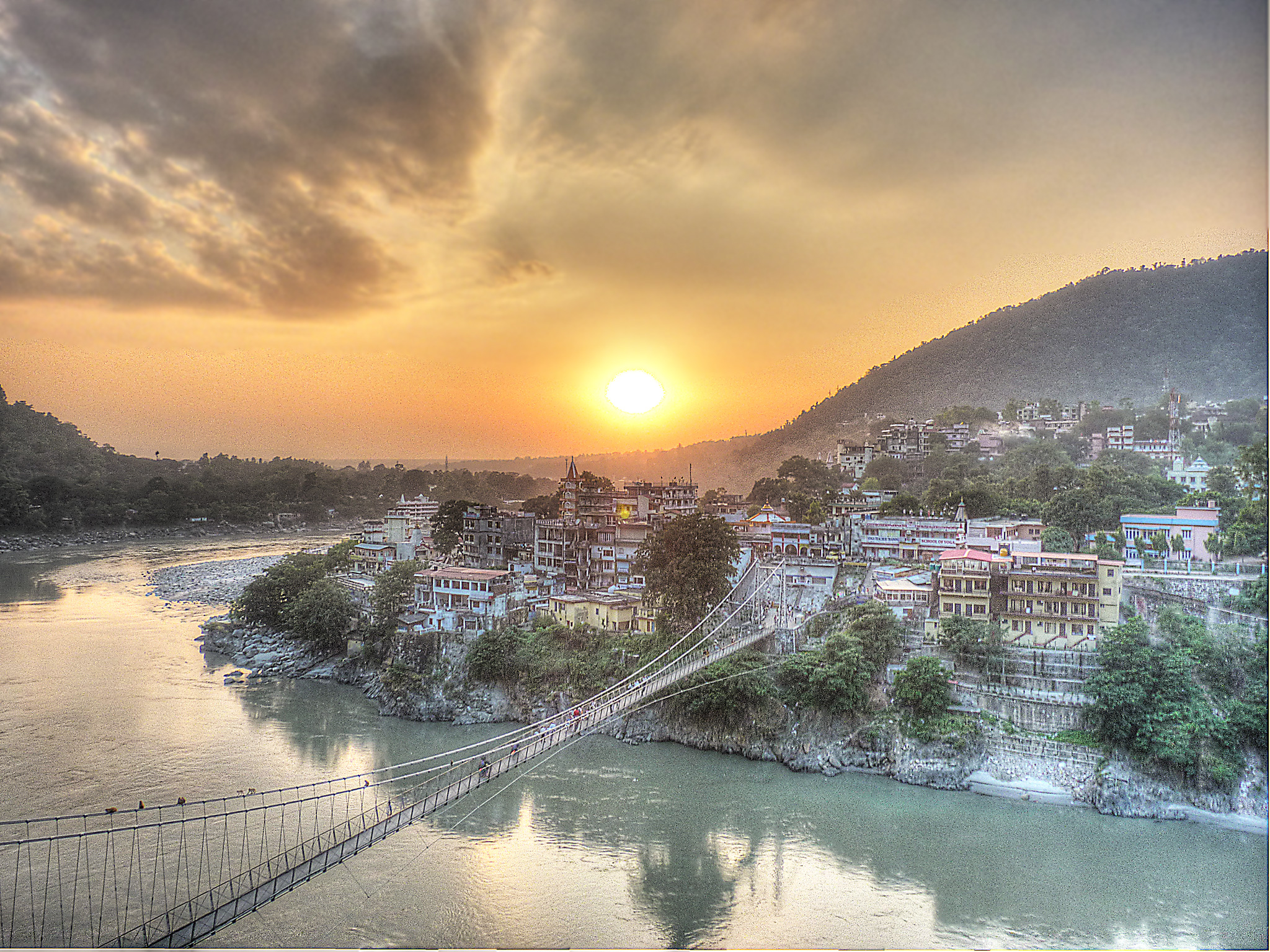
Discover the Path to Becoming a Yoga Teacher in Rishikesh
Yoga Teacher Training Rishikesh
Are you ready to embark on a transformative journey of self-discovery and learn the ancient art of yoga? Look no further than Fitfortunes Yoga School, located in the serene and spiritual city of Rishikesh, India.
Our 200-hour traditional multi-style yoga teacher training course in Rishikesh is designed to provide aspiring yoga teachers with a solid foundation in yoga philosophy, asanas, pranayama, meditation, and teaching methodology. By immersing yourself in the rich culture and spiritual atmosphere of Rishikesh, known as the “Yoga Capital of the World,” you will deepen your practice and develop the skills to become a confident and compassionate yoga teacher.
Why Choose Rishikesh for Your Yoga Teacher Training?
Rishikesh, nestled in the foothills of the majestic Himalayas and blessed with the sacred Ganges River, offers an unparalleled environment for yoga teacher training. The serene and natural surroundings create an ideal setting for self-reflection, meditation, and the study of yoga. As you embark on this transformative journey, you will have the opportunity to learn from experienced and certified yoga instructors who will guide you through the depths of yoga philosophy and the intricacies of asanas, pranayama, and meditation.
Immerse Yourself in a Comprehensive Yoga Curriculum
At Fitfortunes Yoga School, our 200-hour yoga teacher training course encompasses a broad range of topics.
These include in-depth studies of yoga philosophy and history. Our curriculum includes in-depth studies of yoga philosophy and history, techniques for aligning various asanas, pranayama and energy anatomy, meditation and mindfulness practices, teaching methodology with hands-on adjustments, as well as anatomy and physiology. Additionally, we cover yogic lifestyle and ethics to provide you with a comprehensive and well-rounded understanding of yoga. You will also have ample opportunities to practice and refine your teaching skills through supervised teaching sessions.
Experience the Yogic Lifestyle in Rishikesh
During your stay in Rishikesh, you will have the chance to fully immerse yourself in the yogic lifestyle.Your daily routine during our program revolves around yoga. This includes morning yoga and meditation sessions, self-study, and reflection. You’ll immerse yourself in yoga practice. Additionally, you can partake in sacred rituals, visit ashrams and temples, and learn from esteemed spiritual teachers.. The serene and spiritual ambiance of Rishikesh will support and inspire your personal transformation.
Become a Certified Yoga Teacher and Share Your Passion
Upon completing our 200-hour yoga teacher training, you’ll receive a globally recognized certification. With this certification, you can teach yoga professionally worldwide. Whether your dream is to lead classes at renowned yoga studios, offer private sessions, or conduct retreats in comfortable locations. Our training program equips you with the skills, knowledge, and confidence to pursue your passion and share the transformative power of yoga with others.
Ready to Start Your Journey?
If you are ready to embark on this life-changing journey, join us at Fitfortunes Yoga School in Rishikesh. Our upcoming yoga teacher training courses are open for enrollment. Secure your spot today and take the first step towards becoming a certified yoga teacher. Visit our website at Fitfortunes Yoga School to learn more and begin your transformational yoga journey.
Disclaimer: All images used in this blog are copyright-free and sourced from Unsplash.
Karma, A Sanskrit word means– “actions” or “deeds”. Law of karma occupies a central position in Indian philosophy. The spiritual law which was, sometimes compared metaphorically with Newton’s third law, although the two ideas belong to different fields and should not be treated as scientifically equivalent. “To every action, there is an equal and opposite reaction.”
Thus, According to Indian philosophy, we are because of our Karma. So, it decides our future in this or the next birth.
Hey intelligent man, spend your life always in the knowing the supreme bliss, enjoying the whole of your Life without making any complaint.
As we all know, good deeds bring you a good result and your bad deeds bring bad for you. As time progress your Karma processed, calculated and incorporated gradually in your life. Indian soteriologies predict that future rebirths and your situations get planned accordingly. Thus, The actions you perform in your present life gets reflected.
In Addition, Karma serves two main purposes in Indian philosophy. One, motivate you to live a moral life. Next, providing you with an explanation of the primary existence of evil.
Theory of Karma
All the four systems of Yoga – Jnana, Raja, Bhakti and Karma teach us to live positively. Either in thoughts, words and deeds. Good actions support in producing positive memories.
Yajnavalkya, The first philosopher of human history. And, introduced the concept of Karma, mentioned in the book Brihadaranyaka Upanishads. Yet, the person, good or bad. He gets what he does.
Let’s know a few things about Our Cycle- Theory of Karma
Sanchita
Sanchita Basically it means “what we reap, what we sow”. The deeds either good or bad gathered together. Starting from the present including all the previous ones considered. But at this level, the good karma does not cut the effect of the bad. All the karma needs to be resolved. This karma symbolized arrows in a quiver. The arrows show your accumulated karma.
Praarabdha
It’s like the arrows are discharges and are on their flight. Also, the part of Sanchita. And is ready for the action. Prarabdha, that portion of the past actions, which is responsible for the present self. This symbolizes that the arrow has left the bow and flying through the sky ready to hit the target.
Kriyamanna
Kriya means Action Going on at Present. Kriyamanna, The active or the current one. The arrow has just hit the target. And the target is feeling the pressure. The degree of main is the degree we experience. The result of this act creates a new one for you.
Aagami
This can also be referred to as the future self. It follows Sanchita. It’s more like the arrow is ready to discharge from the bow. If all the environment and conditions are favourable, it leads to Praarabdha. This is the stage when the arrows are set in the bow.
Here is a video to know it more clearly
Controlling your Karma
There are various meditation techniques that help us to burn out the Sanchita Karma. Also, many People know through dream awareness about the effect of Aagamikarma. Even so, Through proper medication and appropriate actions, one can kill and destroy Agami karma. Life provides you with various situations to prove yourselves. It’s us on how we react. A humble and peaceful approach may help us to reduce the effect.
Stopping Praarabdha requires a real understanding of yoga and spiritual power.
So, The effect of all these can be easily eliminated by self-knowledge, determination and “Om medication”. Silent Japa of “Om” would guide one to cross the ocean of Samsara and attain the freedom of rounds of birth and rebirth attaining moksha.
Karma in simple terms
Karma: action or deed.
Karma Yoga: disciplined action without clinging to personal reward.
Sanchita: accumulated karma in later traditional explanations.
Prarabdha: karma described as already bearing fruit.
Agami: karma connected with actions being created now.
Different Indian traditions explain karma in different ways. It is a philosophical and religious concept, not a physics law.
Frequently asked questions
Does karma mean punishment?
Not simply. Karma refers to action and its consequences within Indian philosophical traditions. It is broader than the idea of instant reward or punishment.
Rishikesh is famous for yoga because it combines a long tradition of spiritual study with ashrams, teachers, meditation centres, the Ganga, and an international community of students. The city is widely known as the Yoga Capital of the World, but that title is better understood as a description of its living yoga culture than as a claim that yoga began in one single place.
Rishikesh sits in Uttarakhand at the foothills of the Himalayas. For many visitors, yoga here is not limited to a one-hour asana class. It can include pranayama, meditation, philosophy, mantra, traditional study, retreats, and residential teacher training.
Why Rishikesh Is Famous for Yoga: The Yoga Capital Explained 7
Why is Rishikesh called the Yoga Capital of the World?
There is no single event that made Rishikesh a yoga centre. Its reputation grew over time through pilgrimage, ashram life, meditation, teachers, Indian philosophy, and the steady arrival of students who came to study for more than a short holiday.
The Uttarakhand Tourism Department describes Rishikesh as the world capital of yoga and meditation. It also points to the city’s many ashrams and its annual International Yog Festival as part of the reason Rishikesh remains closely connected with yoga today.
The Ganga and Himalayan setting matter
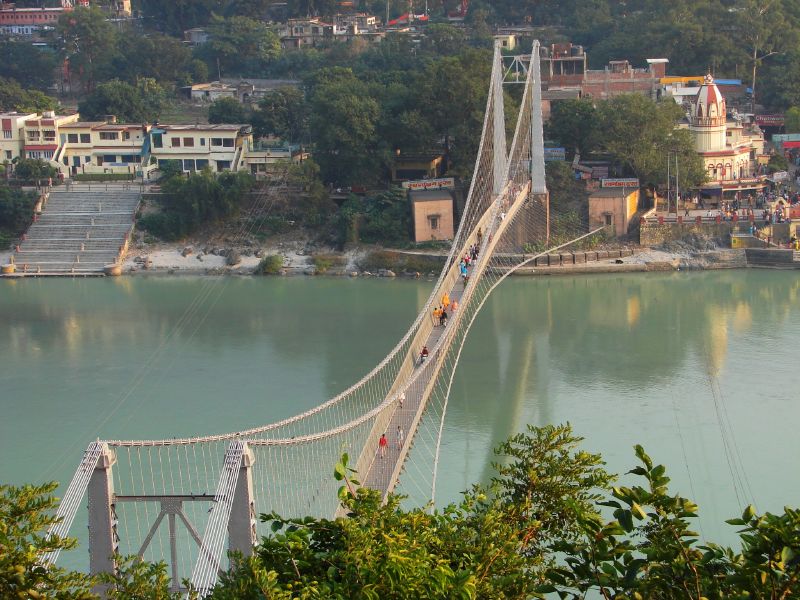
Rishikesh is built around the Ganga as the river leaves the Himalayan foothills. The river, surrounding hills, temples, ghats, and older ashram areas give the city a very different rhythm from a large urban yoga studio. Students can move from practice to philosophy class, sit by the river, attend an evening aarti, or spend quiet time away from traffic and work routines.
This setting does not make every yoga class automatically better. What it does provide is an environment where yoga, meditation, pilgrimage, and spiritual study are visible parts of everyday life.
Ashrams made long-term study possible
Rishikesh has a long ashram tradition. Well-known institutions such as the Divine Life Society and Parmarth Niketan helped make the city a place where students could stay, study, practise, and learn within a daily routine. Other centres developed around meditation, Vedanta, Hatha Yoga, devotional practice, and different teacher lineages.
This residential style of learning is one reason Rishikesh became important for serious yoga students. Instead of separating practice from daily life, students can follow a schedule that includes movement, breath, study, meals, rest, and personal practice.
Why Rishikesh Is Famous for Yoga: The Yoga Capital Explained 8
Yoga in Rishikesh is broader than posture practice
A common reason students choose Rishikesh is that yoga is often taught as more than physical exercise. A complete course may include asana, pranayama, meditation, philosophy, anatomy, alignment, teaching methodology, mantra, or traditional texts, depending on the school and course.
This does not mean every school teaches the same method. Some focus on traditional Hatha Yoga, some on Vinyasa, some on meditation or philosophy, and others combine several subjects. Students should always read the actual syllabus instead of assuming that every course in Rishikesh is identical.
The Beatles brought new international attention
Rishikesh was already a spiritual and yoga centre before the 1960s, but the Beatles’ stay at Maharishi Mahesh Yogi’s ashram in 1968 brought major international attention to the city. Their visit connected Rishikesh with meditation and Indian spiritual study for a much wider global audience.
International interest continued to grow after that. Today, students arrive from many countries for yoga classes, meditation retreats, teacher training, philosophy study, and longer residential programs.
Is Rishikesh really the birthplace of yoga?
It is common to see Rishikesh called the “birthplace of yoga,” but that phrase should be used carefully. Yoga developed across India over a very long period and cannot be reliably traced to one modern city as its single birthplace.
A more accurate description is that Rishikesh is one of the world’s best-known living centres for yoga, meditation, ashram study, and teacher training. Its importance comes from continuity of practice and teaching, not from a simple claim that all yoga started here.
What can you study in Rishikesh today?
People come to Rishikesh for very different reasons. A visitor may join a single morning class, stay in an ashram, attend a meditation program, take a short retreat, or complete a residential yoga teacher training.
Drop-in yoga classes: useful for travellers who want regular practice without joining a full course.
Ashram stays: usually more focused on routine, simplicity, meditation, philosophy, or devotional practice.
Yoga retreats: shorter residential programs that combine practice with rest and wellness activities.
Teacher training: structured study for students who want deeper practice and, at the 200-hour level, a structured foundational teacher-training pathway.
The main difference is concentration. A residential student can spend several weeks around people who are also practising, studying, eating on a regular schedule, and discussing yoga every day. That is very different from fitting two classes each week around a normal work routine.
Rishikesh also gives students access to different styles, teachers, ashrams, lectures, meditation sessions, Sanskrit and philosophy study, and a large international yoga community. The variety is useful, but it also means students need to compare schools carefully. A famous location does not remove the need to check teachers, curriculum, class size, accommodation, fees, and certification details.
How FitFortunes fits into the Rishikesh yoga tradition
FitFortunes Holistic Wellness Yoga School is based in Rishikesh near the Laxman Jhula and Swargashram area. Its current residential teacher-training portfolio includes 100-hour foundation programs and 200-hour teacher-training programs, with Hatha Yoga and Vinyasa Krama forming the practical base of the current Multi-Style training.
The current 100-Hour Multi-Style course is a 10-day foundation from the 2nd to the 12th of each month. The current 200-Hour Multi-Style course begins on the 2nd monthly and is 21 days long. Students can compare the current course structure, room options, and inclusions from the course hub rather than relying on general claims about yoga schools in Rishikesh.
Planning a yoga stay in Rishikesh
If you are travelling for yoga, plan the practical side as carefully as the course itself. Check your arrival route, weather, room type, food, course schedule, and how much free time you will actually have.
Rishikesh has many schools and very different course formats. Before paying a deposit, check the practical details rather than choosing only from photos or a low price.
Confirm the exact yoga styles and syllabus.
Check teacher names, experience, and qualifications.
Check the real course duration, daily hours, and attendance rules.
Confirm room type, meals, Wi-Fi, and what the fee does not include.
Read the certification wording carefully and do not treat a private certificate as a legal teaching licence everywhere.
Use the current course page for dates and prices before booking travel.
Rishikesh is famous for yoga because of its long spiritual tradition, ashrams, teachers, meditation culture, Ganga setting, and large number of modern yoga schools and residential programs.
Why is Rishikesh called the Yoga Capital of the World?
The name reflects the concentration of yoga and meditation study in the city. Rishikesh has long attracted Indian and international practitioners, and Uttarakhand Tourism itself describes it as the world capital of yoga and meditation.
Is Rishikesh the birthplace of yoga?
Not in a literal, historically proven sense. Yoga developed across India over centuries. Rishikesh is better described as an important centre where yoga, meditation, and spiritual study have been practised and taught for generations.
Do I need to join a teacher training to practise yoga in Rishikesh?
No. Rishikesh has drop-in classes, ashrams, meditation programs, retreats, and longer courses. Teacher training is only one option and is better suited to students who want structured, intensive study.
The festival of colours, “Holi” endows us with such special moments in which we can distribute love and compassion with our near and dear ones. People leave all the grudges in past and try to move on while celebrating the occasion of Holi.
As per Hindu scriptures, Holika Dahan commences on the evening of Purnima (Pradosh Kaal), after Bhadra, in the month of Phalguna.
In actual, Holika Dahan is the main reason behind the revels of this festival. Typically, there exist a plethora of myths which are supposed to be the main intellects but here is the description of the most famous myths among all.
The Hindus Myth
The myth is about the tale of a Vishu disciple Prahalada due to which we celebrate Holi. But his father Hiranyakashipu was an arrogant and witty person. Who could never tolerate anyone rising above him.
Narasimha is described in Hindu tradition as the form of Vishnu who defeats Hiranyakashipu.
So, Same happened when Prahalada refused to worship him in place of the God Vishnu. And then, his father tried his best to punish Prahalada. Actually, his father had a boon. That nobody could kill him. Neither the human or animal, in outdoor nor indoor, in day or night, by ashtra nor by shastra (weapons), neither in land nor water.
End of Hiranyakashipu Era
But, when they forced Prahalada to sit on fire in the lap of his aunt Holika. Then Prahalada survived and Vishnu killed his father in the role of Narasinha(body of half human and half lion ) at dusk. And yes, between the boundary line of door, in his own lap, by lion claws.
Since that day, Holi celebrations occur on a particular day. Where Holika bonfire symbolizes the victory of goodness over the evil power. And, Holi as the celebration of that victory.
The Sikhs History
Sikhs have been celebrating the festival of Holi since the 19th century. Because the last human Sikh Guru, “Shri Guru Gobind Singh” presented it as a festival of three days. Among Sikh religion people, this festival called “Hola” or “Hola Mohalla’. In which people show martial arts and many other activities.
Hola Mohalla is marked by Sikh martial-arts displays and community activities.
As per the pages of history, the credit of its initiation goes to Maharaja Ranjit Singh. Who used 300 mounds of colours in Lahore along with his other officials in 1837. From that day, Holi getting celebrated among Sikhs with full enthusiasm.
Rituals of Holi
Here is the list of rituals performed on the spring festival “Holi” which may vary as per different cultures and regions. People celebrate Holi on the last full moon day of Hindu Calendar.
They lit bonfires as Holika Dahan, one night before the main celebrations.
Holika Dahan comprises a huge gathering in which singing, dancing, and other cultural activities.
On the primary celebrations of Holi, people put colours on the faces of their family, relatives or friends in powdered and liquid form.
At some places, people also play DJ music during celebrations to dance and enjoy.
In a northern part of India, Holi has celebrated quite a unique way. Where women hit the men with a stick(lath) or soft ropes of cotton clothes. During this men save themselves with shields and pouring water and colors on women.
See our Best Places to Celebrate Holi Guide.
Over and all, every region has its own myth, name, and rituals as per their cultures and customs. But, the main purpose of Holi is to scatter happiness everywhere and leave the conflicts behind.
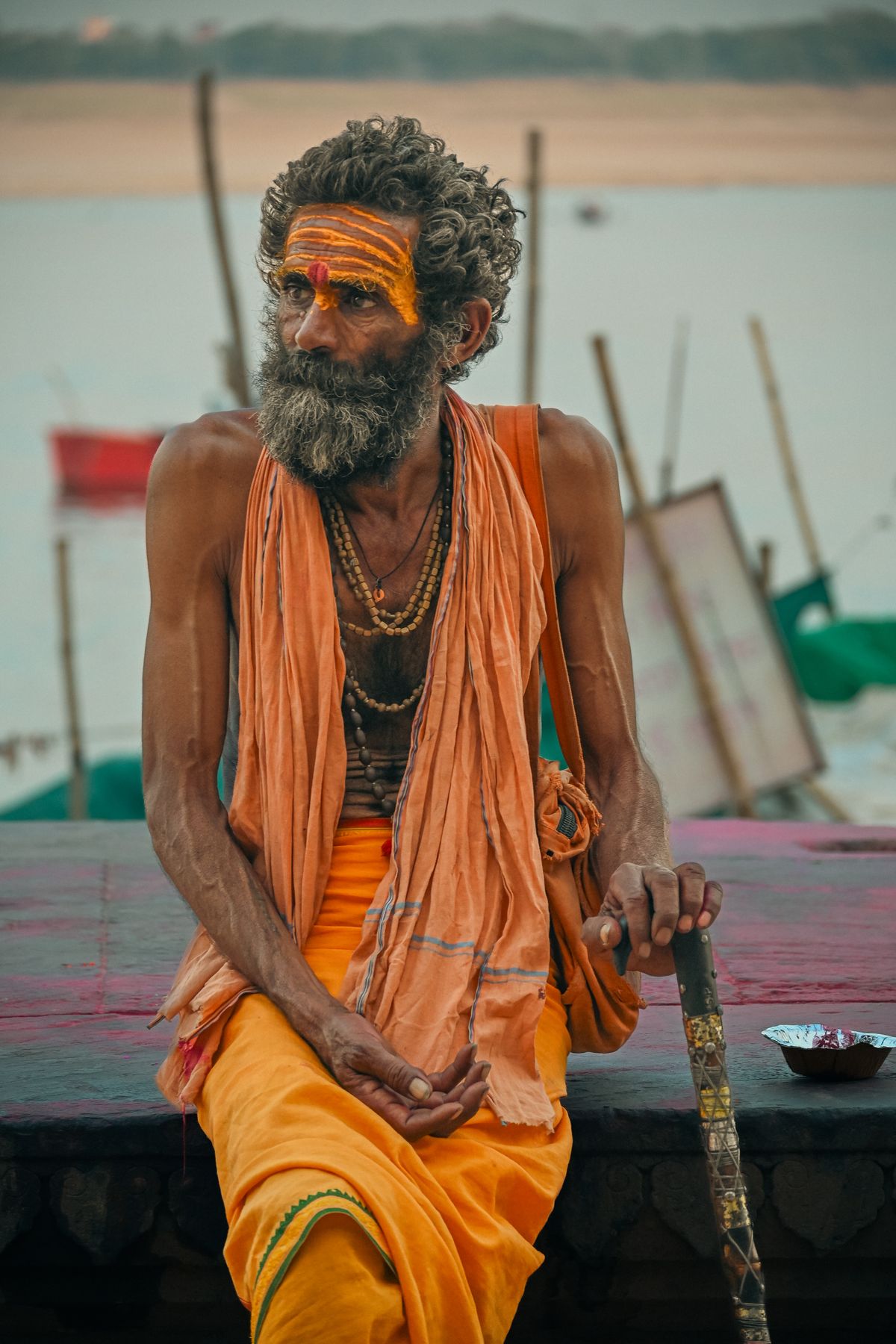
Aghoris are a small Hindu ascetic tradition linked with Shaivism and the worship of Shiva. They are often connected with Varanasi, cremation grounds, ash, skull symbolism and practices that challenge ordinary ideas of pure and impure.
They are also one of the most sensationalised groups in Indian religion. Online stories often mix real practices, rare practices, old reports, rumours and shock headlines. A fair explanation needs to separate documented Aghori ideas from stories that cannot be checked.
Who are the Aghoris?
Aghoris are renunciants within a Shaiva religious setting. “Renunciant” means a person who gives up much of ordinary household life to follow a spiritual discipline. Aghoris are especially known for practices that confront fear, death and social ideas about pollution.
Academic work on Aghori practitioners in Varanasi describes them as a small group of Hindu ascetics and Shiva worshippers. Their practices can be difficult for outsiders to understand because they intentionally work with places and objects that most people avoid.
What does Aghor mean?
Aghor is commonly explained as a state beyond fear, disgust and rigid division. The larger idea is non-duality: the spiritual seeker tries to see the sacred without dividing life into simple boxes such as pure and impure, beautiful and ugly, life and death.
This does not mean every Aghori performs every extreme practice described on the internet. A religious tradition can contain different teachers, lineages and levels of practice.
Why are Aghoris linked with cremation grounds?
Death is normally something people fear or avoid. The cremation ground puts death directly in front of the practitioner. For some Aghori ascetics, this makes it an important place for meditation and for facing attachment, fear and the idea of the separate self.
Anthropologist Jonathan Parry has written about Aghori ascetics in relation to death, corpses and cremation grounds. A peer-reviewed study of Varanasi also discusses the Aghori use of the cremation ground and the way tourists react to it.
What Aghori practices are documented?
Scholarly writing documents practices linked with cremation grounds, the use of ash from cremation sites, skull bowls, meditation on death and strong forms of ascetic discipline. Some academic sources also describe rare transgressive practices involving human remains.
Those rare practices should not be turned into a cartoon of the whole tradition. A practice being documented does not mean every Aghori does it, does it often, or wants outsiders to watch it.
The aim of many transgressive practices is religious, not entertainment. They may be understood as ways to challenge disgust, fear, attachment and social boundaries.
Common myths and exaggerations about Aghoris
“All Aghoris are cannibals”
This is too broad. Scholarly sources describe rare ritual use of human remains among some practitioners. It is not accurate to use one extreme practice as the definition of every Aghori.
“Aghoris have supernatural powers”
Stories about magical powers belong to belief, folklore and personal testimony. They are not facts that can be independently proved. We should label them as beliefs rather than present them as evidence.
“Aghoris live for 150 years”
There is no reliable evidence that Aghoris as a group live to extraordinary ages. Claims like this need records, not rumours.
“Every person near a cremation ghat is an Aghori”
No. Varanasi’s cremation grounds include families, priests, workers, pilgrims, residents, visitors and different kinds of sadhus. Clothing or ash alone is not enough to identify a person’s tradition.
How to approach Aghoris respectfully
Do not treat a living religious tradition as a horror attraction. Ask before taking a close photo. Do not interrupt cremation rites. Do not pay someone to perform a shocking act for a camera. Do not assume a person wants to explain private practice to a tourist.
If you visit Varanasi, remember that a cremation ghat is first a funeral place. Families are grieving there. Their privacy matters more than a visitor’s photograph.
For a wider look at how Indian yoga and Tantra developed subtle-body and transgressive practices, see Geoffrey Samuel’s academic work from Cambridge University Press. A peer-reviewed study of Aghori rituals and tourism at Varanasi’s cremation grounds is available through the University of Groningen research portal.
A simple way to understand the Aghori path
The easiest starting point is not the most shocking ritual. It is the idea behind the practice: facing what the mind rejects, looking directly at death, and testing the boundary between sacred and impure.
That does not make every claim about Aghoris true. Careful study means respecting the tradition while still asking for evidence.
Yes. They are generally described within a Shaiva Hindu ascetic tradition centred on Shiva.
Are Aghoris mainly found in Varanasi?
Varanasi is strongly associated with the tradition and is the place most visitors hear about. Aghori lineages and practitioners are not limited to one ghat or one city.
Why do some Aghoris use ash?
Ash is closely linked with Shiva, renunciation and the reality of death in several Shaiva settings. For Aghoris, cremation-ground symbolism can have an especially strong place in practice.
In short: Aghoris are a small Shaiva ascetic tradition. Their practices can be transgressive, but sensational internet stories should not replace careful, respectful evidence.
Kumbh Mela 2027 will be held in Nashik and Trimbakeshwar in Maharashtra. It is a major Hindu pilgrimage gathering linked with ritual bathing, worship, ascetic orders, temples and public religious events. The Government of Maharashtra has created the Nashik–Trimbakeshwar Kumbh Mela Authority to plan transport, sanitation, safety and pilgrim services for the event.
Official schedules can still change as the event gets closer. Before booking travel, visitors should check the Nashik–Trimbakeshwar Kumbh Mela Authority for the latest dates, routes and public notices.
What is Kumbh Mela?
Kumbh Mela is a large Hindu pilgrimage tradition connected with four places: Prayagraj, Haridwar, Ujjain and Nashik. In Hindu tradition, these places are linked with the story of amrita, the nectar of immortality.
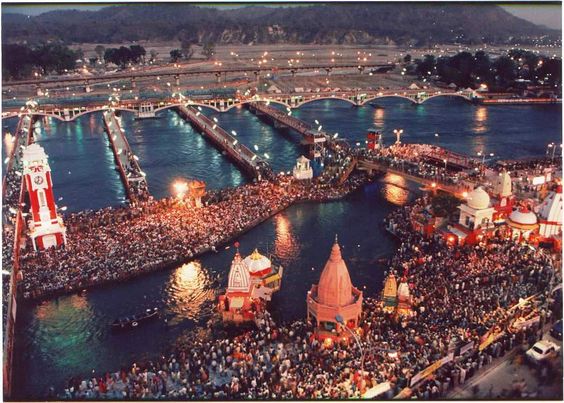
The gathering is religious, but it is also a major social and cultural event. Pilgrims may come for bathing, temple visits, prayer, talks, meetings with sadhus and time with family.
Where is Kumbh Mela 2027?
The 2027 Simhastha Kumbh is being prepared for Nashik and Trimbakeshwar in Maharashtra. The two centres have different sacred bathing places and different roles for some monastic orders.
In Nashik, Ramkund on the Godavari is a major pilgrimage area. In Trimbakeshwar, Kushavarta Kund and the Trimbakeshwar temple area are central places for pilgrims.
The Nashik–Trimbakeshwar Kumbh Mela Authority is the government body coordinating the event. Its work includes infrastructure, sanitation, safety, transport and pilgrim help.
What are the important Kumbh Mela 2027 dates?
The main pilgrimage period is expected in 2027, with major bathing events in August and September. An interim Kumbh plan has listed three main Shahi or Amrit Snan periods: 2 August 2027, 31 August 2027, and 11–12 September 2027, with the last main bathing observance split between Nashik and Trimbakeshwar.
These dates should be treated as provisional until final government notification. Plans for a gathering this large can change. Before booking transport or accommodation, check the official Simhastha Kumbh Mela 2027 page.
The Press Information Bureau reported in July 2026 that heritage conservation work in Nashik was being accelerated ahead of Simhastha Kumbh Mela 2027. This confirms active government preparation for the event.
What may visitors see at Kumbh?
Ritual bathing
Bathing in the sacred river is an important religious practice for many pilgrims. Believers may understand the bath as an act of purification. That is a statement of faith, not a scientific or medical claim.
Sadhus and akhadas
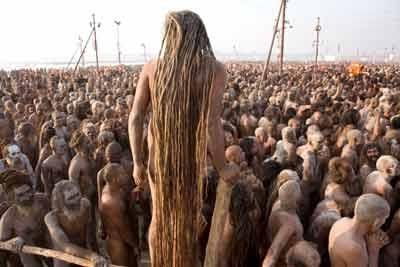
Kumbh brings together many Hindu ascetic orders, often called akhadas. Visitors may see processions, camps, prayer and teaching. Some groups have distinctive clothing, ash markings or rituals.
Talks, worship and temple visits
Religious talks, chanting, worship and temple visits are common parts of the pilgrimage. Exact programmes vary by area and date.
How to plan a Kumbh visit safely
Large bathing days can bring very heavy crowds. Plan simply. Use official transport notices. Keep children and older family members close. Carry only what you need. Keep a paper copy of your hotel address and an emergency contact.
Do not enter restricted areas or push into a crowd because a route looks shorter. Follow police, event staff and local crowd-control signs. Mobile networks may become slow when many people gather in one place.
Book accommodation only after checking the exact location. Nashik and Trimbakeshwar are separate places, and travel time can grow sharply on peak days.
Respect the event
Kumbh is not only a photo opportunity. It is a living religious gathering. Ask before taking close photos of people. Follow temple rules. Dress in a way that is suitable for sacred places. Do not block worship or bathing areas for pictures.
If you are also planning a wider North India trip, our Golden Triangle travel guide explains Delhi, Agra and Jaipur in simple terms.
Simple questions about Kumbh Mela 2027
Is Kumbh Mela 2027 in Prayagraj?
No. The 2027 Simhastha Kumbh is being prepared for Nashik and Trimbakeshwar in Maharashtra.
Is Kumbh Mela only one day?
No. It covers a much longer period, with some bathing days drawing much larger crowds than ordinary days.
Are the bathing dates final?
The main dates have appeared in the interim Kumbh plan, but visitors should check the final government schedule before travel.
Can non-Hindus visit?
Kumbh is a public pilgrimage gathering and many visitors come to understand Indian religion and culture. Everyone should behave respectfully and follow local rules.
In short: Kumbh Mela 2027 is a Nashik–Trimbakeshwar event. Use the official government authority for final dates, transport and safety updates.