AI can help a yoga teacher, but it cannot replace good human teaching in the room. It can organise notes, explain basic terms, suggest class ideas, and make routine work faster. It is much weaker at the parts of teaching that depend on seeing a real person clearly, noticing uncertainty, adapting to different bodies, earning trust, and taking responsibility for a decision. Those human skills remain central in 2026. AI cannot replace a yoga teacher’s in-room observation, safety judgment, or personal connection with students.
Related guides: YTT curriculum, choosing YTT, and teacher-training anatomy.
Can AI replace a yoga teacher?
Not as a complete replacement for real teaching. AI can be useful for study, planning, and simple explanations, but it should not be treated like a person who can reliably see your whole body, know your health history, understand everything happening in a room, and accept professional responsibility for the advice it gives. The useful question is not whether AI is good or bad. It is which parts of yoga education software can support and which parts still need human judgement.
This matters because AI is entering wellness apps, video platforms, and teacher workflows. The Global Wellness Institute’s 2026 yoga trends identifies artificial intelligence and the future of the yoga teacher as an emerging issue. That does not prove what will happen next, but it does show that teachers and students now need a practical way to use these tools without confusing generated information with real teaching.
What can AI do well for yoga?
AI is most useful when the task is based on language, organisation, or ideas rather than direct observation of a student. It can turn notes into study questions, simplify technical wording, compare class themes, draft lesson-plan structures, and help a teacher organise routine admin. These are support tasks, not final safety decisions. The teacher still needs to check accuracy, context, and whether the result fits the students who will actually be in the room.
Explain a basic term
A student can ask what pranayama means, how flexion differs from extension, or how a beginner yoga class is usually structured. AI can give a fast starting explanation and can rewrite it in simpler English when needed. That is useful for revision, especially for international students. The answer should still be checked when the subject is specialised, medical, historical, or philosophical because an AI system can sound certain even when it is wrong.
Organise study notes
A trainee can paste their own class notes and ask for flash cards, revision questions, a glossary, or a short quiz. This is a lower-risk use because the student’s own material remains the source and the tool is helping with organisation rather than inventing the lesson. It can also reveal where a student has gaps in their notes. The teacher or original study material should remain the reference when an answer needs to be confirmed.
Brainstorm class ideas
A teacher can ask for several ideas for a beginner class, a list of possible themes, or different ways to explain one concept. Brainstorming can save time because it gives the teacher options to think about rather than forcing them to start from a blank page. The important part is that the teacher still chooses the final sequence and wording. AI should be treated as a draft partner, not the person responsible for the class.
Simplify or translate language
AI can help shorten long instructions, replace difficult words, or create a simpler version for international students. That can be useful in a yoga school where many people speak English as a second language. The teacher should still read every instruction before using it because simple language can still contain an anatomical or cultural error. Clear teaching is more important than impressive wording, and the final words should sound natural when spoken aloud.
Handle routine admin
Schedules, checklists, lesson-plan templates, reminders, and follow-up emails are good examples of work that AI can help organise. These tasks can take time but usually do not require the system to judge a student’s body or make a health decision. Used carefully, AI can reduce routine writing and leave more time for practice, observation, and student support. Private or sensitive student information should not be pasted into tools without appropriate consent and data safeguards.
Where is AI weak in yoga teaching?
AI becomes less reliable when the task depends on incomplete visual information, personal history, changing conditions, or responsibility for another person’s safety. A camera may show only one angle, clothing can hide movement, and a text prompt can leave out the detail that actually matters. Human teachers can also make mistakes, but they can ask questions, change their view, notice behaviour, and respond to the whole situation rather than only the data provided to a model.
It sees only what the input shows
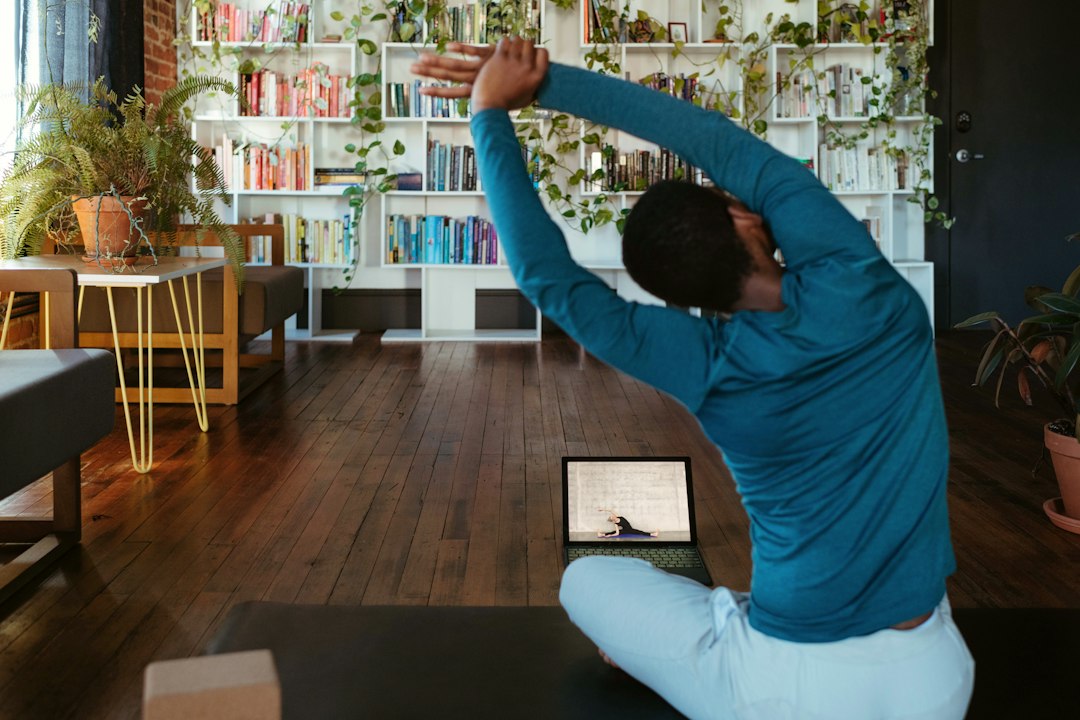
A phone camera can miss the joint angle that matters, poor lighting can change what appears to be happening, and a student may move differently when seen from another side. A text prompt such as “my knee hurts in Warrior II” gives even less information. AI can respond to what it receives, but it cannot reliably know what is outside the frame or missing from the description. That makes automatic pose correction much more limited than a real assessment.
It does not know what you did not tell it
A student may forget to mention surgery, pregnancy, medication, dizziness, osteoporosis, or an old injury because they do not realise it matters. A human teacher may also miss information, but they can notice hesitation, ask follow-up questions, and refer the student elsewhere when the issue is beyond their scope. AI cannot discover a missing fact by observation in the same dependable way. The quality of its answer is limited by the information it has been given.
It can invent information
AI can create a false book reference, mix yoga traditions, misstate anatomy, or present a guess as if it were established fact. This is especially important in yoga philosophy, where a polished quotation may look convincing even when the source is wrong. The more technical or specialised the question, the more important verification becomes. Teachers should check classical texts, anatomy claims, dates, and named sources before using generated material with students.
It cannot own professional responsibility
A teacher chooses what to teach and is responsible for how that choice affects the class. Software can generate words and suggestions, but responsibility still sits with the person or organisation using the tool. This matters when a sequence needs to be changed, a student reports pain, or a teacher must decide that something is outside their competence. AI can support the thinking process, but it cannot take the professional responsibility away from the human teacher.
It cannot reproduce human trust
A student may be scared, embarrassed, tired, or confused without saying it directly. Good teaching uses tone, timing, silence, eye contact, and relationship as well as spoken instructions. These parts of the class are difficult to reduce to a prompt or a pose-detection score. A teacher who knows when to speak, when to wait, and when to change direction offers something different from information alone. That relationship is part of why live teaching still matters.
Can AI create a yoga sequence?
Yes, AI can generate a yoga sequence, but that does not mean the sequence is appropriate for a real group. It can produce a tidy list of poses while missing poor transitions, unnecessary repetition, unsuitable intensity, weak preparation for a peak posture, or a student limitation that was never included in the prompt. Sequence generation is most useful as a draft. Teacher training should develop the judgement needed to review, adapt, and sometimes reject that draft.
- Who is the class for?
- What have the students already done?
- Are the transitions sensible?
- Does the peak posture match the preparation?
- What options and rest choices are needed?
- Is any instruction outside the teacher’s competence?
Our yoga teacher training curriculum guide explains why teaching methodology, anatomy, sequencing, and practice teaching matter. Those subjects help a teacher understand why a sequence works rather than simply copying a list of poses.
How should yoga students use AI?
Students can use AI to support learning without treating it as a replacement for appropriate professional help. It is useful for simple explanations, revision, vocabulary, study questions, and preparing better questions to ask a teacher. It is a poor substitute for assessment when pain, surgery, injury, or another health concern is involved. When a movement causes significant or persistent pain, use appropriate healthcare support rather than trying more prompts to obtain a different answer.
How can yoga teachers use AI responsibly?
A responsible teacher keeps AI in a supporting role. Generated text should be treated as working material that must be checked before it reaches students, especially when it includes anatomy, classical references, health information, or historical claims. Teachers should also protect student privacy and avoid pasting sensitive personal details into tools without proper safeguards. Most importantly, safety decisions should remain human because the qualified teacher is the person responsible for the class.
- Draft, then verify. Treat generated material as a starting point.
- Check classical references. Do not quote a text you have not verified.
- Check anatomy claims. Plausible wording can still be wrong.
- Protect student privacy. Keep personal information out of tools unless proper consent and safeguards exist.
- Keep safety decisions human. AI can suggest questions, but the teacher decides what is appropriate.
- Be transparent when it matters. If AI materially created educational material, disclosure can help maintain trust.
Will AI make yoga teaching worse?
It can make teaching worse when teachers copy generic classes they have not thought through, but it can also improve preparation when it helps organise information and leaves more time for observation. One real risk is sameness. If thousands of teachers ask the same models for the same class theme, the language and sequences can begin to look alike. First-hand experience, study, and attention to real students become more valuable when generic information is easy to generate.
What skills become more valuable in 2026?
AI makes basic information and routine writing easier to produce, so the harder-to-automate parts of teaching become more important. A teacher who can watch a real group, communicate clearly, recognise when not to progress a posture, give useful feedback, understand philosophy beyond quotations, and respect the limits of their training offers value that a text generator cannot easily copy. Trust, judgement, and practical experience become stronger professional differences rather than weaker ones.
Students choosing a course should therefore look beyond a certificate and ask how much real observation, feedback, and practice teaching they will receive. Our guide on how to choose yoga teacher training in India explains what to check in the teachers, curriculum, class size, and practicum structure.
Common questions about AI and yoga
Can an AI app correct my yoga pose?
Some apps can estimate body position from a camera and compare visible joint points, but that is not the same as a complete assessment. Camera angle, clothing, lighting, mobility, injury history, and individual anatomy all matter. A system may identify that two lines look different without knowing whether the difference is actually a problem for that person. Use pose feedback as limited information rather than a final judgement about safety or alignment.
Can AI teach yoga philosophy?
AI can explain terms and summarise common interpretations, which can be useful when a student is starting a topic. It can also mix traditions, invent quotations, or give a modern interpretation as if it were a classical source. Serious study still needs verified texts, context, and knowledgeable teachers. Use AI to prepare questions or simplify notes, then return to the original text and teaching tradition for anything that needs authority.
Can I use AI instead of paying for a yoga teacher?
For general study, simple home-practice ideas, or basic explanations, AI may be useful and free or inexpensive. It offers something different from a teacher who can observe you, answer follow-up questions, change the practice in real time, and help you develop over weeks or months. If you need personalised progression, feedback on teaching skills, or help working around a limitation, a qualified human teacher adds a level of context that generated instructions do not provide.
Will yoga teachers lose jobs to AI?
No one can know that with certainty, and it would be misleading to make a confident prediction. Some digital instruction and routine content may become more automated, while live teaching, individual feedback, community, and trust-based work may become more clearly differentiated. Teachers can prepare by strengthening the skills that depend on observation, judgement, communication, and real experience. Those are also the areas where students often need a person rather than another piece of information.
Should yoga teacher trainees learn to use AI?
Yes, learning to use current tools can be practical, but the skill should include verification, privacy, scope of practice, and knowing when not to use AI. A trainee who only learns prompting can become dependent on generated material without understanding it. A trainee who studies yoga seriously and also knows how to use technology carefully has a better balance. The goal is to save time on suitable tasks without outsourcing the judgement that teaching requires.
A Safe Way to Use AI for Yoga Study
- Use AI for drafts, explanations and idea generation.
- Verify anatomy, medical and historical claims with reliable sources.
- Do not upload private student information without permission.
- Do not use AI to diagnose pain or prescribe treatment.
- Test generated sequences yourself before teaching them.
- Keep human observation and judgement central in live classes.
Where AI Helps and Where It Does Not
| AI can help with | Human teacher still matters for |
|---|---|
| Drafting class themes | Observing movement in real time |
| Summarising reading | Adapting to pain, fear or fatigue |
| Generating practice questions | Building trust and giving nuanced feedback |
| Organising notes | Professional responsibility and consent |
Example: Using AI to Draft a Class Plan
Suppose AI suggests a 60-minute hip-opening class. A teacher should still check whether the sequence warms students gradually, whether repeated deep ranges make sense, whether alternatives are available, and whether the class matches the students in front of them. AI can produce the first draft; the teacher remains responsible for the final decisions.
A 3-Step Verification Habit
- Check factual claims against a reliable source.
- Test the sequence or explanation yourself.
- Remove anything you cannot confidently explain or teach.
The teacher’s job is not to produce words
AI is already very good at producing words. A yoga teacher’s deeper job is to notice, choose, communicate, adapt, and take responsibility for what happens in practice. If those skills remain central, AI is more useful as an assistant than as a replacement. Teachers who keep studying, observing, and practising can use technology without allowing it to flatten their teaching into generic scripts.
Source note: The Global Wellness Institute’s 2026 Science of Yoga trends identifies AI and the future of the yoga teacher as a current field trend. This article separates present practical capabilities from predictions. Written by Pravesh Narwal, lead teacher at FitFortunes.