
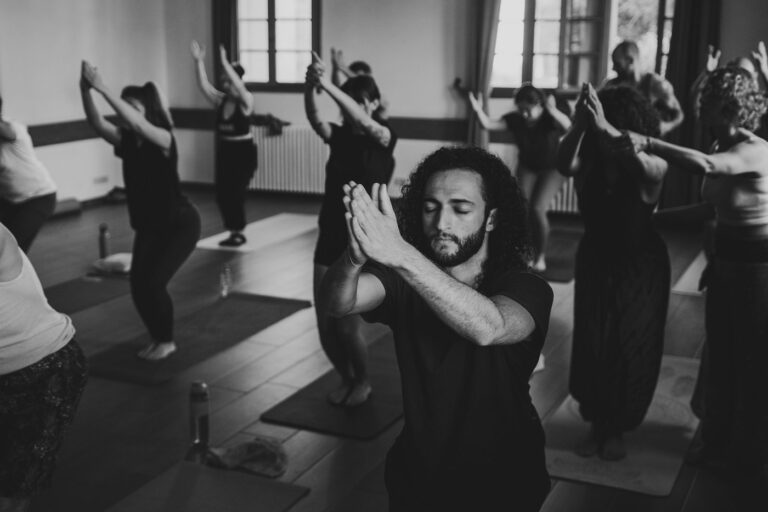
Yoga for teams works best as a simple, voluntary part of a healthier workday. A team does not need complicated postures, a competitive challenge, or a promise that yoga will solve every problem at work. It needs a safe space to move, breathe, and take a short break together.
Group yoga may give colleagues a shared routine, but trust and teamwork still depend on everyday management, fair workloads, clear communication, and how people treat one another. Yoga can support those efforts; it cannot replace them.
What can yoga for teams realistically do?
A short class gives people time away from screens and a chance to change position. It can include gentle movement, attention to breathing, and quiet reflection. Some employees find that helpful for perceived stress or physical tension after a long period of sitting.
Research on workplace yoga is encouraging but not conclusive. A systematic review of workplace yoga trials found lower perceived stress in the intervention groups, while noting limitations in the evidence. The WHO guidelines on mental health at work describe yoga and other leisure-based physical activity as options employers may consider, with very low certainty of evidence for that recommendation.
This is a good reason to offer yoga modestly and honestly: as an optional wellbeing activity, not a medical treatment or a guaranteed method of increasing productivity.
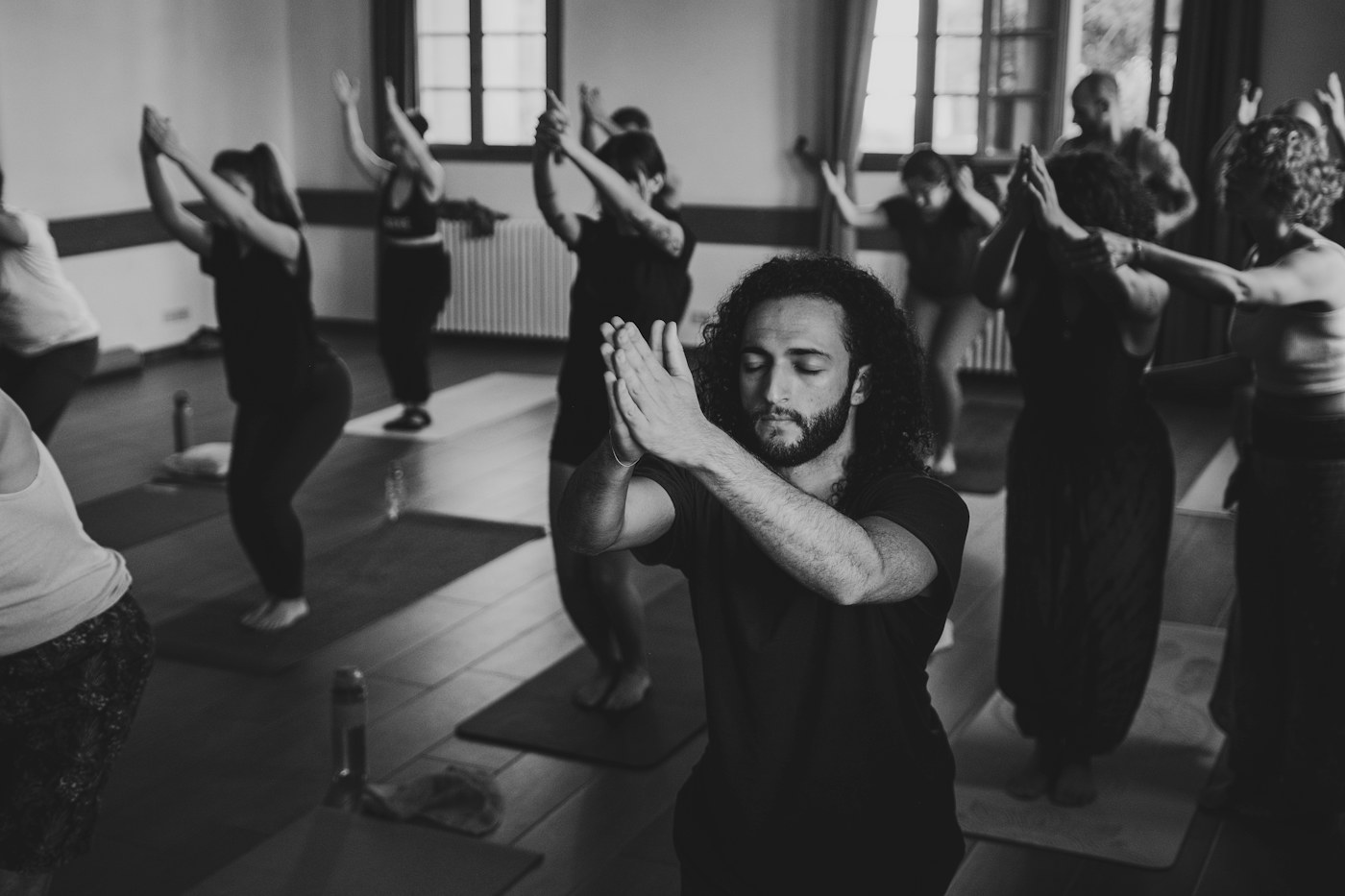
A practical 20-minute yoga session for a team
A mixed-ability workplace group benefits from a predictable class rather than an ambitious sequence. The instructor should explain options before beginning, make it easy to rest, and avoid comparing participants.
| Time | Activity | Purpose |
|---|---|---|
| 0–3 minutes | Comfortable standing or seated check-in | Arrive and notice how the body feels |
| 3–7 minutes | Shoulder circles, easy neck mobility, wrist movement | Change position after desk work |
| 7–13 minutes | Gentle standing stretches and supported balance | Explore mobility without strain |
| 13–17 minutes | Easy seated movement or a short walk | Reset pace and attention |
| 17–20 minutes | Quiet breathing and rest | Finish without rushing |
This is a sample, not a prescription. A qualified instructor should adapt it to the room, participants, health considerations and workplace arrangements. No one needs to perform a challenging pose to benefit from attending.
How to make group yoga accessible
Not everyone will be comfortable on a mat. A class should offer seated options, permit breaks and allow people to observe without joining every movement. Avoid exercises that require physical contact unless participants explicitly consent.
Participation should not be tied to job performance or treated as a test of team spirit. Some people may have injuries, disabilities, pregnancy-related needs, religious concerns or simply a preference not to take part. A respectful programme allows people to decline without explanation.
A chair-based or gentle movement session can be easier to organise in a meeting room than a floor-based class. Make sure there is clear space, stable chairs and safe footwear or flooring. Use sensible alternatives to headstands, deep backbends and intense breathwork.
What leaders should understand before introducing yoga
If employees are overloaded, under-supported or regularly expected to work beyond reasonable hours, a weekly yoga class will not remove those pressures. Workplace wellbeing begins with working conditions. Managers should look at workload, flexibility, job control and communication alongside any optional classes.
A manager who participates can help normalise taking breaks, but the session should not become a place for compulsory social bonding or public discussion of employees’ personal problems. Keep the boundaries clear.
Yoga also does not have to be framed as a way to make workers “work harder.” The purpose can simply be to make the working day more humane.
How to start a team yoga programme
- Ask the team. A quick, anonymous preference survey is better than assuming everyone wants yoga.
- Choose an accessible format. Begin with an optional 15–20 minute session; chairs may be enough.
- Work with a qualified teacher. Explain group size, available space and any relevant accessibility requirements.
- Schedule fairly. A class that only office-based staff can attend may exclude shift workers or remote team members.
- Review the experience. Ask whether people found the session comfortable and useful, without collecting private medical information.
For individuals who want shorter movement breaks between sessions, our guide to yoga during a 9–5 workday offers a simple routine that does not depend on a whole group being available.
Three mistakes that make workplace yoga less useful
Turning the class into another performance target
Attendance and difficult postures are poor measures of wellbeing. Offer clear choices and a welcoming atmosphere instead.
Promising that yoga fixes poor management
A yoga class cannot compensate for unsustainable work demands. Work with employees on the underlying conditions as well.
Using one sequence for every person
Participants will have different ranges of movement and experience. A well-designed class includes options rather than forcing uniformity.
Frequently asked questions about yoga for teams
Does a team need previous yoga experience?
No. Begin with gentle movements and seated alternatives, and avoid advanced postures in a mixed-ability session.
Can yoga improve teamwork?
A shared session may make space for friendly contact, but evidence does not support promising a particular improvement in team performance. Good teamwork relies on management and daily communication too.
Should a workplace session be compulsory?
No. Participation is best voluntary, with alternatives available for employees who do not want to join.
How often should a workplace offer yoga?
Start with a schedule employees can realistically use. A short weekly session plus optional personal movement breaks is often easier to sustain than an elaborate programme.
Is online team yoga possible?
Yes, provided participants have space to move safely, can opt out, and receive modifications suited to the online format.
The useful goal: create a short, repeatable opportunity to move and rest, while keeping the team’s actual working conditions in view.