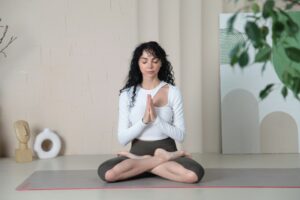
Yoga for a 9–5 job works best when it is broken into small pieces across the day. You do not need a one-hour class at your desk. A few minutes of movement, breathing and posture changes can help you feel less stiff, reset your attention and make an evening practice easier to maintain.
The goal is not to “fix” sitting with one perfect pose. Office work usually means long periods in the same position. The practical answer is to change position more often, move the shoulders and spine, stand when you can, and use short yoga breaks without turning the workday into another fitness target.
Yoga for a 9–5 job: a simple daily plan
| Time | What to do | How long |
|---|---|---|
| Before work | Gentle spinal movement, shoulder circles, easy standing stretch | 5 minutes |
| Mid-morning | Stand, walk, chest opening, neck movement | 2–3 minutes |
| Lunch | Short walk or simple standing yoga | 5–10 minutes |
| Mid-afternoon | Quiet breathing and shoulder reset | 2 minutes |
| After work | Hips, upper back, hamstrings and rest | 10–20 minutes |
Before work: start with five minutes
You do not need a hard morning session. Start with Cat-Cow, shoulder circles, a gentle standing side bend and a relaxed forward fold with bent knees. Move slowly and notice how the body feels after sleep.
If you prefer a ready-made short session, use our 10-minute yoga routine for beginners. A short practice that you repeat is usually more useful than a long routine you avoid.
Desk yoga during work: change position often
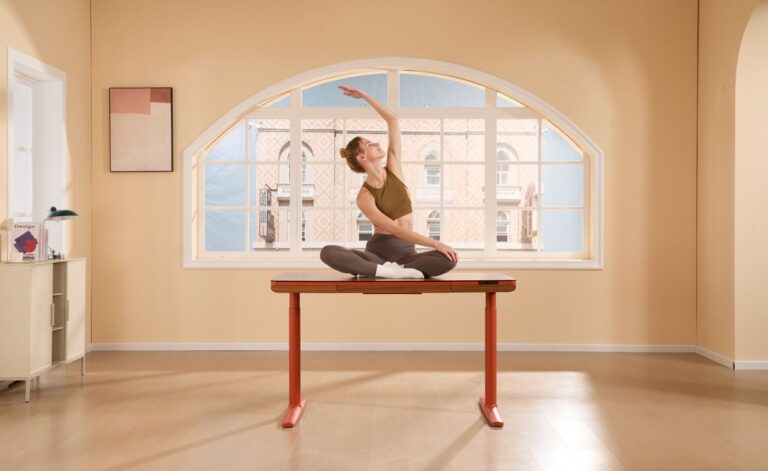
Desk yoga should be simple enough that you can do it in normal clothes. Sit tall for a few breaths, then let the body relax again. Roll the shoulders backward. Turn the chest gently to one side and then the other. Stand up and reach the arms overhead if there is room.
You can also place the hands on the desk, step back and let the spine lengthen while keeping the knees soft. This gives the upper back and shoulders a different position after typing. Nothing needs to be forced.
- Neck: turn left and right slowly instead of making large circles.
- Shoulders: lift, roll back and release.
- Wrists: open and close the hands, then move the wrists gently.
- Spine: alternate between a comfortable upright seat and a gentle seated twist.
- Hips: stand and walk for a few minutes whenever work allows.
A two-minute breathing reset
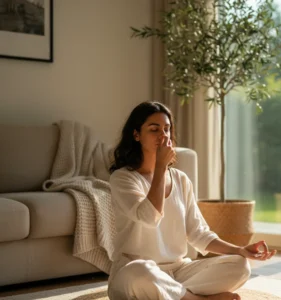
When work becomes busy, use a very simple breathing break. Sit comfortably and let the shoulders drop. Breathe through the nose if that feels natural. Make the exhale unhurried without trying to hold the breath for a long time.
This is not a performance test. Two calm minutes can be enough to separate one task from the next. If strong breathing techniques make you light-headed or uncomfortable, return to normal breathing.
Lunch break: move before you sit again
A short walk after eating may be easier to maintain than a full yoga sequence in the office. If you have space, add Tadasana, a gentle standing side stretch and a supported lunge. Keep the movements comfortable rather than trying to stretch deeply during a short work break.
People who sit for many hours often focus only on the lower back. The hips, upper back, shoulders and ankles also benefit from changing position. Think about the whole body rather than searching for one “office posture” exercise.
After work: 10–20 minutes of yoga
After a long day, start with movement before longer holds. Try Cat-Cow, Low Lunge, a gentle hamstring fold, Sphinx or a mild Cobra, and a comfortable twist. Finish with a few minutes of quiet rest.
If posture is your main concern, our 20–30 minute daily yoga routine for posture gives a longer sequence. It focuses on movement habits rather than forcing the body into one “perfect” shape.
Can yoga improve office posture?
Yoga can help you practise body awareness, movement, breathing and positions that feel easier to maintain. It does not make anyone sit perfectly for eight hours, and that should not be the goal. Even a good sitting position becomes tiring if you stay there too long.
Use posture as a moving target. Sit differently, stand sometimes, walk when possible and adjust your screen or chair if the setup makes you constantly reach or twist. Yoga supports the habit of noticing these patterns.
How often should office workers do yoga?
For many people, two or three longer sessions each week plus short daily movement breaks is realistic. Others prefer ten minutes every day. Your schedule, recovery and other exercise matter more than copying someone else’s routine.
Our guide on how many times a week to do yoga compares weekly practice for beginners, strength, flexibility and stress relief.
What to avoid
- Do not force deep stretches because you feel stiff after sitting.
- Do not hold your breath to make a pose feel more advanced.
- Do not use yoga to ignore persistent pain, numbness or weakness.
- Do not expect one evening class to cancel a full week of no movement.
- Do not turn every short break into another productivity challenge.
Frequently asked questions
Can I do yoga at my desk?
Yes. Simple shoulder, wrist, neck and seated-spine movements can be done beside or at a desk. Keep the range comfortable and avoid anything that needs unsafe furniture support.
Is 10 minutes of yoga after work enough?
Ten minutes can be useful when it helps you practise consistently. A short routine can include spinal movement, hips, breathing and rest without needing a full class.
Should I do yoga before work or after work?
Either can work. Morning practice can help you start moving before sitting. Evening practice can help you change position after work. Many people do best with a short morning session and a slightly longer evening one.
What if sitting causes pain?
General yoga advice cannot diagnose pain. Persistent pain, numbness, weakness or symptoms that keep worsening should be assessed by a qualified health professional.
A workday yoga routine should be easy to repeat
The best yoga routine for a 9–5 job is not the most impressive one. It is the routine that fits around real work. Move for a few minutes, breathe without strain, change position often and keep a short after-work practice available for days when your body feels stiff.
If you later want to study yoga in more depth, our 200-hour multi-style yoga teacher training in Rishikesh is a 21-day residential course. For everyday office practice, however, consistency matters more than advanced poses.