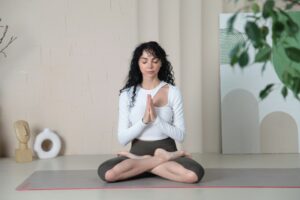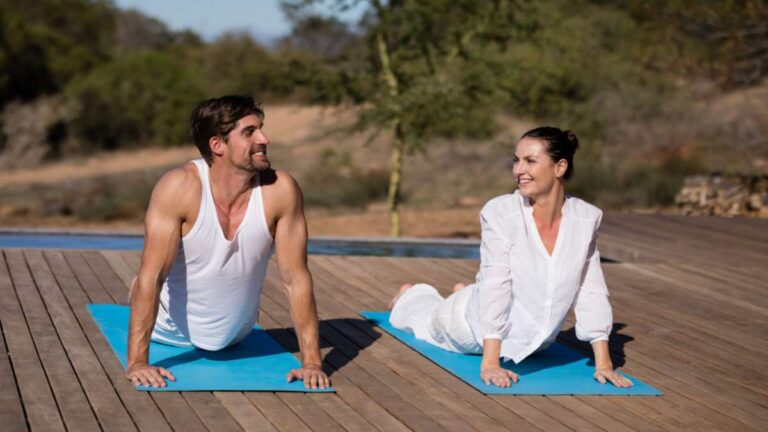
Beginner partner yoga poses work best when both people keep their own support and communicate clearly. Start with mirrored standing poses, comfortable seated movement and light contact. Agree on a stop word, ask before touching and never pull someone deeper into a stretch. These five simple options suit a shared practice without lifting another person. Acrobatic balances require separate qualified instruction.
Partner yoga is a modern shared practice. Its cooperative approach can be connected with ethical ideas such as ahimsa, or non-harming, but this does not mean classical yoga texts describe today’s partner routines. The aim here is a manageable activity with a friend or family member, rather than a promise to improve a relationship or treat stress.
What Is Partner Yoga?
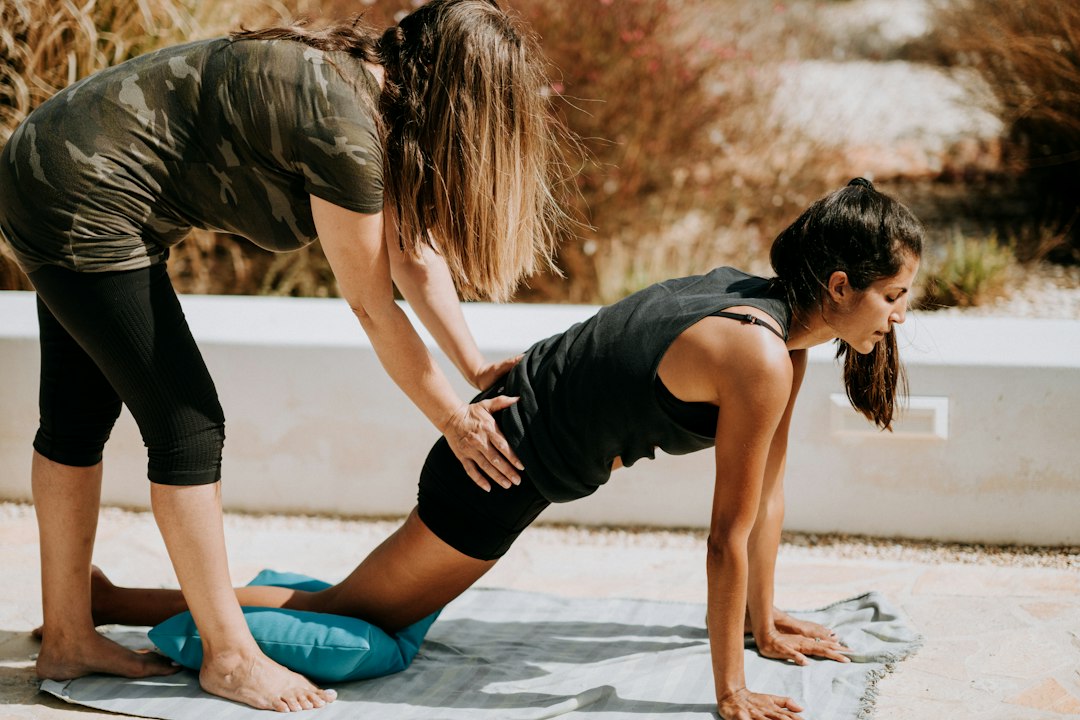 Always ask permission before contact. Learn physical assistance with a qualified teacher.
Partner yoga involves two people working together to create balance, strength, and trust. It combines traditional poses with creative adjustments, requiring teamwork and synchronization.
Practise at the level of the less experienced partner. Share the space and timing, but keep breathing natural; matching every inhale is unnecessary. Tell each other what feels comfortable before moving. You can choose a no-contact routine and still practise together.
Why practise partner yoga poses?
A shared session offers a chance to practise communication, notice movement and enjoy time together. Benefits vary. Touch is optional, and no pose guarantees trust, stress relief or a closer relationship.
Partner yoga poses: safety and setup
| Practice | Beginner setup |
|---|---|
| Mirrored Mountain | Each person stands independently. |
| Back-to-back sitting | Use cushions and light contact without leaning weight. |
| Seated side stretch | Move independently, without pulling. |
| Seated twist | Each person controls their own comfortable range. |
| Tree variation | Use a wall or keep toes down; fingertip contact is optional. |
- Agree on a stop word.
- Ask permission before contact.
- Use slow transitions and keep your own support.
- Avoid lifting, pulling or weight-bearing acrobatics without separate qualified instruction.
A flexible 15-minute partner yoga practice
- Mirrored standing: 2 minutes.
- Comfortable back-to-back sitting: 2 minutes.
- Seated side stretches: 3 minutes total.
- Small independent twists: 2 minutes total.
- Supported Tree variations: 2 minutes total.
- Rest and unhurried transitions: 4 minutes.
Shorten the session whenever needed. Progress through communication and control before adding time. These five partner yoga poses do not require advancing to acrobatic shapes. See our two-person practice guide for related considerations.
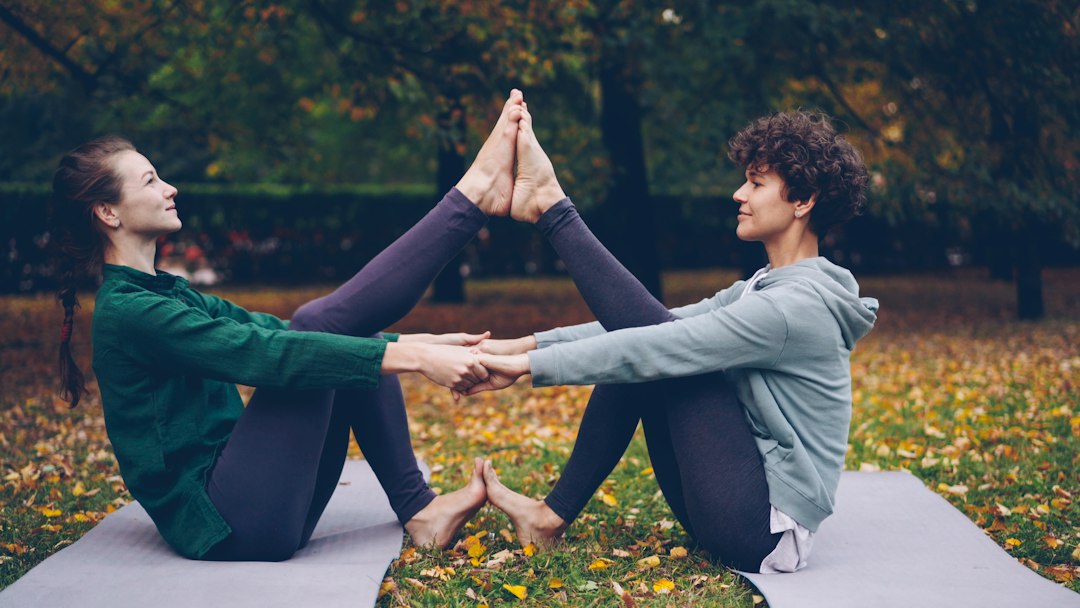
5 simple partner yoga poses to try
1. Mirrored Mountain Pose
Stand facing each other with feet comfortably apart. Each person supports their own weight. Soften the knees, let the arms rest and notice ordinary breathing. One partner can slowly raise and lower the arms while the other mirrors the movement. Take turns leading. Keep the pace slow enough that neither person has to rush.
2. Back-to-back sitting
Sit on cushions with light back contact only if both people agree. Use chairs placed near each other if floor sitting is uncomfortable. Allow the breath to remain natural. Contact should not push either spine into a position. Start with thirty seconds, check comfort and continue briefly if it suits you.
3. Mirrored seated side stretch
Sit side by side or face each other. Place one hand beside you and lift the other arm a little. Lean only within your own comfortable range. Keep both sitting bones supported and return upright slowly. Repeat on the other side. Mirror your partner without holding or pulling their arm.
4. Independent seated twist
Sit facing each other on chairs or cushions. Each person turns the chest slightly to one side while keeping their own support. Rest hands on your own thighs rather than using your partner as leverage. Return to centre and change sides. A small turn is enough. Skip twisting when it causes pain or when a clinician has advised against it.
5. Side-by-side Tree Pose
Stand near a wall with enough room to step out. Place one foot at the standing ankle or calf, avoiding pressure on the knee. Keep toes on the floor when needed. A partner may offer light fingertip contact if agreed, but should not become your main support. Practise both sides and stop before balance becomes strained.
Keep lifted-leg seated balances optional. They ask for more control than the feet-down starting position. See our beginner posture guide before adding harder movements.
When should you skip partner yoga poses?
Skip a movement when either person feels pain, dizziness, numbness, fear or pressure to continue. Recent injury, surgery, pregnancy or a health condition may require individual guidance. A friend’s experience does not replace a qualified teacher or clinician. Do not stand on a partner’s lower back or attempt Flying Bow from an article. Read NCCIH’s yoga safety overview for broader precautions.
How can you adapt partner yoga poses for different needs?
Choose a variation that both people can control independently. Different flexibility, height or experience does not have to prevent a shared session. It does mean that matching the shape of a photograph is a poor goal. The following adaptations keep partner yoga poses focused on communication and manageable movement.
When one person prefers a chair
Use a stable chair for sitting, small side movements or quiet attention. The other person can sit nearby rather than insist on back contact. Choose arm movements that can be mirrored from both positions. Keep the chair on a level surface and leave space for an unhurried transition. A no-contact practice is still a shared practice, and neither person has to act as the other’s support.
When balance is uncertain
Practise beside a wall, keep the lifted toes on the floor or remain in Mountain Pose. Light contact may offer a cue, but it should not become a substitute for a stable support. If a partner suddenly loses balance, the other person may not be able to catch them safely. Avoid testing that situation deliberately. Short turns with ordinary breathing are enough.
When the partners have different experience
Use the simpler variation as the shared starting point. A more experienced person can reduce range and practise clearer instructions instead of choosing a harder shape. Do not add pulling, lifting or extra pressure to “help” the beginner reach the same position. Taking turns leading small arm movements gives both people a role without making one responsible for correcting the other’s body.
When touch feels uncomfortable
Agree that contact is optional before starting. Use phrases such as “Would you like fingertip contact?” and “Shall we pause?” rather than assuming silence means permission. Keep a stop word that either person can use without explaining. Consent can change during the session. If someone declines contact, continue with mirrored movement or finish the practice without persuasion.
What should you ask in a partner yoga class?
Ask whether the class uses independent standing and seated movement or partner-supported weight-bearing balances. Those formats involve different skills. Tell the teacher your experience and ask how rest, no-contact options and accessibility are handled. These questions help you choose suitable partner yoga poses without relying on a promotional picture or a class name.
- Can each participant choose a smaller variation or sit out?
- Will the teacher ask before demonstrations and adjustments?
- Are lifting or acrobatic elements included?
- What experience is expected of both people?
- How are transitions and stop signals explained?
After practising, compare comfort and communication rather than who stretched further. One partner might enjoy standing movement while the other prefers a chair. Use that feedback to choose your next session. A short routine of partner yoga poses can be complete without progressing toward a performance, an advanced balance or a photograph.
Frequently asked questions
Do partners need the same height or flexibility?
No. Choose poses in which each person supports their own body and uses a comfortable range. A taller partner should not determine the depth of the other person’s stretch. Chairs, cushions and a wall can help both people practise at different levels. If a shared shape only works when one person strains or carries the other, choose a simpler option.
Do we have to touch each other?
No. Mirrored Mountain Pose, small seated stretches and independent twists can be practised without contact. Ask before offering a hand or any physical adjustment. Permission can change during the session, so check again when the movement changes. A refusal is enough reason to stop contact; nobody needs to explain it. Communication is part of the practice.
Is partner yoga the same as acroyoga?
No. Partner yoga can include simple paired movement without lifting another person. Acroyoga commonly involves a base, flyer and spotting skills. The loading and fall risks are different. Learn those skills with a qualified instructor and appropriate support. Do not treat an advanced photograph, Double Downward Dog or Flying Bow as a safe first routine for two beginners.
How long should a first session last?
Start with five to fifteen comfortable minutes, including pauses to check in. You can finish after two poses if that is enough. Choose a time when both people can pay attention and agree on the pace. Stop while the session still feels manageable. Our two-person yoga guide offers further options, while this page prioritises simple shared movement.