
The seven chakras are a traditional yoga map of the subtle body. The word chakra means “wheel” in Sanskrit. In later yoga and Tantra traditions, chakras are described as points in a subtle system of channels and energy. They are not organs that doctors can see on an X-ray or scan.
This simple guide explains the seven chakra names, their usual locations, and what each one means in yoga practice. Different traditions do not always use the same number of chakras or describe them in exactly the same way. The seven-chakra model below is the one most people meet in modern yoga.
What is a chakra?
In traditional yoga, a chakra is part of a subtle body model. “Subtle” means it is used to describe inner experience, breath, attention and meditation. It is different from the physical body studied in modern anatomy.
Historical research shows that Indian and Tibetan traditions developed many subtle-body systems. They described channels called nadi and meeting points called chakra. These systems changed across texts and schools. So there is no single chakra chart that represents every yoga tradition.
For readers who want the historical background, Cambridge University Press discusses the growth of subtle-body practices in Indian yoga and Tantra. A modern review indexed by PubMed also discusses the chakra system as a traditional contemplative model. These sources do not prove that chakras are physical organs.
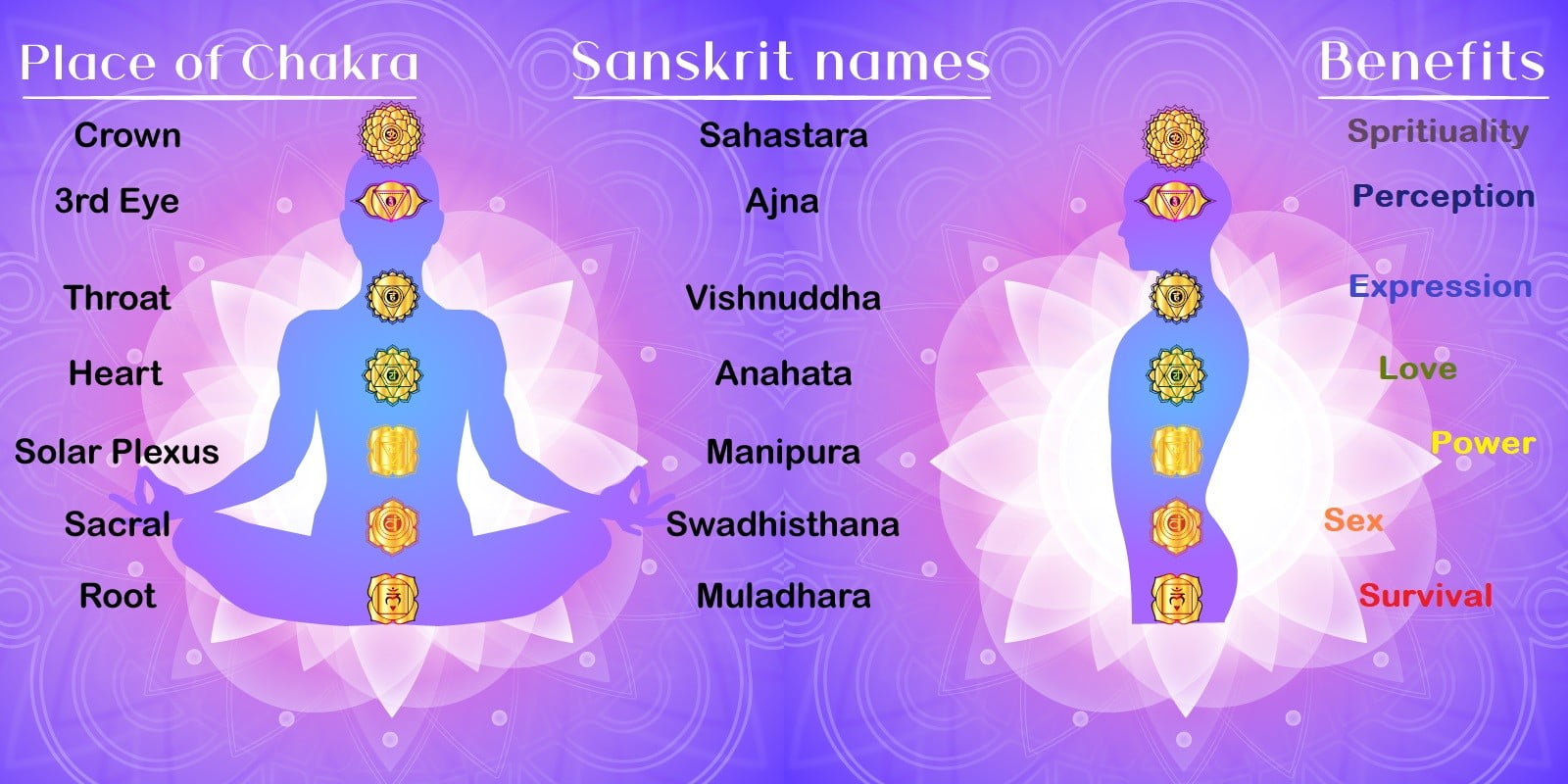
The seven chakra names
In the common seven-chakra model, the names are usually given from the base of the body upward:
- Muladhara — root chakra
- Svadhisthana — sacral chakra
- Manipura — navel or solar plexus chakra
- Anahata — heart chakra
- Vishuddha — throat chakra
- Ajna — eyebrow or “third eye” chakra
- Sahasrara — crown chakra
You may see slightly different spellings in English. That is normal when Sanskrit words are written in the Roman alphabet.
What each chakra means
1. Muladhara — Root
Mula means root. This chakra is placed near the base of the spine in the common modern map. Yoga teachers often use it as a symbol of steadiness, support and being grounded. Its traditional element is earth.
2. Svadhisthana — Sacral
Svadhisthana is usually placed in the lower belly or pelvic area. It is often linked with feeling, desire and creative movement. Its traditional element is water.

3. Manipura — Navel or Solar Plexus
Manipura is commonly placed around the navel or upper belly. It is linked in yoga teaching with will, effort and inner strength. Its traditional element is fire.
4. Anahata — Heart
Anahata is placed around the heart area in the common seven-chakra map. It is linked with love, care and connection. Its traditional element is air.
5. Vishuddha — Throat
Vishuddha is placed around the throat. It is often used as a symbol of clear speech, listening and honest expression. Its traditional element is space or ether.
6. Ajna — Eyebrow Centre
Ajna is usually placed between the eyebrows. In yoga practice it is linked with attention, insight and inner observation. Some people call it the third-eye chakra.
7. Sahasrara — Crown
Sahasrara is shown at or above the crown of the head. It is commonly linked with spiritual understanding and a sense of connection beyond the individual self. Some systems treat it differently from the lower six chakras, which is one reason chakra lists can vary.
How are chakras used in yoga?
Chakras may be used as points of attention during meditation, mantra, breath work and some forms of yoga. A teacher may ask a student to notice an area of the body, repeat a sound, or hold attention on a symbolic quality such as steadiness or compassion.
You do not need to “open” every chakra to practise yoga. You also do not need to believe that chakras are physical objects. They can be studied as part of yoga history, philosophy and meditation practice.
Students who want to understand how chakras fit beside nadis, breath work, meditation and yoga philosophy can also read our simple guide to the five koshas and our explanation of the eight limbs of yoga.
Are chakras part of modern anatomy?
No. Modern medicine does not classify chakras as physical organs or glands. This is important because many internet articles mix chakra symbolism with medical claims.
Yoga traditions can still be meaningful without turning every traditional idea into a medical fact. A careful approach is to say: tradition describes chakras as part of a subtle-body system; modern anatomy describes the body in a different way.
If you have pain, hormone problems, anxiety, sleep problems or another health concern, do not assume a “blocked chakra” is the cause. A qualified health professional can help assess a medical problem.
Where can you study this in more depth?
Chakras make more sense when studied with the rest of yoga, rather than as a stand-alone colour chart. In teacher training, they can sit beside yoga philosophy, pranayama, meditation and subtle anatomy. You can see how FitFortunes places these subjects in its yoga teacher training curriculum.
For historical reading, see Geoffrey Samuel’s discussion of subtle bodies in Cambridge University Press. For a modern scholarly discussion, see the PubMed-indexed review of the subtle-body model.
Simple questions about the seven chakras
Are there always seven chakras?
No. Different traditions describe different chakra systems. Seven is the best-known number in modern yoga, but it is not the only traditional model.
Are chakras the same as nerves or glands?
No. Chakras belong to a traditional subtle-body model. Nerves and glands belong to physical anatomy.
Do I need to believe in chakras to practise yoga?
No. You can study the chakra system as a part of yoga history and meditation. Personal belief is separate from learning what a tradition teaches.
What is the easiest way to remember the order?
Start at the base and move upward: Muladhara, Svadhisthana, Manipura, Anahata, Vishuddha, Ajna, Sahasrara. Learn one name at a time instead of trying to memorise everything at once.
In short: the seven chakras are a traditional map used in many modern yoga teachings. Learn the names and meanings, but keep traditional symbolism separate from medical claims.