
Category: Basic Yoga

  • 5 best yoga poses for beginners Energize your Body Early-Morning

    5 best yoga poses for beginners Energize your Body Early-Morning

    The Best Yoga Poses for Beginners Which are helpful for your Body Early- Morning

    Starting yoga introduces you to a world of physical and mental well-being, suitable for people of all ages and fitness levels. The best yoga poses for beginners gently introduce this ancient practice, improving flexibility, strength, and inner peace. Yoga is known for its overall health benefits, boosting physical fitness while also sharpening mental focus and emotional stability. It’s a flexible discipline that adjusts to individual needs, making it ideal for anyone looking to lead a healthier life.

    Yoga’s appeal lies in its welcoming nature, inviting beginners to try poses that suit their comfort and goals. Whether you’re beginning your day with gentle stretches or relaxing after work, adding yoga to your routine can greatly improve your well-being. With proper guidance and dedication, yoga goes beyond exercise—it becomes a journey accessible to everyone seeking balance and vitality in life.


    We wish to fall back to bed but the day ahead brings new goals, chores, and opportunities. A few splashes of water and some yoga moves will snap us back to the energized self. Yoga helps in stretching up the body and releasing the drowsiness from within. Here are a few yoga poses for the morning energy refill. Also, check yoga poses to control depression.

    1. Upward Salute (Urdhva Hastasana)

    – Stand upright with your feet near to each other
    – Your thighs should not have any space between them
    – Pull your tummy in slightly and bring the arms to the sides of your thighs
    – Roll your shoulders back, inhale and raise both arms to meet over your head
    – Look upwards at your thumb
    – Exhale and return your arms back to resting position.

    https://www.youtube.com/watch?v=cYDNbeoUjqk

    2. Standing Forward Bend (Uttanasana)

    – Stand upright keeping your feet completely on the floor
    – Arch up your back and bring the hands to your sides
    – Inhale and lean forward, keeping the back straight
    – Balance your current posture by placing your hands on either side of your feet
    – Exhale and bend your elbows, bringing the torso close to your knee caps
    – Inhale again to lift your upper body up.

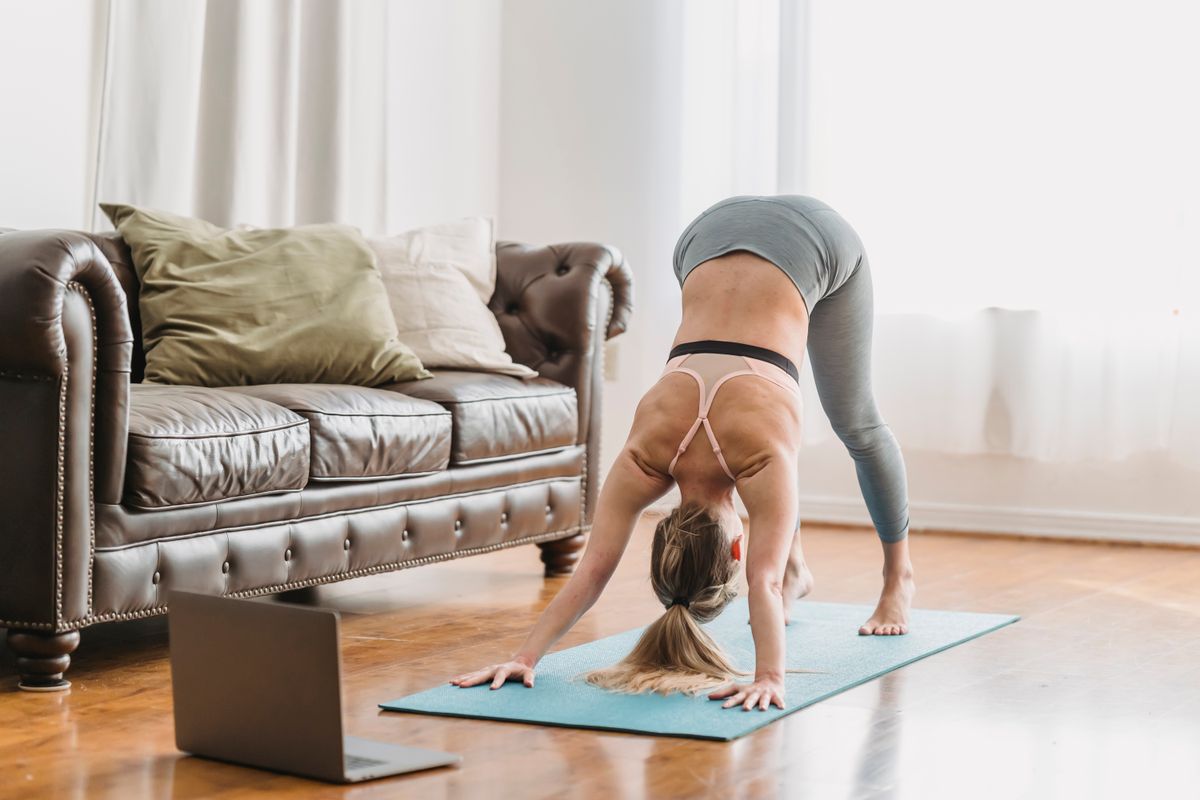
    3. Downward Facing Face (Adho Mukha Svanasana)

    – Lie down on your stomach, arms parallel to the body
    – Bring your fingers parallel to your chest
    – Lift your upper up, straightening your arms till you’re on all 4s.
    – Tuck in your toes and raise your glutes upwards while straightening your knees
    – To release, bend the knees down and rest.

    https://www.youtube.com/watch?v=OWUOCr_5b6E

    4. Upward Facing Dog (Urdhva Mukha Svanasana)

    – Bring your body down in a regular planking position
    – Your arms should be parallel to the shoulders and toes, balancing the lower body
    – Roll your shoulders back and straighten your elbows
    – Lift up your torso and straighten the back
    – Lower your hips and flatten your feet over the floor
    – Return back to downward facing dog pose stretch out.

    5. Mountain Pose (Tadasana)

    Tadasana can be done in two different positions according to class and comfort :

    1. Standing Tadasana Pose (Active)
    2. Supine Tadasana pose (Resting)    

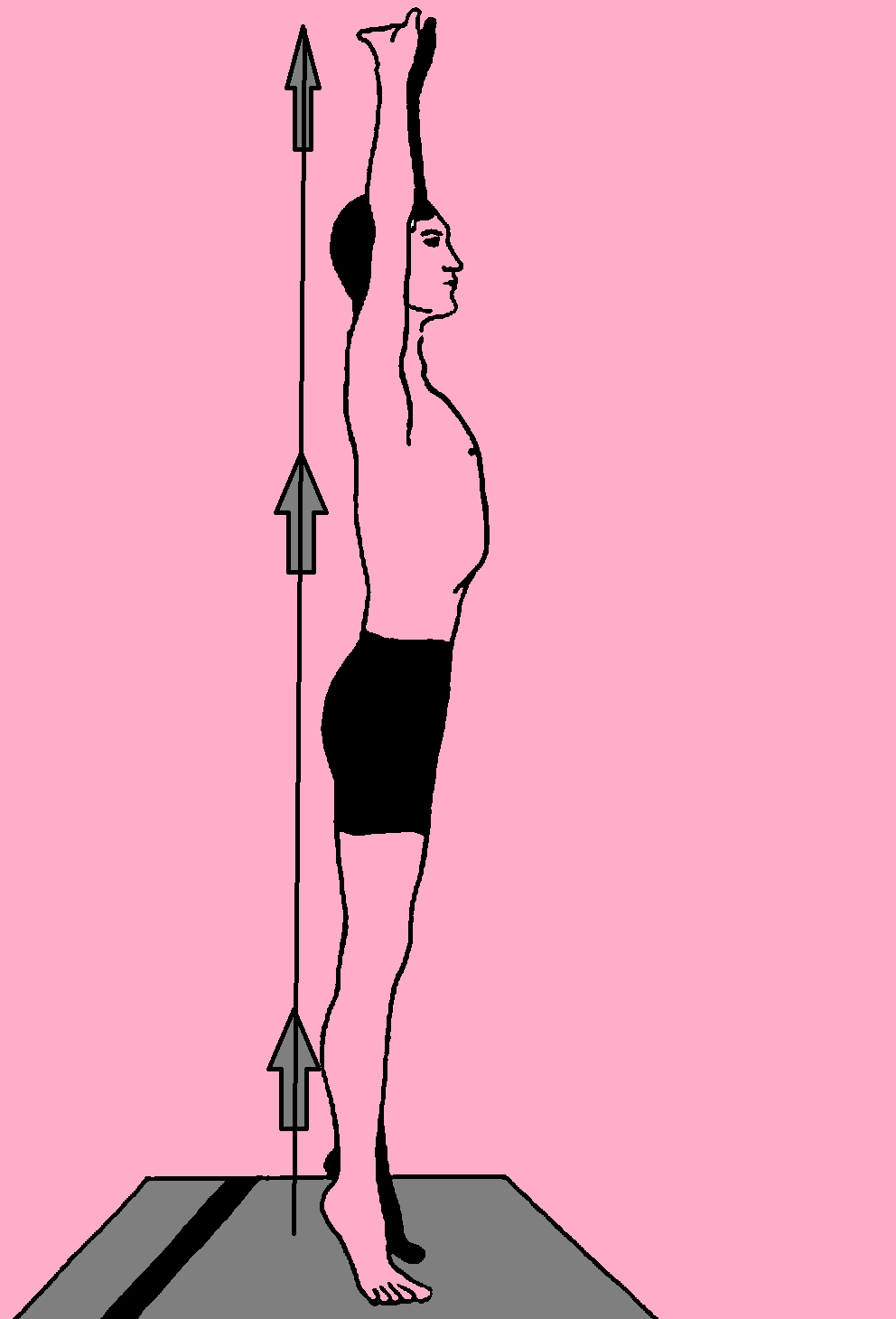
      Standing Tadasana Pose

    -Stand straight keeping your legs slightly apart from each other.

    -Now, With an Inhale start Raising your hands above your head and look straight and gaze at one point.

    -Interlace the fingers of both the hands and turn the palms upwards towards the ceiling.

    -Lift your heels in and stand on the toes.

    – Be as tall as you could, while stretching your arms, chest and shoulders upwards and balancing on your toes.

    -Hold this pose for few seconds and bring your hands and heels down with a exhale.

    -You can practice this Pose for a few rounds.
    yoga for increase your hight
    tadasana

    Supine Tadasana pose

    -We perform this asana laying down straight on the mat and doing the same steps as we did in standing tadasana.


    These few yoga poses are best yoga poses for beginners and provide a gentle yet effective way to start your journey towards better health and well-being. To follow and only take about half an hour each morning. Practicing them regularly can leave your body feeling relaxed and energized, ready to take on the day ahead with renewed vitality. If you’re new to yoga, consider seeking guidance from a qualified yoga teacher. They can help you understand the poses better and reap the full health benefits that yoga offers, ensuring a safe and effective practice tailored to your needs.

    Incorporating these gentle yoga routines into your daily life can make a significant difference in your overall well-being. Whether you’re looking to enhance flexibility, build strength, or simply find moments of calm, yoga for beginners is a versatile and accessible way to nurture both body and mind. Embrace this transformative practice and discover how it can bring balance and vitality to your life, regardless of your age or fitness level.


    Things to Remember

    As a new yoga student, the variety of poses might seem daunting, but yoga can be simple and accessible. Even stretching your arms over your head in the morning counts as a yoga pose. Yoga is a lifelong journey, offering ample opportunities to explore each posture (asana) and master sequences.

    Most basic yoga poses feel natural because they mimic our body’s everyday movements. Focusing on mindful breathing enhances relaxation and helps deepen your pose experience. These beginner yoga poses serve as a gentle introduction to the practice, laying the foundation for more advanced postures.

    Learn the power of yoga with our 200 Hour Yoga Teacher Training in Rishikesh. Join us for an unforgettable experience that will enhance your personal practice and professional skills. Register now!
  • Seven Chakra Names and Meanings: A Simple Yoga Guide

    The seven chakras are a traditional yoga map of the subtle body. The word chakra means “wheel” in Sanskrit. In later yoga and Tantra traditions, chakras are described as points in a subtle system of channels and energy. They are not organs that doctors can see on an X-ray or scan.

    This simple guide explains the seven chakra names, their usual locations, and what each one means in yoga practice. Different traditions do not always use the same number of chakras or describe them in exactly the same way. The seven-chakra model below is the one most people meet in modern yoga.

    What is a chakra?

    In traditional yoga, a chakra is part of a subtle body model. “Subtle” means it is used to describe inner experience, breath, attention and meditation. It is different from the physical body studied in modern anatomy.

    Historical research shows that Indian and Tibetan traditions developed many subtle-body systems. They described channels called nadi and meeting points called chakra. These systems changed across texts and schools. So there is no single chakra chart that represents every yoga tradition.

    For readers who want the historical background, Cambridge University Press discusses the growth of subtle-body practices in Indian yoga and Tantra. A modern review indexed by PubMed also discusses the chakra system as a traditional contemplative model. These sources do not prove that chakras are physical organs.

    Illustration showing the seven chakra positions along the body

    The seven chakra names

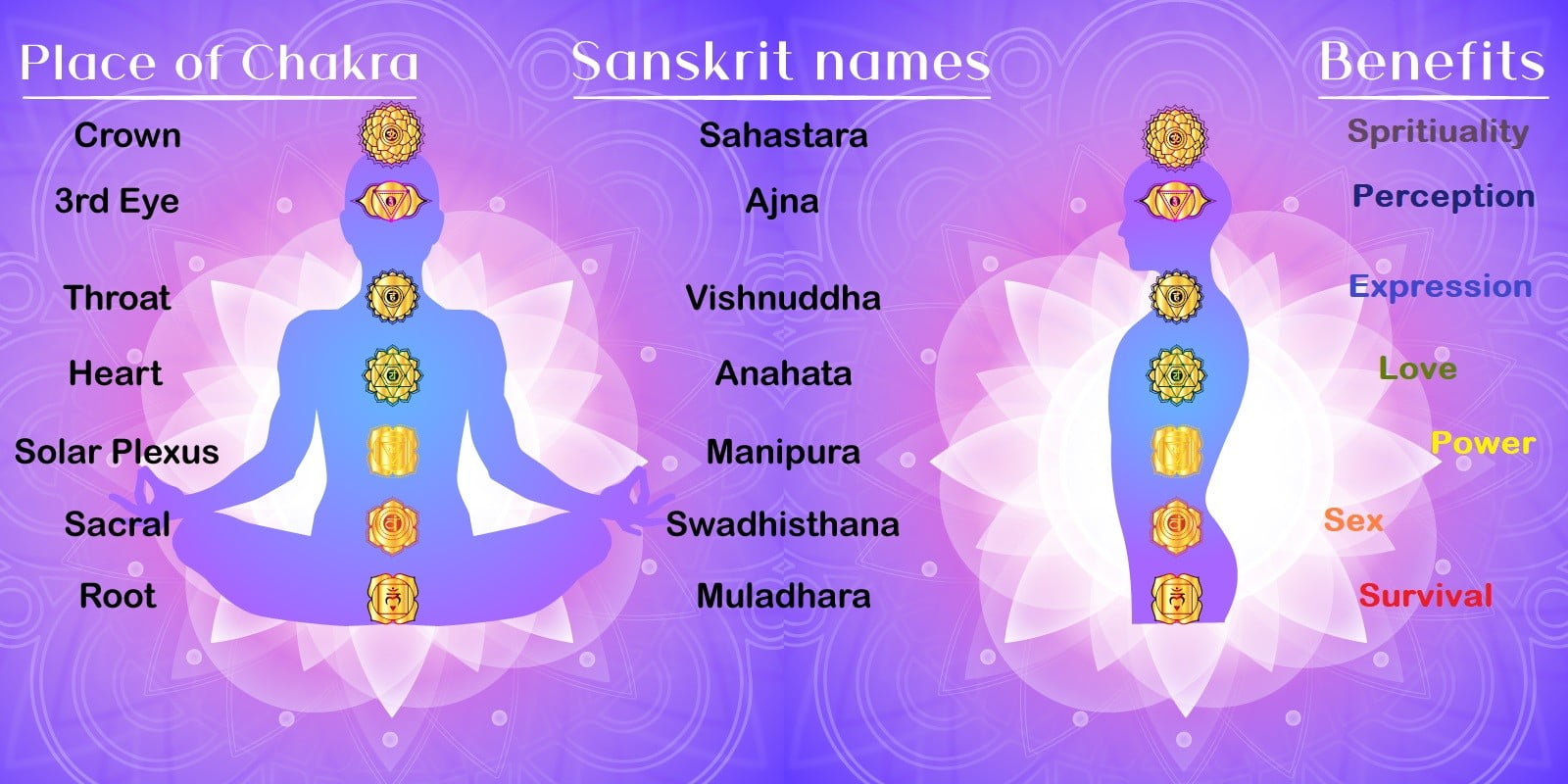
    In the common seven-chakra model, the names are usually given from the base of the body upward:

    1. Muladhara — root chakra
    2. Svadhisthana — sacral chakra
    3. Manipura — navel or solar plexus chakra
    4. Anahata — heart chakra
    5. Vishuddha — throat chakra
    6. Ajna — eyebrow or “third eye” chakra
    7. Sahasrara — crown chakra

    You may see slightly different spellings in English. That is normal when Sanskrit words are written in the Roman alphabet.

    What each chakra means

    1. Muladhara — Root

    Mula means root. This chakra is placed near the base of the spine in the common modern map. Yoga teachers often use it as a symbol of steadiness, support and being grounded. Its traditional element is earth.

    2. Svadhisthana — Sacral

    Svadhisthana is usually placed in the lower belly or pelvic area. It is often linked with feeling, desire and creative movement. Its traditional element is water.

    Yoga illustration of Svadhisthana, the sacral chakra

    3. Manipura — Navel or Solar Plexus

    Manipura is commonly placed around the navel or upper belly. It is linked in yoga teaching with will, effort and inner strength. Its traditional element is fire.

    4. Anahata — Heart

    Anahata is placed around the heart area in the common seven-chakra map. It is linked with love, care and connection. Its traditional element is air.

    5. Vishuddha — Throat

    Vishuddha is placed around the throat. It is often used as a symbol of clear speech, listening and honest expression. Its traditional element is space or ether.

    6. Ajna — Eyebrow Centre

    Ajna is usually placed between the eyebrows. In yoga practice it is linked with attention, insight and inner observation. Some people call it the third-eye chakra.

    7. Sahasrara — Crown

    Sahasrara is shown at or above the crown of the head. It is commonly linked with spiritual understanding and a sense of connection beyond the individual self. Some systems treat it differently from the lower six chakras, which is one reason chakra lists can vary.

    How are chakras used in yoga?

    Chakras may be used as points of attention during meditation, mantra, breath work and some forms of yoga. A teacher may ask a student to notice an area of the body, repeat a sound, or hold attention on a symbolic quality such as steadiness or compassion.

    You do not need to “open” every chakra to practise yoga. You also do not need to believe that chakras are physical objects. They can be studied as part of yoga history, philosophy and meditation practice.

    Students who want to understand how chakras fit beside nadis, breath work, meditation and yoga philosophy can also read our simple guide to the five koshas and our explanation of the eight limbs of yoga.

    Are chakras part of modern anatomy?

    No. Modern medicine does not classify chakras as physical organs or glands. This is important because many internet articles mix chakra symbolism with medical claims.

    Yoga traditions can still be meaningful without turning every traditional idea into a medical fact. A careful approach is to say: tradition describes chakras as part of a subtle-body system; modern anatomy describes the body in a different way.

    If you have pain, hormone problems, anxiety, sleep problems or another health concern, do not assume a “blocked chakra” is the cause. A qualified health professional can help assess a medical problem.

    Where can you study this in more depth?

    Chakras make more sense when studied with the rest of yoga, rather than as a stand-alone colour chart. In teacher training, they can sit beside yoga philosophy, pranayama, meditation and subtle anatomy. You can see how FitFortunes places these subjects in its yoga teacher training curriculum.

    For historical reading, see Geoffrey Samuel’s discussion of subtle bodies in Cambridge University Press. For a modern scholarly discussion, see the PubMed-indexed review of the subtle-body model.

    Simple questions about the seven chakras

    Are there always seven chakras?

    No. Different traditions describe different chakra systems. Seven is the best-known number in modern yoga, but it is not the only traditional model.

    Are chakras the same as nerves or glands?

    No. Chakras belong to a traditional subtle-body model. Nerves and glands belong to physical anatomy.

    Do I need to believe in chakras to practise yoga?

    No. You can study the chakra system as a part of yoga history and meditation. Personal belief is separate from learning what a tradition teaches.

    What is the easiest way to remember the order?

    Start at the base and move upward: Muladhara, Svadhisthana, Manipura, Anahata, Vishuddha, Ajna, Sahasrara. Learn one name at a time instead of trying to memorise everything at once.

    In short: the seven chakras are a traditional map used in many modern yoga teachings. Learn the names and meanings, but keep traditional symbolism separate from medical claims.