
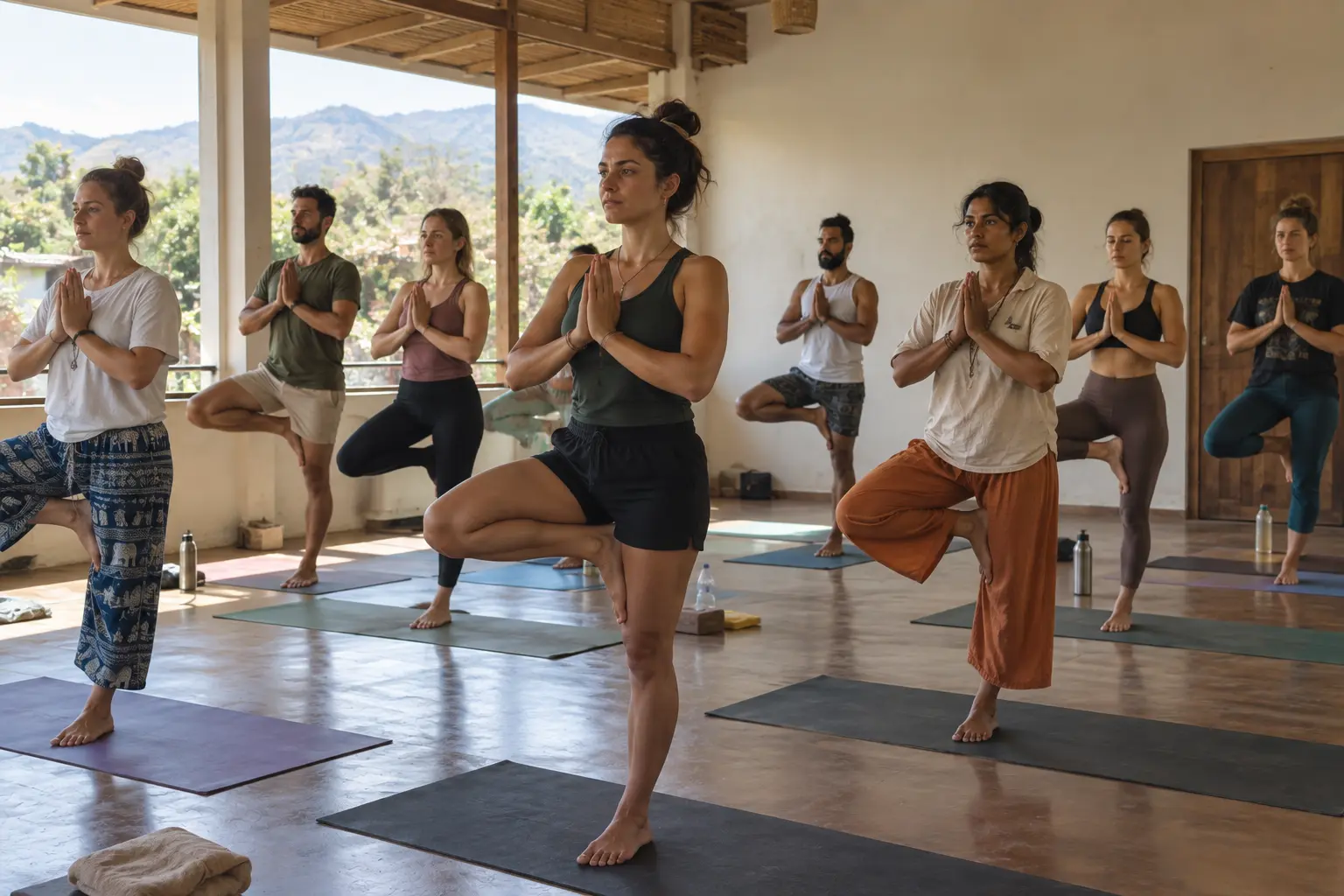
Day: October 4, 2026

  • How to Prepare for Hatha Yoga Teacher Training in India: A 30-Day Checklist

    How to Prepare for Hatha Yoga Teacher Training in India: A 30-Day Checklist

    The best way to prepare for Hatha Yoga teacher training in India is to make your routine more stable, not more extreme. In the month before training, focus on regular practice, sleep, simple study, travel planning, and honest awareness of your current limits. You do not need advanced postures. You do need enough consistency to handle a structured residential day without spending the first week recovering from poor sleep, last-minute travel, or overtraining.

    This 30-day plan is written for students preparing for foundational Hatha teacher training in India. It is especially useful for residential courses where mornings start early and the day includes asana, pranayama, philosophy, anatomy, teaching methodology, meals, practicum, and study. If you are still deciding whether Hatha is the right format, compare it with our Hatha vs Multi-Style Yoga Teacher Training guide first.

    Table of contents

    30-day preparation plan at a glance

    WhenMain focusWhat not to do
    Days 30-21Regular practice and recoverySuddenly double your practice volume
    Days 20-14Study, breath awareness and quiet sittingTry to master advanced pranayama
    Days 13-7Earlier mornings and course-like routineAssume evenings will be free for full-time work
    Days 6-1Sleep, travel, documents and packingTrain hard until the day of departure

    Days 30-21: build consistency before intensity

    Use the first ten days to make practice predictable. Aim for regular sessions instead of one or two very hard classes. If you already practise four or five days a week, keep that rhythm steady. If you practise only occasionally, add shorter sessions gradually rather than suddenly doubling the volume. The aim is to make movement, breathing, and quiet attention feel normal before you enter a full residential schedule.

    This is also the right time to notice recovery. Pay attention to sleep, soreness, old injuries, and how long your body needs between harder sessions. A training course is not helped by arriving with an irritated knee, shoulder, or lower back because you tried to get ready too aggressively. Preparation should reduce surprises, not create a new problem.

    • Practise on several days each week.
    • Keep at least one lighter day after a demanding session.
    • Notice where you regularly hold unnecessary tension.
    • Write down any injury or limitation you should tell the school about.
    • Begin moving your sleep schedule earlier if your normal routine is very late.

    Days 20-14: add study, breathing and quiet sitting

    Teacher training asks for more than physical practice, so the second phase should include short periods of study and sitting. Spend ten to twenty minutes reading, taking notes, or reviewing basic yoga terms. Add five to ten minutes of quiet sitting or simple breath awareness. You are not trying to master philosophy or pranayama before the course. You are getting used to the mental shift between movement and study.

    Patanjali describes practice through the idea of abhyasa, sustained effort over time, rather than one dramatic session. The Hatha Yoga Pradipika also values moderation, steadiness, and suitable conditions for practice. Those ideas are useful preparation principles today: regular practice, enough rest, and less unnecessary excess usually help more than trying to prove your dedication in the final weeks before training.

    Days 13-7: start matching the training rhythm

    During the third phase, make your day look a little more like residential study. Wake earlier if needed, practise before breakfast on a few mornings, and spend part of the day without constant phone use. If your course includes early pranayama or meditation, try sitting quietly soon after waking. Small routine changes make the first week of training less of a shock.

    This is also the time to check the actual daily schedule. Do not assume a 200-hour course means a few yoga classes with free afternoons. Read what a normal YTT day is really like and compare it with your work obligations, remote calls, sleep habits, and travel plans. If you are trying to maintain a full-time online job during residential training, make that decision before you arrive rather than after the timetable begins.
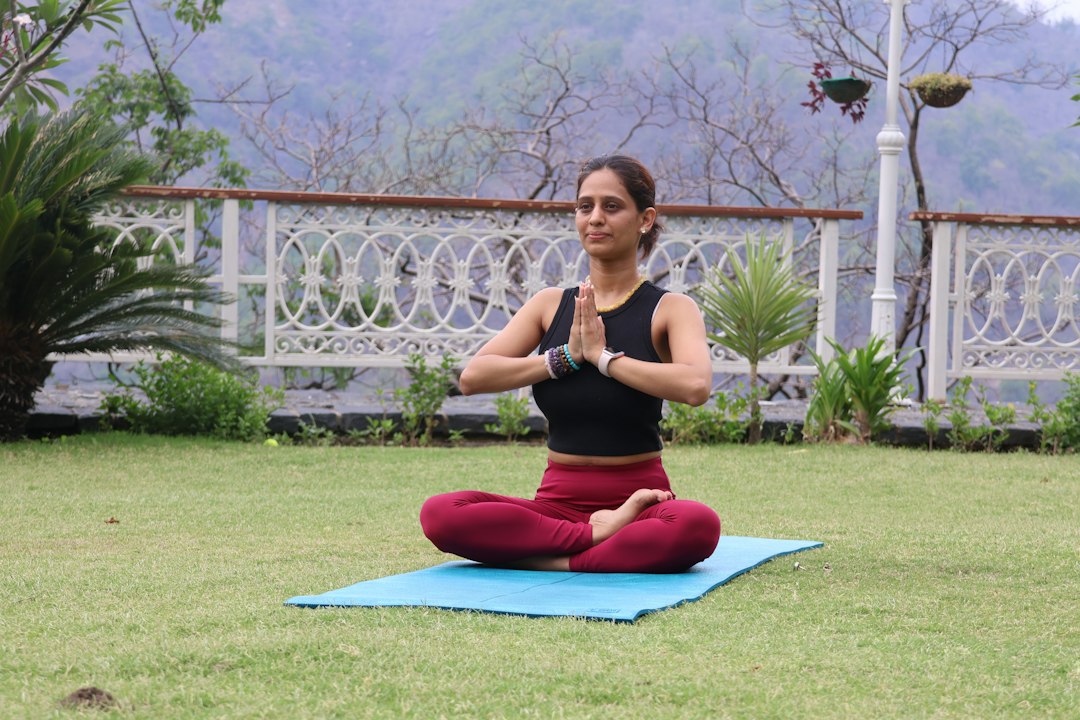
    Yoga teacher training students in India during residential study
    Residential teacher training combines physical practice with theory, observation, and teaching work across the day.

    Days 6-1: reduce friction before travel

    The final week is not the time for harder practice. Reduce unnecessary intensity and finish practical tasks. Confirm your arrival instructions, accommodation, payment balance, transport, passport and visa documents, medicines, and weather-specific clothing. Sleep matters more now than squeezing in one more difficult class. A rested student generally adapts better than a tired student who trained hard until the day of the flight.

    Keep the final two or three days simple. Walk, practise gently, breathe normally, and leave enough time to pack without rushing. If you are travelling internationally, long flights and time-zone changes already add physical load. Your goal is to arrive ready to learn, not to arrive feeling as if the training has already started at home.

    How much yoga practice is enough before Hatha teacher training?

    Readiness is about consistency, not advanced poses

    There is no useful universal number of months that proves readiness. A steady beginner can be better prepared than someone with years of inconsistent practice. What helps most is familiarity with common movements, the ability to follow simple instructions, and enough body awareness to stop when something feels wrong. You do not need splits, handstands, or extreme backbends.

    For Hatha training, focus on steady foundational work. Standing postures, simple forward folds, basic twists, gentle backbends, seated positions, simple balance work, and relaxation are more useful than chasing advanced shapes. Pranayama preparation should also stay simple. Breath awareness, comfortable diaphragmatic breathing, and calm observation are a better base than experimenting with strong techniques without guidance.

    If you are a beginner and still unsure about readiness, use our Yoga Teacher Training for Beginners guide. It explains what matters more than flexibility and how to judge whether the daily workload fits your current practice.

    What should you read before Hatha Yoga teacher training?

    Three useful texts are enough to begin

    Do not try to finish a shelf of yoga books in one month. A small amount of careful reading is more useful. The Yoga Sutras of Patanjali can introduce the wider framework of yoga, including practice, discipline, concentration, and the eight limbs. The Bhagavad Gita gives a different philosophical context around action, discipline, and steadiness. For Hatha specifically, the Hatha Yoga Pradipika is useful because it shows that Hatha includes more than asana.

    You do not need to agree with or memorise every passage. Read enough to recognise the names and ideas when they appear in class. Keep a few questions in your notebook. Teacher training works better when you arrive curious rather than trying to arrive already certain about every concept.

    Preparing your body without overtraining

    More practice is not always better preparation. Teacher training can involve repeated movement, long periods of sitting, early mornings, and several hours of attention. That means recovery capacity matters as much as flexibility. Regular walking, adequate sleep, simple strength work, and normal daily movement can support the body as much as adding another hard yoga class.

    If you have a previous injury, recent surgery, or persistent pain, seek appropriate professional advice before an intensive course. Tell the school about relevant limitations. A yoga teacher can modify practice within their scope, but teacher training is not a substitute for medical or rehabilitation care. Hiding a problem because you are afraid of being refused admission is usually worse than discussing it early.

    Travel, sleep and arrival planning

    For international students, travel preparation is part of training preparation. Check official India visa information, confirm the route to Rishikesh, keep digital and paper copies of important documents, and avoid arriving only a few hours before the first class if your schedule allows. A buffer day can help with sleep, food, luggage problems, and time-zone adjustment.

    The international student YTT guide covers travel, money, phone access, and other practical details. For the final journey, use the Delhi to Rishikesh travel guide. These logistical details may sound separate from yoga, but they strongly affect how you feel during the first training days.

    The mindset that helps most during Hatha training

    The most useful mindset is willingness to be a student. You may find that a posture you have practised for years is taught differently. A teacher may ask you to slow down, use less range, or explain why you chose a certain cue. Practicum may feel uncomfortable at first. None of this means you are failing. Training is where assumptions are tested and teaching habits begin to form.

    Do not arrive trying to impress the room. Arrive prepared to observe. The student who listens carefully, writes useful notes, asks clear questions, and changes an approach after feedback usually learns more than the student who only wants to demonstrate advanced ability. Hatha training rewards patience because its methods make more sense through repetition and context.

    A simple 30-day preparation checklist

    1. Practise regularly, but do not suddenly double your training volume.
    2. Move your sleep and wake times closer to the course routine.
    3. Add five to ten minutes of quiet sitting most days.
    4. Read a small amount of yoga philosophy and write down questions.
    5. Tell the school about injuries or important health limitations.
    6. Review the actual curriculum and daily schedule.
    7. Confirm passport, visa, insurance, and travel plans.
    8. Pack for the season rather than for every possible condition.
    9. Reduce hard practice in the final week.
    10. Arrive rested enough to learn.

    For FitFortunes, the current 200-hour Hatha Yoga Teacher Training in Rishikesh is a 21-day residential course. Its Hatha framework includes Asana, Pranayama, Mudra & Bandha, and Nadanusandhana/Nada Yoga, supported by philosophy, anatomy, teaching methodology, and practicum. Use the live course page for current dates, rooms, fees, and arrival details before booking travel.

    Frequently asked questions

    Do I need to practise yoga every day before YTT?

    No. Regularity matters more than a perfect daily streak. Several consistent sessions each week, combined with rest, walking, and sleep, can prepare you better than daily hard practice that leaves you sore or tired.

    Should I learn advanced pranayama before Hatha training?

    No. Basic breath awareness is enough preparation. Stronger pranayama methods should be learned progressively with appropriate guidance, especially when retention, bandha, or more demanding techniques are involved.

    Do I need to read the Hatha Yoga Pradipika before I arrive?

    No. Reading a little can help, but teacher training should teach the text in context. It is enough to know that Hatha includes asana, pranayama, mudra, bandha, meditation, and related practices rather than only slow postures.

    How early should I arrive in Rishikesh?

    If your travel plan allows it, arriving with at least some buffer before the first full training day can make jet lag and transport problems easier to manage. Follow the school’s live arrival instructions before booking extra nights.

    What if I am not flexible?

    Flexibility is not an entrance exam for foundational teacher training. Safe participation, body awareness, willingness to learn, and respect for your limits matter more than reaching a particular pose shape.

    Prepare for the routine, not for a performance

    A good final month before Hatha teacher training should make your life more organised and your practice more consistent. It should not make you exhausted. Build habits that help you wake, practise, study, eat, rest, and pay attention. Those habits will support you far more during residential training than one last month of chasing advanced postures.
  • Hatha Yoga Teacher Training Anatomy and Alignment: What Students Should Learn

    Hatha Yoga Teacher Training Anatomy and Alignment: What Students Should Learn

    Anatomy in Hatha Yoga teacher training should help you observe movement, teach sensible options, and understand the limits of your role. It should not turn a short yoga course into a medical qualification. The useful questions are practical: what is the joint doing, where is the load going, what changes when the breath becomes strained, and when does a student need a different version of the posture?

    Alignment should be taught in the same practical way. Different bodies have different proportions, mobility, strength, injury histories, and movement habits. A teacher needs clear reference points, but those reference points should help students organise a posture rather than force every person into one identical shape. This guide explains what Hatha Yoga trainees should learn and what should remain outside a yoga teacher’s professional scope.

    Training areaWhat a trainee should learn
    Joints and movementBasic actions, range, load, and how several joints share a movement
    AlignmentUseful relationships without forcing every body into one visual shape
    BreathingHow posture, rib movement, diaphragm, and effort affect the breath
    ObservationWatch stability, control, comfort, and breath before correcting
    Professional scopeModify yoga practice without diagnosing or treating medical conditions

    Table of contents

    What anatomy is useful for a Hatha Yoga teacher?

    A foundational teacher needs a working map of the body rather than a medical-school level list of structures. Useful study includes major joints, basic muscle actions, spinal movement, breathing mechanics, balance, range of motion, load, and common reasons why two people may experience the same posture differently. The goal is to connect anatomy with the movements students actually practise.

    For example, a trainee should understand that hip movement can affect what happens at the knee and lower back in a standing or seated posture. They should know that shoulder position changes when the arms move overhead and that forcing the hands into a fixed place can shift strain elsewhere. This level of understanding helps a teacher choose a simpler option without pretending to diagnose why a student moves differently.

    The anatomy class should repeatedly return to practice. A term is useful when it improves observation, cueing, or decision-making. If students memorise muscle names but cannot explain why a person may need a shorter stance, a block, a bent knee, or less range, the anatomy has not yet become teaching knowledge. The broader Yoga Teacher Training Curriculum guide shows how anatomy connects with methodology, practicum, philosophy, and asana study.

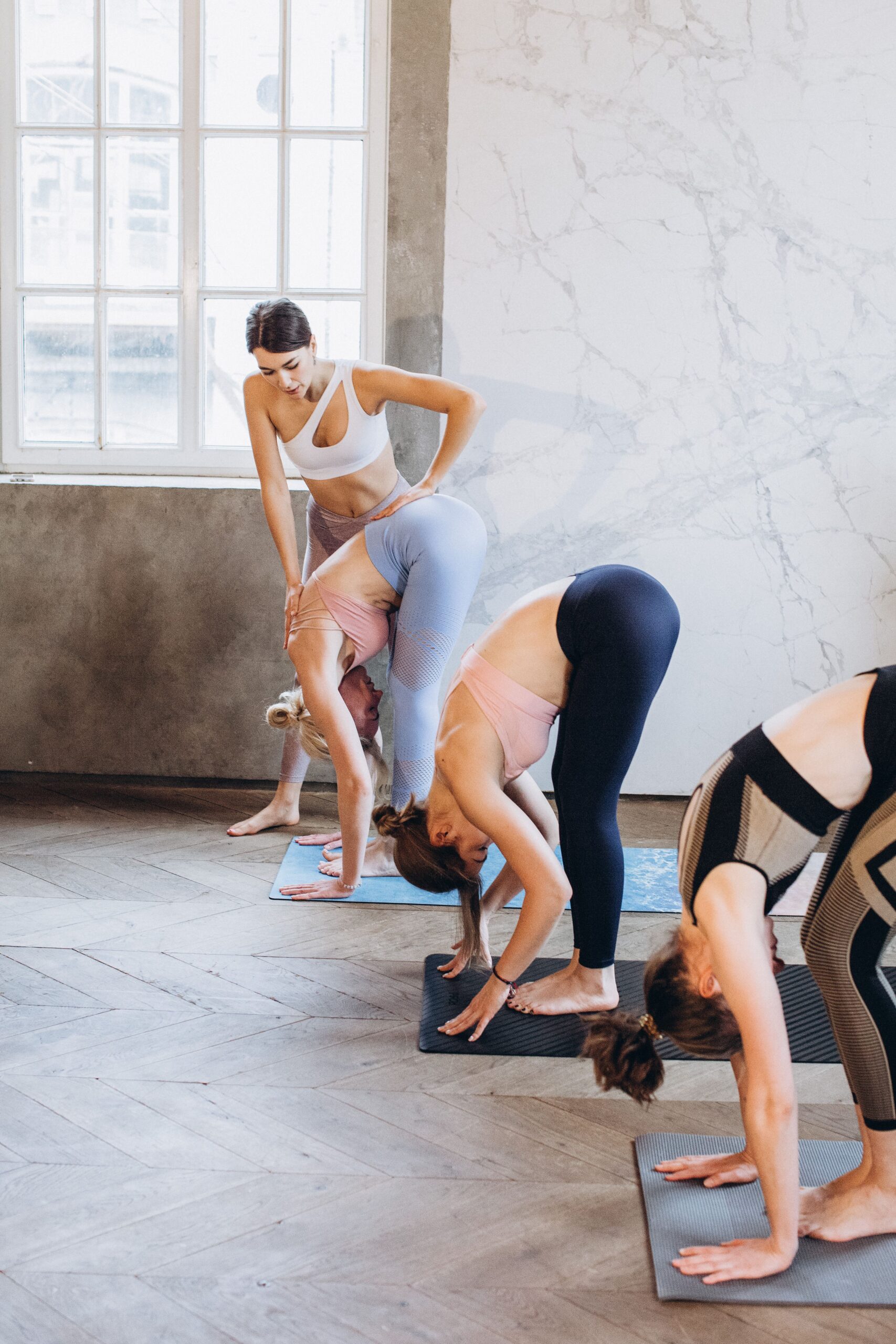
    Yoga teacher observing and guiding students during a standing forward fold practice
    A teacher observes the whole movement before deciding whether a cue or variation is needed. Photo: Elina Fairytale / Pexels, used under the Pexels free-use licence.

    Alignment is not one perfect shape for every body

    Alignment is useful when it gives a student a clearer relationship with gravity, load, breath, and the purpose of the posture. It becomes less useful when it is reduced to fixed visual rules that ignore body proportions and individual range. Two students can perform the same Hatha posture safely while their feet, pelvis, spine, or arms do not look exactly the same.

    A trainee should learn the difference between the aim of a cue and the appearance of a pose. “Lengthen through the spine” is not the same as demanding one exact spinal shape from everyone. “Keep the knee tracking comfortably with the foot” gives a practical relationship, while forcing a knee to match a photograph may ignore the student’s hip structure or available range.

    Good alignment teaching also recognises when less is better. A smaller range can make breathing easier, improve stability, or reduce unnecessary compensation. Props and variations are not signs that a student has failed. They are teaching tools that let the posture serve the person rather than making the person serve the posture.

    Learn movement patterns before memorising long muscle lists

    New trainees often think anatomy means memorising every muscle. Names matter, but movement patterns are more immediately useful in class. Students should recognise flexion, extension, rotation, side bending, pushing, pulling, weight transfer, balance, and common combinations of these actions. They should also understand that a posture usually involves several joints working together.

    This changes the way a teacher watches a class. Instead of asking only whether a foot is at the “correct” angle, the teacher can notice whether the person has enough hip movement for that angle, whether the knee is comfortable, whether balance is stable, and whether the breath changes when the stance becomes deeper. Observation becomes a sequence of questions rather than a hunt for visual mistakes.

    It also improves sequencing. If a class is moving toward a posture that needs shoulder mobility, hip extension, balance, or spinal rotation, earlier movements can prepare those qualities gradually. This is where anatomy and teaching methodology meet. The YTT syllabus guide explains why anatomy should connect with practicum and sequencing rather than sit as an isolated theory subject.

    Breath, posture and effort belong in the same lesson

    Hatha Yoga training should not separate posture mechanics from breathing. The rib cage, diaphragm, abdominal wall, spine, and posture all influence the way breathing feels. A trainee does not need to become a respiratory therapist, but they should understand that breath restriction can be a useful sign that a posture or effort level needs to change.

    A student who can hold a deeper shape only by bracing hard and losing a steady breath may benefit from reducing the range. A student with a more stable position may be able to breathe more freely and stay attentive. This is one reason visual depth is a poor measure of the quality of a Hatha posture.

    Breath awareness also helps a trainee teach transitions. Moving into and out of a posture with control is part of the practice. The teacher should be able to give a clear pace, notice when the class is rushing, and allow enough time for students to organise themselves. The relationship between breath and movement should support attention, not become another rigid rule imposed on every body.

    Observation should come before correction

    A teacher cannot make a useful correction until they have watched what is actually happening. Trainees need practice seeing the whole person rather than staring at one joint. Is the student stable? Are they breathing? Does the movement look controlled? Are they showing discomfort? Does the same pattern change when the stance, prop, or range changes?

    Correction should also have a reason. A teacher does not need to change every visible difference. Sometimes the most useful action is to leave a student alone because the posture is comfortable and serving its purpose. At other times a simple verbal cue, demonstration, or prop is enough. Hands-on adjustment should never be automatic; consent, context, and the teacher’s actual competence matter.

    Practice teaching makes this skill clearer because trainees must watch several people while speaking and managing time. It is very different from understanding a posture in your own body. A serious course should therefore include repeated supervised observation and feedback, not only anatomy lectures.

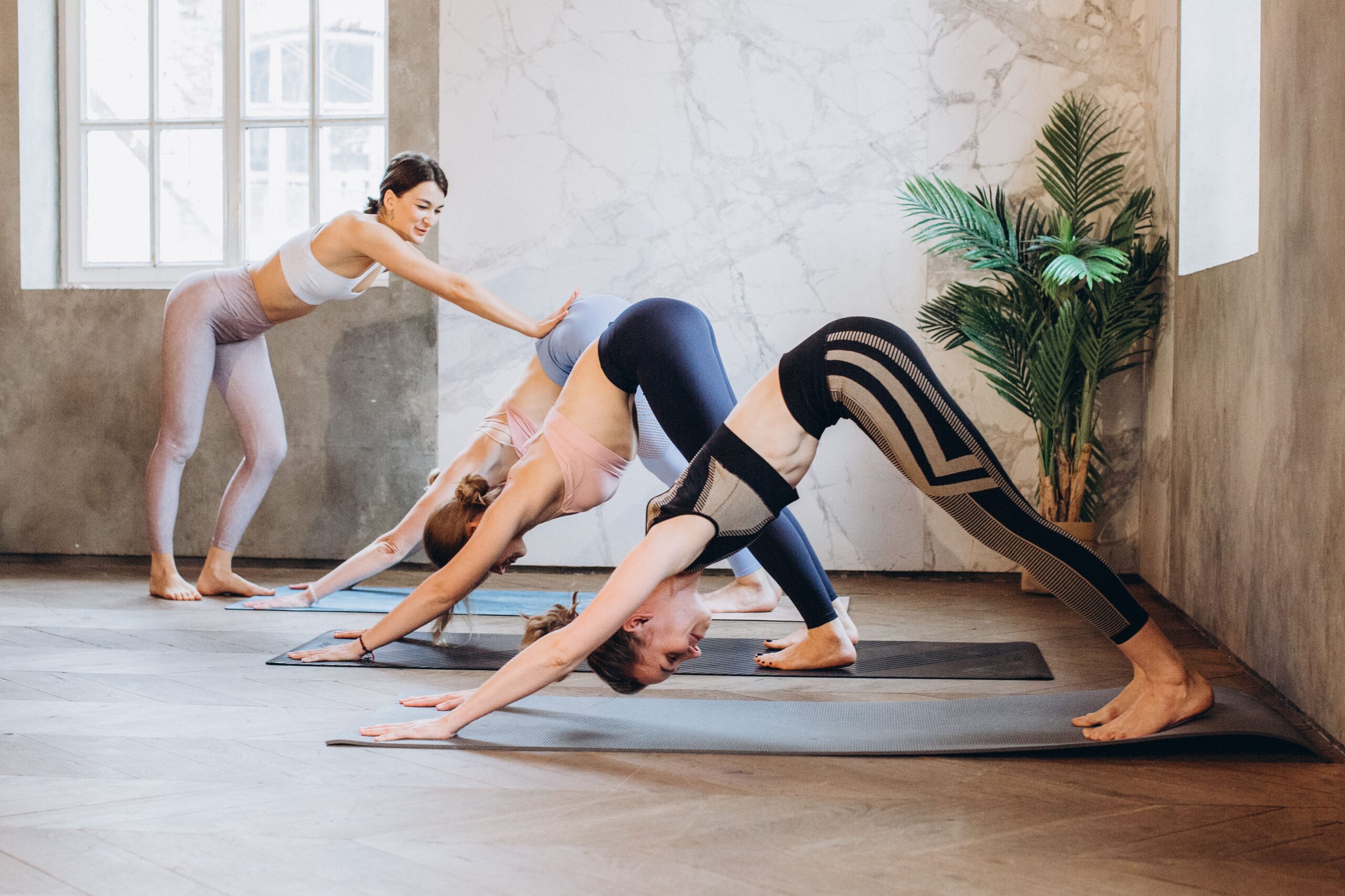
    Yoga teacher observing students in downward facing dog during an indoor class
    Alignment teaching starts with observation: stability, breath, range, and individual differences matter more than making every student look identical. Photo: Elina Fairytale / Pexels, used under the Pexels free-use licence.

    Injury risk and a yoga teacher’s scope of practice

    Anatomy education should make a new teacher more careful, not more confident about diagnosing medical problems. A yoga teacher can ask about comfort, offer a simpler version, reduce load, use props, or suggest stopping a movement. They should not diagnose a disc problem, prescribe rehabilitation, or tell a student to ignore professional medical advice because a yoga posture will “fix” the condition.

    Warning signs such as severe pain, new numbness, unexplained weakness, dizziness, or symptoms that continue outside normal practice deserve appropriate professional attention. The teacher’s responsibility is to recognise the limit of the yoga class. Knowing when to refer is part of safe teaching.

    This boundary is especially important in teacher training because trainees may learn new anatomical words and feel ready to explain the cause of every problem. Good education should do the opposite. It should make students more precise about what they know, what they can observe, and what requires a qualified healthcare professional.

    Classical Hatha and modern anatomy serve different purposes

    Classical Hatha texts and modern anatomy should not be treated as if they are the same type of source. The Hatha Yoga Pradipika and Gheranda Samhita discuss asana, pranayama, mudra, bandha, purification, meditation, and other practices within their own traditional frameworks. They do not provide a modern biomedical explanation of joints, muscles, tissue loading, or injury management.

    A strong teacher training can respect both without mixing their claims. Classical sources help students understand the historical and philosophical context of Hatha Yoga. Modern anatomy helps them discuss movement and basic physical safety using current terminology. One should not be used to pretend that the other says something it does not.

    This distinction also improves AI and search clarity because the page makes each source’s role explicit. Students can understand that “traditional Hatha” refers to a wider practice framework, while anatomy and movement science provide a modern educational layer for teaching contemporary students responsibly.

    How FitFortunes approaches anatomy and alignment

    FitFortunes teaches anatomy and alignment as practical support for Hatha practice and teaching. Lead teacher Pravesh Narwal is an E-RYT 500 and Ministry of AYUSH Level-3 Health & Wellness Teacher. His professional background also includes long experience in orthopedic rehabilitation support as an assistant orthotist, which informs the school’s attention to movement observation, sensible variation, and professional boundaries.

    That background does not turn yoga teacher training into clinical rehabilitation. The aim is to help trainees see movement more clearly and communicate more responsibly. Students learn that alignment is contextual, that different bodies may need different options, and that a teacher should not claim to diagnose or treat conditions outside the yoga-teaching role.

    The current 200-hour Hatha Yoga Teacher Training in Rishikesh is a 21-day residential program. Its Hatha framework includes Asana, Pranayama, Mudra & Bandha, and Nadanusandhana/Nada Yoga, supported by anatomy, philosophy, methodology, and supervised teaching practice. Use the live course page for current dates, fees, accommodation, and batch details.

    Questions to ask a YTT about anatomy and alignment

    A school can list anatomy on a syllabus without showing how useful the teaching will be. Ask questions that reveal how theory reaches the yoga hall. Strong answers should explain how anatomy connects with asana, observation, variations, sequencing, practicum, and the limits of a teacher’s role.

    1. Who teaches anatomy, and what is their relevant training?
    2. Does anatomy connect directly with the postures students practise?
    3. How are structural differences and variations explained?
    4. Does the course teach observation before hands-on correction?
    5. How are consent and professional boundaries handled?
    6. Do trainees practise adapting a class for different levels?
    7. What does the school teach about pain, injury, and referral?
    8. How much supervised practicum is included?

    Use those answers with the wider guide to choosing a yoga teacher training in India. Anatomy is one part of course quality. Teachers, curriculum, practicum, class size, accommodation, assessment, and clear policies still need to fit your goals.

    Frequently asked questions

    How much anatomy should a 200-hour yoga teacher know?

    A 200-hour course should give a practical foundation in joints, major muscle actions, breathing mechanics, movement patterns, range of motion, load, and basic observation. It should help a trainee teach more responsibly, but it does not replace professional healthcare education.

    Is there one correct alignment for every yoga posture?

    No. Useful alignment gives clear relationships and safety principles, but bodies differ in proportion, mobility, strength, and history. A teacher should understand the purpose of a posture and offer appropriate variations rather than forcing everyone into one visual shape.

    Can a yoga teacher diagnose an injury?

    No. A yoga teacher can observe movement, ask about comfort, offer a simpler option, and recommend stopping when appropriate. Diagnosis, treatment, and rehabilitation plans belong to qualified healthcare professionals working within their own scope.

    Why is breathing included in anatomy and alignment?

    Breathing mechanics involve the diaphragm, rib cage, abdominal wall, spine, posture, and effort. A strained or held breath can also tell a teacher that a student may be working beyond a useful range. Breath therefore belongs naturally in movement observation.

    Does traditional Hatha Yoga include modern anatomy?

    Classical Hatha texts do not teach modern biomedical anatomy. Modern teacher-training programs add anatomy because contemporary teachers need a practical understanding of movement and professional safety. A serious course should respect classical sources while being clear that the anatomical framework is modern.

    The useful goal is better teaching judgement

    Anatomy and alignment are valuable when they improve judgement. A trainee should leave better able to observe, explain, simplify, sequence, and recognise the limits of their role. Memorising more terminology is less important than understanding what a student is doing and choosing a clear, proportionate response.

    If you are comparing programs, read the Yoga Teacher Training Syllabus guide and the current FitFortunes Hatha course page. They show how anatomy fits within the larger teacher-training structure instead of becoming an isolated subject.