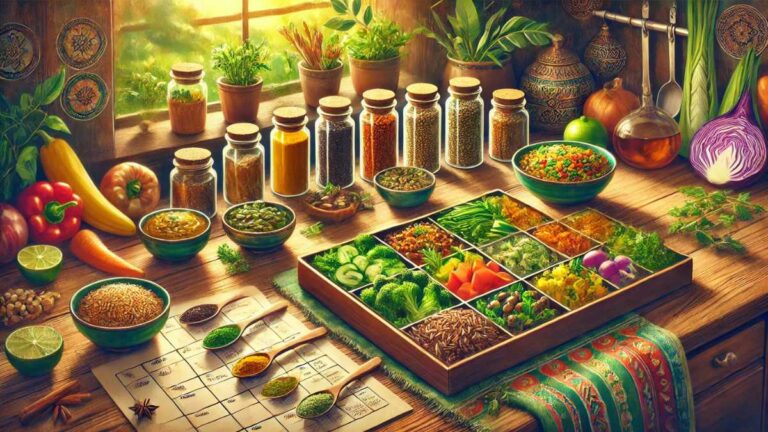
Ayurvedic meal prep ideas can combine seasonal vegetables, grains, dal and familiar spices in a manageable weekly plan. Ayurveda is a traditional Indian health system; its dosha framework is not a modern nutritional diagnosis. Keep the recipes flexible, include enough food for your needs, and prioritise safe storage. This guide offers cooking ideas rather than treatments, detox plans or promises to balance a medical condition.
How Can You Meal Prep With Ayurvedic Guidelines?
Ayurvedic meal prep usually emphasises freshly cooked food, seasonal ingredients, digestion-friendly combinations and regular meal timing. Treat dosha advice as a traditional framework rather than modern nutrition science.
| Prep idea | Simple example |
|---|---|
| Cook a grain base | Rice, millet or another staple you tolerate well |
| Prepare one dal or legume dish | Keep seasoning moderate and adjust to taste |
| Cook seasonal vegetables | Use different colours and textures across the week |
| Keep fresh additions separate | Herbs, lemon, chutney or yoghurt if suitable |
Related reading: multigrain bread nutrition, Yoga for a 9–5 job, and yoga in daily life.
Ayurveda comes from two Sanskrit words: “Ayur” meaning life and “Veda” meaning knowledge. Together, it means “knowledge of life.” In Ayurveda, food is seen as medicine. It is believed that the right foods can help balance your body’s natural energies, called doshas. These doshas are:
- Vata – This energy is linked to movement, creativity, and flexibility.
- Pitta – This energy controls digestion, metabolism, and transformation.
- Kapha – This energy relates to structure, stability, and calmness.
The traditional framework describes individual dosha combinations; these are not validated nutritional diagnoses. Ayurvedic meal prep involves choosing foods that balance your specific doshas and promote overall well-being.
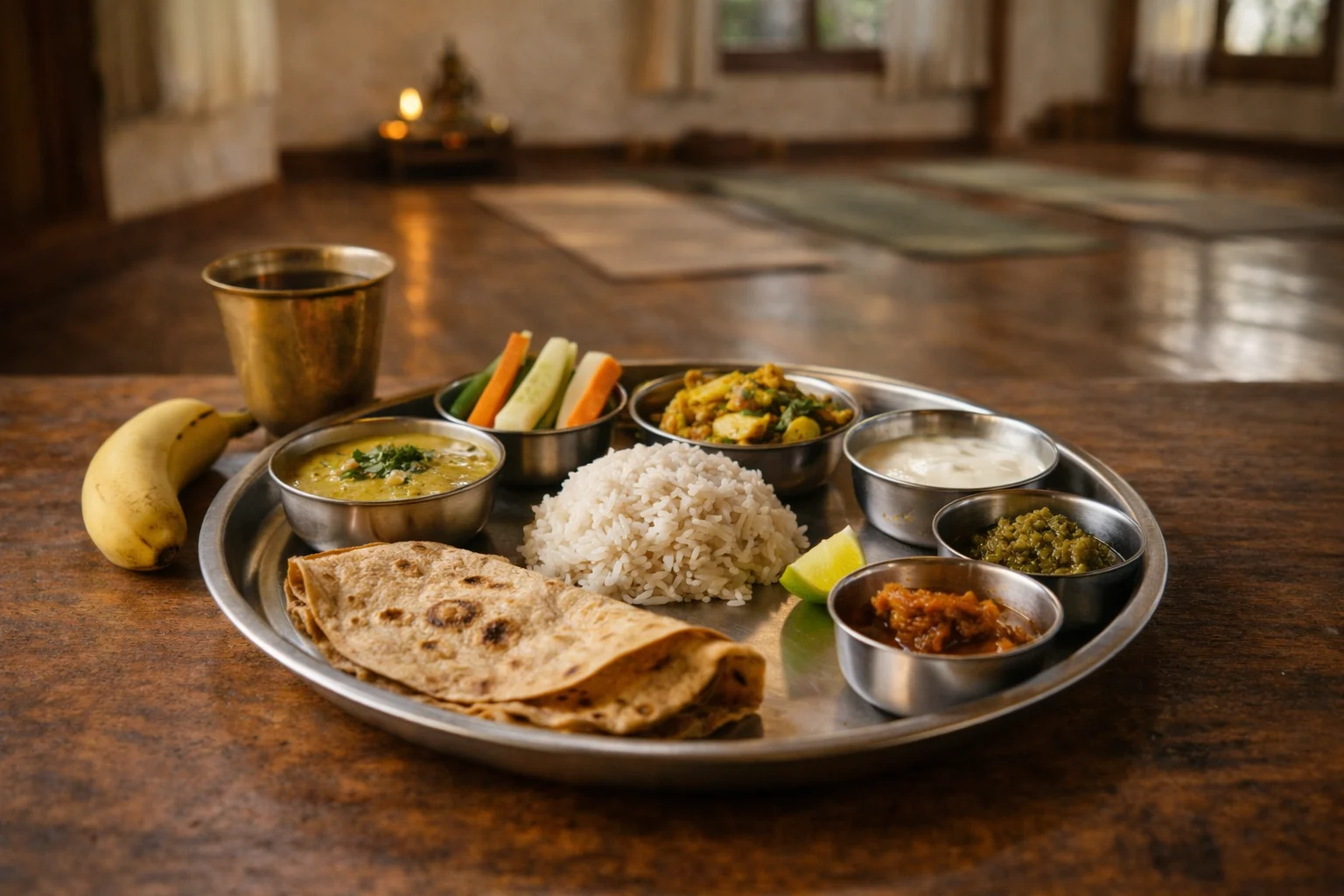
The Ayurvedic Approach to Meal Prep
In Ayurveda, the goal is to eat fresh, seasonal foods that are easy to digest and nourish the body. Meal prepping can be done in a way that keeps the body in balance. Here’s how to use Ayurvedic guidelines in your meal prep:
- Choose Whole Foods: Ayurveda emphasizes eating whole, unprocessed foods. Fresh vegetables, fruits, grains, nuts, seeds, and legumes are staples in Ayurvedic meals. They provide natural energy and support digestion.
- Follow the Seasons: Ayurveda believes that the foods we eat should match the season. In the summer, lighter foods like salads and fruits help cool the body, while in the winter, warming soups and root vegetables help provide warmth and nourishment.
- Balance Your Doshas: Traditional dosha preferences can inform culinary choices, but do not diagnose health problems or determine nutritional needs. Adapt ingredients for allergies, tolerances and suitable professional advice.
- Use Spices and Herbs: Use turmeric, ginger, cumin and cinnamon for flavour in quantities you tolerate. Culinary amounts are different from supplements or treatments.
- Eat Mindfully: Ayurveda teaches that how you eat is just as important as what you eat. Eating mindfully, chewing your food thoroughly, and avoiding distractions while eating can help improve digestion and absorption of nutrients.
Now let’s dive into some healthy meal prep ideas that follow Ayurvedic guidelines. These meals are not only nutritious but also delicious and easy to prepare in advance.
- Ayurvedic Veggie Bowl
A veggie bowl is a great way to prepare a balanced, nourishing meal. This dish is full of vibrant vegetables, grains, and legumes, all cooked in a way that follows Ayurvedic principles.
Ingredients:
- 1 cup quinoa (or brown rice for Kapha dosha)
- 1/2 cup cooked lentils (good for Pitta dosha)
- 1 cup roasted or steamed vegetables (carrots, sweet potatoes, zucchini, spinach, etc.)
- 1 tablespoon ghee (clarified butter) for Vata dosha, olive oil for Pitta and Kapha doshas
- 1/4 teaspoon turmeric, for flavour and colour
- 1/2 teaspoon cumin, adjusted to taste
- 1/4 teaspoon coriander
- Salt to taste
- Fresh cilantro for garnish
Directions:
- Cook the quinoa or rice according to package instructions.
- Steam or roast your favorite vegetables until tender.
- Cook the lentils until soft, then mix them with the quinoa.
- In a small pan, heat the ghee or olive oil and add turmeric, cumin, and coriander. Stir well.
- Pour the spice mixture over the quinoa, lentils, and vegetables.
- Garnish with fresh cilantro and enjoy!
Benefits:
- High in fiber, protein, and vitamins.
- Offers a convenient grain, legume and vegetable combination.
- Use spices at an amount you enjoy and tolerate.
- Ayurvedic Dal (Lentil Soup)
Lentils are rich in protein, fiber, and essential minerals. Dal is a popular Ayurvedic dish that can be enjoyed for lunch or dinner. It’s easy to prepare and can be made in bulk for meal prep.
Ingredients:
- 1 cup split yellow lentils (moong dal)
- 1 tablespoon ghee (for Vata), coconut oil (for Pitta), or olive oil (for Kapha)
- 1 teaspoon cumin seeds
- 1 teaspoon ginger (freshly grated)
- 1/2 teaspoon turmeric
- 1/2 teaspoon coriander
- Salt to taste
- Fresh cilantro for garnish
- 1 tablespoon lemon juice (for freshness)
Directions:
- Wash the lentils and cook them in water until soft and mushy.
- In a pan, heat the ghee or oil and add cumin seeds and grated ginger. Sauté for a few minutes.
- Add turmeric and coriander, stir well, and cook for another minute.
- Pour the spice mixture into the cooked lentils and mix well.
- Add salt to taste and garnish with fresh cilantro and a squeeze of lemon juice.
Benefits:
- Provides a warm lentil dish with ginger and cumin.
- Choose oil according to preference and nutritional needs.
- High in protein, making it a great option for vegetarians.
- Ayurvedic Sweet Potato and Chickpea Salad
This is a great dish for any time of year and can be prepped ahead of time. It’s perfect for balancing Pitta dosha, thanks to its cooling and nourishing ingredients.
Ingredients:
- 2 medium-sized sweet potatoes, peeled and cubed
- 1 cup cooked chickpeas (or canned, rinsed)
- 1 tablespoon olive oil
- 1/2 teaspoon turmeric
- 1/2 teaspoon cumin
- Salt and pepper to taste
- Fresh spinach leaves
- Fresh lemon juice
- Fresh cilantro for garnish
Directions:
- Roast the sweet potatoes in olive oil with turmeric, cumin, salt, and pepper until soft and golden.
- In a large bowl, combine roasted sweet potatoes, chickpeas, and fresh spinach.
- Drizzle with lemon juice and garnish with cilantro.
Benefits:
- Rich in vitamins, minerals, and antioxidants.
- Cooling and nourishing for Pitta dosha.
- High in fiber and protein.
- Ayurvedic Khichdi
Khichdi is a familiar rice-and-dal dish with a soft texture. Cook the rice and lentils thoroughly, and adjust spices to preference. Add vegetables and other foods across the day for variety. Khichdi is a meal, not a detox treatment.
Ingredients:
- 1/2 cup basmati rice
- 1/2 cup moong dal (yellow split lentils)
- 1 tablespoon ghee
- 1 teaspoon cumin seeds
- 1/2 teaspoon turmeric
- 1/2 teaspoon ginger powder
- Salt to taste
- Fresh cilantro for garnish
Directions:
- Wash the rice and lentils and cook them together with 4 cups of water until soft.
- In a pan, heat ghee and sauté cumin seeds and ginger powder.
- Add turmeric and stir well.
- Pour the spice mixture over the cooked rice and lentils.
- Garnish with cilantro and serve hot.
Benefits:
- Light and easy to digest.
- Great for Vata and Pitta doshas.
- Makes a soft-textured meal; add vegetables for variety.
- Ayurvedic Smoothie Bowl
For a quick and nourishing breakfast, try an Ayurvedic smoothie bowl. It’s refreshing, energizing, and easy to prepare.
Ingredients:
- 1/2 cup unsweetened coconut yogurt (or any yogurt of your choice)
- 1/2 banana
- 1/2 cup berries (like blueberries, strawberries, or raspberries)
- 1 tablespoon almond butter or peanut butter
- 1 teaspoon chia seeds
- 1/4 teaspoon cinnamon, if desired
Directions:
- In a blender, combine coconut yogurt, banana, berries, and almond butter. Blend until smooth.
- Pour into a bowl and top with chia seeds and a sprinkle of cinnamon.
Benefits:
- Great for Pitta dosha (cooling and refreshing).
- High in protein, antioxidants, and healthy fats.
- Supports digestion and overall well-being.
How should you store Ayurvedic meal prep safely?
Cooked food needs prompt cooling and refrigeration, even when a traditional recipe describes it as wholesome. Divide a large pot of dal or khichdi into shallow containers. Refrigerate perishable food within two hours, or one hour when the temperature is above 32°C. Keep the refrigerator at 4°C or below. Use refrigerated leftovers within three to four days, and freeze portions you will not eat in that time. Reheat leftovers thoroughly to 74°C.
Keep washed herbs, yoghurt and sauces separate until serving. Do not leave rice at room temperature overnight or rely on smell to judge safety. Label containers with the cooking date. The FoodSafety.gov cold-storage chart and FDA kitchen guidance provide practical storage information.
A three-day Ayurvedic meal prep plan
- Day one: cook dal, a grain and two vegetables. Eat one portion fresh and refrigerate the rest promptly.
- Day two: combine one refrigerated portion with freshly prepared greens and a suitable protein addition.
- Day three: use remaining properly stored portions, or thaw a frozen portion safely. Add fruit and other foods according to appetite and nutritional needs.
This is an organisation example, not a complete diet prescription. Portion sizes depend on age, activity, appetite and health. People managing diabetes, kidney disease, allergies or pregnancy may need individual nutrition advice. A plant-based plan also requires attention to nutrients such as vitamin B12.
Frequently asked questions about Ayurvedic meal prep ideas
Does meal prep conflict with Ayurveda’s preference for fresh food?
You can prepare ingredients ahead and cook smaller portions more often. Some Ayurvedic traditions prefer freshly cooked meals, while modern meal prep often uses refrigeration and freezing. Decide what fits your schedule without treating stored food as a moral failure. Safe handling matters whatever tradition you follow. Chopping vegetables, measuring spices and washing lentils ahead can reduce the work needed for a fresh meal.
Can these recipes detox the body?
No detox effect is established for these recipes. Dal, vegetables and grains can contribute to a varied diet, but eating a particular dish does not remove unspecified toxins. Avoid replacing meals with restrictive cleanses. Persistent digestive symptoms, unusual fatigue or concerns about exposure to a harmful substance deserve appropriate assessment. Food should support adequate nutrition rather than carry unsupported treatment claims.
Do I need to know my dosha before cooking?
No. You can use these Ayurvedic meal prep ideas as flexible cooking inspiration. Doshas belong to Ayurveda’s traditional framework; an online quiz is not a medical or nutritional diagnosis. Choose ingredients you tolerate, account for allergies and include a variety of foods. The NCCIH overview of Ayurveda explains the distinction between traditional practice, scientific evidence and safety concerns.
Is ghee essential?
No. You can use a suitable cooking oil or adjust the recipe to dietary needs. Ghee contains dairy and is not appropriate for everyone; people with milk allergy need specific advice. Coconut yoghurt also varies widely in protein content. Check labels and choose foods that support your nutritional requirements rather than assigning an oil to a dosha as if that proves a health benefit.
A balanced approach to meal prep
Healthy meal prep ideas based on Ayurvedic guidelines can help you stay nourished, balanced, and healthy. By using whole foods, seasonal ingredients, and spices that match your dosha, you can create meals that not only taste good but also promote overall well-being.
Remember, Ayurveda highlights balance, so listen to your body and choose foods that make you feel good. Use Ayurvedic traditions as cooking inspiration while keeping food safety and adequate nutrition central. Happy cooking and eating!
Note: While the meal prep ideas shared in this blog are inspired by Ayurvedic principles, we are not Ayurvedic experts. Ayurveda is a comprehensive and ancient system of natural healing, and it’s always best to consult with a certified Ayurvedic practitioner for personalized advice based on your unique body type and health needs. These guidelines are meant to provide general inspiration for balanced and nourishing meals.